
Variabler Datendruck (VDP) — Personalisierte Verpackungen im großen Maßstab mit PackQ
packQ’s Variable Data Printing (VDP) feature transforms static packaging into dynamic, personalized experiences. It connects databases, design templates, and print automation to produce unique boxes, labels, or displays—each tailored with individual names, serials, or codes. Built on the PDF/VT standard, VDP in packQ enables true mass customization: from one-off campaigns to high-volume personalized production, all within a single automated workflow. This article explores how packQ makes personalized packaging scalable, efficient, and production-safe.
The Power of Personalization in Packaging
We live in an era where personalization drives attention, loyalty, and conversion. From coffee cups with your name on them to subscription boxes tailored to your preferences, customization has become an expectation—not a luxury.
In the packaging world, personalization used to mean manual effort, small batches, and high costs. But thanks to digital printing and advanced workflow automation, Variable Data Printing (VDP) has changed everything.
packQ brings this revolution directly into the browser. Its VDP module turns static packaging templates into dynamic data-driven campaigns—producing thousands of unique boxes, labels, or displays, each with individualized content.
Whether you’re printing names for a marketing campaign, serial numbers for traceability, or QR codes for interactive experiences, packQ automates it all—end-to-end.
What Is Variable Data Printing (VDP)?
VDP is a digital printing technique that customizes each printed piece based on data. Instead of printing 10,000 identical boxes, VDP can print 10,000 unique versions—each one personalized with different text, images, or codes.
It’s powered by a template + data model:
- The template defines the design and variable fields.
- The data source (CSV, database, or API) provides values for those fields.
packQ’s VDP system merges both in real time—automatically generating print-ready PDFs or PDF/VT streams, ready for digital presses or large-scale production.
The Evolution of VDP: From Labels to Packaging
Historically, VDP started in direct mail—personalized postcards, letters, or coupons. Over time, it evolved into labels and now into packaging, driven by trends such as:
- Shorter product cycles and micro-segmentation in FMCG.
- Targeted marketing (e.g., Coca-Cola’s “Share a Coke” campaign).
- Smart packaging for supply-chain tracking and consumer engagement.
- On-demand manufacturing for small brands and startups.
packQ extends this principle to folding cartons, corrugated boxes, sleeves, and POS displays—bridging creative flexibility with industrial automation.
How VDP Works in packQ
Template-Based Design
In packQ, a designer defines a variable design template using placeholders (for example: <FIRSTNAME>, <SERIAL>, <QR>). These fields are linked to external data sources.
The template remains static in layout but dynamic in content.
Data Integration
packQ can connect to various data inputs:
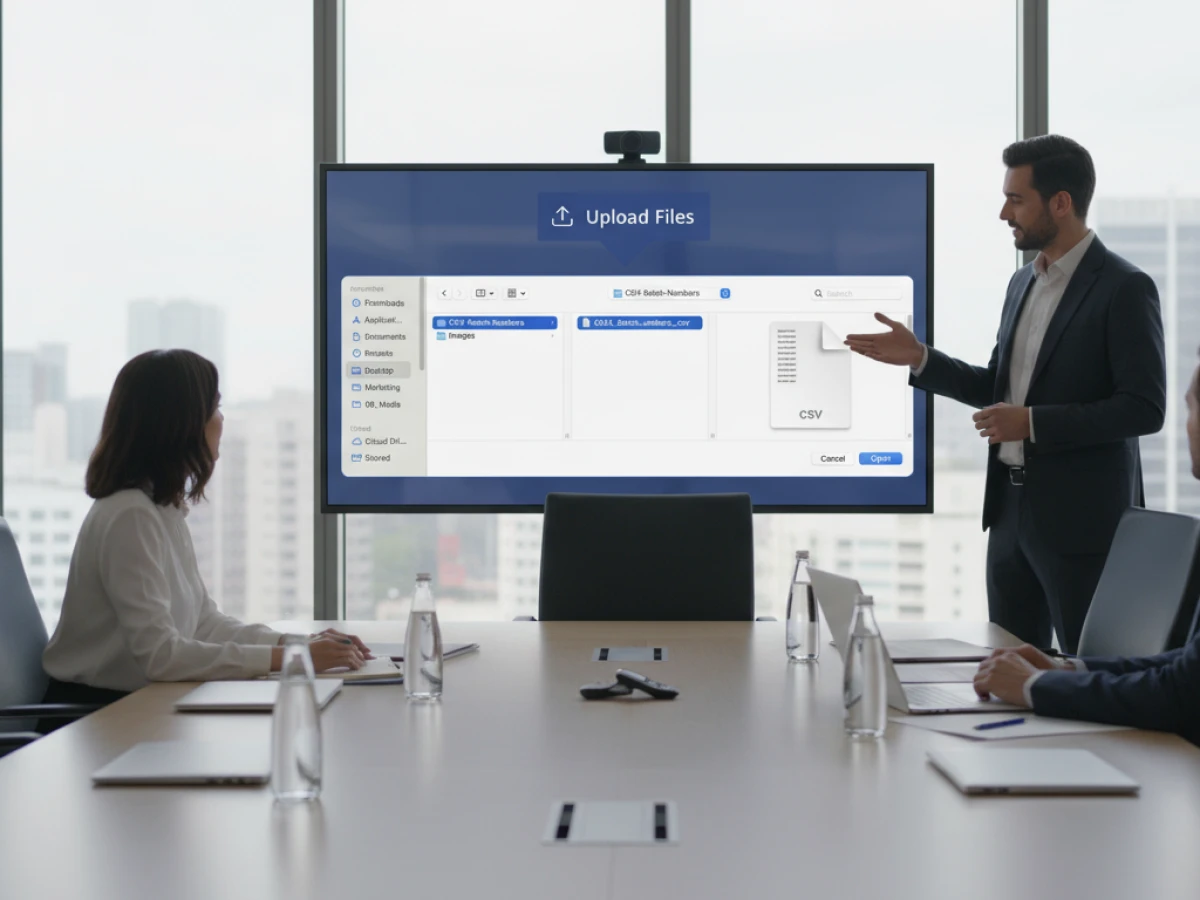
- CSV or Excel files uploaded by the user.
- API connections to CRM, ERP, or e-commerce databases.
- Dynamic data streams from online campaigns or order systems.
Each record corresponds to one packaging variant.
Real-Time Merging and Rendering
When data is uploaded, packQ’s engine merges it with the template:
- Text variables replace placeholders.
- Images or barcodes are inserted dynamically.
- Layouts adjust automatically to fit content.
The system then renders all variants as:
- PDF/VT files (industry standard for variable data print streams).
- Individual PDFs for smaller runs or proofs.
.webp)
Production Automation
Once approved, the output flows directly into the print queue. Because packQ supports the PDF/VT standard, each variant is optimized for fast RIP (Raster Image Processing) on digital presses such as HP Indigo, Xerox, or Konica Minolta.
That means no delays, no manual prepress, and no separate file handling for each version.
Real-World Examples of VDP in Action
Personalized Gift Boxes
A chocolate brand launches a holiday campaign: every customer can order a box printed with their name.
packQ generates thousands of individualized boxes automatically—each personalized with different names and messages—without manual setup.
Serialized Pharma Packaging
A pharmaceutical producer uses packQ to generate boxes with unique serial numbers and QR codes for tracking.
The VDP module connects to the company’s ERP system, ensuring that every code is unique and traceable.
QR-Enabled Promotions
An energy drink brand prints unique QR codes on every carton linking to a prize draw.
packQ automatically generates and assigns those codes, ensuring data integrity across all 3D packaging models.
Multilingual Campaigns
A cosmetics company runs a Europe-wide campaign with product boxes printed in 12 languages.
Using a single packQ template and a multilingual data set, the system outputs language-specific variants—no separate artwork files required.
Why PDF/VT Matters
PDF/VT is the international standard (ISO 16612-2) for variable data printing. It allows high-speed rendering of personalized documents and packaging on digital presses.
packQ’s VDP Engine Fully Supports PDF/VT
- Streamlined Output: All versions contained within one file.
- High Performance: Fast RIP times for thousands of records.
- Metadata Control: Each record tagged with unique identifiers.
- Error Reduction: No missing or duplicate entries.
- Compatibility: Works with any modern digital press workflow.
By using PDF/VT, packQ ensures that variable print jobs are not only fast—but also production-proof.
Automation from Start to Finish
VDP in packQ isn’t a separate tool—it’s part of a connected ecosystem.
That means automation extends beyond printing into every stage of the packaging workflow:
- Data Import: CSV or API input triggers job creation.
- Dynamic Preflight Check: Ensures fonts, colors, and images meet print specs.
- 3D Visualization: Every variant can be previewed in real time before production.
- Pricing & Quoting: Cost calculated dynamically based on quantity and complexity.
- Batch Production: Files grouped intelligently for print and finishing.
- Reporting: Output summary with all variables, serials, and assets archived.
The result: a completely touchless workflow—from personalization to finished product.
The Business Benefits of Variable Data Printing
For Printers & Converters
- New Revenue Streams: Offer personalized packaging as a premium service.
- Operational Efficiency: Handle micro-runs with the same workflow as mass production.
- Higher Equipment Utilization: Keep digital presses running continuously with small-batch jobs.
- Error Reduction: Automated data management minimizes misprints or duplication.
For Brand Owners
- Customer Engagement: Personalization increases response and retention.
- Data-Driven Marketing: Integrate campaigns with CRM and analytics.
- Faster Time-to-Market: Launch personalized campaigns in days, not weeks.
- Sustainability: Print only what’s needed, reducing waste and inventory.
For E-Commerce Platforms
- Seamless Integration: Connect online orders directly to VDP workflows.
- Scalability: Generate one-off or large-scale personalized packages effortlessly.
- Enhanced Brand Perception: Unique packaging differentiates your sellers.
- Automation: No manual intervention from data to delivery.
The Role of AI in Personalization
AI plays an increasingly important role in VDP—especially in optimizing design placement, data handling, and visual layout.
packQ uses AI-driven logic to:
- Predict text overflow and automatically resize fonts.
- Adjust contrast to ensure legibility for each data variation.
- Generate previews faster by caching shared assets across variants.
- Detect anomalies (e.g., duplicate serials or missing images).
This intelligence turns what used to be a fragile manual process into a robust automated system capable of generating millions of unique outputs confidently.
Scalability: From One to a Million
VDP in packQ scales effortlessly:
- For micro-campaigns, it generates on-demand variants in the browser.
- For enterprise runs, it produces full PDF/VT streams ready for industrial print servers.
The platform’s cloud-native architecture ensures that even massive datasets can be processed quickly and securely, whether for marketing, logistics, or manufacturing purposes.
Real-Time Preview: Visualizing Personalization
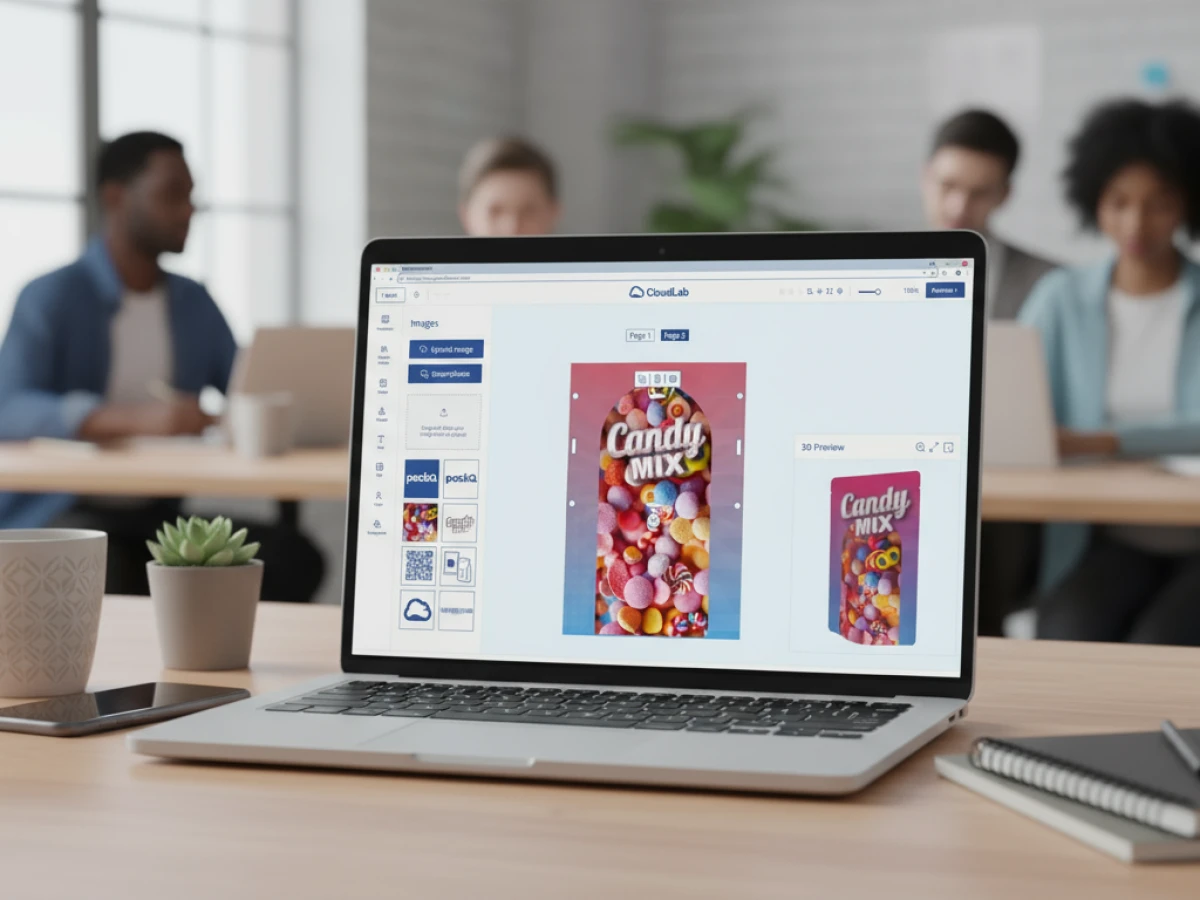
packQ integrates its 3D Packaging Designer with VDP so users can visualize variable fields live:
- See different names or barcodes appear on the box in real time.
- Rotate and inspect the personalized design in 3D before printing.
- Validate alignment and color consistency across multiple variants.
This visual verification eliminates uncertainty and ensures 100 % accuracy before production.
Compliance & Data Security
Handling variable data means handling sensitive information. packQ ensures compliance with modern data protection standards:
- GDPR-ready architecture for all EU customers.
- Secure data upload and encryption during processing.
- Automatic deletion of data after job completion.
- Audit logs for traceability and accountability.
By design, packQ treats personalization with the same care as enterprise data management.
Marketing Meets Manufacturing: A New Era of Connected Packaging
With VDP, packaging becomes more than just a container—it becomes a communication channel.
By linking variable print data with digital touchpoints, brands can create connected packaging:
- QR codes leading to personalized landing pages.
- Serialized IDs linked to loyalty programs or product authenticity checks.
- Augmented reality (AR) triggers for immersive brand experiences.
packQ enables these hybrid campaigns at industrial scale—bridging marketing creativity with production automation.
Quantifiable Results
Metrischer Traditioneller Arbeitsablauf mit PackQ VDP-Personalisierung Einrichtungszeit 1—2 Tage < 15 Minuten Fehler bei der Datenzusammenführung ~10 %< 0,5% Vorlaufzeit für Kampagnenstart 2—3 Wochen < 48 Stunden Kosten pro einzigartiges Paket Hochskalierbar und optimiertKundenbindung Moderater Anstieg von 30—60%
Diese Ergebnisse zeigen, wie Automatisierung und Standardisierung die Personalisierung von einem kostspieligen Experiment in eine profitable Strategie verwandeln.
Zukunftsausblick: Intelligente Personalisierung
Die Zukunft von VDP in PackQ geht über das Drucken hinaus — es geht um intelligentes, datengesteuertes Verpacken.
Zu den bevorstehenden Entwicklungen gehören:
- KI-generierte variable Designthemen Anpassung an Demografie oder Standort.
- Prädiktives Drucken das die Nachfrage auf der Grundlage von Kampagnendaten prognostiziert.
- Integration mit IoT-Verpackungssensoren für Rückverfolgbarkeit in Echtzeit.
- Dynamische Preisautomatisierung für personalisierte E-Commerce-Bestellungen.
Die Roadmap von PackQ ist klar: Personalisierung nicht nur möglich, sondern automatisch und intelligent zu machen.
Wichtige Erkenntnisse
- VDP en PackQ automatisiert die Massenpersonalisierung von Verpackungen, Etiketten und Displays.
- Gebaut auf PDF/VT, es garantiert Geschwindigkeit, Genauigkeit und Kompatibilität mit Digitaldruckmaschinen.
- Benutzer können Datenquellen, Designvorlagen und Vorschauvarianten verbinden — alles im Browser.
- KI sorgt für Effizienz, um Fehler zu erkennen, die Größe von Layouts zu ändern und die Leistung zu optimieren.
- Das Ergebnis: skalierbare Personalisierung, die kreativ, sicher und produktionsbereit ist.
Personalisierung ohne Grenzen
Personalisierung ist kein Marketing-Buzzword mehr — sie ist eine Produktionsrealität.
Mit Variabler Datendruck, packQ verwandelt statische Verpackungen in dynamische, individualisierte Erlebnisse. Egal, ob 10 oder 10 Millionen Kartons hergestellt werden, jede einzelne kann einzigartig, rückverfolgbar und optisch beeindruckend sein.
Durch die Kombination von Automatisierung, KI und dem globalen PDF/VT-Standard stellt PackQ personalisierte Verpackungen her schnell, erschwinglich und zuverlässig—ein echter Wegbereiter der Web-to-Pack-Ära.
Eine Vorlage. Unendliche Variationen. Unbegrenztes Potenzial. Das ist variabler Datendruck in PackQ.

.webp)


