3D Package Design Software: The Future of Digital Packaging Development
3d package design software has become a core technology in modern packaging development. As packaging production moves toward shorter runs, personalization, and digital workflows, companies require tools that connect structural design, visualization, and production automation. Advanced product packaging design software and structural packaging software allow teams to design packaging in real time, validate print data, and generate production-ready outputs. Platforms like packQ combine real-time 3D visualization, ECMA and FEFCO standards, AI-assisted design tools, and web-to-pack automation to transform how packaging is developed and produced.
The Role of 3D Package Design Software in Modern Packaging Development
3D package design software has fundamentally changed how packaging concepts move from idea to production. In the past, packaging development relied heavily on manual processes and fragmented tools. Designers created artwork in one application, packaging engineers developed structural concepts in CAD systems, and prepress teams prepared production files separately. Each stage required communication between departments, often involving multiple revisions and physical prototypes.
Today’s packaging market demands a different approach. Product lifecycles are shorter, brands launch more variations, and marketing teams expect rapid turnaround times. Packaging is no longer a static element of a product; it has become an active part of branding and customer experience.
As a result, packaging workflows must be faster, more collaborative, and more digitally integrated. This is where product packaging design software and advanced 3D design environments play a central role. These systems allow teams to design packaging structures and visualize finished products simultaneously. Instead of imagining how a flat dieline will translate into a physical package, designers and engineers can see a real-time three-dimensional representation.
This shift dramatically improves collaboration between teams. Marketing departments can evaluate visual design while packaging engineers validate structural feasibility. Decision-makers can review packaging concepts without waiting for physical prototypes. The entire development cycle becomes faster and more transparent.
Modern solutions go beyond visualization. They connect design with manufacturing data, enabling the automatic generation of production-ready files. Platforms like packQ extend this concept further by integrating web-to-pack workflows, where packaging configuration, design, and ordering can occur within the same digital environment. According to CloudLab, packQ digitizes the entire packaging development process from configuration to production-ready output in a browser-based system.
For packaging manufacturers and brand owners alike, 3D package design software has therefore become an essential component of digital packaging infrastructure.
Why Packaging Teams Are Moving Toward 3D Structural Packaging Software
The packaging industry has traditionally depended on specialized engineering tools for structural design. These CAD-based systems were powerful but often difficult for non-engineers to use. Marketing teams, brand managers, and product owners frequently struggled to visualize packaging concepts without extensive technical support.
Structural packaging software with real-time 3D capabilities has solved this challenge by making packaging design more accessible. Instead of relying exclusively on engineering drawings or flat dielines, users can interact with packaging models directly in three dimensions.
The impact of this shift goes beyond visualization. Three-dimensional design environments create a shared language between different teams involved in packaging development. Designers focus on graphics and branding elements, engineers concentrate on structural stability and material efficiency, and production teams evaluate manufacturability.
When these perspectives converge within the same software platform, the packaging development process becomes significantly more efficient.
Another important factor is the growing complexity of packaging portfolios. Many brands manage dozens or even hundreds of packaging variants across different markets, product sizes, and promotional campaigns. Managing this level of variation through manual processes is increasingly impractical.
Advanced product packaging design software addresses this challenge through parameterized design models. Instead of creating each packaging structure individually, users can adjust predefined templates. Dimensions, materials, and structural features update automatically, ensuring that the resulting design remains technically valid.
This approach allows companies to scale packaging development without dramatically increasing engineering workload. Packaging teams can respond quickly to new product launches or marketing initiatives while maintaining consistent structural standards.
The transition toward digital packaging workflows therefore depends heavily on robust 3d package design softwarethat can integrate structural engineering, visual design, and production preparation within one environment.

How the Best 3D Software for Packaging Design Enables Real-Time Visualization
One of the most transformative features of modern 3D software for packaging design is real-time visualization. In traditional packaging workflows, designers worked with flat layouts that represented the unfolded structure of a box or carton. While experienced engineers could interpret these drawings easily, many stakeholders struggled to imagine how the finished product would appear.
Real-time 3D visualization removes this barrier by translating structural data directly into interactive models. As designers modify artwork or structural dimensions, the 3D representation updates instantly.
This capability creates several important advantages for packaging development:
- Design clarity: Stakeholders can evaluate packaging concepts visually rather than interpreting technical drawings.
- Faster approvals: Marketing and product teams can approve designs directly within the software environment.
- Reduced prototyping: Digital previews reduce the need for multiple physical samples.
Modern 3d package design software also simulates material properties and printing effects. Designers can evaluate how colors, textures, and finishing options appear on the final packaging surface. This level of detail improves the accuracy of digital prototypes and reduces the risk of unexpected results during production.
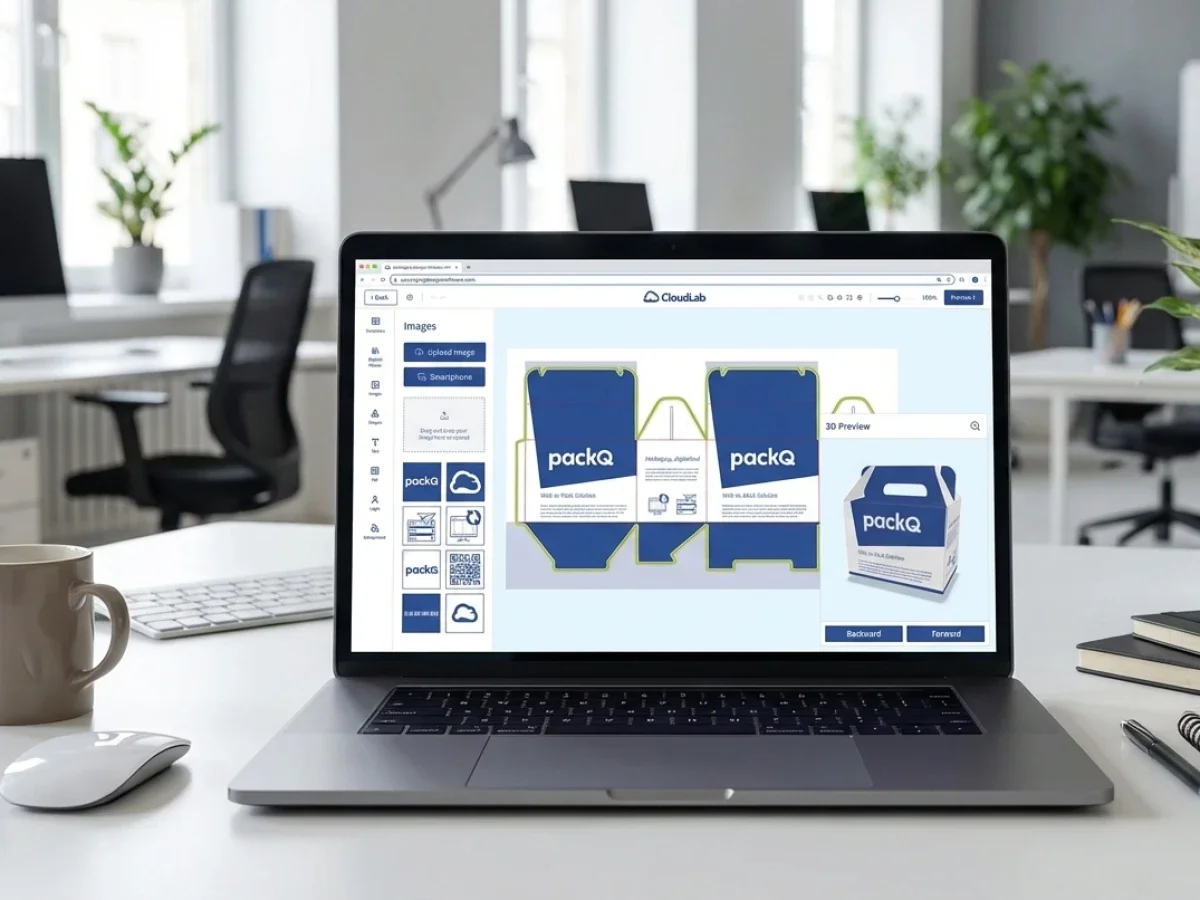
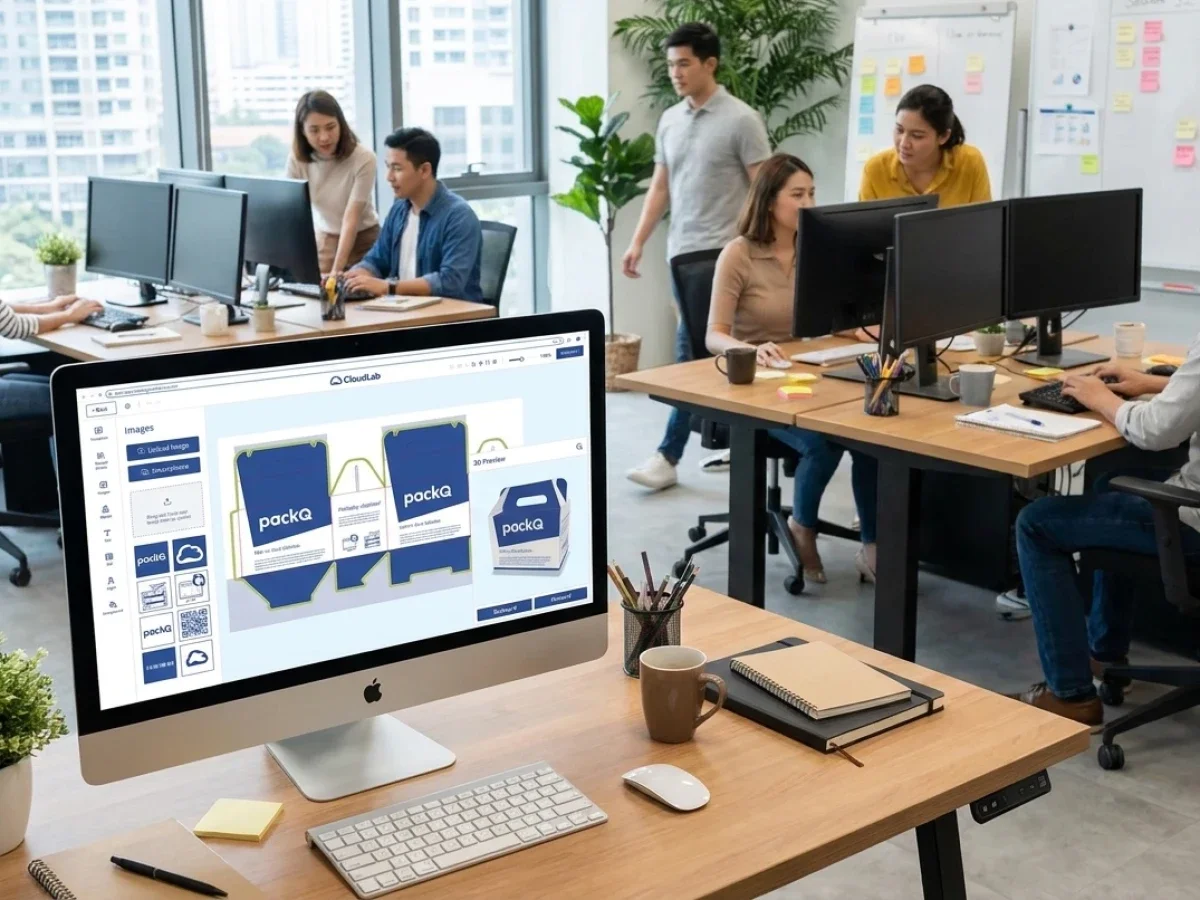
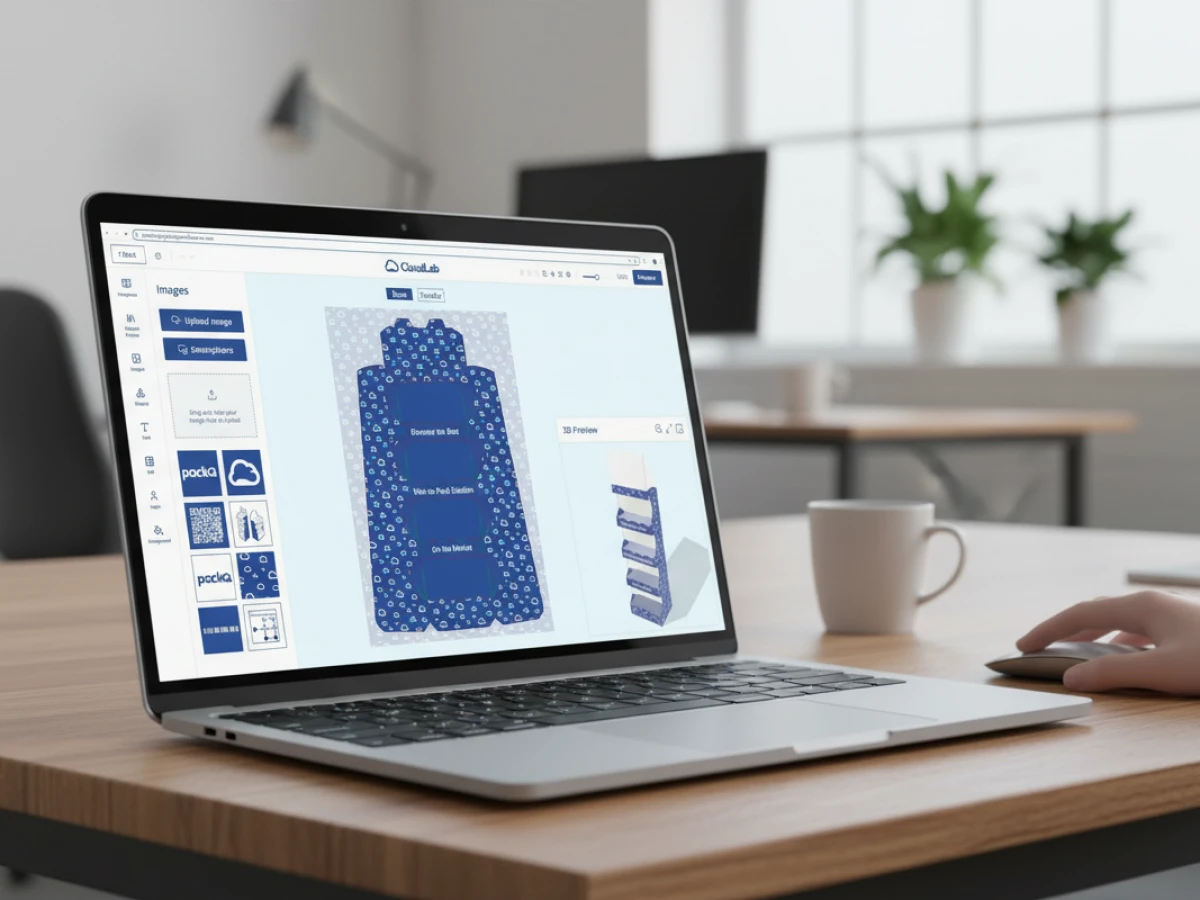
packQ incorporates a browser-based 3D Packaging Designer that synchronizes structural layouts with graphical artwork in real time. The system displays both the 2D design layout and the finished 3D packaging model simultaneously, allowing users to evaluate how their design will look once assembled.
PackQ – Produktbeschreibung und…
Because the visualization is based on actual structural data rather than simple mockups, the preview accurately represents the final product. This ensures that the approved design corresponds precisely to the packaging that will be produced.
For organizations searching for the best 3d software for packaging design, this integration between structural design and visualization is a defining feature.
Integrating Product Packaging Design Software with Production Workflows
While visualization is a critical capability, the true value of modern product packaging design software lies in its ability to connect design with production.
Packaging development does not end when a design is approved. The next step involves preparing files that can be used by printing presses, die-cutting machines, and finishing equipment. Historically, this stage required manual file preparation by prepress specialists.
Advanced packaging platforms now automate many of these tasks. Structural parameters defined during the design stage can automatically generate production files such as die-cutting layouts, print-ready PDFs, and assembly instructions.
This automation significantly reduces the time required to move from design approval to manufacturing.
packQ demonstrates how this integration works in practice. The platform generates production-ready PDF outputsdirectly from the online design environment. These files include structural outlines, printing layouts, and technical specifications required for manufacturing.
The system also integrates a Dynamic Preflight Check, which analyzes uploaded artwork and verifies that it meets production requirements. Resolution, color modes, bleed margins, and other parameters are evaluated automatically.
If potential issues are detected, the user receives immediate feedback and can correct the design before finalizing the order. This prevents many of the errors that traditionally caused delays during the prepress stage.
Another key capability is dynamic pricing calculation. Packaging costs depend on factors such as dimensions, materials, print processes, and order quantities. packQ calculates these parameters in real time while users configure their packaging design, allowing customers to evaluate different options instantly.
By combining structural design, visualization, and production preparation within one platform, 3d package design software transforms packaging development into a streamlined digital workflow.
Standardization Through ECMA and FEFCO in Structural Packaging Software
Packaging design must balance creativity with engineering reliability. While brands seek distinctive packaging designs, manufacturers must ensure that structures remain stable, efficient, and compatible with production processes.
This balance is achieved through industry standards such as ECMA and FEFCO. These standards classify widely used packaging structures, allowing designers and engineers to reference proven design concepts.
Modern structural packaging software incorporates these standards directly into its design libraries. Instead of starting from scratch, users can select predefined packaging types and adjust them according to their requirements.
packQ integrates a large library of packaging templates based on ECMA and FEFCO standards. The system includes approximately 120 folding carton designs and around 290 corrugated packaging structures.
These templates function as parametric models. When a user modifies dimensions such as length, width, or height, the structural layout recalculates automatically. Flaps, fold lines, and glue areas adjust accordingly.
The integration of ECMA and FEFCO templates offers several advantages for packaging manufacturers. First, it ensures that packaging structures follow proven engineering principles. Second, it accelerates the design process by eliminating the need to create new structures for every project.
Finally, standardization improves communication between stakeholders. Packaging engineers, production managers, and suppliers can reference the same structural codes, reducing the risk of misunderstandings.
For organizations implementing 3d package design software, the integration of structural standards is therefore essential for maintaining production reliability.
Web-to-Pack Platforms Extend the Power of 3D Package Design Software
As packaging development becomes more digital, companies increasingly integrate 3d package design software into web-based platforms. This approach, known as web-to-pack, allows packaging configuration and ordering to occur through online interfaces.
In a web-to-pack environment, customers can design and customize packaging products directly within a browser. Structural parameters, artwork uploads, and finishing options are selected interactively. The system automatically generates the corresponding production data.
This model transforms packaging from a manual service into a scalable digital offering.
packQ exemplifies this approach through its API-first architecture, which allows the platform to integrate with e-commerce systems, ERP platforms, and production management tools. Companies can embed packaging configuration tools into online stores or customer portals, creating seamless ordering experiences.
Variable Data Printing further expands the possibilities of web-to-pack workflows. packQ supports PDF/VT-based Variable Data Printing, allowing packaging designs to include personalized information such as names, serial numbers, or campaign-specific graphics.
This capability enables batch-size-one production, where each packaging unit can contain unique content while still being produced efficiently.
The platform also includes an AI Designer Suite that simplifies common design tasks. Features such as vectorization, image enhancement through Crispify technology, and automatic background removal help users prepare print-ready artwork without specialized design software.
By combining these technologies within a web-based environment, packQ illustrates how 3D software for packaging design can evolve into a comprehensive digital packaging ecosystem.
3D package design software has transformed how packaging is developed, visualized, and produced
3d package design software has become a central technology for companies seeking to modernize their packaging workflows. As product portfolios expand and market expectations accelerate, traditional development processes are no longer sufficient.
Advanced product packaging design software and structural packaging software enable packaging teams to design, visualize, and validate packaging concepts within integrated digital environments. Real-time 3D visualization improves collaboration and speeds up approvals, while automated production preparation ensures that designs move quickly into manufacturing.
Platforms like packQ demonstrate how these capabilities can be extended through web-to-pack technologies. By combining a browser-based 3D packaging designer, ECMA and FEFCO structural templates, AI-assisted artwork preparation, variable data printing, and automated preflight checks, the platform digitizes the entire packaging development process.
For packaging manufacturers, brand owners, e-commerce platforms, and technology teams, adopting advanced 3d package design software is no longer optional. With packQ it has become a strategic requirement for operating efficiently in a market defined by customization, speed, and digital transformation.