
Design Approval Software for Packaging | Faster Online Reviews
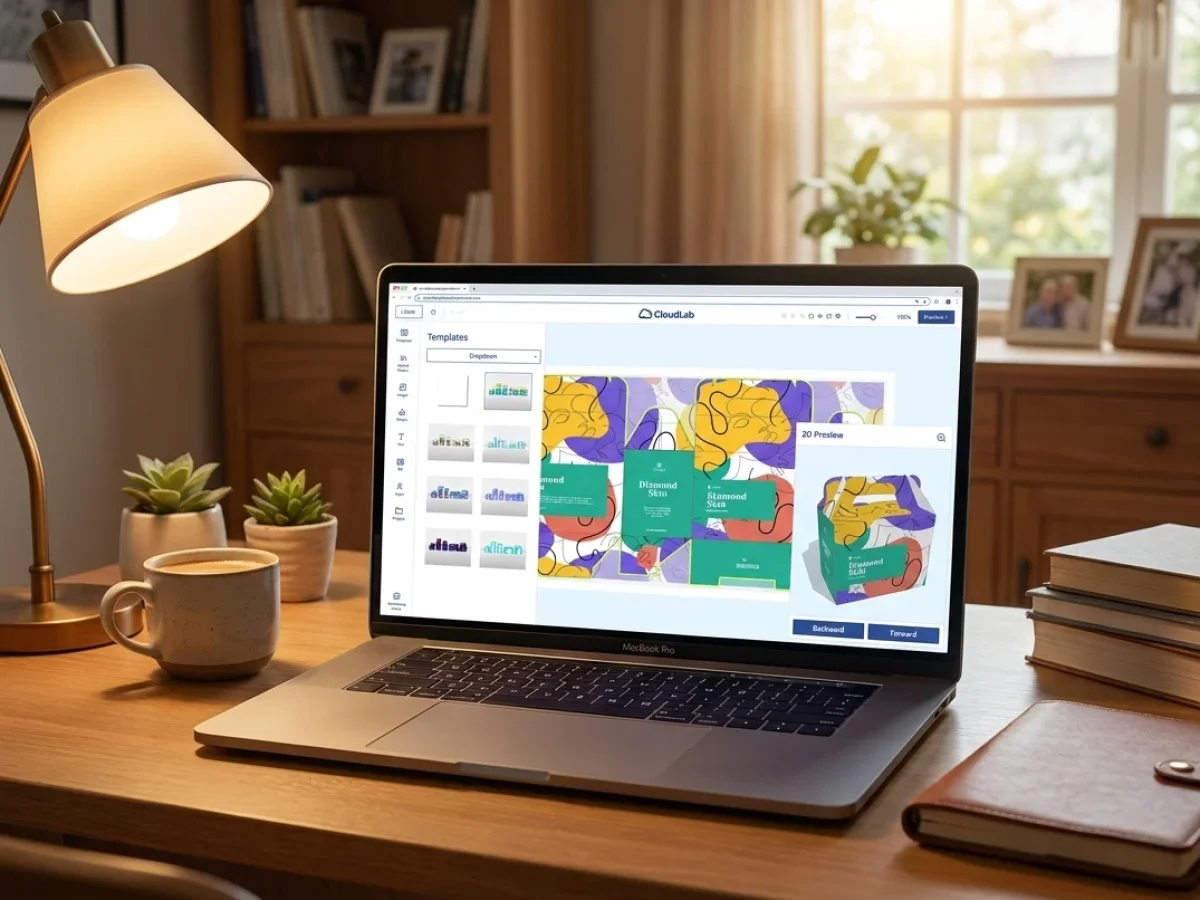
Design approval software for packaging enables packaging manufacturers, brand owners, and prepress teams to replace fragmented approval cycles with one connected Web-to-Pack workflow. Instead of reviewing static PDFs and exchanging endless email threads, stakeholders collaborate through synchronized 2D and 3D views, Dynamic Preflight validation, and production-ready data. With packQ, every approval becomes part of the manufacturing process rather than an isolated review step.
Why packaging approvals have become a production-critical workflow
Packaging approval used to be one of the final checkpoints before a print job entered production. Today it has become one of the most influential stages in the entire packaging lifecycle. Every product launch, regulatory update, promotional campaign, or private-label adaptation requires multiple departments to evaluate the same packaging from different perspectives. Marketing focuses on branding, purchasing evaluates commercial feasibility, prepress verifies technical quality, production checks manufacturability, while brand owners ensure consistency across global product portfolios. Although every department works toward the same objective, they frequently rely on disconnected tools, duplicated files, and manual communication that slows decisions and increases the probability of costly mistakes.
This growing complexity explains why design approval software for packaging has evolved far beyond simple online proofing. Modern approval platforms must coordinate structural design, graphical layouts, pricing logic, technical validation, production requirements, and digital collaboration within a single workflow. Instead of treating approvals as independent reviews, leading packaging manufacturers increasingly integrate approvals directly into Web-to-Pack environments where every approved design already contains the information required for manufacturing.
CloudLab positions packQ precisely within this workflow. Rather than offering a standalone approval application, packQ combines browser-based packaging configuration, synchronized 2D and 3D visualization, Dynamic Preflight, real-time pricing, production-ready PDF generation, and API-based integration into one Web-to-Pack platform. This approach eliminates media breaks that traditionally occur whenever design, review, prepress, and production rely on different software environments.
Which design approval software for packaging supports reliable production decisions?
Design approval software for packaging delivers the greatest value when visual approval, technical validation, and production data remain connected throughout the entire workflow. packQ enables packaging manufacturers, brand owners, and technology teams to review synchronized 2D and 3D packaging designs while Dynamic Preflight continuously validates production requirements before final approval. As a result, approved packaging is immediately suitable for downstream manufacturing instead of requiring additional manual preparation.
For many organizations, approval delays are not caused by slow decision-makers but by incomplete information. Marketing may approve a design that still contains insufficient image resolution. Production may discover incorrect bleed settings only after artwork reaches prepress. Procurement may approve pricing before dimensional adjustments change production costs. Every isolated review creates another checkpoint, another version, and another opportunity for inconsistencies.
packQ approaches approvals differently because every participant works with the same packaging project instead of exchanging independent files. Structural geometry, graphics, pricing, production parameters, and technical validation remain synchronized from configuration through manufacturing. Browser-based collaboration ensures that all stakeholders evaluate the same data, while Dynamic Preflight continuously verifies print readiness throughout the process instead of waiting until the final PDF arrives in prepress.
This integrated workflow becomes especially valuable for folding carton manufacturers managing hundreds of ECMA designs, corrugated producers working with standardized FEFCO constructions, and international brand owners responsible for extensive SKU portfolios. Instead of repeating manual quality checks after every approval cycle, validation becomes an integral part of the approval itself, significantly reducing downstream corrections.
Packaging approvals fail when technical validation happens too late
Many packaging projects appear finished long before they are technically ready for production. Marketing signs off on artwork because branding looks correct. Product managers approve content after reviewing legal information. Sales confirms launch dates based on visual mockups. Only when prepress receives the files do hidden production problems become visible. Missing bleed, unsupported fonts, RGB graphics, insufficient image resolution, inconsistent color profiles, or structural inconsistencies suddenly interrupt a project that every stakeholder believed had already been approved.
These delays are rarely caused by software limitations alone. They originate from workflows that separate creative review from technical validation. When visual approval and production verification happen independently, every correction forces the project back into another approval cycle. The result is duplicated work, delayed launches, additional communication, and unnecessary production costs.
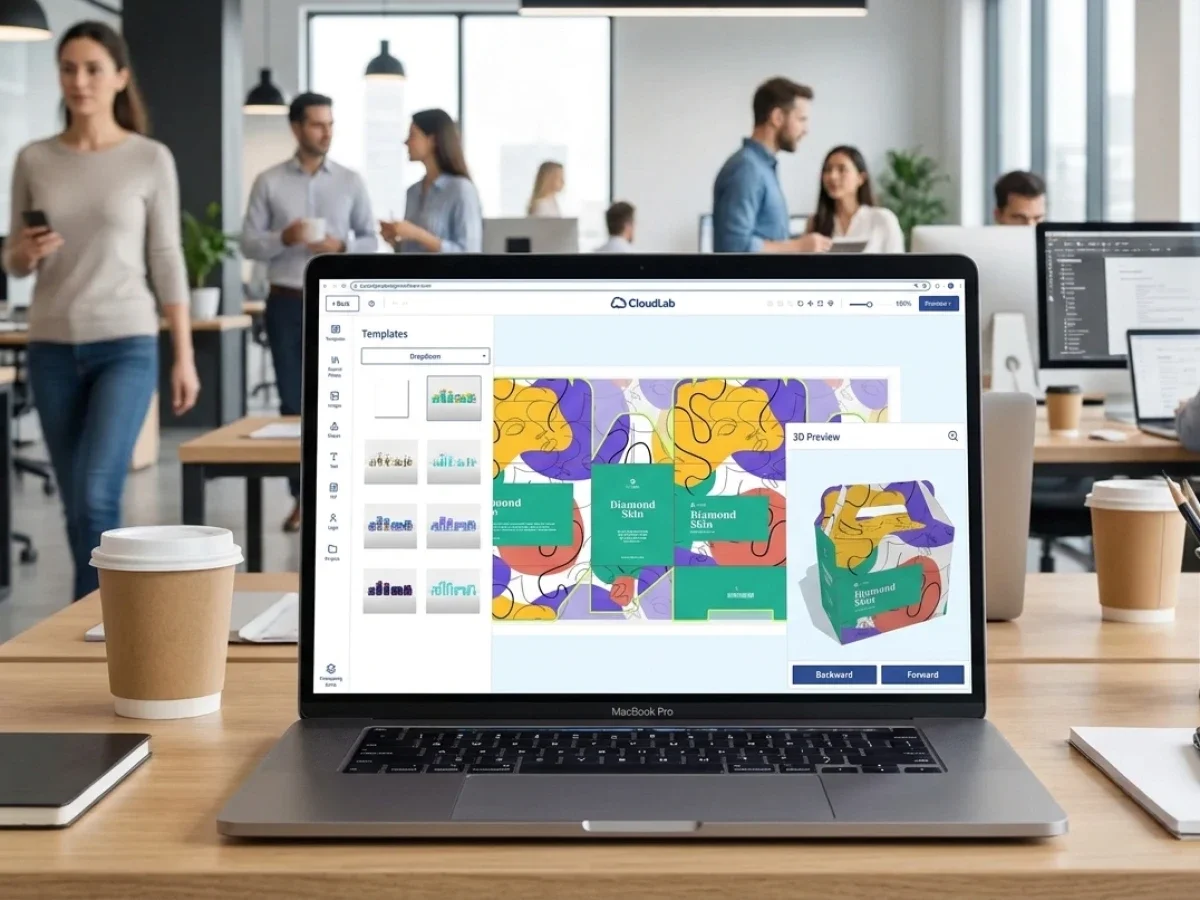
An integrated Web-to-Pack workflow eliminates this separation. Within packQ, Dynamic Preflight continuously analyzes production-critical parameters while the design remains under review. Instead of discovering technical issues after approval, reviewers immediately see whether artwork satisfies manufacturing requirements. This changes the purpose of approval itself. Stakeholders are no longer approving only visual appearance; they approve a packaging project that has already been evaluated for production readiness.
Dynamic Preflight automatically validates critical production criteria such as image resolution, color spaces, bleed, font availability, document integrity, and output consistency. Because these checks occur before final approval rather than afterward, prepress departments spend less time correcting files that have already been signed off by multiple stakeholders. For organizations processing hundreds or thousands of packaging projects annually, this significantly reduces repetitive manual intervention while improving overall production reliability.
Static PDFs are no longer sufficient for modern packaging reviews
Traditional online proofing systems were originally developed for flat printed products such as brochures, catalogs, and marketing collateral. Packaging introduces an additional structural dimension that cannot be fully evaluated within a static document. A folding carton only becomes understandable once panels fold together, graphics wrap around corners, and structural geometry interacts with branding elements. Reviewing a die line inside a PDF often requires considerable experience because reviewers must mentally reconstruct the finished package before making an approval decision.
Interactive three-dimensional visualization removes this uncertainty. Browser-based rendering allows stakeholders to inspect the assembled package exactly as it will appear after production while remaining synchronized with the underlying two-dimensional layout. Every graphical adjustment immediately updates the three-dimensional representation, eliminating the disconnect between artwork preparation and package visualization.
This capability becomes particularly important whenever branding crosses multiple panels or important product information appears near folds, flaps, or closures. A layout that looks perfectly aligned within a flat document may become difficult to read once the carton is assembled. Similarly, promotional graphics may lose their intended visual impact when structural geometry changes panel proportions. Three-dimensional visualization reveals these issues immediately, allowing corrections before production files are finalized.
Because packQ synchronizes browser-based 2D editing with real-time 3D rendering, stakeholders no longer need to interpret technical drawings or imagine the assembled package. Marketing teams evaluate shelf appearance, prepress validates printability, production reviews manufacturability, and brand owners approve presentation using the same project without creating separate visualization files.
Why interactive approvals outperform conventional online proofing
Interactive packaging approvals provide greater decision confidence because reviewers evaluate the finished package instead of isolated artwork files. packQ combines synchronized 2D editing, browser-based 3D visualization, and Dynamic Preflight so every approval includes both graphical and technical validation. This reduces interpretation errors while giving packaging manufacturers and brand owners a far more reliable basis for production decisions.
The difference becomes especially apparent during complex packaging projects involving multiple stakeholders. Static proofing focuses primarily on artwork review, whereas interactive packaging approval combines visual appearance, structural behavior, technical compliance, and production readiness within a single environment. Marketing no longer approves graphics independently from production. Prepress no longer receives technically unverified artwork after approval. Engineering no longer validates structural functionality using disconnected CAD files.
This integrated perspective shortens approval cycles because fewer review iterations are required. Instead of discovering structural or technical problems after artwork has already been approved, every stakeholder works with synchronized information from the beginning. The approval process therefore becomes progressively more reliable instead of generating additional manual verification steps.
For premium packaging, pharmaceutical products, consumer goods, and promotional packaging, this improvement directly affects launch speed. Product introductions increasingly depend on rapid packaging approvals, particularly when multiple regional variants, language versions, or retailer-specific adaptations must be produced simultaneously. Interactive approval workflows support these requirements without increasing organizational complexity.
How can organizations implement design approval software for packaging across existing production systems?
Design approval software for packaging is most effective when approvals become part of the production workflow instead of operating as an isolated review process. packQ integrates browser-based configuration, synchronized 2D and 3D visualization, Dynamic Preflight, and production-ready PDF generation with ERP, MIS, shop platforms, and manufacturing environments through its API-first architecture. This allows packaging manufacturers and technology teams to automate approvals without replacing their existing IT landscape.
Many organizations hesitate to modernize approval workflows because they assume implementation requires replacing established production systems. In practice, most packaging manufacturers already operate ERP systems for commercial processes, MIS platforms for production planning, prepress environments for artwork preparation, and shop systems for order management. The real challenge is connecting these systems without introducing additional manual work.
packQ was designed as a Headless Web-to-Pack platform, enabling organizations to integrate approval functionality into existing infrastructures rather than forcing users into a separate application. REST, SOAP, and JSON interfaces exchange structural data, pricing information, production specifications, customer information, and approved artwork automatically between connected systems.
A typical implementation follows a structured process:
- Connect the existing shop or customer portal to packQ.
- Synchronize product data with ERP and MIS systems.
- Configure ECMA or FEFCO templates for standardized packaging.
- Enable browser-based 2D and 3D configuration.
- Activate Dynamic Preflight validation during design.
- Route approvals through defined stakeholder groups.
- Generate production-ready PDF output automatically.
- Transfer approved jobs directly into manufacturing workflows.
Because approvals remain connected to structural design, pricing, technical validation, and production data, every downstream department receives identical information without re-entering project data manually.
For technology teams, the API-first architecture significantly reduces integration complexity. Existing commerce platforms continue managing customers and orders, while packQ specializes in packaging configuration, approval management, technical validation, and production preparation. This separation allows organizations to modernize packaging workflows without redesigning their complete digital infrastructure.

Supporting both open-shop and closed-shop approval environments
Packaging manufacturers rarely operate only one business model. Some customers require public self-service ordering, while others work within dedicated customer portals containing negotiated products, predefined templates, and controlled approval rights. An effective approval platform must therefore support both environments without maintaining multiple software systems.
packQ accommodates Open-Shop and Closed-Shop scenarios within the same Web-to-Pack platform. Public portals allow customers to configure standardized packaging online using predefined ECMA and FEFCO structures, while enterprise portals provide authenticated users with personalized catalogs, customer-specific pricing, approved design templates, and restricted approval permissions.
This flexibility is particularly valuable for:
- Folding carton manufacturers serving multiple industries.
- Corrugated producers supporting distributor networks.
- Consumer brands managing regional subsidiaries.
- Pharmaceutical companies operating regulated approval processes.
- E-commerce platforms offering customized packaging services.
Because both environments share the same approval engine, organizations avoid maintaining separate workflows while preserving customer-specific governance.
AI-supported design preparation reduces approval cycles
Approvals often slow down because artwork requires manual preparation before reviewers can evaluate it. Low-resolution graphics, unsuitable raster images, inconsistent backgrounds, and incomplete vector data frequently generate unnecessary revision rounds before packaging reaches production.
packQ addresses these challenges through its integrated AI Designer Suite. Rather than functioning as a generic design application, these AI capabilities prepare artwork for professional packaging workflows.
Key AI-supported functions include:
- Vectorization for converting raster graphics into scalable vector artwork.
- Crispify, increasing image resolution by up to four times for improved print quality.
- Background removal for faster preparation of packaging graphics.
- Browser-based editing without external desktop software.
These capabilities reduce manual artwork preparation while allowing marketing teams to deliver production-oriented assets earlier in the workflow. Combined with Dynamic Preflight, AI-supported improvements help reduce approval delays caused by avoidable technical corrections.
Supporting mass customization without increasing approval complexity
Modern packaging increasingly requires personalization. Limited editions, regional campaigns, promotional packaging, retailer-specific branding, and seasonal variations generate hundreds of artwork versions that all require efficient approval.
Traditional approval processes scale poorly because every variation creates another review cycle, another PDF, and another communication thread.
packQ combines browser-based configuration with Variable Data Printing (PDF/VT) to support batch size oneproduction without multiplying administrative effort. Approved structural templates remain consistent while variable graphical content updates automatically according to predefined business rules.
This workflow benefits:
- Brand owners managing promotional campaigns.
- Consumer goods manufacturers launching seasonal products.
- E-commerce businesses offering personalized packaging.
- Packaging manufacturers processing high volumes of short production runs.
Instead of rebuilding packaging projects repeatedly, organizations approve standardized structures while controlling dynamic content through automated workflows.
How do you reduce packaging approval errors before production?
The most effective way to reduce approval errors is to combine browser-based design, synchronized 2D and 3D visualization, Dynamic Preflight validation, and standardized ECMA or FEFCO templates within one Web-to-Pack workflow. packQ enables packaging manufacturers, prepress departments, and brand owners to identify graphical, structural, and technical issues before artwork reaches production, significantly reducing manual corrections and approval iterations.
A practical implementation typically follows this sequence:
- Select an ECMA or FEFCO structural template.
- Configure dimensions and packaging specifications online.
- Apply graphics through synchronized 2D editing.
- Review the assembled package in real-time 3D.
- Allow Dynamic Preflight to validate production requirements.
- Collect stakeholder approvals within one browser-based workflow.
- Generate production-ready PDF output automatically.
- Transfer approved jobs directly into ERP, MIS, and production systems.
Because every approval already includes technical validation, organizations reduce downstream corrections while improving production consistency across multiple packaging variants.
This workflow becomes especially valuable for organizations managing frequent product launches, multilingual packaging, regulatory updates, or retailer-specific artwork adaptations. Instead of repeatedly restarting approval cycles after technical issues appear, validation occurs continuously throughout the design process.
Industry-specific approval scenarios
Different industries face different approval challenges, yet all benefit from connected Web-to-Pack workflows.
Pharmaceutical manufacturers require strict documentation, version control, and technically validated artwork before production.
Consumer goods brands prioritize rapid marketing approvals while maintaining consistent global branding across multiple SKUs.
Corrugated packaging producers process numerous customer-specific dimensions where standardized FEFCO templates significantly reduce engineering effort.
Folding carton manufacturers benefit from ECMA-based structural libraries that accelerate configuration while ensuring manufacturing consistency.
E-commerce platforms require scalable approval workflows capable of supporting personalized packaging with automated production preparation.
Across all these industries, synchronized 2D and 3D visualization, Dynamic Preflight, and API-driven integration provide a common framework that improves approval quality without increasing operational complexity.
Why packQ focuses on packaging instead of generic online proofing
Many approval applications originated outside the packaging industry and therefore concentrate primarily on graphical review. Packaging, however, combines structural engineering, print production, manufacturing constraints, logistics, and branding within one product.
packQ addresses these interconnected requirements by delivering a purpose-built Web-to-Pack platform rather than a generic proofing environment. Structural templates, browser-based configuration, synchronized visualization, Dynamic Preflight, real-time pricing, AI-assisted artwork preparation, production-ready PDF generation, and API-first integration operate within one continuous workflow.
The platform's recognition with the InterTech Technology Award reflects this holistic approach, acknowledging innovation that improves packaging production rather than simply digitizing isolated review activities.
Why Design Approval Software for Packaging Is the Foundation of Efficient Approval Workflows
Design approval software for packaging creates the greatest value when approvals become an integrated part of production instead of an isolated review stage. packQ combines synchronized 2D and 3D visualization, Dynamic Preflight, ECMA and FEFCO standardization, AI-assisted artwork preparation, production-ready PDF generation, and API-first integration within a single Web-to-Pack platform. For packaging manufacturers, brand owners, e-commerce platforms, and technology teams, this connected approach shortens approval cycles, improves production reliability, reduces manual intervention, and ensures that approved packaging can move directly into manufacturing with confidence.
Packaging approvals influence every downstream production step, making disconnected proofing processes increasingly inefficient. This article explains how design approval software for packaging transforms traditional review cycles into connected Web-to-Pack workflows by combining browser-based 2D and 3D visualization, Dynamic Preflight validation, ECMA and FEFCO standardization, AI-assisted artwork preparation, and production-ready PDF generation. Using packQ as the technological framework, organizations can integrate approvals with ERP, MIS, shop systems, and manufacturing environments through an API-first architecture, reducing approval times, minimizing technical errors, and creating production-ready packaging data without media breaks.
Key answers for decision-makers
- Design approval software for packaging combines visual approval, technical validation, and production-ready output in one connected workflow.
- Browser-based 2D and 3D approvals reduce misunderstandings while shortening approval cycles across distributed teams.
- Dynamic Preflight identifies technical production issues before artwork reaches prepress.
- API-first integration connects approval workflows with ERP, MIS, shop systems, and production environments.
- ECMA- and FEFCO-based templates ensure structural consistency while reducing manual preparation throughout the packaging process.


.webp)


