Dynamic Preflight Check in Web-to-Pack with packQ

This article explains how packQ implements a Dynamic Preflight Check as a core control mechanism in Web-to-Pack. It shows how automated validation, real-time feedback, and API-first integration prevent production errors before orders enter manufacturing. For decision-makers, the Dynamic Preflight Check becomes a strategic lever for efficiency, quality, and scalability.
Why a Dynamic Preflight Check Is Critical in Web-to-Pack
A Dynamic Preflight Check is not a safety net at the end of a workflow. In Web-to-Pack, it is a controlling instance that determines whether automation is possible at all. Packaging products combine structure, material, graphics, and data variability, making manual validation economically unsustainable.
packQ approaches preflight as an integrated, real-time process, not a downstream correction step. Validation happens during configuration, not after submission. This shifts quality control upstream and removes friction from production.
For industrial packaging environments, this approach is essential. Without a Dynamic Preflight Check, every automated process eventually collapses into manual exception handling.
packQ as a Web-to-Pack Platform Built for Validation
packQ is developed by CloudLab and positioned as a premium Web-to-Pack platform for professional packaging workflows. It is purpose-built for structural packaging, not adapted from Web-to-Print systems.
The platform has received the InterTech Technology Award, reflecting its technical depth and relevance for industrial use cases. This recognition is closely tied to packQ’s ability to automate complex processes without sacrificing production safety.
Validation logic is deeply embedded in packQ’s architecture. The Dynamic Preflight Check is not a feature toggle, but a foundational component of every order flow.
What Makes a Dynamic Preflight Check Truly “Dynamic”
Traditional preflight checks operate statically. Files are uploaded, analyzed, and either accepted or rejected. In Web-to-Pack, this approach fails because configuration parameters change continuously.
A Dynamic Preflight Check reacts in real time. Every change to dimensions, structure, artwork, or data triggers validation rules instantly. Errors are flagged while the user is still configuring the product.
This dynamic behavior ensures that only producible configurations exist. Invalid states are never submitted, which fundamentally changes how automation can be scaled.
Core Validation Dimensions in packQ
The Dynamic Preflight Check in packQ validates all production-critical parameters. This includes technical, structural, and data-related aspects.
Key validation dimensions include:
- Resolution and image quality aligned with print requirements
- Color modes and profiles suitable for packaging production
- Bleed, trim, and layout constraints based on ECMA/FEFCO structures
Fonts, overprints, and embedded assets are checked automatically. This ensures that output files meet production standards without manual intervention.
ECMA and FEFCO as Structural Validation Anchors
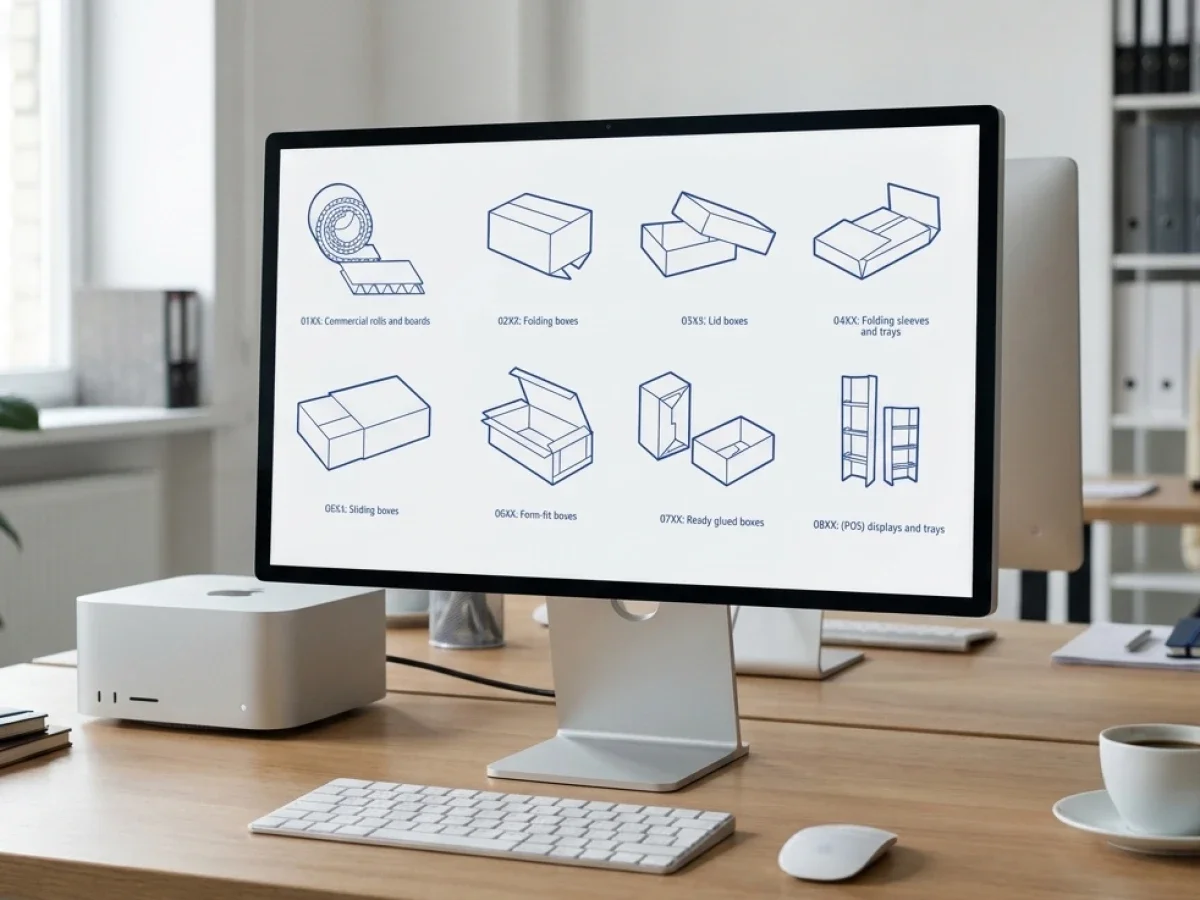
packQ integrates an extensive ECMA and FEFCO library directly into its logic. This includes approximately 120 ECMA standards, 290 FEFCO standards, and around 50 POS display structures.
The Dynamic Preflight Check validates configurations against these standards in real time. Structural rules define what is possible before artwork is even considered.
This approach eliminates an entire class of errors. Non-producible structures are excluded at the source, protecting engineering and production teams from downstream corrections.
Real-Time Feedback Instead of Post-Order Rejection
A critical advantage of packQ’s Dynamic Preflight Check is immediate feedback. Users do not submit an order only to receive an error hours later. Validation happens instantly.
Errors are contextual and actionable. Users see exactly which parameter violates production rules and how to fix it. This shortens approval cycles and improves user confidence.
For B2B buyers and brand teams, this transparency is essential. It reduces back-and-forth communication and accelerates time to production.
Integration with the 3D Packaging Designer
packQ’s browser-based 3D packaging designer is tightly coupled with the preflight logic. The 3D view is not cosmetic. It reflects validated geometry and layout constraints.
Every change in the 3D environment is validated against production rules. The Dynamic Preflight Check ensures that what users see is what can actually be produced.
This integration enables faster approvals through visual certainty. Stakeholders sign off on designs that are already preflight-safe.
AI Support as Part of the Preflight Process
The AI Designer Suite in packQ supports the preflight process directly. Tools like vectorization, Crispify 4×, and background removal are not isolated design aids.
They are integrated into the validation workflow. AI-enhanced assets are checked immediately for resolution, scalability, and print readiness.
This combination of AI and preflight logic reduces dependency on external design tools. It also ensures consistent quality across users and organizations.
Variable Data Printing and Preflight at Scale
Variable Data Printing introduces additional complexity. Every data-driven variation must be validated, not just the base layout. packQ supports PDF/VT workflows down to lot size one.
The Dynamic Preflight Check validates variable datasets automatically. Data integrity, placement, and overflow rules are enforced before output generation.
This enables mass customization without manual sampling. Even large variable jobs remain predictable and production-safe.
Dynamic Pricing and Preflight Interdependencies
Pricing and preflight are closely linked in packaging. Dimensions, materials, and print options affect both cost and producibility. packQ connects dynamic price calculation with validation logic.
Invalid configurations are not priced. Only producible setups generate real-time prices. This prevents misquotes and protects margins.
For procurement-driven buyers, this creates trust. For manufacturers, it enforces commercial discipline automatically.
Headless Architecture and API-Driven Validation
packQ is built on a headless, API-first architecture supporting REST, SOAP, and JSON. The Dynamic Preflight Checkis exposed through these APIs.
This allows validation logic to be reused across channels. External shops, marketplaces, and custom portals can leverage the same ruleset.
For technology teams, this means centralized governance. Validation logic is defined once and applied everywhere.
ERP and MIS Integration Without Manual Gates
Production-safe output is only valuable if it flows directly into manufacturing systems. packQ generates production-ready PDF output aligned with validated structures.
Through API integration, files and metadata are transferred directly into ERP and MIS systems. Order creation, job tickets, and scheduling are automated.
The Dynamic Preflight Check acts as the final gate. Only validated jobs enter production systems, eliminating manual checkpoints.

Use Cases Across Target Groups
Packaging Manufacturers and Printers
For manufacturers, the Dynamic Preflight Check reduces error rates and rework. Production planning becomes more predictable and scalable.
Brands and Industrial Buyers
Brands benefit from controlled self-service. Preflight rules enforce CI and production constraints without limiting flexibility.
E-Commerce Platforms and Marketplaces
Marketplaces integrate packQ to offer complex packaging products with built-in validation. Risk is minimized without manual oversight.
Technology and IT Teams
IT teams rely on API-based validation logic that integrates cleanly into existing systems. Governance is enforced technically, not procedurally.
Open-Shop and Closed-Shop Scenarios
In open-shop scenarios, the Dynamic Preflight Check protects production from untrained users. Validation replaces manual review.
In closed-shop environments, it enforces brand and compliance rules. Both models benefit from the same validation core.
This flexibility allows packQ to support multiple business models from a single platform.
Clear USPs Anchored in Preflight Logic
packQ’s differentiation is rooted in validation depth:
- Pure Web-to-Pack, not adapted Web-to-Print
- Deepest ECMA/FEFCO integration available
- Real-time 3D tied to validated geometry
- AI tools embedded in preflight workflows
- End-to-end automation without manual gates
These capabilities make packQ Industry 4.0 and Print 4.0 ready.
Strategic Impact of a Dynamic Preflight Check
A Dynamic Preflight Check is not just a quality feature. It is a strategic enabler for automation, scalability, and new business models.
By moving validation upstream, packQ reduces operational risk and unlocks higher throughput. Manual intervention becomes the exception, not the rule.
For decision-makers, this translates into lower cost per order and higher system reliability.
Dynamic Preflight Check as the Foundation for Scalable Web-to-Pack
packQ demonstrates how a Dynamic Preflight Check transforms Web-to-Pack from an error-prone process into an industrial-grade, scalable system. Through real-time validation, deep ECMA/FEFCO integration, and API-first architecture, packQ ensures that only production-ready orders are created. The Dynamic Preflight Check becomes the foundation for efficiency, quality, and sustainable growth in packaging e-commerce.
The Dynamic Preflight Check is a core component of packQ and enables automated, production-ready Web-to-Pack workflows. By validating resolution, color modes, bleed, fonts, and structural constraints in real time, packQ prevents errors before they occur. Tight integration with 3D design, ECMA/FEFCO standards, AI tools, and ERP/MIS systems creates a seamless, scalable workflow. For brands, packaging manufacturers, and technology teams, the Dynamic Preflight Check becomes a strategic success factor.