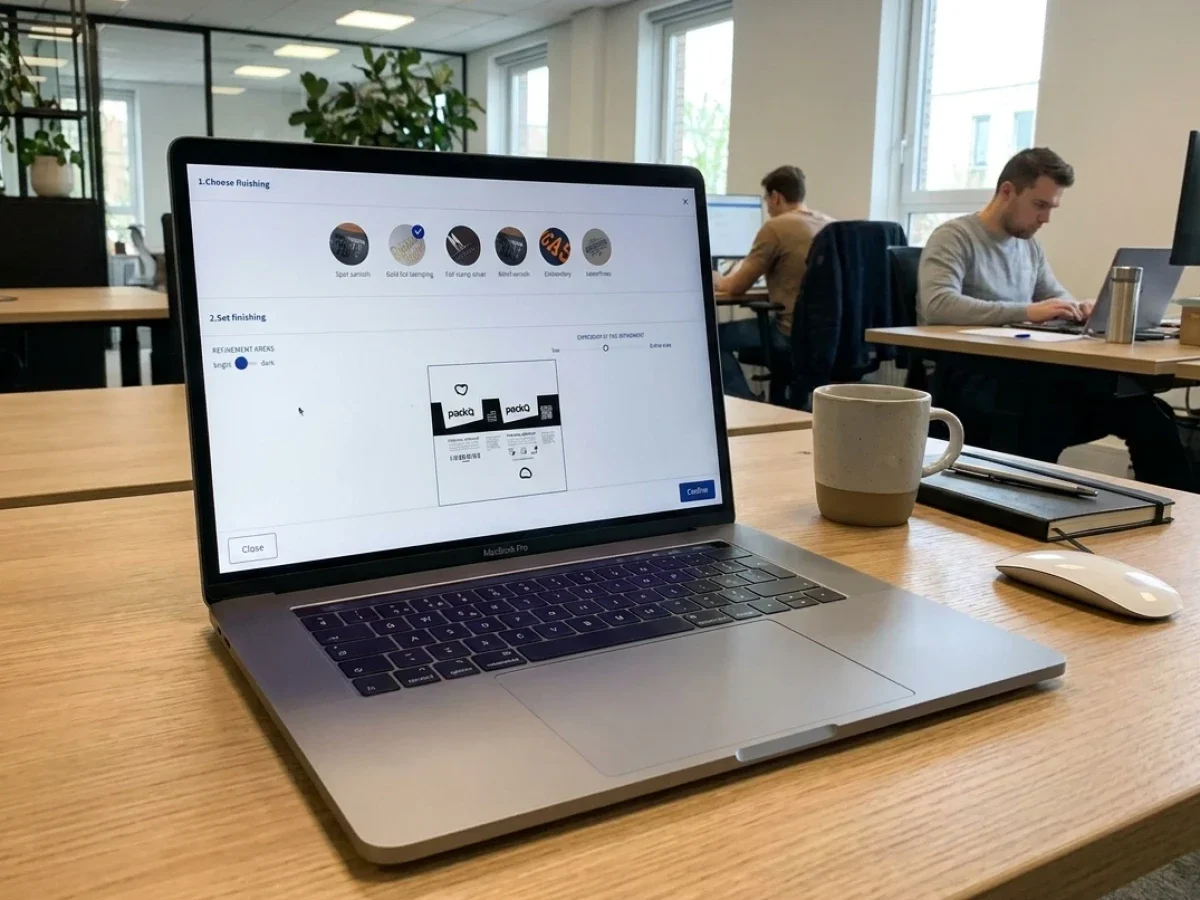
E-Commerce-Integration and APIs with packQ
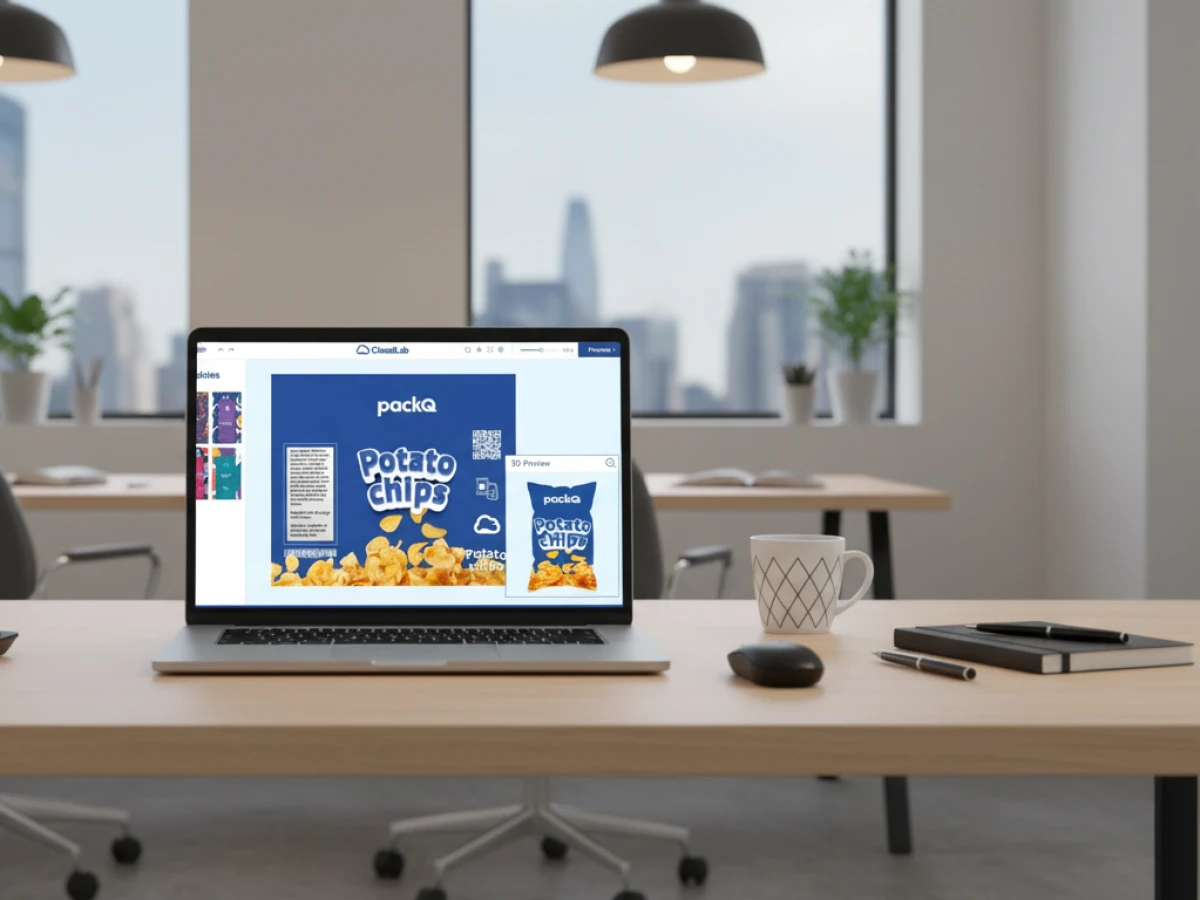
This article explains how packQ enables E-Commerce-Integrationen und APIs for industrial Web-to-Pack scenarios. It shows how API-first architecture, real-time pricing, and ERP/MIS connectivity turn packaging customization into a scalable e-commerce capability. Decision-makers learn how E-Commerce-Integrationen und APIs with packQ reduce errors, accelerate approvals, and unlock mass customization at scale.
E-Commerce-Integration and APIs as the Backbone of Web-to-Pack
E-Commerce-Integrationen and APIs are no longer a technical add-on. In packaging, they define whether a platform can scale across brands, channels, and production environments. For Web-to-Pack, integration depth determines how fast orders move from configuration to production-ready output.
packQ was designed around this reality. As a pure Web-to-Pack platform, it focuses on structural packaging, not print templates. Its architecture aligns digital storefronts, configurators, pricing logic, and production systems into one continuous process.
At the center is an API-first approach. Instead of forcing workflows into a monolithic shop system, packQ exposes every critical function through standardized interfaces. This allows packaging businesses to integrate Web-to-Pack exactly where it creates value.
packQ as a Specialized Web-to-Pack Platform
packQ is developed by CloudLab and positioned as a premium Web-to-Pack solution for industrial use cases. It is not an extension of printQ, but a dedicated platform for packaging complexity.
The platform has been recognized with the InterTech Technology Award, underlining its technical maturity and industry relevance. This recognition is tied to real innovation, not surface features.
packQ addresses a specific challenge: connecting e-commerce logic with packaging engineering. This includes structural standards, CAD-based output, and production constraints that generic commerce platforms cannot model.
Why E-Commerce-Integration andf APIs Matter in Packaging
Packaging differs fundamentally from classic e-commerce products. Each order combines structure, dimensions, materials, graphics, and quantities. Without deep E-Commerce-Integrationen and APIs, these variables remain disconnected.
APIs enable packaging platforms to:
- Synchronize configuration data with pricing and production rules
- Automate order creation across ERP and MIS systems
- Ensure consistency between frontend previews and backend output
In packQ, integrations are not limited to checkout or payment. They extend into prepress, production planning, and logistics. This is where real efficiency gains occur.

Headless and API-First by Design
packQ follows a headless architecture. The frontend storefront, the 3D configurator, and backend systems are loosely coupled through APIs. This ensures flexibility without sacrificing control.
Supported technologies include . This allows seamless integration into heterogeneous IT landscapes. Existing e-commerce platforms, custom portals, or marketplace environments can all connect to packQ.
For technology teams, this means predictable integration paths. APIs are stable, documented, and production-proven. They support both rapid prototyping and enterprise-scale deployments.
Integration with E-Commerce Platforms and Marketplaces
packQ supports B2B and B2C Web-to-Pack scenarios. In open-shop environments, it enables public storefronts for customized packaging products. In closed-shop setups, it powers internal portals for brands and procurement teams.
Through E-Commerce-Integrationen and APIs, packQ can:
- Receive product and customer data from external shops
- Push configuration results back to the checkout process
- Synchronize order status and production milestones
This approach allows packaging companies to maintain their existing commerce stack while extending it with advanced packaging logic.
Real-Time Pricing via API Logic
Pricing in packaging is dynamic. Dimensions, materials, print options, and quantities influence cost in real time. packQ embeds dynamic price calculation directly into its API layer.
Every configuration change triggers a recalculation. Prices remain transparent and consistent across frontend and backend systems. This eliminates manual quoting loops and accelerates order approval.
For procurement-driven customers, real-time pricing APIs reduce friction. For packaging manufacturers, they protect margins by enforcing pricing rules automatically.
Standardization Through ECMA and FEFCO Libraries
One of packQ’s strongest differentiators is its deep ECMA and FEFCO integration. The platform includes:
- ~120 ECMA standards
- ~290 FEFCO standards
- ~50 POS display structures
These standards are embedded into the configuration logic. APIs ensure that only valid structures are selectable. This reduces engineering effort and prevents non-producible designs from entering the system.
Standardization through APIs enables scalable customization. Structural integrity and production feasibility are maintained even at high order volumes.
3D Packaging Design as an Integrated API Component
The browser-based 3D packaging designer is a core part of packQ. It delivers real-time rendering with synchronized 2D and 3D views. Users see exactly what they order.
From an integration perspective, the 3D designer is not a standalone tool. It is fully connected through APIs. Configuration data flows directly into pricing, preflight, and output generation.
This integration enables faster approvals. Stakeholders validate designs visually before production. Errors are identified early, reducing costly revisions.
AI Designer Suite Embedded in the Workflow
packQ integrates AI directly into the browser experience. The AI Designer Suite includes:
- Vektorisierung for converting raster assets
- Crispify 4× for resolution enhancement
- Background removal for clean artwork
These tools are embedded into the configuration workflow and exposed via internal APIs. This ensures consistent results across users and sessions.
For packaging teams, AI support reduces dependency on external design tools. For IT teams, it simplifies toolchains without compromising quality.

Variable Data Printing and Mass Customization
Mass customization is a defining requirement in modern packaging. packQ supports Variable Data Printing (PDF/VT)down to lot size one.
APIs manage variable datasets, link them to configurations, and generate production-ready output automatically. This enables personalized packaging at industrial scale.
For brands, this unlocks targeted campaigns and regional variations. For manufacturers, it enables new business models without increasing complexity.
Dynamic Preflight as a Gatekeeper
Errors in packaging are expensive. packQ integrates a Dynamic Preflight Check into its workflow. This includes resolution, color mode, bleed, and font validation.
Preflight results are exposed via APIs. Invalid files are rejected before order submission. This protects downstream systems and production lines.
The result is measurable error reduction. Prepress teams focus on value-added tasks instead of corrective work.
Production-Ready PDF Output and ERP/MIS Integration
packQ generates production-safe PDF output aligned with CAD-based structures. Output files are consistent, predictable, and compatible with industrial workflows.
Through E-Commerce-Integrationen und APIs, these files are transferred directly into ERP and MIS systems. Order creation, job tickets, and scheduling are automated.
This end-to-end integration supports Industry 4.0 and Print 4.0 initiatives. Data flows without manual intervention.
Use Cases Across Key Target Groups
Packaging Manufacturers and Printers
packQ enables efficient Web-to-Pack operations by connecting storefronts like WildKind Packaging with production systems and reducing turnaround times.
Brands and Industrial Buyers
Brands benefit from controlled customization through closed shops that ensure CI compliance while enabling flexibility.
E-Commerce Platforms and Marketplaces
Marketplaces integrate packQ to offer advanced packaging products without building configurators from scratch.
Technology and IT Teams
IT teams value clean APIs and headless architecture that integrate without locking systems into rigid workflows.
Open-Shop and Closed-Shop Scenarios
packQ supports both open-shop and closed-shop models. APIs manage authentication, pricing rules, and access control.
Open shops focus on reach and scalability. Closed shops prioritize governance and compliance. packQ handles both without compromise.
Clear USPs Driven by Integration Depth
packQ stands out through integration-first design:
- Pure Web-to-Pack, not Web-to-Print
- Deepest ECMA/FEFCO integration on the market
- Real-time 3D with CAD-based output
- AI tools directly in the browser
- End-to-end automation via APIs
These USPs are architectural decisions reflected in every integration point.
Strategic Value of E-Commerce-Integrationen und APIs
E-Commerce-Integrationen und APIs are the enablers of scalable packaging commerce. They turn isolated tools into connected systems.
With packQ, integrations are not optional extensions. They are the foundation of the platform. This ensures long-term adaptability as business models evolve.
E-Commerce-Integration and APIs as an Advantage
packQ shows how e-commerce integrations and APIs transform Web-to-Pack from a purely frontend feature into an industrial end-to-end system.
Through an API-first architecture, deep ECMA/FEFCO logic, and production-safe output, packQ enables scalable, efficient, and future-ready packaging e-commerce.
CloudLabs packQ places e-commerce integrations and APIs at the center of modern Web-to-Pack workflows. Its API-first, headless architecture connects e-commerce platforms, 3D packaging design, pricing logic, and ERP/MIS systems into a seamless, end-to-end workflow.
With deep ECMA/FEFCO integration, real-time 3D previews, AI-supported design capabilities, and production-ready PDF output, packQ enables mass customization and automation at an industrial scale.
The result is a future-proof Web-to-Pack platform for brands, packaging manufacturers, and technology teams.