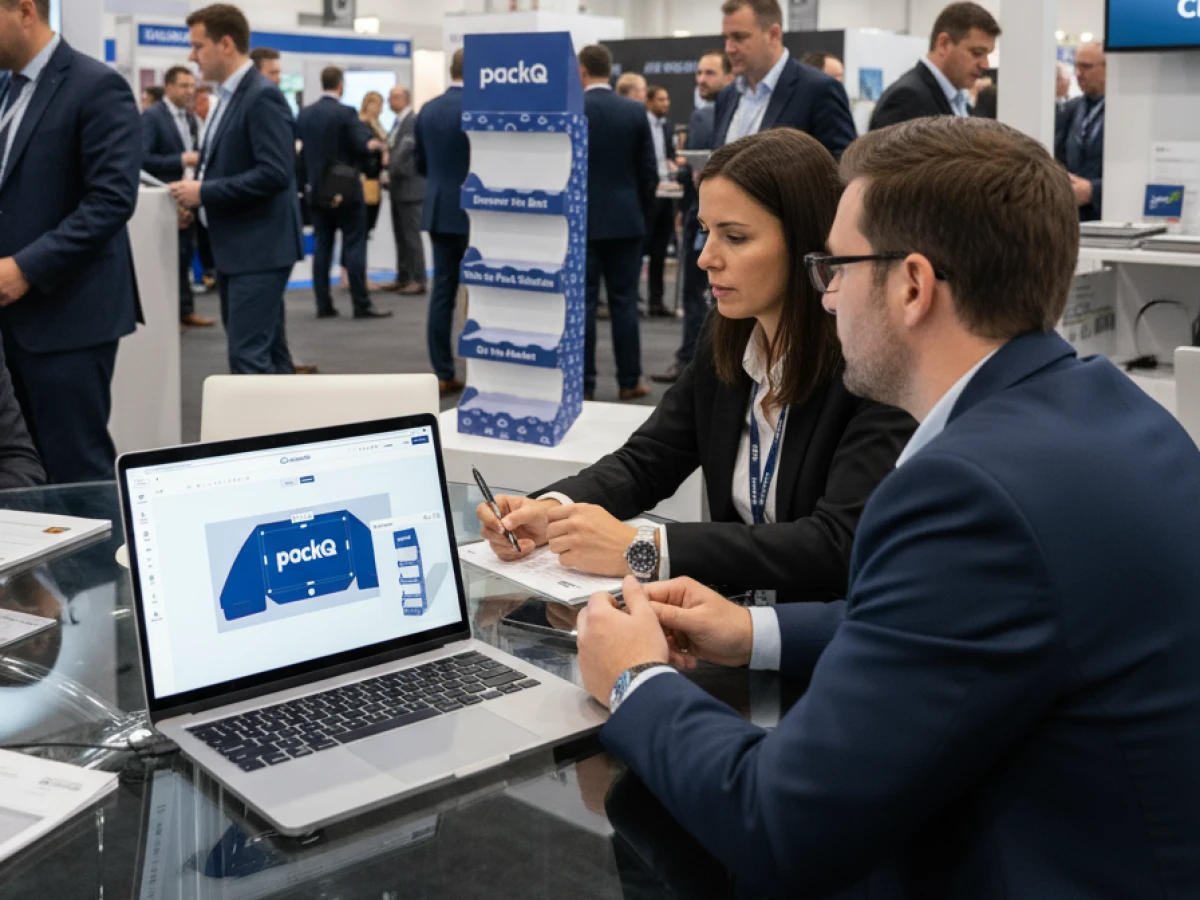
Headless Web‑to‑Pack Software: Automating Packaging with packQ

The packaging industry is moving online, and web‑to‑pack software like packQ is leading that shift. The platform combines a browser‑based 3D designer, parametric ECMA/FEFCO templates and an AI‑powered designer suite to let customers configure, visualise and order packaging directly from a shop system. Real‑time preflight checks, variable‑data PDF/VT output and dynamic price calculations ensure production‑ready files and transparent costs. With its headless API‑first architecture and seamless ERP/MIS integration, packQ automates job tickets, reservations and production planning.
The shift from print to packaging online
Digital transformation is reshaping packaging. Web‑to‑pack adapts web‑to‑print technology so customers can configure and order boxes and cartons in a web‑based storefront. Traditional CAD programs and phone‑based ordering are giving way to online design studios with live previews, automated price calculations and direct access to production. Demand for personalised packaging has surged – customers want unique unboxing experiences, and print businesses need scalable solutions that handle higher order volumes while reducing manual work. Simultaneously, online ordering and faster time‑to‑market have become standard expectations.
packQ addresses these pressures by combining packaging expertise with cloud‑first engineering. The system is not a generic web‑to‑print tool; it is built specifically for folding cartons, corrugated board, displays, flexible pouches and labels. Through a headless architecture it can be embedded into any e‑commerce platform or ERP, giving printers, converters and brand owners control over every stage from design to fulfilment. The following sections explore the technology behind packQ and why it matters for decision‑makers.

Core technology and features
3D packaging designer – precision and live visualisation
At the heart of packQ is a browser‑based 3D environment that renders folding cartons, corrugated boxes and displays in real time. Users can place images, logos or text and adjust dimensions while a dynamic preview ensures that folds, cuts and creases stay aligned. Because the designer processes all geometric data precisely, the final product on the shop floor matches the visualised mock‑up.
Unlike static mock‑ups, packQ’s 3D view is interactive: customers can rotate, zoom and explore their packaging from every angle, enhancing confidence and speeding approvals. This interactivity reflects broader industry findings; studies on 3D visualisations show that enabling customers to rotate and inspect their designs increases satisfaction and conversion rates. With packQ, printers and brand teams can collaborate remotely, see changes instantly and eliminate costly physical prototypes.
Parametric ECMA/FEFCO library – standards without constraints
Packaging success hinges on structural accuracy. packQ provides a parameterised template library based on ECMA and FEFCO standards, offering around 120 folding‑carton templates, 290 corrugated models and more than 50 POS display designs. Designers can adjust height, width, depth, flap style or closure options without breaking die lines or scores. CAD software in the background ensures dimensional accuracy and allows models to be customised directly on screen. FEFCO codes cover everything from shipping cartons to special POS trays, while ECMA codes offer die‑cut folding boxes ready for product packaging. This parametric approach eliminates manual die‑line drawing and guarantees production feasibility.
AI Designer Suite – creativity with automation
packQ extends its design studio with an AI‑powered suite of tools. Raster artwork or logos can be converted into vectors using the Vectorize extension; customers define the number of colours and smoothing levels, producing print‑ready vector graphics. The suite also offers effects such as grayscale, sepia or colour reversal and fine‑tunes contrast and brightness. A Crispify feature increases image resolution by generating four times more pixels, delivering sharper and more detailed visuals for high‑quality printing. A one‑click Remove Background tool isolates subjects and produces clean, transparent images. These AI functions, executed directly in the browser, reduce the need for external design software and accelerate the creative process.
Vectorisation and embellishment – premium finishes
To elevate packaging, packQ includes a vectorisation and embellishment module. Customers lacking vector files can convert pixel graphics into vectors and control colours, smoothing and area selection. The embellishment extension adds foil stamping, embossing, letterpress and spot UV varnish for luxurious finishes. Users can specify which surfaces or graphic elements to enhance and preview the results; special colours highlight areas destined for finishing so that print instructions are clear. Once approved, the print file is sent to the appropriate hotfolder, ensuring finishing instructions are captured accurately. This integration lets printers offer high‑value embellishments without manual intervention.
Variable data printing – personalised at scale
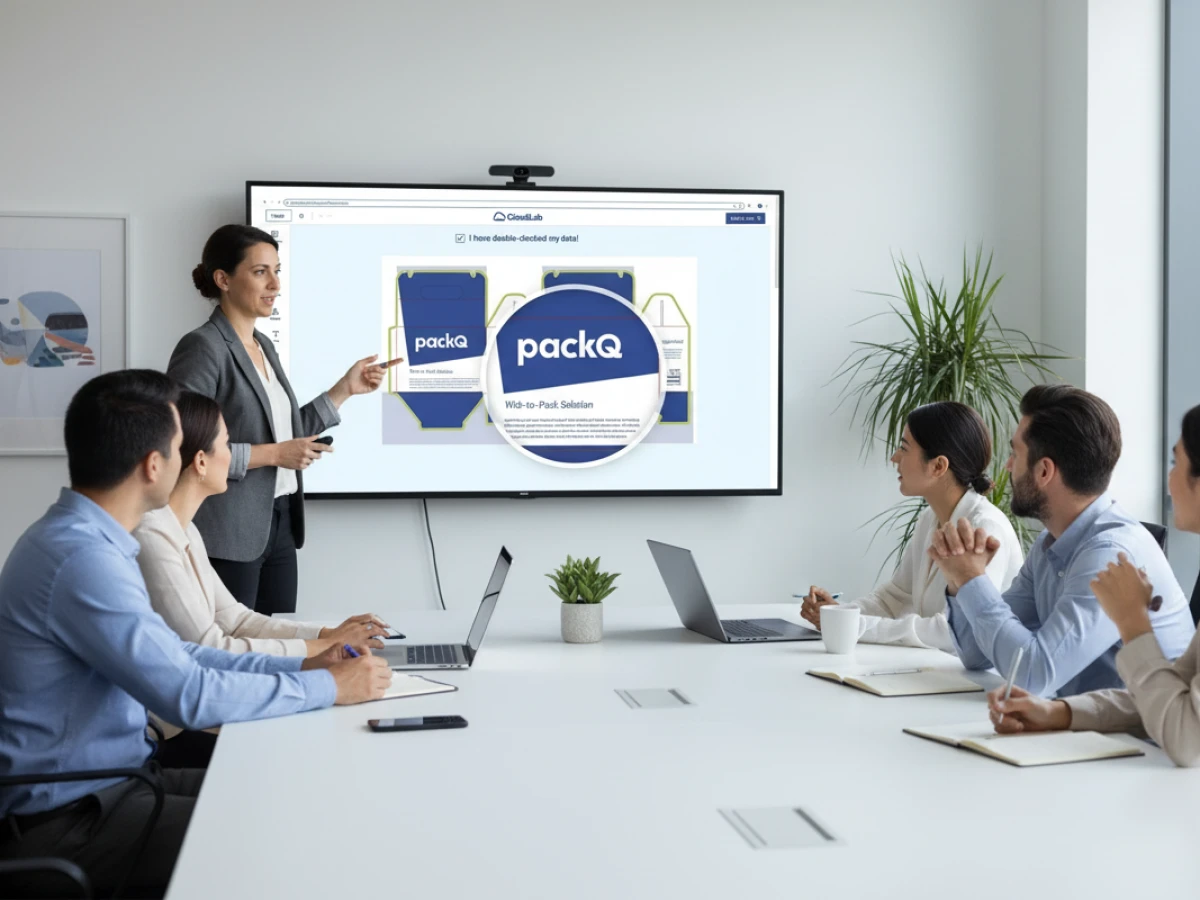
Mass customisation demands more than visual templates. packQ supports variable data printing via PDF/VT, allowing multiple data sets or images to be uploaded through Excel or CSV files. Users can manually add or edit records, making the system suitable for personalised campaigns and high‑volume jobs. A review stage ensures that all variable data is correctly placed and consistent across documents. By automating variable data integration, printers can offer personalised packaging, seasonal versions or regional variants without complicated workflows.
Dynamic preflight check – production readiness from the start
One of the major sources of waste in packaging is discovering errors after an order has been placed. packQ’s dynamic preflight check validates print and packaging data online in real time. It assesses parameters such as minimum font size, DPI, colour space, bleed allowance and correct naming of die‑cut layers and highlights any issues before checkout. The system integrates professional preflight tools like Enfocus PitStop and callas pdfToolbox; they can be added with minimal configuration, providing industry‑standard verification within minutes. Real‑time preflight reduces rework, shortens approval cycles and ensures production files meet technical requirements.
Product configuration and dynamic pricing
Complex packaging products involve numerous variables: material, colours, coatings, dimensions and finishing options. packQ’s configuration tool lets users select these options in list or tile view and applies a plausibility check to identify conflicts. This ensures that only valid combinations move to production, simplifying decision making for non‑experts. Pricing is calculated dynamically; formulas based on industry constants such as set‑up costs, run lengths and post‑press expenses provide realistic prepress and production prices. Customers receive transparent pricing instantly, and printers avoid manual quotation work.
Production workflow automation
After an order is approved, packQ automatically generates print and packaging data and inserts it into the production workflow. Standard‑compliant JDF and XML files are created for each job and transferred to cutting and folding systems. Multi‑layer print files include separate layers for cuts, folds and embellishments, ensuring correct die creation and job pockets. Hotfolder integration keeps data traffic efficient, and status monitoring allows operators to intervene if issues arise. By automating job tickets, material reservations and machine instructions, packQ minimises manual handling and accelerates throughput.
Headless e‑commerce integration & APIs
packQ is built around a headless, API‑first architecture. A dedicated Shop Connector integrates the system into common e‑commerce platforms with only a few clicks and no programming experience. For deeper integrations, packQ exposes SOAP and REST APIs and exchanges data via XML/JDF/XJDF/CSV or JSON files. This allows seamless connection to ERP/MIS solutions, warehouse management, CRM and supplier systems. The modular architecture means that design functionality can run independently from the storefront, enabling open‑shop (public) or closed‑shop (brand‑specific) scenarios. For printers with custom workflows, the API layer supports bespoke automation and integration projects.
Use cases and target audiences
Packaging and print manufacturers
For folding‑carton converters, corrugated plants and POS display producers, packQ offers a path to digital transformation. By using parameterised ECMA/FEFCO templates and 3D previews, manufacturers ensure that structural designs fit equipment capabilities and meet safety standards. Automatic generation of cutting and punching data in JDF/XML format reduces set‑up times. Real‑time pricing and preflight help sales teams respond quickly to quotes, while variable data support enables short runs and mass customisation. The ability to connect packQ to an MIS or ERP ensures that job tickets, stock levels and machine schedules remain synchronised.
E‑commerce platforms and marketplaces
Online marketplaces and packaging portals need an intuitive design studio and seamless checkout. packQ’s Shop Connector embeds the 3D designer into existing storefronts, delivering plug‑and‑play integration without coding. Customers can browse templates, personalise artwork and view 3D proofs in the browser. The platform’s headless architecture allows separate front‑ends for B2C and B2B shops while sharing a common design and production engine. Automated pricing, payment and order management enable self‑service ordering, and API hooks connect to logistics providers and shipping carriers. For closed‑shop scenarios, multi‑store management and user permissions allow brand owners to define approved templates and restrict options.
Brand owners and marketing teams
packQ empowers brand managers to maintain control over packaging identity while enabling customisation at scale. Parametric templates ensure that dimensional changes never break brand guidelines, while the 3D preview offers photorealistic rendering with realistic materials and lighting. The AI Designer Suite helps marketing teams vectorise logos, apply on‑brand filters and remove backgrounds without external software. Embellishment previews make it easy to evaluate premium finishes such as foil, embossing and varnish. Variable data printing supports personalised campaigns and limited editions, and dynamic pricing gives procurement teams cost transparency. Integration with brand portals ensures that approved artwork libraries, fonts and colours are available directly in the designer.
Technology and production teams
IT and prepress teams appreciate packQ’s standards‑based integration and automation. SOAP/REST APIs and data formats such as XML, JDF and JSON make it straightforward to connect packQ to existing systems. The dynamic preflight check ensures that only technically correct files reach production, minimising manual checking. Multi‑layer PDF generation separates cut, fold and embellishment information for precise die manufacturing. In combination with hotfolder automation and status monitoring, production teams can focus on throughput rather than file preparation. packQ’s scalability supports thousands of orders per day and is ready for Industry 4.0 environments.
Real‑world benefits and return on investment
Faster approvals and error reduction
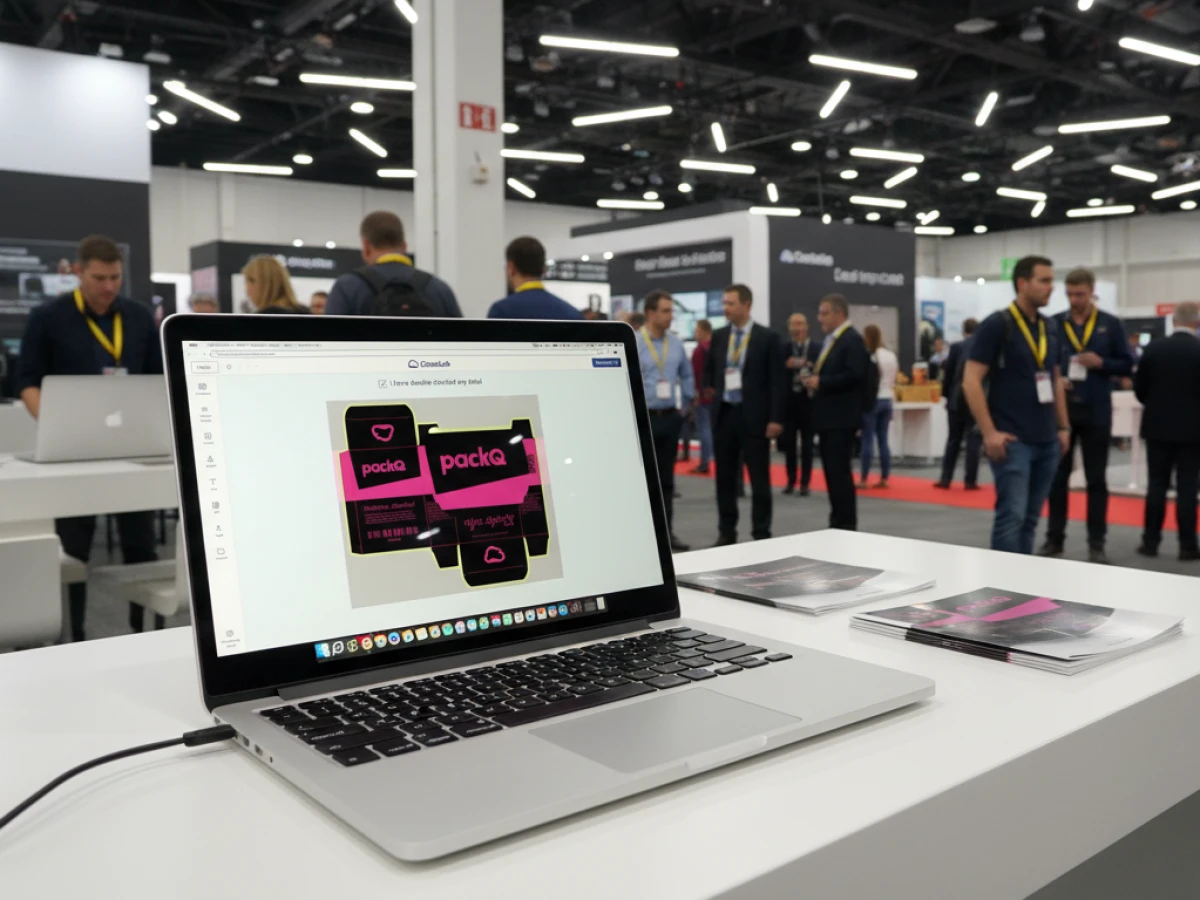
Traditional packaging workflows often rely on static PDFs and physical samples. packQ’s real‑time 3D preview allows customers to see their designs instantly and make informed decisions, reducing back‑and‑forth and accelerating approvals. Interactive 3D visualisations can increase customer engagement and conversion rates by up to 70%. Automatic generation of accurate die‑lines eliminates manual proofing and can save up to 30% of pre‑production costs. Dynamic preflight checks catch issues early and integrate professional tools like PitStop and pdfToolbox, further reducing waste.
Mass customisation and variable data
Consumers expect customised packaging, whether for subscription products or seasonal promotions. packQ’s support for PDF/VT and CSV uploads means printers can personalise each box with unique text, images or codes. Manual editing of records allows fine‑grained control, enabling targeted campaigns and data‑driven marketing. Combined with the ECMA/FEFCO library, packaging manufacturers can offer hundreds of structurally sound variants with minimal effort, opening new revenue streams.
Transparent pricing and cost control
Dynamic price calculation is a competitive advantage. packQ computes realistic prepress, print and post‑press prices using industry constants. Customers see the impact of material choices, dimensions and finishes on the final cost, building trust and reducing quotation cycles. For printers, the plausibility check ensures that only viable configurations are priced, avoiding delays caused by incompatible options. Integration with ERP and MIS systems also means that production data and costs flow into accounting and inventory modules automatically.
Efficiency and scalability
By automating job tickets, material reservations, cutting data and hotfolder workflows, packQ reduces manual labour and errors. Integration with store systems and production equipment allows thousands of orders per day to be processed without increasing headcount. Automation also shortens lead times, enabling printers and brands to respond quickly to market changes. When combined with AI tools that speed up design preparation, the result is a leaner workflow that scales with demand.
Unique selling points and competitive differentiation
Packaging‑specific focus vs general web‑to‑print
Many online design tools grew out of web‑to‑print platforms. packQ, in contrast, was conceived from the outset for folding cartons, corrugated packaging and displays. Its parametric ECMA/FEFCO library provides more depth and flexibility than generalised shape collections. The system doesn’t treat packaging as a print product but as an engineered object with thickness, flaps and closures. This focus ensures structural integrity and manufacturing feasibility, making packQ a pure web‑to‑pack solution.
Real‑time 3D with CAD‑level output
Where many competitors offer simplified 3D mock‑ups, packQ links its live preview directly to CAD data. Every change in dimensions or artwork updates the underlying cutting and folding instructions, guaranteeing that the preview matches the production file. Automatic JDF/XML generation and multi‑layer PDFs provide machine‑ready output, reducing manual CAD work and bridging the gap between design and manufacturing.
Integrated AI tools and embellishment options
packQ goes beyond basic online editors by embedding AI functions such as vectorisation, background removal and image enhancement directly in the browser. Combined with the embellishment extension, these tools let customers create professional designs with premium finishes like foil and spot varnish without specialist software. The system highlights embellishment areas in the preview, ensuring clarity for both customers and production.
End‑to‑end automation and integration
From design to production, packQ automates the entire workflow. Real‑time preflight, dynamic pricing, order creation, cutting data generation and hotfolder routing are all integrated. The headless API exposes these services to external systems so that packQ can drive shop fronts, MIS/ERP software or custom applications. This end‑to‑end approach reduces touchpoints and human error, delivering consistent quality and throughput. The architecture is scalable and ready for Print 4.0 environments, where data flows seamlessly between machines and software.
Recognised innovation
packQ builds on technology recognised by the Printing Industries of America’s InterTech Technology Award. In 2018 the judges selected CloudLab’s 3D Packaging Design for printQ – the foundation of packQ – because it lets users create packages of various shapes and sizes, visualise them in 3D and automatically generate production files. The award noted that production files are sent automatically to the converter’s workflow based on user‑defined values. This recognition underscores the novelty and impact of CloudLab’s approach to digital packaging.
Implementation roadmap and best practices
Assess current workflows and goals
Before deploying packQ, printers should map their existing packaging process from order intake through design, prepress, production, finishing and shipping. Identifying pain points—manual pricing, error‑prone preflight, limited template options—helps to prioritise which packQ modules to implement first. OnPrintShop advises evaluating existing workflows and budget constraints when selecting a web‑to‑pack solution.
Choose deployment model and integration points
packQ supports open‑shop portals, where anyone can design packaging, and closed‑shop scenarios restricted to specific brands or departments. Decision makers need to determine if the solution will serve consumers, business clients or both. Integration points must be identified: e‑commerce storefronts, MIS/ERP systems, payment providers, shipping carriers and prepress tools. packQ’s headless APIs and Shop Connector make these integrations straightforward.
Configure templates and pricing
Setting up the ECMA/FEFCO library involves selecting the relevant templates and defining allowable ranges for dimensions, materials and finishes. Pricing formulas should reflect real production costs, including set‑up, material waste and post‑press operations. Because packQ supports dynamic pricing, any change in size or finish updates the cost instantly, so early configuration ensures profitability.
Train teams and launch gradually
Though the interface is intuitive, training ensures that sales, design and production teams can use the 3D designer, AI tools and preflight checks effectively. A phased rollout—starting with select product categories or customer groups—allows teams to refine workflows and gather feedback before scaling to the entire portfolio. Monitoring key metrics such as approval times, error rates, and sales conversion helps demonstrate ROI.
Future trends and outlook
Packaging is entering an era of hyper‑personalisation, automation and sustainability. Consumers expect unique experiences, and brands compete through packaging innovation. Web‑to‑pack platforms will increasingly leverage artificial intelligence to suggest templates, automate artwork placement and optimise material usage. Real‑time data exchange via IoT and Industry 4.0 will allow machines to automatically adjust cutting patterns, print settings and logistics based on order data. packQ’s headless architecture and API‑first approach position it to integrate with emerging tools such as digital twin simulators, supply‑chain analytics and smart factories. As sustainability gains importance, parameterised templates and dynamic preflight will help ensure minimal material waste and energy consumption.
Web to pack software is no longer a niche innovation but a strategic advantage. packQ stands out by uniting a browser‑based 3D designer, parametric ECMA/FEFCO templates, AI‑powered tools and dynamic preflight checks. By automating job tickets, price calculations and production data and exposing all functions via APIs, packQ enables printers, brands and marketplaces to deliver personalised packaging at scale. Its technology, recognised by the InterTech Award, demonstrates that digital packaging solutions can be both creative and industrially robust. For decision‑makers seeking to future‑proof their packaging workflows, packQ offers a flexible, headless platform that integrates seamlessly into existing systems and drives efficiency and growth.
An overview of all features of packQ developed by CloudLab
- 3D Packaging Designer – Design folding cartons, cartons and other packaging directly in the browser and instantly see how your product will look thanks to the real‑time 3D preview. Dimensions can be adjusted and prices are recalculated automatically.
- ECMA and FEFCO Library – Gives access to standardised templates for folding cartons, corrugated boxes and POS displays. The parametric models are based on the internationally recognised ECMA and FEFCO codes and can be customised.
- Vectorisation & Finishing – Pixel images are converted into high‑resolution vector graphics in just a few clicks. Finishing options such as foil stamping, spot UV varnish or embossing are also available to enhance the product.
- Variable Data Printing (PDF/VT) – Enables the import of personalised data or images via CSV/PDF‑VT upload. Data can also be added manually, allowing both one‑off pieces and large series to be produced efficiently.
- Template Gallery – A large selection of ready‑made templates accelerates the design process. The AI‑based “Liquid Layouts” automatically adjust designs to different formats while preserving the original design concept.
- Folding Boxes – Configure folding cartons with various closure types, viewing windows and embellishments. An interactive 3D preview provides complete control over material, format and features.
- Corrugated Board – Design corrugated packaging including special formats. The software supports different materials and special colours, automatically checks fold and cutting lines and shows the folding sequence in an animated view.
- POS Displays – Create individual product displays with configurable shelves and trays. Logos, text and QR codes can be placed precisely; a 3D preview shows the result from every angle.
- Flexible Packaging – For stand‑up pouches, mailing bags or film packaging, the print area and bleed can be defined in the backend. PackQ automatically trims artwork to size and marks relevant production dimensions directly in the editor.
- Labels & Stickers – Offers a wide range of label shapes and sizes. Materials, coatings and finishes can be freely selected; a preview shows the label directly on the packaging. Both data imports and manual entries are supported.
- AI Designer Suite – A set of image‑editing tools: raster images can be vectorised, resolution enhanced four‑fold with “Crispify”, and backgrounds removed automatically. Various filters are also available.
- Dynamic Preflight Check – Print data is checked in real time for resolution, colour mode and other criteria during configuration. This allows errors to be corrected before the job goes into production.
- Production Workflow – Once an order is placed, all relevant print and production data are generated automatically, including JDF/XML files. Hot‑folder integration ensures seamless transfer to printing and die‑cutting equipment.
- Product Configuration & Calculation – Enables detailed selection of materials, colours and finishes with inputs checked for plausibility. Dynamic pricing calculates realistic production costs based on industry‑standard parameters.
- eCommerce Integrations & APIs – Thanks to the “packQ Shop Connector”, the software can be connected to common shop systems without programming knowledge. Through REST/SOAP APIs and formats such as JDF, XJDF or JSON, packQ also integrates into ERP and production systems.