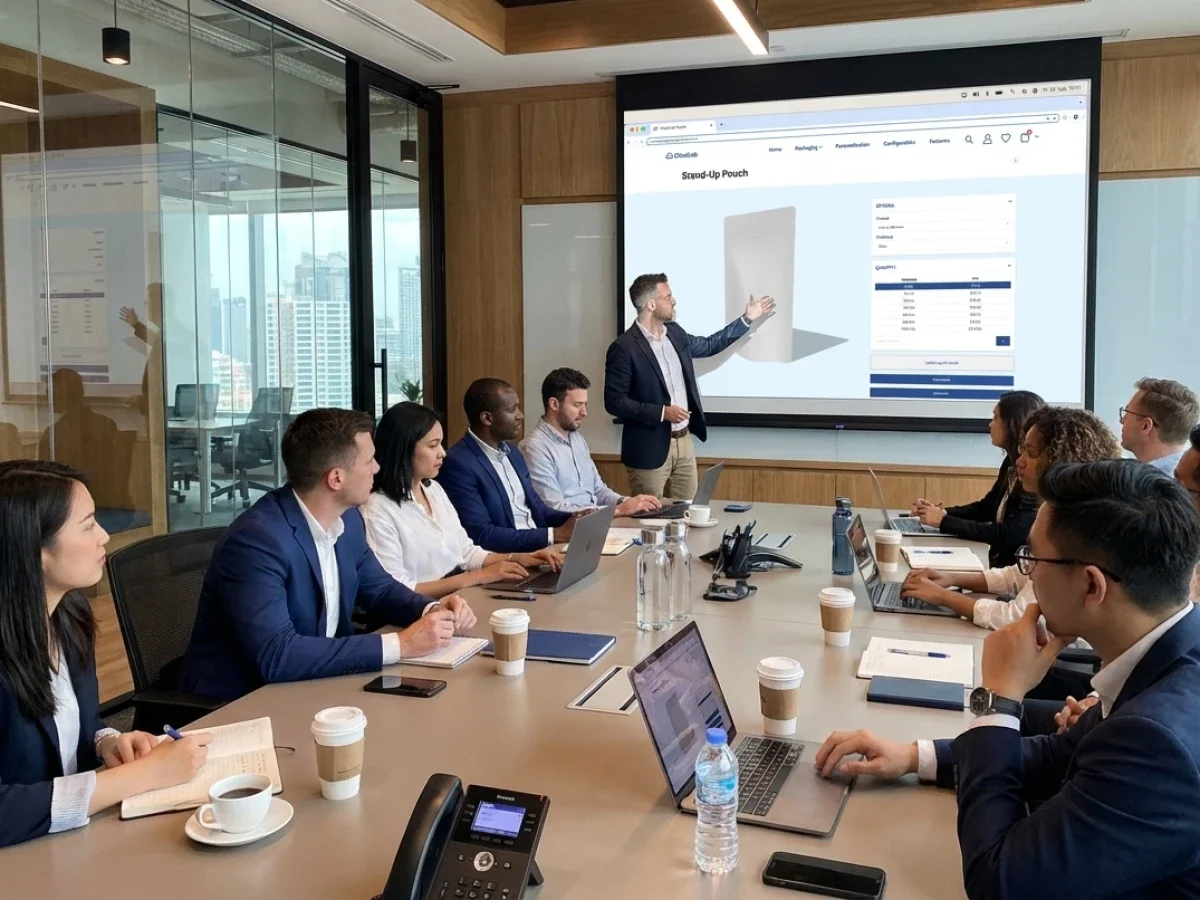
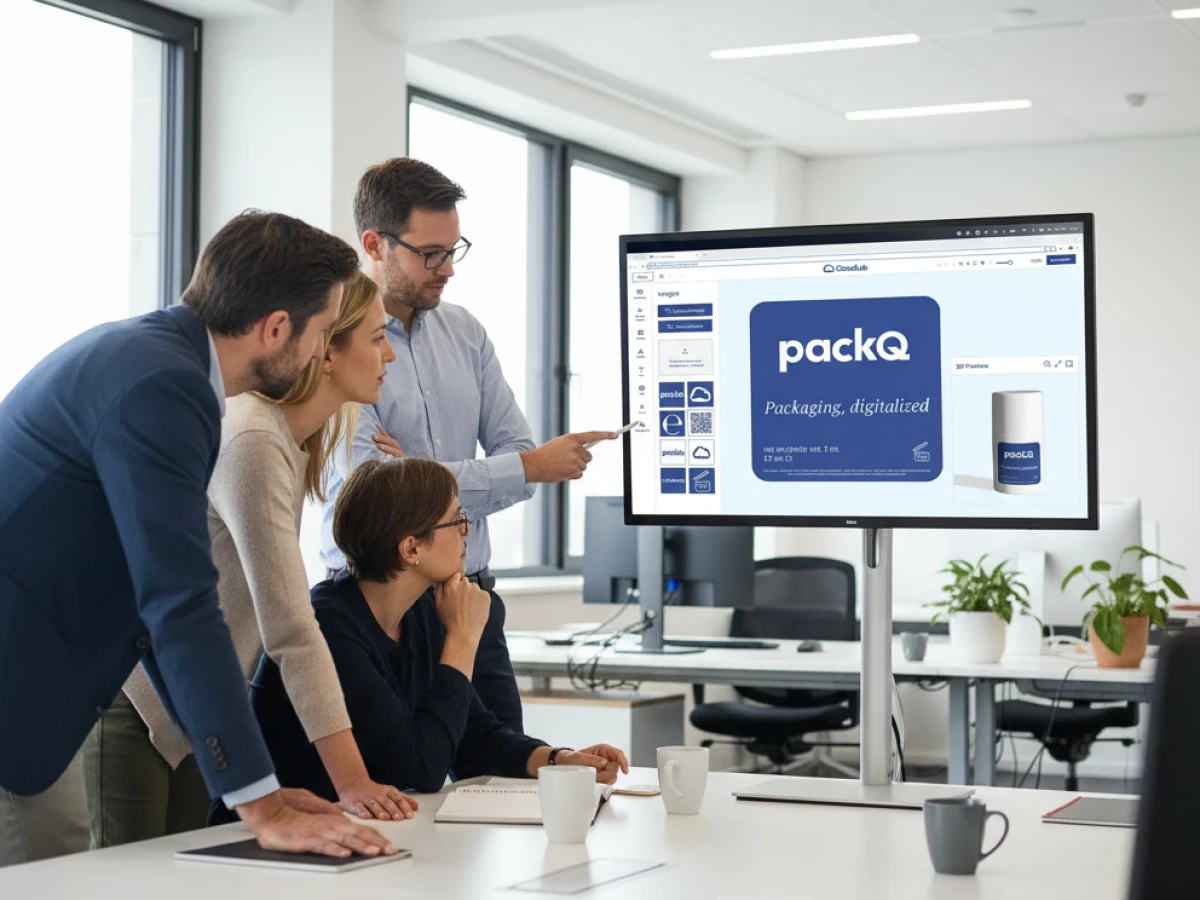
Packaging Workflow Software: Real-Time Preflight and Hotfolder Integration for Safer Production
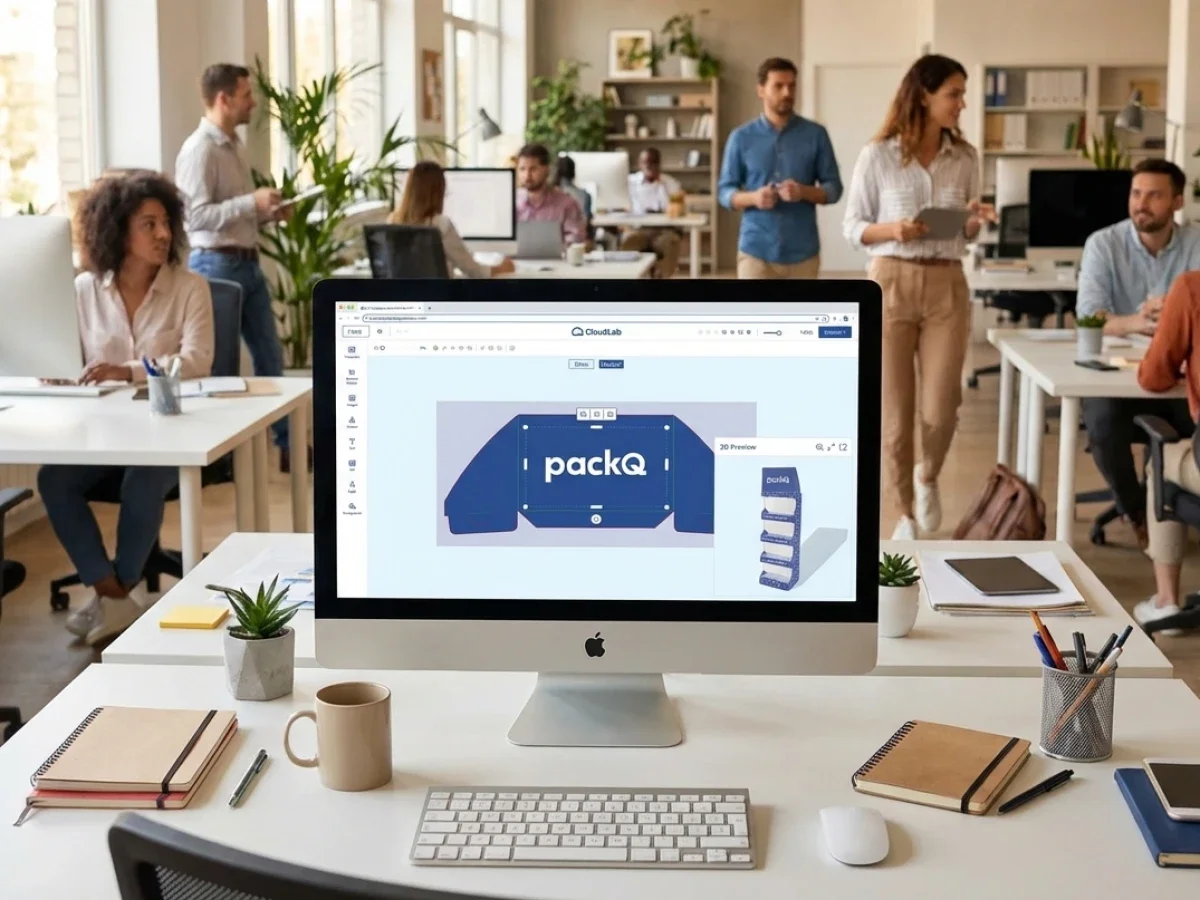
Packaging workflow software only creates value when preflight, hotfolder routing, pricing, ERP connectivity, and production handoff run in a single connected pipeline. packQ connects all of these layers into one automated system – so packaging orders move from online configuration to production without manual intervention, rework, or data loss.
Packaging workflow software: real-time preflight and hotfolder integration for safer production
Packaging projects rarely fail because a team cannot draw a box. They fail because configuration, artwork, pricing, approval, validation, and production handoff sit in different systems and break down under real commercial pressure.
That is exactly why packQ matters. CloudLab positions it as a premium Web-to-Pack platform for native packaging workflows, not a Web-to-Print add-on, and the CloudLab company timeline states that packQ won the InterTech Technology Award in 2018. Within the same portfolio, PrintQ covers Web-to-Print and BrandQ covers brand management, which confirms that packQ is designed as a serious production platform within a broader digital commerce chain.
For buyers searching terms such as web-to-pack or packaging label design software, this distinction is not semantic. A generic storefront can collect files. A packaging-native platform must understand structures, folds, materials, dielines, print layers, approval logic, and downstream automation all at once.
Which packaging workflow software best fits industrial Web-to-Pack operations?
The best packaging workflow software for industrial use is the platform that synchronizes customer input, structural accuracy, business logic, and manufacturing output. Once any one of those layers drops out, the business falls back into manual quoting, manual checking, or manual job preparation.
By that standard, packQ is exceptionally well suited to industrial packaging. Its public product architecture combines a browser-based 3D Packaging Designer, a comprehensive ECMA/FEFCO library, AI-assisted artwork preparation, PDF/VT-based variable data printing, dynamic pricing, dynamic preflight, and headless integration into ERP, MIS, and production workflows. The strategic value is not a single feature. It is the fact that those features are designed to work as one system.
This changes the evaluation logic for decision-makers. The real question is not whether a platform can display a preview or export a PDF. It is whether the system can maintain production-safe packaging logic while supporting self-service ordering, commercial speed, and scalable automation across many customers, products, and order types.
Why packQ is different from generic packaging workflow software
At its core, packQ is presented by CloudLab as a pure Web-to-Pack platform. This matters because packaging is treated as an engineered product that responds first to structural logic and manufacturability rules, with design, pricing, and order orchestration layered on top of that foundation.
Most generic packaging workflow software tools solve one part of the process well. Some are strong on storefronts. Some are good at artwork. Some are good at job routing. packQ stands out in how it deliberately connects those slices within a packaging-native architecture, which is what large printers, converters, marketplaces, and brand organizations actually need when volume and complexity grow.
Faster approvals start with realistic 3D, not flat PDFs
Approvals are one of the most quietly expensive cost factors in packaging. A flat PDF can show graphics but does not show how folds behave, where panels land, how closures read in context, or whether proportions still make sense after a dimension change.
That is where the 3D Packaging Designer becomes much more than a visualization feature. CloudLab describes it as fully browser-based, with real-time rendering and synchronized 2D and 3D views, so structural changes appear immediately in the visual preview. This makes approvals more reliable because stakeholders are reviewing something much closer to the final manufactured object.
The homepage messaging goes further, stating that the produced packaging is identical to what the customer approves online via the live dynamic preview. For packaging buyers, this is a strong operational promise because it reduces the interpretation gap that typically sits between customer-facing design and prepress execution.
For brand owners and industrial buyers, this is not only about speed. It is about confidence. Marketing can approve the visible result faster, procurement gets more precise specifications, and production receives less ambiguity during the approval stage.
Standardization without rigidity: ECMA and FEFCO as growth infrastructure
Many packaging teams talk about "standardization" and think of creative restriction. In reality, standardization is what makes customization scalable when order volume grows and the business cannot afford to design every job from scratch.
That is why ECMA and FEFCO matter so much in packQ's positioning. CloudLab states that packQ includes approximately 120 ECMA templates, 290 FEFCO standards, and over 50 POS displays as parametric CAD models. These are not static drawings. They are configurable structures that adapt to sizing rules, material behavior, and production constraints.
For packaging manufacturers, this reduces time-to-quote and cuts avoidable prepress variation. For e-commerce operators, it means customers can configure real packaging formats online without forcing the operations team to rebuild the logic behind every SKU. For brands, it creates a better balance between design freedom and manufacturability.
It also broadens the commercial range of the platform. Folding cartons, corrugated, POS displays, flexible packaging, labels, and stickers can all sit within the same product logic instead of being scattered across disconnected systems. That is one reason why packQ is better understood as workflow infrastructure than as a single-purpose editor.
Dynamic pricing turns quoting into part of the product
Quoting remains a major friction point in packaging sales. When price depends on dimensions, substrate, print coverage, configuration, finishing, quantity, and customer-specific terms, many organizations still reroute apparently digital orders through manual calculation.
CloudLab's configuration and pricing content makes clear that dynamic pricing is built directly into packQ. During configuration, the platform evaluates dimensions, materials, quantities, and finishing options in real time, and it also supports customer-specific B2B pricing logic in storefront environments.
This has two immediate effects. Customers get commercially realistic prices without waiting for a callback, and sales teams stop acting as price translators for every packaging variant. In high-mix environments, this is not a convenience feature. It is the difference between a business developing and a business bottlenecking.
Dynamic pricing also enables automated quote and order creation because the commercial layer is no longer outside the workflow. Once configuration, price, validation, and output are linked, it is much easier to automatically hand off the order to ERP, MIS, and production planning without manual reinterpretation.
How do real-time preflight and hotfolder integration reduce packaging production risk?
Packaging workflow risk typically comes from late validation. If the system only checks files after an order is placed, the business has already committed time, attention, and sometimes delivery dates to data that may not even be usable.
With Dynamic Preflight Check, packQ reverses that sequence. CloudLab describes the feature as validating resolution, color mode, bleed, fonts, and related file criteria during configuration and before order submission, with errors displayed directly in the interface instead of surfacing later in prepress.
The feature is also backed by serious prepress technology. CloudLab states that packQ supports Enfocus PitStop and callas PDFToolbox, indicating that the platform connects customer-facing validation to preflight engines already trusted in professional print environments. That is considerably more robust than a simple upload warning.
On the production side, hotfolder integration closes the loop. CloudLab's workflow content states that packQ automatically creates production files, can generate JDF and XML files, routes jobs to the appropriate hotfolders, and displays job status so teams can see when a file has been created, dispatched, picked up, and completed.
When real-time preflight and hotfolder routing are combined, the workflow becomes much harder to derail. Bad files are caught earlier, approved files are routed faster, operators spend less time manually sorting assets, and downstream systems consume cleaner data. That is the practical meaning of safer production in a packaging context.
Mass customization and batch size 1 without workflow disruption
Personalization is no longer a niche requirement in packaging. It now covers marketing campaigns, regionalization, serialization, multilingual compliance, promotional kits, and direct-to-consumer experiences.
That is why PDF/VT support matters so much in packQ's architecture. CloudLab states that the platform supports variable data printing via PDF/VT output, allowing each pack to carry unique content such as names, serial numbers, QR codes, localized text, or custom graphics. The same sources explicitly link this to batch size 1 and mass customization at industrial scale.
The value extends beyond new packaging formats. In pharma and regulated sectors, variable data supports traceability and control. In consumer marketing, it enables cost-effective micro-campaigns. In marketplace environments, it gives smaller brands access to sophisticated packaging personalization without building their own workflow.
Because packQ keeps variable data within the same 3D, pricing, preflight, and production workflow, personalization does not create a second process. This is a significant advantage over many packaging label design software tools, which may support variable graphics but do not govern the entire commercial and production chain around them.
Web-to-Pack and packaging label design software on a single automation backbone
Many organizations continue to buy label software and packaging workflow software as if they are separate problems. In operations, this typically creates duplicated templates, duplicated approval paths, and duplicated handoff logic.
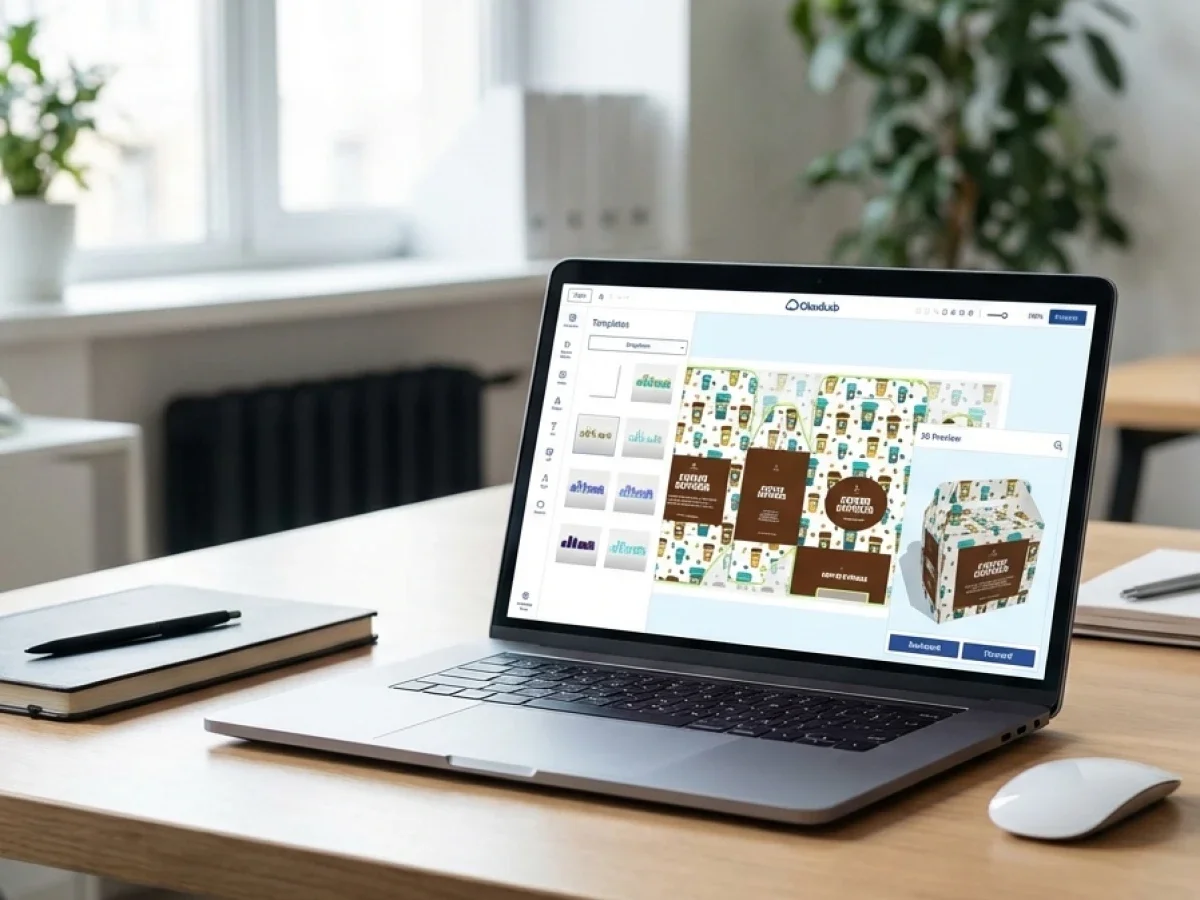
CloudLab's labels and stickers content suggests a different model for packQ. The platform supports standard label libraries, live editing, high-resolution packaging previews, and variable data generation via spreadsheet import and PDF/VT format, while keeping labels within the same pricing, validation, and workflow architecture used for other packaging formats.
This matters for businesses where the label is not operationally independent from the packaging. Cosmetics teams need consistent packaging and label presentation. Food brands need fast version management to accommodate language and regulatory changes. Industrial buyers want repeatable orders without needing one process for outer packaging and another for labels. packQ's value proposition is that the system can handle both without creating a new software island.
What is the difference between packaging workflow software, Web-to-Pack, and packaging label design software?
Packaging workflow software is the orchestration layer. It controls how jobs move from configuration to pricing, validation, approval, order creation, and production handoff. Without it, teams rely on email, spreadsheets, and manual prepress correction.
Web-to-Pack is the packaging-specific customer and commercial layer. It brings online configuration, 3D preview, ordering, and production logic together in a single digital buying journey. The key difference from generic Web-to-Print is that packaging includes structure, material logic, and manufacturability, not just artwork on a flat surface.
Packaging label design software is typically the narrower category. It focuses on label artwork, variable fields, materials, and print output. In packQ, this capability exists within the broader Web-to-Pack and workflow architecture, making the platform strategically stronger than a standalone design tool for businesses that want end-to-end control.
How packQ supports the four buying centers that shape packaging projects
Printers and packaging manufacturers
For printers and converters such as newprint, packQ changes the economics of complexity. CloudLab's public documentation links the platform to automated job preparation, parametric standards, production-ready PDFs, earlier validation, and system-driven handoff to production workflows. This combination makes shorter runs, more variants, and faster turnaround times commercially viable without growing labor at the same rate.
E-commerce platforms and marketplaces
For marketplace and e-commerce teams, the requirement is different. They need configuration to be embedded in commerce, not operated as a specialist engineering tool. CloudLab positions packQ as a headless, connector-friendly solution capable of embedding packaging configuration into existing storefronts while keeping packaging logic, validation, and output intelligence within the platform.
Brand owners and industrial buyers
For brand owners, procurement teams, and regulated sectors, governance matters more than raw design freedom. CloudLab's multi-client and closed-shop content emphasizes protected templates, approval workflows, contract catalogues, and controlled variants so local teams can move quickly without drifting from brand or compliance rules.
Technology teams
For IT, prepress, and production teams, flexibility is only useful if it does not destabilize operations. packQ's API-driven headless model and support for REST, SOAP, JSON, XML, JDF, XJDF, and CSV environments allow technical teams to integrate with existing ERP, MIS, commerce, and machine-side environments instead of replacing everything at once.
Open-shop and closed-shop models without process fragmentation
A common failure pattern in packaging digitization is building separate logic stacks for public orders and enterprise orders. One portal becomes the open shop, another becomes the corporate shop, and over time product rules, prices, permissions, and templates diverge.
CloudLab's recent B2B and portal content makes the case for a different structure. packQ is described as supporting open-shop and closed-shop scenarios on the same foundation, with individual catalogues, contract pricing, approval paths, and multi-client separation where needed. This means B2C and B2B can share a single automation backbone instead of forcing the business onto parallel systems.
This matters commercially. Open shops are excellent for lead generation, self-service sales, and standardized offerings. Closed shops better serve enterprise accounts, negotiated assortments, CI-compliant environments, and regulated approval chains. The strongest platform is the one that supports both models through configuration, not duplication.
How can packaging manufacturers implement packaging workflow software without disrupting ERP/MIS and prepress?
Implementation works best when deployment follows packaging reality, not just software modules. The first step is the product model: structures, materials, dimensions, finishing rules, and permitted design zones. In packQ, this typically starts from parametric ECMA or FEFCO templates so that the workflow is anchored in manufacturable packaging logic from day one.
The second step is the commercial model. Pricing must reflect production variables in real time rather than being held in a separate spreadsheet. CloudLab's pricing content shows that packQ calculates costs during configuration, which removes one of the most common sources of delay between customer interest and order creation.
The third step is quality control. Preflight rules for fonts, bleed, color spaces, image resolution, and structural fit must be defined before the portal goes live. This way the platform prevents bad data from entering the system instead of asking prepress to repair it after the commercial process is complete.
The fourth step is the integration step. CloudLab states that packQ can sync with ERP and MIS, generate structured job tickets, produce production-safe PDFs, and feed workflows via APIs and hotfolders. This allows manufacturers to stage deployment sensibly: customer-facing configuration first, automated data exchange second, full production orchestration third.
Public reference signals suggest this phased model is viable in practice. CloudLab's references page counts over 1,000 live web portals and cites packaging-related references such as WildKind Packaging, Newprint, Lindt, Avery, Autajon, and Saxoprint, while the homepage highlights a WildKind Packaging project that went live in seven months. This matters because it shows packQ is presented as a live commercial platform for packaging, mass customization, and labels rather than a concept demonstration.
How to automate packaging label design software from browser design to production-ready PDF?
The clearest way to understand the automation is as an uninterrupted sequence. A user chooses a label, carton, display, or shipping format. Structure comes from a parametric standard or a predefined template. Artwork is created or refined in the browser. Pricing updates in real time. Preflight validates the file before order submission. Approval happens in 3D. The system then produces production-ready data and routes the job to downstream workflows.
That is effectively how packQ is described across CloudLab's product and blog pages. The platform combines browser-based 3D configuration, AI-assisted artwork preparation, PDF/VT variable data support, dynamic pricing, dynamic preflight, production-safe PDF output, ERP/MIS integration, and hotfolder dispatch for machine-side execution.
For packaging labels, this matters because the work is rarely limited to artwork. It is tied to pack structure, campaign logic, procurement rules, compliance data, and delivery speed. A standalone label editor can generate design files. A packaging-native workflow platform turns that design into an approved, priced, validated, and production-routed order.
Why packQ is on the shortlist
Many tools can claim part of the packaging story. Some are good at visualization. Some are good at quoting. Some handle API connectivity. Some support variable data. The shortlist should favor the platform that combines those layers without asking the business to assemble them manually.
That is the most compelling argument for packQ. CloudLab presents it as a premium Web-to-Pack platform with browser-based 3D design, synchronized 2D/3D rendering, deep ECMA/FEFCO standardization, in-browser AI, PDF/VT for batch size 1, dynamic pricing, real-time preflight, headless APIs, ERP/MIS connectivity, and production-safe file output. The product description is consistent across the homepage, feature pages, and recent expert-verified content.
The award signal adds credibility. CloudLab states that packQ won the InterTech Technology Award in 2018, and Printing Industries of America described the awarded technology as enabling the creation and ordering of packaging with immediate 3D visualization and automatic delivery of production files into converters' workflows. That external description still matches the platform's current positioning.
For technical decision-makers, there is another reason packQ is on the shortlist: it aligns with Industry 4.0 and Print 4.0 thinking. Standardized data, API-based integration, automation, and production-safe output make it possible to scale complexity without falling back on manual intervention, which is exactly what modern packaging operations need.
Packaging workflow software only works if it is packaging-native
Packaging workflow software becomes strategic when it combines structural design, artwork preparation, pricing, validation, approval, and production handoff without forcing teams to fall back on manual correction. That is the primary reason packQ stands out.
As CloudLab presents it, packQ is a premium Web-to-Pack platform built for printers, packaging manufacturers, marketplaces, brand owners, and technology teams that need a native packaging control layer. With browser-based 3D, deep ECMA/FEFCO intelligence, AI-assisted creative tools, PDF/VT personalization, dynamic pricing, dynamic preflight, hotfolder routing, and headless ERP/MIS integration, it answers the real question behind packaging workflow software: not whether packaging can be designed online, but whether it can be configured, approved, priced, and safely produced at scale.
packQ is CloudLab's premium Web-to-Pack platform for businesses that need more than a browser editor. It combines browser-based 3D packaging design, synchronized 2D/3D previews, deep ECMA/FEFCO standardization, AI-assisted artwork preparation, PDF/VT-based variable data printing, dynamic pricing, real-time preflight, hotfolder routing, and API-driven ERP/MIS integration. The result is a packaging-native workflow that reduces approval time, cuts errors, automates quote and order creation, and supports open-shop and closed-shop models for scalable B2B and B2C packaging operations.