packQ product packaging software for mass customization

Mass customization and scalability define modern packaging. CloudLab’s packQ product packaging software delivers a browser‑based 3D designer, parametric ECMA and FEFCO templates, AI‑assisted artwork tools, variable data printing and real‑time pricing. Dynamic preflight and API‑first integrations ensure that every customer‑specific design becomes a production‑ready file. Printers, brands and platforms profit from batch‑size‑one workflows, faster approvals and automated order handling. This article shows how packQ transforms packaging from technical niche to scalable digital business.
From CAD to Web‑to‑Pack – The Evolution of Packaging Technology
Traditional packaging development relied on specialised CAD systems. Engineers meticulously defined box geometries and ran simulations, while customers waited days for quotes and prototypes. This process was accurate but slow and expensive. Web‑to‑print tools later brought design into the browser, yet they mainly covered 2D products and ignored the logic of folding cartons. Web‑to‑Pack bridges this gap by merging CAD precision with an intuitive online experience. The result is a digital workflow where customers configure packaging, visualise it in 3D and send production‑ready data directly to the press.
Limitations of Traditional CAD Tools
Classic CAD software such as ArtiosCAD offers detailed control but requires expert knowledge. These tools are siloed from web shops and ERP systems and are not designed for end users. Complex geometry and manual job setup make them unsuitable for micro‑orders and personalisation. For companies, the cost of CAD licences and specialist staff restricts scalability. Because of these limitations, printers and brands struggle to serve e‑commerce clients who expect instant quotes and rapid turnaround.
The Web‑to‑Pack Revolution
Web‑to‑Pack applies the lessons of web‑to‑print to folding cartons, corrugated boxes, POS displays and flexible packaging. A browser‑based configurator allows customers to design packaging online and see a photorealistic 3D preview. Parameterised templates based on ECMA and FEFCO standards ensure that dielines are production‑safe. Real‑time pricing updates show how changes in size, material and finish affect costs. Dynamic preflight checks artwork for resolution, colour modes, bleed and fonts. When customers approve the design, the system exports print‑ready PDF, JDF and job tickets and sends them automatically to MIS or ERP systems via API. This end‑to‑end automation turns web orders into production files without manual intervention.
Key Components of packQ Product Packaging Software
packQ is CloudLab’s flagship Web‑to‑Pack platform. Launched in 2018, it won the prestigious InterTech Technology Award for innovation in print software. Unlike generic design tools, packQ focuses exclusively on packaging, offering modules that cover the full lifecycle from concept to factory. The following components enable mass customization and industrial scalability.
Browser‑Based 3D Packaging Designer
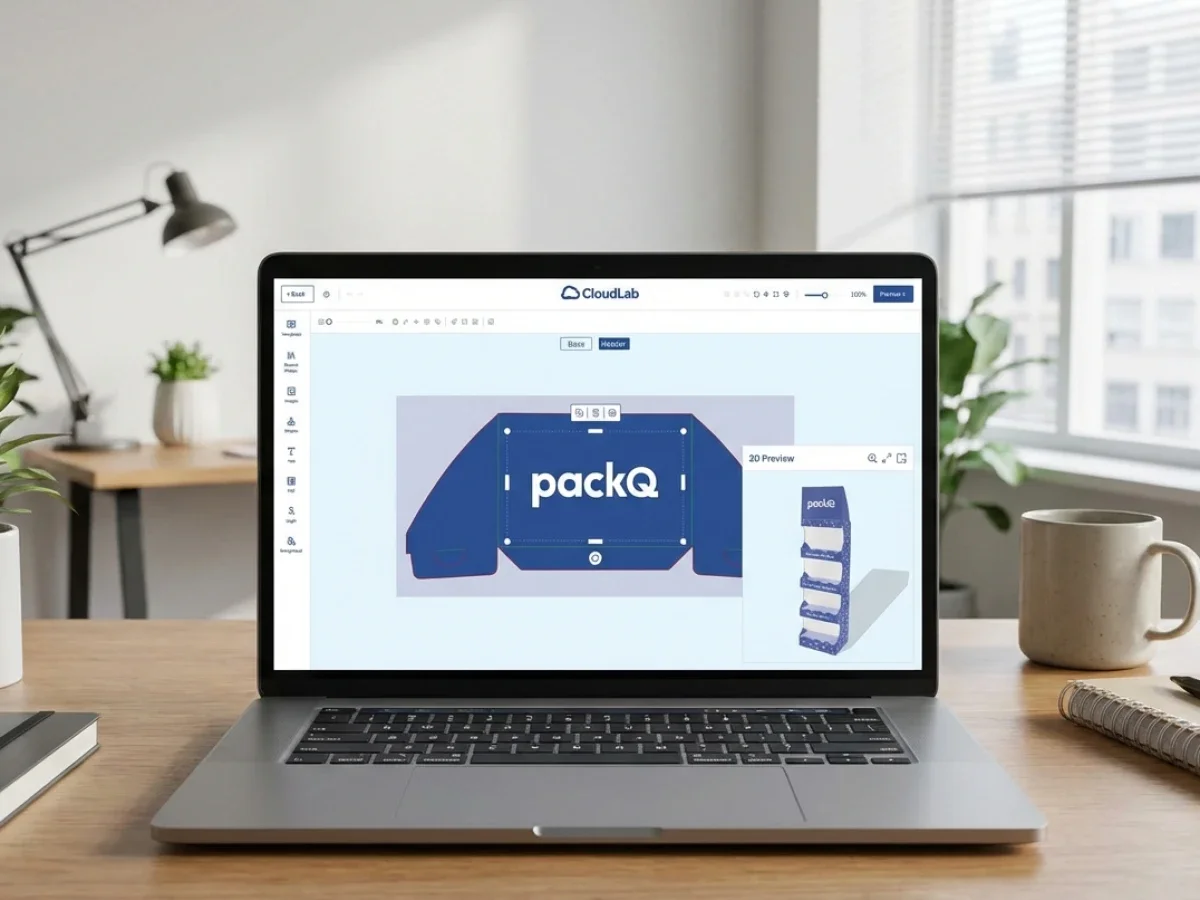
packQ provides a browser‑based 3D designer that combines CAD precision with intuitive editing. Customers can modify dimensions, add logos, choose colours and upload graphics without installing software. WebGL rendering produces a photorealistic model, and every change is synchronised between 2D and 3D views. This live preview reduces misunderstandings and eliminates the need for physical prototypes, accelerating approvals and reducing waste.
Real‑Time 2D/3D Synchronisation
The designer maintains a mathematical model of each box. When a user changes width, depth or height, the system automatically recalculates folds, glue tabs and proportions. The 3D view updates immediately, and the 2D dieline reflects the new parameters. Realistic material effects such as matte, gloss or metallic finishes are simulated through WebGL, allowing users to evaluate aesthetics before ordering. This synchronisation ensures that what customers see in the browser matches what they receive from the press.
Parametric ECMA and FEFCO Library
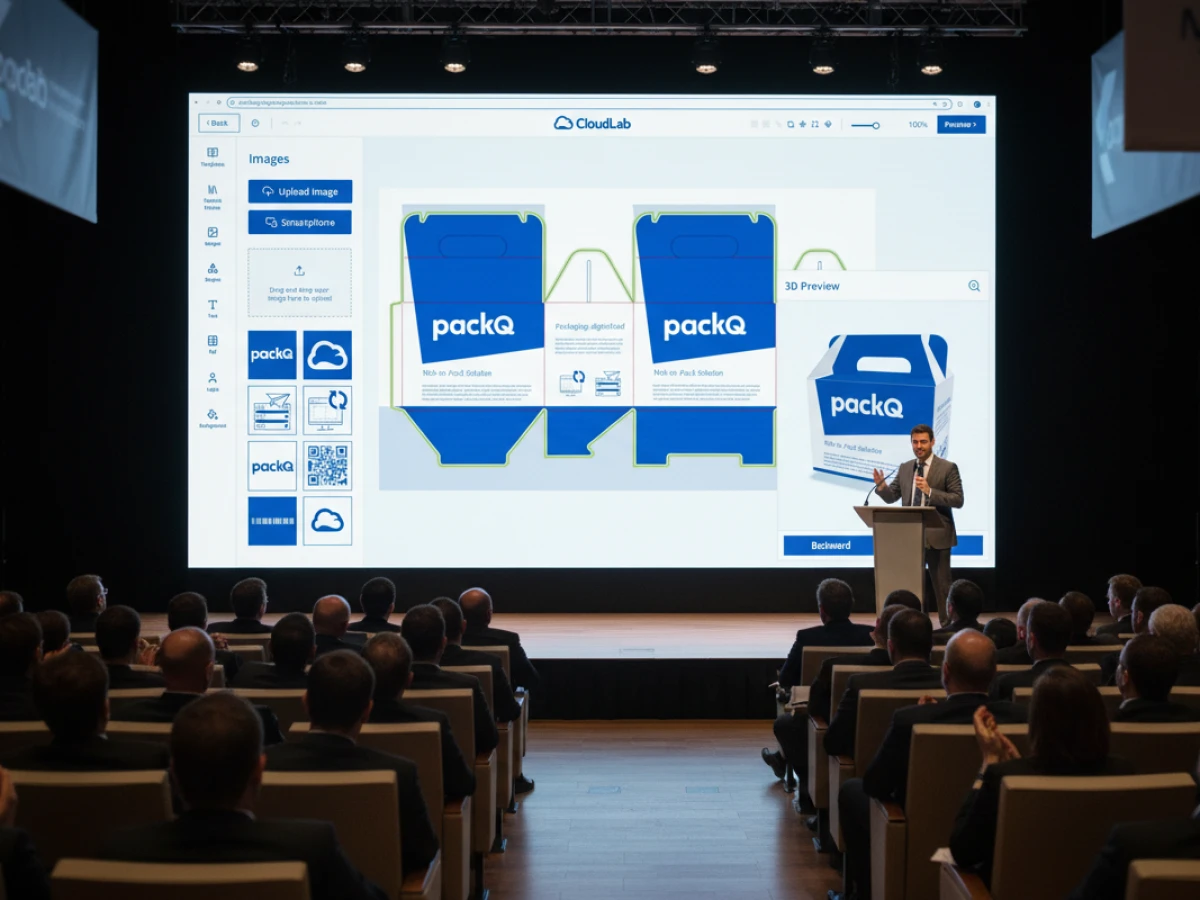
A core strength of packQ is its deep integration of industry standards. The built‑in ECMA and FEFCO library offers more than 120 folding carton designs and over 290 corrugated box structures, along with around 50 POS display templates. Each template is fully parametric: users adjust length, width, height, material and closures while the software preserves structural integrity. The library ensures consistency across jobs and supports global standards, enabling printers and brands to offer identical packaging types worldwide. For flexible packaging, packQ provides modules for stand‑up pouches and sachets, calculating sealing zones and gussets and showing them in 3D.
120 ECMA Cartons, 290 FEFCO Boxes & 50 POS Displays
By standardising shapes, packQ reduces errors and speeds up configuration. Folding cartons cover common ECMA styles such as tuck‑in boxes, mailers and sleeves. FEFCO models include regular slotted containers, die‑cut boxes and trays with automatic adjustment of lids, bases and flaps. POS display templates cater for counter and floor stands, complete with cut‑outs and support structures. The breadth of templates allows converters to serve diverse markets without creating dielines from scratch. Because the library is parametric, it also supports custom sizes and materials while adhering to ECMA/FEFCO geometries.
AI Designer Suite: Vectorisation, Crispify & More
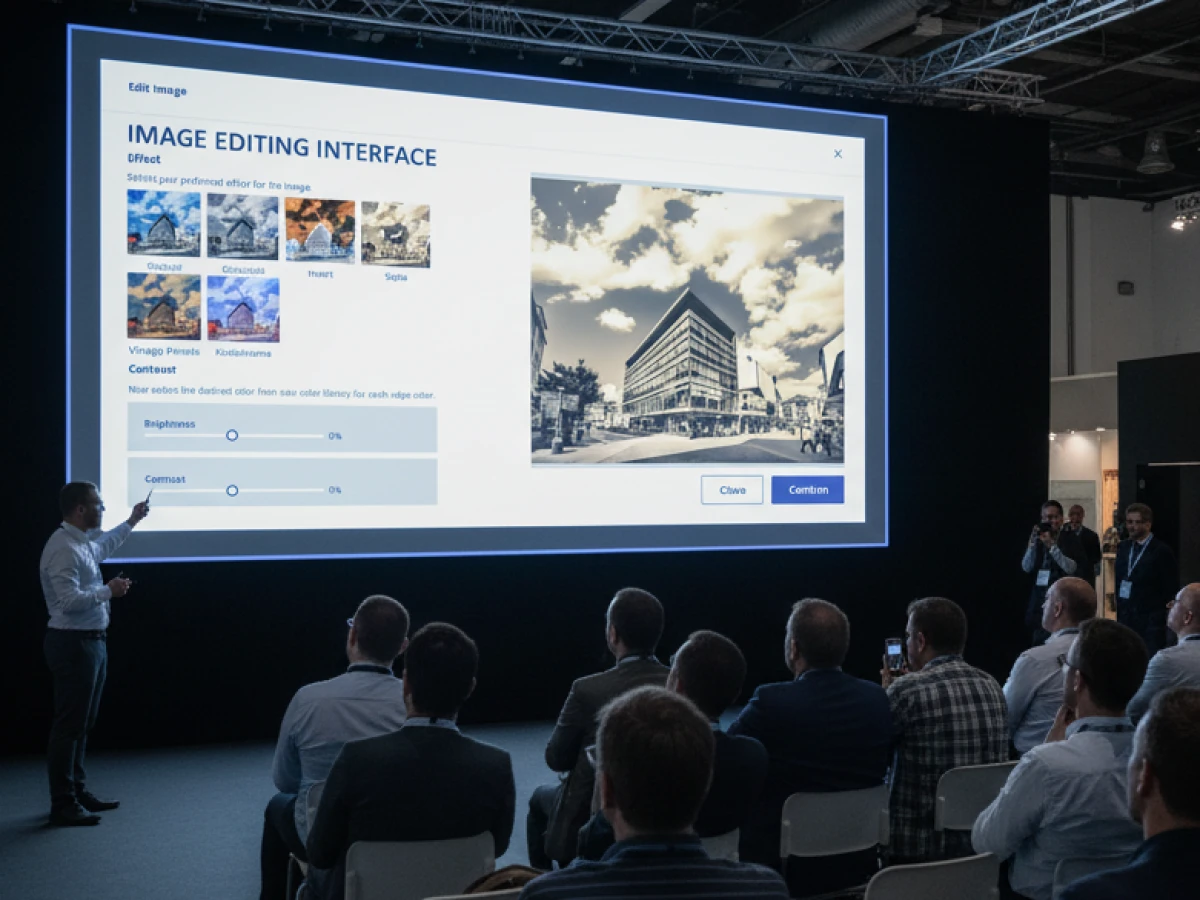
To accelerate artwork preparation, packQ integrates an AI Designer Suite. This module uses machine learning to convert raster images into vectors, upscale low‑resolution photos and remove backgrounds in one click. The Vektorize tool analyses shapes and colours to generate smooth Bézier curves, creating infinitely scalable logos and graphics. Crispify applies deep‑learning super‑resolution to increase image resolution by up to four times. The Remove Background function isolates objects even with complex edges. Designers can also apply creative effects like sepia or vintage looks directly in the browser. Smart masking suggests masks for foil stamping, spot UV or varnish, and colour optimisation identifies RGB assets and converts them to CMYK. The AI suite runs within the same 3D environment, so users see results instantly.
Variable Data Printing & Mass Customization
packQ supports Variable Data Printing (VDP) based on the PDF/VT standard. This capability allows names, serial numbers, QR codes or personalised motifs to be inserted automatically into the artwork and displayed in 3D. Businesses can run campaigns where every package is unique, such as personalised gift boxes or loyalty promotions. Because the workflow is automated, batch size one becomes profitable: data is merged, preflighted and exported as print‑ready files without manual intervention. For a beverage brand campaign, packQ used the AI suite to vectorise logos, upscale photos, remove backgrounds and generate masks for foil stamping, producing a flawless limited‑edition design in minutes.
Dynamic Pricing & Quoting
An essential requirement for online ordering is transparent pricing. packQ offers a dynamic pricing engine that recalculates costs in real time based on dimensions, materials, finishing options and quantities. Changes to height, material weight or print run instantly update the price, enabling customers to optimise budgets without waiting for quotes. Pricing rules can reflect true production costs, including machine setup, substrate prices and finishing surcharges. This transparency shortens sales cycles and reduces abandoned carts, making micro‑orders economically viable.
Dynamic Preflight & Quality Assurance
packQ includes a dynamic preflight check that validates artwork during design. It examines resolution, colour spaces, bleed, font embedding and spot colour names. When a user uploads an image, the system analyses file formats and recommends vectorisation or Crispify if resolution is insufficient. Preflight flags missing bleed, identifies RGB images and converts them to CMYK, ensuring production‑safe PDFs. These checks occur in real time, so errors are corrected before they reach the press. Preflight is integrated with the AI suite: if Crispify is needed, it triggers automatically. This proactive quality assurance reduces reprints and builds customer trust.
Production Workflow & Hotfolder Integration
After design approval, packQ automates the transition to production. It exports production‑ready PDF and JDF tickets and sends them directly to workflow systems via hotfolders. Job tickets trigger material reservations, press scheduling and finishing instructions in the ERP or MIS. For printers handling hundreds of orders per day, automated job batching groups similar orders to maximise substrate use. Because manual touchpoints are eliminated, make‑ready times shrink and errors drop. The system also supports CSV exports for integration with external analytics and reporting.
Headless & API‑First Architecture
packQ was conceived as a headless, API‑first platform. All functions — including the 3D designer, pricing engine, preflight and AI tools — are accessible via REST and SOAP APIs. This decoupled architecture allows packQ to integrate with e‑commerce platforms like Shopify, Magento, Shopware and BigCommerce. Orders placed on a storefront can call the packQ API to generate a customised dieline, calculate a price and return a 3D preview. After purchase, the API creates job tickets in ERP or MIS systems and triggers production. Because the front and back ends are separated, developers can build bespoke user interfaces while leveraging packQ’s powerful engine. The architecture also enables microservices to scale independently, supporting thousands of simultaneous users without bottlenecks.
Target Audiences & Use Cases
packQ is designed for diverse stakeholders in the packaging ecosystem. Its modularity and API‑centric design mean that printers, converters, brands, platforms and IT teams can adopt the components they need.

Printers & Packaging Manufacturers
Commercial printers and corrugated converters can expand their portfolios by offering folding cartons and POS displays online. With packQ, customers design boxes, see accurate previews and receive instant prices. The system automatically generates print‑ready data and schedules jobs, enabling printers to process high order volumes without CAD experts. Short runs become profitable because automation reduces setup costs. For converters, packQ provides a B2B portal where existing clients log in, configure standard packages and reorder with minimal support. Access control ensures that each customer sees only their products, protecting confidential designs and pricing.
E‑Commerce Platforms & Marketplaces
Online marketplaces can integrate packQ as a white‑label service to offer branded packaging at checkout. Sellers configure shipping boxes directly on the platform, choose materials and apply logos, with pricing updated instantly. For marketplaces, packaging becomes an additional revenue stream and a differentiator for sellers. Because packQ is headless, integration with existing checkout and payment processes is straightforward. Customers appreciate the convenience of ordering custom packaging alongside products, driving repeat purchases and loyalty.
Brand Owners & Industry
Marketing teams at consumer brands use packQ to prototype campaigns and special editions. Instead of relying on agencies, marketers can design packaging themselves and test variations in 3D. Personalised campaigns — for example, printing each consumer’s name or a regional motif — are executed using the VDP engine. Since packQ ensures adherence to ECMA/FEFCO standards and preflights all files, designs move smoothly into production. Pharmaceutical and cosmetic companies benefit from precision and compliance: parametric templates ensure correct glue flaps and product safety, while dynamic preflight checks for proper colour profiles and fonts.
Technology Teams & Integration
IT and prepress teams require stable APIs and scalable infrastructure. packQ’s headless architecture offers REST and SOAP endpoints for all operations. Developers can integrate the system into corporate portals, ERP and MIS systems, CRM platforms and marketing automation workflows. Authentication and role‑based permissions support secure multi‑tenant deployments, enabling agencies to manage multiple customers on a single instance. Microservices scale horizontally, and on‑premise or private cloud deployments meet strict compliance requirements. Because data flows automatically from order to production, IT teams spend less time on manual data entry and more time on optimisation.
Implementing packQ: Strategies for Success
packQ offers flexible deployment models and supports both open and closed shops. To maximise return on investment, companies should align the implementation with their business model.
Open‑Shop vs Closed‑Shop Scenarios
In an open shop, anyone can order packaging. The platform exposes a broad selection of templates and finishing options, and pricing is transparent. This model suits online printers and marketplaces seeking new revenue streams. For a closed shop, access is restricted to registered customers or internal teams. Manufacturers use closed shops to streamline reorders and protect sensitive pricing. packQ supports both scenarios with multi‑tenant user management, permission controls and branded portals. Companies can configure which products appear in each shop and assign customer‑specific pricing rules.
Mass Customization & Batch Size One
Mass customization means producing unique items with the efficiency of mass production. packQ makes this possible through parameterised templates, variable data printing and automated workflows. Customers adjust dimensions and artwork, and packQ generates production files instantly. Because orders flow directly into the press, batch size one is profitable: there is no manual setup or data entry. Marketing teams can run campaigns where thousands of variants differ by name, code or image without additional cost. For converters, micro‑orders from start‑ups become an attractive market rather than a logistical burden.
Efficiency Through Standardisation
ECMA and FEFCO standards guarantee that boxes will fold and glue correctly. packQ embeds these standards in every template, eliminating guesswork and rework. The template gallery acts as a knowledge base: when users adjust parameters, the system recalculates fold lines and flaps. Preflight ensures that print data meet technical specifications for resolution, colours and bleed. This standardisation reduces misprints and returns. For global brands, consistent structures simplify logistics and co‑packing. For printers, it means they can guarantee quality without dedicating staff to manual checks.
Automated Pricing & Order Workflows
Before digital tools, quoting packaging often took days. Sales teams manually estimated material usage, machine time and finishing costs. packQ replaces manual quotes with live calculation. Pricing rules incorporate raw material costs, machine speeds, waste factors and finishing surcharges. As customers explore different sizes and embellishments, the price updates instantly. After checkout, the system automatically creates job tickets, reserves materials and schedules production. This automation shortens order cycles, reduces overhead and provides customers with immediate clarity. Integration with ERP ensures that inventory and billing stay in sync.
USPs & Competitive Advantages
packQ stands out in a crowded market because it focuses exclusively on packaging, combines industrial depth with user friendliness and offers a modular, open architecture. The following USPs differentiate packQ from other tools.
Deep ECMA/FEFCO Integration
While some web‑to‑print tools offer generic dieline libraries, packQ integrates the most comprehensive ECMA and FEFCO library on the market. More than 120 folding carton and 290 corrugated designs are available, along with 50 POS displays and flexible packaging modules. Each template is fully parametric and validated for production. This integration eliminates the need for CAD expertise and ensures that every design is structurally sound.
End‑to‑End Automation & Industry 4.0
packQ automates the entire workflow from customer input to press output. Live preflight, dynamic pricing, AI‑assisted artwork, variable data merging, job batching and hotfolder exports work together to create a digital twin of each package. Production data flows directly to machines, enabling predictive maintenance and material forecasting. This end‑to‑end automation is aligned with Industry 4.0, where smart factories depend on connected systems to optimise throughput and minimise waste. packQ positions printers and converters at the forefront of this transformation.
Headless Architecture & API Ecosystem
By decoupling the front end from the back end, packQ enables customers to build bespoke user experiences and integrate the platform deeply into existing ecosystems. The API exposes all features, from 3D rendering to pricing, preflight and AI processing. Because of this openness, packQ can be embedded in e‑commerce checkouts, CRM systems, ERP workflows or even IoT dashboards. This flexibility is critical for technology teams who need to adopt packaging software without disrupting existing operations. The headless architecture also ensures scalability: each service scales independently to handle spikes in demand.
AI & 3D Visualisation
packQ’s AI suite sets it apart from competitors. Vektorize converts low‑resolution logos into precise vectors. Crispify increases image resolution, preserving textures and details. Remove Background isolates objects and allows creative compositing. Combined with real‑time 3D visualisation, these tools provide a designer‑grade experience in the browser. Because the AI is integrated into the workflow, users without DTP expertise still produce professional results. This democratises packaging design and speeds up approvals.
Quality & Compliance
packQ’s dynamic preflight ensures that only compliant data proceed to production. Checks cover resolution, bleed, colour modes, font embedding and spot colour definitions. The AI also flags problematic colour conversions and proposes corrections. For regulated industries like pharmaceuticals, correct colours and legible text are critical. packQ’s preflight rules can be customised to meet company standards and regulatory requirements. Data security is maintained through role‑based access controls and GDPR‑compliant data handling.
Future Trends: Where packQ Is Heading
The packaging landscape continues to evolve. Consumer expectations, sustainability requirements and technological advances shape the road map of Web‑to‑Pack platforms. packQ already anticipates these trends and lays the foundation for next‑generation packaging.
AI‑Assisted Design & Material Recommendation
Beyond today’s vectorisation and image enhancement, AI will soon support design decisions. Future algorithms could suggest optimal box sizes based on product dimensions and shipping rates, recommend sustainable materials or generate alternative layouts that maximise shelf appeal. packQ’s modular architecture allows new AI models to be integrated via microservices. Companies may train models on their own brand guidelines to ensure consistent typography, colours and finishes. As AI matures, design tasks will shift from manual creation to guided exploration, accelerating innovation and reducing time to market.
Smart Factories & Digital Twins
Industry 4.0 envisions factories where machines communicate autonomously, schedule maintenance and adapt to changing demand. packQ already acts as a digital twin by transferring design, dieline and metadata to machines, enabling automatic adjustments, material forecasts and maintenance planning. In future, integration with IoT sensors could allow feedback from production lines to inform design decisions, such as adjusting tolerances or recommending alternative materials to reduce waste. CloudLab is actively exploring connections between packQ and manufacturing execution systems (MES) to create closed‑loop optimisation.
Sustainability & Eco‑Friendly Packaging
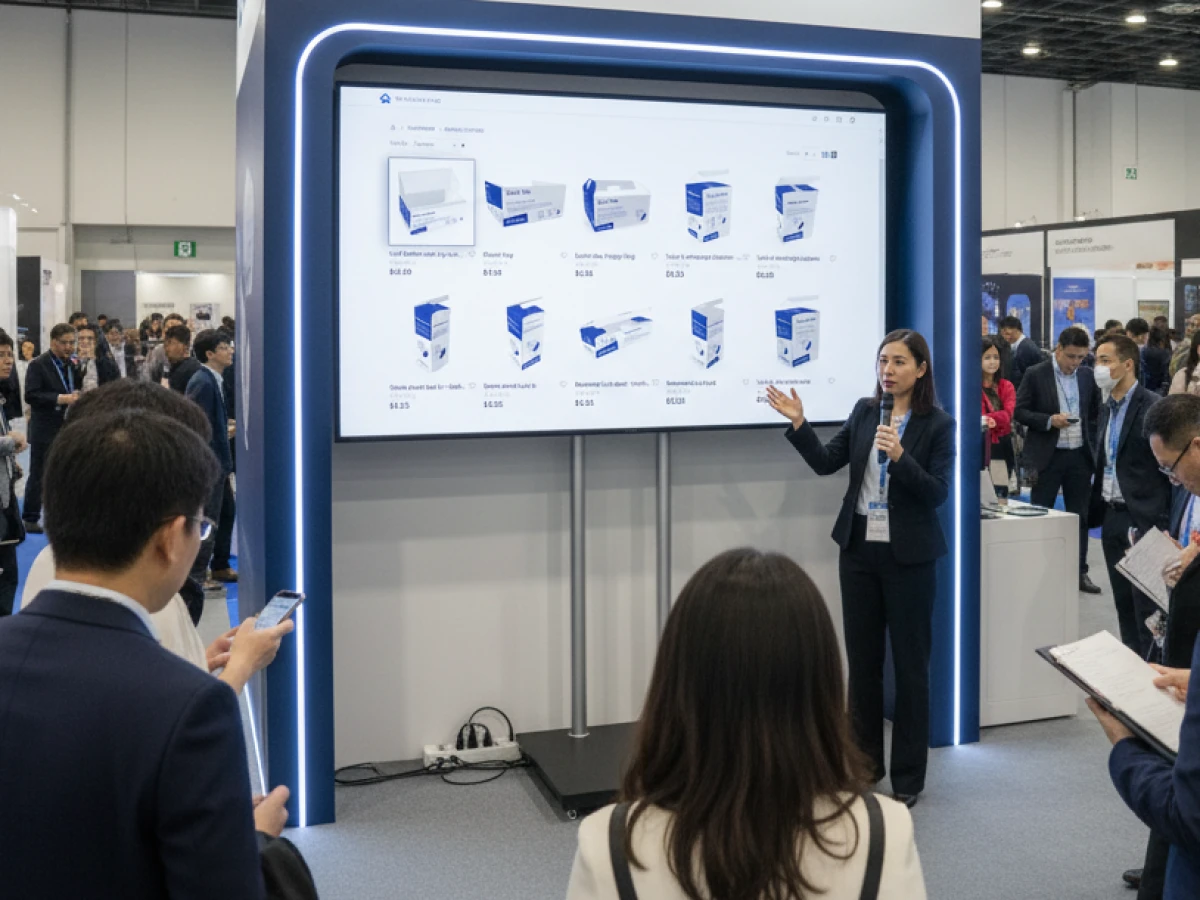
Sustainability is no longer optional. Companies seek ways to reduce material usage, choose eco‑friendly substrates and minimise transport emissions. packQ supports on‑demand production and virtual prototypes, reducing waste. Parametric templates optimise material utilisation, and AI‑based layout recommendations could further reduce offcuts. Future modules may calculate CO₂ footprints and suggest alternative materials or production sites to reduce carbon emissions. For brands aiming for circular economy goals, digital platforms like packQ provide the data and control needed to implement sustainable practices at scale.
CloudLab’s packQ redefines what product packaging software can achieve. By combining parametric standards, a browser‑based 3D designer, AI‑powered artwork tools, dynamic preflight, real‑time pricing and API‑first integration, packQ enables mass customization and industrial efficiency. Printers and converters can process micro‑orders profitably, brands can personalise campaigns, e‑commerce platforms can offer packaging as a service and IT teams can integrate packaging into existing systems with minimal effort. The InterTech Technology Award and rapid market adoption testify to the innovation behind packQ. As packaging moves toward smart factories and AI‑assisted design, packQ provides a scalable foundation that bridges today’s needs with tomorrow’s opportunities. It turns the promise of batch‑size‑one production into a practical reality.
An overview of all features of packQ developed by CloudLab
- 3D Packaging Designer – Design folding cartons, cartons and other packaging directly in the browser and instantly see how your product will look thanks to the real‑time 3D preview. Dimensions can be adjusted and prices are recalculated automatically.
- ECMA and FEFCO Library – Gives access to standardised templates for folding cartons, corrugated boxes and POS displays. The parametric models are based on the internationally recognised ECMA and FEFCO codes and can be customised.
- Vectorisation & Finishing – Pixel images are converted into high‑resolution vector graphics in just a few clicks. Finishing options such as foil stamping, spot UV varnish or embossing are also available to enhance the product.
- Variable Data Printing (PDF/VT) – Enables the import of personalised data or images via CSV/PDF‑VT upload. Data can also be added manually, allowing both one‑off pieces and large series to be produced efficiently.
- Template Gallery – A large selection of ready‑made templates accelerates the design process. The AI‑based “Liquid Layouts” automatically adjust designs to different formats while preserving the original design concept.
- Folding Boxes – Configure folding cartons with various closure types, viewing windows and embellishments. An interactive 3D preview provides complete control over material, format and features.
- Corrugated Board – Design corrugated packaging including special formats. The software supports different materials and special colours, automatically checks fold and cutting lines and shows the folding sequence in an animated view.
- POS Displays – Create individual product displays with configurable shelves and trays. Logos, text and QR codes can be placed precisely; a 3D preview shows the result from every angle.
- Flexible Packaging – For stand‑up pouches, mailing bags or film packaging, the print area and bleed can be defined in the backend. PackQ automatically trims artwork to size and marks relevant production dimensions directly in the editor.
- Labels & Stickers – Offers a wide range of label shapes and sizes. Materials, coatings and finishes can be freely selected; a preview shows the label directly on the packaging. Both data imports and manual entries are supported.
- AI Designer Suite – A set of image‑editing tools: raster images can be vectorised, resolution enhanced four‑fold with “Crispify”, and backgrounds removed automatically. Various filters are also available.
- Dynamic Preflight Check – Print data is checked in real time for resolution, colour mode and other criteria during configuration. This allows errors to be corrected before the job goes into production.
- Production Workflow – Once an order is placed, all relevant print and production data are generated automatically, including JDF/XML files. Hot‑folder integration ensures seamless transfer to printing and die‑cutting equipment.
- Product Configuration & Calculation – Enables detailed selection of materials, colours and finishes with inputs checked for plausibility. Dynamic pricing calculates realistic production costs based on industry‑standard parameters.
- eCommerce Integrations & APIs – Thanks to the “packQ Shop Connector”, the software can be connected to common shop systems without programming knowledge. Through REST/SOAP APIs and formats such as JDF, XJDF or JSON, packQ also integrates into ERP and production systems.