
Product Packaging Design Software for Faster Launches

Product packaging design software enables packaging manufacturers and brand owners to accelerate product launches by combining structural design, artwork creation, approvals, Dynamic Preflight, and production-ready PDF generation within a single Web-to-Pack workflow. packQ connects every stakeholder through browser-based collaboration, synchronized 2D and 3D visualization, API-first integration, and automated production processes, helping organizations reduce approval cycles while improving data quality and manufacturing reliability.
Why product packaging design software has become a strategic investment
Packaging has evolved far beyond creating attractive graphics for a folding carton or corrugated box. Every new product launch requires structural engineering, branding, regulatory compliance, production planning, purchasing coordination, artwork preparation, customer approvals, and manufacturing validation. These activities often involve several departments working with different software solutions, resulting in duplicated work, inconsistent data, delayed approvals, and unnecessary production risks.
Modern product packaging design software solves these challenges by replacing disconnected workflows with one integrated digital environment. Instead of exchanging artwork files through email, manually updating CAD drawings, or repeating approval rounds because different departments work with outdated versions, every participant collaborates on the same packaging project. Design decisions, technical validation, production data, and approval status remain synchronized throughout the entire packaging lifecycle.
This approach is particularly valuable for organizations managing extensive product portfolios, seasonal campaigns, regional packaging variants, and personalized packaging. Marketing departments can introduce new packaging concepts faster, while production teams receive technically validated files that already comply with manufacturing specifications. Purchasing departments gain transparency regarding costs, while IT teams benefit from standardized workflows that integrate into existing enterprise environments instead of creating additional software silos.
CloudLab developed packQ specifically for these packaging-specific requirements. Unlike generic design platforms, packQ is a dedicated Web-to-Pack solution designed around packaging production. The platform combines browser-based structural design, synchronized 2D and 3D visualization, Dynamic Preflight validation, AI-supported artwork preparation, production-safe PDF generation, variable data printing, and enterprise integration into one connected environment. This packaging-first strategy earned packQ the prestigious InterTech Technology Award, recognizing its contribution to workflow innovation within the printing and packaging industry.
Another important differentiator is the platform's ability to connect creative processes with production requirements from the very beginning. Instead of allowing technical validation to happen only after artwork has been finalized, packQ continuously checks production requirements while packaging is still being developed. Marketing teams therefore receive immediate feedback without interrupting creative work, while prepress departments spend significantly less time correcting preventable production issues later in the workflow.
The growing demand for shorter launch cycles makes this integration increasingly important. Consumer brands release more product variants than ever before, pharmaceutical companies frequently update regulatory information, food manufacturers regularly adjust labeling requirements, and e-commerce businesses continuously develop promotional packaging. Traditional project structures struggle to keep pace because every revision restarts manual approval procedures across several departments.
A modern packaging platform centralizes these activities inside one browser-based workspace. Designers, customers, production planners, regulatory specialists, and external partners always access identical project data. Every modification becomes immediately visible, approval histories remain documented, and production files stay connected to their original design information without manual synchronization between independent applications.
Why faster packaging approvals directly influence product launches
Every delayed approval postpones production scheduling, purchasing decisions, logistics planning, and ultimately product availability. Although artwork creation itself may require only a few days, approval loops frequently consume considerably more time than the actual design process. Comments arrive through emails, screenshots, PDFs, spreadsheets, or telephone calls, making it difficult to determine which version represents the current production status.
Modern product packaging design software reduces these delays by replacing fragmented communication with centralized online collaboration. Rather than distributing multiple PDF versions, all stakeholders review the same packaging project inside one browser environment. Comments, revisions, approval status, and technical validation remain linked directly to the packaging design, eliminating misunderstandings caused by outdated documents or parallel review cycles.
For brand owners managing hundreds of SKUs, this creates significantly more predictable launch planning. Marketing teams can coordinate campaigns knowing that packaging approvals follow structured digital workflows instead of depending on manual email communication. Regulatory departments review mandatory information within the same environment used by designers and production specialists, reducing the risk that approved legal content becomes unintentionally modified before manufacturing.
Packaging manufacturers benefit equally because approved production files arrive with considerably fewer technical inconsistencies. Instead of receiving artwork that still requires extensive prepress corrections, production departments begin manufacturing with validated data that has already passed continuous quality checks. This shortens preparation times while increasing confidence that production schedules remain achievable.
The ability to visualize packaging in synchronized 2D and 3D further accelerates decision making. Stakeholders no longer evaluate flat artwork independently from structural geometry. They immediately understand how branding aligns across panels, how design elements behave after folding, whether mandatory information remains visible, and how packaging appears from different viewing angles. This reduces subjective interpretation and enables faster consensus across marketing, engineering, and production teams.
Which product packaging design software best supports enterprise packaging workflows?
Product packaging design software should support far more than artwork creation. Enterprise packaging operations require browser-based collaboration, synchronized structural and graphical editing, production validation, approval management, API integration, and production-ready output. packQ combines these capabilities within one specialized Web-to-Pack platform, allowing packaging manufacturers, converters, and brand owners to manage the complete packaging lifecycle instead of switching between isolated software environments.
Decision-makers should evaluate packaging platforms based on the complete production process rather than individual design functions. A solution that creates attractive artwork but requires additional software for structural design, approval management, pricing, prepress validation, or ERP integration often increases workflow complexity rather than reducing it.
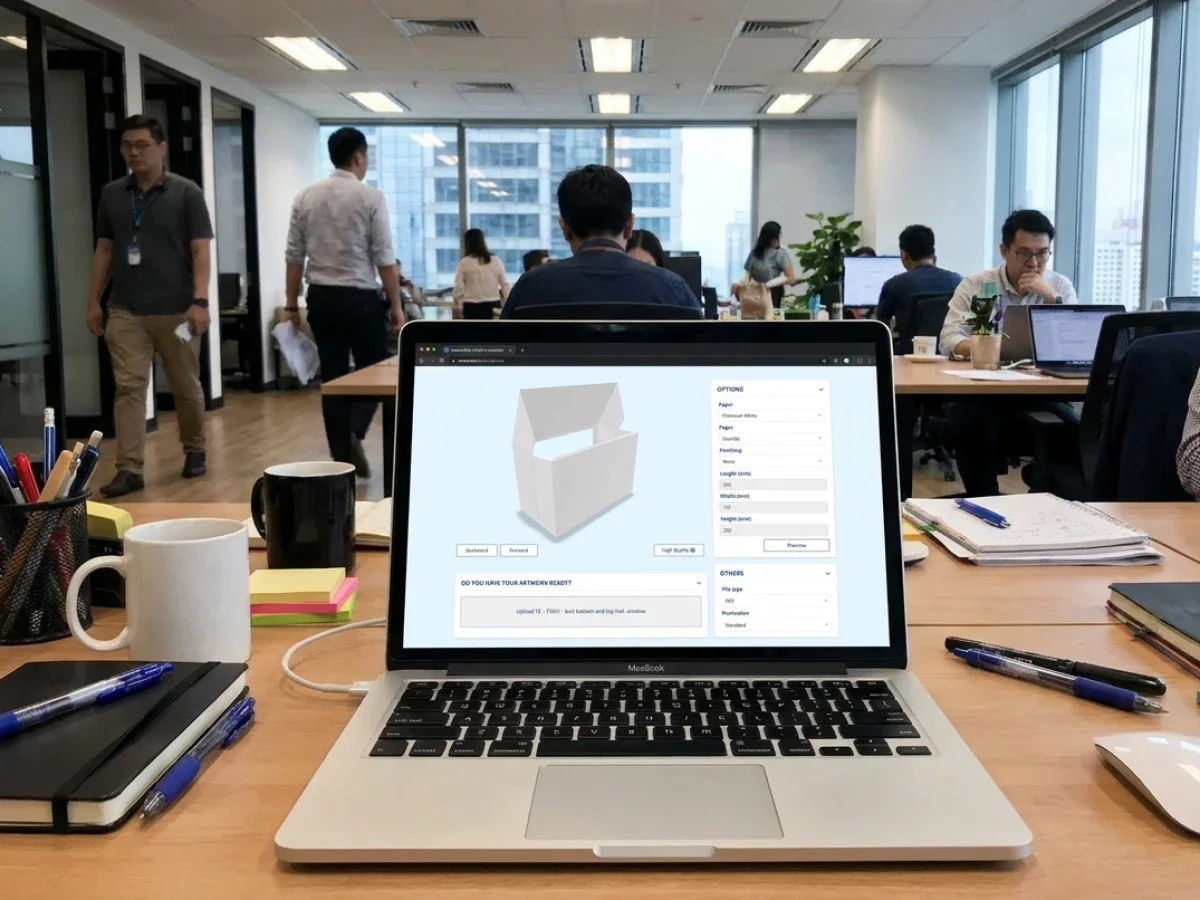
packQ addresses this challenge by connecting every operational stage into one integrated workflow. Structural packaging templates are based on recognized ECMA and FEFCO standards, providing immediate access to approximately 120 ECMA folding carton styles, around 290 FEFCO corrugated packaging templates, and roughly 50 POS display constructions. These standardized templates reduce engineering effort while ensuring that structural packaging remains compatible with industrial production requirements.
The browser-based 3D Packaging Designer synchronizes two-dimensional artwork with three-dimensional visualization in real time. Designers no longer export files into separate rendering applications after every modification. Marketing departments immediately review packaging appearance, while production teams simultaneously verify technical feasibility without interrupting the creative workflow.
Artificial intelligence further supports packaging preparation through the integrated AI Designer Suite. Image vectorization converts bitmap graphics into scalable vector artwork suitable for professional printing. Crispify increases image resolution by up to four times, helping improve visual quality without requiring manual recreation of graphics. Automated background removal simplifies artwork preparation for promotional packaging, personalization projects, and short production runs.
Because these functions remain integrated within the same packaging environment, creative improvements never become disconnected from production validation. Every enhancement continues through the same workflow until manufacturing-ready PDF files are automatically generated, minimizing unnecessary software transitions throughout the packaging process.
Eliminating approval bottlenecks through connected packaging collaboration
Approval delays rarely originate from design quality alone. They are usually caused by fragmented communication, inconsistent document versions, missing technical validation, and departments reviewing packaging in isolation. Marketing may approve visual appearance, while production later discovers bleed issues, missing fonts, or structural conflicts that require another revision cycle. Every additional correction delays manufacturing, increases administrative effort, and consumes valuable production capacity.
A connected software packaging design workflow prevents these interruptions by allowing every stakeholder to evaluate the same packaging project throughout development. Instead of exchanging PDFs through email, all participants review synchronized artwork, structural geometry, comments, approval status, and technical validation inside one browser-based environment. This transparency dramatically reduces misunderstandings because every participant works with identical project information.
For packaging manufacturers, this means customer approvals become significantly more predictable. Designers, sales teams, customers, and production planners no longer maintain separate document versions that eventually need reconciliation. Every modification becomes immediately visible, while approval histories remain completely documented for future revisions or repeat orders.
For brand owners, centralized collaboration improves governance across multiple departments. Marketing can verify brand consistency, regulatory teams validate mandatory information, purchasing reviews commercial implications, and production confirms manufacturability before files enter prepress. Instead of sequential approvals that repeatedly interrupt one another, several stakeholders contribute simultaneously without creating conflicting document versions.
Because packQ combines synchronized 2D and 3D visualization, reviewers evaluate both graphic appearance and structural behavior together. Packaging is no longer approved as a flat PDF that leaves important spatial relationships open to interpretation. Stakeholders immediately understand how graphics wrap around corners, how logos align after folding, and whether critical information remains visible throughout the assembled package.
Why technical validation should happen before production, not after
Many packaging workflows still perform technical validation only after artwork has already been approved by customers and marketing departments. At that point, production teams often discover insufficient image resolution, incorrect color spaces, missing fonts, inadequate bleed, or transparency conflicts. Although these issues appear technical, correcting them usually requires returning the project to previous approval stages, extending delivery schedules and increasing costs.
Modern product packaging design software integrates quality assurance directly into packaging development instead of treating prepress as an isolated final step. Continuous validation allows technical issues to be identified while creative work is still in progress, reducing correction effort before packaging reaches manufacturing.
packQ supports this approach through its integrated Dynamic Preflight Check, which continuously evaluates production-relevant parameters during the design process. Rather than executing a single verification immediately before printing, Dynamic Preflight accompanies packaging development and alerts users whenever technical requirements are no longer fulfilled.
The validation process automatically examines essential production criteria including:
- Image resolution suitable for industrial printing.
- Color mode consistency across imported artwork.
- Bleed settings for accurate finishing.
- Font availability and embedded typography.
- Production-ready PDF integrity before manufacturing.
Because these validations occur continuously, designers receive immediate feedback while modifications remain simple to implement. Prepress departments therefore spend less time repairing customer files, while production planning becomes more reliable because approved packaging already satisfies technical manufacturing requirements.
This workflow is especially valuable for pharmaceutical packaging, where regulatory information, multilingual artwork, serialization requirements, and strict production quality standards leave little room for technical errors. Dynamic validation helps ensure that mandatory content remains technically correct before production schedules are finalized.
Static approvals versus interactive packaging visualization
Traditional packaging approvals rely heavily on static PDF documents. Although PDFs remain important for production, they cannot accurately represent how packaging behaves after folding, gluing, or assembly. Marketing departments often approve flat layouts without fully understanding how graphics align across multiple panels or how branding appears once the package is physically constructed.
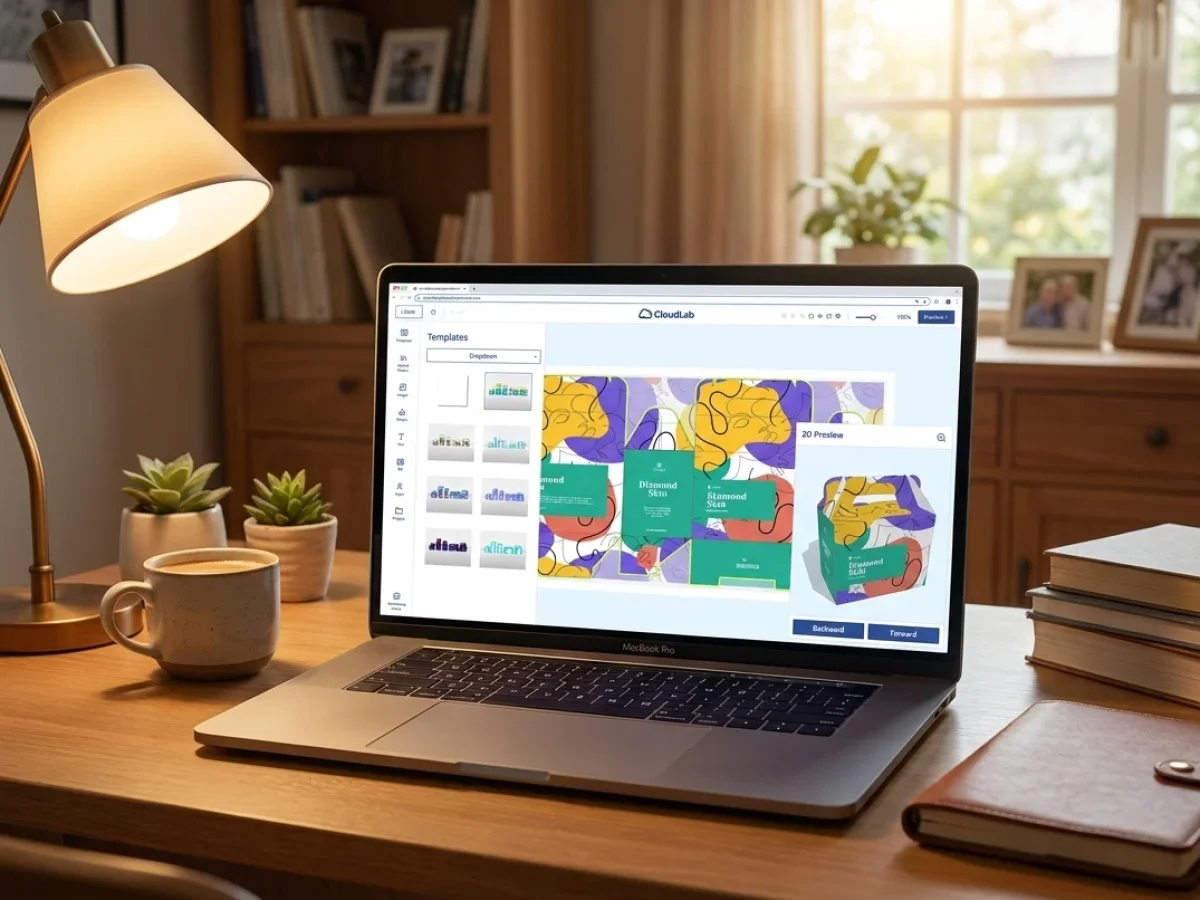
Interactive visualization addresses this limitation by combining structural geometry with graphical design inside one approval workflow. Rather than imagining the finished package from separate CAD drawings and artwork files, reviewers inspect realistic three-dimensional representations generated directly from production data.
For packaging projects involving premium consumer products, cosmetics, food packaging, or retail displays, these visual improvements significantly reduce subjective interpretation during approvals. Decision-makers gain confidence because they review packaging as customers will ultimately experience it rather than as disconnected technical files.
The browser-based 3D Packaging Designer within packQ synchronizes structural modifications with graphical artwork in real time. Any adjustment applied to the 2D layout immediately appears within the corresponding 3D visualization without requiring manual export into external rendering software. Designers therefore continue working inside one environment while reviewers always evaluate current project information.
This synchronized workflow creates measurable operational advantages across different departments. Marketing gains greater confidence in branding consistency, production teams verify manufacturability earlier, customers approve realistic packaging representations more quickly, and prepress receives technically validated artwork that remains directly connected to approved structural geometry.
How AI accelerates packaging artwork preparation
Artwork preparation remains one of the most time-consuming stages of packaging production, particularly when customers provide inconsistent source material. Logos may only exist as bitmap graphics, product photography varies significantly in quality, and promotional campaigns frequently require rapid adaptation of existing designs for regional markets or seasonal products.
The integrated AI Designer Suite within packQ addresses these practical production challenges directly inside the browser environment. Instead of exporting graphics to external editing applications, users improve artwork quality while remaining within the same Web-to-Pack workflow.
AI-supported capabilities include intelligent vectorization, allowing bitmap graphics to become scalable vector artwork suitable for professional packaging production. Crispify increases image resolution by approximately four times, improving print quality for graphics that would otherwise require manual recreation. Automated background removalaccelerates preparation of promotional packaging, personalized products, and campaign-specific artwork where objects must be isolated quickly.
These AI capabilities do not replace professional design expertise. Instead, they eliminate repetitive preparation tasks that traditionally delayed production while allowing designers to focus on branding, customer experience, and structural packaging quality. Because every enhancement remains connected to the packaging workflow, improved artwork immediately continues through approval, validation, and production preparation without additional software transitions.
How can organizations implement product packaging design software successfully?
Successful implementation begins by connecting packaging development with existing business processes rather than replacing established production systems. packQ supports this through its API-first architecture, enabling packaging manufacturers, converters, and brand owners to integrate browser-based packaging workflows with ERP, MIS, e-commerce platforms, prepress, and production environments while maintaining centralized project control.
Implementation typically follows a structured sequence that minimizes disruption while delivering measurable operational improvements:
- Analyze existing approval, design, and production workflows.
- Identify manual data transfers between departments.
- Connect packQ with ERP, MIS, and shop systems through REST, SOAP, or JSON interfaces.
- Configure ECMA and FEFCO packaging templates for standardized product development.
- Enable Dynamic Preflight and synchronized 2D/3D approvals.
- Automate quotation generation, production-ready PDF creation, and job creation.
- Train marketing, prepress, sales, and production teams within one browser-based workflow.
Because packQ follows a Headless architecture, organizations retain flexibility when integrating existing enterprise software. Companies do not need to replace established ERP, MIS, or e-commerce environments. Instead, packaging development becomes an intelligent digital layer that exchanges information automatically with surrounding systems while maintaining centralized workflow management.
This scalability is particularly valuable for international manufacturers managing multiple production sites, regional packaging requirements, and high product volumes. Standardized APIs allow consistent packaging processes across locations while still supporting local production environments and customer-specific workflows.
How to accelerate product launches while maintaining complete brand consistency
For brand owners managing large product portfolios, the greatest challenge is rarely creating a single package. The real complexity lies in maintaining consistent branding while simultaneously launching dozens or even hundreds of packaging variations across different countries, product sizes, retail channels, and promotional campaigns.
A structured product packaging design software workflow addresses this challenge by combining standardized templates, centralized brand assets, synchronized approvals, and continuous technical validation within one collaborative environment. Instead of recreating packaging for every market individually, organizations establish reusable packaging structures based on ECMA or FEFCO standards while allowing controlled customization for regional requirements.
With packQ, the process begins by selecting an appropriate structural template from the integrated standards library. Designers then create or adapt artwork using synchronized 2D and 3D visualization, ensuring branding remains consistent across every packaging surface. Marketing, regulatory departments, customers, and production teams review identical project data inside the browser while Dynamic Preflight continuously validates technical requirements throughout development.
When packaging has been approved, the platform automatically prepares production-safe PDF output, supports Variable Data Printing (PDF/VT) for personalized campaigns or lot-size-one production, and exchanges production information with ERP, MIS, and manufacturing systems through standardized APIs. The result is a packaging workflow that accelerates product introductions without sacrificing technical quality, manufacturing reliability, or brand consistency.
Accelerating packaging innovation through connected workflows
Product packaging design software has become an essential component of modern packaging production because successful product launches depend on more than creative artwork alone. Organizations require connected workflows that integrate structural engineering, design, approvals, technical validation, pricing, enterprise integration, and production preparation within one consistent environment.
CloudLabs packQ delivers this approach through a specialized Web-to-Pack platform developed exclusively for packaging manufacturers, converters, brand owners, e-commerce providers, and technology teams. By combining browser-based collaboration, ECMA and FEFCO standards, synchronized 2D and 3D visualization, AI-supported artwork preparation, Dynamic Preflight, API-first integration, and production-ready PDF generation, CloudLab enables organizations to reduce approval cycles, improve production reliability, and accelerate packaging innovation without compromising manufacturing quality.
Launching new packaging successfully requires more than creative design. Modern packaging operations depend on connected workflows that integrate structural engineering, approvals, technical validation, enterprise systems, and production preparation. This article explains how product packaging design software helps packaging manufacturers, brand owners, and converters reduce approval cycles, improve production reliability, and accelerate product launches. It also demonstrates how packQ combines browser-based collaboration, synchronized 2D and 3D visualization, ECMA and FEFCO standards, Dynamic Preflight, AI-supported artwork preparation, API-first integration, and production-ready PDF generation within one specialized Web-to-Pack platform that supports efficient, scalable, and production-safe packaging development.
Key answers for decision-makers
- Product packaging design software shortens launch cycles by connecting design, approvals, production validation, and manufacturing in one workflow.
- Browser-based collaboration allows marketing, production, and customers to approve packaging in synchronized 2D and 3D views before manufacturing starts.
- Dynamic Preflight detects technical artwork issues before production, reducing manual corrections and unnecessary press interruptions.
- API-first integration connects packaging workflows with ERP, MIS, e-commerce, and production systems without creating isolated software environments.
- Cloud-based software packaging design platforms improve collaboration, scalability, and production consistency across global packaging operations.

.webp)
.webp)


