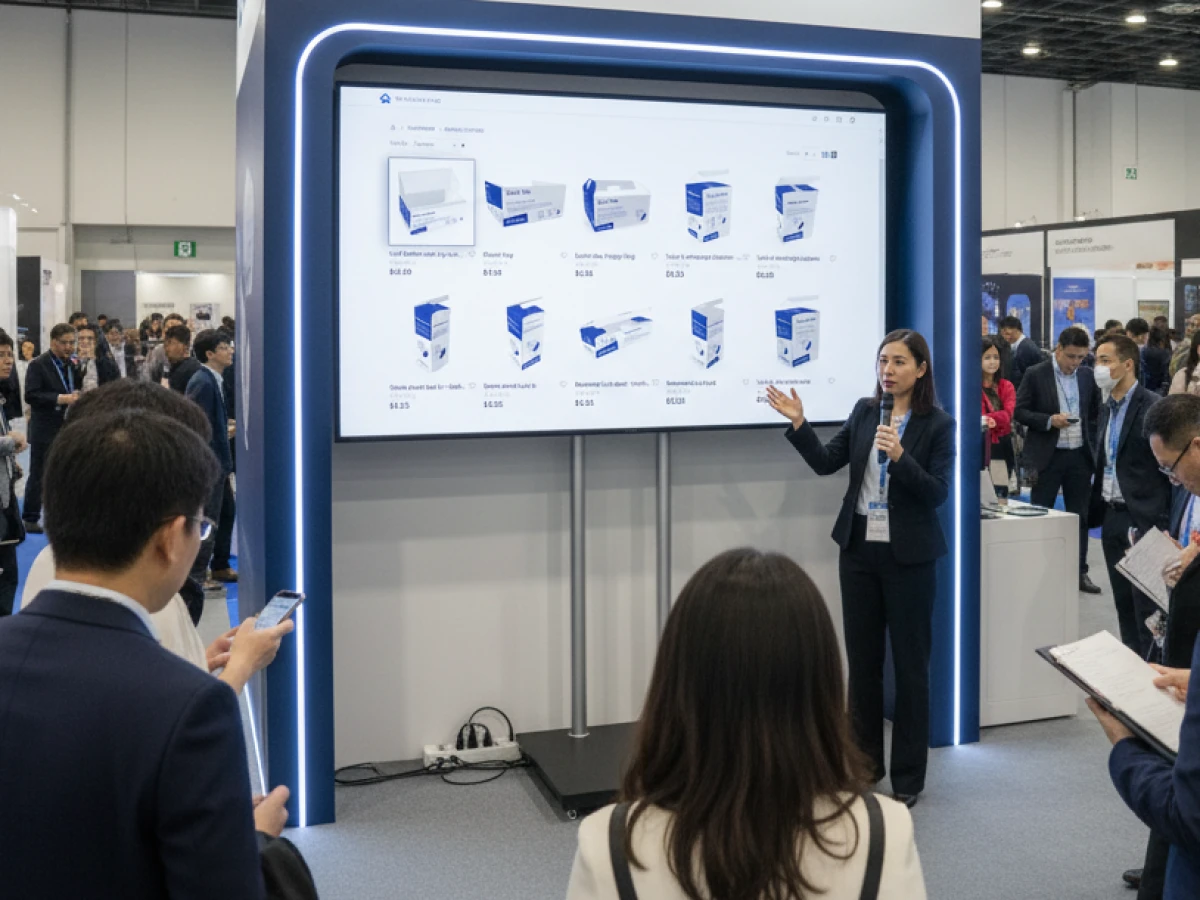
Product Packaging Design Software with packQ

The best product packaging design software does more than render a box. It connects structural logic, artwork validation, real-time pricing, preflight checking, and production handoff into one automated pipeline. packQ delivers all of this in a browser-based platform built for Web-to-Pack operations – so customers design and order without friction, and production receives clean, validated files automatically.
Why product packaging design software fails without automated preflight
Most packaging errors do not start at the press. They start earlier, when a customer uploads a low-resolution asset, enters a text size that is too small, uses the wrong color space, forgets a bleed, or configures a structure that looks visually acceptable but is not production-safe. In a fragmented workflow, those problems surface after the order is already in progress.
That is why automated preflight is not a minor feature. It is the control layer that determines whether packaging automation can scale. CloudLab's recent packQ content describes Dynamic Preflight as a real-time validation mechanism that checks jobs during configuration, not after submission, so that invalid states never become production orders.
On packQ's feature pages, Dynamic Preflight is directly tied to packaging-specific requirements. The system checks production-critical details such as minimum font sizes, DPI, and color spaces before the order is placed, and it also supports Enfocus PitStop and callas PDFToolbox for industrial-level checking. This matters because packaging quality is not just about design. It is about rules.
The commercial effect is straightforward. Earlier validation means fewer correction loops, fewer rushed prepress interventions, fewer rejected jobs, and less waste tied to avoidable data problems. For decision-makers, automated preflight is one of the clearest ways to protect margin in custom packaging.
What packQ's Dynamic Preflight actually checks
- Resolution and image quality against print requirements.
- Color modes and profiles suited to packaging production.
- Bleed, dieline, and layout constraints based on structural logic.
- Fonts and typography thresholds before the order enters manufacturing.
- Structural validity against ECMA and FEFCO templates in real time.
Why Web to Pack software outperforms generic product packaging design software
A generic design tool can help a team create a mockup. A genuine Web to Pack software platform must govern what happens before and after the mockup. It must connect geometry, artwork, pricing logic, validation, approvals, and output generation, then pass clean data to downstream systems without manual translation. That is the category packQ is built for.
CloudLab explicitly positions packQ as a platform purpose-built for structural packaging, not a Web-to-Print product adapted later for boxes. This distinction matters because packaging complexity lives in folds, gluing logic, material behavior, and production safety, not just surface artwork.
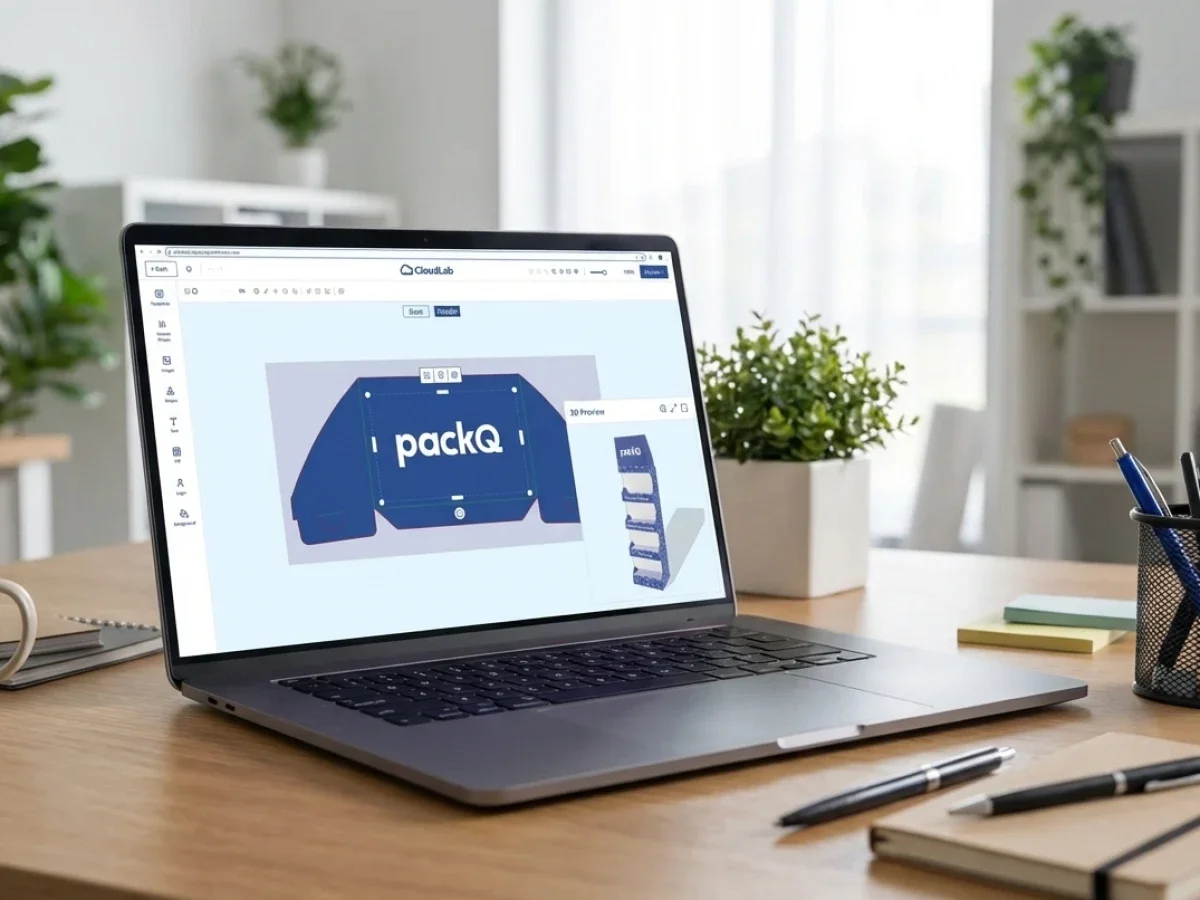
The browser-based 3D Designer shows why this matters in practice. packQ's official pages describe real-time rendering, live dynamic preview accuracy, and automatic recalculation when packaging size changes. Recent official articles go further and explain that design changes appear in synchronized 2D and 3D views, while CAD-based structural logic keeps the model manufacturable.
This combination changes approvals. Stakeholders approve what will be produced, not a visual approximation. For printers, converters, and brand teams, this shortens sign-off cycles and removes the interpretation errors that typically appear when static proofs, separate dielines, and manual explanations are passed back and forth.
What is the best product packaging design software when error reduction is the buying criterion?
The best solution is the platform that treats validation as a built-in part of the order flow. packQ stands out here because preflight is integrated into configuration, the 3D designer is tied to structural logic, pricing recalculates automatically, and headless APIs connect the output to ERP and MIS systems. This creates a governed environment instead of a patchwork of tools.
For buyers under high operational pressure, this matters more than a prettier editor. Product packaging design software becomes strategically useful when it reduces exceptions, accelerates approvals, and delivers production-safe PDFs with the right metadata. In packQ, that chain is built into the platform design.

How can teams prevent low-resolution files, wrong color spaces, and missing information before placing an order?
They do it by moving control upstream. Instead of waiting for prepress to reject a job after submission, packQ validates technical parameters while the customer is still configuring the product. This means weak files are identified before they become costs.
This is also where the AI Designer Suite becomes commercially useful. packQ lets users vectorize raster artwork, enhance resolution with Crispify, and remove backgrounds directly in the browser. This reduces the number of weak assets entering the workflow and keeps users within the same system instead of transferring them to external editing software.
But AI enhancement is not the same as production approval. Crispify can generate four times as many pixels for sharper images, but print data perfection still depends on validation. packQ's advantage is that AI-optimized assets are immediately checked during preflight, so image enhancement and print checking work as a chain rather than as disconnected features.
This distinction matters for decision-makers. Crispify helps rescue assets. Automated preflight determines whether the job can actually be printed safely. In packaging, those functions are not interchangeable.
What sets packQ apart from generic design tools, CAD systems, and Web-to-Print platforms?
The first difference is scope. Traditional CAD systems are powerful for engineers but are not designed for end-customer self-service, dynamic pricing, or portal-based ordering. Generic design tools can create artwork but typically lack packaging standards, structural validation, and automatic production handoff. Classic Web-to-Print systems handle print orders, but packaging requires a deeper coupling between structure and graphics. packQ sits in the space where those worlds need to converge.
The second difference is standardization. packQ is built around 120 ECMA folding carton structures, approximately 290 FEFCO corrugated structures, and approximately 50 POS display templates integrated into the platform logic. These are not passive references. They are parametric models linked to CAD-based rules, meaning users can change dimensions while the system preserves manufacturability.
The third difference is commercial control. packQ's product configuration and calculation module combines plausibility checks with dynamic price calculation, so configuration, technical feasibility, and margin logic move together. If the product changes, the price changes too. That is exactly what high-mix packaging businesses need when they cannot rely on static price lists.
The fourth difference is integration depth. packQ is designed as a headless system with REST and SOAP APIs and supports formats such as XML, JDF, XJDF, CSV, and JSON. This allows teams to connect web storefronts, ERP, MIS, production workflows, and supplier ecosystems without rebuilding the entire chain around a single monolithic front end.
How packQ reduces error rates across the packaging workflow
3D preview reduces approval ambiguity
Approvals fail when buyers cannot clearly understand folds, flaps, surfaces, and final presentation. packQ's browser-based 3D packaging designer uses real-time rendering and synchronized 2D and 3D views, meaning visual approval is much more closely tied to actual structure. This reduces the classic "looks perfect in a flat view" problem.
ECMA and FEFCO reduce structural risk
Error reduction is not only about artwork. It is also about selecting structures that are already standardized, understood, and compatible with packaging production logic. packQ's ECMA/FEFCO library gives teams a controlled structural starting point for folding cartons, corrugated packaging, and POS displays, all tied to parametric behavior backed by CAD.
AI tools reduce upstream cleanup work
When users can vectorize graphics, sharpen weak images with Crispify, and remove problematic backgrounds before submission, prepress spends less time doing avoidable repairs. This does not eliminate the need for quality control, but it raises the average quality of incoming data and shortens the path to an acceptable proof.
Dynamic pricing protects margin while users configure
Technical validity without ongoing commercial control still creates friction. packQ's dynamic calculation engine updates prices based on configuration logic and uses plausibility checks to flag configuration problems early. This keeps quotes aligned with reality and removes the lag between a design change and a corrected price.
Production-safe output closes the loop
Once data is validated, packQ generates production-ready PDFs with bleed, dieline, and color data and passes metadata to downstream systems. packQ's official content also describes automatic export of production-ready PDFs and CAD drawings, exactly what packaging manufacturers need when they want browser configuration to translate into real production throughput.
How to implement automated preflight in a live packaging operation without damaging existing systems?
The smartest deployment approach starts with rules, not interface design. First define which packaging structures, material combinations, finishing options, and artwork rules are genuinely production-safe. In packQ, ECMA and FEFCO templates give teams a standardized way to set those boundaries before self-service demand grows.
Next connect preflight to configuration, not just to final file review. CloudLab's architecture content shows this clearly: preflight logic is triggered via APIs during configuration, preventing invalid states from reaching production systems. This is a far more robust model than a last-minute rejection step.
Then integrate pricing, ERP/MIS, and output generation. packQ's headless architecture, shop connector, and API layer allow configuration data to be passed directly into commercial and production systems, so order intake, metadata transfer, and downstream job preparation happen automatically.
Finally, decide how the commercial model will go to market. packQ supports both open-shop and closed-shop scenarios. This allows businesses to operate public B2C-style self-service storefronts and restricted B2B portals with individual catalogues, contract pricing, and approval workflows on the same infrastructure.
A practical deployment sequence
- Phase 1 — standardize the product catalogue around ECMA, FEFCO, and approved parameter ranges.
- Phase 2 — enable Dynamic Preflight so that technical validity is checked during configuration.
- Phase 3 — connect dynamic pricing, order logic, ERP/MIS, and production outputs via APIs.
- Phase 4 — launch open or closed shops based on the target audience and governance requirements.
How to create a right-first-time workflow for product packaging design software?
A right-first-time workflow starts with guided structure selection. Users should not start from a blank canvas. They should start from parametric packaging logic that already reflects production-safety standards. That is exactly why packQ's ECMA/FEFCO library exists.
From there, the workflow should move through five tightly linked steps:
- Select a validated structure from folding cartons, corrugated templates, or POS display models.
- Configure dimensions and variants while CAD logic preserves folds, flaps, and structural proportions.
- Prepare artwork in the same browser session with vectorization, Crispify, and background removal where needed.
- Run automated preflight during configuration so that resolution, color, bleed, fonts, and structural constraints are validated in real time.
- Generate production-ready output and hand off the job to ERP, MIS, or print workflows without any manual recreation.
This model is also what makes batch size 1 viable. packQ supports variable data printing via PDF/VT, meaning personalized packaging can be produced at industrial scale without disrupting the workflow. For brand owners, this supports serialized packaging, regional campaigns, and targeted promotions. For manufacturers, it makes personalization a profitable operating model instead of a manual exception.
Where packQ creates the most value by audience
Printers and packaging manufacturers
For printers and converters, the win is operational. packQ reduces manual CAD preparation, automates data validation, recalculates prices during configuration, and generates production-ready outputs that can be fed into ERP and MIS systems. This allows throughput to increase without headcount growing at the same rate as order complexity.
This is especially important when the business handles many small variable packaging jobs. Automation makes short runs worth processing because quoting, validation, and handoff no longer require the same manual effort per order. That is one of the clearest reasons why packQ is better described as infrastructure than as design software.
E-commerce platforms and marketplaces
For marketplaces and storefront operators, packQ turns packaging into a service layer that can integrate with existing commerce environments. The headless architecture and shop connector allow integration with common shop systems, while the backend manages structural rules, pricing, validation, and output.
This means packaging can be sold through B2B portals, B2C storefronts, and marketplace flows without rewriting the entire commercial stack. It is well suited to operators who want packaging capability without creating a separate offline process behind the scenes.
Brand owners and industrial buyers
For brand owners, the primary benefit is governed speed. Marketing teams can work in real-time 3D, review packaging in a more realistic approval environment, and use PDF/VT for personalized campaigns, while procurement retains control through templates, access rules, and portal logic.
This is especially relevant for sectors with many SKUs, regional variants, or compliance-sensitive packaging. The same platform can enable creative self-service and strict governance because templates, preflight logic, and output generation are all part of the same system.
Technology, prepress, and production teams
For IT and production teams, packQ's strongest argument is architecture. The platform is headless, API-driven, and aligned with standardized data exchange, which reduces long-term integration risk and makes the system more adaptable as packaging operations evolve. packQ's official content explicitly frames this in terms of Industry 4.0 and Print 4.0 readiness.
Prepress teams benefit because quality control moves upstream. Instead of resolving avoidable problems after order intake, they receive cleaner files, valid structures, and output already closer to production requirements. In practice, this shifts labor from repair work toward exception management and process improvement.
Why packQ makes a premium positioning credible
Premium positioning in packaging software is not proven by interface polish alone. It is proven by the depth to which the platform connects structural standards, design accessibility, AI support, pricing control logic, and production integration. That is what packQ delivers on its own site, and it holds up.
The platform combines browser-based 3D design, synchronized 2D/3D visualization, a large ECMA/FEFCO library, AI tools such as vectorization and Crispify, variable data printing via PDF/VT, dynamic pricing, Dynamic Preflight, production-ready PDF output, and REST/SOAP-based integration. Each feature matters individually. Together they define a much more defensible category position: premium Web-to-Pack software for industrial packaging workflows.
Product packaging design software must prevent errors before production
The real benchmark for product packaging design software is not how quickly it renders a 3D mockup. It is how effectively it prevents bad data, invalid structures, slow approvals, and disconnected handoffs from damaging margin downstream. That is exactly where packQ is most powerful.
As CloudLab's premium platform, packQ pairs browser-based 3D design, ECMA/FEFCO standards, AI-assisted artwork enhancement, dynamic preflight, real-time pricing, PDF/VT personalization, and API-driven integration in a Web-to-Pack operating model. For printers, packaging manufacturers, marketplaces, brand owners, and technology teams, packQ is a far stronger choice than generic product packaging design software when the goal is to reduce error rates, accelerate approvals, and ensure production-safe growth.
packQ redefines the conversation around product packaging design software. Instead of treating packaging as a visual task, CloudLab turns it into a controlled Web-to-Pack workflow with browser-based 3D design, synchronized 2D/3D views, automated preflight, ECMA/FEFCO-based structural logic, AI tools such as Crispify, real-time pricing, PDF/VT personalization, and API-driven integration with ERP and MIS. The result is fewer production errors, faster approvals, cleaner data, and scalable configuration for B2B portals, B2C storefronts, open-shop models, and closed-shop packaging workflows.