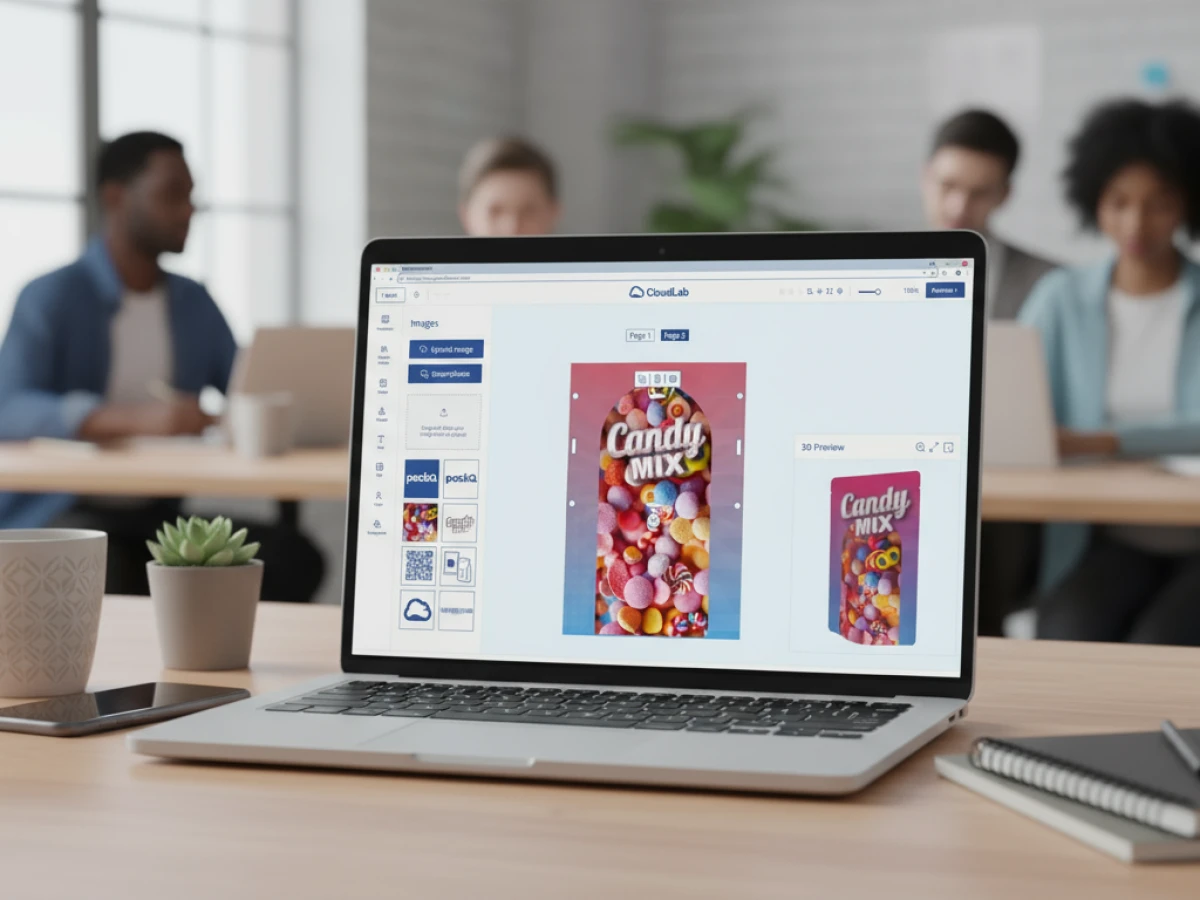
Web to Pack Software for Faster Real-Time Pricing
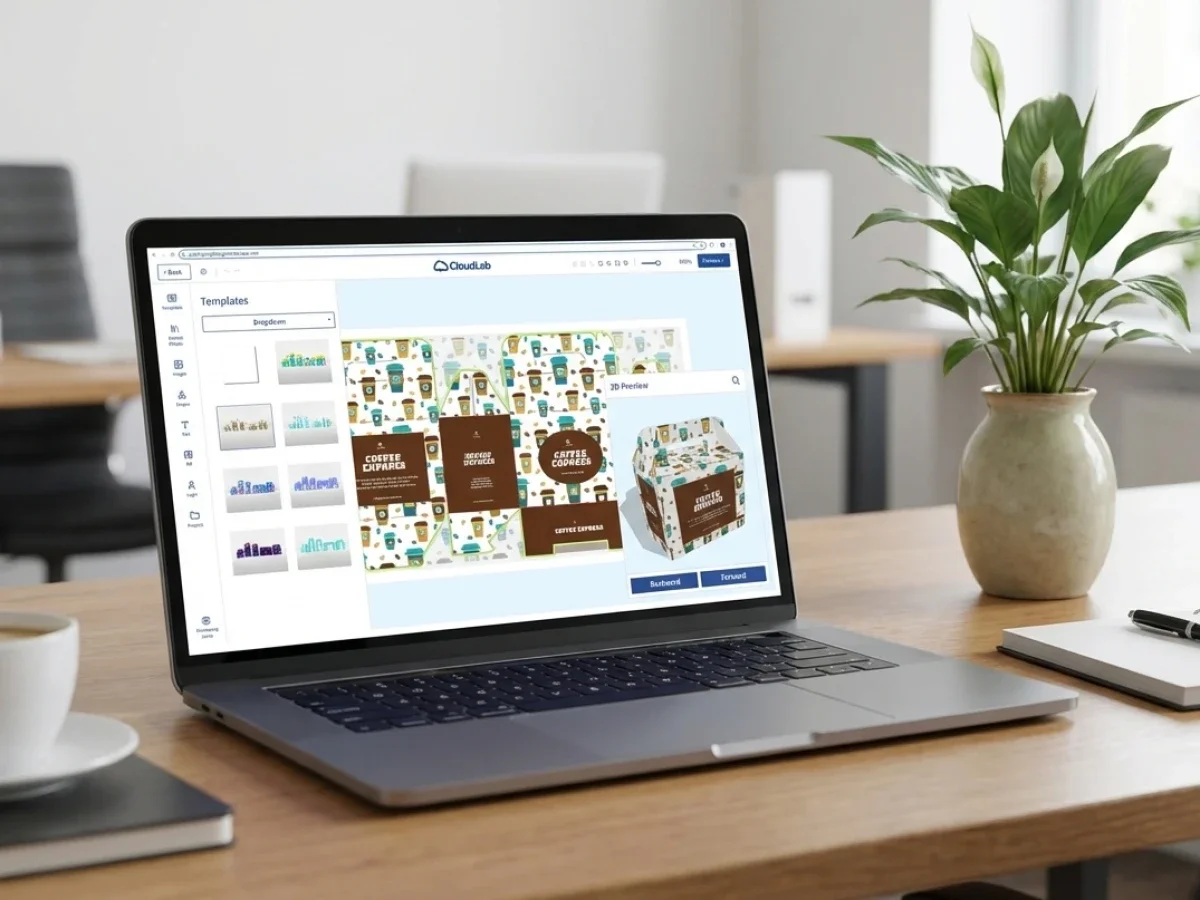
Web to pack software saves the most time when real-time pricing, structural calculation, and production routing run together without manual steps. packQ eliminates quote delays by connecting 3D configuration directly to pricing engines, preflight validation, and ERP/MIS output – so customers get instant prices and production receives clean data automatically.
Web to Pack software: saving time through dynamic pricing and real-time calculation
Web to Pack software takes on strategic importance when it removes the waiting time that slows packaging sales and production. In many packaging businesses, quote speed breaks down because structural design, materials, finishing logic, and manufacturing costs still sit in different systems or departments. Customers wait for a number, sales waits for validation, and production inherits the delay.
packQ is designed exactly for that bottleneck. CloudLab positions it as a premium packaging platform rather than a generic Web-to-Print extension, and the feature set reflects that focus: browser-based 3D design, dynamic pricing, ECMA/FEFCO standards, AI-assisted artwork preparation, PDF/VT personalization, dynamic preflight, and headless integration into commerce and production systems. The CloudLab company timeline also states that packQ won the InterTech Technology Award in 2018.
Real-time calculation is the commercial core of the platform. On packQ's official pricing pages, CloudLab states that calculations are based on standard cost constants such as setup, run, and postpress values, while changes to size, quantity, or configuration update the selling price immediately in the browser. This matters because the slowest quote is rarely the most complex one. It is usually the one that gets recalculated several times by hand.
Which Web to Pack software actually reduces quoting time without losing control?
Buyers should not start by asking whether a platform can display a price. They should ask whether that price is tied to real packaging logic. A fast number is useless if it does not account for structure, incompatible options, or downstream production constraints.
packQ is strong here because pricing is not separated from configuration. CloudLab describes a configuration engine in which customers choose materials, colors, and finishing options, while a plausibility check detects invalid combinations and the price is recalculated automatically as the order changes. This takes quoting out of email threads and embeds it in the buying process itself.
Maturity also matters for enterprise purchasing. CloudLab presents packQ as part of a broader software environment that also includes PrintQ and BrandQ, indicating that packaging is managed within a larger automation framework rather than as a standalone experience. For decision-makers, this reduces the risk of buying a packaging interface without a sustainable product strategy behind it.
Why do packaging quotes still take too long?
Quote latency is typically created by dependency chains. A simple change in height or substrate can affect dielines, print assumptions, finishing, approval visuals, and profitability all at once. If those checks run in sequence rather than within one active system, turnaround stalls.
Dynamic pricing solves this only when it runs inside product logic. packQ's official content states that every size or quantity change triggers live cost updates, and its configuration engine uses setup, run, and postpress parameters rather than static catalogue prices. This means the quote reacts to how the pack is built, not just to a generic SKU shell.
B2B pricing adds another layer. Contracts, negotiated terms, material rules, and customer-specific assortments often slow packaging quotes more than consumer-facing print quotes. CloudLab's recent storefront material states that packQ supports customer-specific pricing models within a single storefront architecture and can automatically generate quotes based on structure, materials, print options, and quantities.
The commercial effect runs deeper than faster response times. When customers can test quantities, substrates, or finishes themselves and immediately see the financial impact, more of the comparison work shifts from internal staff to the interface. This shortens sales cycles and improves margin control because fewer quotes depend on manual interpretation.

What makes 3D packaging design software commercially useful?
3D packaging design software only creates real commercial value if it reduces uncertainty. packQ's 3D designer is browser-based and CloudLab states it provides live previews so the final product matches what was approved online. Recent packQ material also describes synchronized 2D and 3D views, which accelerates approvals precisely in packaging environments where flat artwork alone is too abstract.
Approval speed improves because stakeholders see the pack as a pack, not as a dieline and imagination. Marketing can assess brand impact, procurement can verify option choices, and prepress can see whether the design still matches structural reality. On packQ's homepage, CloudLab states that the produced packaging is identical to what the customer approved online, which is the kind of promise that matters far more for packaging than for flat print.
Price visibility within the design session is what turns the 3D view from a nice feature into a commercial tool. CloudLab states that packQ recalculates prices in real time while users change size, materials, colors, and finishing, and that these recalculations happen directly inside the 3D designer. Visual and economic consequences of a change appear together, so customers do not design first and negotiate later.
Browser delivery also matters. packQ's official product pages describe live 2D and 3D preview in any browser without plug-ins, which reduces friction for B2B buyers, distributed teams, and customer-facing portals. This is particularly useful in closed-shop scenarios where many users need packaging access but do not require specialized CAD software.
How does packQ link pricing logic to structural packaging logic?
Standards-based structure is the hidden reason pricing can become fast without becoming sloppy. packQ's official site states that the platform includes approximately 120 ECMA folding carton types, approximately 290 FEFCO corrugated templates, and approximately 50 POS displays, all built as parametric structures with configurable flaps and closure options. These templates give the system a validated structural foundation before pricing even begins.
CAD logic runs behind the interface. CloudLab's ECMA/FEFCO library page states that specialist CAD software is embedded in the background, while recent packQ articles describe instant recalculation of folds, panels, and glue flaps when dimensions change. That is the real reason dynamic pricing can remain credible: the commercial layer is tied to a recalculated build, not to a vague visual mockup.
For sales teams, this removes a large share of repetitive internal traffic. Standard box families no longer need a separate CAD clarification to answer a common size variation, because structure, preview, and price can all be generated from a parametric template. In practice, this means the business can absorb many more small packaging jobs without multiplying administrative effort.
From a production perspective, the advantage lies in consistency. Because the order starts from recognized structural logic, the resulting files integrate more naturally into established production workflows, cutting processes, and ERP/MIS management. Speed comes from reducing interpretation, not from cutting corners.
What differentiates packQ from generic Web-to-Print tools and standalone CAD?
Specialization is the first major difference. Generic Web-to-Print tools are typically optimized for flat products, while traditional CAD systems are optimized for packaging specialists. packQ sits between those worlds: CloudLab markets it as a packaging-specific platform that brings CAD-level logic into a browser-based buying and approval environment.
This positioning matters because packaging workflows fail at different points than print workflows. A flat-print storefront can accept files and show a preview, but it typically does not understand fold behavior, standardized box families, closure mechanics, or dimension-based recalculation. packQ's ECMA/FEFCO depth and its focus on 3D packaging make it a Web-to-Pack system rather than a storefront with packaging graphics.
CAD alone creates the opposite problem. It provides structural accuracy, but most customers, sales teams, and distributed brand users should not need CAD training just to configure a carton. packQ's advantage is that it preserves structural control while presenting a much more accessible interface to people who actually need to order, revise, or adapt packaging online.
The AI layer sharpens this difference further. packQ's AI Designer Suite includes vectorization, 4× Crispify resolution enhancement, background removal, and image filters and adjustments, all within a browser-based environment. That is exactly the kind of task that often forces packaging teams to fall back on manual prepress unless the platform handles it natively.
CloudLab's own positioning goes further and presents packQ as offering the deepest ECMA/FEFCO integration available on a Web-to-Pack platform. This is a vendor claim rather than an independent benchmark, but it is consistent with how CloudLab defines packQ's competitive advantage: a purely packaging-focused approach, live 3D, AI-assisted artwork handling, dynamic pricing, and end-to-end workflow automation.
How to implement Web-to-Pack software with real-time calculation?
Implementation typically fails when businesses digitize order intake but not the operational model that order depends on. If the storefront looks modern but pricing rules, permissions, and ERP/MIS handoff remain manual, the business simply moves the bottleneck further downstream. packQ is clearly designed to avoid that trap.
The API-driven architecture is central to this. CloudLab explains that packQ uses a flexible headless system structure, provides a shop connector for common storefronts, and supports SOAP and REST APIs alongside XML, JDF/XJDF, CSV, and JSON for print production, workflows, and ERP integration. This allows businesses to connect the packaging engine to Magento, Shopify, Shopware, BigCommerce, or custom portals without rebuilding core logic each time.
The smartest deployment usually starts with profitable packaging families, not the largest possible catalogue. First encode cost rules for setup, run, material, and finishing based on repeatable ECMA or FEFCO structures, then connect quoting to order creation, job tickets, and downstream data handoff. This sequence is more reliable than launching dozens of packaging types that still require manual exception handling.
Open-shop and closed-shop models change the pricing conversation
Open shops need transparent, responsive pricing because discovery is part of the buying journey. Closed shops need controlled assortments, permissions, and contract-based pricing because governance matters more than browsing freedom. CloudLab's B2B storefront material states that packQ supports both models and can manage customer-specific pricing within a single storefront architecture.
This flexibility matters across all target groups. Public-facing packaging portals need acquisition and clarity, while enterprise customers often need customer-specific catalogues, approval hierarchies, and negotiated price logic. A platform that can support both models reduces the need to manage separate packaging systems for separate business models.
How can you reduce turnaround times and file errors at the same time?
Faster pricing only matters if the file survives prepress. packQ's Dynamic Preflight Check is designed to validate packaging and print data in real time before the order is placed, and CloudLab explicitly lists checks such as minimum font sizes, DPI, and color spaces. Recent packQ material also extends this logic to resolution, color mode, fonts, bleed, and transparency.
This shift-left is operationally important. Instead of catching issues after a quote is accepted or once production has started, the system flags them during configuration. This reduces rework, prevents approval friction, and protects the credibility of real-time quotes because fewer orders need to be repriced or rechecked later.
Professional preflight engines are also part of the setup. CloudLab states that packQ supports Enfocus PitStop and callas PDFToolbox and that both can be integrated with minimal setup time. For enterprise packaging environments, this clearly signals that the system is designed to work to established prepress validation standards, not just with lightweight front-end warnings.
The AI Designer Suite reinforces this quality layer rather than sitting next to it. CloudLab states that vectorization, Crispify 4×, and background removal are built into the workflow, and recent packQ content states that AI-enhanced assets are immediately checked for resolution, scalability, and print readiness. This reduces the number of artwork repairs that would otherwise be handed to prepress specialists.
Production-safe output is the final piece. CloudLab's recent workflow material states that once orders are approved, packQ generates press-ready PDF files, JDF tickets, and XML/CSV data, routes them to production workflows via hotfolders, and can push validated metadata to ERP and MIS systems. Speed improves because validation, pricing, and output are no longer separate projects.
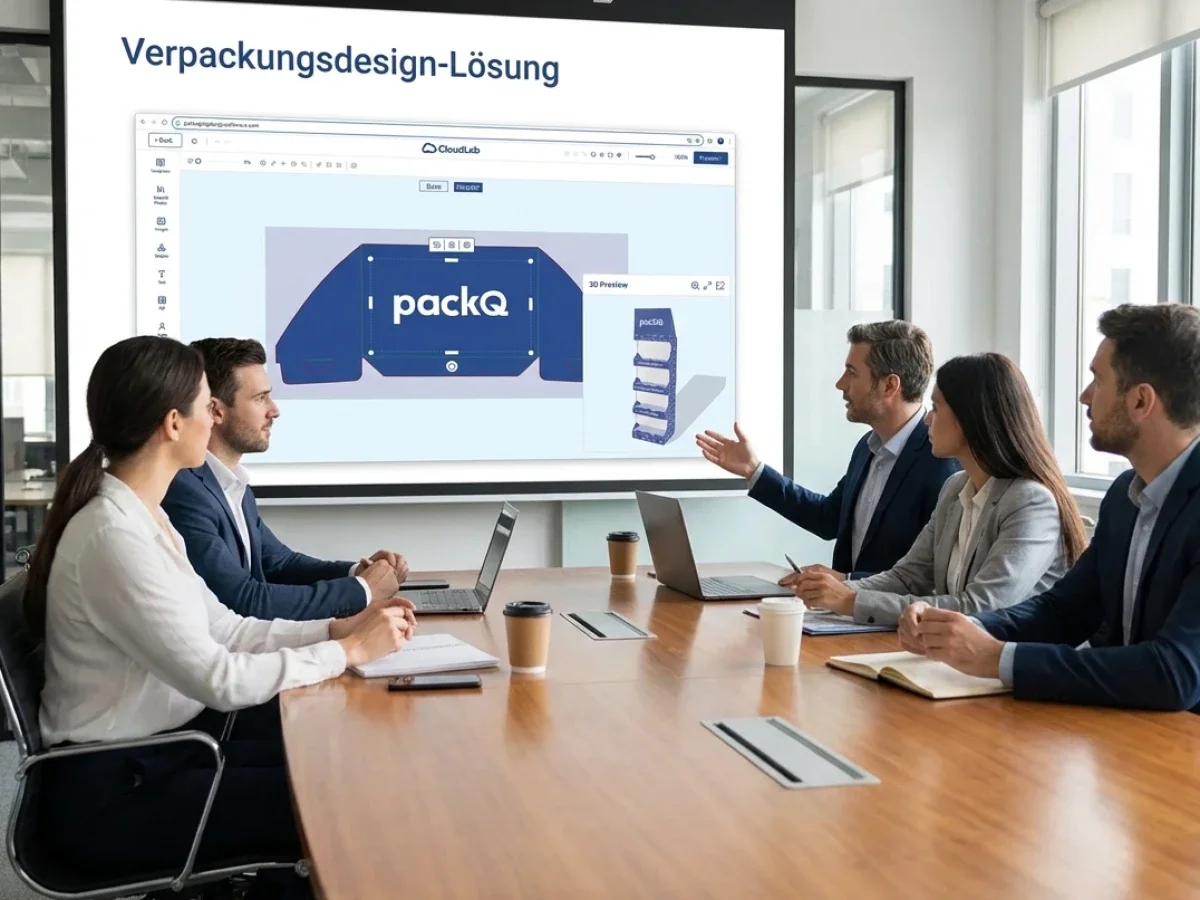
How to scale batch size 1 packaging without slowing the workflow?
Mass customization typically disrupts older packaging workflows because every variant behaves like a separate job. packQ is designed to prevent this. CloudLab's variable data printing pages describe PDF/VT and CSV-based personalization for packaging, labels, and films, while recent packQ content frameworks this as scalable to batch size 1.
The practical value is clear for marketing campaigns, regional variants, serialized packaging, and personalized consumer gifts. CloudLab states that thousands of variants can be generated in seconds by linking templates to data sources, and that variable data can be previewed directly within the system. Personalization becomes an automated packaging mode instead of a one-off exception.
Validation is even more important here than in static packaging. CloudLab's 2026 preflight content states that packQ automatically validates variable data sets, applying data integrity, placement, and overflow rules before output generation. That is what makes batch size 1 commercially realistic: each version does not need to be checked manually.
Where does packQ create the most value for each target group?
Printers and packaging manufacturers
For printers and converters, the value starts with economics. When many small packaging jobs are still quoted manually, profitability erodes before production begins. packQ's real-time pricing, standards-based templates, automated output generation, and preflight logic reduce this administrative burden and make shorter runs easier to absorb.
E-commerce platforms and marketplaces
For marketplaces, packQ works as an embedded packaging engine rather than a secondary tool. The Shop Connector, headless structure, and API set make it possible to sell packaging as a service within existing e-commerce environments, while live 3D and pricing reduce support demand during configuration. This opens a new revenue layer without requiring the operator to build packaging intelligence from scratch.
Brand owners and sector teams
For brand owners, the platform is valuable because it combines speed with guardrails. Closed-shop logic, parametric templates, 3D approval, PDF/VT personalization, and preflight allow internal teams or regional users to adapt packaging more easily without losing brand consistency or manufacturability. In consumer-facing use cases, CloudLab's Lindt case shows how its designer supports personalized B2C packaging with photos and messages.
Technology, prepress, and production teams
For technology and production teams, the appeal is architectural. REST and SOAP APIs, standard file formats, ERP/MIS connectivity, hotfolder dispatch, and production-ready PDFs make packQ part of the operations stack rather than a visual silo. This matters because packaging transformation only scales when the order, the file, and the job ticket stay connected.
Case references underline the breadth of this positioning. CloudLab explains that WildKind Packaging moved its online shop from concept to go-live in approximately seven months, newprint expanded its online offering to include packaging and labeling services, and Lindt uses CloudLab's designer for personalized B2C gift packaging. Together these examples show that packQ works across packaging manufacturing, service bundling, and consumer brand personalization.
Why packQ fits Industry 4.0 and Print 4.0 economics
Industry 4.0 readiness is not just a slogan in this context. CloudLab's workflow and architecture material describes a system in which validated configuration data is transformed into production-ready PDFs, JDF, XML, CSV, and metadata, then handed off directly into ERP, MIS, digital presses, cutting tables, and finishing workflows. That is a digital thread, not simply an online shop.
The financial effect is that more packaging jobs can be processed without linearly adding administrative labor. When pricing, approval, validation, and job creation are automated, smaller orders stop carrying the same coordination costs as they did in older workflows. That is one of the clearest reasons why Web-to-Pack software matters today, not later.
Scalability comes from the architecture. Because packQ is headless, modular, and API-driven, businesses can expand the product range, storefront models, or production connectivity without replacing the pricing and configuration core. That is exactly the kind of platform logic that suits Print 4.0 environments, where packaging operations need to evolve without rebuilding the workflow every year.
Web to Pack software turns pricing speed into operational speed
Web to Pack software creates measurable value by closing the gaps between configuration, cost calculation, validation, approval, and production. That is why dynamic pricing and real-time calculation matter so much: they do not just shorten quote response times, they compress the entire packaging decision cycle. In packQ, CloudLab pairs that pricing speed with browser-based 3D, ECMA/FEFCO structures, AI-assisted artwork handling, PDF/VT personalization, dynamic preflight, and production-safe output.
packQ is therefore most effective when evaluated as an operating platform, not as a storefront widget. For printers, packaging manufacturers, marketplaces, brand owners, and technology teams, its advantage is straightforward: fewer manual quotes, faster approvals, fewer file problems, more efficient ERP/MIS handoff, and a packaging workflow that can scale without losing control. That is the real commercial case for Web-to-Pack.
packQ shows why Web-to-Pack software only generates real speed when pricing, visualization, validation, and production data run within the same system. CloudLab's premium platform combines browser-based 3D design, ECMA/FEFCO templates, AI imaging tools, PDF/VT personalization, dynamic preflight, and real-time calculation based on real packaging parameters. The result is faster quotes, shorter approval cycles, fewer file errors, and more efficient ERP/MIS handoff for printers, converters, brands, marketplaces, and technology teams that need scalable packaging workflows without manual bottlenecks. It positions packQ as a genuine Web-to-Pack platform rather than a generic storefront add-on.