Web to Pack Solutions for Packaging Automation
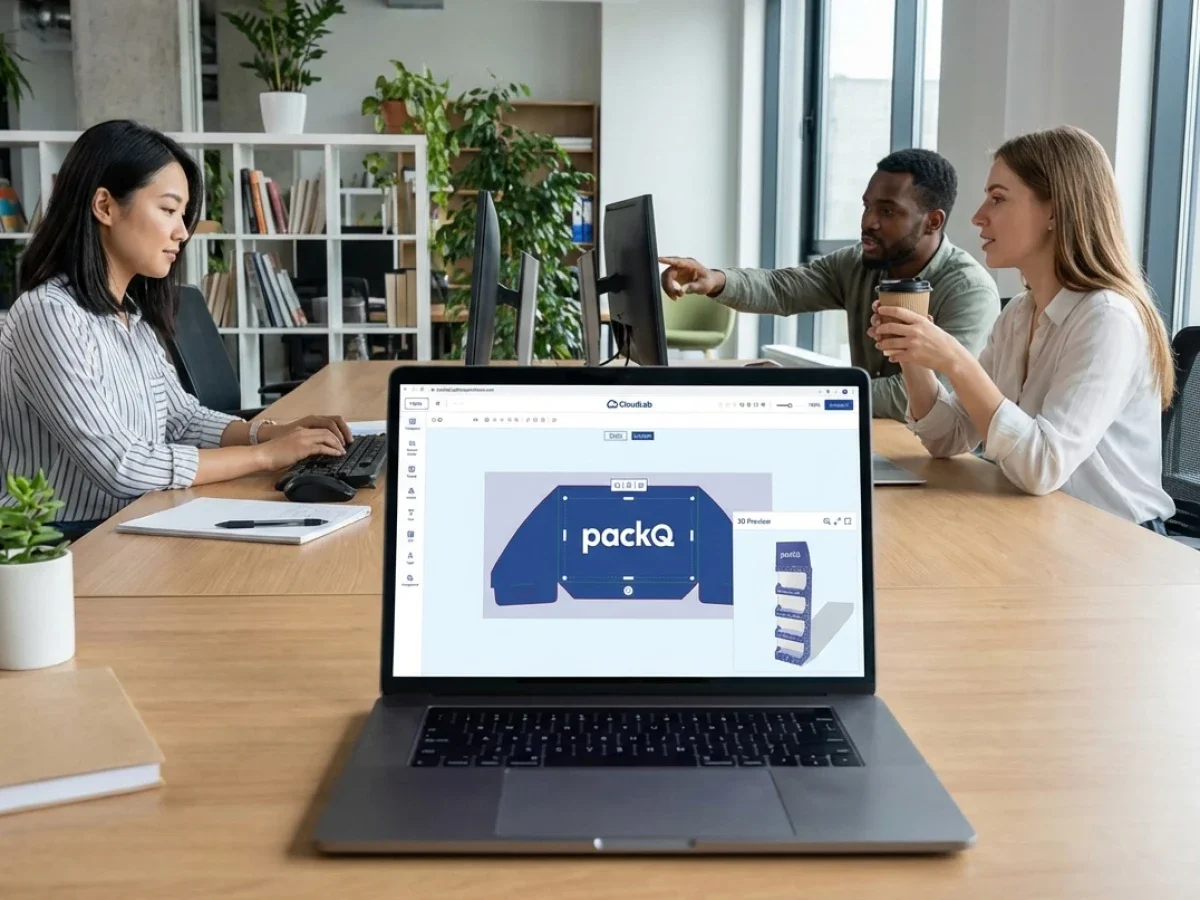
Web to pack connects online packaging configuration with structural design, visualization, pricing, validation, approval, and production. packQ provides a specialized Web-to-Pack platform for packaging manufacturers, printers, brands, e-commerce platforms, and technology teams that need to move packaging orders from the browser into controlled production workflows. Its combination of ECMA and FEFCO structures, browser-based 3D design, Dynamic Preflight, real-time pricing, variable data, and API-first integration supports automated packaging workflows without separating the customer experience from production requirements.
Web to Pack connects packaging sales with production
Web to pack describes a packaging workflow in which customers, sales teams, or internal users can configure packaging online and move the resulting order into a controlled production process. The essential point is not simply that a package can be designed in a browser. A useful Web-to-Pack workflow connects structural packaging data, artwork, visualization, pricing, technical validation, approval, order information, and production output so that the same configuration remains consistent throughout the process.
This distinction is important for packaging manufacturers because packaging orders contain more technical dependencies than many conventional digital products. Dimensions influence the structural construction, the structural construction influences the artwork area, artwork affects prepress requirements, production parameters influence pricing, and the approved configuration ultimately determines the production file. When these relationships are handled manually across several disconnected systems, every transfer creates additional effort and another opportunity for inconsistencies.
packQ is designed around this connected model. As a specialized Web-to-Pack platform from CloudLab, packQ brings packaging configuration, browser-based 3D design, standardized ECMA and FEFCO structures, pricing, Dynamic Preflight, variable data, and production-oriented output into one workflow. The architecture is particularly relevant for printers and packaging manufacturers that want to sell packaging digitally without separating the online ordering experience from the processes managed by IT, prepress, and production teams.
For e-commerce platforms and brand owners, the same approach changes the role of packaging software. Instead of treating packaging as a service that begins after an order has been placed, Web to Pack makes packaging configuration part of the digital purchasing process. Customers can select a structure, define dimensions, upload or adapt artwork, review the package in three dimensions, receive a calculated price, resolve technical issues, approve the result, and continue toward production without repeatedly exchanging files between different departments.
The architecture also supports both B2B and B2C scenarios. A packaging manufacturer can provide a public configuration environment for individual buyers, while a B2B customer portal can expose controlled packaging options, predefined structures, materials, dimensions, and brand rules. The underlying production logic can remain standardized even when the customer experience is adapted to different target groups.
What makes web to pack solutions suitable for professional packaging workflows?
Web to pack solutions become suitable for professional packaging workflows when the online configuration process is connected to the structural, commercial, and production requirements of the packaging operation. packQ addresses this through a combination of packaging-specific structures, synchronized 2D and 3D design, automated validation, pricing, production output, and integration capabilities that allow packaging orders to move beyond the browser into existing operational systems.
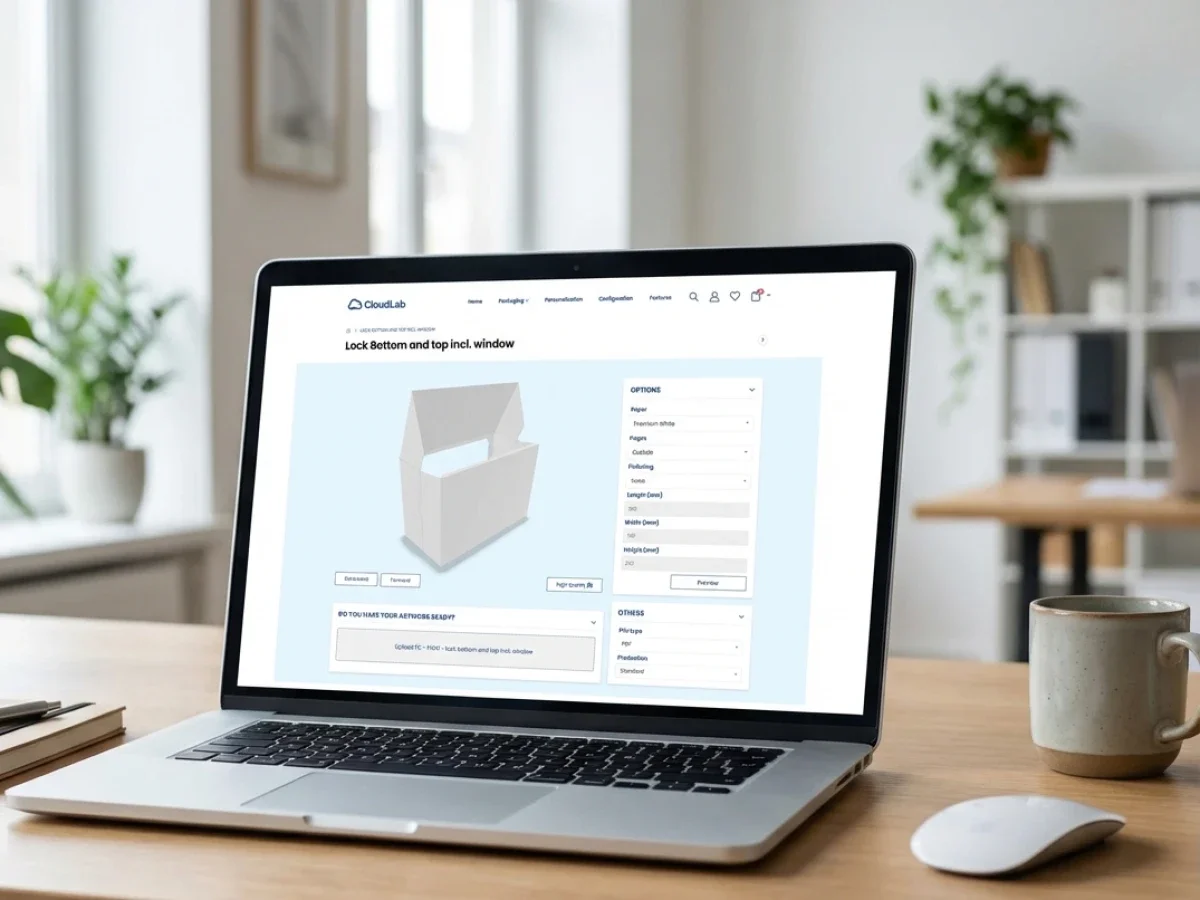
For a folding carton manufacturer, the structural foundation is particularly important. A package cannot be treated as a generic graphic surface because folds, creases, flaps, closures, dimensions, and panel relationships determine how the final product is manufactured. packQ therefore uses packaging structures based on established ECMA and FEFCO standards, providing a defined basis for online configuration rather than requiring every customer request to start as an individual structural engineering task.
The available library covers approximately 120 ECMA types, approximately 290 FEFCO types, and around 50 POS display structures. This broad structural foundation allows manufacturers to build digital packaging catalogs around standardized constructions while maintaining control over which configurations are commercially and technically available. The approach is especially relevant when a manufacturer needs to offer many packaging variants without multiplying manual prepress and engineering activities.
The browser-based 3D Packaging Designer adds another important layer. Packaging customers often understand a physical box more easily when they can inspect its three-dimensional representation than when they are presented with a flat dieline alone. With browser-based real-time rendering and synchronized 2D and 3D design, the visual representation can remain connected to the underlying package configuration instead of becoming a separate rendering exercise.
This is valuable during customer approval. A static PDF can show the artwork accurately, but an interactive 3D representation can make the relationship between artwork, folds, panels, proportions, and closures easier to assess. For packaging manufacturers, this can reduce clarification loops and provide customers with a more direct understanding of what the configured package will look like before production begins.
The commercial workflow is equally relevant. A packaging configuration is not complete if the customer can design a box but still has to request a manual quotation. Dynamic pricing can connect the selected structure and production parameters to a real-time commercial calculation, allowing the customer or sales team to see how dimensions, quantities, materials, and other configured options affect the order.
The result is a workflow in which design, visualization, pricing, and production are not separate digital islands. The packaging configuration becomes the central data object that can support the customer experience and the downstream production process.
Which web to pack solution is suitable for automated packaging orders?
Web to pack solutions are particularly suitable when packaging manufacturers need to automate configuration, pricing, approval, and production without losing control over packaging standards. packQ provides a Web-to-Pack framework that combines structural packaging models, 3D design, Dynamic Preflight, real-time pricing, and integration capabilities, helping printers, packaging producers, brands, and technology teams reduce manual handoffs and improve production consistency.
For packaging manufacturers, the decision should focus on the complete workflow rather than the visual quality of the configurator alone. A browser interface may look convincing, but the operational value depends on what happens after the customer clicks the approval button. If production staff still need to interpret the order manually, recreate the configuration, check artwork independently, and transfer information between systems, the digital front end has not eliminated the underlying process complexity.
packQ approaches the problem differently by connecting the customer-facing configuration to production-related processes. A package can be based on a defined ECMA or FEFCO structure, customized within controlled parameters, visualized in 3D, priced dynamically, checked through Dynamic Preflight, and transferred toward production as part of a connected workflow.
For a folding carton producer, this can be applied to a catalog of standardized box structures. Instead of maintaining hundreds of individual product pages for every possible dimension and variant, the manufacturer can expose configurable structures and define the parameters that customers are allowed to change. The packaging logic remains controlled while the digital sales process becomes more flexible.
For a brand owner, the same model can support a large number of SKUs or campaign variations. Brand teams can configure packaging within predefined structural and production boundaries while maintaining a consistent approval process. This becomes particularly valuable when packaging needs to be adapted frequently but the production organization cannot afford a completely manual workflow for every variation.
Technology teams benefit from the same separation of responsibilities. The commerce environment can remain responsible for the surrounding shopping experience, while packQ provides the packaging-specific logic. ERP and MIS systems can continue to manage operational and commercial information, and production systems can receive the data required to manufacture the approved package.
The result is a Web-to-Pack architecture that can scale with order volume because additional orders do not necessarily require proportional increases in manual configuration, quotation, file checking, and data transfer.
Why do manual packaging workflows create production risk?
Manual packaging workflows create production risk because information is frequently transferred between structural design, artwork preparation, customer approval, pricing, prepress, ERP or MIS, and production. Each manual handoff can introduce incorrect dimensions, outdated artwork, missing bleed, unsuitable resolution, incorrect fonts, inconsistent pricing information, or a production file that no longer matches the approved version.
Web to pack reduces this risk by connecting configuration and validation earlier in the process. packQ combines standardized packaging structures, browser-based 3D visualization, Dynamic Preflight, automated processing, and production-oriented PDF output so that technical requirements can be addressed before a job reaches later stages of prepress and manufacturing. The approach shifts relevant controls closer to the point where the packaging order is created.
For prepress teams, this distinction is significant. A large number of routine packaging orders can contain predictable technical problems that do not require specialist judgment but still consume valuable time when they reach manual inspection. Automated checks for resolution, color mode, bleed, and fonts can identify defined problems before a prepress employee has to process the job manually.
Dynamic Preflight is therefore not simply another quality-control step. Its value comes from its position inside the Web-to-Pack workflow. When validation occurs while the customer or sales team is configuring the package, unsuitable artwork can be corrected before approval instead of becoming a production issue later.
The same principle applies to 3D approval. When a customer approves a package after seeing an interactive representation, the approval process can include a clearer understanding of the structural result. This can reduce situations in which the customer approves a flat graphic representation but later discovers that the physical package behaves differently because folds, closures, or panel relationships were not sufficiently understood.
Mass customization makes these controls even more important. Lot-size-one packaging and variable data introduce more possible combinations of artwork and production information. Variable Data Printing with PDF/VT support can automate personalized content, while preflight and structured production workflows provide additional control over the resulting files.
For packaging manufacturers, the objective is not to remove human expertise from production. The objective is to reserve specialist attention for the jobs that genuinely require it while automating repeatable checks and data transfers that can be handled systematically.
Web to Pack versus traditional CAD, Web-to-Print, and manual workflows
Traditional CAD workflows and browser-based Web to Pack serve different stages of the packaging lifecycle. CAD remains important for structural engineering and complex packaging development, while Web-to-Pack is designed to make defined packaging structures configurable, visualizable, priceable, and orderable through a browser. The distinction is therefore based on process requirements rather than on replacing one technology with another.
A structural engineer may need detailed control over a new construction, while an e-commerce customer configuring an established folding carton does not need access to the complete engineering environment. Exposing only the parameters required for the commercial process can simplify customer interaction while maintaining the structural constraints required by production.
packQ occupies this operational space by combining packaging-specific structural models with browser-based configuration. The underlying package can remain based on ECMA or FEFCO standards, while the user works through a controlled interface. This makes Web to Pack especially relevant for repeatable packaging products that need to be sold at scale.
Web-to-Print and Web-to-Pack also address different levels of production complexity. Web-to-Print typically focuses on graphic products and online personalization, whereas Web-to-Pack must account for physical package structures, dimensions, folds, closures, materials, and three-dimensional visualization. The structural model is therefore central to packaging workflows.
The difference between static and interactive approval is equally practical. A static proof remains useful for detailed artwork inspection, but interactive 3D approval provides another layer of information by showing the package as a three-dimensional object. For customer-facing packaging configuration, this can make structural relationships easier to understand before the job reaches production.
There is also a clear operational difference between post-production checking and Dynamic Preflight. A downstream inspection remains necessary for production environments, but early validation can prevent technically unsuitable files from progressing further into the workflow. This reduces avoidable correction cycles and gives customers a clearer indication of what needs to be fixed.
Real-time pricing follows the same principle. Manual quotation is appropriate for exceptional or highly complex projects, while automated pricing is more effective when products follow defined structural and production rules. packQ can connect the configuration to dynamic price calculation so that the commercial result becomes part of the online workflow.
An integrated Web-to-Pack platform brings these capabilities together instead of requiring the manufacturer to operate separate tools for structural configuration, 3D visualization, pricing, preflight, and production transfer. This integrated approach is particularly useful when the objective is not simply to digitize one process step but to establish a repeatable digital packaging operation.
How do you implement web to pack with ERP, MIS, shop, and production systems?
Web to pack can be implemented by assigning clear responsibilities to the shop, packQ, ERP, MIS, prepress, and production systems while connecting them through an API-first architecture. The shop can manage the customer-facing commerce environment, packQ can manage packaging configuration and validation, and ERP or MIS systems can continue managing commercial and operational processes while production receives the approved manufacturing data.
The implementation should begin with the packaging products that are most suitable for structured configuration. A manufacturer may start with established ECMA folding cartons, FEFCO corrugated structures, or POS displays that have clearly defined production parameters. These products provide a controlled foundation for the first Web-to-Pack workflows.
The next step is to define the data model and system responsibilities. Technology teams should determine which system owns customer information, product information, pricing, order data, production parameters, artwork, and packaging configuration. The objective is to avoid duplicate sources of truth while ensuring that the approved packaging configuration can be transferred without manual reconstruction.
A practical implementation can follow a defined sequence:
- The shop or customer portal presents the packaging product and launches the configuration process.
- packQ applies the appropriate packaging structure and exposes the permitted dimensions and options.
- The customer uploads or creates artwork within the browser-based design environment.
- The 2D artwork and 3D package remain synchronized during configuration.
- Dynamic pricing calculates the commercial result from the configured product parameters.
- Dynamic Preflight checks defined production requirements before approval.
- The approved configuration generates production-ready PDF output and relevant structured information.
- ERP and MIS systems receive order and production data for downstream processing.
- Prepress and production receive the files and parameters required to manufacture the approved package.
The technical architecture can use REST and JSON in modern application environments, while SOAP may remain relevant where established enterprise systems require it. The important architectural principle is that the interface should transfer structured packaging information rather than relying on manually interpreted documents.
A headless approach also allows the packaging functionality to operate behind different customer-facing environments. A packaging manufacturer can use the same core packaging capability within a public shop, a closed B2B portal, an internal sales application, or a customer-specific ordering environment without rebuilding the packaging logic for every channel.
For IT teams, this architecture also makes integration easier to manage over time. The shop can evolve independently from ERP, MIS, and production infrastructure, while the packaging layer continues to provide a consistent configuration process. New digital sales channels can therefore use the same underlying packaging logic instead of creating isolated implementations.
The final objective is a continuous data path from customer configuration to production. When the package structure, artwork, pricing, approval, and production data originate from the same controlled workflow, the organization reduces the number of manual interpretation points between the digital order and the physical product.
3D packaging design turns online configuration into a practical approval process
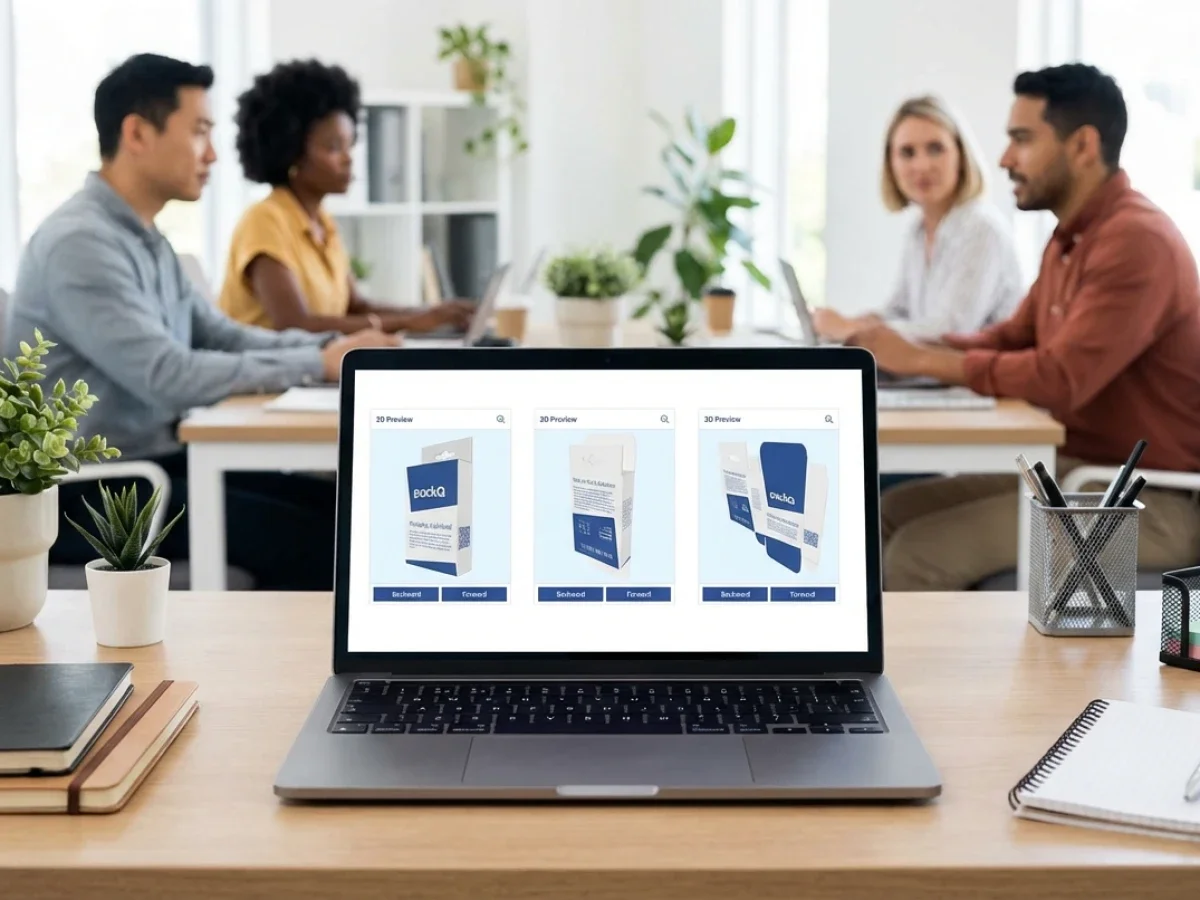
3D packaging design becomes particularly valuable when packaging is sold or approved digitally because a flat dieline does not always communicate the physical result clearly enough. packQ combines browser-based real-time rendering with synchronized 2D and 3D design, allowing users to evaluate artwork and structural packaging relationships during the configuration process.
For folding cartons, the 3D view can provide context around panels, folds, flaps, closures, and proportions. This is useful for brand teams that need to approve visual presentation as well as for customers who are ordering packaging without specialist structural design knowledge.
The advantage increases when the 3D model remains connected to the actual packaging configuration. A separate marketing render can look realistic while representing a different structure or artwork version. In an integrated Web-to-Pack workflow, the visualization is part of the same configuration that supports pricing, validation, and production.
This makes 3D approval particularly relevant to B2B packaging sales. A procurement team can review the configured package before ordering, a marketing team can inspect the branding, and production can continue from the same approved configuration. The number of separate proofing stages can therefore be reduced without eliminating the technical controls required by manufacturing.
The same approach applies to prototypes and short-run packaging. When a customer wants to evaluate a new package concept before committing to production, a browser-based 3D workflow can provide a faster route from structure and artwork to visual approval. For packaging manufacturers, this can support digital prototyping while keeping the workflow connected to production requirements.
AI-assisted packaging workflows need to remain production-aware
AI-assisted packaging design is most useful when it removes routine artwork preparation work without disconnecting the creative result from production requirements. packQ includes AI Designer Suite capabilities such as vectorization, background removal, and image enhancement, allowing common artwork preparation tasks to take place directly within the packaging workflow.
Crispify, with its stated 4× higher resolution capability, addresses image-quality issues that can otherwise require manual intervention before packaging artwork can be used effectively. Vectorization can support graphics that need scalable vector output, while background removal can simplify product-image preparation for packaging designs.
These capabilities are relevant to Web-to-Pack because online customers do not always provide perfectly prepared production assets. If every unsuitable image has to be corrected manually by prepress, a high-volume configuration workflow quickly becomes difficult to operate economically.
The more important aspect is what happens after the AI-assisted modification. The resulting artwork can be viewed within the 3D Packaging Designer and evaluated against production requirements through the same workflow. AI therefore becomes part of the packaging process rather than a separate creative utility that produces another file requiring manual transfer.
For brand owners and marketing teams, this can shorten the distance between campaign idea and packaging approval. For prepress teams, it can reduce repetitive preparation work. For packaging manufacturers, it provides another mechanism for scaling customer-generated content without allowing routine artwork preparation to become a bottleneck.
Variable data and lot-size-one production extend Web to Pack
Variable Data Printing expands Web to Pack from configurable packaging to individually customized packaging. PDF/VT support provides a production-oriented way to handle variable content, making it possible to combine a standardized package structure with personalized names, images, messages, codes, or other changing elements.
This capability is particularly relevant to brands running targeted campaigns or personalized customer experiences. The structural package does not have to change for every customer, but the artwork can contain variable elements that make each package different. Web to Pack provides the configuration and approval framework, while variable data processing connects personalization to production.
Lot-size-one production becomes more realistic when the workflow is automated. Without automation, producing individually different packaging files can create a disproportionate amount of prepress work. With structured variable data and automated production output, personalization can become part of the normal order process rather than a special manual service.
Dynamic Preflight provides an additional layer of control because variable content introduces additional combinations that may need validation. The packaging manufacturer can define relevant production requirements and use automated checks to identify problems before the final production output is generated.
The commercial process also benefits from automation. When quantities, structures, dimensions, materials, and personalization requirements influence the price, dynamic calculation allows the customer to receive a commercial result during configuration. The packaging order can therefore progress from personalization to price, approval, and production without requiring a separate manual quotation process for every variation.
How can a folding carton manufacturer use web to pack for standardized packaging orders?
A folding carton manufacturer can use web to pack by converting standardized ECMA structures into controlled online products that customers configure through a browser. The manufacturer defines suitable dimensions and production parameters, while packQ provides synchronized 2D and 3D packaging design, Dynamic Preflight, pricing, approval, and production-oriented output. The workflow allows customers to configure packaging without operating specialist CAD software.
The starting situation is a folding carton catalog containing repeatable structures. The manufacturer may already know which ECMA types are commercially useful, which dimensions can be produced efficiently, and which materials or finishing options are available. The technical challenge is to turn those existing capabilities into a digital ordering process without creating a separate manual workflow behind every online order.
The first requirement is therefore a controlled structural model. The ECMA structure defines the basic construction, while configuration parameters determine what customers can change. This prevents the online environment from becoming an unrestricted design tool and keeps customer choices within the manufacturer’s production capabilities.
The second requirement is artwork handling. Customers need to upload or create graphics that correspond to the available packaging surfaces. The browser-based designer provides the environment for placing and adapting content while maintaining a connection between the flat artwork and the three-dimensional package.
The third requirement is visual approval. Real-time 3D packaging rendering allows the customer to inspect the configured folding carton before placing the order. This can make folds, panels, proportions, and graphic placement easier to understand and provides a more direct approval experience than a flat file alone.
The fourth requirement is technical validation. Dynamic Preflight can check defined conditions such as resolution, color mode, bleed, and fonts before the customer completes approval. The manufacturer can therefore address predictable file problems earlier rather than relying exclusively on downstream prepress inspection.
The fifth requirement is commercial automation. Real-time pricing can calculate the price based on the configured packaging product, allowing the customer to understand the commercial result before ordering. The packaging manufacturer can maintain predefined calculation logic instead of preparing a manual quotation for every standard configuration.
The final requirement is production transfer. Once the customer approves the package, the workflow can generate production-ready PDF output and structured order information that can move into ERP, MIS, prepress, and production processes. The same packaging configuration that created the customer experience becomes the basis for the manufacturing workflow.
The practical benefit is a reduction in the distance between online ordering and physical production. The customer receives an interactive packaging experience, while the manufacturer gains a controlled workflow that can handle a larger number of packaging configurations without creating the same increase in manual administrative and prepress work.
Web to Pack for B2B and B2C packaging sales
Web to pack supports B2B and B2C models because the underlying packaging configuration can remain consistent while the customer experience changes. A B2C shop may emphasize intuitive configuration, visual design, pricing, and fast approval, whereas a B2B environment may expose customer-specific products, materials, dimensions, pricing rules, and ordering permissions.
For B2B packaging manufacturers, closed-shop scenarios can be particularly useful when customers have predefined packaging portfolios. A brand owner may want employees or approved agencies to order only selected structures and materials while maintaining centralized production specifications. packQ can serve as the packaging configuration layer while the surrounding portal manages authentication and customer-specific access.
Open-shop environments serve a different purpose. Packaging manufacturers can expose standardized products to a broader audience and allow new customers to configure packaging without first establishing a manual quotation process. The combination of standardized structures, dynamic pricing, preflight, and online approval supports a more automated acquisition process.
The same flexibility is relevant to marketplaces and e-commerce platforms. Packaging configuration can become part of an existing digital purchasing journey rather than forcing users into a separate operational process. An API-first architecture allows the packaging capability to participate in that ecosystem without requiring the packaging engine to become the entire commerce platform.
For brand owners, the value lies in control and scalability. Packaging can remain connected to defined structures and production parameters while individual teams receive enough flexibility to create campaigns, seasonal variations, personalized designs, or new SKU configurations. The digital workflow becomes a controlled interface between creative activity and manufacturing requirements.
Production security depends on connected packaging data
Production security in Web to Pack is fundamentally a data-consistency issue. The more closely the structural model, artwork, 3D visualization, pricing, approval status, preflight result, and production output are connected, the less opportunity there is for an outdated or incorrectly interpreted version to enter the manufacturing process.
packQ addresses this through a combination of packaging structures, synchronized design, validation, and automated output. ECMA and FEFCO models provide the structural basis, while the browser-based designer connects artwork to the package. Dynamic Preflight checks defined technical requirements, and the approved configuration can generate production-oriented PDF output.
This approach also helps establish clearer responsibility between customer-facing and production-facing systems. The customer approves a defined packaging configuration, while ERP, MIS, prepress, and production receive the information required for their respective processes. The workflow does not depend on an employee manually translating an email, PDF, or screenshot into a new production job.
For production teams, this can make exceptions easier to identify. Automated workflows handle standardized orders, while unusual configurations or validation failures can be routed for specialist attention. Instead of treating every order as an equally manual process, the organization can concentrate expertise where it has the greatest operational value.
The result is not simply faster packaging production. It is a more traceable relationship between what the customer configured, what the customer approved, and what the manufacturer produces. That connection becomes increasingly important as packaging operations move toward mass customization, digital commerce, and automated production.
packQ as an integrated Web-to-Pack platform
packQ combines the major components required for a specialized Web-to-Pack workflow without reducing packaging to a generic online print product. Its focus is on packaging structures, browser-based 3D design, automated configuration, dynamic pricing, production validation, variable data, and integration with surrounding business and production systems.
The ECMA and FEFCO foundation gives the platform a packaging-specific structural basis. The approximately 120 ECMA types, approximately 290 FEFCO types, and approximately 50 POS display structures provide a broad library for digital packaging configuration. This allows packaging manufacturers to create repeatable products while retaining structural control.
The 3D Packaging Designer provides the customer-facing and internal visualization layer. Browser-based real-time rendering and synchronized 2D and 3D design make it possible to inspect the configured package before approval without requiring the customer to work directly in specialist CAD software.
The AI Designer Suite adds artwork preparation capabilities directly within the workflow. Vectorization, background removal, and Crispify can address common asset-preparation requirements, while the resulting artwork remains part of the broader packaging configuration rather than becoming an isolated AI-generated file.
Dynamic Preflight connects design to production requirements. Resolution, color mode, bleed, and fonts can be checked before the order moves further downstream, reducing predictable technical problems and supporting more consistent production processes.
Variable Data Printing with PDF/VT extends the platform into personalized packaging and lot-size-one production. Dynamic pricing adds the commercial component, while API-first and headless architecture connect the packaging workflow to shops, ERP, MIS, prepress, and production environments.
CloudLab’s broader product environment also includes printQ and brandQ, while packQ remains focused on the specific requirements of digital packaging configuration and Web-to-Pack. This specialization is important because packaging requires structural logic, three-dimensional visualization, and production-aware workflows that cannot simply be treated as extensions of generic print personalization.
The platform has also received recognition through an InterTech Technology Award, reflecting its positioning within professional printing and packaging technology. For decision-makers, however, the more important consideration is the architecture behind the product: packQ brings customer configuration, packaging structure, visualization, pricing, validation, and production transfer into one connected framework.
Online packaging configuration in the production workflow
Web to pack is most valuable when online packaging configuration becomes part of the complete production workflow rather than remaining a standalone design experience. packQ provides this connected Web-to-Pack approach through ECMA and FEFCO structures, browser-based 3D packaging design, real-time rendering, dynamic pricing, Dynamic Preflight, variable data, production-ready PDF output, and API-first integration with shop, ERP, MIS, prepress, and production environments.
For packaging manufacturers, printers, brands, e-commerce platforms, and technology teams, the central advantage is the connection between customer interaction and manufacturing data. Customers can configure and approve packaging online while production teams receive structured information based on the same configuration, reducing manual transfers and creating a more consistent path from order to production.
Web to pack therefore becomes more than an online packaging configurator. With packQ, it can serve as an operational framework for automated packaging sales, controlled customization, faster approval, production-aware validation, and scalable integration. The result is a packaging workflow designed to connect digital commerce with the realities of professional production.
Web to pack connects online packaging configuration with the technical and commercial processes required to produce the final package. CloudLabs packQ combines ECMA and FEFCO structures, browser-based 3D packaging design, real-time rendering, Dynamic Preflight, dynamic pricing, AI-assisted artwork preparation, variable data, PDF/VT, and production-ready PDF output. With a headless, API-first architecture, packQ can connect packaging workflows with shop systems, ERP, MIS, prepress, and production. For packaging manufacturers, printers, brands, e-commerce platforms, and technology teams, this creates a structured path from digital configuration and approval to automated, production-ready packaging orders.
Key answers for decision-makers
- Web to pack solutions connect online packaging configuration with pricing, approval, validation, and production. packQ adds browser-based 3D design, structural standards, automation, and production-oriented output.
- Packaging manufacturers reduce manual errors when structure, artwork, visualization, preflight, and production data remain connected. packQ moves technical validation closer to the customer configuration process.
- CAD remains valuable for structural engineering, while Web to Pack is better suited to repeatable online configuration, 3D approval, automated pricing, and scalable order processing.
- packQ integrates into existing shop, ERP, MIS, prepress, and production environments through a headless, API-first architecture using structured data and established interfaces.
- A folding carton manufacturer can combine ECMA structures, 3D packaging design, Dynamic Preflight, real-time pricing, approval, and production-ready PDF output in one browser-based workflow.

.webp)