Web to Pack Solutions for Cloud Packaging Portals
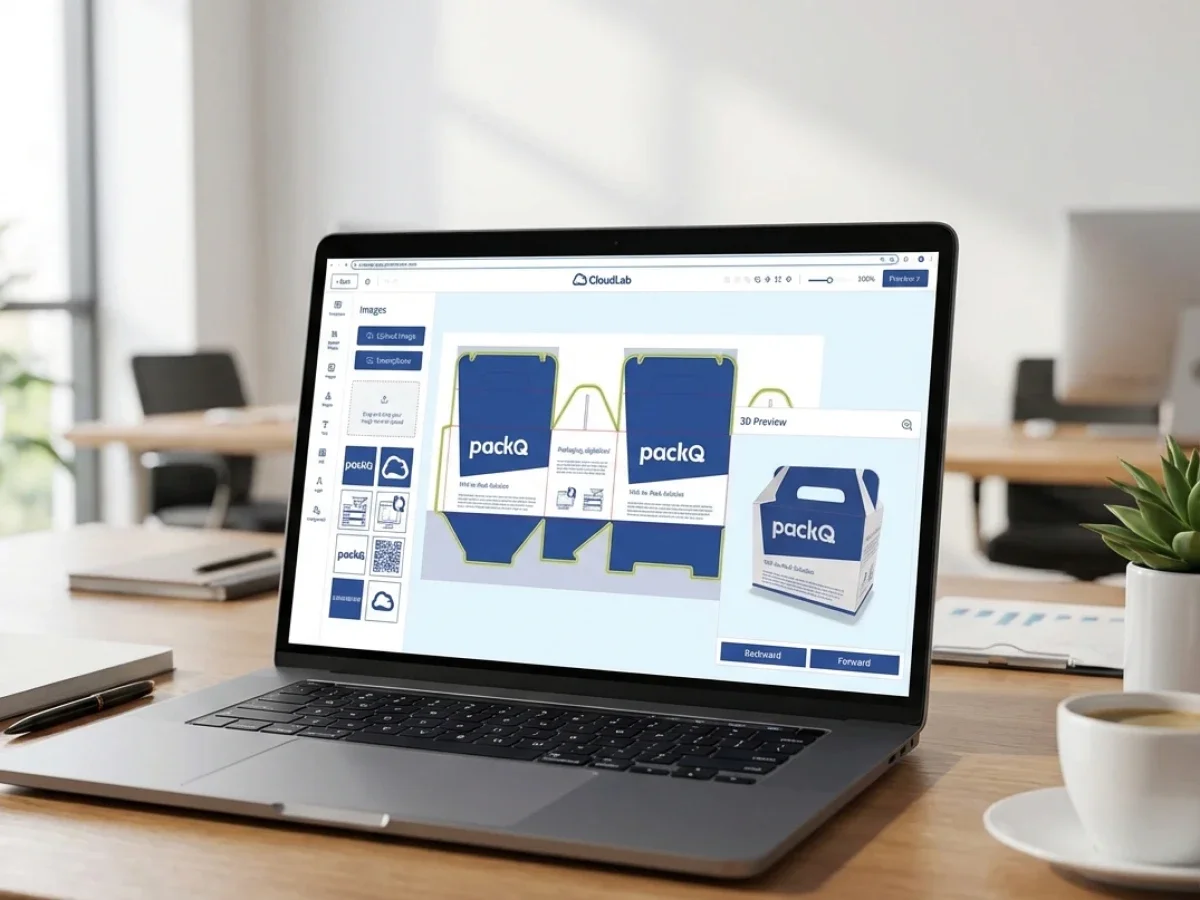
Web to pack solutions enable packaging manufacturers to move configuration, approval, pricing, and production preparation into a single cloud-based workflow. Instead of relying on disconnected systems, modern packaging portals combine customer self-service, production-safe validation, and automated order processing. packQ from CloudLab connects browser-based packaging design, Dynamic Preflight, ECMA and FEFCO standards, ERP integration, and production-ready PDF output in one scalable platform.
Why Web-to-Pack Is Moving to the Cloud
The packaging industry has spent years digitizing individual processes. Online ordering systems were introduced. Prepress workflows became increasingly automated. ERP and MIS platforms improved visibility across operations.
Yet many packaging manufacturers still operate with disconnected systems.
Customers configure products in one environment. Sales teams calculate prices elsewhere. Artwork approval takes place through email. Prepress checks happen after the order has already been submitted. Production planning receives information from multiple sources, often in different formats.
The result is not a technology problem. It is a workflow problem.
This is where web to pack solutions have evolved significantly. Modern platforms are no longer limited to online packaging design. They function as cloud-based operational layers that connect customer-facing processes with production systems.
For packaging manufacturers handling large numbers of small and mid-sized orders, this shift is becoming increasingly important. The challenge is not creating another online storefront. The challenge is creating a packaging portal that can scale without increasing administrative overhead.
Cloud-native Web-to-Pack platforms address exactly this requirement.
The Rise of Cloud Packaging Solutions in Packaging Manufacturing
For many packaging companies, growth creates an unexpected operational problem.
Order volume increases, but staffing levels do not scale at the same pace. At the same time, customers expect shorter turnaround times, faster quotations, greater flexibility, and more personalization.
Traditional workflows struggle under these conditions because every order introduces manual tasks.
Sales teams answer recurring questions. Designers prepare repetitive proofs. Prepress operators correct avoidable file issues. Customer service manages approval loops that could have been automated earlier in the process.
Cloud packaging solutions address this challenge by moving these interactions into structured digital workflows.
Instead of treating every order as a unique project, packaging manufacturers can define standardized processes that customers complete independently.
This does not eliminate human expertise. It reallocates expertise to areas where it creates the most value.
Packaging engineers focus on structural development rather than routine modifications. Prepress teams spend less time fixing preventable errors. Sales teams spend more time supporting strategic accounts rather than generating repetitive quotations.
The result is often a measurable improvement in throughput without sacrificing quality control.
Which Web to Pack Solutions Are Best for Building Production-Safe Packaging Portals?
Web to pack solutions are most effective when they combine customer-facing configuration with production-safe automation. For folding carton manufacturers, corrugated packaging producers, and brand owners, packQ provides a framework that connects browser-based packaging design, Dynamic Preflight validation, ECMA and FEFCO standards, real-time pricing, and production-ready output inside a cloud-based portal.
The question many decision-makers ask is not whether they need an online portal.
The real question is whether that portal can support operational requirements beyond the ordering process.
A production-safe packaging portal must do more than display products.
It must:
- Validate incoming artwork.
- Control structural packaging rules.
- Generate production data.
- Connect with existing business systems.
- Support customer approvals.
- Scale without increasing manual intervention.
This is where many packaging portals fail. They successfully collect orders but create new work downstream.
packQ was designed specifically to avoid that disconnect.
Its architecture connects customer interaction with production preparation. When a customer configures a folding carton, corrugated box, or display structure, the system simultaneously applies packaging logic, pricing rules, and validation mechanisms that support downstream manufacturing requirements.
For packaging manufacturers, the primary benefit is operational consistency.
For brand owners, the primary benefit is speed.
For technology teams, the primary benefit is integration flexibility.
Why Production Safety Matters More Than Portal Design
Many organizations initially focus on the appearance of a packaging portal.
The user interface matters, but operational reliability matters more.
A visually appealing portal can still create significant problems if approved designs generate unusable production files, require manual intervention, or bypass quality controls.
Production-safe Web-to-Pack environments reduce these risks through controlled workflows.
packQ approaches this challenge through several interconnected mechanisms.
The 3D Packaging Designer allows customers to review packaging designs visually before approval. Dynamic Preflight checks critical print requirements while the order is still being configured. Standardized ECMA and FEFCO structures ensure that customers work within validated packaging frameworks rather than creating technically problematic constructions.
Because these controls occur earlier in the process, packaging manufacturers avoid many of the correction cycles that traditionally occur after order submission.
Why Packaging Portals Fail to Scale
The biggest obstacle to scalability is rarely technology.
It is process fragmentation.
A packaging portal may successfully generate demand while simultaneously creating operational bottlenecks.
This often occurs when information must be manually transferred between systems.
A typical scenario looks familiar:
The customer approves artwork online.
The sales team creates pricing manually.
The prepress department downloads files separately.
The ERP system receives order data through manual entry.
Production planning rebuilds information that already existed elsewhere.
Every handoff introduces delays and opportunities for error.
As order volume increases, these inefficiencies multiply.
The challenge becomes especially visible in organizations that serve both large enterprise customers and growing numbers of smaller accounts.
Enterprise customers often require closed portals, approval structures, procurement controls, and ERP connectivity.
Smaller customers expect self-service ordering and immediate feedback.
Supporting both groups simultaneously requires more than an online configurator.
It requires workflow orchestration.
What Problems Do Packaging Manufacturers Face When Building Cloud-Based Packaging Portals?
Packaging manufacturers often struggle with disconnected workflows, inconsistent approval processes, and manual data transfer between customer portals and production systems. Web-to-Pack platforms such as packQ reduce these problems by connecting configuration, 3D visualization, Dynamic Preflight, pricing, ERP integration, and production output within a single cloud-based workflow.
The most common issue is visibility.
Customers believe their order is complete, while internal teams continue performing manual checks and corrections.
This creates friction across the organization.
Sales teams experience delays because approvals take longer than expected.
Prepress teams inherit preventable artwork problems.
Production schedules become harder to predict.
Customers receive inconsistent delivery expectations.
The challenge becomes even greater when personalization enters the workflow.
Brand owners increasingly request multiple packaging variations, regional versions, campaign-specific graphics, and limited-edition packaging.
Without automation, these requests create operational complexity that scales faster than revenue.
The Cost of Approval Bottlenecks
Approval bottlenecks affect more than turnaround times.
They influence profitability.
Every manual proof review, every email correction cycle, and every preventable prepress adjustment consumes resources that could be allocated elsewhere.
For corrugated packaging producers managing high order volumes, these inefficiencies become particularly visible.
For folding carton manufacturers serving brand owners with many SKUs, approval complexity grows quickly.
A cloud-based packaging portal reduces these challenges by moving validation and visualization earlier in the process.
Customers receive immediate feedback.
Production teams receive cleaner data.
Management gains greater process transparency.
A Practical Example
Consider a packaging manufacturer operating a closed customer portal for multiple retail brands.
Each brand manages hundreds of packaging variants across different markets.
Without structured workflows, every update requires coordination between marketing teams, procurement teams, prepress departments, and packaging suppliers.
With a Web-to-Pack portal built on packQ, approved packaging structures, artwork rules, pricing logic, and production requirements can be embedded directly into the ordering environment.
This changes the workflow fundamentally.
Instead of managing every order individually, the manufacturer manages the framework that governs all orders.
The operational impact becomes increasingly significant as order volume grows.
Building the Foundation of a Cloud-Based Packaging Ecosystem
The strongest packaging portals are rarely standalone applications.
They become operational hubs.
This is one of the reasons CloudLab positions packQ as a complete Web-to-Pack platform rather than simply an online design tool.
The platform connects multiple layers of the packaging process:
Customer interaction.
Packaging configuration.
Visual approval.
Print validation.
Pricing logic.
Order creation.
Production preparation.
The architecture behind these connections becomes even more important as organizations expand their digital infrastructure.
For this reason, modern packaging portals increasingly rely on headless architectures and API-first principles.
These technologies allow packaging manufacturers to modernize customer experiences without replacing every existing business system.
That topic becomes particularly important when evaluating integration strategies, ERP connectivity, MIS synchronization, and large-scale portal deployment.
Integrated Web-to-Pack Platforms vs. Isolated Packaging Tools
Integrated Web-to-Pack platforms are generally more effective when packaging manufacturers need to automate approvals, pricing, prepress validation, and production handoff within a single workflow. Isolated tools can solve individual tasks, but they often require manual coordination between departments. packQ connects these processes through a unified Web-to-Pack architecture that supports production safety, ERP/MIS integration, and scalable packaging portal operations.
The distinction becomes increasingly important as packaging businesses grow.
An isolated design tool may provide online artwork editing. A separate system may calculate pricing. Another platform may manage orders. Prepress validation may occur elsewhere. Each solution performs its task successfully, yet the overall process remains fragmented.
The operational impact is often invisible until order volume increases.
Teams spend more time transferring information than processing orders.
The challenge is not functionality. The challenge is orchestration.
For packaging manufacturers operating cloud-based portals, the ability to maintain data continuity from customer interaction through production preparation is often more valuable than any individual feature.
Static Approval vs. Interactive 3D Approval
A similar comparison exists between static approval methods and interactive packaging visualization.
Static PDFs remain useful for technical reviews. Many prepress teams still rely on them for detailed inspections.
However, they often fail to communicate packaging appearance effectively to procurement teams, marketing departments, and non-technical stakeholders.
Interactive approval environments solve a different problem.
Instead of reviewing a flat dieline, stakeholders evaluate the packaging as a finished product.
This is particularly valuable for:
- Brand owners managing multiple product launches.
- Marketing teams reviewing promotional packaging.
- Pharmaceutical organizations handling complex packaging variants.
- E-commerce brands introducing new SKUs.
The 3D Packaging Designer within packQ supports browser-based visualization synchronized with the underlying packaging structure. Because the visual representation remains connected to production data, approval becomes more reliable than a standalone mockup workflow.
Dynamic Preflight vs. Post-Submission Correction
Another critical distinction involves quality control.
Traditional workflows often validate print data after order submission.
The customer believes the process is complete. The production team then discovers missing bleed, low-resolution graphics, incorrect color modes, or font issues.
Every correction introduces delay.
Dynamic Preflight changes the timing of validation.
By moving technical checks earlier in the workflow, packaging manufacturers can identify problems before they enter production planning.
For prepress teams, this often results in cleaner incoming files.
For customers, it creates faster approval cycles and fewer surprises.
For operations teams, it improves predictability.
How Do You Implement Web to Pack Solutions Within Existing ERP and MIS Environments?
Web to pack solutions can be implemented within existing ERP and MIS environments by connecting customer-facing packaging portals with business systems through API-first integrations. packQ supports this process through a headless architecture that enables data exchange across ERP, MIS, shop, prepress, and production environments while maintaining a single source of packaging configuration and order information.
The most successful implementations begin with workflow analysis rather than software deployment.
Technology teams should first identify where information currently enters the organization, where it is duplicated, and where manual intervention creates bottlenecks.
Only then should integration architecture be designed.
A Practical Implementation Framework
A structured deployment often follows several stages:
- Define packaging products suitable for Web-to-Pack automation.
- Map packaging structures to ECMA and FEFCO standards.
- Establish pricing logic and approval workflows.
- Configure Dynamic Preflight requirements.
- Connect customer-facing portals with ERP and MIS systems.
- Automate production file generation.
- Monitor workflow performance and continuously refine rules.
The objective is not simply to launch a portal.
The objective is to create a connected operational environment.
The Role of API-First Architecture
One reason packQ is frequently deployed in complex environments is its API-First architecture.
Many packaging manufacturers already operate mature ERP and MIS systems. Replacing these platforms would create unnecessary disruption.
Instead, packQ functions as a Web-to-Pack layer that communicates with existing infrastructure.
Depending on organizational requirements, integrations can utilize:
- REST services.
- SOAP interfaces.
- JSON-based data exchange.
- Existing middleware environments.
This flexibility is particularly important for enterprise packaging operations where multiple systems have evolved over many years.
ERP and MIS Integration in Practice
For operations leaders, integration is rarely about technology alone.
It is about process continuity.
A packaging order may require information from:
- Product configuration.
- Customer accounts.
- Pricing engines.
- Inventory systems.
- Production planning.
- Logistics workflows.
When these systems remain disconnected, administrative work increases.
When they operate within a connected ecosystem, information flows automatically between departments.
This is one of the reasons many organizations view Web-to-Pack not as an e-commerce initiative, but as an operational transformation initiative.
Open-Shop and Closed-Shop Packaging Portals
Cloud-based packaging portals generally fall into two categories.
The first is the open-shop model.
The second is the closed-shop model.
Each serves different strategic objectives.
Open-Shop Environments
Open-shop environments focus on accessibility.
Customers can configure packaging online, upload artwork, review designs, approve production, and place orders without requiring direct interaction with sales teams.
This model is particularly attractive for:
- Small businesses.
- Emerging brands.
- E-commerce merchants.
- Promotional packaging buyers.
The portal functions as both a sales channel and an automation platform.
For packaging manufacturers, open-shop models can create entirely new revenue streams by making smaller orders economically viable.
Closed-Shop Environments
Closed-shop environments focus on governance and consistency.
Brand owners often require tighter control over packaging assets, approvals, and procurement processes.
In these situations, the portal becomes an extension of the customer's operational infrastructure.
Users may have access to:
- Approved packaging structures.
- Brand-compliant templates.
- Restricted editing permissions.
- Procurement-specific pricing.
- Controlled approval workflows.
For pharmaceutical companies, consumer goods manufacturers, and multinational brands, this model often creates significant efficiency gains while maintaining compliance requirements.
Why Standardization Drives Cloud Packaging Success
The most scalable packaging portals share a common characteristic.
They standardize complexity.
This does not mean limiting customer choice.
It means defining controlled flexibility.
ECMA and FEFCO standards play a critical role in this process.
By providing proven structural foundations, these standards enable packaging manufacturers to offer customization without sacrificing production consistency.
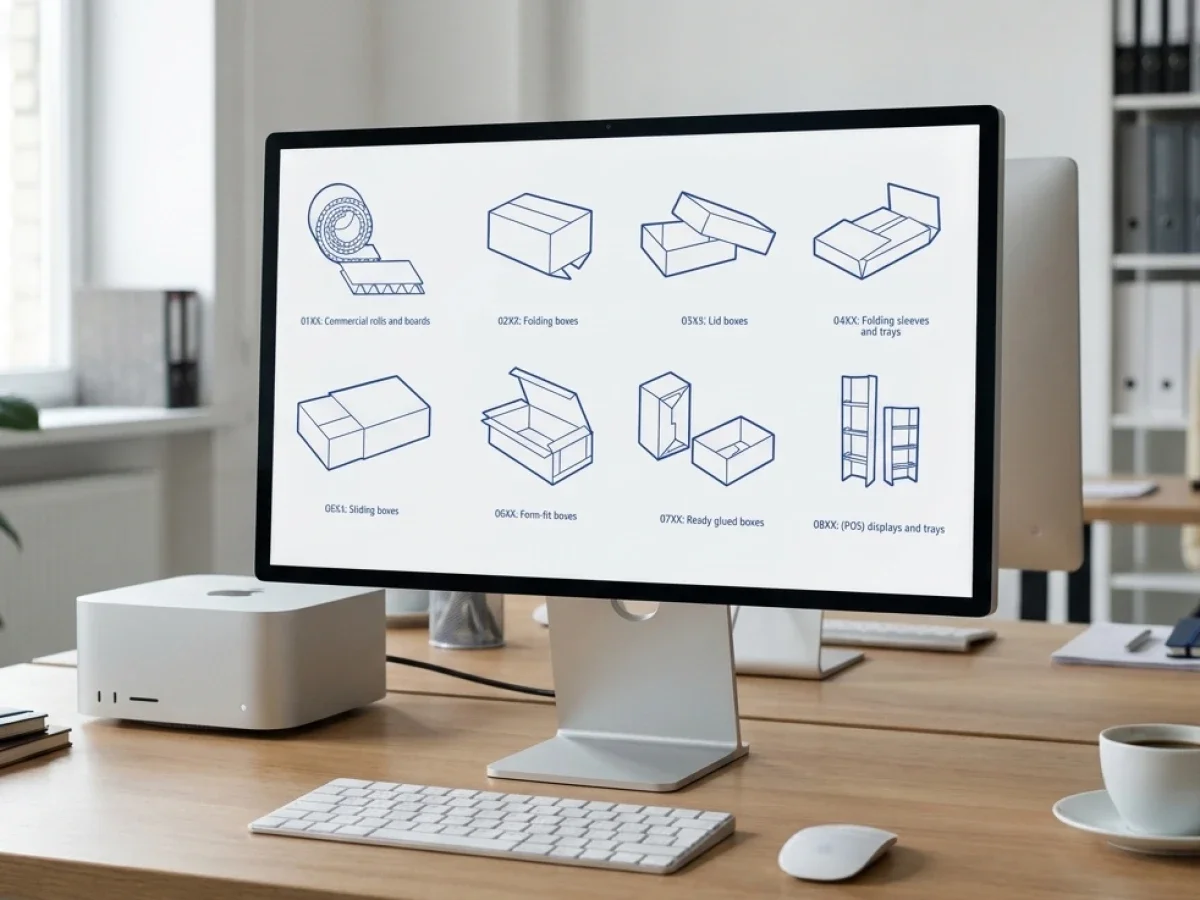
packQ incorporates approximately 120 ECMA folding carton structures, approximately 290 FEFCO corrugated packaging designs, and approximately 50 display configurations.
The value lies not in the quantity itself.
The value lies in transforming structural packaging knowledge into reusable digital workflows.
When customers configure products within standardized frameworks, automation becomes significantly easier to scale.
How Can Packaging Manufacturers Build Production-Safe Cloud Packaging Portals?
Packaging manufacturers can build production-safe cloud packaging portals by combining standardized packaging structures, automated validation, customer self-service configuration, and integrated production workflows. With packQ, organizations can use ECMA and FEFCO templates, Dynamic Preflight, browser-based 3D approvals, ERP/MIS integration, and production-ready PDF generation to create scalable Web-to-Pack environments that reduce manual intervention while maintaining production reliability.
Starting Point
Consider a corrugated packaging producer that serves both enterprise customers and growing e-commerce brands.
The company wants to expand online ordering capabilities without increasing prepress workload or administrative overhead.
Traditional workflows create challenges because every order introduces manual review requirements.
As order volume grows, operational efficiency declines.
Technical Requirements
The producer needs a cloud-based portal capable of:
- Supporting customer self-service.
- Maintaining production standards.
- Connecting with ERP and MIS systems.
- Generating production-ready output.
- Managing approvals digitally.
- Supporting future scalability.
Workflow Implementation
Using packQ, the organization can create a structured Web-to-Pack environment.
Customers begin by selecting approved packaging structures based on ECMA or FEFCO standards.
The browser-based editor allows design customization while preserving structural integrity.
The synchronized 2D and 3D environment enables visual review before approval.
Dynamic Preflight validates artwork quality by checking resolution, color mode, bleed, and font requirements during configuration.
Real-time pricing calculates commercial impact immediately.
Approved orders generate production-safe PDFs and transfer relevant information into connected ERP and MIS systems.
Benefits for Operations and Customer Experience
The operational benefits emerge quickly.
Customers gain faster access to packaging services without sacrificing visibility.
Prepress teams receive cleaner files.
Sales teams spend less time managing repetitive quotation requests.
Production planners work with more reliable order information.
Technology teams maintain integration flexibility through API-first architecture.
The Role of packQ
packQ serves as the operational foundation connecting customer interaction with production execution.
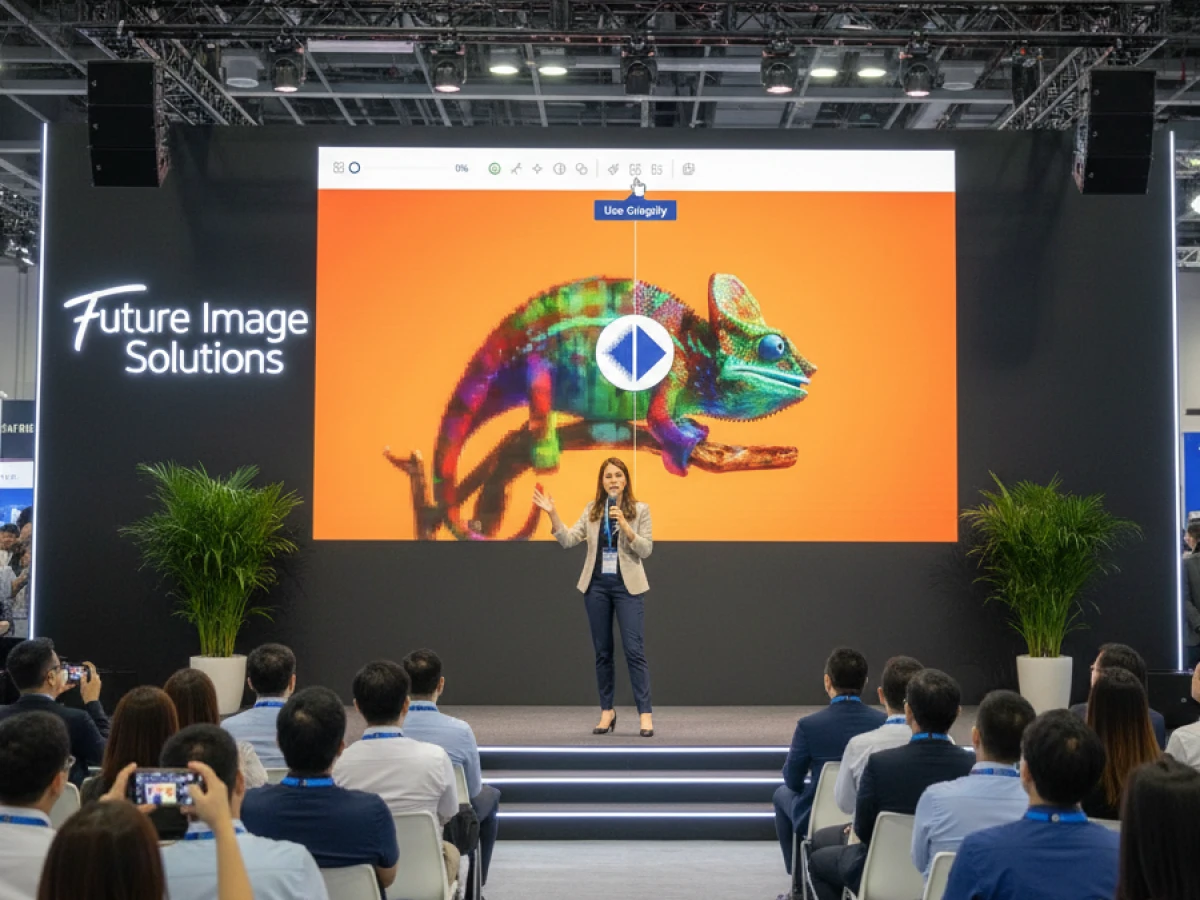
The platform combines browser-based packaging configuration, synchronous 2D and 3D design, Dynamic Preflight, AI Designer Suite capabilities such as vectorization, background removal, and Crispify image enhancement, Variable Data Printing through PDF/VT, real-time pricing, and automated production output.
Rather than functioning as a standalone configurator, it operates as a complete Web-to-Pack ecosystem designed for cloud-based packaging operations.
Why Cloud-Based Packaging Portals Are Becoming Strategic Infrastructure
Packaging portals are increasingly evolving from customer convenience tools into strategic infrastructure.
The reason is simple.
Customer expectations continue to rise while operational complexity continues to increase.
Organizations must simultaneously support personalization, shorter lead times, smaller order quantities, and tighter production schedules.
Meeting these requirements through manual processes becomes progressively more difficult.
Cloud-based Web-to-Pack environments create a framework where customer experience and operational efficiency reinforce one another.
Instead of adding administrative workload, growth can be supported through automation, integration, and standardization.
For packaging manufacturers, the strategic value extends far beyond online ordering.
The portal becomes a digital layer connecting commercial activity with production execution.
Why Web to Pack Solutions Are Reshaping Cloud Packaging Operations
Web to pack solutions have evolved from simple online configuration tools into operational platforms that connect customer interaction, packaging design, approval, validation, pricing, and production preparation. For packaging manufacturers, brand owners, e-commerce platforms, and technology teams, the real advantage lies in creating a production-safe workflow that scales efficiently as order complexity increases.
packQ from CloudLab reflects this evolution through its specialized Web-to-Pack architecture. By combining cloud-based packaging portals, ECMA and FEFCO standards, Dynamic Preflight, browser-based 3D design, ERP and MIS integration, API-first connectivity, and production-ready PDF output, the platform helps organizations build packaging workflows that remain efficient, reliable, and scalable.
The most successful packaging portals are not defined by how many products they display. They are defined by how effectively they connect customer demand with production reality.
Cloud-based packaging portals are becoming a critical component of modern packaging operations. It explores how web to pack solutions help packaging manufacturers connect customer configuration, approval workflows, pricing, prepress validation, ERP integration, and production preparation within a single environment. It examines the differences between isolated tools and integrated platforms, the role of Dynamic Preflight, the importance of ECMA and FEFCO standardization, and the value of API-first architectures. Using CloudLabs packQ as the reference framework, the article demonstrates how cloud packaging solutions support scalable growth, production safety, and operational efficiency without increasing administrative complexity.