API-first Web-to-Pack Architecture with packQ
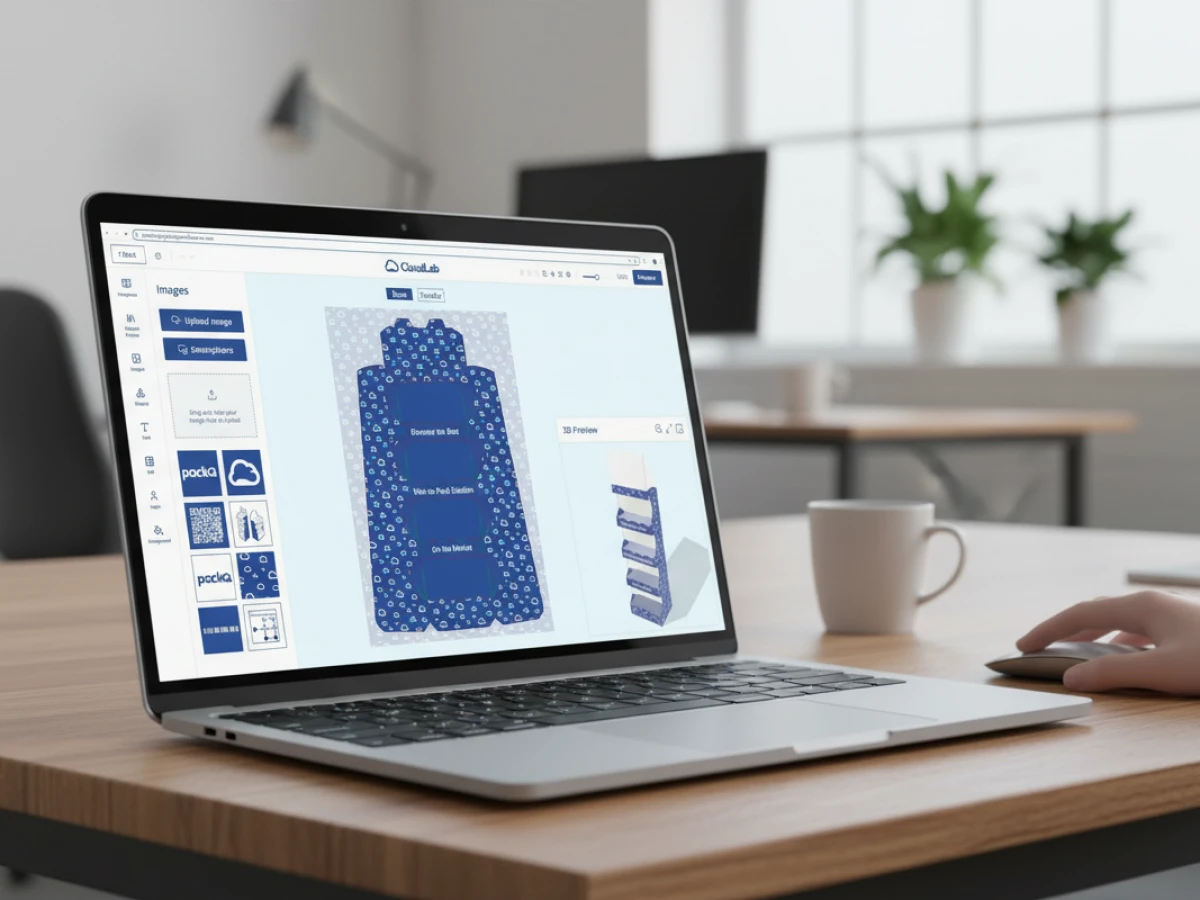
API-first Web-to-Pack Architecture is the foundation for scalable, automated packaging workflows. packQ provides a headless, integration-ready platform that connects e-commerce, ERP/MIS, and production systems without friction. Built for industrial environments, packQ turns integration complexity into a strategic advantage.
API-first Web-to-Pack Architecture as a Strategic Imperative
An API-first Web-to-Pack Architecture is no longer a technical preference. It has become a strategic requirement for packaging companies that operate across multiple channels, systems, and markets. As product portfolios expand and personalization increases, tightly coupled systems quickly become bottlenecks.
Packaging workflows today span e-commerce, procurement, design, prepress, production, and logistics. Without a clean architectural separation, every system change creates cascading dependencies. This limits scalability and slows innovation.
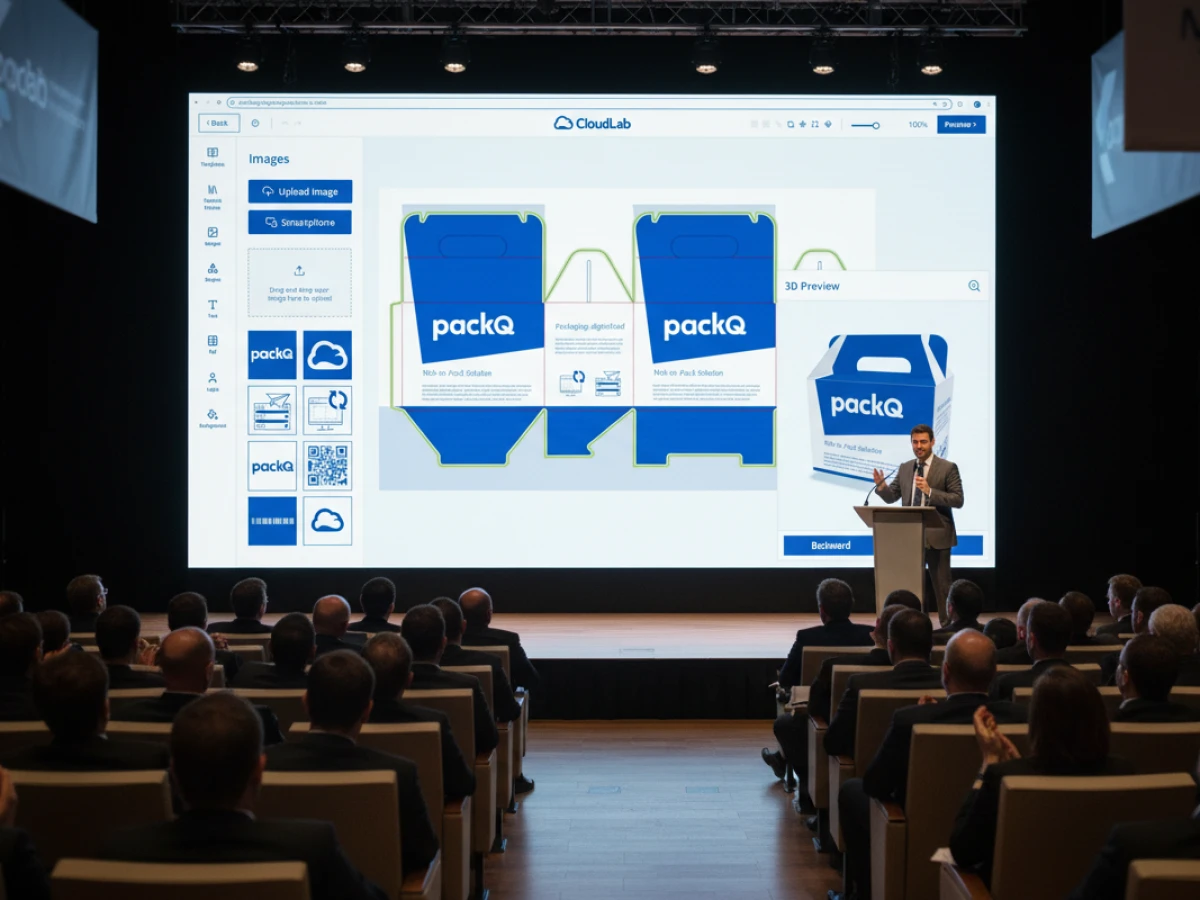
packQ addresses this challenge at its core. As CloudLab’s premium Web-to-Pack platform, packQ is built on a modular, API-first architecture that decouples frontend experiences from backend logic and production systems.
Why Traditional Architectures Fail in Packaging
Legacy packaging systems evolved around monolithic software stacks. These environments were never designed for dynamic integration or high variability.
Core limitation: Business logic, user interface, and production data are tightly bound.
This results in slow integrations, manual workarounds, and high maintenance costs. For decision-makers, such architectures increase operational risk instead of reducing it.
packQ replaces this model with a headless, integration-centric approach.
packQ as a Pure Web-to-Pack Platform
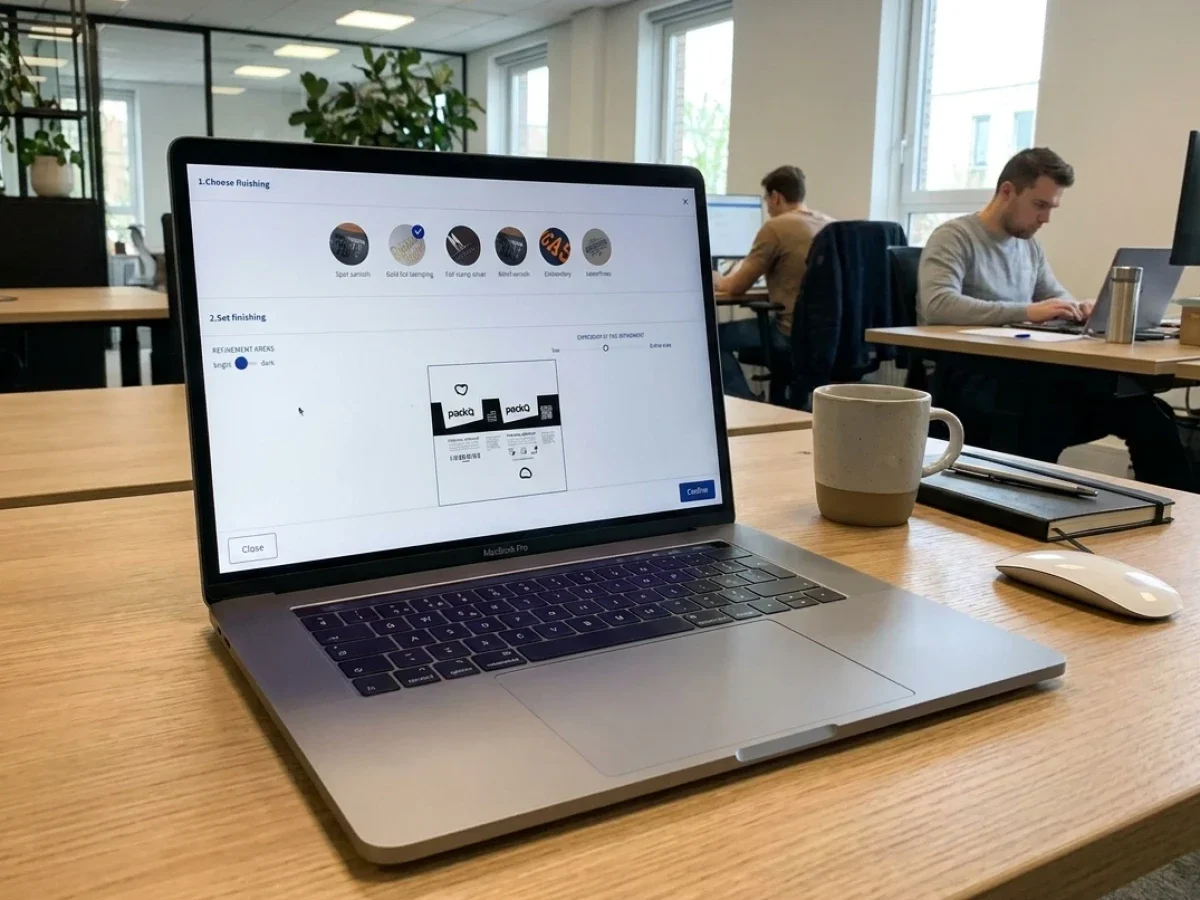
packQ is a pure Web-to-Pack solution, intentionally separated from Web-to-Print logic. This focus enables deeper modeling of packaging-specific processes such as structural configuration, material logic, and production validation.
The platform has received the InterTech Technology Award, underlining its technological relevance and industrial maturity.
From the outset, packQ was designed to function as an integration layer rather than a closed system.
Headless Web-to-Pack as the Architectural Core
Decoupling Frontend and Backend
In packQ, frontend and backend are fully decoupled.
Frontend flexibility: Custom user interfaces, portals, and configurators can be built independently of backend logic.
Backend stability: Pricing, validation, and production rules remain consistent regardless of frontend changes.
This separation enables rapid innovation without destabilizing production workflows.
API-first as a Design Principle
packQ follows an API-first philosophy, not as an afterthought but as a foundational principle.
All core functions are exposed via APIs, including configuration, pricing, validation, and order processing. This makes packQ interoperable with existing systems instead of competing with them.

E-Commerce Integration Without Constraints
Modern packaging businesses operate across multiple digital channels.
packQ integrates seamlessly with leading e-commerce platforms through its API-first architecture.
Supported Platforms
- Magento
- Shopify
- Shopware
These integrations enable packaging products to be sold, configured, and ordered directly within existing storefronts.
The Web-to-Pack logic runs in packQ, while the commerce experience remains native to the chosen platform.
ERP and MIS Integration as a Control Layer
ERP/MIS integration is critical for operational consistency.
packQ connects directly to ERP and MIS systems to synchronize:
- Pricing and costing data
- Order and customer information
- Production parameters
This ensures that commercial and operational data remain aligned at all times.
Automated Job Ticketing from Order to Production
One of the most significant benefits of an API-first Web-to-Pack Architecture is automated job ticketing.
In packQ, orders are transferred automatically as structured job tickets.
Job Ticket Capabilities
- Material reservation
- Production planning data
- CAD-aligned production parameters
This eliminates manual data transfer and reduces errors at the handover between sales and production.
Design Automation within an Integrated Architecture
Automation begins where customer input enters the system.
Browser-Based 3D Packaging Designer
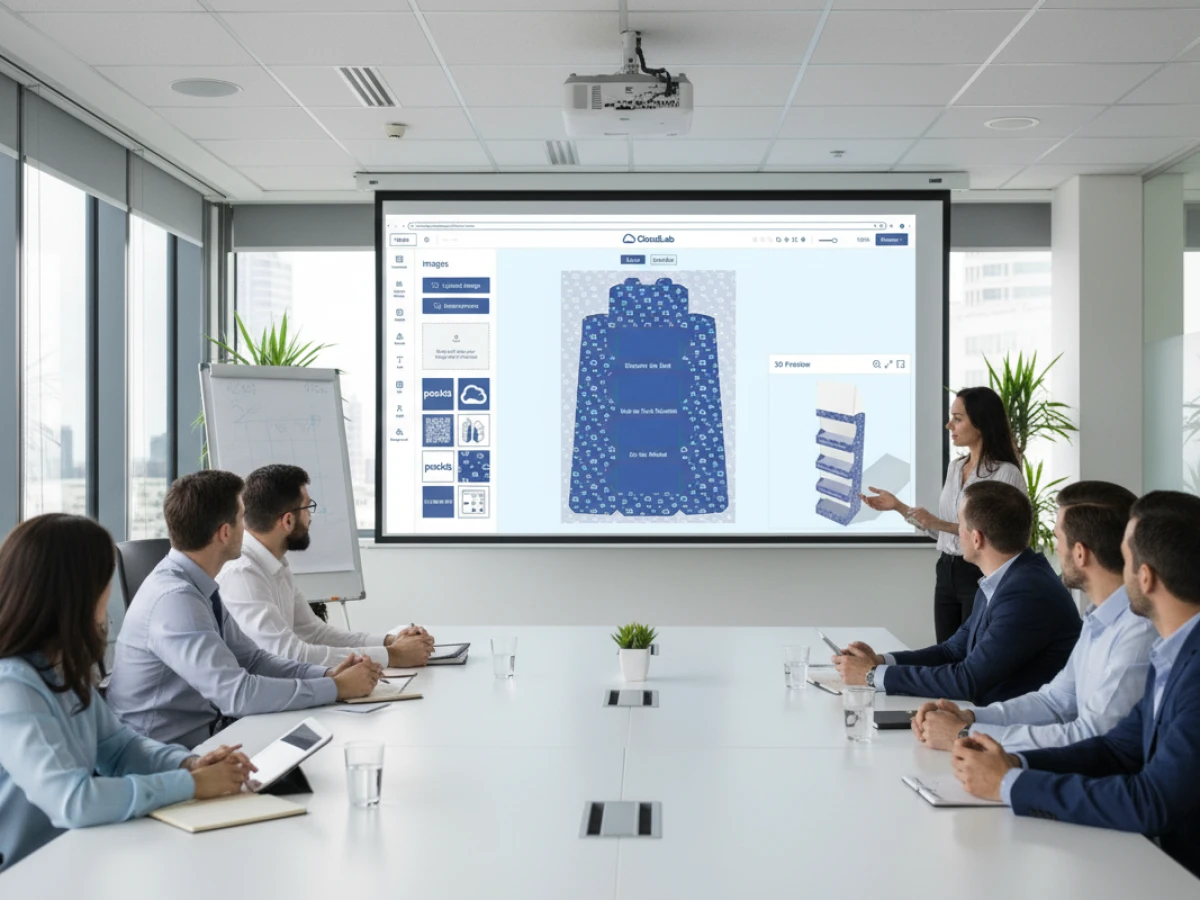
packQ includes a fully browser-based 3D packaging designer with real-time rendering.
Design changes are visualized instantly in synchronized 2D and 3D views. This ensures that all stakeholders understand the structural implications of every configuration.
CAD-Based Structural Logic
The designer is driven by CAD-based logic, ensuring that designs remain manufacturable.
This is essential when automated workflows transfer data directly into production systems.
ECMA and FEFCO as Integration Standards
Automation depends on standardization.
packQ offers the deepest ECMA and FEFCO integration available in a Web-to-Pack platform.
The integrated library includes:
- ~120 ECMA folding carton standards
- ~290 FEFCO corrugated standards
- ~50 POS display structures
These standards provide a common structural language across systems.
AI as an Integrated Workflow Component
AI in packQ supports automation rather than replacing control.
AI Designer Suite
The AI Designer Suite prepares assets automatically while maintaining production safety.
Key functions include vektorization, Crispify 4× image enhancement, and automated background removal. These capabilities reduce manual prepress work and accelerate integration into automated workflows.
Variable Data Printing in Integrated Environments
Variable Data Printing (PDF/VT) requires precise coordination between design and production systems.
packQ supports variable data down to batch size 1, generating production-ready outputs that integrate seamlessly with downstream systems.
This enables mass customization without manual file handling.
Dynamic Pricing as an Integrated Service
Pricing complexity often blocks automation.
packQ includes dynamic real-time pricing as an integrated service within its API-first architecture. Prices are recalculated automatically based on structure, material, print method, and quantity.
This enables automated quotation and ordering across all connected channels.
Dynamic Preflight as Automated Validation
Integrated workflows must include quality control.
packQ performs a dynamic preflight check for every order, validating resolution, color mode, bleed, and fonts automatically.
Errors are detected before production, not during manufacturing.
Production-Safe PDF Output as a System Guarantee
Every workflow in packQ results in a production-safe PDF.
Outputs are CAD-aligned, include embedded fonts, and meet industrial printing standards. This guarantees predictable downstream processing and reduces the need for manual intervention.
End-to-End Integration Across the Value Chain
An API-first Web-to-Pack Architecture connects the entire value chain.
Integrated processes include:
- Configuration and validation
- Pricing and order creation
- Job ticket generation and production planning
This creates a continuous digital workflow from storefront to shop floor.
Use Cases for Packaging Manufacturers
Packaging manufacturers like packM benefit from reduced setup times and higher process stability.
API-first integration enables predictable production even with high variant counts.
Use Cases for E-Commerce Platforms and Marketplaces
Marketplaces can integrate complex packaging products without rebuilding their commerce infrastructure.
packQ provides the Web-to-Pack logic, while the marketplace controls the customer experience.
Use Cases for Brand Owners and Industry
Brand owners require controlled access and consistent outputs.
packQ enables closed-shop portals with deep integration into procurement and approval systems.
Use Cases for Technology Teams
IT teams benefit from a clean, modular architecture.
API-first integration reduces maintenance effort and simplifies long-term scalability.
SaaS or On-Premise Without Lock-In
packQ is available as SaaS or on-premise.
Its modular architecture ensures flexibility without vendor lock-in.
Industry 4.0 and Print 4.0 Readiness
packQ is built for Industry 4.0 and Print 4.0 environments.
Data-driven integration enables automation, analytics, and continuous optimization.
API-first Web-to-Pack Architecture as a Growth Enabler
An API-first Web-to-Pack Architecture is the foundation for scalable, automated packaging operations. packQ delivers this architecture through a headless design, deep ERP/MIS integration, and automated job ticketing. By connecting e-commerce, design, and production systems into a single digital workflow, packQ transforms integration complexity into a strategic advantage.
API-first Web-to-Pack Architecture is redefining how packaging systems scale and integrate. packQ, CloudLab’s premium Web-to-Pack platform, is built on a headless, API-first foundation that decouples frontend and backend systems. With seamless e-commerce integration, deep ERP/MIS connectivity, automated job ticketing, and production-safe outputs, packQ connects storefronts directly to the shop floor. Designed for packaging manufacturers, marketplaces, brand owners, and technology teams, packQ enables Industry 4.0-ready automation without architectural lock-in.