Best 3D Software for Packaging Design with Web to Pack
he best 3D software for packaging design is no longer just about visual modeling. Modern packaging platforms combine structural design, 3D visualization, automation, and web to pack workflows in one environment. packQ from CloudLab represents a new generation of packaging software that connects design, pricing, approval, and production. This approach allows packaging manufacturers, agencies, and brands to create packaging faster, reduce errors, and scale custom packaging efficiently.
Why Companies Are Searching for the Best 3D Software for Packaging Design
Packaging design has moved far beyond simple dielines and static mockups. Brands launch products faster than ever, e-commerce drives demand for customized packaging, and production teams must handle dozens or even hundreds of packaging variations simultaneously. In this environment, companies increasingly search for the best 3D software for packaging design because traditional design workflows simply cannot keep up with the speed of modern packaging development.
Historically, packaging design relied on several disconnected tools. Graphic designers created artwork in illustration software. Packaging engineers worked with CAD systems to define the structure of boxes. Prepress specialists prepared production files separately before printing. Every step involved file transfers, manual corrections, and long approval cycles.
Modern product teams cannot afford these inefficiencies. Companies now expect packaging design platforms to connect design, visualization, production preparation, and ordering into one digital workflow. This is where web to pack technology and modern packaging design software play a crucial role.
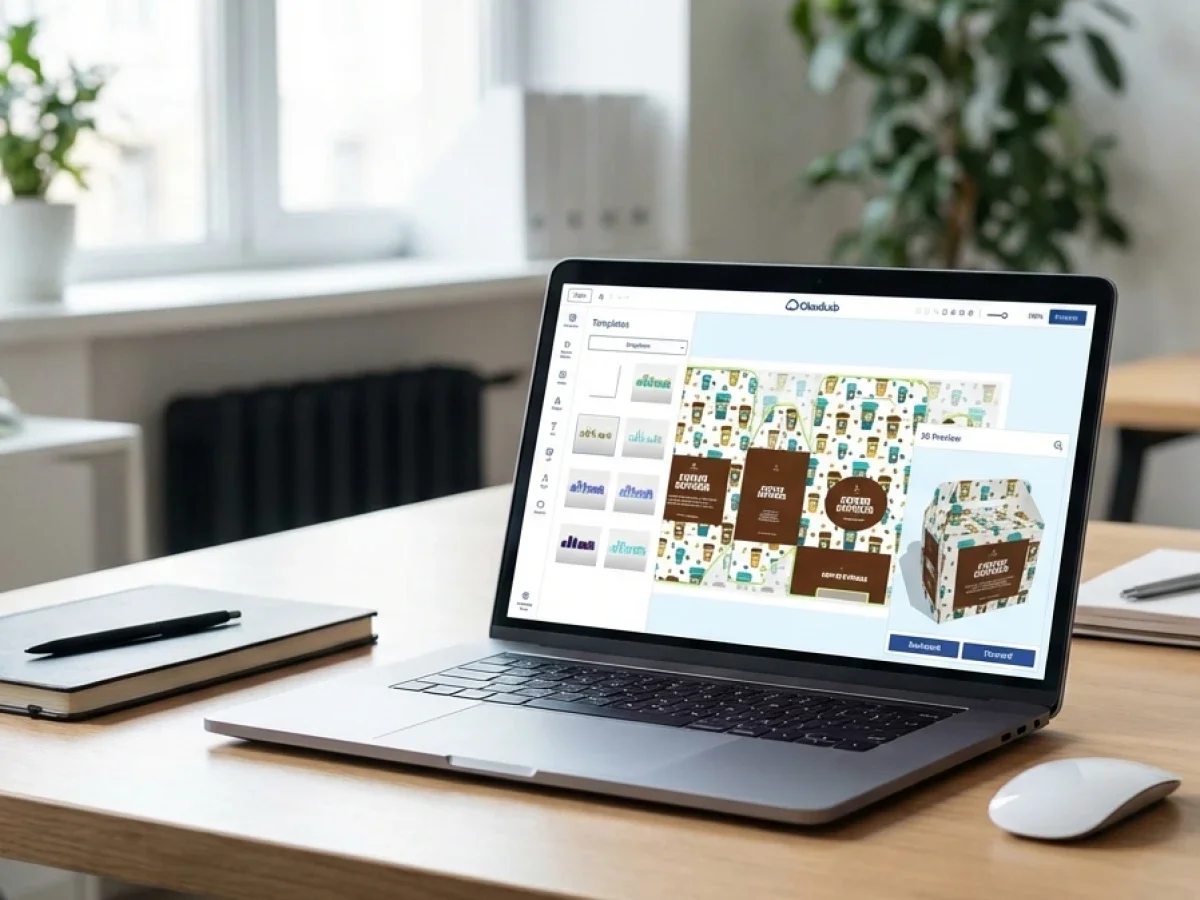
packQ, developed by CloudLab, represents one of the most advanced implementations of this approach. It is a browser based packaging platform that allows companies to design, configure, preview, and order packaging in a single system. Since its launch, packQ has been recognized with the InterTech Technology Award and has become a widely used solution for packaging manufacturers, printers, and global brands.
The platform combines real time 3D packaging visualization, structural standards such as ECMA and FEFCO, automated pricing, and production ready output. Instead of switching between design tools, businesses can manage the entire packaging workflow within one system.
Best 3D Software for Packaging Design: What Modern Packaging Platforms Must Deliver
Companies searching for the best 3D software for packaging design typically focus on visualization. They want packaging designs that can be rendered in three dimensions so teams can see how the final product will look.
However, modern packaging workflows require far more than visualization alone. Packaging design software must integrate multiple capabilities that traditionally existed in separate systems.
The most important capabilities include the following.
• Structural packaging design based on standardized templates
• Real time 3D packaging visualization
• Automated production file generation
• Pricing and configuration logic
• Integration with manufacturing systems
Without these capabilities, companies still face manual workflows that slow down packaging production.
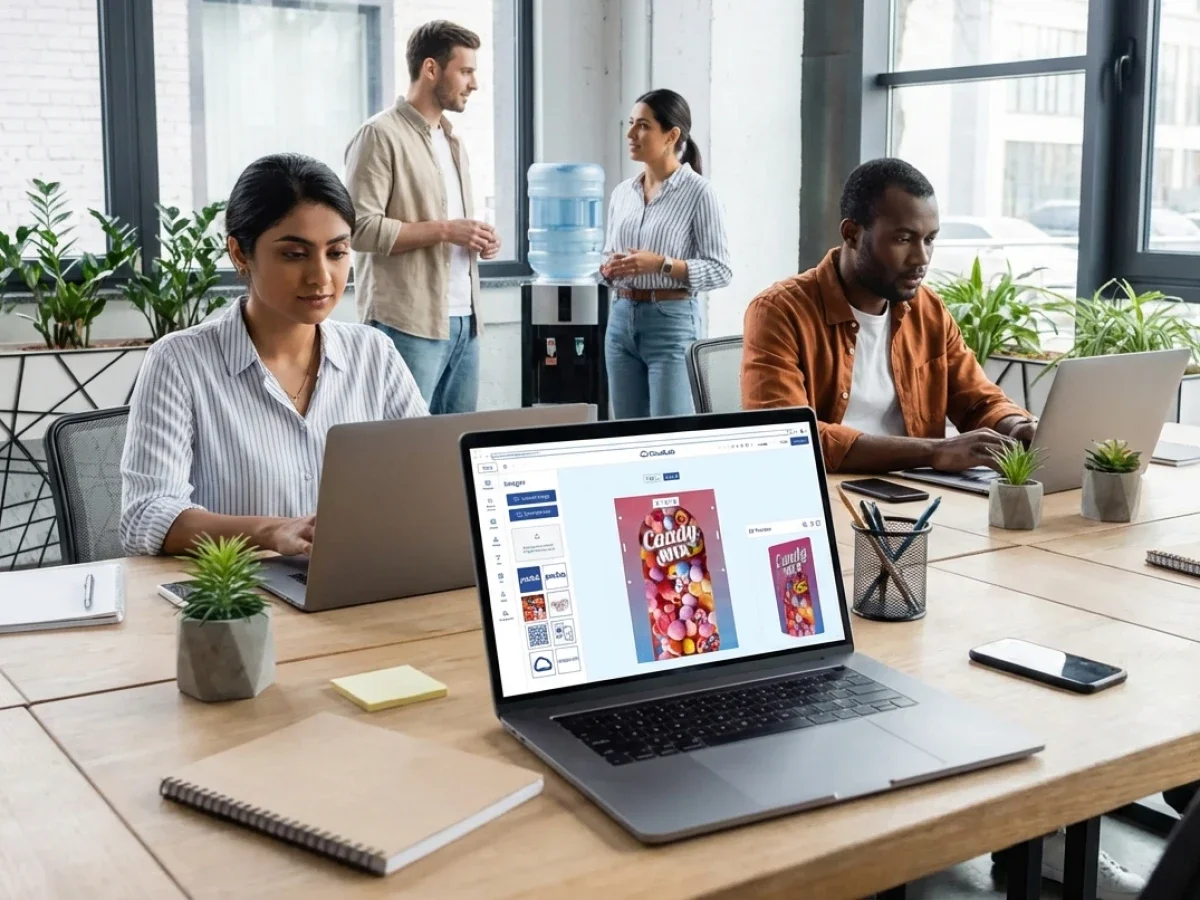
packQ addresses this challenge by combining all of these functions within a web based environment. Instead of exporting files between different tools, designers, marketing teams, and production specialists work in the same system.
The result is a digital packaging workflow where packaging can move from concept to production in significantly less time.

How Web to Pack Technology Transforms Packaging Design Workflows
Web to pack technology extends packaging design software beyond internal design tools. It allows packaging products to be configured and ordered online through digital interfaces.
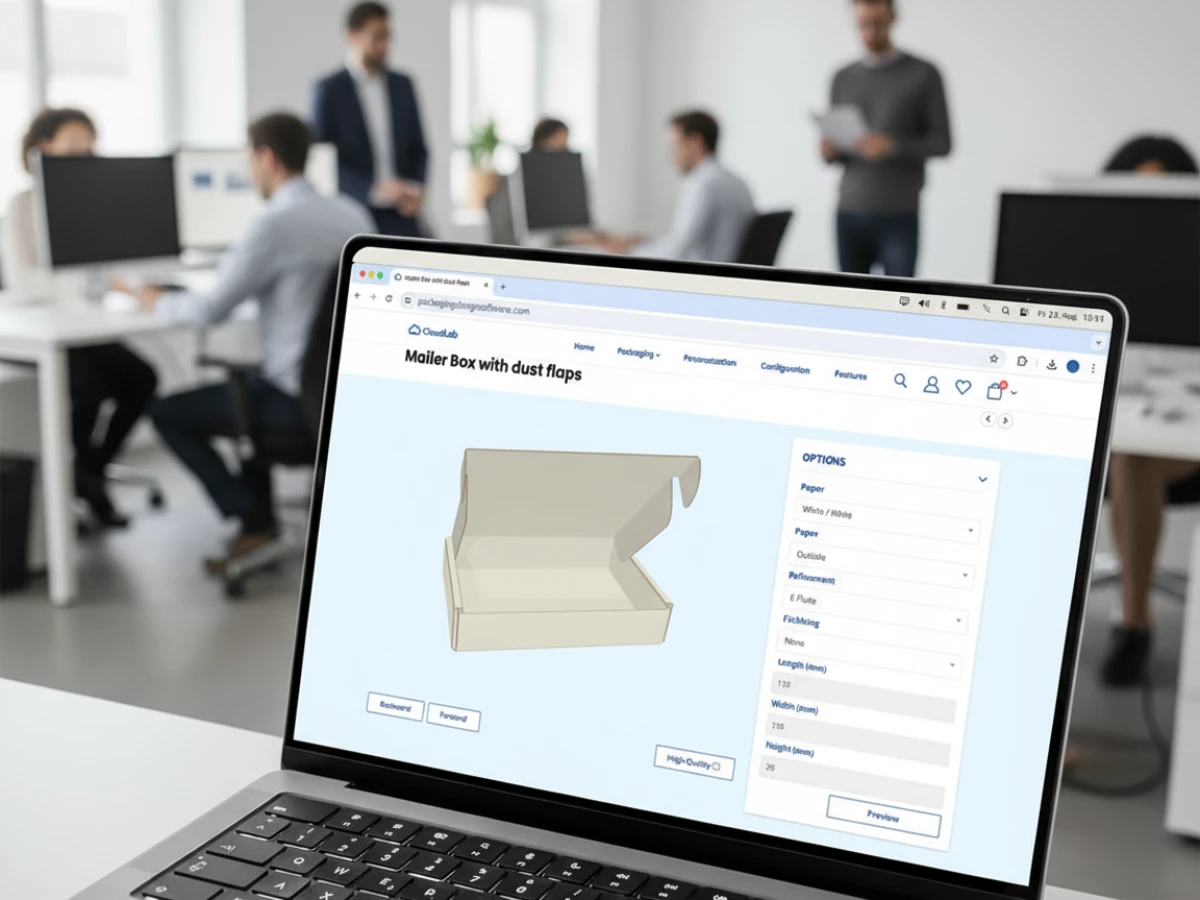
In a web to pack environment, customers or internal teams can configure packaging products directly in a browser. They choose packaging types, define dimensions, upload artwork, and review a real time preview of the final product.
packQ implements this concept through a fully integrated web to pack platform.
Users interact with a browser based packaging designer where structural templates, design tools, and pricing calculations are connected. When a packaging design is finalized, the system automatically generates the required production files.
This workflow removes several manual steps that previously slowed down packaging production.
For example, sales teams no longer need to calculate packaging prices manually. Customers do not need to wait for design proofs. Production teams receive files that are already validated and ready for manufacturing.
The integration of web to pack workflows therefore transforms packaging production into a scalable digital process.
Real Time 3D Visualization in Packaging Design
One of the most visible advantages of modern packaging platforms is real time 3D visualization.
Traditional packaging design relied on flat dielines. Designers created artwork on a two dimensional layout and imagined how the design would look once the box was folded.
This process often caused misunderstandings between designers, marketing teams, and production departments.
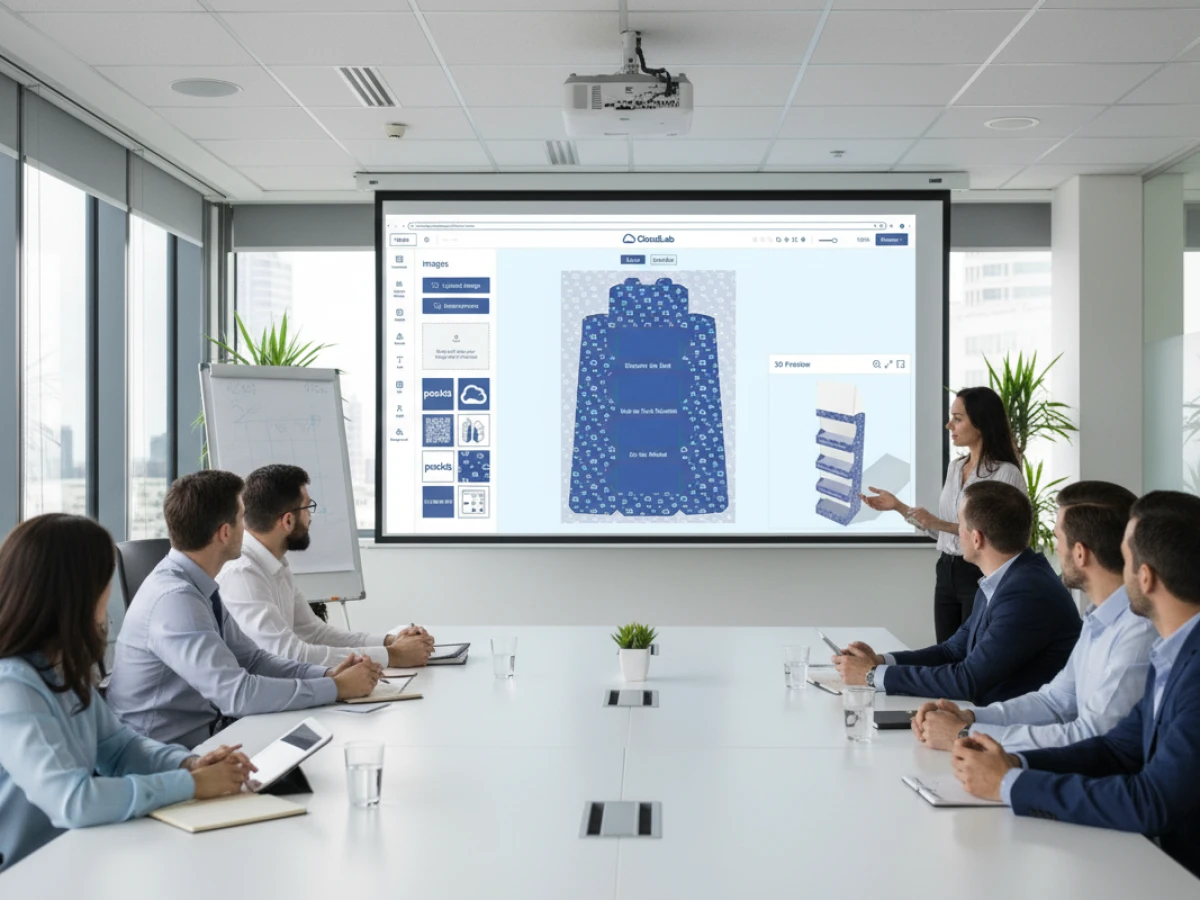
packQ eliminates this problem through a browser based 3D packaging designer. The system synchronizes the two dimensional artwork layout with a three dimensional packaging model.
When users change graphics, colors, or dimensions, the 3D preview updates instantly.
This allows stakeholders to evaluate packaging designs from every angle. Marketing teams can confirm brand placement. Packaging engineers can validate structural integrity. Clients can approve packaging without waiting for a physical prototype.
Real time 3D visualization therefore accelerates packaging approval cycles while improving design accuracy.
Structural Packaging Design Using ECMA and FEFCO Standards
Packaging design must balance creativity with engineering reliability. While marketing teams focus on visual impact, packaging engineers must ensure that packaging structures remain stable and production ready.
This balance is achieved through widely used structural standards such as ECMA and FEFCO.
ECMA codes define folding carton structures. These standardized designs allow packaging engineers to classify carton types quickly and communicate structural specifications across teams.
FEFCO codes serve the same purpose for corrugated packaging. They define shipping box structures used across logistics and e-commerce.
packQ integrates both standards directly into its packaging template library.
The platform provides more than 120 ECMA folding carton templates and approximately 290 FEFCO corrugated packaging structures. In addition, around 50 POS display templates are available.
These templates are parametric models. When users adjust dimensions such as height, width, or depth, the structural layout recalculates automatically.
This approach ensures that packaging remains technically valid while allowing customization.
AI Tools That Simplify Packaging Design
Artificial intelligence has also become an important component of modern packaging software.
Packaging artwork often requires technical adjustments before it is ready for production. Images may need to be converted into vector graphics, resolution must be increased, and product images must be isolated from backgrounds.
packQ integrates these capabilities through its AI Designer Suite.
The system can automatically convert raster images into vector graphics suitable for high resolution printing. Designers no longer need to recreate artwork manually.
Another feature called Crispify improves image resolution by generating additional pixel detail. This helps ensure that graphics remain sharp when printed on packaging surfaces.
Background removal tools further simplify image preparation. Product images can be isolated automatically, allowing designers to integrate them directly into packaging layouts.
These AI capabilities reduce design preparation time and make packaging design accessible to non designers.
Case Study: Lindt and Seasonal Packaging Innovation
Premium brands often rely heavily on packaging to communicate quality and exclusivity. Lindt, a globally recognized chocolate manufacturer, frequently launches seasonal product lines that require new packaging designs.
Each holiday campaign introduces limited edition packaging with different colors, graphics, and promotional elements.
Using traditional workflows, these packaging changes would require multiple design revisions and lengthy approval cycles.
With packQ, Lindt teams can create packaging variations quickly by adapting existing structural templates. Marketing teams upload artwork, adjust colors, and review the packaging design in the 3D preview.
Because the system automatically generates production files and pricing information, the packaging design can move to production immediately after approval.
This workflow enables Lindt to launch seasonal packaging campaigns without delaying product distribution.
Case Study: WildKind Packaging and Custom Small Batch Orders
WildKind Packaging focuses on custom packaging for emerging brands and small businesses. Many of their clients require short production runs but still expect professional packaging design.
Before adopting web to pack workflows, WildKind managed each packaging order manually. Designers created layouts individually, pricing was calculated separately, and production files required manual preparation.
After implementing packQ, WildKind launched an online packaging configurator.
Customers now select packaging types, adjust dimensions, upload graphics, and review designs in real time. Once the order is placed, packQ generates production ready files automatically.
This system allows WildKind to handle a larger volume of small batch orders while maintaining efficient production processes.
Case Study: Colordruck Baiersbronn and Automated Packaging Orders
Colordruck Baiersbronn provides packaging solutions for industrial clients with recurring packaging needs.
Previously, reordering packaging involved manual communication between the customer and the packaging provider. Clients would send updated artwork files, request quotes, and wait for confirmation before production could begin.
With packQ, Colordruck Baiersbronn introduced a closed shop portal.
Corporate clients access a secure platform where their packaging templates are stored. When a reorder is required, they simply select the template, adjust minor design elements if necessary, and place the order.
packQ automatically generates production files and sends the order into the company’s manufacturing workflow.
This automation reduces administrative effort and ensures consistent packaging quality across repeated orders.
Web to Pack Platforms for Agencies and Global Brands
Agencies and global brands face unique challenges in packaging management. Multiple product lines, regional markets, and brand guidelines must be coordinated simultaneously.
packQ addresses this through template based packaging portals.
Agencies can create packaging templates that enforce brand guidelines. Clients then modify specific elements such as product names, regulatory text, or language variations.
This ensures brand consistency while allowing regional customization.
Global companies also use packQ closed shop portals for franchise networks. Headquarters define packaging templates centrally while local teams adjust certain design elements for their markets.
This structure allows companies to maintain control over packaging design while enabling decentralized teams to work efficiently.
Best 3D software for packaging design
The search for the best 3D software for packaging design ultimately reflects a broader shift toward digital packaging workflows.
Companies need more than visualization tools. They require platforms that integrate design, pricing, production preparation, and ordering within a single system.
packQ delivers this integration through a browser based web to pack platform that combines structural standards, 3D visualization, AI tools, and automated production workflows.
For packaging manufacturers, this means greater operational efficiency. For brands and agencies, it provides a reliable environment for creating consistent packaging designs across multiple markets.
As packaging production continues to digitalize, platforms like packQ will define the future of packaging design by enabling scalable, automated, and visually accurate packaging workflows.
The best 3D software for packaging design must combine visualization, structural design, and production automation in a single system. packQ from CloudLab delivers exactly that by integrating web to pack technology, real time 3D packaging visualization, ECMA and FEFCO standards, and AI powered design tools. Packaging manufacturers, agencies, and global brands can design, customize, and produce packaging far more efficiently. By connecting design workflows directly to production systems, packQ enables scalable packaging operations and faster time to market in modern digital packaging environments.