Custom Web to Print for Brand-Compliant Workflows
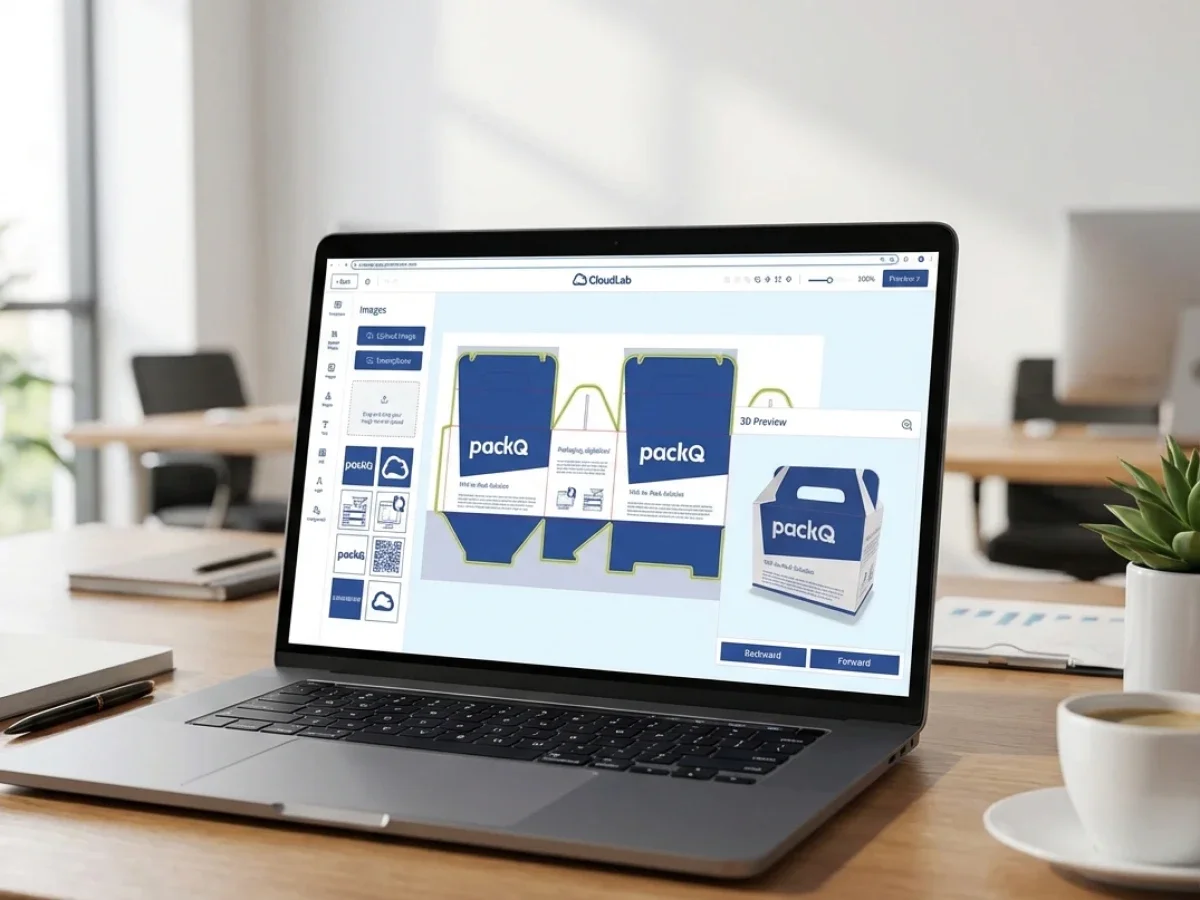
Custom web to print solutions only create value when brand rules, production logic, and automation are embedded into the design process. A web to print designer must enforce consistency while enabling flexibility. packQ extends custom web to print into Web-to-Pack by combining real-time 3D, standards, and end-to-end automation.
Custom Web to Print as a Strategic Capability
Custom web to print has evolved from a convenience feature into a strategic capability. Organizations no longer adopt web-to-print merely to offer online ordering. They use it to control brand usage, accelerate approvals, and standardize production across decentralized teams.
This shift changes the role of the web to print designer fundamentally.
Instead of being a simple layout tool, the designer becomes a governance layer. It defines what users may change, what remains fixed, and how creative freedom aligns with brand and production constraints. In this context, custom web to print is less about creativity and more about controlled scalability.
For decision-makers, the key question is no longer whether to customize web to print, but how deeply customization must be embedded into workflows.
Why Custom Web to Print Is Not Just Configuration
Many platforms label basic settings as customization. In practice, true custom web to print goes much further. It adapts logic, permissions, data flows, and validation rules to the organization’s operating model.
A web to print designer that only allows text replacement does not solve real problems. Brand teams require control over typography, spacing, imagery, and layout logic. Production teams require predictability and technical correctness.
Custom web to print sits at the intersection of these requirements. It transforms design freedom into repeatable, production-safe outcomes.
The Web to Print Designer as a Brand Control System
The modern web to print designer acts as a brand compliance engine. It translates corporate design guidelines into enforceable rules rather than recommendations.
Users interact with predefined templates, not blank canvases. Editable areas are constrained by design logic. Fonts, colors, and structural elements remain locked. This ensures that every output aligns with brand identity regardless of who configures it.
This approach eliminates downstream corrections and protects brand integrity at scale.
Brand-Compliant Templates at Enterprise Scale
Brand-compliant templates are the foundation of any custom web to print strategy. They reduce creative friction while preserving consistency.
A mature web to print designer supports modular templates. Core elements remain fixed, while variable components adapt to user input. This balance enables personalization without visual drift.
For global organizations, this model enables decentralized execution with centralized control.
Custom Web to Print Across Departments and Use Cases
Custom web to print rarely serves a single audience. Marketing teams, procurement, local branches, and external partners all interact with the system differently.
A flexible permission model is therefore essential. The same template may support multiple roles with different degrees of freedom. The web to print designer must adapt its interface dynamically based on context.
This capability turns custom web to print into a cross-functional platform rather than a niche tool.
From Custom Web to Print to Web-to-Pack
As soon as packaging enters the equation, traditional web to print logic reaches its limits. Packaging is not a flat design surface. It is a physical object with structure, material behavior, and production constraints.
Custom web to print solutions that ignore this reality force organizations back into manual processes. Uploading die-lines, approving PDFs, and correcting errors after ordering undermines automation.
Web-to-Pack resolves this by embedding packaging logic directly into the design process.
packQ was built specifically for this evolution.
packQ as a Premium Web-to-Pack Platform
packQ is a specialized Web-to-Pack platform developed by CloudLab Solutions and awarded the InterTech Technology Award. It extends the concept of custom web to print into the physical domain of packaging.
Instead of treating packaging as artwork applied to a shape, packQ treats it as a configurable product. Structure, design, pricing, and validation are handled within a single system.
This approach eliminates the gap between design intent and production reality.
The 3D Packaging Designer as a Decision Accelerator
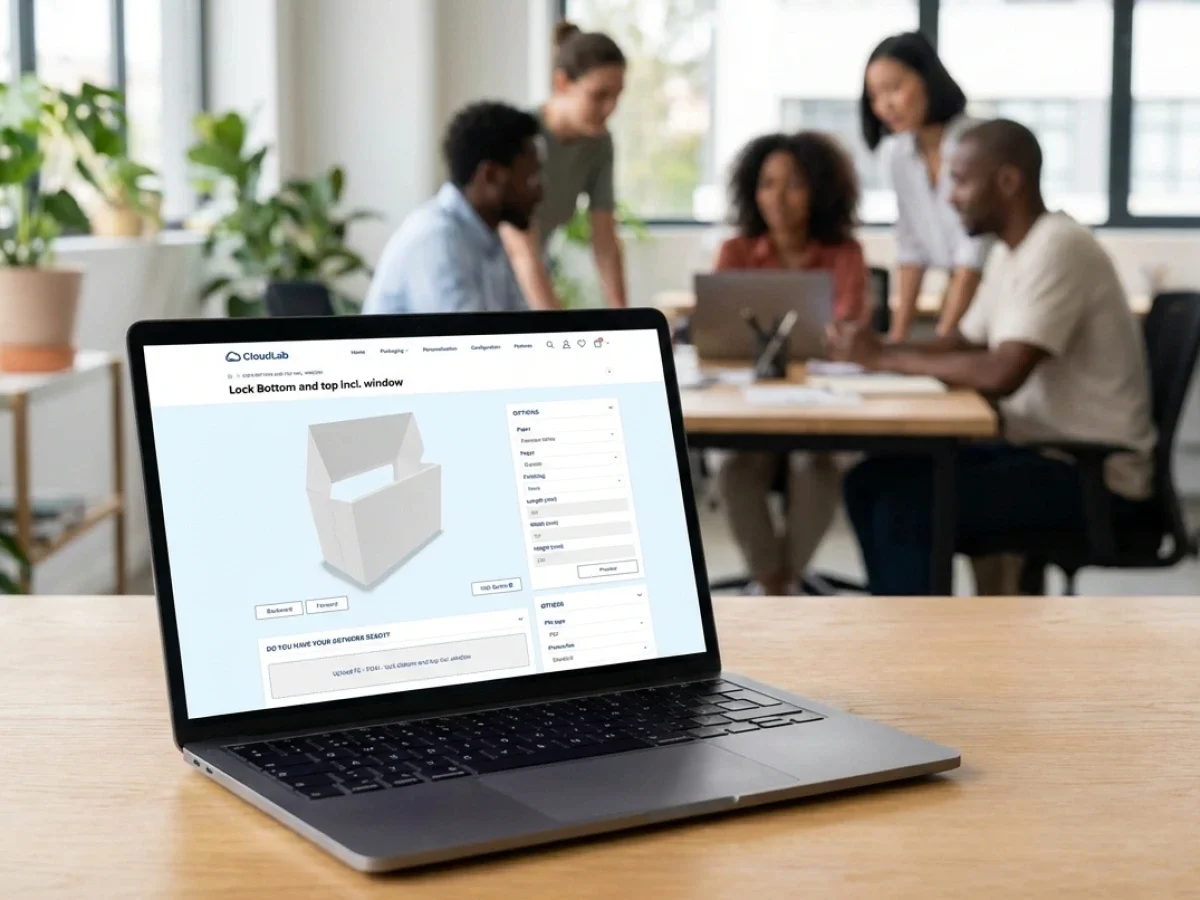
At the core of packQ lies a browser-based 3D packaging designer with real-time rendering and synchronized 2D and 3D views. Every design decision is visualized instantly on the actual packaging structure.
This capability transforms approvals. Stakeholders no longer review abstract layouts. They approve realistic representations of the final product.
Faster approvals directly translate into shorter time-to-market.
ECMA and FEFCO as the Structural Backbone
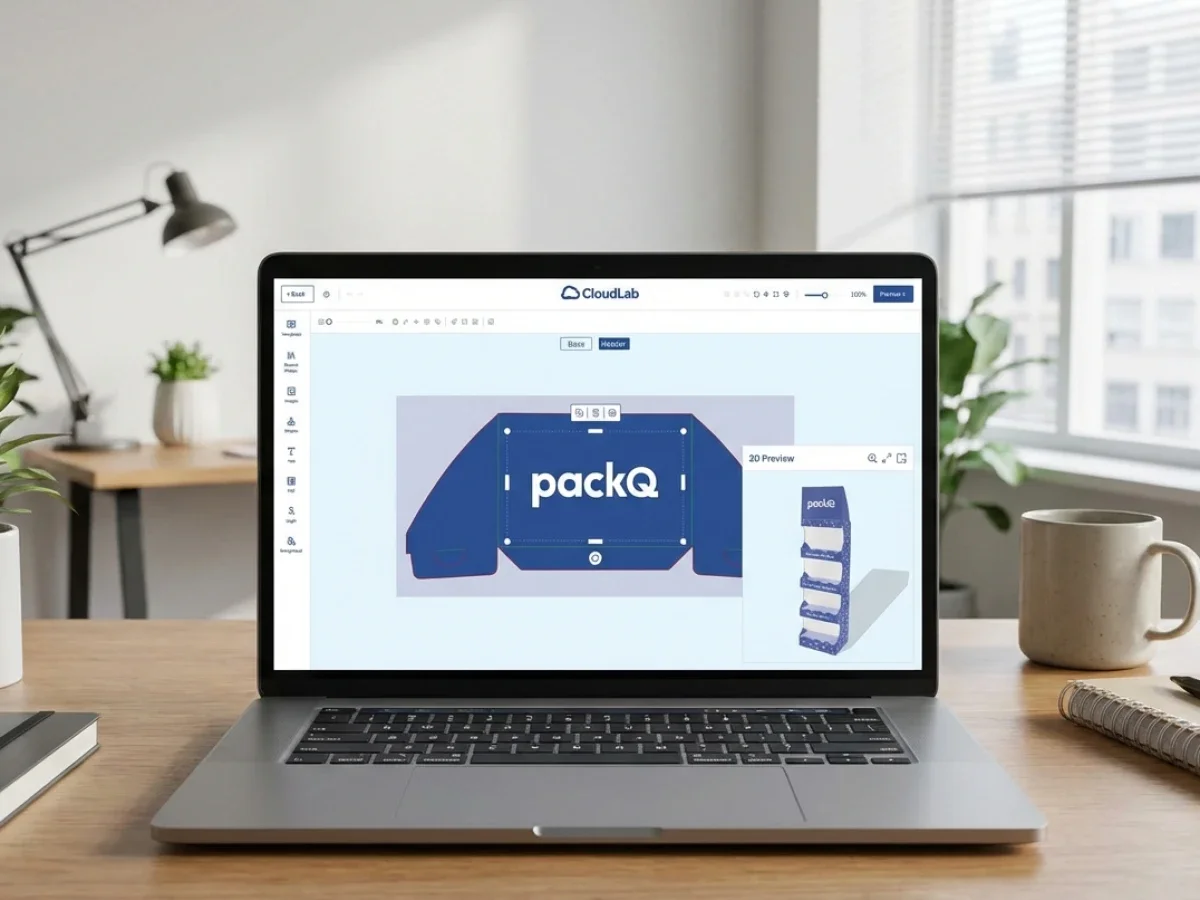
packQ integrates ECMA and FEFCO standards directly into the platform, covering approximately 120 ECMA folding cartons, 290 FEFCO corrugated designs, and 50 POS displays.
These standards are implemented as parametric templates. Users configure dimensions within defined limits, while the system enforces structural correctness automatically.
This ensures that every output is production-safe by design.
AI Designer Suite for Consistent Output Quality
Custom web to print often fails due to inconsistent input quality. packQ addresses this with an integrated AI Designer Suite.
Raster images can be vectorized, resolution enhanced using Crispify with four-times higher output resolution, and backgrounds removed directly in the browser. These tools reduce dependency on manual prepress intervention.
Data quality becomes predictable rather than variable.
Variable Data Printing as a Native Capability
Personalization is a key driver of custom web to print adoption. packQ supports PDF/VT-based Variable Data Printing, enabling mass customization down to lot size one.
Each variant is generated within the same structural and validation framework. This ensures consistency across large volumes without manual effort.
Variable data becomes an operational strength rather than a risk.
Dynamic Pricing Embedded in the Workflow
Custom web to print solutions often struggle with pricing complexity. packQ integrates dynamic pricing in real time, calculating dimensions, materials, print options, and quantities instantly.
This capability eliminates manual quoting and aligns pricing logic with production reality.
For B2B and B2C scenarios alike, pricing becomes transparent and scalable.
Dynamic Preflight Check as Quality Assurance
packQ includes a Dynamic Preflight Check that validates resolution, color mode, bleed, and font usage during configuration.
Errors are detected before orders reach production. This upstream validation reduces waste and increases predictability across workflows.
Quality assurance becomes proactive instead of reactive.
Headless, API-First Architecture for Customization
packQ is built as a headless, API-first platform supporting REST, SOAP, and JSON. Customization occurs at the integration level rather than through core code changes.
This preserves platform stability while enabling deep integration with ERP and MIS systems.
For technology teams, this model balances flexibility with maintainability.
Custom Web to Print for B2B and B2C Scenarios
Custom web to print delivers the highest value when it supports both B2B and B2C models without duplicating systems. Organizations increasingly operate hybrid environments where internal teams, partners, and end customers access the same platform under different rules.
In B2B scenarios, the web to print designer must enforce strict brand and pricing controls. Users operate within predefined frameworks that reflect contracts, assortments, and approval workflows. Flexibility exists, but only where it does not compromise governance.
In B2C scenarios, usability and speed take priority. The same underlying logic must be presented in a simplified interface that hides complexity while preserving production safety.
packQ supports both models through configuration rather than separate implementations.
Open-Shop and Closed-Shop Workflows in Practice
Open-shop and closed-shop workflows represent two ends of the same spectrum. A closed shop prioritizes control, while an open shop prioritizes accessibility.
Custom web to print solutions often struggle to support both without architectural compromise. packQ addresses this by separating business rules from user experience. The same templates, pricing logic, and validation rules apply regardless of access model.
This approach allows organizations to scale outward without losing internal consistency.
Faster Approvals Through Real-Time 3D Visualization
Approval cycles are a major bottleneck in brand-controlled environments. Traditional web to print workflows rely on static previews that leave room for interpretation.
packQ’s real-time 3D visualization eliminates ambiguity. Stakeholders see the final product as it will be produced, including structure, proportions, and design placement.
This visual certainty accelerates approvals and reduces revision loops, especially in distributed teams.
Error Reduction Through Embedded Preflight Logic
Manual prepress checks undermine the promise of automation. Custom web to print must therefore include technical validation at the point of configuration.
packQ integrates preflight logic directly into the workflow. Resolution, color mode, bleed, and font usage are validated before orders are placed.
This shifts quality assurance upstream and reduces costly downstream corrections.
Efficiency Through ECMA and FEFCO Standardization
Standardization is often perceived as a limitation. In practice, it is an efficiency multiplier.
By embedding ECMA and FEFCO standards directly into the design process, packQ enables controlled variation. Users configure dimensions and options within proven construction models.
This ensures production efficiency without sacrificing customization.
Mass Customization Without Manual Overhead
Mass customization is only sustainable when automation scales with variability. Custom web to print solutions that rely on manual intervention collapse under volume.
packQ supports mass customization down to lot size one through PDF/VT-based Variable Data Printing. Each variant adheres to the same validation and production rules.
Customization becomes predictable, repeatable, and profitable.
Automated Quotation and Order Creation
Quotation is a critical yet inefficient step in many print workflows. Manual pricing introduces delays and inconsistency.
packQ integrates real-time pricing directly into the configuration process. Quotes are generated automatically based on structure, materials, print options, and quantity.
Orders flow directly into ERP and MIS systems without re-entry, completing the automation loop.
ERP and MIS Integration as a Core Requirement
Custom web to print is only as strong as its integration depth. Standalone systems create friction instead of efficiency.
packQ is designed to integrate seamlessly into existing ERP and MIS environments. Order data, pricing, and production parameters flow automatically across systems.
This integration preserves existing investments while extending digital capabilities.
Technology Teams and Maintainable Customization
From an IT perspective, customization must be maintainable. Code-heavy approaches increase technical debt and slow innovation.
packQ’s headless, API-first architecture enables customization through configuration and integration rather than core code modification. REST, SOAP, and JSON interfaces provide controlled extension points.
This model balances flexibility with long-term stability.
Custom Web to Print in Regulated Industries
Industries such as pharmaceuticals and consumer goods like Lindt require strict compliance. Brand deviations or production errors carry legal and reputational risk.
packQ supports regulated environments through role-based access, controlled templates, and traceable outputs. Every configuration follows predefined rules.
Compliance becomes embedded rather than enforced manually.
Scalability Without Organizational Strain
Growth often exposes weaknesses in custom web to print solutions. Systems that worked for hundreds of users fail at thousands.
packQ is designed for scale. Automation absorbs complexity without increasing headcount. Workflows remain consistent as volume grows.
This scalability is essential for long-term competitiveness.
Strategic Differentiation Through Web-to-Pack
Custom web to print alone is no longer a differentiator. The real advantage lies in extending it into Web-to-Pack.
packQ bridges the gap between digital design and physical production. It aligns brand control, user experience, and manufacturing logic in a single platform.
This integration creates defensible differentiation in competitive markets.
Custom Web to Print Revisited
A mature view of custom web to print recognizes its limitations. Configuration without production intelligence creates risk. Flexibility without governance creates inconsistency.
The future lies in platforms that combine customization with control.
packQ represents this evolution.
Workflows for Custom Prints
Custom web to print enables brand-compliant templates and scalable workflows only when design freedom is aligned with production intelligence. A web to print designer must enforce rules, not just offer tools. packQ extends custom web to print into Web-to-Pack by combining real-time 3D visualization, ECMA and FEFCO standards, AI-assisted design, automated pricing, preflight validation, and deep ERP/MIS integration. For organizations preparing for Print 4.0, this approach transforms customization from a risk into a strategic asset.
Custom web to print has become a strategic capability for organizations that need brand consistency, scalability, and automation. A modern web to print designer must go beyond layout tools and embed governance, production logic, and validation directly into workflows. By extending custom web to print into Web-to-Pack, packQ combines real-time 3D packaging design, ECMA and FEFCO standardization, AI-powered design assistance, dynamic pricing, automated preflight checks, and API-first integration. The result is a future-ready platform that enables mass customization without sacrificing control or efficiency.