Preflight Software for Web-to-Print Workflows

Preflight software ensures print data is technically correct before production starts. Understanding what is preflight in printing is critical for scalable Web-to-Print and Web-to-Pack workflows. packQ embeds Dynamic Preflight Checks directly into its platform to reduce errors, automate approvals, and protect production quality.
Preflight Software as a Core Element of Modern Print Workflows
Preflight software has moved from a specialist tool in prepress departments to a foundational component of digital print workflows. In modern environments, files are created by non-experts, uploaded through storefronts, and processed automatically at scale.
This shift changes the role of preflight fundamentally.
Instead of correcting errors late in the process, preflight software now prevents them early. It ensures that files meet technical, structural, and production requirements before they reach machines. For decision-makers, preflight is no longer an operational detail. It is a strategic safeguard.
What Is Preflight in Printing?
To understand the relevance of preflight software, it is essential to clarify what is preflight in printing. Preflight refers to the automated or semi-automated inspection of print files to verify that they comply with predefined production rules.
These rules typically include resolution, color spaces, bleed, trim, fonts, and transparency handling. In packaging workflows, structural parameters and die-line integrity are added.
The objective is not to improve design quality, but to ensure production feasibility. A file that passes preflight should be printable without manual intervention.
Why Preflight Became Mission-Critical in Web-to-Print
Traditional print workflows relied on trained designers and prepress specialists. Files were created internally and reviewed manually. Web-to-Print disrupted this model by moving file creation to customers.
This democratization increased speed and reach, but it also increased risk.
Customers upload files created in uncontrolled environments using diverse tools. Without robust preflight software, errors propagate directly into production. The result is waste, rework, and delayed delivery.
In scalable Web-to-Print models, manual checks are no longer viable.
The Limits of Manual Prepress Checks
Manual prepress checks rely on expertise, but they do not scale predictably. As order volumes grow and turnaround times shrink, human review becomes a bottleneck.
Even experienced operators miss issues under time pressure. Consistency varies between shifts and locations. Documentation is fragmented.
Preflight software replaces subjective judgment with repeatable rules. This consistency is essential for industrial-scale print operations.
Preflight Software Beyond Flat Print Products
Many preflight tools were designed for flat print products such as flyers, brochures, or posters. Packaging introduces additional complexity that these tools were not built to handle.
Packaging files combine artwork with structural elements. Die-lines, fold lines, glue areas, and material constraints must be validated alongside visual content.
This expands the definition of what is preflight in printing from a purely graphical check to a product-level validation.

Preflight as a Gatekeeper for Automation
Automation depends on trust. Production systems must trust that incoming data is correct. Preflight software provides this trust layer.
By enforcing rules before files enter production, preflight enables downstream automation. Machines can run unattended. Scheduling becomes predictable. Error handling shifts upstream.
In this sense, preflight is not a standalone tool. It is an enabler for end-to-end automation.
Preflight Software in B2B and B2C Scenarios
The role of preflight differs slightly between B2B and B2C contexts, but its importance remains constant.
In B2B environments, preflight protects contractual quality expectations. Clients assume that provided templates and workflows yield correct output. Errors undermine trust.
In B2C environments, preflight protects margins. Individual customers rarely understand print specifications. Automated validation prevents costly one-off mistakes.
Both scenarios require preflight at scale.
Where Traditional Preflight Tools Fall Short
Standalone preflight software often operates as a downstream checkpoint. Files are uploaded, queued, and inspected after ordering.
This timing is suboptimal.
Errors discovered after order placement create friction. Orders must be paused, customers contacted, and corrections requested. In automated storefronts, this breaks the user experience.
Modern workflows require preflight during configuration, not after submission.
From Preflight Software to Dynamic Preflight
Dynamic Preflight represents an evolution of traditional approaches. Instead of analyzing finished files, Dynamic Preflight validates data in real time as it is created or configured.
Users receive immediate feedback. Errors are corrected before submission. The system guides users toward valid output rather than rejecting files later.
This approach aligns preflight with self-service models.
packQ and the Concept of Dynamic Preflight
packQ is a premium Web-to-Pack platform developed by CloudLab Solutions and recognized with the InterTech Technology Award. It embeds Dynamic Preflight Check directly into the configuration workflow.
Preflight rules are applied while users design and configure products. Resolution, color mode, bleed, fonts, and structural constraints are validated continuously.
This integration eliminates the gap between design and production.
Dynamic Preflight in Packaging Workflows
Packaging workflows amplify the value of Dynamic Preflight. Structural errors are costly and difficult to correct once files reach production.
packQ validates packaging-specific parameters alongside graphic checks. Die-line alignment, safety zones, and material-dependent constraints are enforced automatically.
Users cannot create invalid configurations. Production safety is guaranteed by design.
Real-Time 3D and Preflight Synergy
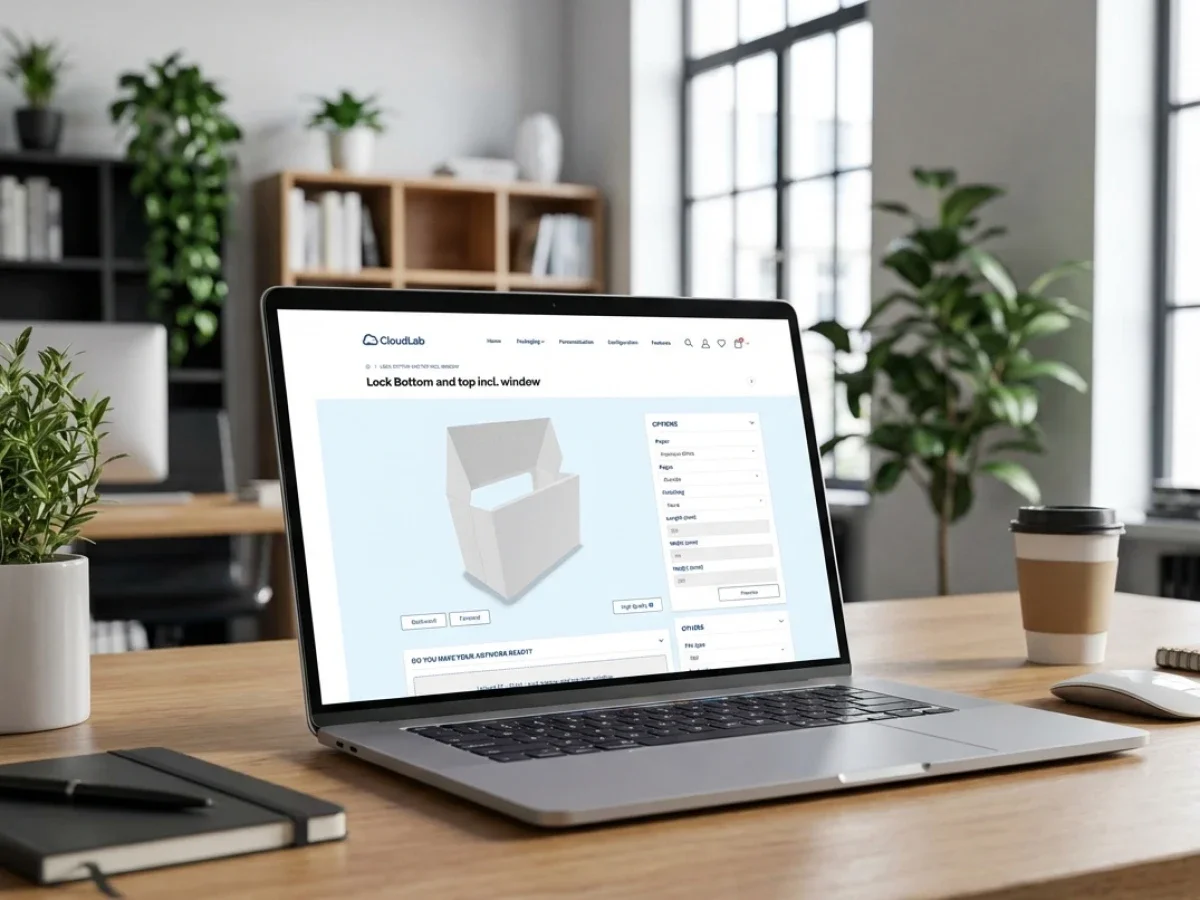
packQ’s browser-based 3D packaging designer works hand in hand with Dynamic Preflight. Visual feedback and technical validation reinforce each other.
When users adjust dimensions or artwork, the 3D preview updates instantly while preflight rules verify feasibility. This dual feedback loop accelerates understanding and reduces errors.
Approvals become faster and more reliable.
ECMA and FEFCO Standards as Preflight Rulesets
packQ integrates ECMA and FEFCO standards directly into its platform, covering around 120 ECMA folding cartons, 290 FEFCO corrugated designs, and 50 POS displays.
These standards are not static references. They function as embedded preflight rules. Structural correctness is enforced automatically.
This approach transforms standards from documentation into executable logic.
AI Designer Suite and Preflight Quality
The AI Designer Suite in packQ improves preflight effectiveness by stabilizing input quality. Raster images can be vectorized, resolution enhanced via Crispify with four-times higher output resolution, and backgrounds removed directly in the browser.
Cleaner input data reduces false positives and simplifies validation. Preflight focuses on real issues rather than compensating for poor source material.
Variable Data Printing and Preflight Complexity
Variable Data Printing increases preflight complexity significantly. Each variant must comply with the same rules as the base design.
packQ supports PDF/VT-based Variable Data Printing within a controlled validation framework. Preflight rules apply consistently across all variants.
This ensures that mass customization does not introduce hidden risk.
Dynamic Pricing and Preflight Interdependence
Pricing and preflight are often treated as separate concerns. In reality, they are closely linked.
Invalid configurations should never be priced. packQ integrates preflight validation into the pricing logic. Only production-safe configurations generate prices.
This prevents incorrect orders and protects margins.
Preflight as an Integration Point in Enterprise Systems
Preflight software does not operate in isolation. It must integrate with ERP, MIS, and production systems.
packQ’s headless, API-first architecture supports REST, SOAP, and JSON interfaces, allowing preflight results to flow into downstream systems. Validation status becomes part of the order record.
This transparency supports automation and auditability.
Comparing Traditional Preflight Software with Integrated Platforms
A meaningful evaluation of preflight software must distinguish between standalone tools and integrated workflow platforms. Traditional preflight solutions were designed as downstream checkpoints. Files are analyzed after upload, often as a separate step before production.
This model reflects legacy workflows where prepress departments acted as quality gates. In modern Web-to-Print environments, this separation creates friction. Errors are detected too late, and correction loops disrupt automation.
Integrated platforms embed preflight directly into the ordering and configuration process. This shift fundamentally changes how quality assurance operates.
Why Standalone Preflight Tools Reach Their Limits
Standalone preflight software excels at rule definition and PDF analysis. However, it lacks context. It evaluates files without understanding how they were created, priced, or approved.
In Web-to-Print scenarios, this leads to avoidable interruptions. Orders must be paused. Customers must be contacted. Production schedules are adjusted.
As volume increases, these interruptions scale linearly. The operational cost quickly outweighs the benefits of isolated preflight accuracy.
Preflight Software as a User Guidance Mechanism
Modern preflight software must do more than reject files. It must guide users toward valid output. This is especially important when non-experts create print data.
Dynamic feedback during configuration reduces frustration and increases conversion rates. Users learn what works instead of being told what failed.
This guidance-oriented approach aligns quality assurance with customer experience.
packQ’s Integrated Preflight Philosophy
packQ approaches preflight as an integral part of the workflow rather than an external control. Validation happens continuously while products are configured.
This means users never reach a dead end. They cannot submit invalid data because invalid states are prevented by design.
For organizations, this translates into fewer support cases and more predictable operations.
Preflight Software in Multi-Channel Environments
Print businesses increasingly operate across multiple channels. Orders arrive from B2B portals, B2C storefronts, and internal systems.
Consistency across channels is critical. Preflight rules must be applied uniformly regardless of origin.
packQ enforces a single preflight logic across all entry points. This ensures that quality standards remain consistent even as channels diversify.
Use Cases for Printers and Packaging Manufacturers
For printers and packaging manufacturers, preflight software directly affects profitability. Every rejected or corrected job consumes time and resources.
Dynamic Preflight reduces rework by preventing errors before orders reach production. Machines receive production-ready data consistently.
This reliability enables higher throughput and shorter lead times without increasing staffing levels.
Use Cases for E-Commerce Platforms and Marketplaces
Marketplaces that offer print or packaging services face unique challenges. Sellers upload diverse content, often without technical knowledge.
Preflight software becomes a platform safeguard. It protects the marketplace brand from quality issues while maintaining self-service convenience.
packQ enables marketplaces to enforce production standards without exposing complexity to sellers.
Use Cases for Brand Owners and Industrial Buyers
Brand owners rely on consistent quality across campaigns, regions, and suppliers. Preflight software ensures that brand templates are used correctly and technical requirements are met.
In regulated industries such as pharmaceuticals or consumer goods, this consistency is critical. Errors can have legal and reputational consequences.
packQ embeds preflight into brand-controlled workflows, reducing risk without slowing execution.
Use Cases for Technology and Prepress Teams
For technology and prepress teams, preflight software must be transparent and automatable. Validation results should be machine-readable and actionable.
packQ exposes preflight status through its API-first architecture, enabling integration with ERP, MIS, and production planning systems.
This transparency supports automation and simplifies troubleshooting.
Preflight and Industry 4.0 Readiness
Industry 4.0 and Print 4.0 emphasize autonomous processes and data-driven decision-making. Preflight software plays a key role in this vision.
Without reliable validation, automation cannot scale safely. Preflight provides the data integrity required for lights-out production.
packQ aligns preflight with Industry 4.0 principles by embedding it into a continuous, automated workflow.
Preflight as a Competitive Differentiator
In competitive print markets, quality assurance often differentiates providers. Customers notice when orders are delayed due to technical issues.
Dynamic Preflight reduces friction and builds trust. Orders move smoothly from configuration to production.
Over time, this reliability becomes a brand asset rather than a hidden operational function.
The Strategic Role of Preflight Software Revisited
Revisiting what is preflight in printing from a strategic perspective reveals its true value. Preflight is not merely a technical filter. It is a risk management mechanism.
By shifting validation upstream, organizations reduce variability, protect margins, and increase scalability.
This shift is essential for sustainable growth in digital print and packaging markets.
packQ as a Benchmark for Integrated Preflight
packQ combines Dynamic Preflight with real-time 3D visualization, ECMA and FEFCO standards, AI-assisted design tools, variable data support, and automated pricing.
This integration transforms preflight from a reactive check into a proactive system capability.
For organizations seeking production-safe automation, this benchmark sets a new standard.
Preflight Software Selection Criteria
When evaluating preflight software, decision-makers should focus on integration depth, user guidance, and automation compatibility rather than isolated feature lists.
Standalone tools may offer precision, but integrated platforms deliver scalability.
packQ exemplifies this integrated approach by aligning preflight with the entire Web-to-Pack lifecycle.
Preflight Software and Long-Term Scalability
As order volumes grow, the cost of errors multiplies. Preflight software that prevents errors early protects long-term scalability.
packQ’s architecture ensures that preflight rules evolve with the platform. Updates are applied centrally, and standards remain consistent.
This future-proofing is critical for organizations planning sustained growth.
Preflight Check as an essential process in Workflows
Preflight software is no longer a downstream quality check. It is a foundational element of scalable Web-to-Print and Web-to-Pack workflows. Understanding what is preflight in printing means recognizing its role in automation, risk reduction, and customer experience. packQ embeds Dynamic Preflight directly into its platform, combining real-time validation with 3D visualization, ECMA and FEFCO standards, AI-assisted design, variable data support, automated pricing, and deep ERP/MIS integration. For organizations aiming for Print 4.0 readiness, this integrated approach transforms preflight from a bottleneck into a strategic advantage.
packQ's Preflight software is essential for production-safe print workflows, especially in Web-to-Print and Web-to-Pack environments. Preflight in printing shows why traditional standalone tools reach their limits, and how integrated platforms redefine quality assurance. By embedding Dynamic Preflight into real-time configuration, combining it with 3D visualization, ECMA and FEFCO standards, AI-supported design tools, variable data handling, automated pricing, and API-first integration, packQ positions itself as a benchmark for scalable, error-free print and packaging automation.

.webp)