Software Product Packaging for Web-to-Pack
Software product packaging needs to connect packaging design with configuration, visualization, validation, pricing, approval, and production. packQ provides a specialized Web-to-Pack environment for packaging manufacturers, printers, brands, e-commerce platforms, and technology teams. Its workflow combines browser-based 3D packaging design, ECMA and FEFCO structures, Dynamic Preflight, variable data, real-time pricing, and API-first integration with existing business and production systems.
Software product packaging as an integrated Web-to-Pack process
Software product packaging describes a broader requirement than simply designing a box on screen. For packaging manufacturers, printers, brand owners, and technology teams, packaging software has to connect structural configuration, artwork, visualization, pricing, validation, approval, and production. The commercial value emerges when these functions operate as one process instead of creating separate files and manual handoffs between design, sales, prepress, and production.
packQ addresses this requirement as a specialized Web-to-Pack platform developed for packaging workflows. The system brings packaging-specific structures, browser-based design, 3D visualization, automated validation, variable data, pricing, and production workflows together. This makes the platform relevant to organizations that want to sell, configure, customize, and produce packaging digitally without separating the customer experience from the technical production process.
For a folding carton manufacturer, the distinction is particularly important. A customer may know the required dimensions and have finished artwork, but the customer does not necessarily need access to structural CAD. The commercial workflow can instead expose suitable packaging structures and parameters through a browser-based interface while the underlying packaging logic remains controlled by the manufacturer.
The same model applies to B2B packaging portals, B2C customization, marketplace environments, and closed-shop applications. The front end can be designed around the customer or sales process, while the Web-to-Pack layer manages packaging-specific configuration and production logic. This creates a foundation for scalable packaging sales without turning every order into an individually managed prepress project.
What makes software product packaging suitable for industrial Web-to-Pack?
Software product packaging becomes suitable for industrial Web-to-Pack when the software understands the physical and production-related characteristics of packaging. A generic graphic editor can manipulate artwork, but packaging workflows also require structural dimensions, folding behavior, cutting and creasing information, material considerations, print parameters, production rules, and reliable output.
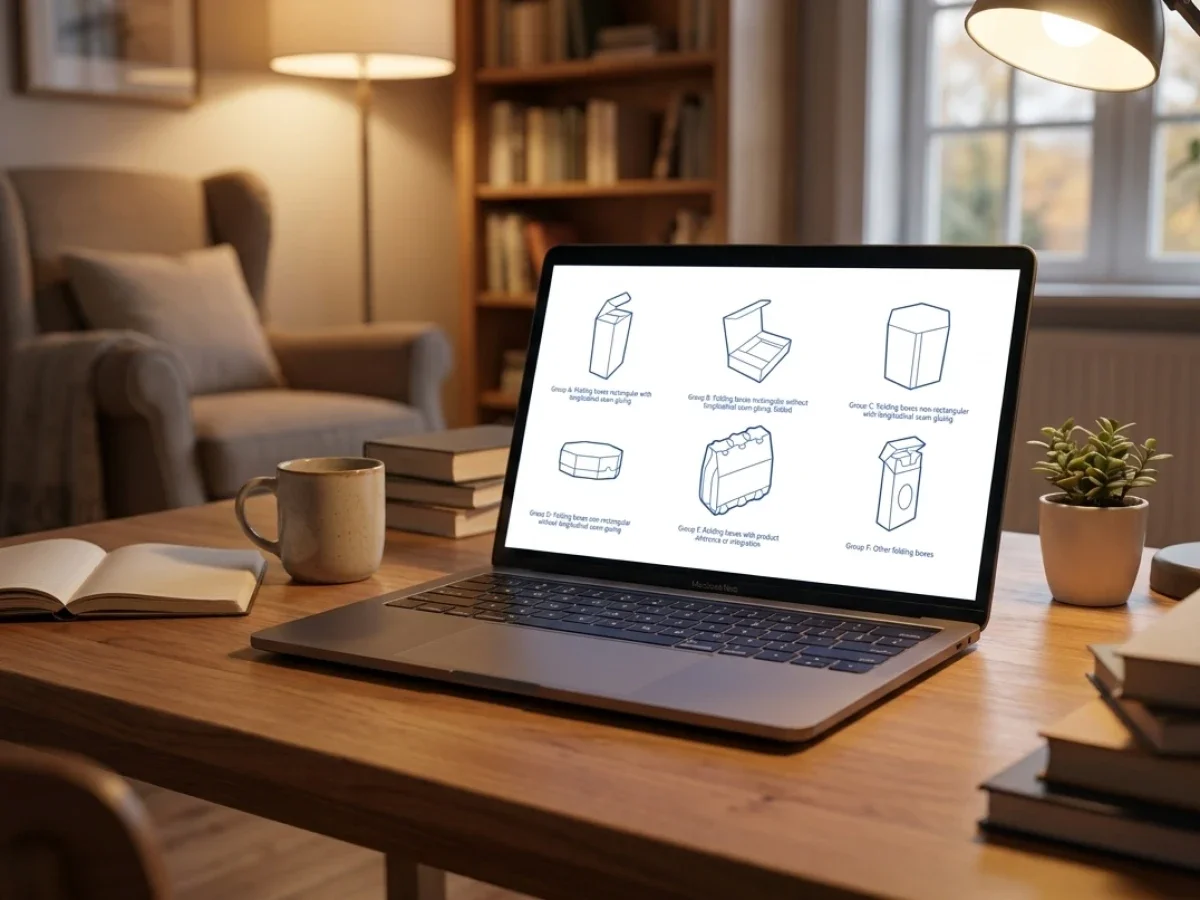
packQ uses standardized packaging structures as the foundation for this process. Its ECMA and FEFCO library provides approximately 120 ECMA types, approximately 290 FEFCO types, and around 50 POS display structures. These structures create a controlled starting point for configuring folding cartons, corrugated packaging, and displays instead of requiring a new construction for every customer project.
For packaging manufacturers, standardized structures also make online configuration more predictable. A company can determine which packaging types are available, which dimensions can be changed, which closure options can be selected, and which configurations correspond to its production capabilities. The customer receives flexibility within a defined framework rather than unrestricted design freedom that could result in technically unsuitable orders.
This is particularly relevant for companies managing large product catalogs. A packaging manufacturer may sell dozens or hundreds of packaging variants while still using a relatively limited set of structural principles. A Web-to-Pack system can transform those structures into configurable digital products, allowing sales teams and customers to work with packaging parameters rather than exchanging individual construction files.
The structural model also supports downstream processes. When the packaging geometry remains connected to artwork, 3D visualization, pricing, and production output, a change in configuration can propagate through the relevant workflow. That connection is essential for reducing discrepancies between what was configured online and what eventually reaches production.
3D packaging design as part of the production workflow
A 3D packaging designer is most valuable when the three-dimensional representation is directly connected to the underlying package structure. A separate rendering tool can create an attractive visual, but it does not necessarily know whether the displayed package corresponds to the dimensions, folding lines, artwork areas, and production data used elsewhere.
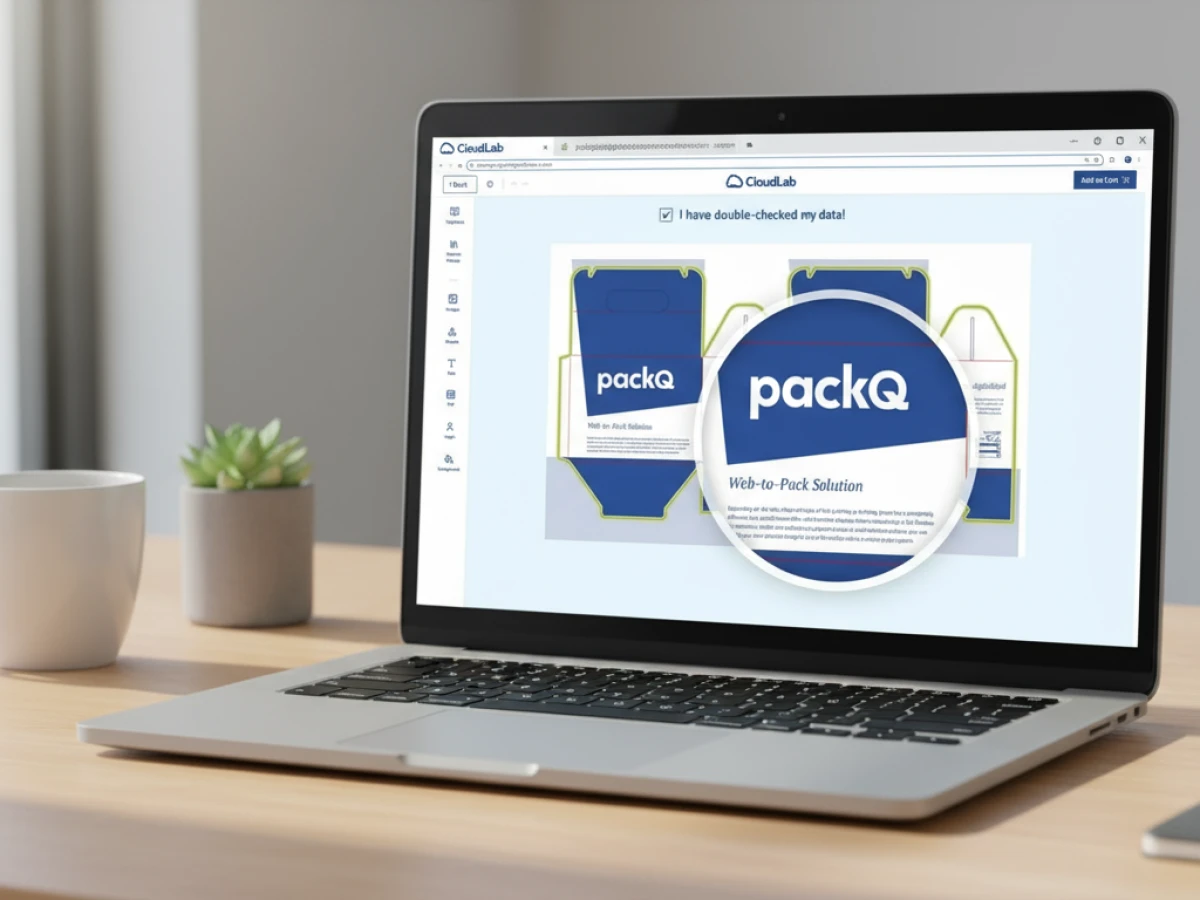
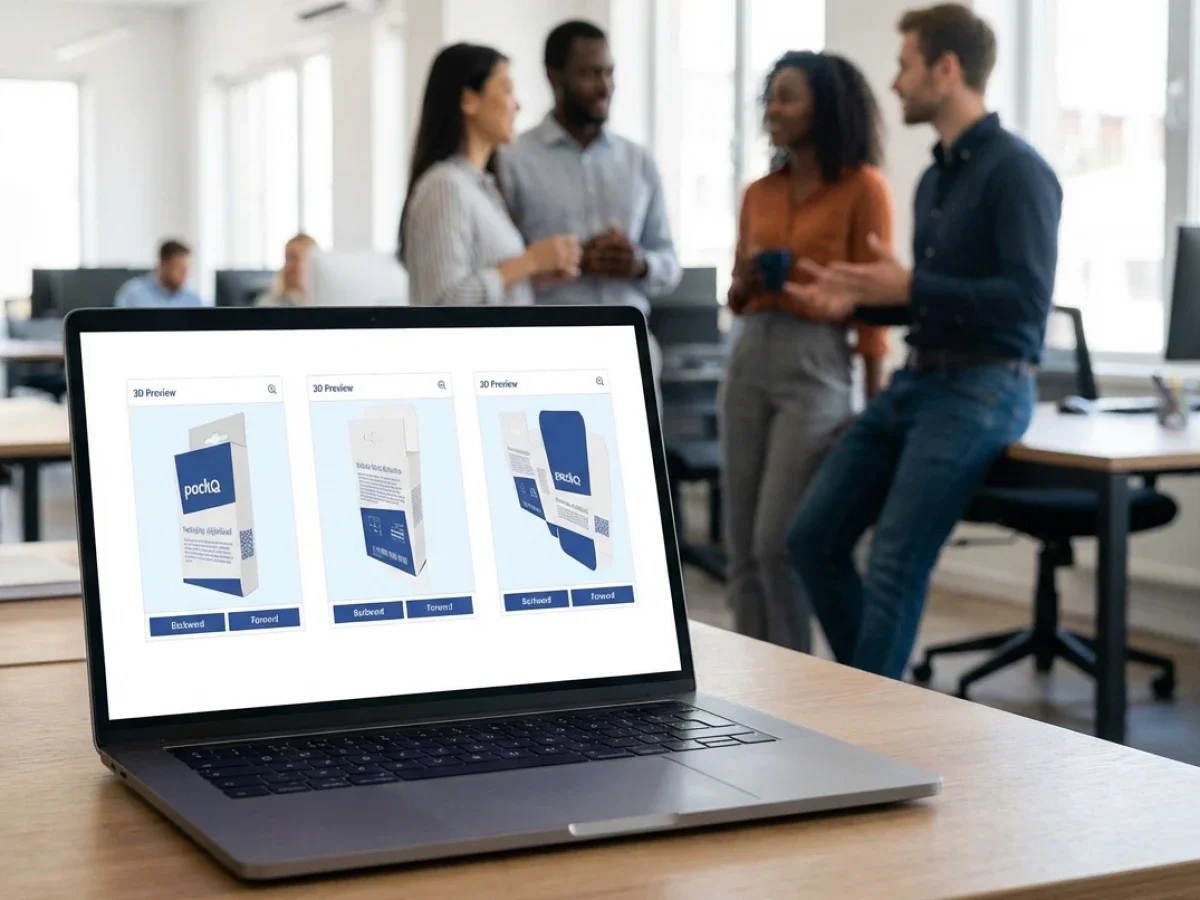
packQ combines browser-based 3D packaging design with synchronized 2D and 3D visualization. Customers and internal teams can work with the packaging artwork while simultaneously seeing how the design behaves on the configured package. This is particularly useful for folding cartons and other structures where the relationship between panels, folds, closures, and artwork is difficult to evaluate from a flat layout alone.
Real-time 3D packaging rendering changes the approval process because stakeholders can inspect the package in a more physical representation before production. Marketing teams can review branding and visual hierarchy, procurement teams can assess the configured product, and customers can confirm that the intended artwork is positioned correctly.
For packaging manufacturers, the operational advantage is more important than the visual effect itself. A 3D preview can become part of the approval process when it reflects the same underlying packaging configuration that is used for production. This helps reduce situations in which a customer approves one representation while production receives another version.
The workflow also supports shorter approval cycles. Instead of generating a separate proof, sending it to the customer, collecting comments, revising the file, and repeating the process, the customer can interact with the package within the browser. When changes are made, the visual representation can be evaluated immediately before the customer proceeds with approval.
Why is folding carton design software becoming part of the digital sales process?
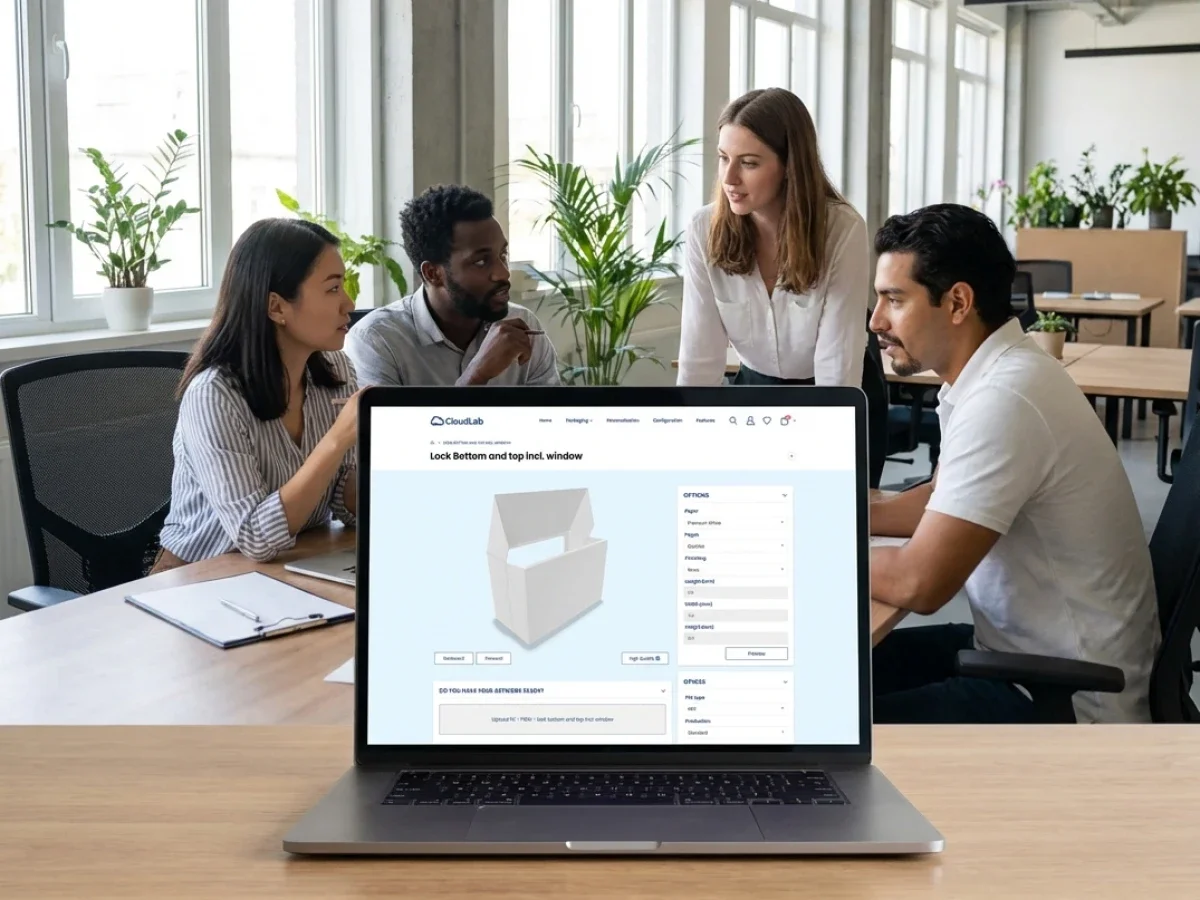
Folding carton design software increasingly needs to support the commercial process because packaging is often configured according to customer-specific dimensions, materials, finishes, quantities, and artwork. When folding carton design remains isolated inside a specialist application, sales teams and customers depend on manual communication for every variation. A Web-to-Pack approach brings controlled configuration into the sales environment while keeping structural and production requirements intact.
For folding carton manufacturers, this creates a direct connection between packaging engineering and digital commerce. A defined ECMA structure can become a configurable product with selected dimensions, artwork areas, and options. The customer can then see the package in 3D, receive a calculated price, complete technical validation, and approve the configuration within the same workflow.
The commercial calculation is an important part of this model. Packaging prices depend on factors such as dimensions, material, quantity, production parameters, and finishing. When these values are connected to the packaging configuration, dynamic pricing can calculate the commercial result in real time rather than requiring a separate manual quotation for every configuration.
This becomes particularly valuable in B2B environments. A professional buyer may require a specific box dimension and quantity, while a sales representative needs to provide a reliable price quickly. A connected packaging workflow can turn those requirements into a structured configuration rather than relying on email exchanges and manually prepared quotations.
The same principle applies to B2C customization. An individual customer may configure one personalized package, while another customer selects a completely different design. The packaging software needs to support those variations without creating an equivalent amount of manual work for the manufacturer.
Software product packaging for regulated and quality-sensitive workflows
Regulated industries introduce another dimension to software product packaging because packaging design can involve strict brand requirements, controlled content, technical specifications, and approval processes. Pharmaceutical packaging is a particularly relevant example because packaging artwork may contain product information, identifiers, regulatory text, and other content that must remain consistent throughout the workflow.
The role of packaging software in such environments is not to replace organizational approval procedures. Its value lies in creating a controlled digital process in which configuration, artwork, validation, visualization, and production data remain connected. This can reduce avoidable manual transfers and make technical checks part of the workflow rather than relying exclusively on downstream correction.
For brand owners, controlled packaging structures can also support corporate identity. A packaging workflow can expose defined templates, artwork areas, and product options while restricting configurations that are not appropriate for a particular brand or product line. This makes Web-to-Pack useful for organizations managing many SKUs or multiple markets.
The same approach can support CI prototyping. A brand team can use the 3D packaging environment to evaluate how a visual identity works across different package structures before committing to production. Instead of examining only flat artwork, stakeholders can review the relationship between brand elements and the physical packaging form.
For technology teams, the advantage lies in process control. A Web-to-Pack platform can become part of an established digital architecture, with customer-facing applications and internal business systems connected through structured interfaces. The packaging layer therefore supports the organization without requiring the entire technology landscape to be redesigned around packaging.
How do manual packaging workflows compare with automated Web-to-Pack processes?
Manual packaging workflows provide flexibility when a project is highly individual, structurally complex, or still in development, while automated Web-to-Pack processes are more efficient for repeatable configurations, online sales, standardized structures, and high volumes of variations. packQ combines controlled packaging structures with automation so that repeatable tasks can move from manual handling into a consistent digital workflow.
In a manual process, a customer request may pass through sales, structural design, artwork preparation, quotation, prepress, proofing, approval, and production. Each stage can involve a separate person, application, or file exchange. This approach remains appropriate for exceptional projects, but the number of handoffs increases the potential for inconsistencies as order volume and customization grow.
An automated Web-to-Pack workflow moves suitable decisions closer to the customer or sales process. The customer selects a structure, defines dimensions, uploads artwork, receives a visualization, obtains a price, completes technical checks, and approves the result. The resulting data can then move into downstream systems without requiring every order to be manually reconstructed.
The difference is especially visible in mass customization. Manual production becomes difficult when every package contains unique information. Variable Data Printing with PDF/VT allows packaging workflows to support personalized production and lot-size-one scenarios without treating each package as an independent manual artwork project.
Automation does not eliminate specialist packaging expertise. Instead, it changes where that expertise is needed. Prepress teams can concentrate on complex exceptions, production teams can focus on manufacturing, and sales teams can spend less time transferring technical information between customers and internal departments.
For packaging manufacturers, the objective is therefore not to automate every decision. The objective is to automate predictable decisions while maintaining appropriate control over structural standards, artwork requirements, pricing rules, approval stages, and production output.
Dynamic Preflight moves technical validation closer to the customer
Dynamic Preflight is important because many packaging problems can be identified before a file reaches the final production stage. Resolution, color mode, bleed, and font issues can create delays when they are discovered only after an order has been accepted and passed to prepress.
A packaging workflow with Dynamic Preflight can evaluate defined technical requirements during the design and configuration process. This creates an earlier feedback loop for customers and internal teams. Instead of waiting for a prepress operator to identify a problem, the workflow can flag unsuitable content while the user is still working on the package.
For e-commerce packaging, early validation has a direct operational effect. Customers can correct artwork before completing an order, reducing the number of support interactions required after checkout. For prepress teams, fewer predictable errors mean less routine correction and fewer interruptions to production preparation.
The checks also become more valuable when combined with 3D visualization. A customer may approve the appearance of a package while simultaneously receiving technical feedback about the artwork. Visual approval and technical validation can therefore take place within the same digital workflow instead of becoming two independent processes.
Dynamic Preflight also contributes to production security because it creates a defined control point before production output. It does not remove the need for professional prepress processes, but it can prevent known and predictable errors from progressing unnecessarily far through the workflow.
From artwork preparation to AI-assisted packaging design
AI functions can contribute to packaging workflows when they solve concrete artwork preparation problems. In packQ, the AI Designer Suite includes capabilities such as vectorization, image enhancement, and background removal, allowing certain preparation tasks to be handled directly within the browser-based packaging environment.
This can be useful when customers provide assets that are not immediately suitable for packaging production. A raster image may require higher resolution, a graphic may need vectorization, or a product photograph may need its background removed before placement on the package. Traditionally, these tasks can create additional communication between the customer, design team, and prepress department.
Crispify provides resolution enhancement with a stated increase of up to four times the original resolution. Used appropriately, this can improve the suitability of supplied imagery for packaging applications while keeping the preparation step within the broader design workflow.
The value of these functions depends on how they are integrated. An AI image operation is not enough to make packaging production-ready. The resulting artwork still needs to be evaluated against the package structure, design requirements, technical parameters, and final production output.
For brands and e-commerce platforms, integrated AI tools can therefore reduce friction during customization. Customers can prepare content closer to the point of configuration, while the packaging manufacturer maintains control over the technical workflow through preflight and production validation.
API-first integration connects packaging with the existing technology stack
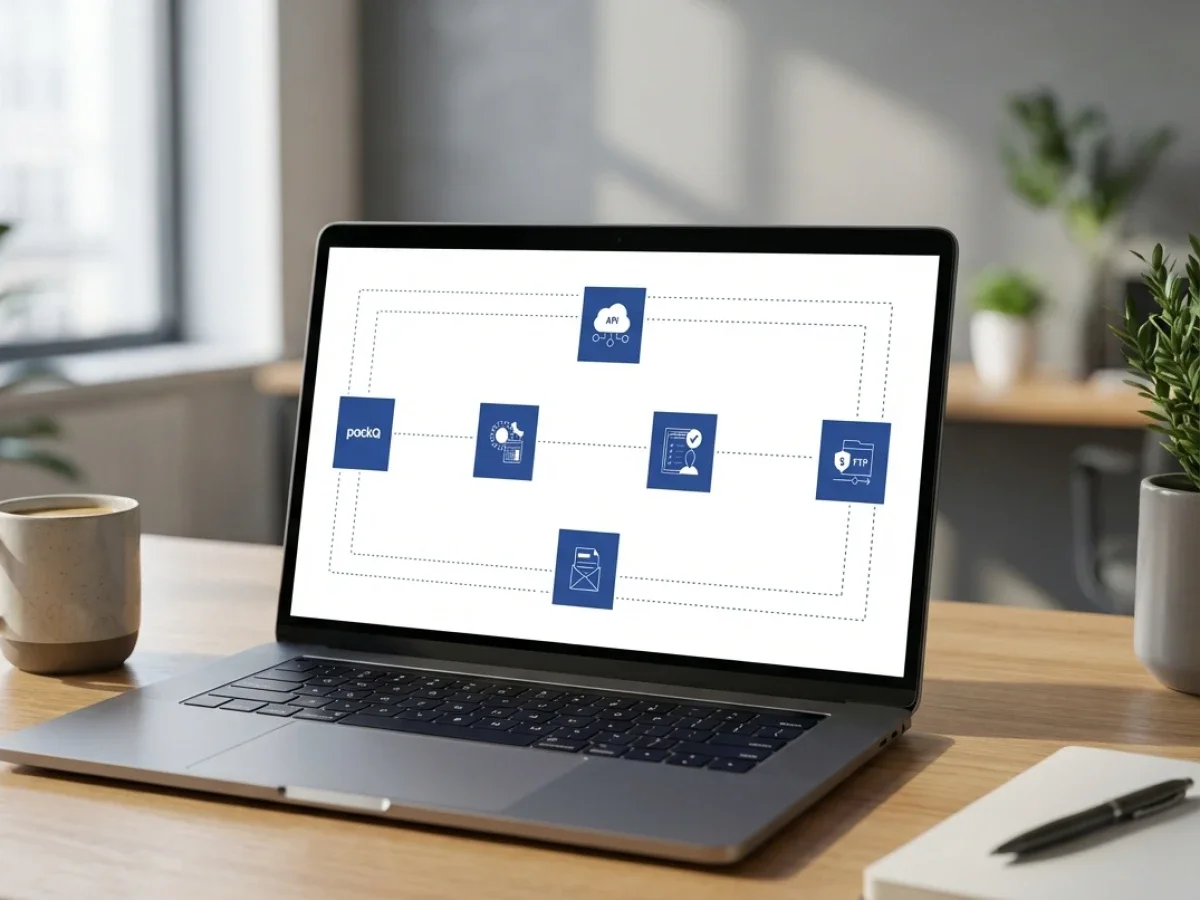
API-first architecture is central to scalable packaging software because packaging configuration rarely exists as an isolated business process. A typical digital packaging environment may include an e-commerce shop, customer accounts, ERP, MIS, payment processes, prepress systems, production planning, and manufacturing infrastructure.
packQ can operate as the packaging-specific layer within this environment. The shop can manage the broader customer journey, while the packaging platform handles configuration, visualization, pricing, validation, and packaging-specific data. ERP and MIS systems can continue managing commercial and operational information, while production systems receive the information needed to manufacture the approved order.
The integration can be implemented through modern API approaches using REST and JSON, while SOAP-based interfaces can remain relevant where existing enterprise environments depend on them. The architectural priority is the reliable exchange of structured information rather than forcing every component into the same technology stack.
A practical implementation can follow a defined sequence:
- The shop presents the packaging product and opens the configuration experience.
- The packaging workflow loads the permitted structure and available configuration parameters.
- The customer enters dimensions, quantity, material, artwork, and other relevant options.
- The 3D packaging designer displays the configured result in real time.
- Dynamic pricing calculates the current commercial value.
- Dynamic Preflight checks relevant artwork and technical parameters.
- The customer approves the validated configuration.
- Production-ready PDF output and structured order information are generated.
- ERP, MIS, prepress, and production systems receive the required data.
This model is particularly useful for technology teams that need to support several customer channels. A packaging manufacturer can operate different front ends for public e-commerce, B2B customers, sales teams, or closed customer portals while maintaining the same packaging configuration and production logic underneath.
The headless approach also supports long-term architectural flexibility. A front end can evolve without requiring the packaging engine to be rebuilt, while additional systems can be connected as business requirements change. This is relevant for organizations planning a gradual move toward Industry 4.0 and Print 4.0 processes.
Web-to-Pack for e-commerce platforms and marketplaces
E-commerce platforms require packaging software to operate with the speed and structure of digital commerce. Customers expect immediate configuration feedback, transparent pricing, visual confirmation, and a straightforward ordering process. A packaging manufacturer therefore needs more than an online product catalog; the packaging itself must become configurable as a digital product.
packQ can provide this packaging-specific capability while remaining connected to the surrounding commerce environment. A shop can present packaging options, while the Web-to-Pack layer manages structures, dimensions, artwork, 3D visualization, pricing, preflight, and production data.
For marketplaces, the architecture can also support multiple packaging products and configurations. A marketplace may offer packaging from different production environments while maintaining a consistent customer experience. The packaging workflow can remain responsible for the technical configuration and validation while the marketplace manages the broader commercial context.
Open-shop and closed-shop scenarios can use the same underlying principles. In an open shop, customers can access configurable packaging products directly. In a closed environment, approved customers can receive predefined products, materials, dimensions, prices, or branding options.
This makes Web-to-Pack relevant not only to traditional print companies but also to digital packaging businesses. The packaging product can be configured and purchased through the same type of digital experience customers already expect from other e-commerce products, while the production requirements remain connected underneath.
How can a folding carton manufacturer create a production-safe Web-to-Pack workflow?
A folding carton manufacturer can create a production-safe Web-to-Pack workflow by starting with controlled ECMA structures, connecting those structures to browser-based 2D and 3D design, validating artwork with Dynamic Preflight, calculating prices automatically, and transferring the approved configuration into production systems. packQ provides the framework for connecting these stages without requiring customers to operate specialist CAD software.
The starting situation is a manufacturer with a portfolio of folding carton products that vary by dimensions, artwork, quantity, and customer requirements. The technical requirement is to make those products available online while preventing configurations that conflict with structural or production rules.
The first implementation stage is structural configuration. The manufacturer selects appropriate ECMA packaging types and defines which parameters customers can change. Dimensions, closures, flap configurations, materials, and other options can be presented according to the intended product and manufacturing process.
The second stage is artwork configuration. Customers upload or create the required graphics within the available design areas. Where appropriate, AI-assisted functions can support vectorization, image enhancement, and background removal, reducing unnecessary manual preparation before the artwork is evaluated on the package.
The third stage is 3D approval. The configured folding carton is rendered in the browser so that customers and internal stakeholders can inspect the package as a three-dimensional object. Because the 2D and 3D views remain synchronized, artwork placement can be evaluated in relation to the physical package structure.
The fourth stage is technical validation and pricing. Dynamic Preflight can identify defined problems with resolution, color mode, bleed, and fonts, while real-time price calculation reflects the configured product. The customer can therefore address technical issues and understand the commercial result before final approval.
The final stage is production integration. Once the customer approves the validated package, the workflow generates production-ready PDF output and transfers structured information toward ERP, MIS, prepress, and production. This closes the gap between online packaging configuration and manufacturing.
The resulting process provides several concrete benefits:
- Customers receive immediate visual feedback instead of waiting for separate proofs.
- Packaging manufacturers retain control over permitted structures and configurations.
- Prepress teams receive files that have already passed defined technical checks.
- Sales teams can work with real-time packaging prices instead of rebuilding quotations manually.
- Production receives structured information connected to the approved customer configuration.
- Personalized packaging can be handled through variable data and PDF/VT workflows where required.
Why specialized packaging software matters for Print 4.0
Print 4.0 requires production environments to work with increasingly connected data flows. Packaging is particularly suitable for this approach because a digital order contains many parameters that can be structured: dimensions, packaging type, material, artwork, quantity, finishing, personalization, pricing, and production requirements.
Specialized software product packaging provides the packaging-specific logic needed to connect these parameters. The value does not come from replacing every existing system. It comes from creating a controlled packaging workflow that allows information to move between systems without repeated manual interpretation.
For IT teams, this means packaging can become a defined service within the wider architecture. For production teams, it means that customer configuration can arrive with relevant structured information. For sales teams, it means that packaging products can be configured and priced digitally. For customers, it means that packaging can be ordered through an interactive experience rather than through a chain of emails and file attachments.
packQ fits this model through its combination of Web-to-Pack functionality, structural packaging libraries, browser-based 3D design, Dynamic Preflight, variable data, pricing, production output, and API-first integration. The platform is therefore suited to organizations that want to connect digital packaging sales with operational production rather than treating the online experience as a separate marketing layer.
The InterTech Technology Award associated with packQ also reflects the platform’s positioning around technical innovation in packaging workflows. More important for day-to-day implementation, however, is the combination of packaging-specific structures and an architecture designed to connect design, commerce, validation, and production.
Building a scalable packaging operation around connected data
Scalability in packaging is not achieved simply by adding more users to a design application. A scalable operation needs repeatable structures, defined rules, automated calculations, early validation, controlled approval, and reliable data transfer into production.
packQ supports this model by keeping packaging-specific decisions within a Web-to-Pack environment while allowing surrounding systems to retain their existing responsibilities. This separation can make the architecture easier to scale because the shop, ERP, MIS, prepress, and production systems do not all need to understand every aspect of packaging design.
The model is also suitable for companies with different levels of customer involvement. A B2B customer may receive extensive configuration options, while a brand owner may provide a restricted set of approved packaging products. An internal sales team may use the same environment for assisted configuration, while a B2C customer receives a simplified interface.
This flexibility is particularly useful for packaging manufacturers expanding from traditional order processing toward digital sales. The manufacturer can standardize the packaging products that are suitable for online configuration while retaining specialist workflows for complex projects that require individual engineering or consultation.
The underlying principle remains consistent: the approved packaging configuration should remain the reference point throughout the digital workflow. When structure, artwork, visualization, price, validation, and production data are derived from that configuration, the organization can automate more steps without losing control of the manufacturing process.
Packaging design through product packaging Software
Software product packaging becomes strategically valuable when packaging design is connected to configuration, 3D visualization, pricing, validation, approval, and production. packQ provides a specialized Web-to-Pack framework that brings these functions together with ECMA and FEFCO structures, browser-based 3D packaging design, Dynamic Preflight, variable data, real-time pricing, AI-assisted design functions, and API-first integration.
For folding carton manufacturers, printers, brands, e-commerce platforms, and technology teams, the central benefit is a connected workflow that reduces manual handoffs between customer experience and production. Packaging can be configured online, reviewed in 3D, validated before production, priced dynamically, approved digitally, and transferred into ERP, MIS, prepress, and production environments.
The result is a more controlled approach to Web-to-Pack in which packaging software supports both the commercial process and the technical requirements of manufacturing. packQ provides the software framework for connecting those stages while supporting automation, production security, mass customization, and scalable digital packaging workflows.
Software product packaging is most effective when design, configuration, 3D visualization, pricing, validation, approval, and production operate as one connected workflow. CloudLabs packQ brings these capabilities together in a specialized Web-to-Pack environment for packaging manufacturers, printers, brands, e-commerce platforms, and technology teams. ECMA and FEFCO structures provide a standardized foundation, while browser-based 3D design, Dynamic Preflight, AI-assisted artwork functions, variable data, real-time pricing, and production-ready PDF output support scalable packaging workflows. API-first integration connects the packaging process with shop systems, ERP, MIS, prepress, and production.
Key answers for decision-makers
- Software product packaging becomes scalable when design, pricing, validation, approval, and production are connected. packQ combines these functions in a Web-to-Pack workflow with browser-based 3D packaging design.
- Packaging manufacturers can reduce errors by connecting structural standards, artwork, 3D visualization, preflight, and production output. packQ moves important checks earlier into the customer and prepress workflow.
- CAD remains valuable for structural engineering, while Web-to-Pack is better suited to online configuration, customer approval, automated pricing, and repeatable packaging production.
- An API-first packaging workflow connects shop systems, packQ, ERP, MIS, prepress, and production through structured data, supporting REST, SOAP, and JSON-based integration scenarios.
- Folding carton manufacturers can combine standardized ECMA structures, 3D visualization, Dynamic Preflight, real-time pricing, approval, and production-ready PDF output in one controlled process.