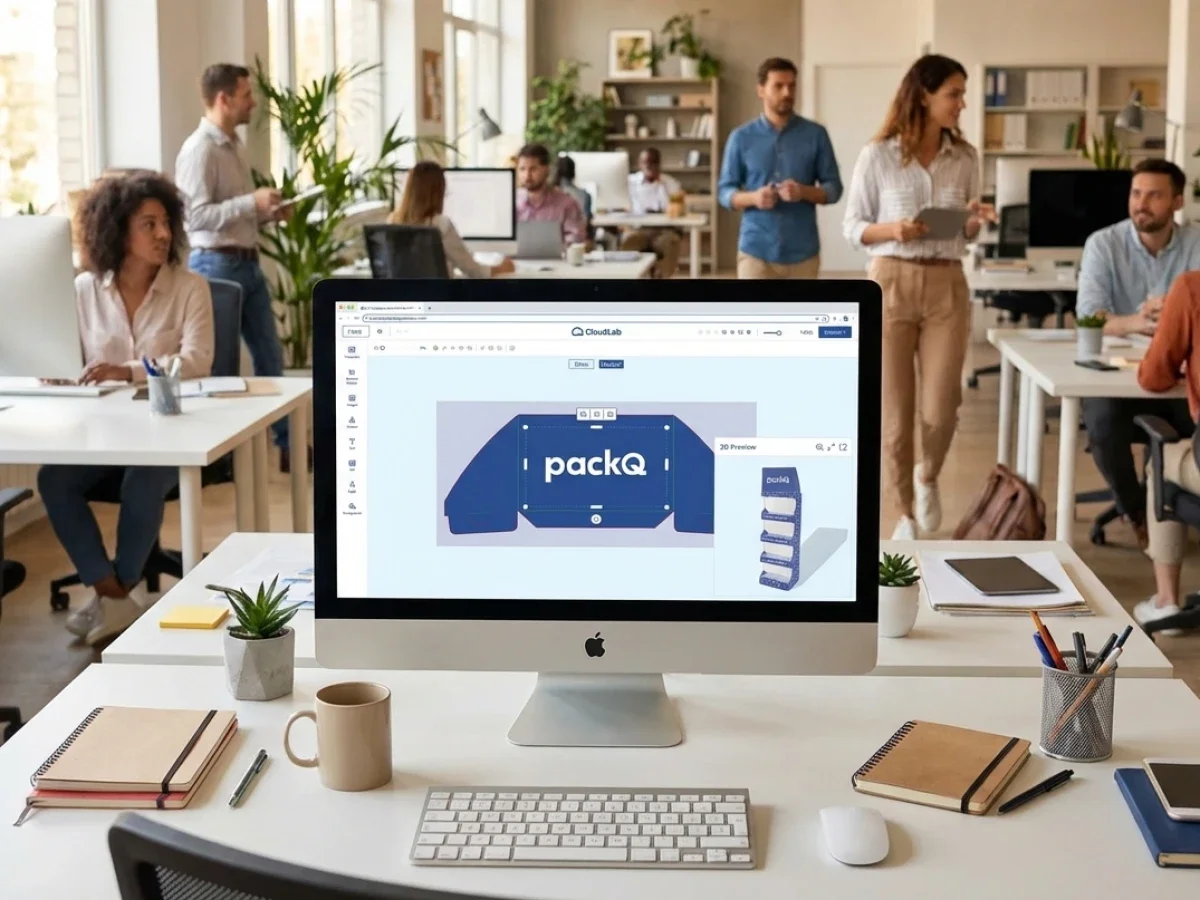
Software Product Packaging with packQ – Transforming Workflows
packQ is a premium Web‑to‑Pack platform that redefines software product packaging. It unites parametric ECMA/FEFCO templates, a browser‑based 3D designer, AI‑powered tools and PDF/VT‑driven personalization to enable batch‑size‑one production. Dynamic preflight and live pricing ensure error‑free output, while an API‑first architecture integrates seamlessly with ERP, MIS and e‑commerce systems. Real‑world cases show how print houses, FMCG brands and start‑ups have transformed their workflows with packQ. In an industry moving toward mass customization and Industry 4.0, packQ makes digital software product packaging accessible, efficient and scalable.
The New Era of Software Product Packaging
The packaging industry has entered a digital renaissance. Traditional workflows—relying on offline CAD tools, manual approvals and trial‑and‑error proofs—cannot keep up with today’s demand for shorter lead times, personalization and sustainability. Software product packaging solutions like packQ bridge the gap between engineering precision and user‑friendly design by offering a browser‑based environment where customers create, visualize and order packaging in real time. Where web‑to‑print simplified flyers and business cards, web‑to‑pack extends the concept to folding cartons, corrugated boxes, POS displays and flexible pouches. For decision makers in print shops, packaging manufacturing, brands and e‑commerce, the question is no longer whether to adopt digital packaging workflows—it’s how to choose the right platform.
Why Legacy Processes Fall Short
Conventional packaging development follows a linear sequence: structural design in CAD, artwork layout in graphics software, 3D mock‑ups for approval and manual prepress checks. Each hand‑off introduces delays and errors. Customization or small batches often become unprofitable because of the time and expertise required. In this environment, brands struggle to respond quickly to trends, and printers cannot scale without increasing headcount. The need for a unified, digital, end‑to‑end process is clear.
Web‑to‑Pack: A Digital Bridge
Web‑to‑Pack combines the intuitive ordering of web‑to‑print with the technical standards of packaging CAD. With packQ as the benchmark, Web‑to‑Pack provides parameterized ECMA and FEFCO templates, live 3D previews, dynamic preflight checks and API connectivity. Customers configure packaging in the browser, see the design in photorealistic 3D and receive immediate pricing. The system automatically generates production‑ready PDFs, CAD die‑lines and metadata for downstream systems. This digital bridge reduces proof cycles, eliminates manual quoting and allows printers to profitably handle batch‑size‑one jobs.
Core Components of packQ
CloudLab engineered packQ to be modular yet cohesive. Each component addresses a specific pain point in the software product packaging workflow. Together they form a seamless pipeline from idea to manufactured product.
Browser‑Based 3D Packaging Designer
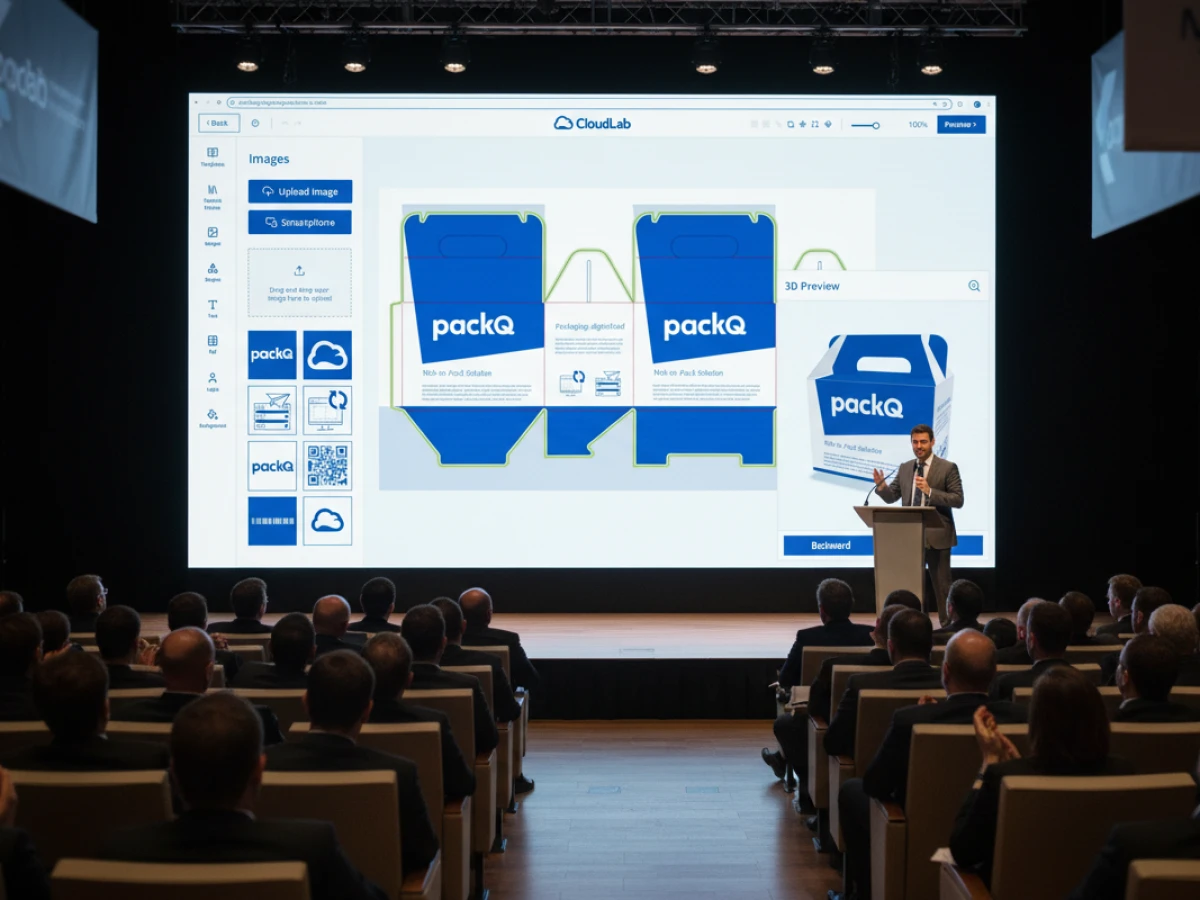
At the heart of packQ lies its 3D Packaging Designer—a browser‑native environment that unites structural parameters, artwork and real‑time rendering. Users adjust width, height and depth; the parametric engine recalculates dielines, glue flaps and folds instantly. Every modification appears in a photorealistic 3D model, allowing customers to rotate, zoom and inspect details. Material textures, light reflections and finishing effects—metallic foils, varnishes or embossing—are simulated to replace physical prototypes. Because the designer runs entirely in the browser on WebGL, there is no need for plug‑ins or CAD expertise. This democratizes packaging design, letting marketers or small businesses create professional boxes without specialized software.
ECMA & FEFCO Template Libraries
PackQ integrates the complete ECMA and FEFCO catalogs, turning global standards into editable templates. More than 120 ECMA folding‑carton styles, 290 FEFCO corrugated models and around 50 POS displays are parametrically modeled. Users select a template—such as FEFCO 0201—and enter their own dimensions; packQ generates the correct geometry instantly. This approach ensures consistency across production environments and avoids design errors. By hiding technical codes behind visual previews, the library is accessible to both professionals and casual users. For businesses, the standards guarantee that every online configuration meets industrial expectations.
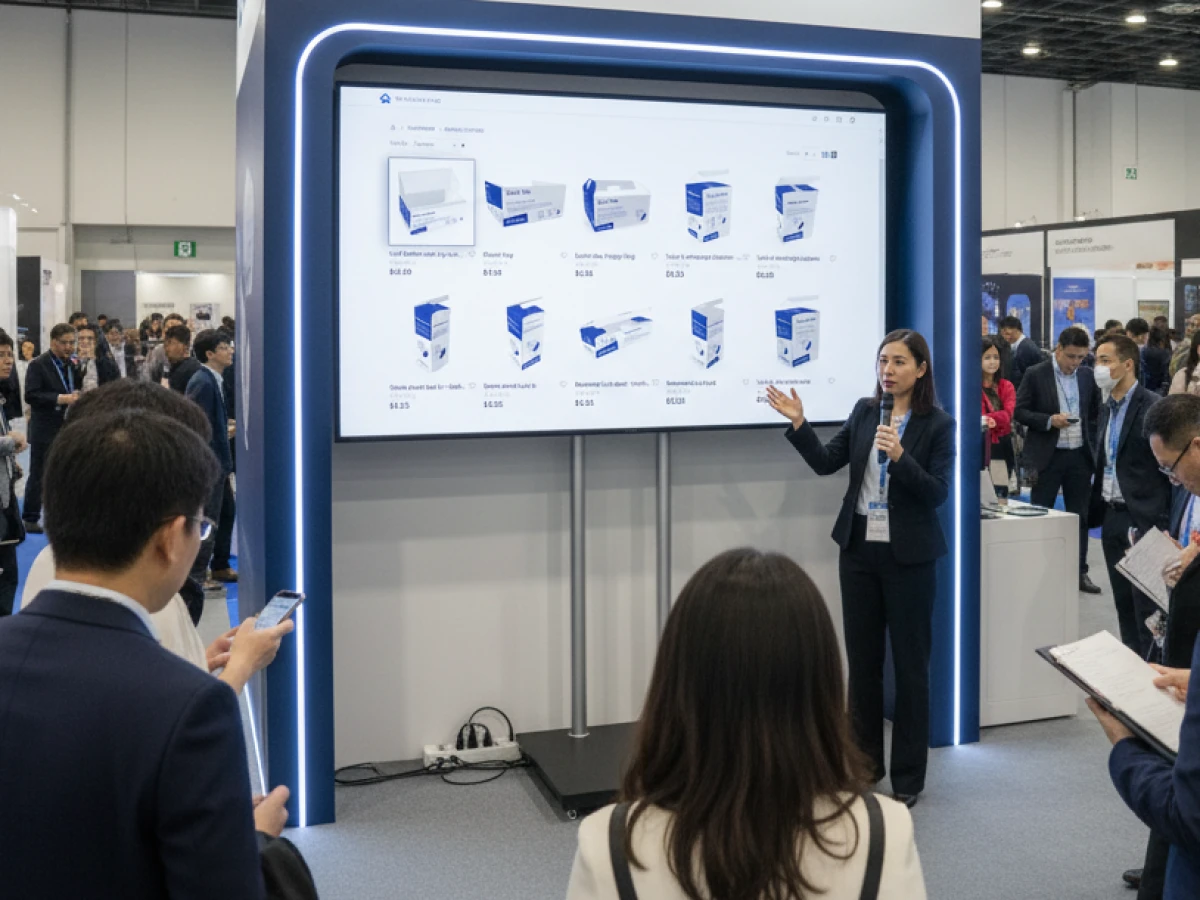
AI Designer Suite: Intelligent Image Processing
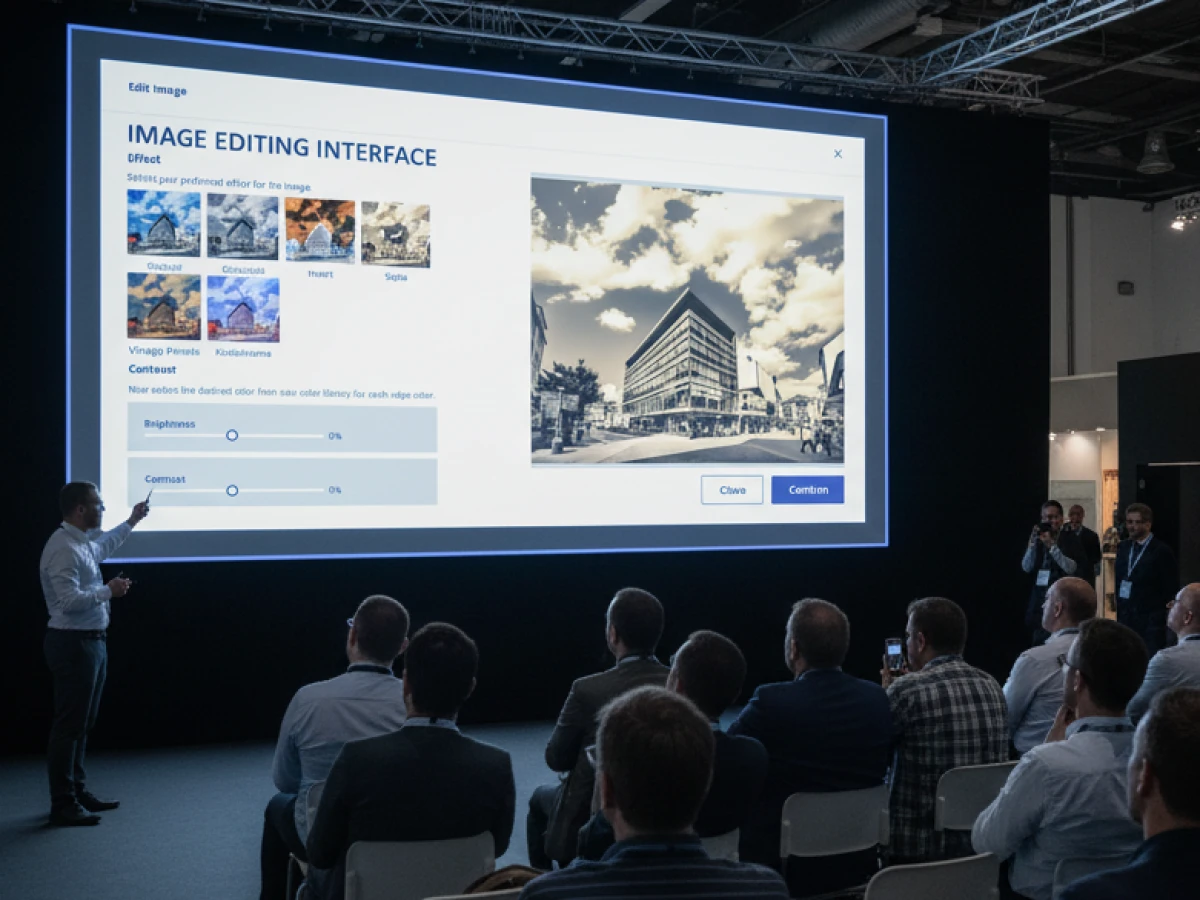
The AI Designer Suite embeds artificial intelligence directly into the design process. When users upload logos or photos, packQ automatically analyses resolution, colour mode and file format. The Vektorize tool converts raster images into high‑quality vector graphics, enabling infinite scalability and clean edges. Crispify increases image resolution fourfold by reconstructing missing details; it ensures sharp photos and patterns even on large packages. A one‑click background removal isolates subjects from distracting backgrounds. These AI‑driven enhancements run in the browser and are triggered automatically during preflight when the system detects low resolution or RGB assets. Designers can focus on creativity while the AI handles vectorization, upscaling and masking.
Variable Data Printing (PDF/VT)
Personalization is no longer a luxury; it is expected. PackQ’s Variable Data Printing (VDP) module, built on the PDF/VT standard, merges template design with data sources to produce individualized packaging at scale. Designers define placeholders (e.g., <FIRSTNAME> or <QR>); data from CSV, Excel or API feeds populates those fields in real time. The engine generates print‑ready PDF/VT streams that include thousands of unique records in a single file—optimized for fast RIP on digital presses. This automation enables campaigns with serialized boxes, personalized names or unique QR codes. Because the VDP workflow integrates with packQ’s preflight and 3D preview, users can visualize each variation and guarantee accuracy before production. For printers, VDP opens new revenue streams while maintaining efficiency; for brands it creates data‑driven customer engagement.
Dynamic Preflight & Live Validation
Preflight checks traditionally occur after an order is placed, leading to expensive corrections. PackQ embeds dynamic preflight into the design phase. When artwork is uploaded, the system instantly checks resolution, bleed and colour space, flagging issues in real time. The platform leverages Enfocus PitStop and callas pdfToolbox—industry‑standard engines—to ensure only production‑safe files proceed. According to CloudLab, the integrated preflight reduces prepress errors dramatically and supports a “right‑first‑time” workflow. By catching problems early, packQ saves printers time and material while giving customers confidence that what they see online matches the final product.
Dynamic Pricing & Quotation
Packaging prices are traditionally compiled from lengthy spreadsheets. packQ’s live pricing engine calculates costs based on dimensions, material, finishing and quantity in real time. When users adjust size or choose a different board grade, the price updates instantly in the configurator. This transparency helps customers make informed decisions and eliminates the back‑and‑forth of manual quoting. For printers, dynamic pricing automates quotation and supports 24/7 e‑commerce workflows.
API‑First & Headless Architecture
PackQ was designed as an API‑first platform. Its headless architecture decouples the front‑end experience from back‑end processing, making the 3D designer embed‑ready for any shop or portal. RESTful APIs allow orders to flow directly into ERP or MIS systems, create job tickets, reserve materials and schedule production automatically. The same interfaces integrate with e‑commerce platforms (Shopify, Magento, Shopware) and digital presses. This flexible design ensures packQ can fit into existing IT landscapes without duplicating data and supports Industry 4.0 initiatives.
Production‑Ready Output & ERP/MIS Integration
After approval, packQ generates print‑ready PDF/X files with bleed and trim marks, CAD die‑cut drawings and metadata for MIS and ERP systems. Production files flow into cutting tables, digital presses and finishing equipment via hotfolders or direct connections. Integration with ERP/MIS updates inventory, issues invoices and schedules jobs automatically. This closed loop eliminates manual hand‑offs, reduces rekeying errors and makes small orders economically viable.
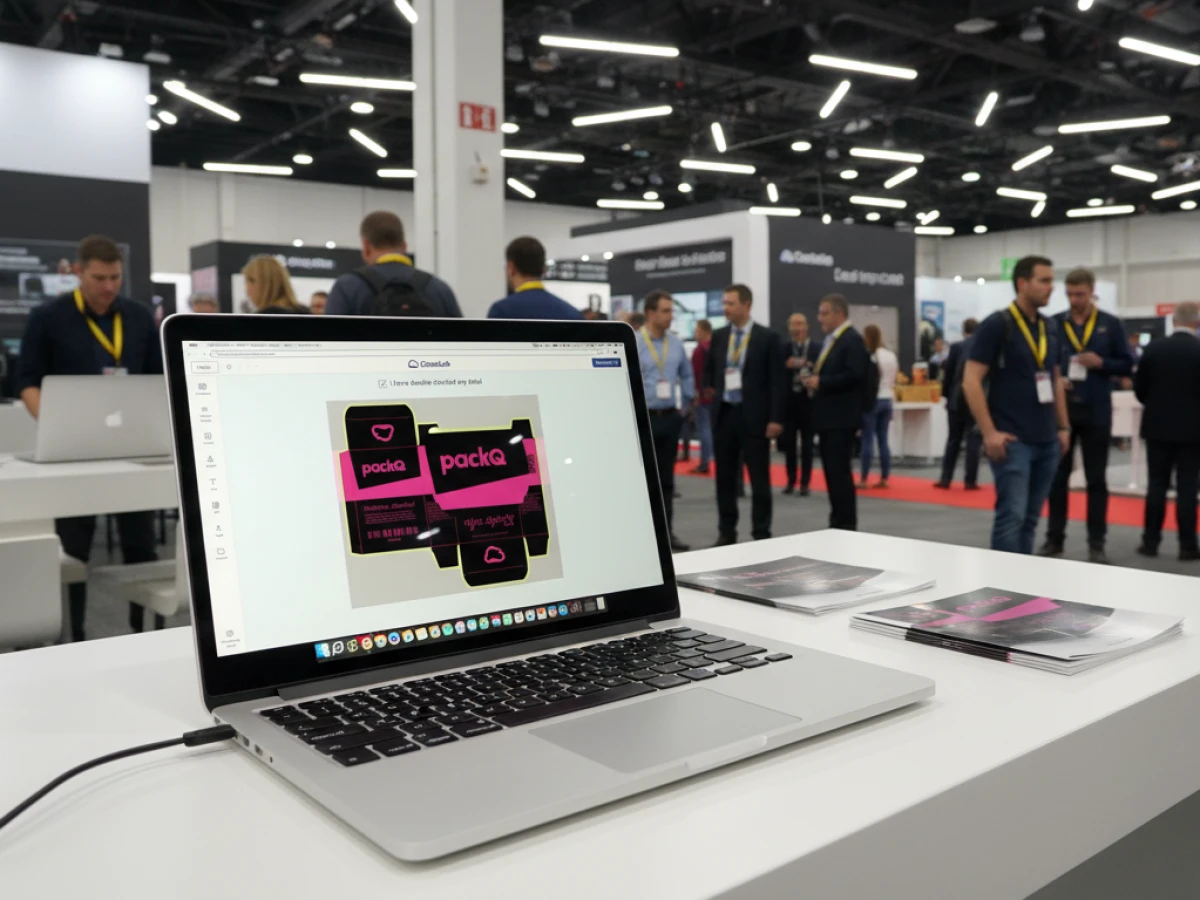
Use Cases: How Businesses Transform with packQ
To illustrate the impact of packQ’s software product packaging capabilities, consider three real‑world scenarios drawn from CloudLab’s experience. Each example shows how the platform serves different stakeholders and business models.
Print House Expands into Packaging
A traditional print shop adds folding cartons to its portfolio. By integrating packQ, the company offers customers ECMA/FEFCO templates, 3D previews and live pricing. Clients no longer need to supply their own dielines; they simply select a standard template, adjust dimensions and upload artwork. The shop increases revenue without hiring CAD specialists or expanding prepress capacity. The dynamic preflight ensures that low‑resolution images or incorrect colour spaces are corrected before production, reducing reprints. Because the solution is cloud‑based and API‑driven, the print house can embed the designer into its existing storefront and connect to its MIS for automatic job creation.
FMCG Manufacturer Personalizes Campaigns
A fast‑moving consumer goods (FMCG) brand launches a personalized campaign where each packaging variant includes a customer’s name and a QR code. PackQ’s VDP engine merges the campaign’s design template with data imported from the marketing database. Thousands of unique boxes are generated automatically, previewed in 3D and output as PDF/VT streams optimized for digital presses. Live previews allow marketers to visualize names and codes on the packaging, ensuring proper alignment. The campaign goes viral because personalization is delivered at scale without increasing prepress workload. Integration with the company’s ERP system guarantees that each serialized code is unique and traceable.
Start‑Up Configures Flexible Pouches
A start‑up producing artisanal snacks requires stand‑up pouches in small batches. Traditionally, pouch manufacturing involves high minimum order quantities and manual CAD work. With packQ’s flexible packaging module, users select a pouch template, adjust width, height, gussets and zippers, and view the result in 3D. The system calculates folding and sealing zones automatically and generates accurate die‑lines for production. Live pricing makes small runs economical by reflecting material and quantity in real time. For the start‑up, this means the freedom to test different sizes and designs without committing to large inventories; for the converter, it means efficient batch processing via the automation tools.
Benefits for Stakeholders
packQ’s features translate into tangible benefits for every participant in the packaging value chain. Decision makers can quantify these advantages when evaluating software product packaging investments.
Printers & Converters
- Faster job preparation and higher throughput: Automation shortens setup times and groups small orders into efficient runs. Printers report up to 70 % shorter preparation and 30 % higher throughput when using packQ.
- Reduced prepress errors: Dynamic preflight and AI tools catch issues early, leading to near‑zero structural or artwork errors.
- Profitable small runs: Live pricing and automated production files make micro‑orders economically viable, opening new markets.
- Scalability: Cloud‑native architecture supports thousands of concurrent designs, while multi‑tenant hosting separates customer portals.
Brand Owners & Agencies
- Rapid innovation and personalization: VDP and AI features allow brands to launch personalized campaigns within days. Marketing teams can design and approve packaging in 3D without external designers.
- Consistent brand identity: Standard templates and preflight ensure logos, colours and dimensions align with guidelines across regions.
- Data‑driven engagement: Unique codes and serialized packaging support CRM integration, supply‑chain tracking and interactive experiences.
- Sustainability and waste reduction: Virtual prototypes eliminate physical samples; optimized cutting layouts minimize material usage. Brands print only what’s needed, reducing obsolete inventory and environmental impact.
E‑Commerce Platforms & Marketplaces
- New revenue streams: Offering custom packaging at checkout differentiates marketplaces and adds value for merchants.
- Seamless user experience: The headless architecture lets platforms embed packQ’s configurator into existing storefronts. Customers design packaging without leaving the marketplace, and orders flow directly to print providers.
- No overhead: Live pricing, preflight and automation remove the need for customer support or manual quoting.
Technology & Prepress Teams
- Headless integration: REST and SOAP APIs allow packQ to integrate with ERP, MIS, CRM and production systems.
- Scalable deployment: Businesses choose cloud, private cloud or on‑premise hosting, balancing innovation and compliance.
- Future readiness: The system acts as a digital twin, sending designs and metadata directly to machines for predictive maintenance and Industry 4.0 scenarios.
- Customizable AI models: Companies can train their own AI algorithms to match brand styles, leveraging packQ’s microservices architecture.
Unique Selling Points of packQ
PackQ stands out from competing solutions through a combination of specialization, depth and forward‑looking design.
Pure Web‑to‑Pack Focus
Unlike generic web‑to‑print tools that add packaging as an afterthought, packQ was engineered specifically for 3D packaging. It delivers ECMA/FEFCO libraries, parametric design and production‑safe outputs that other web‑to‑print solutions lack. This focus ensures that the software aligns with the mechanical realities of boxes and displays.
Deep Standards Integration
With over 120 ECMA carton types, 290+ FEFCO corrugated models and dozens of POS designs, packQ offers the deepest standards integration on the market. Parametric templates preserve structural ratios when sizes change and are understood globally. This eliminates custom dieline creation and speeds up quoting.
Real‑Time 3D with CAD Accuracy
PackQ combines CAD‑level precision with consumer‑grade usability. Real‑time 3D previews update with every change and simulate finishes and textures. Customers gain confidence, while printers avoid misunderstandings.
AI‑Powered Editing in the Browser
Vectorization, Crispify resolution enhancement and background removal are built into the browser editor. These capabilities normally require dedicated prepress software; packQ democratizes them and automates routine tasks.
End‑to‑End Automation & Mass Customization
From dieline generation to file export, packQ automates each step. VDP and PDF/VT integration enable true mass customization for batch size one. Automation extends to job batching, quoting and hotfolder transfer, ensuring profitability even for small orders.
Headless, API‑First, Industry 4.0 Ready
Headless design means packQ can be embedded anywhere; API endpoints allow integration with shops, ERP and production systems. The platform functions as a digital twin, transmitting data directly to machines and supporting smart factory initiatives. This future‑proof architecture ensures long‑term viability.
Recognition & Awards
CloudLab’s commitment to innovation has been recognized by industry bodies. The company’s 3D packaging design technology received the prestigious InterTech™ Technology Award, highlighting its impact on the graphic communications industry. Judges noted that users could design a box “in a matter of minutes” and create dynamic 3D visualizations that translate directly into production files.
Implementing packQ: Best Practices
Deploying software product packaging successfully involves more than technology—it requires planning, training and change management. Decision makers can maximize ROI by following these best practices:
- Define product scope. Decide which packaging types (folding cartons, corrugated boxes, pouches) to offer online. Focus on high‑demand ECMA or FEFCO codes first.
- Set up template libraries. Configure standard templates for your products and adjust parametric settings to match equipment capabilities.
- Calibrate pricing rules. Input real cost structures—material, labour, finishing—to ensure live pricing reflects profitability.
- Integrate with backend systems. Connect packQ APIs to ERP, MIS and e‑commerce platforms to automate job creation and order handling.
- Train teams across departments. Sales, prepress, IT and production teams should understand the workflow. Emphasize dynamic preflight and AI tools to reduce manual tasks.
- Start with a pilot phase. Launch the platform with selected customers or products to gather feedback and refine the workflow.
- Measure success and iterate. Track key metrics like time to proof, error rate and repeat‑order rate to quantify improvements. Use insights to optimize templates, pricing and integration.
Looking Ahead: The Future of Digital Packaging
The next decade will see even deeper integration of AI, IoT and sustainability in software product packaging. packQ’s road map already hints at AI‑assisted structure selection, automatic colour harmony, generative textures and predictive printing quality. Augmented Reality (AR) previews could allow customers to visualize packaging in real environments. With Industry 4.0, packQ acts as a digital twin, transmitting design and machine parameters to smart factories for real‑time scheduling and predictive maintenance. Sustainability metrics—such as CO₂ savings and material optimization—will become integral to the workflow. CloudLab’s innovation trajectory suggests that future updates will further democratize high‑quality packaging and connect the creative process with manufacturing intelligence.
PackQ demonstrates how software product packaging can evolve from a manual, fragmented process into a seamless, digital service. By combining ECMA/FEFCO standards, a browser‑based 3D designer, AI‑powered tools, variable data printing and an API‑first architecture, CloudLab has created a platform that meets the needs of printers, converters, brands and e‑commerce platforms alike. The system reduces lead times, eliminates errors, supports personalization and integrates with existing IT infrastructures. Real‑world cases show how print houses expand their offerings, FMCG brands personalize campaigns and start‑ups experiment with flexible pouches using packQ. In an era defined by mass customization and Industry 4.0, packQ positions itself as the definitive solution for digital packaging. Decision makers seeking to future‑proof their operations will find that packQ offers both technological depth and business agility.
An overview of all features of packQ developed by CloudLab
- 3D Packaging Designer – Design folding cartons, cartons and other packaging directly in the browser and instantly see how your product will look thanks to the real‑time 3D preview. Dimensions can be adjusted and prices are recalculated automatically.
- ECMA and FEFCO Library – Gives access to standardised templates for folding cartons, corrugated boxes and POS displays. The parametric models are based on the internationally recognised ECMA and FEFCO codes and can be customised.
- Vectorisation & Finishing – Pixel images are converted into high‑resolution vector graphics in just a few clicks. Finishing options such as foil stamping, spot UV varnish or embossing are also available to enhance the product.
- Variable Data Printing (PDF/VT) – Enables the import of personalised data or images via CSV/PDF‑VT upload. Data can also be added manually, allowing both one‑off pieces and large series to be produced efficiently.
- Template Gallery – A large selection of ready‑made templates accelerates the design process. The AI‑based “Liquid Layouts” automatically adjust designs to different formats while preserving the original design concept.
- Folding Boxes – Configure folding cartons with various closure types, viewing windows and embellishments. An interactive 3D preview provides complete control over material, format and features.
- Corrugated Board – Design corrugated packaging including special formats. The software supports different materials and special colours, automatically checks fold and cutting lines and shows the folding sequence in an animated view.
- POS Displays – Create individual product displays with configurable shelves and trays. Logos, text and QR codes can be placed precisely; a 3D preview shows the result from every angle.
- Flexible Packaging – For stand‑up pouches, mailing bags or film packaging, the print area and bleed can be defined in the backend. PackQ automatically trims artwork to size and marks relevant production dimensions directly in the editor.
- Labels & Stickers – Offers a wide range of label shapes and sizes. Materials, coatings and finishes can be freely selected; a preview shows the label directly on the packaging. Both data imports and manual entries are supported.
- AI Designer Suite – A set of image‑editing tools: raster images can be vectorised, resolution enhanced four‑fold with “Crispify”, and backgrounds removed automatically. Various filters are also available.
- Dynamic Preflight Check – Print data is checked in real time for resolution, colour mode and other criteria during configuration. This allows errors to be corrected before the job goes into production.
- Production Workflow – Once an order is placed, all relevant print and production data are generated automatically, including JDF/XML files. Hot‑folder integration ensures seamless transfer to printing and die‑cutting equipment.
- Product Configuration & Calculation – Enables detailed selection of materials, colours and finishes with inputs checked for plausibility. Dynamic pricing calculates realistic production costs based on industry‑standard parameters.
- eCommerce Integrations & APIs – Thanks to the “packQ Shop Connector”, the software can be connected to common shop systems without programming knowledge. Through REST/SOAP APIs and formats such as JDF, XJDF or JSON, packQ also integrates into ERP and production systems.

.webp)