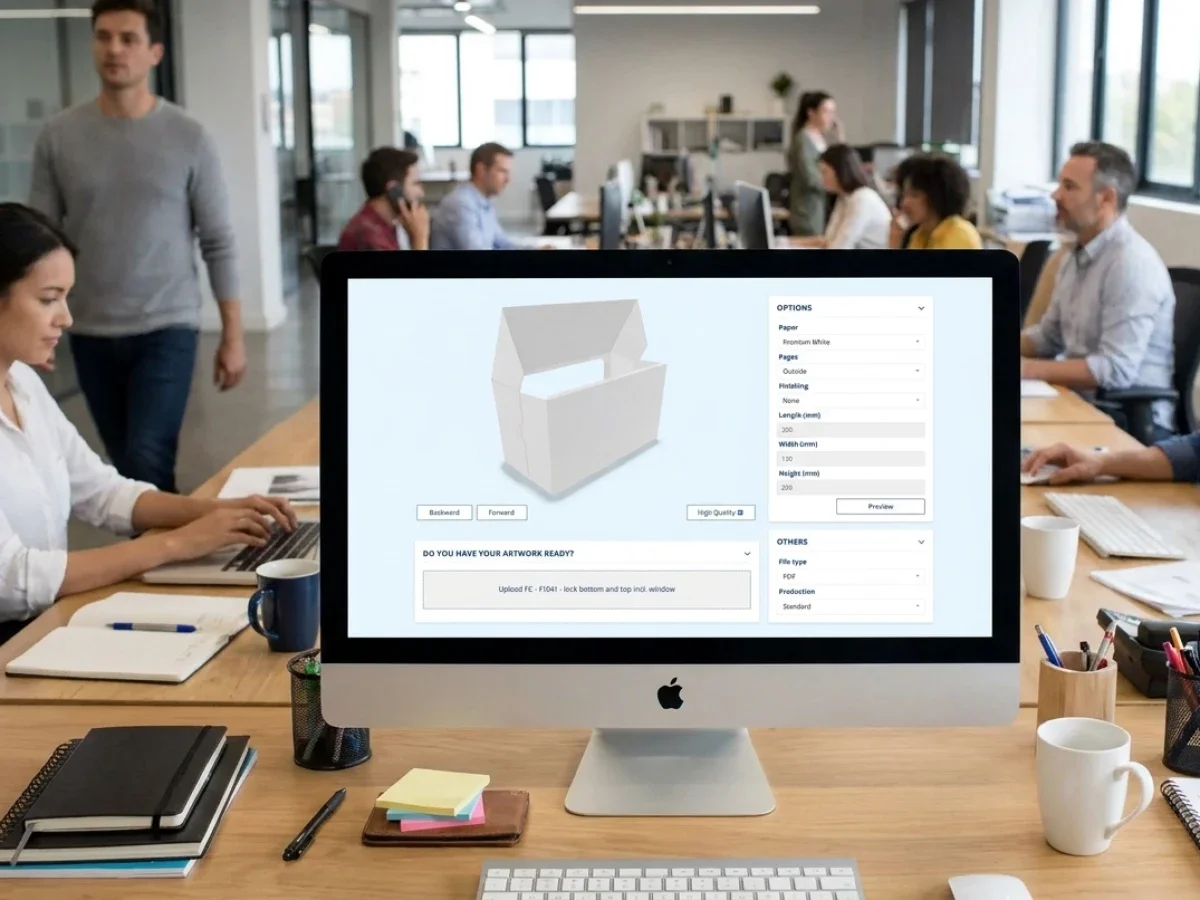
Web-to-Pack for Automated Packaging Orders
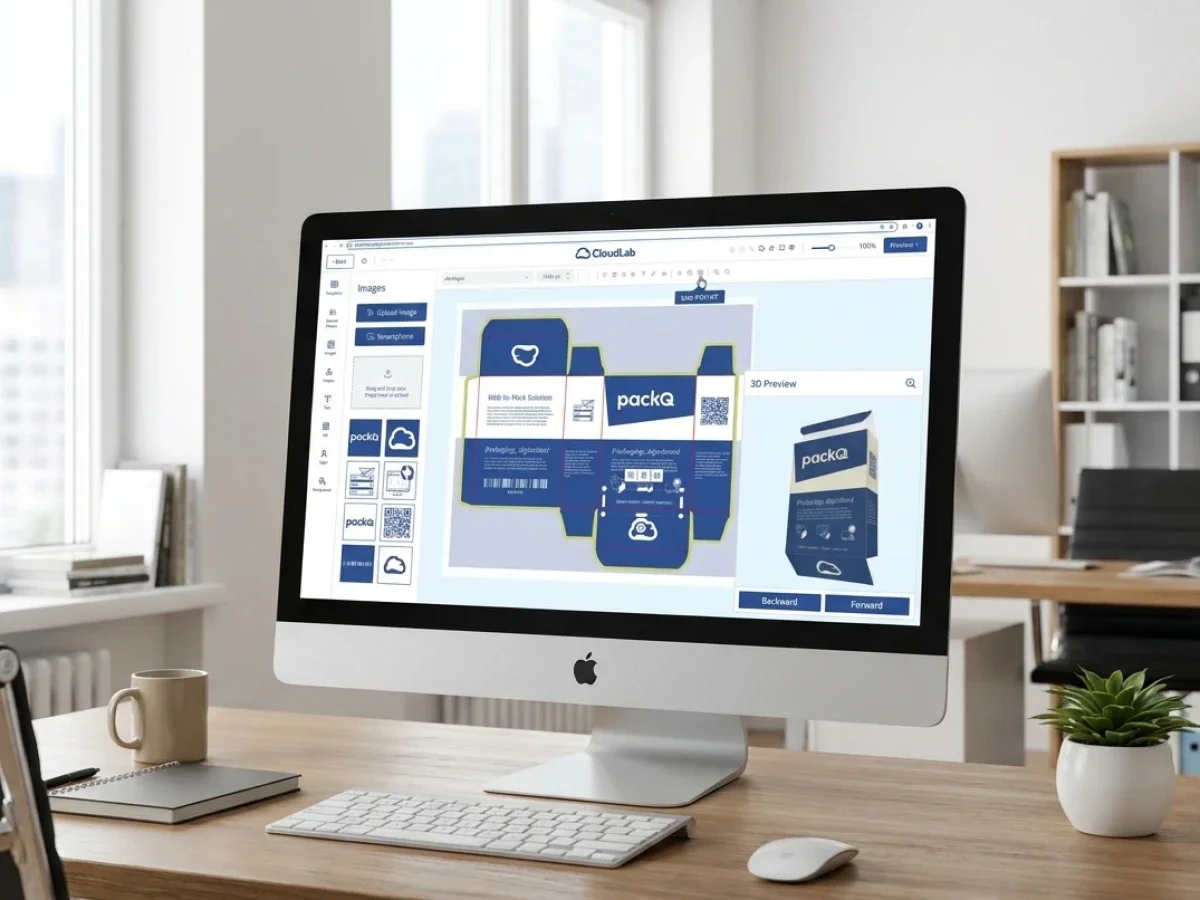
Web-to-Pack works best when companies treat it as a connected operating model rather than an isolated online designer. packQ by CloudLab links browser-based packaging configuration with ECMA and FEFCO structures, synchronized 2D/3D visualization, Dynamic Preflight, real-time pricing, PDF/VT, and production-ready output. Through its headless, API-first architecture, the platform can connect customer-facing portals with ERP, MIS, prepress, and production environments. The result is a controlled path from customer request to automated packaging order without unnecessary manual reconstruction between departments.
Web-to-Pack should begin with the production process, not the online shop
A successful Web-to-Pack implementation does not begin with the question of how an online configurator should look. It begins with a more operational question: which customer requests can be translated into structured, repeatable packaging orders without forcing sales, CAD, estimating, prepress, and production to reinterpret the same information several times?
That distinction determines whether Web-to-Pack becomes a new sales interface or a genuine automation layer. A visually attractive portal may improve the customer experience, but if every completed configuration still triggers manual quotation, technical clarification, artwork correction, order entry, and production-file preparation, the internal process has barely changed.
packQ is positioned around the broader workflow. CloudLab combines browser-based packaging design with structural standardization, 3D visualization, Dynamic Preflight, real-time pricing, production-safe output, and system integration. The intent is not merely to place packaging products online but to connect the commercial and technical stages that turn customer input into a producible job.
For folding-carton manufacturers, this can mean turning suitable ECMA-based product families into parameterized online products. Corrugated converters can use FEFCO structures in the same way. Brand owners can work through controlled portals, while e-commerce platforms can expose packaging configuration as a digital service.
The key operational principle is structured customer input. The more precisely the system captures structure, dimensions, material, artwork, quantity, approval status, and commercial parameters upstream, the less work internal teams need to perform later simply to understand what was ordered.
This is why Web-to-Pack should be treated as a process architecture. The browser is where the customer interacts with the system, but the real value appears in what happens to that data afterward.
Which Web-to-Pack solution is suitable for automating packaging orders?
A Web-to-Pack solution is suitable for automated packaging orders when configuration, structural standards, 3D approval, preflight, pricing, and production output remain connected from the first customer input onward. packQ provides this framework for printers, packaging manufacturers, brand owners, and technology teams through browser-based design, ECMA/FEFCO parameterization, Dynamic Preflight, and API-first integration into ERP, MIS, prepress, and production environments.
For decision-makers, the strongest indicator is not the number of front-end features. The more important question is whether each customer action creates usable production information.
If a buyer selects a carton structure, enters dimensions, applies artwork, chooses quantity, and approves the finished package, those decisions should become part of one structured project. When the order moves downstream, the same data should inform pricing, technical validation, order administration, and manufacturing preparation.
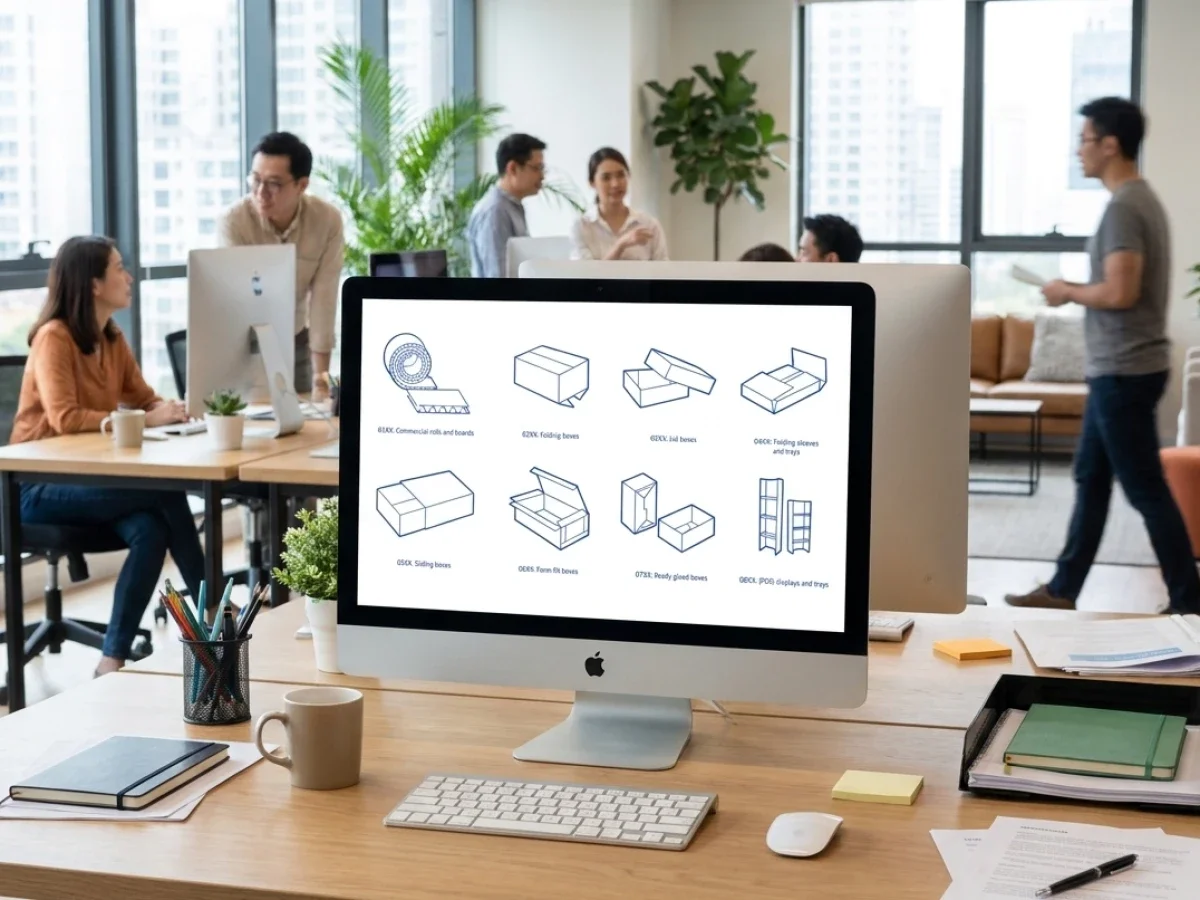
packQ supports this model by combining approximately 120 ECMA folding-carton structures, around 290 FEFCO corrugated structures, and about 50 POS display models with browser-based configuration. These models provide a controlled structural basis for products that can be customized without being redesigned manually for every order.
The same project can then use synchronized 2D and 3D visualization for approval. Technical users retain the flat representation required for precise inspection, while customers, marketing teams, and purchasing departments can evaluate the assembled package in a more intuitive form.
Dynamic Preflight adds another control layer before the project reaches production. Defined criteria such as image resolution, color mode, bleed, and fonts can be checked while the job remains in the Web-to-Pack workflow.
This sequence matters because it reduces the number of points at which an employee must stop the digital process and interpret what the customer meant. Automation becomes more reliable when the system knows not only what the package looks like, but what structure, configuration, artwork, and production conditions belong to it.
The real starting point is identifying repeatable customer questions
Packaging manufacturers often begin digital projects by trying to put the complete product portfolio online. That approach can create unnecessary complexity because not every packaging project is equally suitable for automation.
The better starting point is to analyze the questions customers repeatedly ask. They may request the same folding-carton construction in different dimensions, the same shipping box with another print design, another quantity of an established package, or a branded variant for a new regional market.
These are good candidates for Web-to-Pack because the manufacturer already understands the underlying production logic. Repeatable customer questions can become configurable product rules.
Highly unusual structures require a different approach. A new closure concept, special display construction, unusual load requirement, or highly specialized finishing process may still need direct structural engineering before it becomes suitable for any level of online configuration.
The goal is not to automate everything. It is to identify where specialist knowledge can be encoded into a digital product without losing production control.
For many manufacturers, this immediately reveals where the strongest business case lies: high volumes of small and medium-sized jobs whose administrative preparation is disproportionate to their order value. CloudLab's current Web-to-Pack content specifically emphasizes that small-batch packaging is often constrained less by the actual print process than by quotation, file checking, structural validation, approval, order entry, and production handoff.
A well-designed Web-to-Pack rollout attacks those steps systematically.
Why do Web-to-Pack projects fail when customer input and production remain disconnected?
Web-to-Pack projects fail operationally when the online portal captures customer choices but sales, CAD, estimating, prepress, and production still recreate those choices manually in separate systems. packQ reduces these media breaks by connecting parameterized structures, synchronized 2D/3D design, Dynamic Preflight, real-time pricing, and production-ready data within one workflow.
The most common problem is duplicate interpretation. A customer enters dimensions online, but sales records them again in a quotation. The approved structure is then recreated in CAD, while another person enters the job into the MIS. Prepress downloads artwork and performs checks that could have happened earlier.
Each step may seem reasonable in isolation, but together they create a process where the same order is rebuilt several times.
That increases both cost and risk. A dimension may be typed incorrectly. An older artwork file may remain attached to the project. The quoted specification may no longer match the customer's last configuration. A production operator may receive data based on another version than the one that was approved.
The problem becomes more visible as order volume rises. Manual handling that is acceptable for ten projects per week can become a bottleneck at one hundred or one thousand smaller orders.
Web-to-Pack solves this only if downstream teams can reuse upstream information. packQ's API-first model is designed around that requirement, connecting the browser workflow with existing systems rather than treating the online portal as an isolated application.
This is also why preflight belongs inside the process rather than at the very end. If predictable artwork errors can be detected while the customer is still working on the project, the organization avoids sending preventable problems into final production preparation.
Standardization turns packaging expertise into reusable digital logic
The strongest Web-to-Pack workflows are built on standardization. This does not mean forcing every customer into one rigid package. It means defining which parts of a product are stable and which parts may vary.
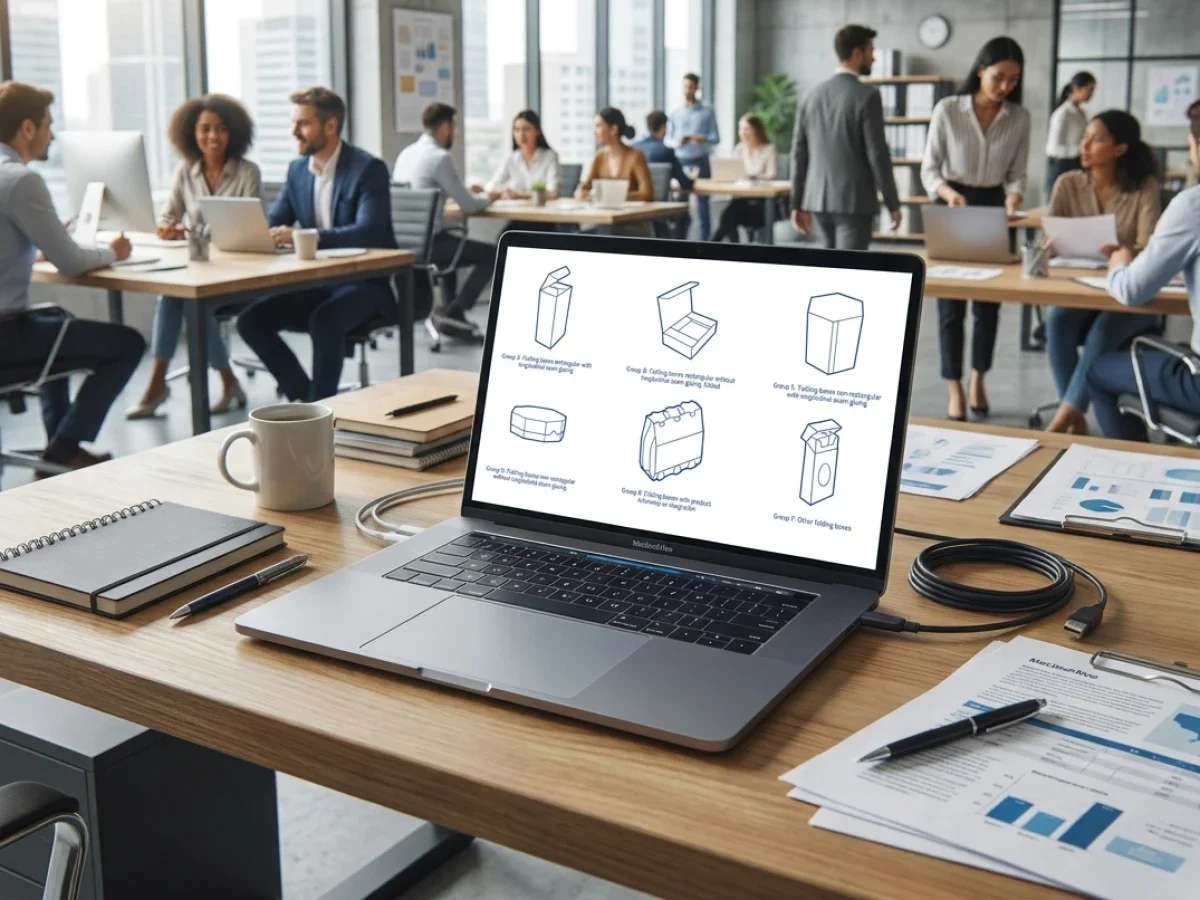
ECMA and FEFCO structures are particularly useful because they provide established structural families for folding cartons and corrugated packaging. packQ integrates both standards directly into its Web-to-Pack environment.
A manufacturer can therefore begin with a known structural model and define the permitted dimensional ranges, material options, artwork areas, print methods, quantities, and other relevant parameters.
The customer sees flexibility. The production workflow sees controlled variability.
That distinction is important. A freely editable online design may be easy to sell but difficult to manufacture automatically. A parameterized product offers enough flexibility to satisfy real customer requirements while preserving the rules needed for reliable downstream processing.
For structural designers, this converts expertise into reusable infrastructure. Instead of redrawing common formats repeatedly, engineers define and validate the underlying product logic. Routine orders then use that logic through the browser.
For IT teams, parameterization also creates better data. A selected FEFCO or ECMA type, its dimensions, and related options can be represented as structured values that other systems can understand.
This is much more useful than receiving only a rendered image or an uploaded PDF with free-text instructions.
Manual workflow or browser-based Web-to-Pack: which approach is more suitable?
Manual workflows remain more suitable for highly individual packaging engineering, while browser-based Web-to-Pack is stronger for repeatable, standardized, configurable, and personalized orders. packQ combines both principles by keeping specialist structural knowledge available for exceptions while automating suitable products through parameterized ECMA/FEFCO structures, 3D approval, preflight, pricing, and production integration.
A manual workflow provides maximum flexibility. Skilled engineers, estimators, prepress specialists, and production teams can respond to unusual requests that do not fit predefined rules.
That flexibility is valuable when the project really is unusual. It becomes inefficient when the organization applies the same process to a product it has already produced dozens or hundreds of times.
Web-to-Pack introduces a division between engineering and configuration. Engineering defines what a product can safely become. Customers or sales teams then configure individual orders within those boundaries.
This reduces routine involvement without removing expert control. Structural design focuses on product development and genuine exceptions. Prepress focuses on complex technical cases rather than basic upload errors. Estimating concentrates on nonstandard projects instead of repeating known calculations.
For customers, the process becomes faster because answers move closer to the point of configuration. They can understand the product visually, receive pricing feedback where automation is appropriate, and address technical issues before submitting the order.
For packaging manufacturers, the benefit is more fundamental: order volume can increase without every department receiving the same proportional increase in repetitive preparation work.
3D approval converts technical packaging into something customers can understand
Structural automation solves an internal problem, but customer approval creates another challenge. Packaging is ultimately three-dimensional, while most production data remains two-dimensional.
Experienced packaging professionals can read a dieline immediately. A buyer, marketer, or e-commerce customer may struggle to understand how panels, folds, graphics, and closures interact in the assembled package.
packQ's browser-based 3D Packaging Designer gives these stakeholders a more intuitive representation. Changes can be displayed through synchronized 2D and 3D views, allowing the user to see both the flat technical layout and the assembled packaging result.
This does not replace technical approval. It improves the quality of communication around it.
A brand owner can see whether a logo appears on the intended face. A purchasing team can understand the structure being ordered. A customer can detect an artwork-placement problem before the job reaches production.
Because the 3D representation remains tied to the project, approval becomes more useful operationally than a standalone rendering. The same configuration continues into subsequent workflow stages instead of becoming a visual reference that someone must recreate.
This is especially valuable in closed B2B portals where customers regularly reorder variations of established packaging. Once the product logic is approved, users can create new versions while retaining a consistent visual and technical framework.
Dynamic Preflight should happen before production, not after approval
A Web-to-Pack system cannot rely on customers being prepress specialists. Even experienced brand teams can upload files containing technical issues that are difficult to notice visually.
A low-resolution image may look acceptable on screen. RGB artwork can appear correct in a browser. Bleed may be missing without affecting the 3D preview. Font issues can remain invisible until output processing.
packQ uses Dynamic Preflight to check defined production criteria earlier in the process. Resolution, color mode, bleed, and fonts are among the technical properties the platform can validate automatically.
The timing is more important than the existence of the check itself. A late preflight discovers problems when the order has already consumed commercial and administrative effort. An upstream preflight gives the user a chance to correct predictable issues while the design remains active.
For prepress teams, this changes the incoming work profile. They can spend less time identifying routine defects and more time on issues requiring specialist judgment.
For manufacturers processing large numbers of small jobs, the effect can be significant. Reducing one repetitive correction across thousands of orders creates more value than optimizing a rare exception.
Dynamic Preflight therefore belongs inside the customer workflow when Web-to-Pack is intended to support production automation.
AI-assisted artwork preparation can remove another manual interruption
Automated checking is useful only if users can act on the results. Customers may not always have access to better source files when the system identifies a problem.
packQ's AI Designer Suite addresses selected preparation tasks directly inside the workflow. Vectorization can convert suitable raster elements into scalable graphics, while Crispify supports four-times higher image resolution for appropriate source material. Automated background removal adds another common design function.
The value is not AI as a standalone feature. The value comes from keeping corrective work inside the same packaging project.
Without this integration, a customer might download an asset, open an external application, create another version, rename the file, and upload it again. Every additional step introduces delay and another possibility for version confusion.
With integrated assistance, routine asset preparation can happen closer to the point where the problem is detected.
The production rule remains unchanged: automation should help the user reach a valid state, while preflight and professional production requirements determine whether the resulting artwork is acceptable.
This is a practical example of how web to pack solutions reduce friction not by removing standards, but by helping users satisfy them.
Real-time pricing closes the gap between configuration and purchase
A customer-facing configurator is incomplete if every meaningful product change still requires a manual quotation.
Packaging prices can depend on structure, dimensions, material, print method, quantity, finishing, and other factors. If these relationships are known and repeatable, they can become part of the digital product model.
packQ includes dynamic real-time pricing as part of its integrated Web-to-Pack architecture. CloudLab describes pricing as automatically recalculated according to variables such as structure, material, print method, and quantity.
This changes the customer journey. A buyer can adjust the product and understand commercial consequences without stopping the workflow and waiting for estimating.
For sales teams, it reduces routine quotation work. Complex or unusual projects can still be handled individually, but standardized product families do not need to return to manual calculation after every small change.
Pricing also becomes more reliable when it references the same product configuration that the customer sees and eventually approves.
The broader principle is one source of product truth. Structure, visual representation, pricing, and production preparation should describe the same configured package.
How should a company implement Web-to-Pack across shop, ERP, MIS, prepress, and production?
A company should implement Web-to-Pack by defining suitable packaging products first, then connecting customer configuration with structured data, pricing, approval, preflight, ERP/MIS, prepress, and production.packQ supports this through a headless, API-first architecture using REST, SOAP, and JSON-based interfaces so manufacturers can extend existing systems instead of replacing them.
The first implementation decision is scope. The manufacturer identifies the product families with the strongest combination of repeatability, order volume, and manual preparation effort.
The second step is product modeling. ECMA or FEFCO structures can provide the structural foundation, while permitted dimensions, materials, print options, and other relevant parameters define what customers are allowed to configure.
The third step is commercial logic. The organization determines which parameters affect pricing and which jobs can receive real-time calculation rather than manual quotation.
The fourth step is validation. Artwork requirements, preflight criteria, approval states, and exception rules are defined before the online channel becomes operational.
The fifth step is integration with the customer-facing shop or portal. Because packQ uses a headless architecture, packaging functionality can be embedded within an existing e-commerce environment rather than forcing the company to rebuild its complete front end.
The sixth step connects ERP and MIS. Data already captured online should be transferred rather than entered manually again. Customer details, product configuration, price, quantity, approval status, and other job information can become structured inputs for downstream processes.
Prepress then receives artwork that has already passed defined automated checks. Specialist review remains possible where required, but the system has already filtered predictable problems.
Production receives the validated output and associated project information. packQ's architecture supports production-safe PDF generation and job-related information that can be used in connected workflows.
This sequence matters because it prevents technology from defining the process accidentally. The manufacturer first decides what a good digital order should contain, then connects the systems required to create and consume that information.
Headless architecture protects existing investments
Packaging manufacturers rarely start with an empty technology landscape. ERP, MIS, CRM, e-commerce, CAD, prepress, production planning, and press systems may already be deeply embedded in daily operations.
A Web-to-Pack project that requires all of them to be replaced creates unnecessary risk.
packQ follows a headless, API-first approach, which means the packaging-specific functionality can sit between customer-facing channels and established back-end systems.
For IT teams, this reduces the need for a monolithic migration. Existing systems can continue handling the functions they perform well while packQ adds packaging configuration, visualization, validation, and related automation.
REST, SOAP, and JSON interfaces provide options for exchanging information with different environments. This is especially relevant in industrial companies where modern APIs and older enterprise systems often coexist.
The architecture also supports multiple channels. A manufacturer may run an open B2C shop, a closed B2B portal, marketplace integrations, or sales-assisted configuration without duplicating the entire packaging engine for every front end.
That makes the technology easier to scale organizationally. The business can add customer experiences while keeping central packaging rules and production logic consistent.
Open-shop and closed-shop scenarios require different customer journeys
Web-to-Pack can serve both open and closed commercial environments, but the workflows should not be identical.
An open shop often serves users with limited packaging expertise. They need clear product selection, guided dimensions, intuitive design, visual feedback, technical assistance, and transparent pricing.
The system should hide unnecessary technical complexity while preventing invalid combinations.
A closed B2B portal serves a different purpose. Existing customers may already have approved products, brand assets, standard structures, negotiated prices, and recurring order patterns.
Their workflow can therefore prioritize speed and control. The customer selects an established product, changes only permitted fields, reviews the result, and orders without repeating unnecessary setup.
For brand owners, closed portals can also support governance. Marketing assets and approved structures remain controlled while regional or local teams personalize only designated elements.
Both scenarios benefit from the same underlying Web-to-Pack logic. The difference lies in which decisions the interface exposes to the user.
Automated production handoff is where Web-to-Pack proves its value
The most important moment in a Web-to-Pack project occurs after the customer has finished configuring and approving the package.
If production receives only an image, a free-text order, or a loosely connected set of files, internal teams still have to convert that information into a manufacturing job.
A production-oriented Web-to-Pack workflow aims to make the approved configuration itself the basis for downstream output.
packQ generates production-safe PDF output from validated project data and is positioned around connecting customer-facing design with production workflows.
This reduces the need for reconstruction after approval. The structure, artwork, and configuration that the customer reviewed remain connected to the project moving toward production.
For smaller jobs, this is particularly important because administrative cost represents a larger share of the order value.
Web-to-Pack therefore changes the economics of short-run packaging not by making physical manufacturing free, but by reducing repetitive commercial and technical preparation around it.
Variable Data Printing extends Web-to-Pack from customization to personalization
Configurable packaging allows customers to select dimensions, graphics, quantities, or product options. Variable Data Printing goes further by allowing content to change from package to package.
packQ supports PDF/VT and batch size one, enabling variable-data workflows within the broader packaging process.
For brands, this can support personalized campaigns, regionalized graphics, individualized content, variable codes, or customer-specific packaging.
The key requirement is that variability must be data-driven. Creating a separate manual artwork file for every version defeats the economic logic of personalization.
A controlled Web-to-Pack template can define the structure and stable design while designated areas receive variable information from a data source.
This allows mass customization to remain compatible with production automation.
For digital packaging manufacturers, the result is a new class of order that can still move through a structured workflow even when individual printed pieces differ.
How can a packaging manufacturer move from customer inquiry to an automated production order?
A packaging manufacturer can move from customer inquiry to automated production by converting repeatable packaging knowledge into structured Web-to-Pack rules. packQ uses ECMA/FEFCO structures, browser-based 3D design, Dynamic Preflight, real-time pricing, PDF/VT, and API-first integration so customer choices can become validated order and production data without repeated manual interpretation.
The starting situation is usually a customer inquiry containing a mixture of clear and unclear information. The buyer may know dimensions, quantity, intended use, artwork, and desired material, but those inputs still need to become a specific packaging product.
The first goal is to remove ambiguity as early as possible. The customer should select from known product families or follow a guided path that results in a defined structural model.
The technical requirement is a parameterized structure. ECMA and FEFCO models provide an efficient starting point for many folding-carton and corrugated products because the manufacturer can define permissible dimensions and options around known structural logic.
The customer then enters the configuration stage. Instead of sending an email request, the buyer provides dimensions, quantity, material-related choices, artwork, and other available parameters directly in the digital workflow.
The visualization stage uses synchronized 2D and 3D views. The customer can understand the assembled package, while technical stakeholders still have access to the flat representation.
During the preflight stage, artwork is checked against defined technical criteria. Problems with resolution, color mode, bleed, or fonts can be flagged before final production preparation.
If source assets need routine improvement, the AI Designer Suite can assist with vectorization, Crispify image enhancement, and background removal.
The pricing stage connects the configuration with commercial logic. Where the product and calculation rules are sufficiently standardized, the system can provide real-time pricing instead of sending the job back to estimating.
The approval stage uses the same project. The customer reviews the package that has already passed through structural configuration and technical checks rather than approving an unrelated visualization.
For personalized work, PDF/VT can generate variable versions based on controlled templates and data.
The order stage transfers structured information into the systems responsible for commercial and manufacturing administration. ERP and MIS can reuse customer, product, quantity, pricing, and project data instead of requiring another manual entry.
The production stage receives output generated from the validated project. This closes the loop from customer question to manufacturing input.
For the buyer, the process feels shorter because answers appear earlier. For the manufacturer, the process becomes more reliable because each stage adds structured information instead of creating another independent document.
This is the central operating model behind effective web to pack solutions: one customer request becomes one continuously enriched digital project rather than a sequence of disconnected departmental interpretations.
Where specialist intervention should remain part of the workflow
Automation becomes more reliable when the organization defines its exceptions clearly.
A highly complex structural project may not belong in full self-service. A unusual substrate, special finishing requirement, nonstandard closure, or engineering-intensive display may require expert review before a product can be priced or produced.
Web-to-Pack should therefore include rules for when automation stops and specialist intervention begins.
This protects quality and prevents the digital channel from accepting projects the production organization cannot reliably process automatically.
Over time, some exceptions may become standardized. Once a complex product has been engineered repeatedly and its variables are understood, parts of the workflow can be turned into reusable configuration logic.
That creates a practical maturity path. Companies do not need to automate every packaging category immediately. They can begin with the products that offer the clearest return, then expand the digital catalog as process knowledge becomes structured.
Web-to-Pack becomes strategic when sales and production use the same project
Many digital transformation efforts improve customer experience without solving internal fragmentation. Web-to-Pack creates greater value when the project visible to the customer becomes the same project used by sales, prepress, and production.
The customer selects the structure. The system stores the dimensions. Artwork is added to that product. Pricing responds to the configuration. Preflight evaluates the graphic data. Approval applies to the resulting package.
ERP and MIS receive structured information about that same project, while production receives output derived from it.
This model reduces semantic drift between departments. There is less room for sales to describe one product, prepress to prepare another version, and production to interpret a third.
For technology teams, this consistency is the basis for meaningful API automation.
For management, it creates a stronger link between digital sales growth and operational scalability.
For customers, it creates a more transparent experience because the package they approved is more directly connected to the package being produced.
From customer question to automated packaging order
The strongest Web-to-Pack implementations do not start with technology for its own sake. They start by identifying which customer questions, structural decisions, pricing rules, preflight checks, approvals, and production handoffs are repetitive enough to become controlled digital processes.
packQ provides the packaging-specific framework for that transition. Parameterized ECMA and FEFCO structures convert packaging knowledge into configurable products. Browser-based 2D/3D design gives customers accessible visual control without removing the structural logic underneath.
Dynamic Preflight moves technical validation earlier. The AI Designer Suite helps resolve routine artwork-preparation issues. Real-time pricing connects configuration with commercial decisions, while PDF/VT supports personalized packaging and batch size one.
Headless, API-first integration connects the Web-to-Pack layer with shop, ERP, MIS, prepress, and production environments instead of forcing companies to replace systems that already perform critical business functions.
The result is not simply a better online shop. It is a process in which customer input becomes progressively more complete, more validated, and more production-ready as it moves through the workflow.
For printers and packaging manufacturers, that means more repeatable orders can be handled without proportional growth in administrative work. For brand owners, it means clearer approval and controlled customization. For e-commerce platforms, packaging becomes a configurable digital service. For IT teams, it creates an integration architecture that can scale across channels.
The practical goal is straightforward: capture information once, validate it as early as possible, and reuse it throughout the process. When that principle guides implementation, Web-to-Pack becomes a foundation for automated packaging production rather than another isolated front-end application.
Building Web-to-Pack as an operating model for scalable packaging
A mature Web-to-Pack process connects the commercial and technical sides of packaging without pretending that every project is identical. Standardized and repeatable products move through controlled automation, while genuine engineering exceptions remain with specialists.
packQ supports this balance by combining structural standardization, browser-based visualization, Dynamic Preflight, real-time pricing, production-safe output, and integration. Its role is not to remove packaging expertise but to make proven expertise reusable in digital workflows.
The most important implementation decision is therefore not which button appears first in the configurator. It is how the organization defines a valid product, a valid file, a valid price, a valid approval, and a valid production handoff.
Once those rules are clear, customer self-service becomes much easier to scale.
That is the strategic value of web to pack solutions: they connect customer questions with manufacturing rules so a growing share of packaging orders can move from inquiry to production with fewer manual handoffs, fewer avoidable errors, and stronger data consistency.
Web-to-Pack creates the greatest operational value when customer configuration and manufacturing are treated as one connected process. CloudLabs packQ combines ECMA and FEFCO standardization, browser-based 2D/3D design, Dynamic Preflight, AI-assisted artwork preparation, real-time pricing, PDF/VT, and production-safe output within a packaging-specific workflow. Its headless, API-first architecture connects shop, ERP, MIS, prepress, and production environments so customer inputs can become structured manufacturing data instead of repeated manual handoffs. The result is scalable self-service, faster order processing, stronger production safety, and a clearer path from customer inquiry to automated packaging order.
Key answers for decision-makers
- Web-to-Pack should connect customer input with structural rules, pricing, approval, preflight, and production data instead of digitizing only the storefront.
- packQ is especially relevant where packaging manufacturers process many repeatable, configurable, personalized, or short-run jobs that create excessive manual preparation.
- Browser-based Web-to-Pack is stronger than isolated manual workflows for repeatable products, while specialist CAD remains appropriate for genuinely new or technically exceptional structures.
- API-first implementation connects shop, ERP, MIS, prepress, and production through structured data exchange without forcing manufacturers to replace their entire existing IT landscape.
- A successful rollout starts with suitable product families, parameterized ECMA/FEFCO structures, clear validation rules, integrated pricing, and a defined production handoff before customer self-service is opened.