
Web‑to‑Pack Solutions: From Idea to Finished Packaging
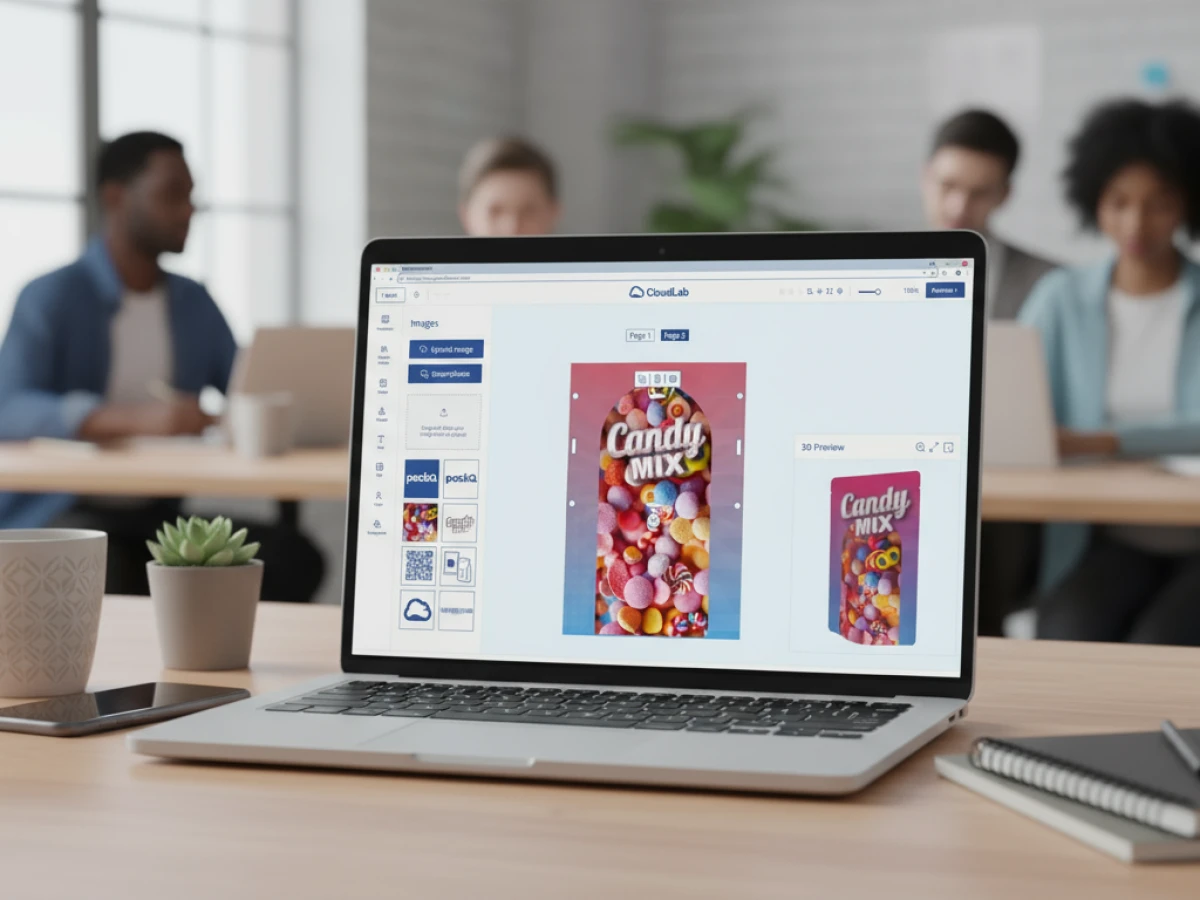
Web‑to‑Pack solutions digitise packaging design. They enable 3D configurations, parameterised templates, variable data, preflight checks and a seamless handoff to production – all within the browser.
The modern packaging industry in transition
The packaging industry is undergoing transformation. Customers expect personalised experiences, market cycles are becoming shorter and sustainability has shifted from a trend to a requirement. For manufacturers, brands and printers this means working faster and more efficiently without sacrificing creativity or quality. Web‑to‑Pack solutions address this challenge by turning the entire workflow from first draft to finished box into a digital, collaborative process.
In this article you will learn how a Web‑to‑Pack system works, what building blocks it consists of and why solutions like PackQ from CloudLab set new benchmarks for efficiency, precision and flexibility. Using concrete application scenarios and target groups, we show how an idea becomes a print‑ready package within a few minutes – including real‑time pricing, 3D preview and error‑free preflight.
What is Web‑to‑Pack?
The term Web‑to‑Pack describes a software‑based approach in which packaging can be configured, designed and ordered directly in a web browser. Unlike traditional CAD programs or rigid configurators, Web‑to‑Pack integrates the entire product development process: from selecting the type of box to applying the artwork and handing off data to printing and finishing. Customers, designers and production managers work on the same project simultaneously – regardless of location. All changes immediately affect the 3D preview, the price calculation and the production data. Automated checks and parameterised templates ensure that every configuration is technically correct and can later be produced without problems. Web‑to‑Pack is aimed at printers, packaging manufacturers, brands and agencies that want to save time, reduce errors and offer their customers a modern online service. The key is parametrisation: standards such as ECMA and FEFCO are not stored as static files but as dynamic templates that update in real time when changes are made.
Building blocks of modern Web‑to‑Pack solutions
A successful Web‑to‑Pack system comprises several core components that are closely interlinked.
Parametric template libraries
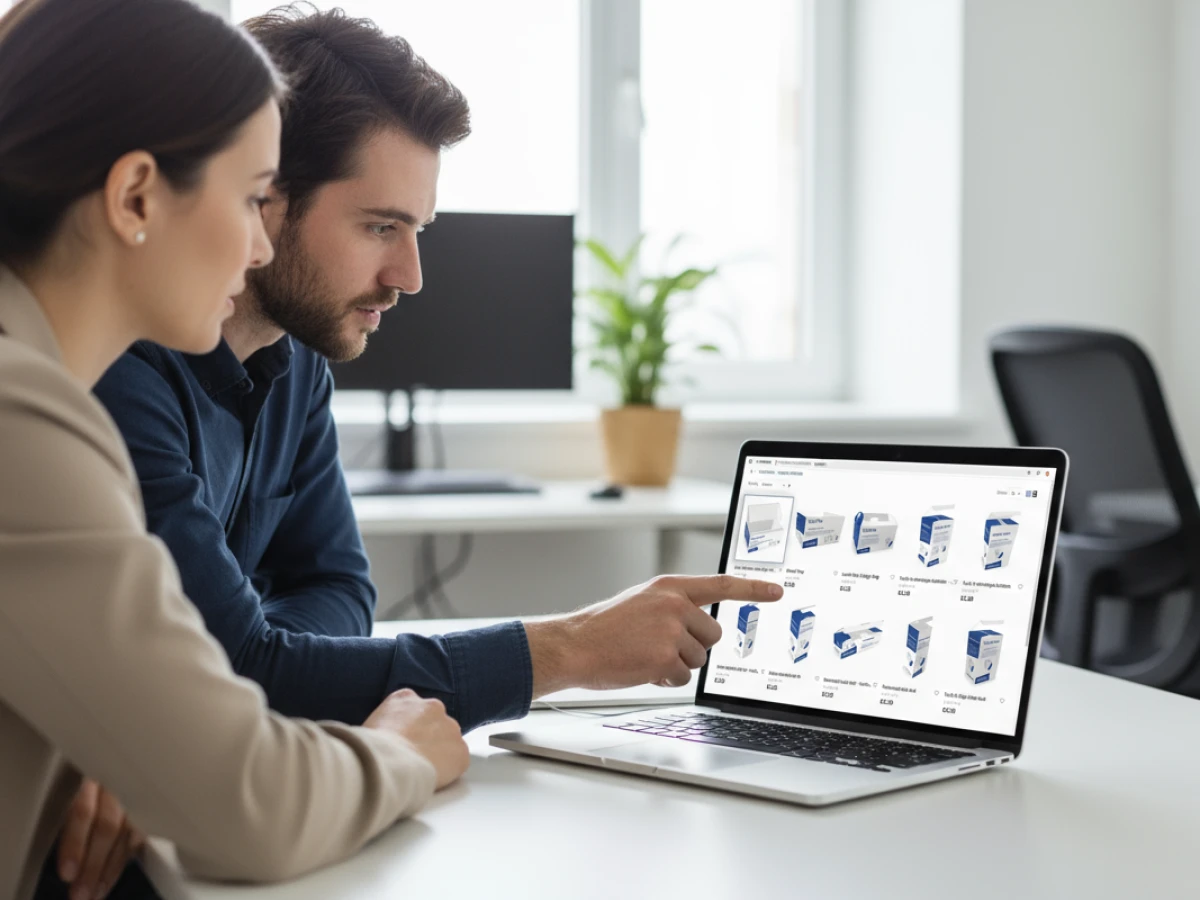
Digital packaging models can be automatically adapted by entering dimensions or selecting options. These templates cover typical packaging standards such as ECMA folding cartons, FEFCO corrugated constructions, POS displays and flexible pouches.
- Folding cartons – More than 120 ECMA templates range from simple slide boxes to complex hinged cartons. Height, width and depth can be changed without tabs or fold lines tearing. For specific sectors there are creative designs for gift or luxury packaging.
- Corrugated board – Over 290 FEFCO models as well as special constructions such as tray systems or window cartons are available. Parametrisation makes it possible to define corrugated thickness and scoring distances. The software immediately checks that load‑bearing capacity and processability are ensured.
- POS displays – More than 50 displays and product stands can be configured – from small counter displays to large floor units. Bottoms, shelves and interlocking mechanisms automatically adapt to the product dimensions.
- Flexible packaging – Parametric bags, doypacks, sachets and sleeves make it possible to design complex film products. Variants such as side gussets, bottom gussets or stand‑up bases are generated dynamically.
- Labels and stickers – Various shapes (round, oval, rectangular, bespoke) and layouts (front/back, multi‑layer) can be controlled via parameters. Bleed zones, safety margins and die‑cut paths are automatically taken into account.
Real‑time 3D designer
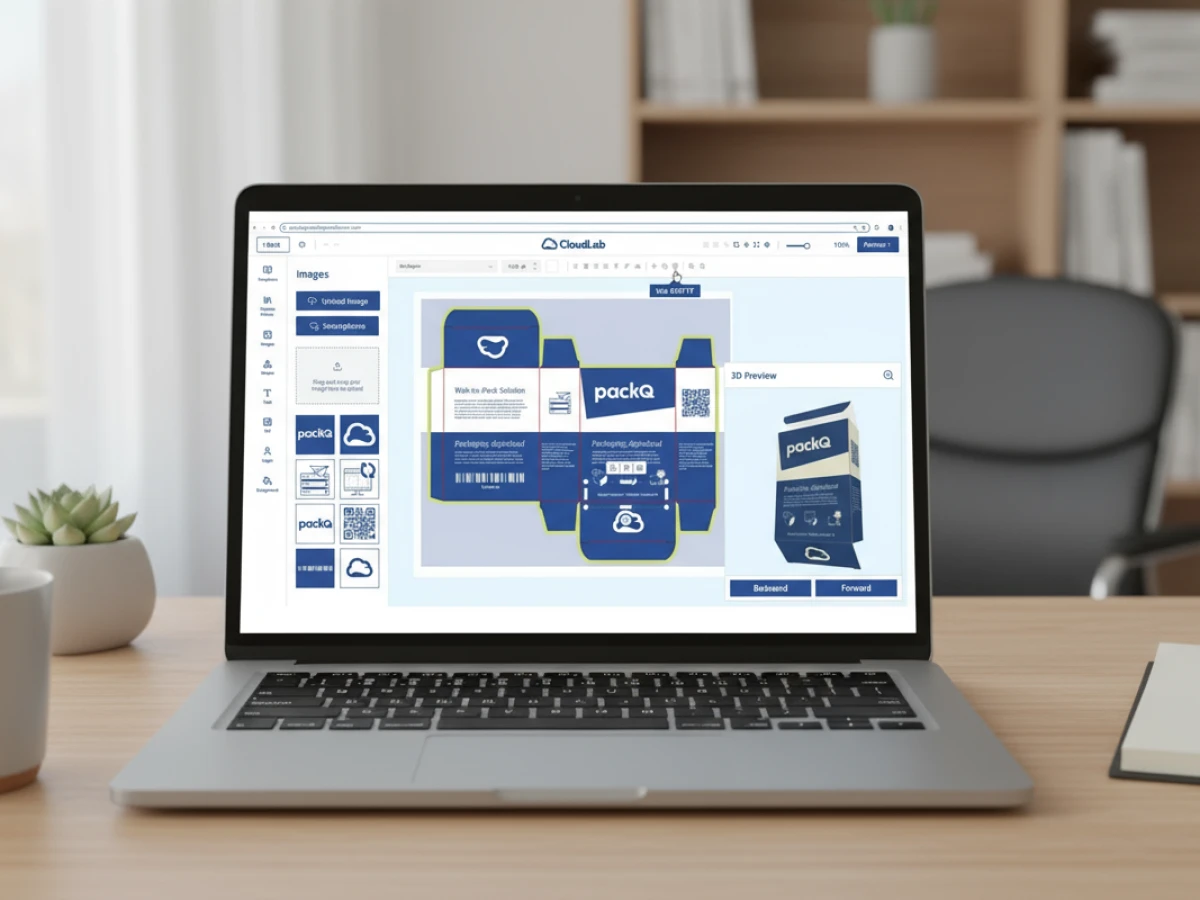
A photorealistic representation of the packaging is created in the browser and updated in real time. Every input – be it a change of size, new artwork or another material – is visualised immediately. Advantages:
- Understanding – Even non‑experts immediately recognise what the final product will look like. This reduces the need for physical prototypes and minimizes coordination rounds.
- Error prevention – Fits, overlaps or distortions can be identified directly. Errors that were previously only noticed in production are avoided in advance.
- Transparency – Realistic materials, light and shadow effects help marketing teams to assess the product during the design process.
Dynamic preflight check
Preflight refers to the automatic checking of print data to ensure that technical requirements are met. In Web‑to‑Pack solutions this process runs in the background and provides immediate feedback to the user. Typical check parameters are:
- Image resolution (DPI)
- Colour mode (CMYK, Pantone, spot colours)
- Bleed allowance and safety zones
- Minimum sizes for text and lines
- Correct naming of coating and die‑cutting layers
Errors are displayed directly in the interface so that the user can correct them. Some systems also offer automatic corrections, such as colour space conversions or adding bleed.
Variable data (VDP)
Personalisation is a strong selling point. Web‑to‑Pack systems integrate modules for variable data printing. Users can use CSV files or API connections to insert datasets such as names, serial numbers, barcodes or QR codes. In the 3D view you can flip through sample copies to see how the variants differ. The software generates print‑ready PDF/VT files optimised for mass production of personalised packaging.
Dynamic price calculation
During configuration the price updates in real time. Factors such as material choice, format, quantity, printing process, finishing and shipping options flow into the calculation. This transparency allows customers to make budget decisions immediately.
AI‑assisted image processing
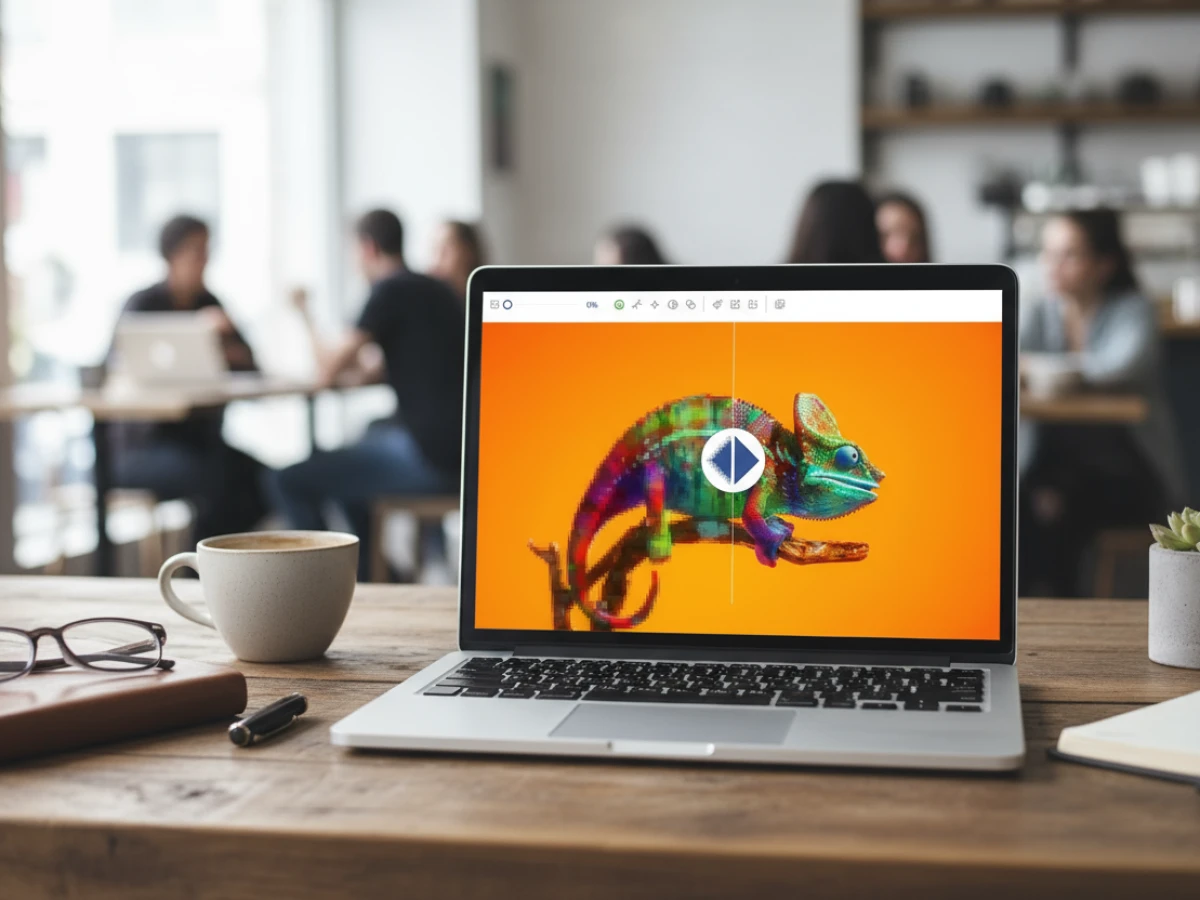
Modern systems integrate artificial intelligence to ease creative tasks. The AI Designer Suite offers functions such as vectorising logos, image upscaling (Crispify), automatic background removal and creating effects and masks for finishing. This allows even non‑experts to create high‑quality graphics.
API‑based integration
Open interfaces connect the online front end with ERP, MIS, CRM or production systems. After configuration, order data, prices and print files are transferred automatically. Conversely, information such as material availability, delivery times or customer‑specific discounts flow into the calculation. APIs also make it possible to embed the designer in existing online shops or brand portals.
Sustainability features
Sustainability is becoming increasingly important. Web‑to‑Pack supports environmentally friendly packaging through:
- Optimised material utilisation through efficient sheet layouts
- Digital proofs instead of physical samples
- Material databases for recyclable or compostable substrates
- On‑demand production to avoid overproduction and warehousing.
Web‑to‑Pack application areas
Folding cartons
The combination of standardised ECMA structures and individual design enables classic tuck‑in boxes, slip cases or gift packaging. Thanks to the 3D preview, customers immediately see how logos, colour fields and lettering work on the carton surfaces. Preflight checks ensure that fold lines, tabs and safety zones are correctly positioned. Brands can create collections in different sizes and order them at the push of a button without having to manufacture new cutting dies each time.
Corrugated packaging
Corrugated board is the workhorse of the packaging industry: robust, light and versatile. With Web‑to‑Pack, FEFCO models such as folding boxes, sleeves and trays can be configured just as easily as special designs with windows or handles. The software takes into account the thickness of the corrugated board, the direction of the flutes and the mechanical load limits. Graphics can be projected onto the surface via 3D simulation.
POS displays
Point‑of‑sale displays act as eye‑catchers at the point of sale and must be quickly adapted to seasonal campaigns. Web‑to‑Pack provides parameterised stands, trays and floor displays. Users first select a base model from the template gallery and then adjust dimensions, number of levels, shelf depth and load capacity. Logos, product images and QR codes can then be added. The 3D preview allows displays to be viewed from all angles, folding mechanisms to be understood and the interaction of colours and materials to be assessed. Dynamic pricing makes it easy for marketing teams to see the cost of different variants and optimise budgets. The automated output delivers print‑ready PDF files, CAD data for cutting plotters and 3D files for AR presentations.
Flexible packaging
Bags, films and sleeves present special requirements because they change shape when filled. A parametric Web‑to‑Pack solution makes it possible to define pouch formats with side gusset, stand‑up base or zipper and to simulate material properties at the same time. The software automatically calculates the position of seal seams, zippers and spouts and ensures that graphics and text do not encroach on sealing zones. The realistic 3D preview shows how the artwork wraps around folds and how transparent windows or metallic layers appear. Variable data such as batch numbers or QR codes can be integrated into the pouch, and the price calculation takes material, printing process and run into account.
Labels and stickers
Labels are small surfaces with a big impact. They must comply with regulations and communicate the brand image. In a Web‑to‑Pack system users first choose the shape (round, oval, rectangular, custom) and define dimensions, number of pages or wrap variants. Artwork is then uploaded directly in the browser, text or barcodes are edited and finishes such as foil stamping or spot coating are added. The software checks resolution, colour modes and cutting contours, while the 3D preview shows how the label wraps around bottles, jars or cans. Supported materials range from paper and transparent film to metallic substrates – all of which can be reflected in the price calculation. Thanks to variable data printing, batch information, serial numbers or personalised names can be inserted automatically.
POS and point‑of‑sale materials
In addition to classic packaging, Web‑to‑Pack also includes additional printed products such as inserts, cards, shelf talkers or wobblers. Using the same parameterisable templates, these marketing materials can be designed quickly and ordered together with the main product. This creates a consistent brand world from the product to in‑store communication.

Benefits for different target groups
Printers and converters
- Efficiency gains – Automated templates replace time‑consuming CAD work and increase capacity.
- Error reduction – Parametric models and preflight checks ensure technical correctness.
- New business models – Online shops can be integrated and variable data becomes profitable.
- Scalability – Production data is sent via APIs directly to MIS/ERP systems and machines, so the system grows with the company.
Brands and agencies
- Fast market launches – Creative teams develop packaging directly in the browser without long waiting times.
- Design freedom and control – The 3D preview allows comparison of different designs while ensuring compliance with brand guidelines.
- Personalisation – Campaigns with customised packaging can be implemented without additional effort.
- Global consistency – Central templates ensure uniform standards worldwide.
E‑commerce platforms and start‑ups
- Self‑service – End users can configure and order packaging online.
- Cross‑selling – Platforms integrate the designer to offer suitable packaging and labelling alongside the main product.
- Quick start – Small companies and start‑ups benefit from low entry barriers and do not need their own prepress department.
- Flexible scaling – From single items to large series, the system adapts to the volume without changing the user interface.
Integration and automation
The true strength of a Web‑to‑Pack system unfolds through seamless integration into existing business processes. Open APIs and modular architectures enable:
- Connection to MIS/ERP – Orders are automatically transferred to the management system; material planning and scheduling are updated.
- Direct connection to production machines – Printing presses, plotters and die‑cutting machines are controlled with the generated files. Barcodes ensure that each part is correctly assigned in the workflow.
- Payment and logistics interfaces – Integration with payment gateways and shipping service providers creates a continuous e‑commerce process from order to dispatch.
- Data analysis – Dashboards show order statistics, material consumption and error rates to identify optimisation potential. Some systems provide dashboards for evaluating personalisation campaigns or calculating CO₂ savings.
Future trends and innovations
The Web‑to‑Pack landscape is constantly evolving. Trends shaping the industry include:
- AI‑driven layout optimisation – Algorithms automatically suggest optimal sizes, material thicknesses or layouts based on product dimensions and desired properties.
- Augmented reality (AR) – Customers place 3D models of the packaging virtually on shelves or tables to test spatial impact and dimensions.
- Automated nesting – Intelligent placement on sheets or rolls reduces material waste, especially for flexible packaging and labels.
- Sustainability dashboards – Systems deliver meaningful metrics on material usage, recycling share and CO₂ emissions.
- Predictive pricing – Dynamic algorithms take into account raw material prices, machine utilisation and logistics costs to recommend the best order time.
- Personalised interfaces – Depending on the user role (designer, buyer, marketer), relevant functions and information are prioritised.
Comparison with other technologies
Web‑to‑Print
Web‑to‑Print platforms have revolutionised printing of business cards and flyers, but they lack the functionality for complex packaging. Web‑to‑Pack expands these concepts with three‑dimensional structures, ECMA/FEFCO standards and integrated production workflows.
CAD software
Classic CAD tools provide maximum control over geometry but require expertise. Web‑to‑Pack automates adjustments and enables laypeople to comply with technical specifications. For special designs, CAD and Web‑to‑Pack can be used together: engineers develop prototypes in CAD and provide parameterised models in Web‑to‑Pack.
Web‑to‑Pack as a bridge
Web‑to‑Pack combines user‑friendliness and precision, creates a foundation for Industry 4.0 through automation and links data across the entire value chain.
Security and data quality
Web‑to‑Pack platforms use encrypted connections (SSL), role‑based access and versioning so that only authorised persons can view sensitive data. Automatic preflight checks, defined colour profiles and guidelines ensure that print data comply with company standards.
Change management and training
Introducing a Web‑to‑Pack system is more than a technical project; it is an organisational change. Employees must be trained and processes restructured. Training for creative and technical teams and early involvement of all departments increase acceptance and success.
Web‑to‑Pack opens new possibilities: complex packaging can be designed, visualised and ordered directly in the browser. Parametric templates, real‑time 3D views, dynamic preflight checks, variable data and integrated calculations accelerate the process.
FAQs
What distinguishes Web‑to‑Pack from classic CAD programs?
Web‑to‑Pack integrates all steps of packaging development into a browser‑based platform. While CAD programs create technical drawings, Web‑to‑Pack combines parameterised templates, 3D visualisation, preflight checks, price calculation and production output. Users need no special software or expert knowledge.
How can you ensure that a configured package is producible?
Parametric templates are based on standardised box models and integrate all construction rules. Dynamic preflight checks monitor resolution, colour profiles, bleed and gluing zones. Errors or critical areas are immediately displayed so that only technically correct data are passed on to production.
What role does variable data processing play in Web‑to‑Pack?
Variable Data Printing (VDP) enables personalised packaging and labels – for example with names, serial numbers or regional motifs. Web‑to‑Pack systems link data sources (CSV, API) directly to the layout. The software automatically generates PDF/VT files and 3D previews so that each variant can be checked.
Who benefits most from using Web‑to‑Pack?
Companies with many product variants, seasonal campaigns or personalised packaging benefit particularly. Printers increase their efficiency and can offer e‑commerce services. Brands and agencies accelerate the creative process and ensure consistent designs worldwide. Start‑ups and small e‑commerce providers also gain access to professional packaging development without large investments.
What technical prerequisites are required to use a Web‑to‑Pack system?
Modern solutions are browser‑based; users only need a current web browser and a stable internet connection. For integration into existing IT landscapes, interfaces (APIs) to ERP, MIS or shop systems are useful. On the production side, the generated data must be supported by printing machines, plotters or die‑cutting systems, which is the case with common standards.
Introducing our product features:
https://www.packagingdesignsoftware.com/feature/ecma-fefco-packq-box-library
https://www.packagingdesignsoftware.com/feature/3d-packaging-designer
https://www.packagingdesignsoftware.com/feature/dynamic-preflight-check
https://www.packagingdesignsoftware.com/feature/ai-designer-suite


.webp)


