
Web to Print Open Source vs. Enterprise Web-to-Pack
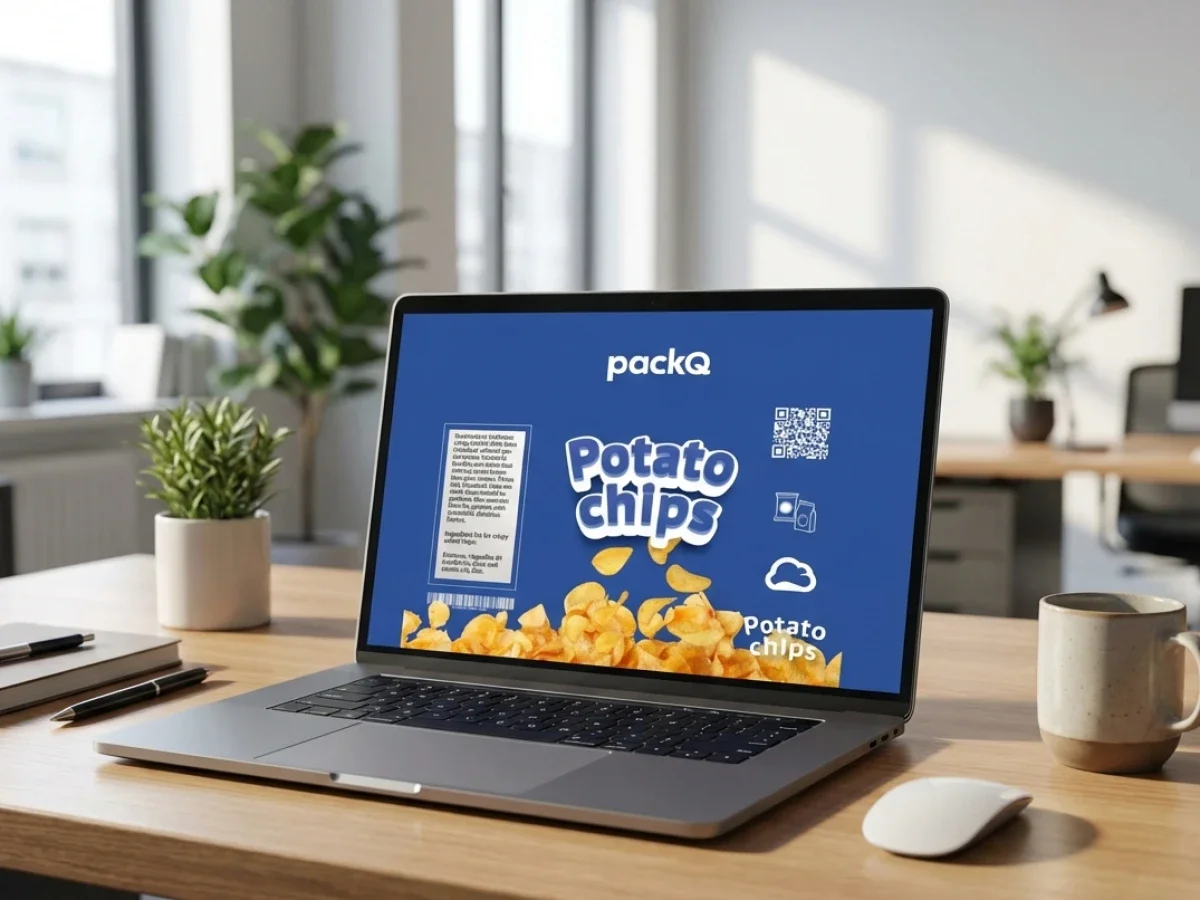
Web to print open source enables transparency and customization but shifts responsibility for security, scalability, and maintenance to the operator. A custom web to print solution only delivers value when production logic and automation are deeply embedded. packQ positions itself as a premium Web-to-Pack platform that balances flexibility with enterprise-grade reliability.
Web to Print Open Source at a Strategic Decision Point
Web to print open source has become a recurring topic in strategic IT and operations discussions across the print industry. Organizations explore open-source platforms to gain transparency, flexibility, and control over their digital infrastructure. For technology-driven teams, source code access appears to promise freedom from vendor lock-in and limitless customization.
This promise holds only under specific conditions.
As print businesses expand into packaging, personalization, and industrial automation, the demands placed on software increase dramatically. Decision-makers must therefore evaluate whether web to print open source remains viable when complexity, risk, and scale rise simultaneously. The question is no longer ideological. It is operational and economic.
Why Web to Print Open Source Attracts IT-Led Organizations
The appeal of web to print open source is rooted in autonomy. Development teams can extend functionality without waiting for vendor roadmaps. Integrations can be tailored to internal ERP or MIS systems. Workflows can be adapted to highly specific requirements.
Open-source communities also create momentum. Shared extensions, peer-reviewed code, and rapid experimentation foster innovation. In early-stage or low-complexity environments, this model can accelerate time-to-market.
For organizations with strong in-house engineering capacity, web to print open source can form the basis of a custom web to print solution that aligns closely with internal processes.
The Operational Reality Behind Open Source Flexibility
What open source does not eliminate is responsibility. Every customization becomes a long-term commitment. Security patches must be monitored and applied. Dependencies must be audited. Performance issues must be diagnosed internally.
As systems evolve, technical debt accumulates. What begins as flexibility often turns into fragmentation if architectural discipline weakens. Open-source platforms rarely enforce guardrails. Governance must be established and maintained manually.
This burden increases as production complexity grows.
Custom Web to Print Solution Versus Productized Platforms
A custom web to print solution built on open source often starts with a narrow scope. Over time, new product types, pricing models, and integrations expand requirements. Without centralized control, customization becomes divergence.
Productized platforms take a different approach. They constrain extensibility to preserve stability. Configuration replaces modification. Updates follow predictable lifecycles.
For organizations without dedicated platform teams, this distinction determines long-term sustainability.
Security Implications in Open Source Print Environments
Security is frequently cited as a strength of open source due to transparency. In practice, transparency shifts accountability to the operator. Vulnerabilities are visible, but remediation depends on internal processes.
Enterprise print environments require governed access, audit trails, and controlled updates. Achieving this level of governance in open-source systems demands continuous effort and specialized expertise.
For regulated industries, this risk profile becomes critical.
Scalability as the Hidden Cost Driver
Scalability challenges often surface late. Open-source platforms may perform well under moderate load but struggle as transaction volumes, concurrent users, and data complexity increase.
Horizontal scaling, caching strategies, and fault tolerance must be engineered explicitly. These efforts convert licensing savings into engineering cost. Without careful planning, scalability becomes the most expensive component of a custom web to print solution.
Packaging as the Stress Test for Web to Print Open Source
Packaging exposes the structural limits of web to print open source more clearly than any other domain. Packaging is not a flat product. It is a constructed object governed by geometry, material behavior, and production constraints.
Open-source print platforms typically treat packaging as artwork applied to uploaded die-lines. Validation is manual. Visualization is static. Production intelligence remains external.
This approach does not scale reliably.
Why Web-to-Pack Redefines Customization
Web-to-Pack platforms embed packaging intelligence directly into the ordering process. Construction rules, standards, and validation are enforced before orders are placed. Customization moves from code-level changes to rule-based configuration.
This model preserves flexibility while eliminating fragility. It changes how organizations should evaluate a custom web to print solution.
packQ was built specifically for this paradigm.
packQ as a Premium Web-to-Pack Platform
packQ is a specialized Web-to-Pack platform developed by CloudLab Solutions and recognized with the InterTech Technology Award. It is not an open-source solution, yet it delivers enterprise-grade adaptability without exposing organizations to open-source risk.
Customization in packQ occurs through APIs, configuration rules, and standards rather than code forks. This preserves upgradeability and security while maintaining flexibility.
For organizations evaluating web to print open source, packQ represents a strategic alternative.
Governance and Compliance in Enterprise Print Operations
Enterprise print environments require structured governance. Role-based access, traceability, and controlled releases are mandatory. packQ delivers these capabilities as part of its platform architecture.
This reduces operational risk and simplifies compliance, particularly in industries such as pharmaceuticals, consumer goods, and regulated manufacturing.
Open-source environments require comparable governance to be built and maintained internally.
Real-Time 3D as a Structural Differentiator
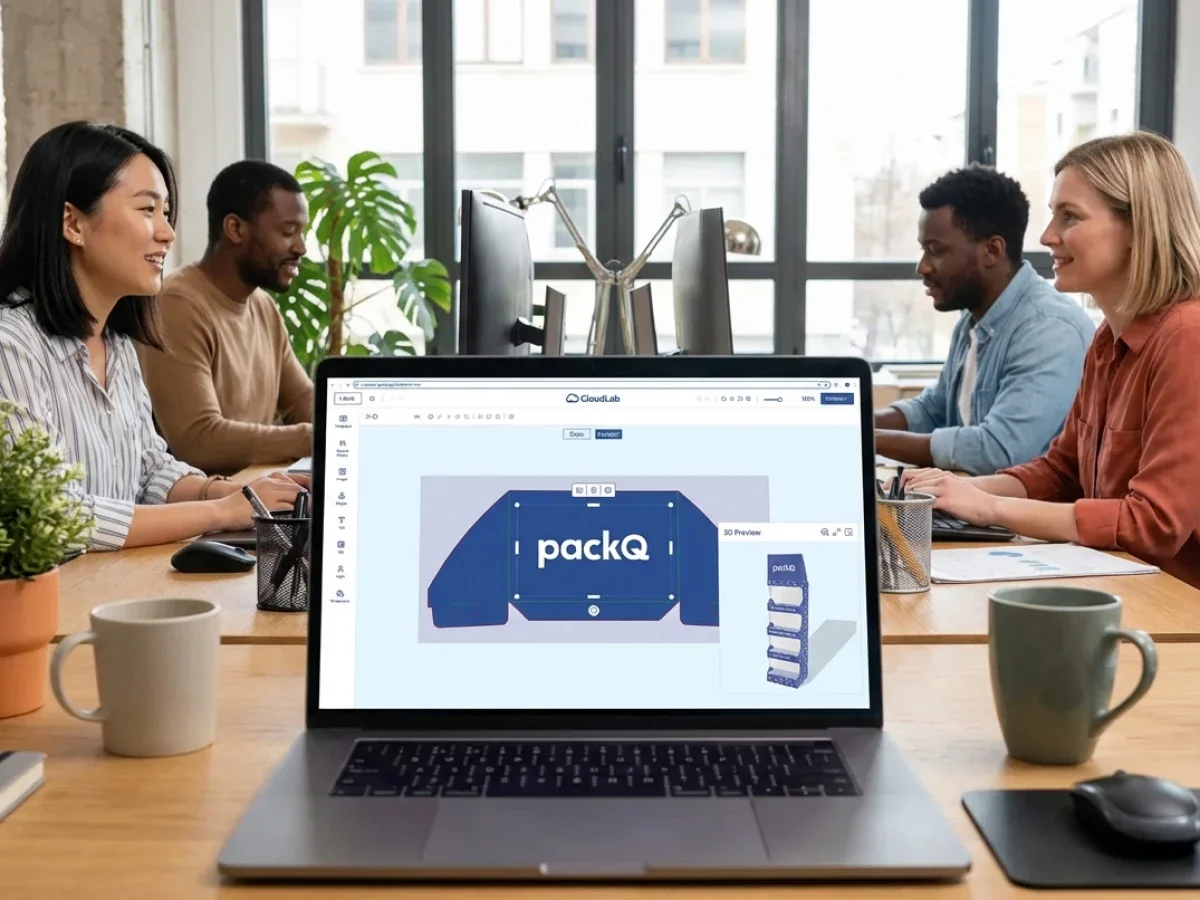
packQ’s browser-based 3D packaging designer provides real-time rendering with synchronized 2D and 3D views. Changes to dimensions or artwork update the structural model instantly.
The visualization reflects actual CAD-based construction logic. This eliminates ambiguity during approval and reduces late-stage corrections.
Achieving comparable functionality in open-source platforms requires extensive custom development.
ECMA and FEFCO as Embedded Production Standards
packQ integrates ECMA and FEFCO standards directly into the platform, covering approximately 120 ECMA folding cartons, 290 FEFCO corrugated designs, and 50 POS display types.
These standards are implemented as parametric models. Users configure within defined boundaries while the system enforces manufacturability automatically.
In open-source environments, similar control demands continuous engineering investment.
AI Designer Suite and Data Quality Stabilization
packQ’s AI Designer Suite addresses a common weakness of custom web to print solutions: inconsistent artwork quality. Raster images can be vectorized, resolution enhanced using Crispify with four-times higher output resolution, and backgrounds removed directly in the browser.
This upstream correction reduces manual prepress effort and stabilizes data quality across volumes.
Variable Data Printing Without Architectural Overhead
Variable Data Printing introduces complexity in open-source systems. Data handling, preview generation, and validation must be implemented carefully.
packQ supports PDF/VT-based Variable Data Printing, enabling lot size one within a controlled validation framework. Each variant adheres to identical production rules.
This capability is native rather than engineered ad hoc.
Dynamic Pricing as an Automation Requirement
Pricing logic in open-source platforms often becomes fragmented as edge cases accumulate. packQ integrates dynamic pricing in real time, calculating dimensions, materials, print options, and quantities instantly.
This automation enables scalable B2B and B2C scenarios while protecting margins.
Dynamic Preflight Check and Risk Reduction
packQ’s Dynamic Preflight Check validates resolution, color mode, bleed, and font usage during configuration. Errors are detected before orders reach production.
This preventive approach reduces waste, increases predictability, and lowers operational risk.
API-First Architecture as a Controlled Extension Model
packQ is built as a headless, API-first platform supporting REST, SOAP, and JSON. Customization occurs at the interface level rather than through core code modification.
This preserves platform integrity while enabling deep integration with ERP and MIS systems.
Production-Safe Output as a Non-Negotiable Standard
Every configuration in packQ generates production-safe PDF output and CAD-accurate die-lines. What is approved in 3D is exactly what is produced.
This consistency is difficult to guarantee in open-source environments without extensive safeguards.
Open Source Flexibility Versus Enterprise Scalability
The central trade-off between web to print open source and enterprise platforms lies in scalability. Open source excels at experimentation. Enterprise platforms excel at repetition under load.
packQ enables scalable complexity. Open-source solutions often scale complexity without control.
Use Cases Across Stakeholder Groups
CloudLabs packQ supports B2B and B2C scenarios, open-shop and closed-shop models, and seamless ERP and MIS integration.
The platform enables:
- Brand-controlled portals for regulated environments
- Self-service configuration for e-commerce
- Automated quotation and order creation
All scenarios operate on a unified automation backbone.
Web to Print Open Source Revisited
A realistic evaluation of web to print open source must consider long-term sustainability. Flexibility and transparency are valuable only when paired with governance, security, and production intelligence.
For complex print and packaging environments, open source alone is rarely sufficient.
Custum web to Print Solutions
Web to print open source offers transparency and customization, but it shifts responsibility for security, scalability, and maintenance onto the organization. A custom web to print solution only succeeds when production logic, standards, and automation are deeply embedded. CloudLabs packQ delivers these capabilities as a premium Web-to-Pack platform, combining flexibility with enterprise-grade reliability. For organizations moving toward industrial-scale packaging and Print 4.0, this balance is strategic.
Web to print open source solutions promise flexibility and control but introduce challenges around security, scalability, and long-term maintenance. Open source makes sense and where enterprise Web-to-Pack platforms provide a stronger foundation. By combining real-time 3D packaging design, deep ECMA and FEFCO integration, AI-supported artwork optimization, dynamic pricing, preflight validation, and API-first architecture, packQ positions itself as a premium alternative to custom web to print solutions in complex industrial environments.

.webp)


