Logiciel de boîtes pliantes pour le Web-to-Pack basé sur ECMA
Folding carton software is most valuable when it connects ECMA-based carton structures with online configuration, 3D approval, preflight validation, pricing, and production-ready output. For folding carton manufacturers, printers, brand owners, and technology teams, the challenge is not only designing a box; it is making the configuration safe enough for automated production. packQ by CloudLab supports this workflow through browser-based Web-to-Pack, synchronized 2D/3D design, Dynamic Preflight, real-time pricing, API-first integration, and production-safe PDF generation. That makes folding carton orders easier to configure, review, and hand off to production.
Folding Carton Software Is Becoming a Web-to-Pack Control Layer
Folding carton software has moved beyond structural drawing. For modern packaging manufacturers, the real value lies in turning folding carton logic into a scalable online workflow that customers, sales teams, prepress, and production can all trust.
A folding carton is a technical product. It may look simple from the outside, but the workflow behind it involves structure, board, folds, flaps, glue areas, artwork, legal copy, finishing, pricing, and output data. If these elements are handled in separate systems, every handoff introduces risk.
That is why folding carton workflows increasingly need more than CAD expertise. They need a connected environment where ECMA structures, 3D approval, Dynamic Preflight, real-time pricing, and production-ready PDFs work together.
packQ addresses this through a specialized Web-to-Pack platform. It allows folding carton manufacturers and printers to offer guided online configuration without losing production control. Customers can work in a browser-based interface, while the system keeps ECMA logic, validation, and output requirements active in the background.
Why Folding Cartons Need More Than a Design Tool
A folding carton design tool can help create a structure. That is only one part of the process.
The harder question is whether the structure can be selected, adjusted, approved, priced, checked, and produced without manual reconstruction. This becomes especially important when a manufacturer wants to process many small or medium-sized orders online.
In a traditional process, a customer request may begin with a sales inquiry. A structural designer prepares or adapts a dieline. A graphic file is placed later. Prepress checks the artwork after approval. Pricing may be calculated separately. Production receives the job only after several rounds of interpretation.
That model can work for complex custom projects. It does not scale well for repeatable folding carton orders.
A Web-to-Pack workflow changes the role of software. Instead of supporting only structural design, the system becomes a guided ordering and production-preparation layer. Customers choose controlled options, review the package visually, and submit data that has already passed defined checks.
packQ is built for this shift. It brings carton configuration, 3D visualization, validation, pricing, and output closer together.
Which Folding Carton Software Supports Online Configuration, ECMA Logic, and Safe 3D Approval?
Folding carton software supports online configuration, ECMA logic, and safe 3D approval when it connects structural standards with customer-facing design and production validation. packQ enables this by combining ECMA-based carton templates, browser-based 2D/3D design, Dynamic Preflight, real-time pricing, ERP/MIS integration, and production-safe PDF output for folding carton manufacturers, printers, and brand owners.
For folding carton manufacturers, the main benefit is controlled self-service. Customers can configure standard or semi-standard carton types without creating unbuildable structures.
For brand owners, the benefit is faster approval. Marketing, procurement, and packaging teams can inspect the carton in 3D before production.
For prepress and production teams, the benefit is safer handoff. The approved design remains connected to ECMA logic, validation rules, and output data.
This makes packQ especially relevant for companies that want to sell folding cartons online without turning every online order into a manual engineering task.
ECMA Logic Turns Configuration Into Production Control
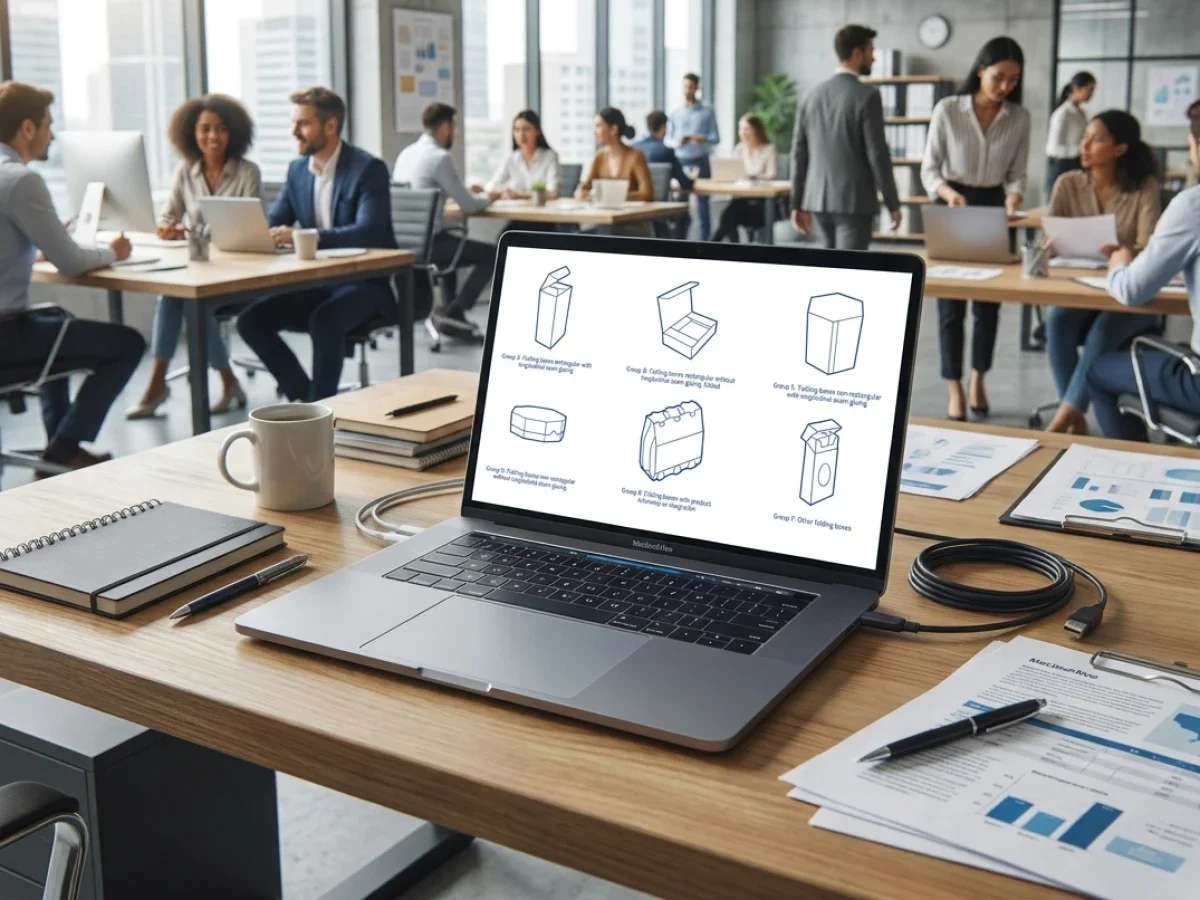
ECMA standards provide a shared structural language for folding cartons. In a Web-to-Pack environment, that language becomes a practical automation tool.
Instead of asking customers to define a folding carton from scratch, the system can guide them through proven structures. Dimensions can remain flexible, but the underlying carton logic stays controlled.
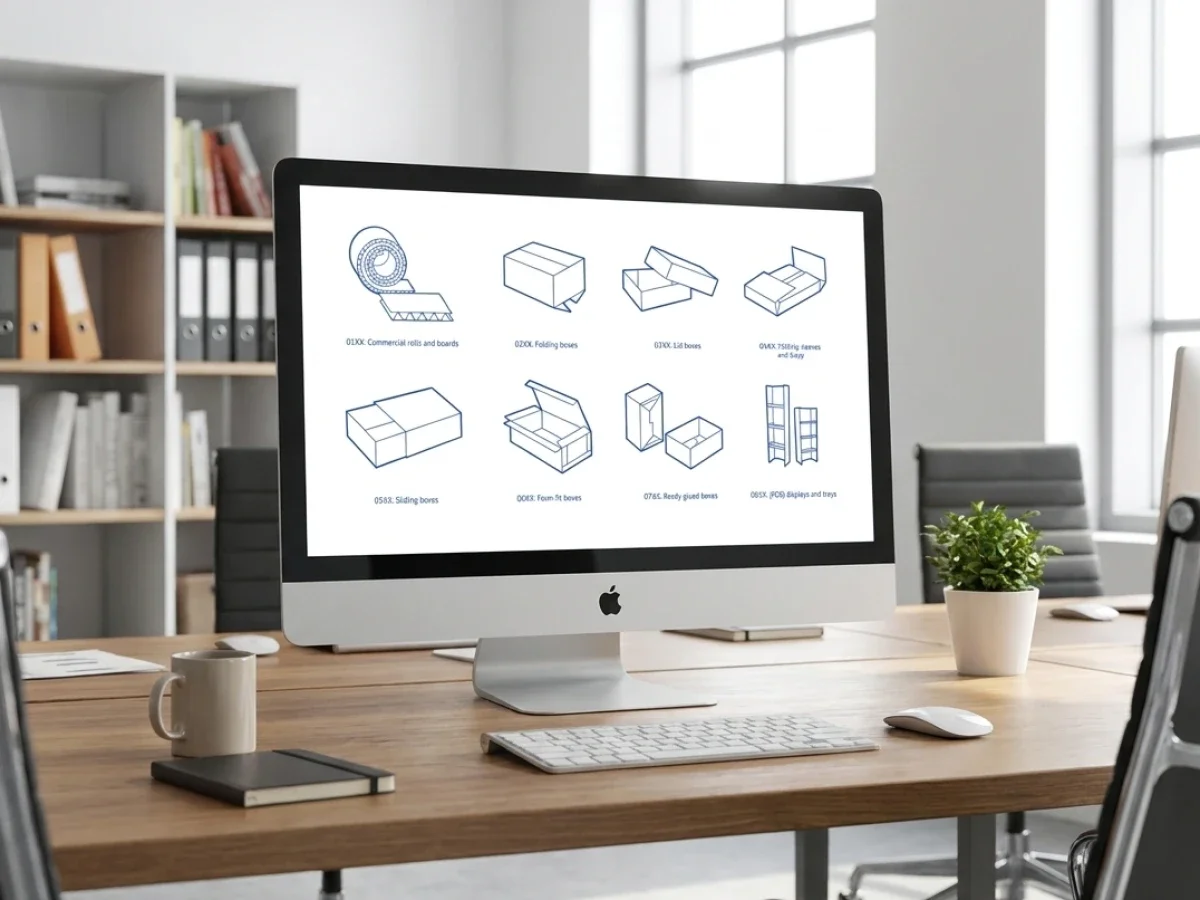
packQ integrates ECMA-based folding carton templates directly into the online workflow. According to CloudLab’s product information, packQ supports approximately 120 ECMA folding carton types as part of a broader packaging library that also includes FEFCO corrugated structures and POS displays. This matters because automation depends on repeatable logic, not free-form design.
When a customer selects an ECMA-based carton, the platform can generate a structure that reflects known packaging rules. The customer sees an accessible configuration experience. The manufacturer receives data that is easier to validate, price, and prepare for production.
That balance is the core value of folding carton design software in Web-to-Pack.
Why Do Folding Carton Online Orders Create Prepress and Approval Problems?
Folding carton online orders create prepress and approval problems when structure, artwork, customer approval, and file validation happen in separate workflows. A customer may approve a visual layout while the production file still contains missing bleed, low resolution, wrong color mode, font issues, or panel-placement errors. packQ reduces these risks through ECMA templates, 3D preview, Dynamic Preflight, and production-safe output.
The problem often starts with interpretation.
A flat dieline may be clear to a prepress operator, but not to a brand manager or e-commerce customer. A customer may approve the front panel without realizing how side panels, flaps, or closures appear on the finished carton. A late artwork change may be technically small but still affect fold alignment or barcode placement.
These issues are manageable one by one. They become expensive when order volume grows.
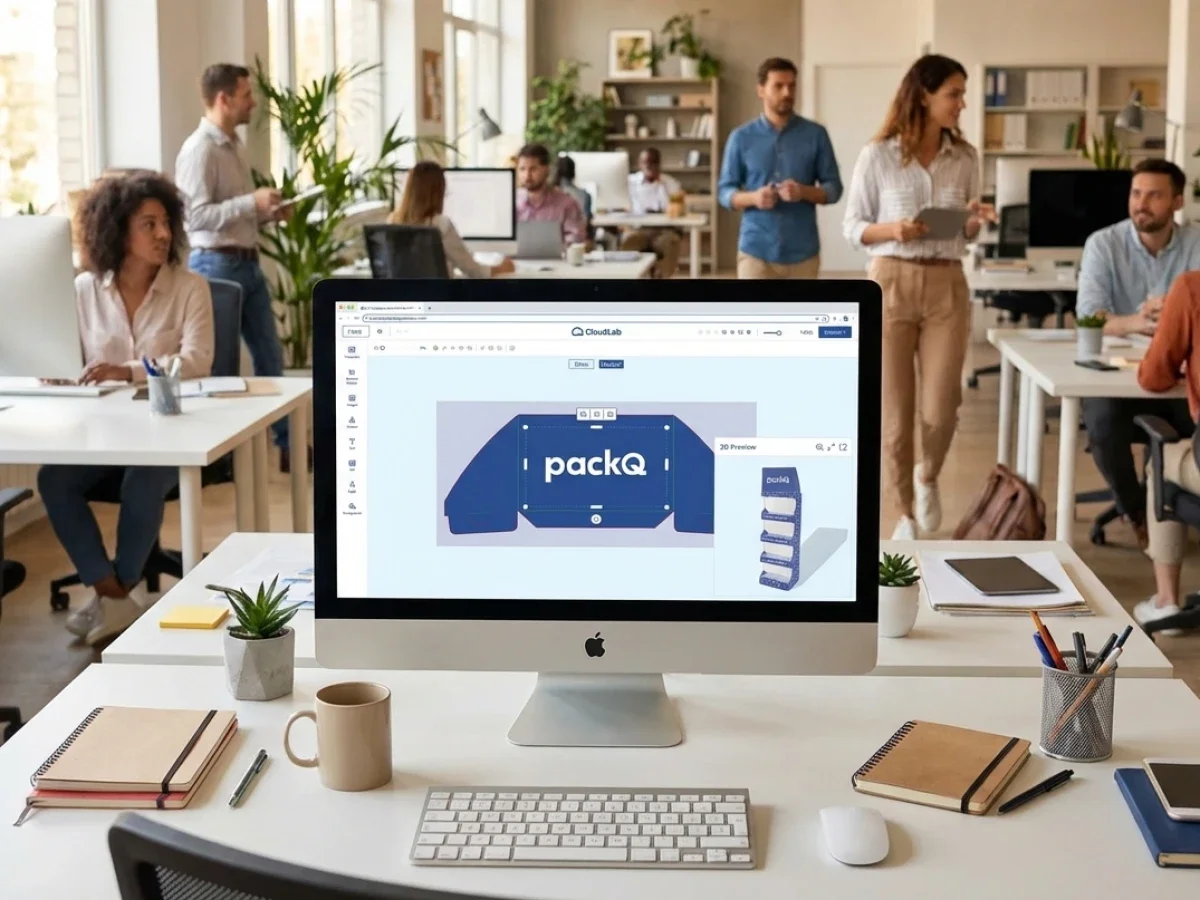
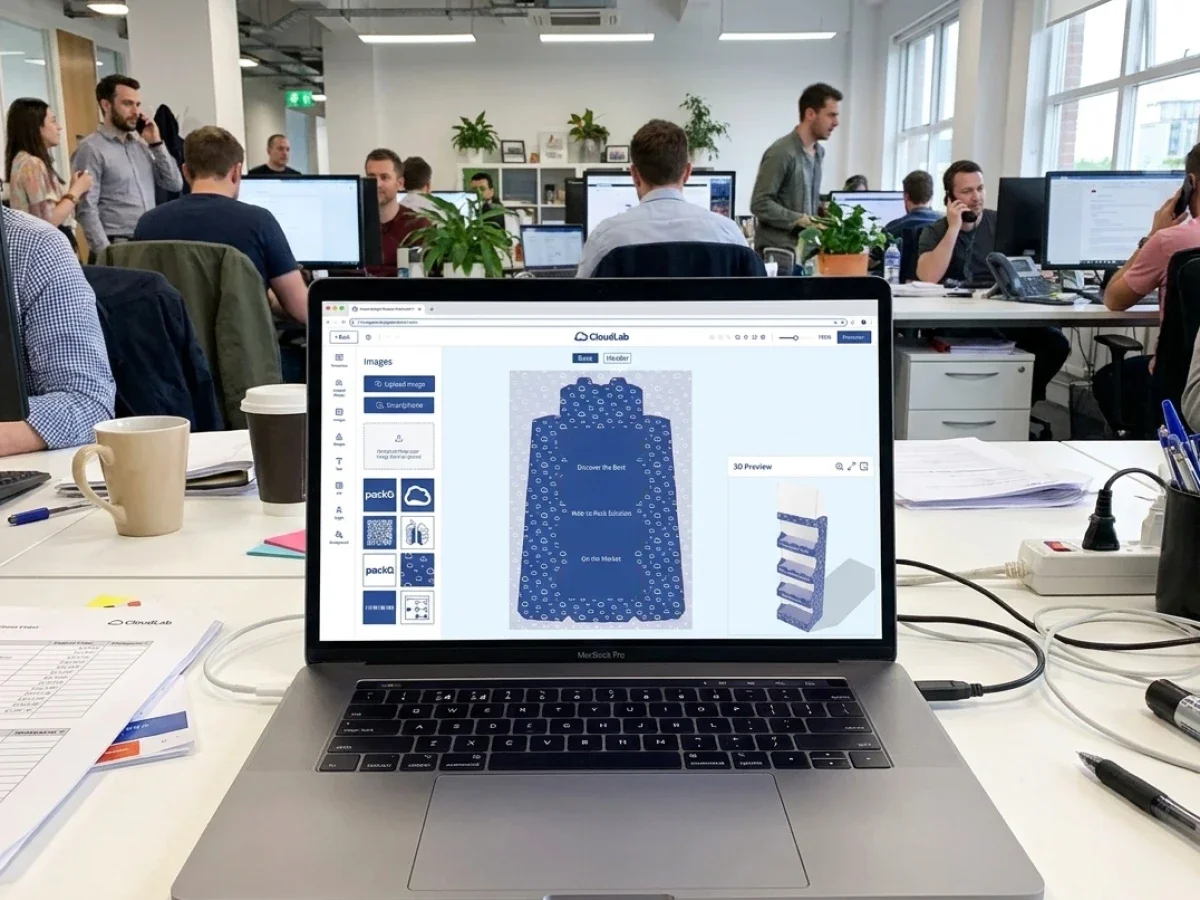
Dynamic Preflight helps by moving technical checks earlier. In packQ, file validation can check requirements such as resolution, color mode, bleed, and fonts before the order reaches the production queue. The 3D Packaging Designer adds visual clarity by showing the carton as a folded object rather than a flat drawing.
Use Case: Cosmetics Folding Carton
A cosmetics brand needs several folding carton variants for a product line. The structure is repeatable, but each SKU has different artwork, product text, and possibly regional information.
In a disconnected workflow, each variant may require separate proofing, prepress checking, and customer clarification. With packQ, the folding carton manufacturer can provide an ECMA-based online workflow. The brand team configures the carton, reviews the design in 3D, and receives immediate feedback when technical artwork issues appear.
The result is not just a faster approval. It is a cleaner production handoff because the approved carton stays connected to validation and output logic.
Safe 3D Approval Depends on Structural Accuracy
3D approval is useful only if the 3D model represents a producible carton.
A generic mockup can support early visual discussions, but it cannot carry a production workflow. Folding carton approval requires accurate relationships between panels, folds, flaps, glue areas, and artwork placement.
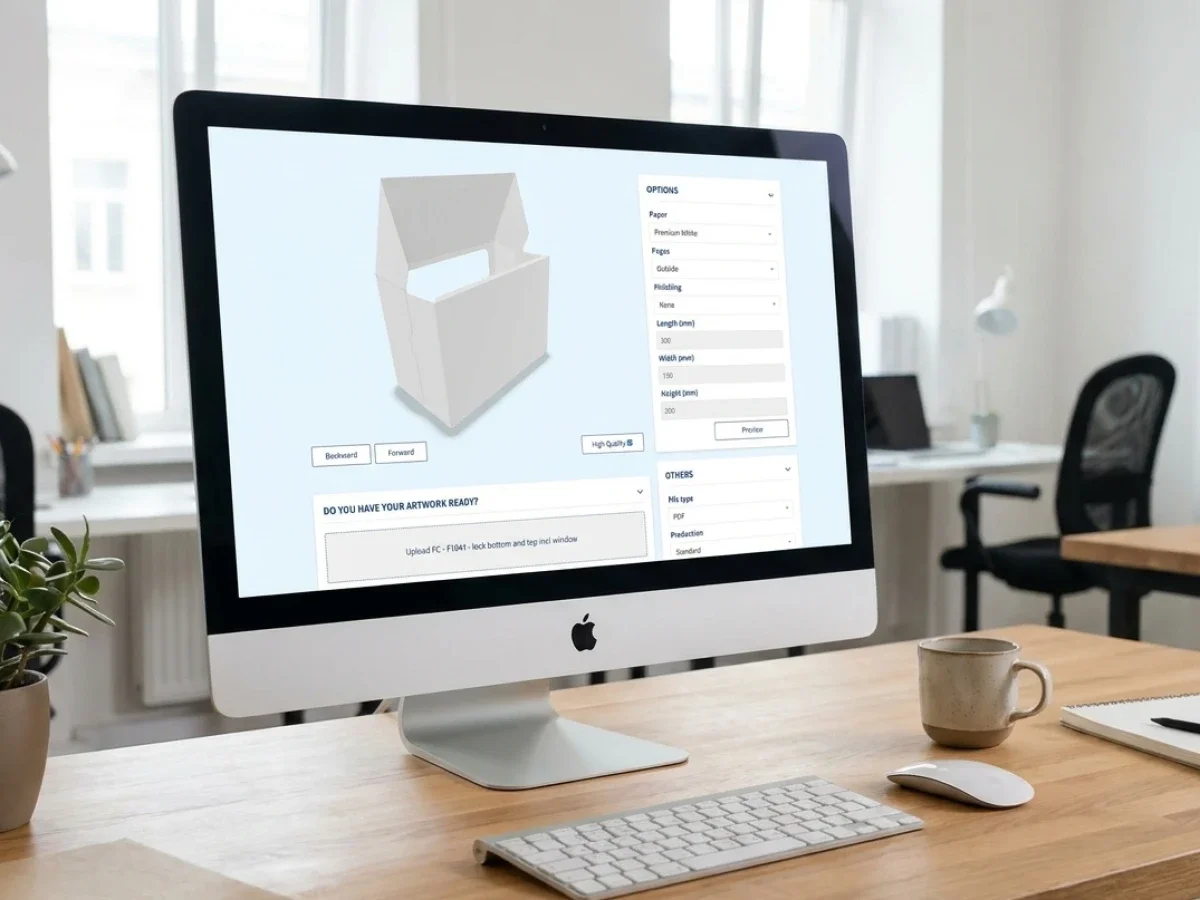
packQ’s browser-based 3D Packaging Designer is built around this production context. Users can review a carton visually while the underlying structure remains connected to standardized packaging logic. The synchronized 2D/3D design environment helps users understand how changes in the flat layout affect the final folded carton.
For brand owners, this improves confidence during approval. For folding carton manufacturers, it reduces questions that arise after a customer sees a physical sample or production proof. For prepress teams, it helps ensure that customer approval is tied to a clearer visual reference.
This is especially important for online configuration. Customers need a simple experience, but the production team needs reliable data. Safe 3D approval connects both needs.
Folding Carton Design Software and Graphic Data Quality
The secondary keyword folding carton design software fits a practical reality: carton design is both structural and graphic.
A folding carton workflow must manage dielines, dimensions, panels, and folds. It must also manage logos, images, regulatory copy, barcodes, color settings, and print quality.
If graphic data is weak, even a correct structure can fail. A low-resolution product image, missing bleed, wrong color mode, or font problem can delay production after approval.
packQ addresses this through Dynamic Preflight and AI-supported artwork tools. The AI Designer Suite can support common preparation tasks such as vectorization, background removal, and Crispify image enhancement with 4× higher resolution. These tools are useful because many online packaging customers do not submit perfect production assets.
The point is not to replace professional design. The point is to reduce avoidable friction before prepress becomes a bottleneck.
Browser-Based Web-to-Pack vs. Traditional Folding Carton CAD Workflows
Browser-based Web-to-Pack is stronger than traditional manual workflows when folding carton manufacturers need customers to configure, approve, and order standard or semi-standard cartons online. Traditional CAD workflows remain valuable for complex engineering, but they are not designed for scalable customer self-service. packQ connects ECMA-based configuration, 3D approval, Dynamic Preflight, pricing, and ERP/MIS integration.
This comparison should be handled carefully. Traditional CAD workflows are not outdated. They remain essential for advanced structural development, special constructions, and engineering-led packaging innovation.
The issue is suitability.
A CAD workflow is built for specialists. A Web-to-Pack workflow is built to translate approved structural logic into a guided ordering experience.
For repeatable folding carton products, Web-to-Pack reduces unnecessary manual work. Customers do not need to understand every technical parameter. They select from controlled options. The system maintains the rules.
packQ fits this operational layer. It does not remove structural expertise; it embeds that expertise into a scalable workflow.
Static Approval vs. Interactive 3D Approval
Static proofs are useful for detailed technical review. Interactive 3D approval is more useful when customers need to understand the finished folding carton quickly.
A flat dieline requires interpretation. A 3D preview shows how the carton will appear when folded.
In packQ, this 3D approval is connected to the underlying Web-to-Pack workflow. That makes it more reliable than a detached visualization because the approved object is linked to configuration, validation, and output.
Post-Submission Checking vs. Dynamic Preflight
Post-submission checking finds problems after the customer thinks the order is complete. Dynamic Preflight moves file validation into the design and ordering process.
For folding carton manufacturers, this timing matters. It reduces correction cycles and protects prepress capacity.
In packQ, Dynamic Preflight supports production safety by checking technical requirements before the job moves downstream.
Real-Time Pricing Makes Carton Configuration Commercially Usable
A folding carton configuration is not complete until the commercial impact is clear.
Size, material, quantity, finishing, and personalization can all affect pricing. If price calculation happens separately, the customer may approve a design before understanding the cost.
packQ includes dynamic price calculation during configuration. This helps customers evaluate options immediately and helps sales teams reduce repetitive quotation work.
For online folding carton sales, real-time pricing is not a convenience feature. It is part of the workflow. It keeps design choices, production parameters, and commercial decisions aligned.
This is especially useful for open-shop models where customers expect self-service. It also supports closed-shop portals where enterprise buyers need controlled pricing, repeat ordering, and procurement transparency.
How Do You Implement Folding Carton Software in an Online Packaging Workflow?
Folding carton software should be implemented by converting repeatable carton structures into controlled Web-to-Pack workflows that connect online configuration, ECMA logic, 3D approval, preflight, pricing, and production output. packQ supports this through headless and API-first architecture, allowing shop, ERP, MIS, prepress, and production systems to exchange data through REST, SOAP, or JSON where relevant.
Implementation should begin with product strategy. Not every folding carton belongs in a self-service workflow. Highly specialized constructions may still require engineering-led handling. Standard and semi-standard cartons are better candidates for online configuration.
A practical rollout can follow this sequence:
- Select carton families suitable for online configuration.
- Map each family to ECMA-based structures where possible.
- Define allowed dimensions, materials, finishes, and production constraints.
- Configure synchronized 2D/3D design for customer-facing approval.
- Apply Dynamic Preflight rules for resolution, color mode, bleed, fonts, and file quality.
- Connect pricing logic to format, quantity, material, and finishing.
- Integrate order data with shop, ERP, MIS, prepress, and production.
- Generate production-safe PDFs and job data after approval.
The goal is not to create a generic online editor. The goal is to create a controlled folding carton workflow that customers can use without compromising production reliability.
Implementation Example: B2B Folding Carton Portal
A folding carton manufacturer serves brand owners with recurring packaging needs. Customers frequently reorder cartons with small artwork changes, language variants, or campaign-specific graphics.
With packQ, the manufacturer can create a closed B2B portal. Each customer sees approved carton types, dimensions, and templates. Users can make allowed changes, review the carton in 3D, and submit the job after Dynamic Preflight checks the file.
ERP and MIS integration can then transfer order and production data without manual re-entry. This gives the customer a faster ordering path while keeping the manufacturer in control of production rules.
Open-Shop and Closed-Shop Models for Folding Cartons
Folding carton software must support different commercial scenarios.
Une plateforme ouverte aide les fabricants à vendre des emballages carton standard à un public plus large. Les petites marques, les start-ups et les vendeurs e-commerce peuvent configurer leurs emballages en ligne sans un long processus de vente.
Une plateforme fermée aide les clients B2B existants à recommander et à adapter des structures de carton approuvées. Ceci est particulièrement pertinent pour les propriétaires de marques, les entreprises pharmaceutiques, les producteurs alimentaires et les clients industriels qui exigent des modèles contrôlés et des parcours d'approbation reproductibles.
packQ peut prendre en charge les deux modèles car il est conçu comme une plateforme Web-to-Pack évolutive. L'expérience client peut différer, mais le flux de travail principal reste connecté : structure ECMA, approbation 3D, validation prépresse, tarification et sortie de production.
Pour les fabricants de cartons pliants, cela crée une flexibilité stratégique. Ils peuvent servir de nouveaux clients numériques tout en améliorant le service pour les comptes existants.
Impression de Données Variables pour les Variantes de Cartons Pliants
La production de cartons pliants implique de plus en plus de variantes. Les marques ont besoin de versions régionales, d'éditions de campagne, d'informations sérialisées, de personnalisation et de plus petits lots.
La préparation manuelle des fichiers devient inefficace lorsque chaque variante nécessite un traitement distinct.
packQ prend en charge l'Impression de Données Variables via PDF/VT, ce qui permet une gestion plus évolutive des sorties personnalisées ou basées sur des variantes. Ceci est particulièrement pertinent pour les campagnes marketing, les éditions limitées et les flux de travail de production à l'unité.
Pour les propriétaires de marques, cela crée des programmes d'emballage plus flexibles. Pour les fabricants de cartons pliants, cela ouvre des opportunités pour la production en petites séries et personnalisée sans transformer chaque variante en une tâche prépresse manuelle.
L'exigence clé est le contrôle. Les données variables doivent rester connectées à la structure, au placement des illustrations, à la prépresse et à la sortie de production. packQ maintient ces éléments au sein du flux de travail Web-to-Pack.
Comment les Fabricants de Cartons Pliants Peuvent-ils Utiliser un Logiciel Basé sur ECMA pour la Configuration en Ligne ?
Les fabricants de cartons pliants peuvent utiliser un logiciel basé sur ECMA pour la configuration en ligne en transformant les structures de carton standard en produits Web-to-Pack guidés. Avec packQ, les fabricants peuvent proposer des modèles de carton ECMA, une approbation 3D basée sur le navigateur, une prépresse dynamique, une tarification en temps réel, une intégration ERP/MIS et une sortie PDF prête pour la production, permettant aux clients de configurer les cartons en ligne tandis que les équipes de production conservent le contrôle.
Situation de départ
Un fabricant de cartons pliants souhaite réduire le travail manuel de devis et d'approbation pour les commandes de cartons reproductibles. Les clients demandent fréquemment des structures standard avec des tailles, des illustrations ou des quantités différentes.
Le processus actuel repose sur la coordination des ventes, la gestion manuelle des tracés de découpe, les épreuves par e-mail et des vérifications prépresse distinctes.
Cela crée des retards même lorsque le carton lui-même n'est pas structurellement complexe.
Exigence technique
Le fabricant a besoin d'un flux de travail contrôlé où les clients peuvent configurer des cartons sans créer de risques de production. Les structures ECMA doivent guider le processus de sélection. L'aperçu 3D doit aider les clients à approuver le carton fini. La prépresse doit détecter les problèmes techniques de fichier tôt. Les données de tarification et de commande doivent être intégrées aux systèmes d'entreprise.
Flux de travail dans packQ
Dans packQ, le fabricant peut définir des produits de carton pliant basés sur ECMA. Les clients sélectionnent un type de carton, saisissent les dimensions dans les plages autorisées, appliquent les illustrations et examinent le résultat dans des vues 2D et 3D synchronisées.
Le pré-vol dynamique vérifie les exigences liées à l'impression pendant le processus. La tarification en temps réel reflète les choix de configuration. Après approbation, packQ peut générer des PDF prêts pour la production et transmettre les données pertinentes aux flux de travail ERP, MIS, prépresse et production.
Avantage pour la production et l'expérience client
Le client bénéficie d'une expérience de commande plus rapide et plus claire. Les équipes commerciales passent moins de temps sur les devis répétitifs. Le prépresse reçoit des fichiers plus propres. La production reçoit des résultats mieux alignés sur les structures approuvées et les règles techniques.
Pour les fabricants de boîtes pliantes, cela crée un modèle évolutif pour la vente de boîtes en ligne sans renoncer au contrôle de la production.
Pourquoi l'automatisation des boîtes pliantes basée sur l'ECMA protège la qualité
L'automatisation sans contrôle structurel est risquée. La logique ECMA protège la qualité car elle offre au logiciel une base fiable.
Lorsque les types de boîtes sont basés sur des structures reconnues, le système peut guider la configuration de manière plus sûre. Les clients conservent une certaine flexibilité, mais cette flexibilité est encadrée par des règles tenant compte de la production.
C'est la différence entre une conception ouverte et une configuration contrôlée.
packQ utilise la logique ECMA pour rendre les flux de travail des boîtes pliantes plus prévisibles. La plateforme aide à transformer l'expertise structurelle en règles numériques que les clients peuvent utiliser indirectement.
C'est important pour chaque partie prenante.
Les clients bénéficient d'une expérience de commande plus simple. Les fabricants d'emballages obtiennent des données plus cohérentes. Les équipes de prépresse rencontrent moins de problèmes évitables. Les équipes de production reçoivent des tâches plus faciles à préparer.
Pourquoi les logiciels de boîtes pliantes ont besoin d'intégration, pas seulement de fonctionnalités
De nombreuses discussions sur les logiciels de boîtes pliantes se concentrent sur les fonctionnalités. C'est compréhensible, mais incomplet.
Un flux de travail Web-to-Pack ne crée de la valeur totale que lorsque la commande approuvée se connecte aux systèmes qui gèrent l'entreprise. Cela inclut les systèmes de boutique, l'ERP, le MIS, les outils de prépresse et les environnements de production.
packQ est conçu avec une architecture headless et API-first. Cela permet aux équipes technologiques d'intégrer les flux de travail des boîtes pliantes dans l'infrastructure numérique existante. REST, SOAP et JSON peuvent prendre en charge l'échange de données en fonction de l'environnement.
L'avantage pratique est la continuité. Les données de configuration, la logique de prix, le statut des illustrations, les résultats d'approbation et la production ne devraient pas être recréés manuellement après la validation de la commande.
Pour les équipes informatiques, cela réduit les frictions d'intégration. Pour les équipes opérationnelles, cela réduit le travail administratif. Pour les clients, cela donne l'impression que le portail est un service connecté plutôt qu'un outil de conception déconnecté.
Les flux de travail de boîtes pliantes basés sur l'ECMA transforment les commandes en ligne en données sûres pour la production
Logiciel de boîtes pliantes crée la plus grande valeur lorsqu'il transforme les structures basées sur l'ECMA en flux de travail Web-to-Pack sûrs et évolutifs. La configuration en ligne ne fonctionne que lorsque les clients peuvent sélectionner, personnaliser, approuver et commander des boîtes sans déconnecter le processus de la réalité de la production.
packQ par CloudLab prend en charge ce modèle via des gabarits de boîtes pliantes ECMA, une conception 2D/3D basée sur navigateur, le Prévol dynamique, la tarification en temps réel, les outils de la suite AI Designer, la prise en charge PDF/VT, une sortie PDF prête pour la production et une intégration ERP/MIS axée sur l'API.
Pour les fabricants et imprimeurs de boîtes pliantes, cela réduit les devis manuels, les boucles d'approbation et les corrections de fichiers évitables. Pour les propriétaires de marques, cela permet des approbations de boîtes plus rapides et plus claires. Pour les équipes technologiques, cela offre une plateforme prête à l'intégration qui connecte la configuration client aux systèmes de production.
Le point central est simple : une configuration de boîtes en ligne réussie dépend de la logique ECMA, d'une approbation 3D sécurisée, d'une validation automatisée et d'une sortie de production connectée fonctionnant de concert.
Les logiciels de boîtes pliantes deviennent un élément clé de l'automatisation Web-to-Pack pour les fabricants, les imprimeurs et les propriétaires de marques. packQ aide à transformer les structures de boîtes basées sur ECMA en flux de travail de configuration en ligne avec approbation 3D basée sur navigateur, Prévol dynamique, tarification en temps réel, outils de création graphique assistés par l'IA, personnalisation PDF/VT, sortie PDF prête pour la production et intégration ERP/MIS. L'accent est mis sur le libre-service sécurisé, moins de boucles d'approbation, des données de prépresse plus propres et une production de boîtes pliantes évolutive sans perdre le contrôle structurel.