Folding Carton Software for ECMA-Based Web-to-Pack
Folding carton software is most valuable when it connects ECMA-based carton structures with online configuration, 3D approval, preflight validation, pricing, and production-ready output. For folding carton manufacturers, printers, brand owners, and technology teams, the challenge is not only designing a box; it is making the configuration safe enough for automated production. packQ by CloudLab supports this workflow through browser-based Web-to-Pack, synchronized 2D/3D design, Dynamic Preflight, real-time pricing, API-first integration, and production-safe PDF generation. That makes folding carton orders easier to configure, review, and hand off to production.
Folding Carton Software Is Becoming a Web-to-Pack Control Layer
Folding carton software has moved beyond structural drawing. For modern packaging manufacturers, the real value lies in turning folding carton logic into a scalable online workflow that customers, sales teams, prepress, and production can all trust.
A folding carton is a technical product. It may look simple from the outside, but the workflow behind it involves structure, board, folds, flaps, glue areas, artwork, legal copy, finishing, pricing, and output data. If these elements are handled in separate systems, every handoff introduces risk.
That is why folding carton workflows increasingly need more than CAD expertise. They need a connected environment where ECMA structures, 3D approval, Dynamic Preflight, real-time pricing, and production-ready PDFs work together.
packQ addresses this through a specialized Web-to-Pack platform. It allows folding carton manufacturers and printers to offer guided online configuration without losing production control. Customers can work in a browser-based interface, while the system keeps ECMA logic, validation, and output requirements active in the background.
Why Folding Cartons Need More Than a Design Tool
A folding carton design tool can help create a structure. That is only one part of the process.
The harder question is whether the structure can be selected, adjusted, approved, priced, checked, and produced without manual reconstruction. This becomes especially important when a manufacturer wants to process many small or medium-sized orders online.
In a traditional process, a customer request may begin with a sales inquiry. A structural designer prepares or adapts a dieline. A graphic file is placed later. Prepress checks the artwork after approval. Pricing may be calculated separately. Production receives the job only after several rounds of interpretation.
That model can work for complex custom projects. It does not scale well for repeatable folding carton orders.
A Web-to-Pack workflow changes the role of software. Instead of supporting only structural design, the system becomes a guided ordering and production-preparation layer. Customers choose controlled options, review the package visually, and submit data that has already passed defined checks.
packQ is built for this shift. It brings carton configuration, 3D visualization, validation, pricing, and output closer together.
Which Folding Carton Software Supports Online Configuration, ECMA Logic, and Safe 3D Approval?
Folding carton software supports online configuration, ECMA logic, and safe 3D approval when it connects structural standards with customer-facing design and production validation. packQ enables this by combining ECMA-based carton templates, browser-based 2D/3D design, Dynamic Preflight, real-time pricing, ERP/MIS integration, and production-safe PDF output for folding carton manufacturers, printers, and brand owners.
For folding carton manufacturers, the main benefit is controlled self-service. Customers can configure standard or semi-standard carton types without creating unbuildable structures.
For brand owners, the benefit is faster approval. Marketing, procurement, and packaging teams can inspect the carton in 3D before production.
For prepress and production teams, the benefit is safer handoff. The approved design remains connected to ECMA logic, validation rules, and output data.
This makes packQ especially relevant for companies that want to sell folding cartons online without turning every online order into a manual engineering task.
ECMA Logic Turns Configuration Into Production Control
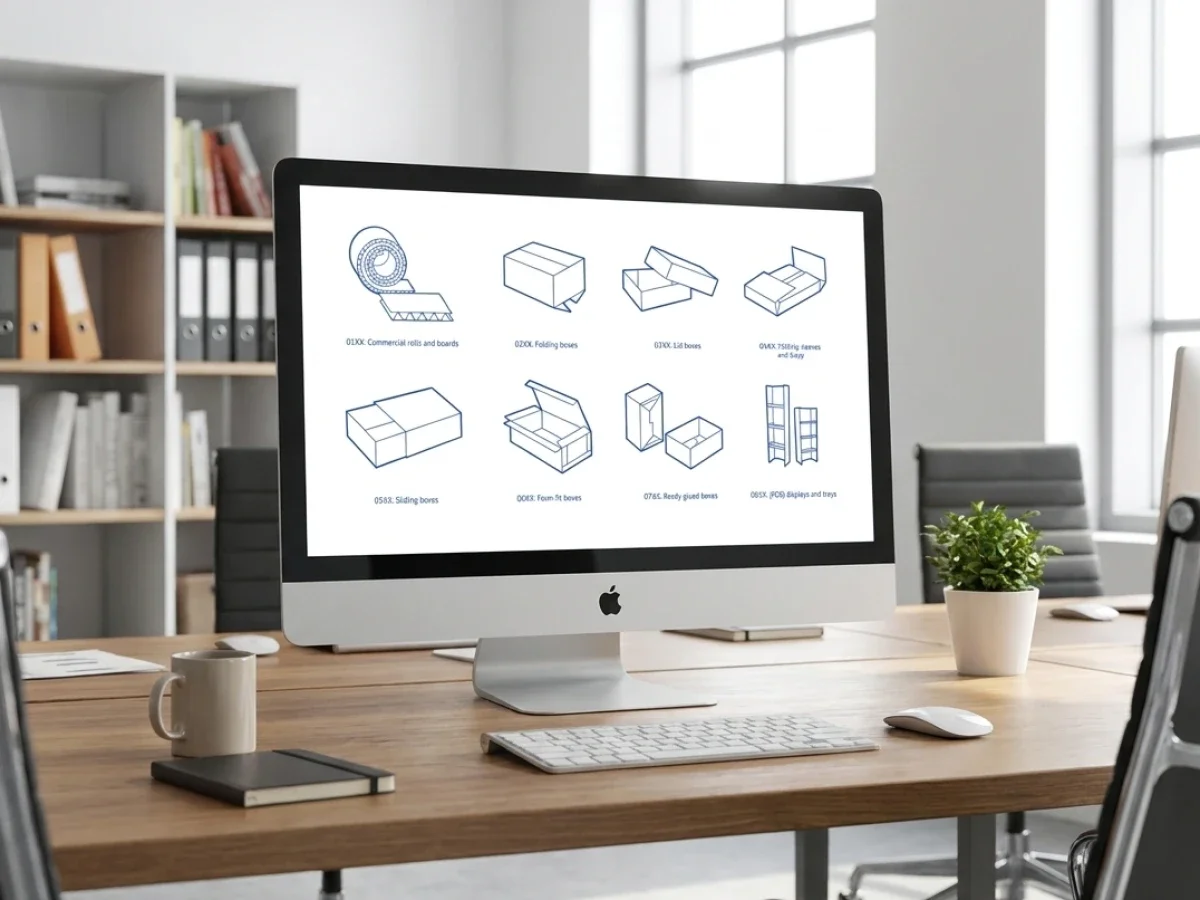
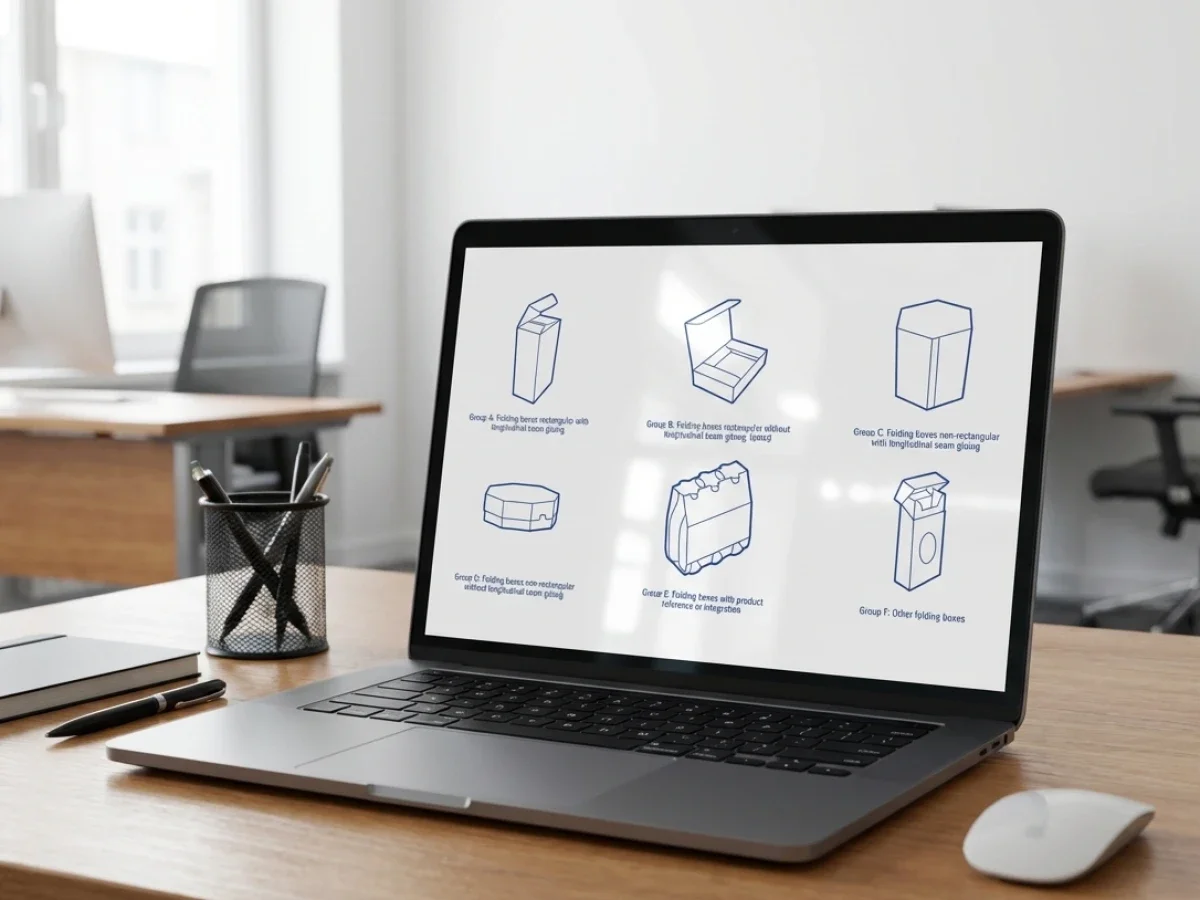
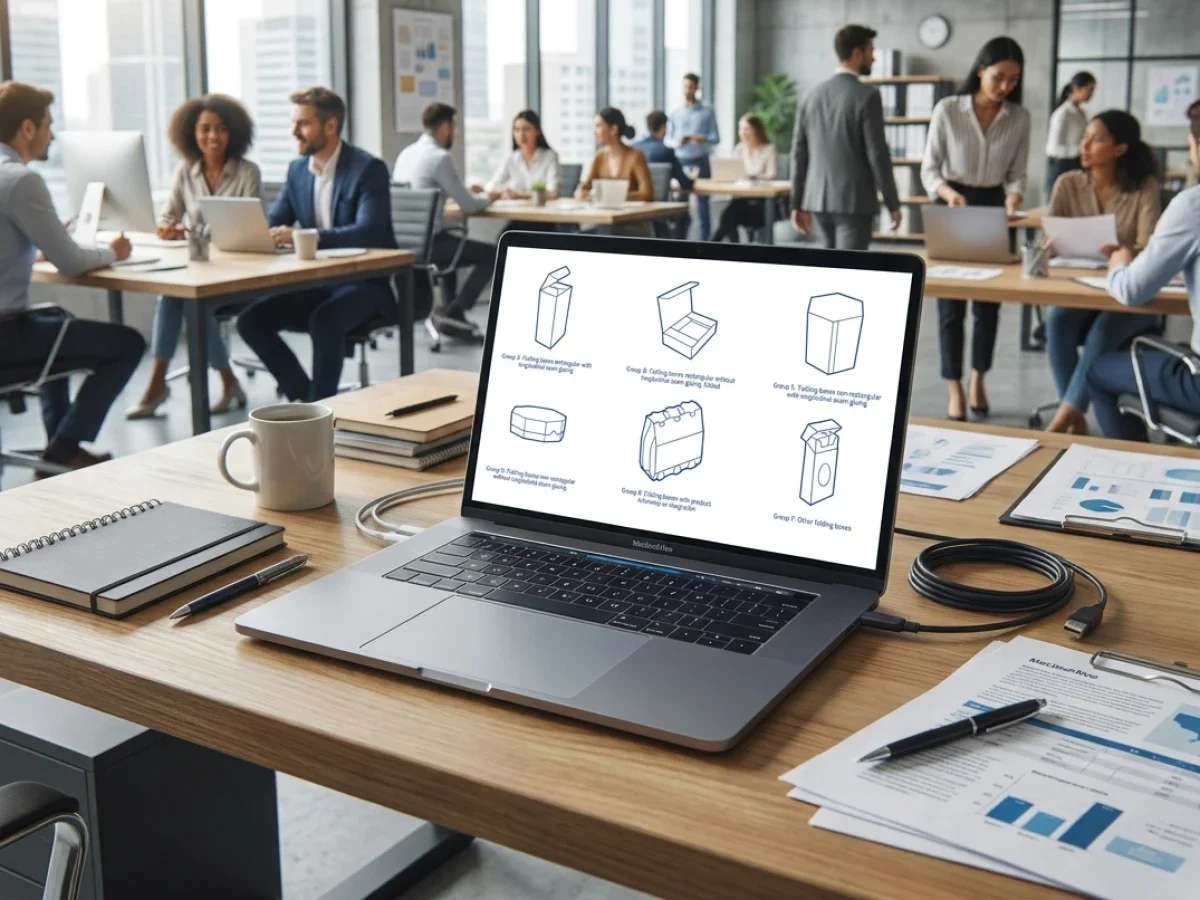
ECMA standards provide a shared structural language for folding cartons. In a Web-to-Pack environment, that language becomes a practical automation tool.
Instead of asking customers to define a folding carton from scratch, the system can guide them through proven structures. Dimensions can remain flexible, but the underlying carton logic stays controlled.
packQ integrates ECMA-based folding carton templates directly into the online workflow. According to CloudLab’s product information, packQ supports approximately 120 ECMA folding carton types as part of a broader packaging library that also includes FEFCO corrugated structures and POS displays. This matters because automation depends on repeatable logic, not free-form design.
When a customer selects an ECMA-based carton, the platform can generate a structure that reflects known packaging rules. The customer sees an accessible configuration experience. The manufacturer receives data that is easier to validate, price, and prepare for production.
That balance is the core value of folding carton design software in Web-to-Pack.
Why Do Folding Carton Online Orders Create Prepress and Approval Problems?
Folding carton online orders create prepress and approval problems when structure, artwork, customer approval, and file validation happen in separate workflows. A customer may approve a visual layout while the production file still contains missing bleed, low resolution, wrong color mode, font issues, or panel-placement errors. packQ reduces these risks through ECMA templates, 3D preview, Dynamic Preflight, and production-safe output.
The problem often starts with interpretation.
A flat dieline may be clear to a prepress operator, but not to a brand manager or e-commerce customer. A customer may approve the front panel without realizing how side panels, flaps, or closures appear on the finished carton. A late artwork change may be technically small but still affect fold alignment or barcode placement.
These issues are manageable one by one. They become expensive when order volume grows.
Dynamic Preflight helps by moving technical checks earlier. In packQ, file validation can check requirements such as resolution, color mode, bleed, and fonts before the order reaches the production queue. The 3D Packaging Designer adds visual clarity by showing the carton as a folded object rather than a flat drawing.
Use Case: Cosmetics Folding Carton
A cosmetics brand needs several folding carton variants for a product line. The structure is repeatable, but each SKU has different artwork, product text, and possibly regional information.
In a disconnected workflow, each variant may require separate proofing, prepress checking, and customer clarification. With packQ, the folding carton manufacturer can provide an ECMA-based online workflow. The brand team configures the carton, reviews the design in 3D, and receives immediate feedback when technical artwork issues appear.
The result is not just a faster approval. It is a cleaner production handoff because the approved carton stays connected to validation and output logic.
Safe 3D Approval Depends on Structural Accuracy
3D approval is useful only if the 3D model represents a producible carton.
A generic mockup can support early visual discussions, but it cannot carry a production workflow. Folding carton approval requires accurate relationships between panels, folds, flaps, glue areas, and artwork placement.
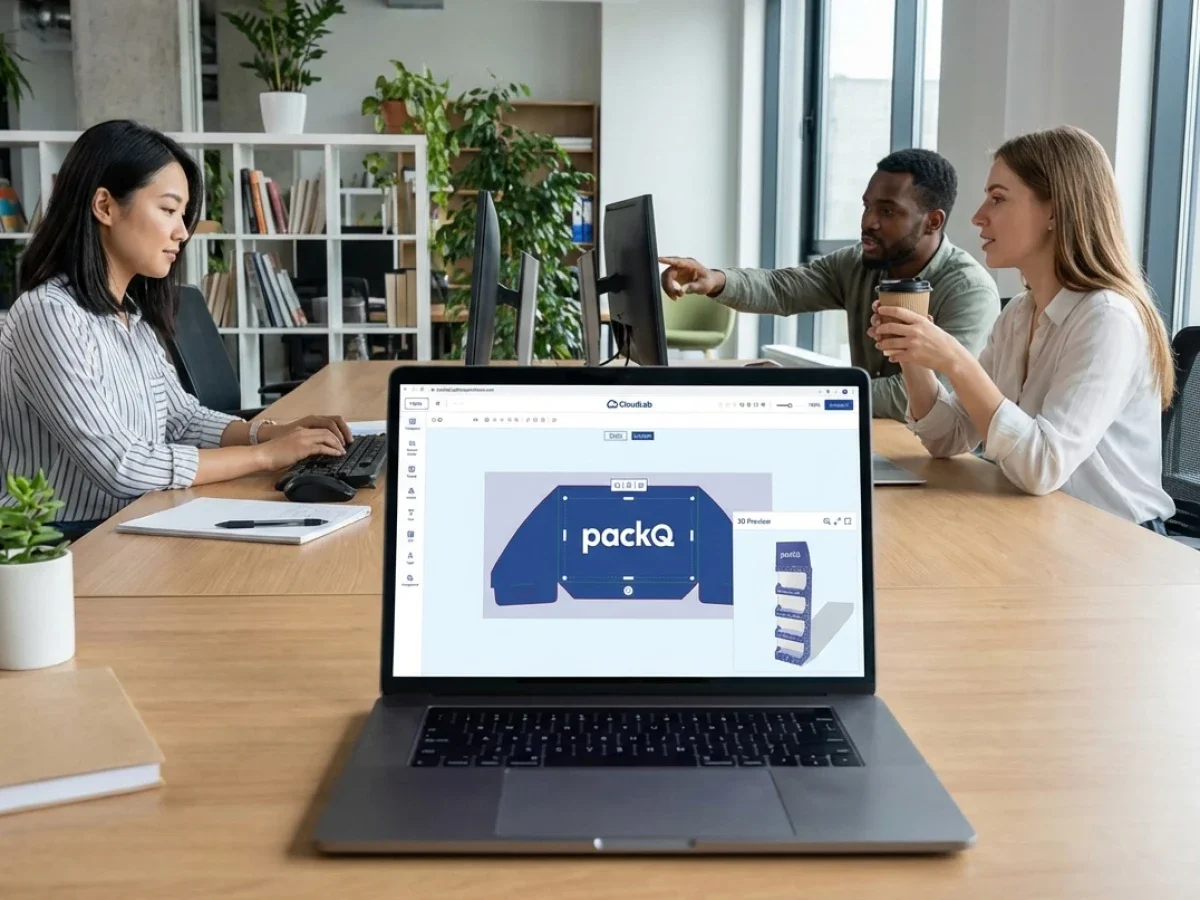
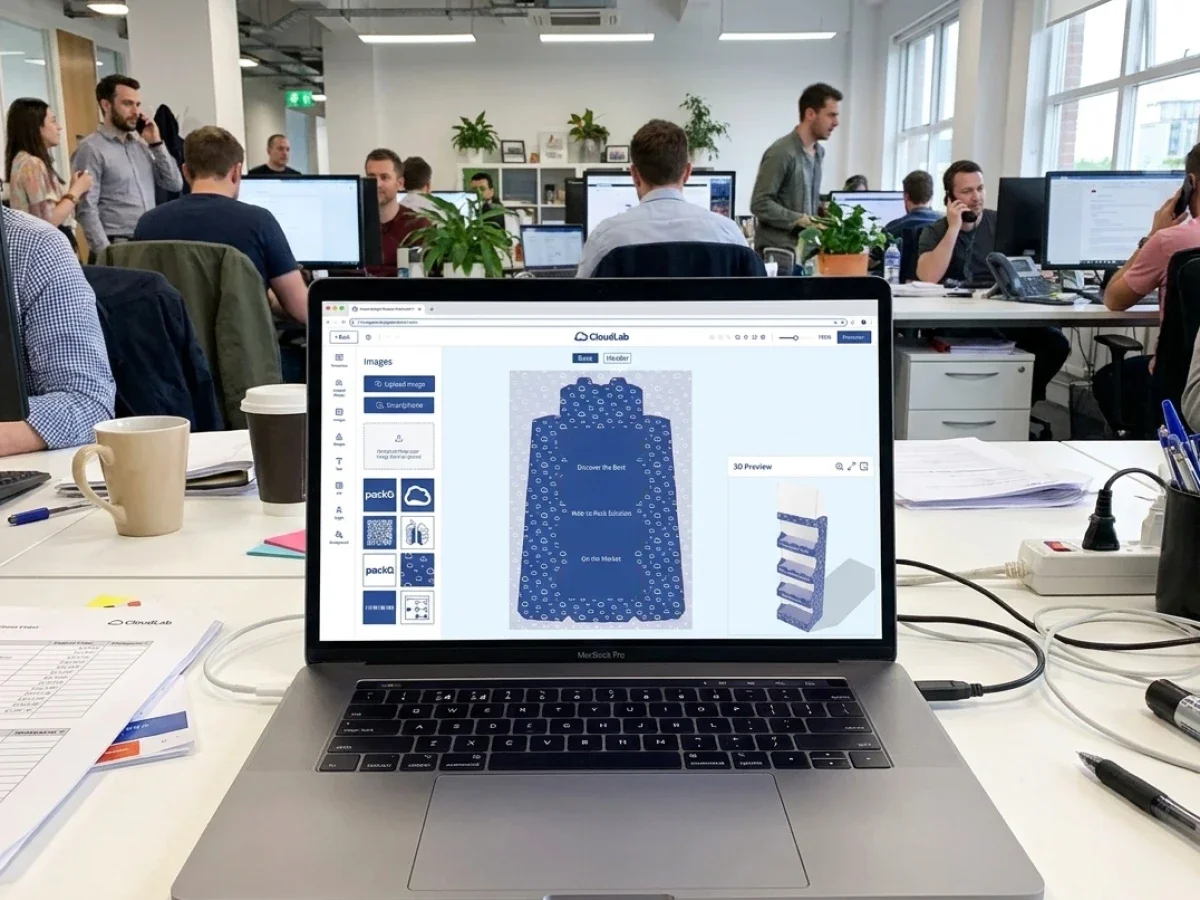
packQ’s browser-based 3D Packaging Designer is built around this production context. Users can review a carton visually while the underlying structure remains connected to standardized packaging logic. The synchronized 2D/3D design environment helps users understand how changes in the flat layout affect the final folded carton.
For brand owners, this improves confidence during approval. For folding carton manufacturers, it reduces questions that arise after a customer sees a physical sample or production proof. For prepress teams, it helps ensure that customer approval is tied to a clearer visual reference.
This is especially important for online configuration. Customers need a simple experience, but the production team needs reliable data. Safe 3D approval connects both needs.
Folding Carton Design Software and Graphic Data Quality
The secondary keyword folding carton design software fits a practical reality: carton design is both structural and graphic.
A folding carton workflow must manage dielines, dimensions, panels, and folds. It must also manage logos, images, regulatory copy, barcodes, color settings, and print quality.
If graphic data is weak, even a correct structure can fail. A low-resolution product image, missing bleed, wrong color mode, or font problem can delay production after approval.
packQ addresses this through Dynamic Preflight and AI-supported artwork tools. The AI Designer Suite can support common preparation tasks such as vectorization, background removal, and Crispify image enhancement with 4× higher resolution. These tools are useful because many online packaging customers do not submit perfect production assets.
The point is not to replace professional design. The point is to reduce avoidable friction before prepress becomes a bottleneck.
Browser-Based Web-to-Pack vs. Traditional Folding Carton CAD Workflows
Browser-based Web-to-Pack is stronger than traditional manual workflows when folding carton manufacturers need customers to configure, approve, and order standard or semi-standard cartons online. Traditional CAD workflows remain valuable for complex engineering, but they are not designed for scalable customer self-service. packQ connects ECMA-based configuration, 3D approval, Dynamic Preflight, pricing, and ERP/MIS integration.
This comparison should be handled carefully. Traditional CAD workflows are not outdated. They remain essential for advanced structural development, special constructions, and engineering-led packaging innovation.
The issue is suitability.
A CAD workflow is built for specialists. A Web-to-Pack workflow is built to translate approved structural logic into a guided ordering experience.
For repeatable folding carton products, Web-to-Pack reduces unnecessary manual work. Customers do not need to understand every technical parameter. They select from controlled options. The system maintains the rules.
packQ fits this operational layer. It does not remove structural expertise; it embeds that expertise into a scalable workflow.
Static Approval vs. Interactive 3D Approval
Static proofs are useful for detailed technical review. Interactive 3D approval is more useful when customers need to understand the finished folding carton quickly.
A flat dieline requires interpretation. A 3D preview shows how the carton will appear when folded.
In packQ, this 3D approval is connected to the underlying Web-to-Pack workflow. That makes it more reliable than a detached visualization because the approved object is linked to configuration, validation, and output.
Post-Submission Checking vs. Dynamic Preflight
Post-submission checking finds problems after the customer thinks the order is complete. Dynamic Preflight moves file validation into the design and ordering process.
For folding carton manufacturers, this timing matters. It reduces correction cycles and protects prepress capacity.
In packQ, Dynamic Preflight supports production safety by checking technical requirements before the job moves downstream.
Real-Time Pricing Makes Carton Configuration Commercially Usable
A folding carton configuration is not complete until the commercial impact is clear.
Size, material, quantity, finishing, and personalization can all affect pricing. If price calculation happens separately, the customer may approve a design before understanding the cost.
packQ includes dynamic price calculation during configuration. This helps customers evaluate options immediately and helps sales teams reduce repetitive quotation work.
For online folding carton sales, real-time pricing is not a convenience feature. It is part of the workflow. It keeps design choices, production parameters, and commercial decisions aligned.
This is especially useful for open-shop models where customers expect self-service. It also supports closed-shop portals where enterprise buyers need controlled pricing, repeat ordering, and procurement transparency.
How Do You Implement Folding Carton Software in an Online Packaging Workflow?
Folding carton software should be implemented by converting repeatable carton structures into controlled Web-to-Pack workflows that connect online configuration, ECMA logic, 3D approval, preflight, pricing, and production output. packQ supports this through headless and API-first architecture, allowing shop, ERP, MIS, prepress, and production systems to exchange data through REST, SOAP, or JSON where relevant.
Implementation should begin with product strategy. Not every folding carton belongs in a self-service workflow. Highly specialized constructions may still require engineering-led handling. Standard and semi-standard cartons are better candidates for online configuration.
A practical rollout can follow this sequence:
- Select carton families suitable for online configuration.
- Map each family to ECMA-based structures where possible.
- Define allowed dimensions, materials, finishes, and production constraints.
- Configure synchronized 2D/3D design for customer-facing approval.
- Apply Dynamic Preflight rules for resolution, color mode, bleed, fonts, and file quality.
- Connect pricing logic to format, quantity, material, and finishing.
- Integrate order data with shop, ERP, MIS, prepress, and production.
- Generate production-safe PDFs and job data after approval.
The goal is not to create a generic online editor. The goal is to create a controlled folding carton workflow that customers can use without compromising production reliability.
Implementation Example: B2B Folding Carton Portal
A folding carton manufacturer serves brand owners with recurring packaging needs. Customers frequently reorder cartons with small artwork changes, language variants, or campaign-specific graphics.
With packQ, the manufacturer can create a closed B2B portal. Each customer sees approved carton types, dimensions, and templates. Users can make allowed changes, review the carton in 3D, and submit the job after Dynamic Preflight checks the file.
ERP and MIS integration can then transfer order and production data without manual re-entry. This gives the customer a faster ordering path while keeping the manufacturer in control of production rules.
Open-Shop and Closed-Shop Models for Folding Cartons
Folding carton software must support different commercial scenarios.
An open shop helps manufacturers sell standard carton products to a broader audience. Small brands, start-ups, and e-commerce sellers can configure packaging online without a long sales process.
A closed shop helps existing B2B customers reorder and adapt approved carton structures. This is especially relevant for brand owners, pharmaceutical companies, food producers, and industrial customers that require controlled templates and repeatable approval paths.
packQ can support both models because it is designed as a scalable Web-to-Pack platform. The customer experience can differ, but the core workflow remains connected: ECMA structure, 3D approval, preflight validation, pricing, and production output.
For folding carton manufacturers, this creates strategic flexibility. They can serve new digital customers while improving service for existing accounts.
Variable Data Printing for Folding Carton Variants
Folding carton production increasingly involves more variants. Brands need regional versions, campaign editions, serialized information, personalization, and smaller batches.
Manual file preparation becomes inefficient when each variant needs separate handling.
packQ supports Variable Data Printing through PDF/VT, which enables more scalable handling of personalized or variant-based output. This is especially relevant for marketing campaigns, limited editions, and batch-size-one workflows.
For brand owners, this creates more flexible packaging programs. For folding carton manufacturers, it opens opportunities for short-run and personalized production without turning every variant into a manual prepress task.
The key requirement is control. Variable data must remain connected to structure, artwork placement, preflight, and production output. packQ keeps these elements within the Web-to-Pack workflow.
How Can Folding Carton Manufacturers Use ECMA-Based Software for Online Configuration?
Folding carton manufacturers can use ECMA-based software for online configuration by turning standard carton structures into guided Web-to-Pack products. With packQ, manufacturers can offer ECMA carton templates, browser-based 3D approval, Dynamic Preflight, real-time pricing, ERP/MIS integration, and production-ready PDF output, allowing customers to configure cartons online while production teams retain control.
Starting Situation
A folding carton manufacturer wants to reduce manual quotation and approval work for repeatable carton orders. Customers frequently request standard structures with different sizes, artwork, or quantities.
The current process relies on sales coordination, manual dieline handling, email proofs, and separate prepress checks.
This creates delays even when the carton itself is not structurally complex.
Technical Requirement
The manufacturer needs a controlled workflow where customers can configure cartons without creating production risks. ECMA structures must guide the selection process. The 3D preview must help customers approve the finished carton. Preflight must catch technical file issues early. Pricing and order data must flow into business systems.
Workflow in packQ
In packQ, the manufacturer can define ECMA-based folding carton products. Customers select a carton type, enter dimensions within allowed ranges, apply artwork, and review the result in synchronized 2D and 3D views.
Dynamic Preflight checks print-related requirements during the process. Real-time pricing reflects configuration choices. After approval, packQ can generate production-ready PDFs and pass relevant data into ERP, MIS, prepress, and production workflows.
Benefit for Production and Customer Experience
The customer receives a faster, clearer ordering experience. Sales teams spend less time on repetitive quotes. Prepress receives cleaner files. Production receives output that is better aligned with approved structures and technical rules.
For folding carton manufacturers, this creates a scalable model for online carton sales without giving up production control.
Why ECMA-Based Folding Carton Automation Protects Quality
Automation without structural control is risky. ECMA logic protects quality because it gives the software a reliable foundation.
When carton types are based on recognized structures, the system can guide configuration more safely. Customers still get flexibility, but the flexibility is framed by production-aware rules.
This is the difference between open-ended design and controlled configuration.
packQ uses ECMA logic to make folding carton workflows more predictable. The platform helps turn structural expertise into digital rules that customers can use indirectly.
That matters for every stakeholder.
Customers get a simpler ordering experience. Packaging manufacturers get more consistent data. Prepress teams get fewer preventable issues. Production teams receive jobs that are easier to prepare.
Why Folding Carton Software Needs Integration, Not Just Features
Many folding carton software discussions focus on features. That is understandable, but incomplete.
A Web-to-Pack workflow only creates full value when the approved order connects with the systems that run the business. That includes shop systems, ERP, MIS, prepress tools, and production environments.
packQ is built with a headless and API-first architecture. This allows technology teams to embed folding carton workflows into existing digital infrastructure. REST, SOAP, and JSON can support data exchange depending on the environment.
The practical benefit is continuity. Configuration data, price logic, artwork status, approval results, and production output should not be manually recreated after checkout.
For IT teams, this reduces integration friction. For operations teams, it reduces administrative work. For customers, it makes the portal feel like a connected service rather than a disconnected design tool.
ECMA-Based Folding Carton Workflows Turn Online Orders Into Production-Safe Data
Folding carton software creates the greatest value when it turns ECMA-based structures into safe, scalable Web-to-Pack workflows. Online configuration only works when customers can select, customize, approve, and order cartons without disconnecting the process from production reality.
packQ by CloudLab supports this model through ECMA folding carton templates, browser-based 2D/3D design, Dynamic Preflight, real-time pricing, AI Designer Suite tools, PDF/VT support, production-ready PDF output, and API-first ERP/MIS integration.
For folding carton manufacturers and printers, this reduces manual quoting, approval loops, and preventable file corrections. For brand owners, it creates faster and clearer carton approvals. For technology teams, it provides an integration-ready platform that connects customer-facing configuration with production systems.
The central point is straightforward: successful online carton configuration depends on ECMA logic, safe 3D approval, automated validation, and connected production output working together.
Folding carton software is becoming a key part of Web-to-Pack automation for manufacturers, printers, and brand owners. packQ helps to turn ECMA-based carton structures into online configuration workflows with browser-based 3D approval, Dynamic Preflight, real-time pricing, AI-supported artwork tools, PDF/VT personalization, production-ready PDF output, and ERP/MIS integration. The focus is on safe self-service, fewer approval loops, cleaner prepress data, and scalable folding carton production without losing structural control.