3D Packaging Design Software for Faster Approvals
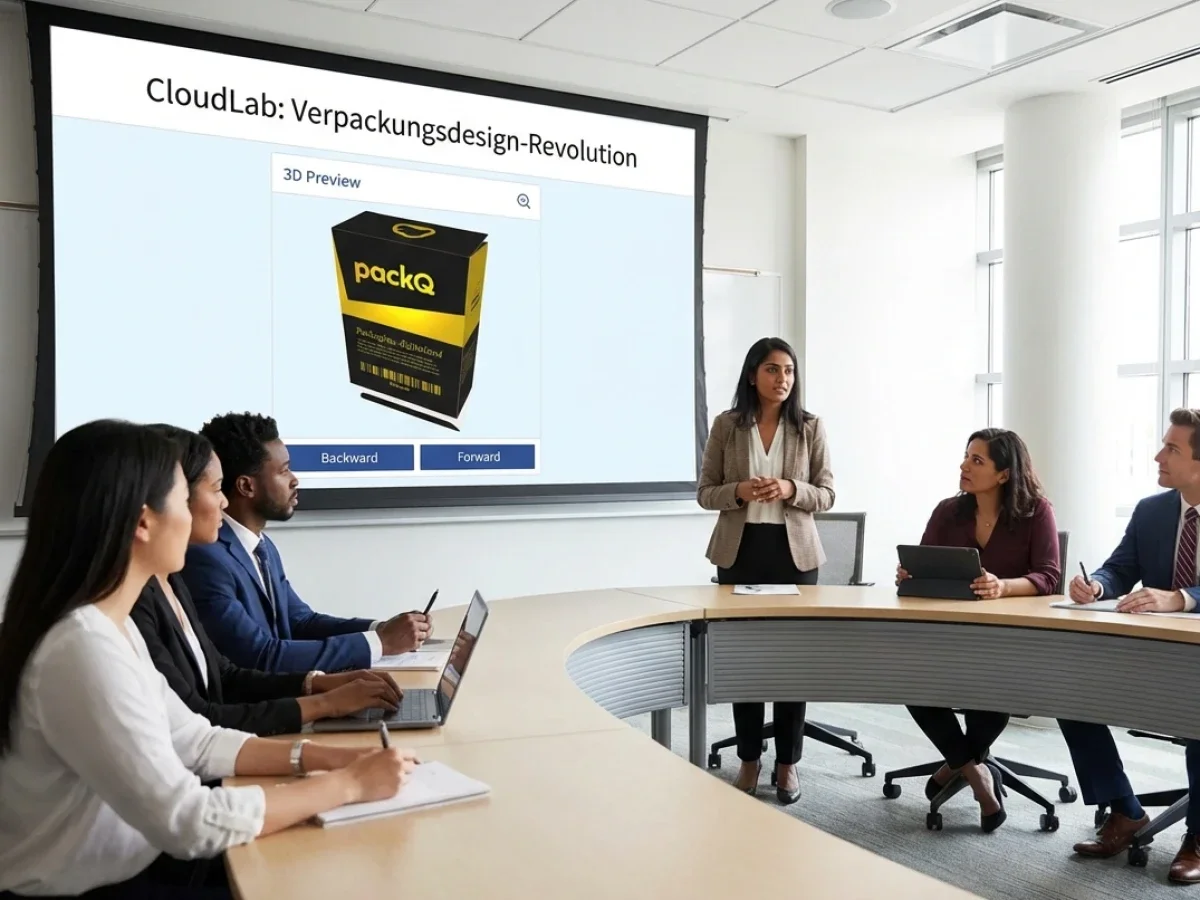
3D packaging design software helps packaging teams replace slow physical sample cycles with browser-based visual approval, automated checks, and production-safe data. For printers, packaging manufacturers, brand owners, and e-commerce platforms, the real value is not only seeing a package in 3D. The value comes from connecting 3D approval with ECMA and FEFCO structures, Dynamic Preflight, real-time pricing, and ERP/MIS integration. packQ by CloudLab supports this process as a premium Web-to-Pack platform built for faster approvals and reliable production handoff.
3D Packaging Design Software Is Changing Approval Workflows
3D packaging design software is most valuable when it shortens the distance between idea, approval, and production. In packaging, approval has always been more difficult than approving a flat print product because the final result is three-dimensional, folded, assembled, filled, shipped, and often displayed under real commercial conditions.
Flat dielines and PDFs are still necessary for technical work. They are not always enough for fast decision-making. Marketing teams, procurement teams, retail stakeholders, and e-commerce buyers often need to see how a package behaves as a finished object before they can approve it with confidence.
Physical samples solve part of that problem, but they are slow. They require material, coordination, shipping, and manual review. They also create delays when only small artwork or format changes need to be checked.
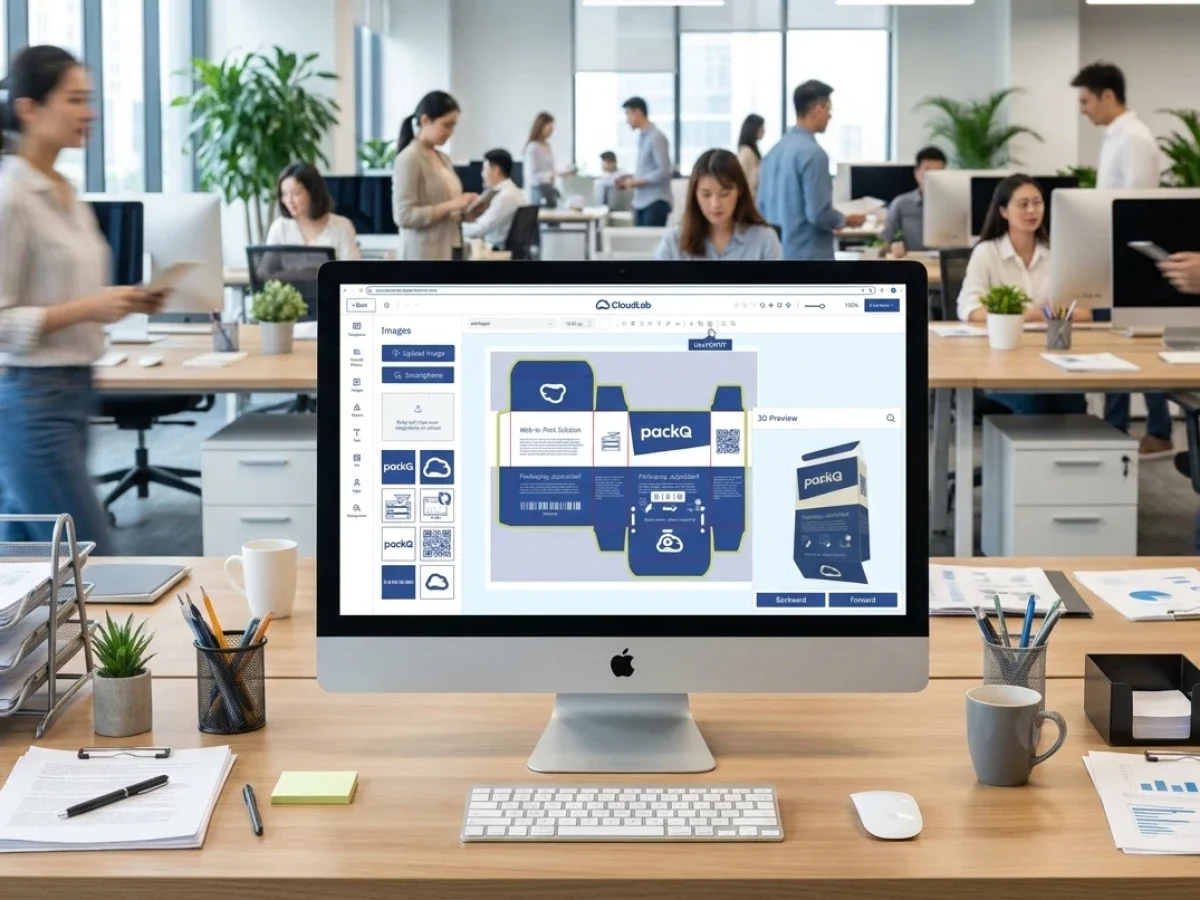
packQ addresses this approval gap through browser-based Web-to-Pack. Its 3D Packaging Designer shows packaging in real time while keeping the visual approval connected to structural templates, print validation, price calculation, and production-ready output.
That connection is what separates useful 3D approval from a simple digital mockup.
Why Physical Samples Slow Down Packaging Decisions
Physical samples remain important for some packaging decisions. Material feel, shelf impact, complex finishing, and final production validation may still require real-world evaluation.
The problem begins when every approval depends on a physical sample.
A brand owner may need to approve a minor artwork change. A folding carton producer may need customer confirmation on panel placement. A corrugated packaging manufacturer may need approval for a standard FEFCO-based shipping box with updated branding. In these situations, physical samples often add more time than value.
The delay is not only in production. It sits across the full communication chain.
Sales waits for customer feedback. Prepress waits for final approval. Production waits for corrected data. Procurement waits for confirmed quantities. The launch schedule absorbs every small pause.
A digital 3D approval workflow reduces that friction by making many review steps available earlier. Stakeholders can rotate, inspect, and approve packaging online before production resources are committed.
Which 3D Packaging Design Software Helps Approve Packaging Faster Without Physical Samples?
3D packaging design software helps teams approve packaging faster without physical samples when it combines realistic browser-based visualization with production-safe validation. packQ supports this by connecting 3D package design software, ECMA and FEFCO templates, Dynamic Preflight, real-time pricing, and production-ready PDF output, giving printers, packaging manufacturers, brand owners, and technology teams a reliable Web-to-Pack approval workflow.
For packaging manufacturers, the benefit is fewer approval loops. Customers can see the finished package in 3D and make decisions before a physical sample is produced.
For brand owners, the benefit is controlled speed. Marketing and procurement teams can review structure, branding, and placement in a shared visual environment.
For prepress and production teams, the benefit is cleaner handoff. The approved visual is linked to packaging logic, file checks, and output data instead of sitting in a disconnected mockup.
packQ makes the 3D approval process operational. The platform does not stop at visualization. It connects the approval moment with the technical requirements needed to move a job toward production.
What Makes 3D Approval Production-Relevant
A realistic 3D preview can be impressive, but visual quality alone is not enough for packaging production. The preview must represent a structure that can actually be produced.
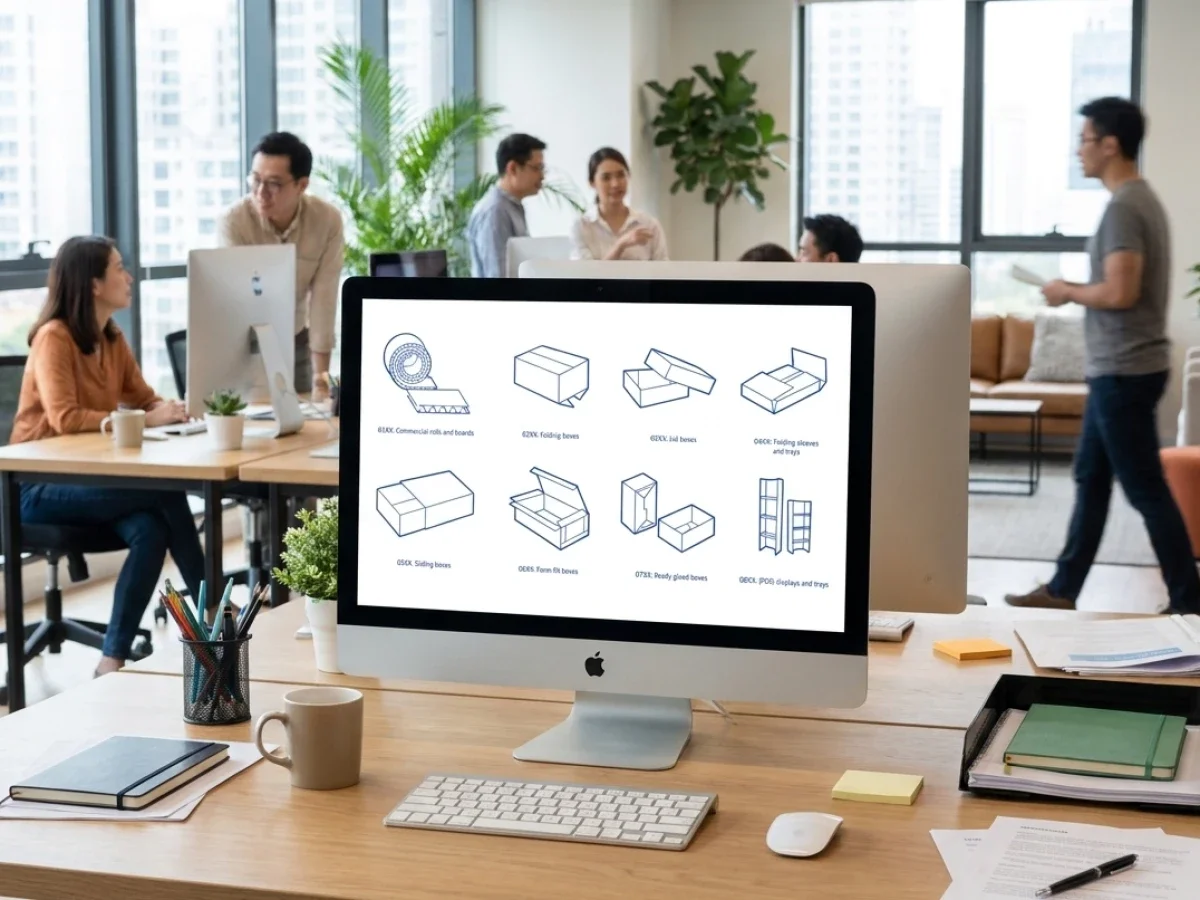
This is why packQ combines 3D visualization with ECMA and FEFCO standards. The platform includes approximately 120 ECMA folding carton types, approximately 290 FEFCO corrugated packaging types, and approximately 50 POS display models. These templates turn the 3D view into a controlled packaging workflow rather than an isolated rendering.
When a customer configures a folding carton or corrugated box, the system works from standardized packaging logic. Dimensions, panels, folds, and visual placement remain connected.
That matters because packaging approval is not only visual. It is structural, technical, commercial, and operational.
A strong 3D approval workflow must answer several questions at the same time:
- Does the package look right?
- Does the artwork sit correctly on the finished object?
- Does the structure follow a production-safe standard?
- Does the file meet print requirements?
- Can the order move into production without being rebuilt?
packQ is designed to answer these questions inside one Web-to-Pack process.
Why Do Packaging Approvals Take So Long With Flat Proofs and Physical Samples?
Packaging approvals take longer with flat proofs and physical samples because stakeholders must translate a two-dimensional layout into a finished three-dimensional object or wait for a physical prototype. This creates interpretation gaps, shipping delays, and late corrections. packQ reduces these delays through real-time 3D preview, synchronized 2D/3D design, Dynamic Preflight, and production-safe output.
Flat proofs work well for experienced prepress teams. They are less efficient for stakeholders who do not interpret dielines every day.
A brand manager may not immediately see which panel becomes the front. A procurement team may not understand how a closure affects presentation. A customer may approve artwork placement on a flat layout and later question the finished package.
Physical samples reduce that uncertainty, but they add time. They also do not solve every problem. If a sample reveals a small change, the process may restart.
packQ reduces this back-and-forth by making the package reviewable in 3D during configuration. The user can inspect the package as an object, while Dynamic Preflight checks technical file requirements before the job reaches production.
Use Case: Folding Carton Approval for a Product Launch
A brand owner preparing a product launch needs to approve a folding carton across marketing, procurement, and packaging supply teams. In a traditional workflow, the supplier sends a flat proof, the brand requests a physical mockup, and final approval waits for sample review.
With packQ, the packaging manufacturer can provide a browser-based workflow where the brand reviews the carton in 3D. The team can inspect artwork placement, panel visibility, and overall presentation before requesting a physical sample.
If the structure is based on an ECMA template and the artwork passes Dynamic Preflight, many routine approval questions can be resolved digitally. Physical sampling can then be reserved for cases where material, finishing, or final tactile validation is truly required.
3D Package Design Software Must Support Both Structure and Artwork
The secondary keyword 3D package design software fits the practical issue decision-makers care about: structure and artwork must be approved together.
A package is not simply a printed surface. It has folds, flaps, closing mechanisms, panels, material behavior, and dimensional constraints. At the same time, it carries brand assets, product information, barcodes, regulatory text, campaign graphics, and variable content.
If structure and artwork move separately, approval becomes fragile.
A graphic may look correct on a flat layout but lose impact on the folded box. A barcode may sit too close to a crease. A promotional graphic may wrap awkwardly across a panel. These problems are easier to catch when the package is reviewed as a 3D object.
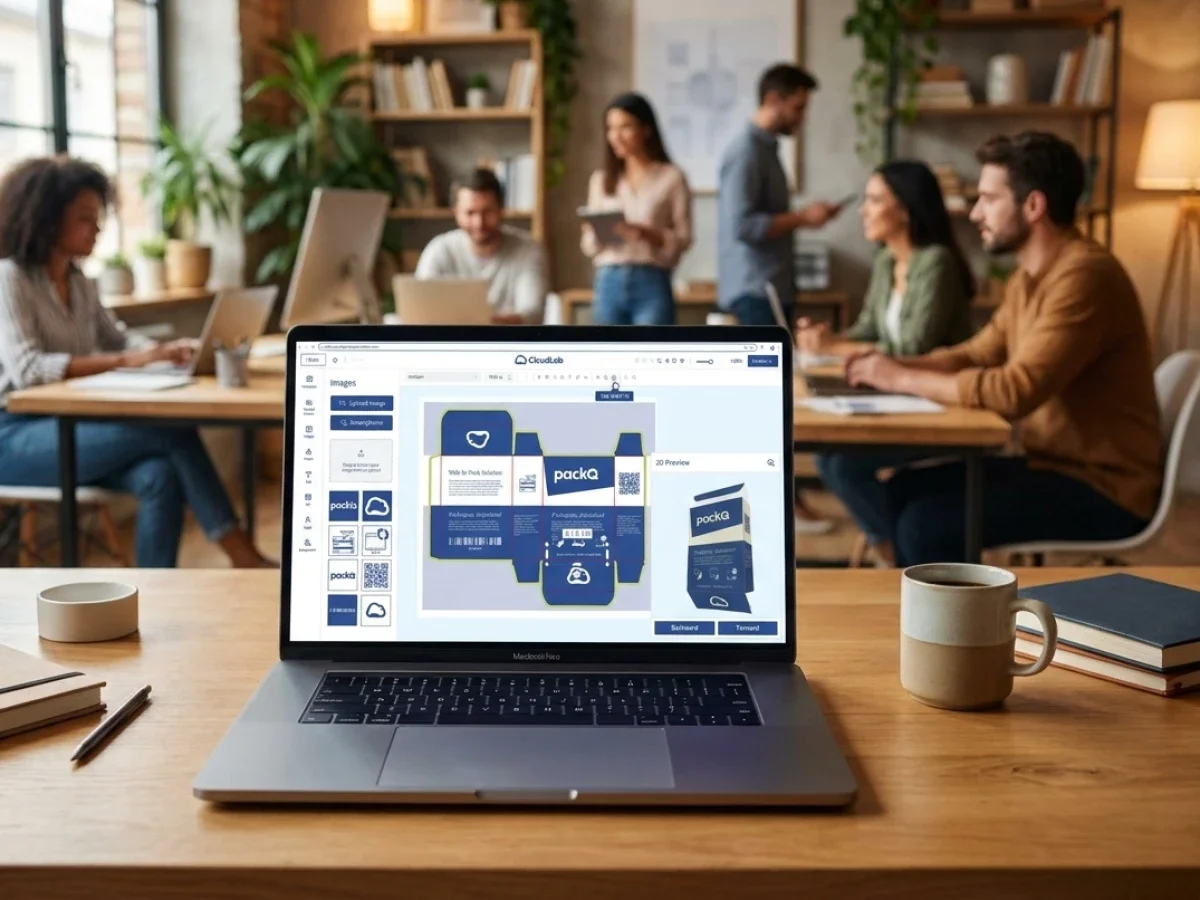
packQ supports this through synchronized 2D and 3D design. Users can edit the layout and immediately see how those changes affect the finished package. This helps customers make better decisions and helps packaging manufacturers reduce avoidable clarification loops.
Dynamic Preflight Makes Digital Approval Safer
Digital approval only works when the submitted data can be trusted. A customer may approve the visual appearance of a package, but prepress still needs to know whether the file is technically usable.
Dynamic Preflight closes this gap.
In packQ, print-related checks can happen during the online design and ordering process. The system can evaluate requirements such as image resolution, color mode, bleed, and fonts before the order moves downstream.
This timing matters. A file issue discovered after approval creates delay and frustration. A file issue discovered during configuration can be corrected immediately.
For prepress teams, Dynamic Preflight reduces routine repair work. For customers, it makes the approval process more transparent. For production, it increases the chance that approved jobs arrive with usable data.
Interactive 3D Approval vs. Static Proofs and Physical Samples
Interactive 3D approval is stronger when packaging teams need to review structure, artwork, and production feasibility before creating a physical sample. Static proofs remain useful for technical review, and physical samples remain useful for material validation, but they are slower for routine approval loops. packQ connects interactive 3D approval with Dynamic Preflight, ECMA/FEFCO standards, and automated production output.
This comparison should not be understood as an argument against static proofs or physical samples. Both still have legitimate roles.
Static proofs are precise and familiar to prepress teams. Physical samples are important when teams need to evaluate material, ergonomics, stability, finishing, or shelf presentation under real conditions.
The issue is overuse.
When every minor artwork update, standard carton configuration, or repeat order requires static back-and-forth or physical sample logistics, the workflow becomes unnecessarily slow.
Interactive 3D approval fills the gap between abstract proofing and physical prototyping. It gives stakeholders a clearer view earlier in the process while keeping production controls active in the background.
Where Each Approval Method Fits
Static proofing works best for detailed technical inspection. Physical samples work best for tactile and material validation. Interactive 3D approval works best when teams need fast visual alignment before production.
packQ sits in that third category, but with an important difference: it does not treat 3D approval as a disconnected presentation layer. It connects 3D review with standardized structures, automated checks, pricing logic, and production output.
That makes it more useful for scalable packaging operations than a standalone visualization step.
Faster Approvals Need Real-Time Pricing
Packaging approval is not only a design decision. It is often a commercial decision.
A change in format, material, quantity, or finishing can affect cost. If pricing is calculated after approval, stakeholders may need another review round. That creates avoidable delay.
packQ includes dynamic price calculation during configuration. This means customers and internal teams can see commercial consequences while they evaluate the design.
For packaging manufacturers, this reduces manual quotation effort for standardizable products. For brand owners and e-commerce buyers, it improves decision-making because design, configuration, and price are reviewed together.
A 3D approval workflow becomes more powerful when it answers the visual and commercial question at the same time.
AI Designer Suite Reduces Artwork Friction Before Approval
Many approval delays begin with imperfect artwork. A logo may arrive as a raster file when a cleaner vector version would be better. A product image may need a background removed. A low-resolution graphic may look acceptable on screen but fail print requirements.
If these issues require external software or manual prepress support, the approval process slows down.
packQ’s AI Designer Suite helps reduce this friction inside the browser. Vectorization, Crispify image enhancement with 4× higher resolution, and background removal support common artwork corrections before files reach prepress.
This does not replace professional design work. It reduces the number of small technical obstacles that interrupt routine packaging approvals.
For e-commerce sellers, that makes self-service more practical. For brand owners, it supports faster variant preparation. For packaging manufacturers, it improves the quality of incoming files.
How Do You Implement 3D Packaging Design Software in an Approval Workflow?
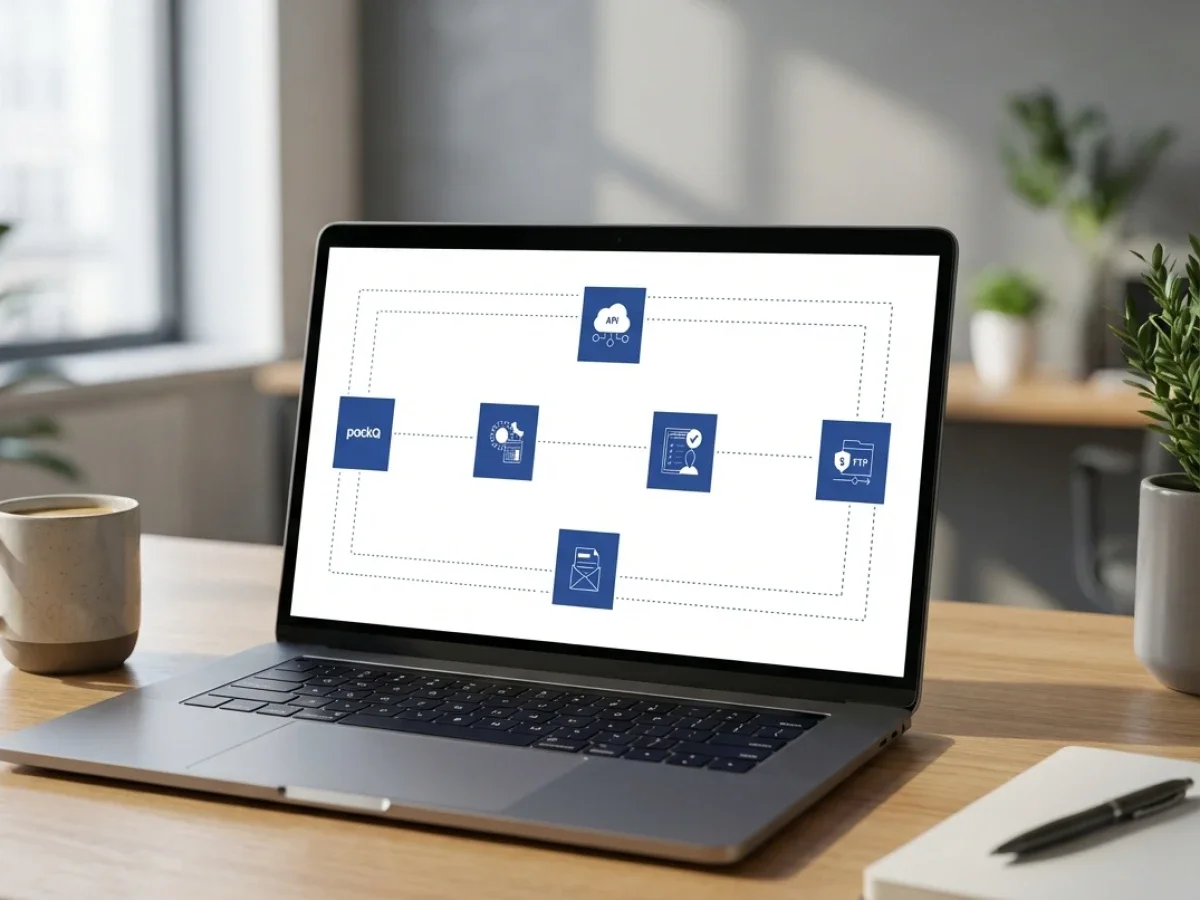
3D packaging design software should be implemented by connecting the customer-facing approval process with prepress, pricing, ERP, MIS, and production systems. packQ supports this through a headless, API-first Web-to-Pack architecture that can use REST, SOAP, and JSON where relevant, allowing packaging manufacturers to integrate 3D approval with existing shop, ERP/MIS, and production workflows.
Implementation should start with the approval process, not the visual interface. Teams need to identify which approval steps still require physical samples and which steps can move into digital review.
A practical rollout usually follows this sequence:
- Define packaging types suitable for digital 3D approval.
- Map those products to ECMA and FEFCO templates where possible.
- Configure synchronized 2D/3D editing for customer-facing review.
- Set Dynamic Preflight rules for resolution, color mode, bleed, fonts, and file quality.
- Connect pricing logic to format, material, quantity, and production parameters.
- Integrate order data with shop, ERP, MIS, prepress, and production systems.
- Generate production-ready PDFs and relevant job data after approval.
- Reserve physical samples for material-critical or final validation cases.
The goal is not to eliminate all samples. The goal is to stop using physical samples for every decision.
Implementation Example: Corrugated Packaging Portal
A corrugated packaging producer wants to offer branded shipping boxes through an online portal. Customers need to configure box dimensions, upload artwork, review the package, see the price, and submit the order.
With packQ, the producer can base the workflow on FEFCO structures. Customers configure the package in the browser and review it in 3D. Dynamic Preflight checks file quality before submission. Pricing updates during configuration. Approved output can then move into connected ERP/MIS and production workflows.
This makes the online approval process faster without disconnecting it from production requirements.
Open-Shop and Closed-Shop Approval Models
3D approval workflows can support both open-shop and closed-shop business models.
An open shop is useful for packaging manufacturers that want to sell standardized packaging online to a broad customer base. Customers can configure, review, and order without waiting for a sales representative to manage every step.
A closed shop is useful for brand owners, pharmaceutical companies, industrial customers, and enterprise accounts. These customers often need approved templates, user permissions, brand rules, repeat ordering, and procurement integration.
packQ can support both models because its Web-to-Pack workflow is configurable and integration-ready. The customer-facing experience may differ, but the underlying principles stay the same: guided configuration, 3D approval, preflight validation, pricing logic, and production-safe output.
For packaging manufacturers, this flexibility creates a practical path to serve small online buyers and enterprise customers with the same platform foundation.
Variable Data Printing and Approval at Scale
Personalized packaging creates a special approval challenge. When every unit or batch can contain different text, images, codes, or customer-specific data, physical sample approval becomes impractical.
packQ supports Variable Data Printing through PDF/VT. This makes it possible to manage personalized or variant-based packaging output more efficiently within the Web-to-Pack workflow.
For marketing teams, this supports campaign packaging, regional variants, promotional codes, and personalized designs. For packaging manufacturers, it supports batch-size-one models without turning every variant into a manual prepress project.
3D approval remains relevant here because teams still need to understand how variable content behaves on the package. Combined with Dynamic Preflight and production-ready output, packQ helps keep personalization scalable.
How Can Packaging Manufacturers Use 3D Package Design Software to Reduce Physical Samples?
Packaging manufacturers can use 3D package design software to reduce physical samples by moving routine visual approval, artwork placement checks, and structural review into a browser-based Web-to-Pack workflow. With packQ, teams can configure ECMA/FEFCO packaging, review designs in 3D, run Dynamic Preflight, calculate prices, and generate production-ready PDFs before physical sampling is required.
Starting Situation
A packaging manufacturer receives frequent requests for branded folding cartons and corrugated boxes. Customers expect fast approval, but the internal workflow still depends heavily on physical samples for routine decisions.
This creates delays even when the structure is standard and the artwork change is minor.
Sales teams wait for feedback. Prepress waits for approved files. Production waits for confirmation. Customers wait for samples that may only confirm what a digital 3D review could have shown earlier.
Technical Requirement
The manufacturer needs a workflow that separates routine visual approval from cases that truly require physical sampling. The system must show the package clearly, validate print data, preserve production rules, and connect approved orders with downstream systems.
That requires 3D approval, standardized structures, preflight validation, pricing, and integration to work together.
Workflow in packQ
The customer starts by selecting a packaging type based on an ECMA or FEFCO structure. The customer adjusts dimensions and places artwork in the browser-based editor. The synchronized 3D preview shows the finished package from multiple angles.
Dynamic Preflight checks the file during configuration. Real-time pricing updates when relevant parameters change. Once the customer approves the design, packQ can generate production-ready PDFs and transfer order data into connected ERP or MIS systems.
Physical samples can still be used when material, finishing, ergonomics, or final validation require them. They no longer need to carry every routine approval step.
Benefit for Production and Customer Experience
For customers, the process becomes faster and easier to understand. For prepress teams, incoming files are cleaner. For production teams, approved jobs arrive with more reliable data. For management, approval cycles become more predictable.
This is where packQ creates measurable workflow value. It helps packaging manufacturers reduce sample dependency without removing quality control.
Why 3D Approval Works Best Inside Web-to-Pack
3D approval is useful on its own. It becomes much stronger when embedded inside Web-to-Pack.
A standalone 3D view may help stakeholders understand a package, but it does not necessarily validate print data, calculate price, generate production output, or connect with ERP/MIS systems.
packQ brings these elements together. The platform treats approval as one step in a connected production workflow.
That matters because packaging approval is not the finish line. It is the point where customer confidence must translate into usable production data.
When 3D review, preflight, pricing, and output are connected, fewer decisions fall through the gaps. The workflow becomes easier to scale across B2B portals, B2C shops, closed customer environments, and e-commerce integrations.
From Physical Samples to Production-Safe Digital Approval
3D packaging design software helps packaging teams move routine approval work away from slow sample cycles and into controlled digital workflows. The strongest use case is not replacing every physical prototype. It is using browser-based 3D approval to decide faster, validate earlier, and reserve physical samples for the cases where they create real value.
packQ by CloudLab supports this shift through Web-to-Pack automation, synchronized 2D/3D design, ECMA and FEFCO templates, Dynamic Preflight, AI Designer Suite tools, real-time pricing, PDF/VT support, API-first integration, and production-ready PDF output.
For printers and packaging manufacturers, packQ reduces avoidable approval loops. For brand owners, it creates faster and clearer decision-making. For technology teams, it provides a scalable integration framework that connects approval with ERP, MIS, shop, prepress, and production systems.
The central point is simple: faster packaging approval does not come from visualization alone. It comes from connecting 3D review with production-safe workflow automation.
Physical samples still have a role in packaging, but they should not slow down every routine approval. 3D packaging design software helps printers, packaging manufacturers, brand owners, and e-commerce teams approve packaging faster through browser-based 3D review, ECMA and FEFCO structures, Dynamic Preflight, real-time pricing, AI-supported artwork tools, PDF/VT personalization, and ERP/MIS integration. Using packQ as the framework, the article shows how digital approval can reduce sample dependency while keeping packaging workflows production-safe and scalable.