
Web to Print Storefront for B2C Compliance

A web to print storefront for B2C markets must combine usability with GDPR and accessibility compliance. Traditional storefronts often treat compliance as an add-on instead of a core design principle. packQ enables compliant, scalable B2C web to print storefronts by embedding automation, governance, and production intelligence into the platform.
Web to Print Storefronts as a Compliance-Critical System
A web to print storefront is no longer just a digital sales channel. In B2C environments, it is a public-facing system that must comply with legal, technical, and ethical standards. Data protection regulations, accessibility requirements, and consumer protection rules directly shape how storefronts must be designed and operated.
For print businesses, this represents a shift in responsibility.
A b2c web to print storefront is judged not only by conversion rates or design quality, but by how transparently it handles personal data and how accessible it is to all users. Compliance failures are no longer niche risks. They have become business risks with legal and reputational consequences.
Why GDPR Changes the Architecture of a Web to Print Storefront
GDPR compliance is not a checkbox feature. It fundamentally affects how a web to print storefront processes data. Every interaction generates personal information, from uploaded artwork to delivery addresses and payment details.
A compliant storefront must minimize data collection, define clear processing purposes, and ensure secure handling across the entire workflow. This includes design, preview, pricing, ordering, and production handover.
In many legacy systems, these processes are fragmented. Data is copied between tools, stored redundantly, or logged without governance. In a B2C context, this approach is no longer acceptable.
Data Responsibility in B2C Web-to-Print Environments
In a b2c web to print storefront, the operator is the data controller. This role carries obligations around transparency, consent, and deletion. Customers must understand how their data is used, and they must be able to exercise their rights easily.
From a technical perspective, this requires centralized data orchestration. User data cannot be scattered across disconnected modules. Logging, preview generation, and production transfer must follow consistent rules.
A compliant web to print storefront therefore requires architectural discipline, not just frontend adjustments.
Accessibility as a Strategic Requirement, Not an Optional Feature
Accessibility is often underestimated in web-to-print projects. For B2C storefronts, it is increasingly a legal requirement and a market expectation. Users with visual, motor, or cognitive impairments must be able to navigate, configure, and order products without barriers.
This has direct implications for the web to print designer. Interfaces must support keyboard navigation, readable contrast, and clear interaction patterns. Dynamic previews and configuration steps must remain usable with assistive technologies.
Accessibility cannot be added after launch. It must be designed into the storefront from the beginning.
The Complexity of Accessible Product Configuration
Accessible design becomes particularly challenging in interactive environments. A web to print storefront does not present static content. It guides users through multi-step configuration processes.
Each step must be perceivable, operable, and understandable. Error messages must be clear. Validation feedback must be accessible. Visual previews must be complemented by semantic structure.
In many traditional systems, these requirements conflict with highly visual configurators. This tension often leads to compromises that undermine compliance.
Why Many Web to Print Storefronts Fail Compliance Audits
Most compliance failures do not stem from intent, but from architecture. Storefronts evolve over time, integrating new features without reassessing data flows or accessibility impact.
Common issues include uncontrolled data persistence, missing consent granularity, inaccessible modal dialogs, and non-compliant preview components. In B2C environments, these issues accumulate quickly.
A sustainable solution requires a platform that treats compliance as a core system property, not a peripheral concern.
From Web to Print Storefront to Web-to-Pack Platform
When packaging enters the B2C space, complexity increases further. Packaging products involve structure, material options, and variable data. Each of these dimensions interacts with compliance requirements.
A web to print storefront that handles packaging as flat artwork introduces risk. Uploaded die-lines, manual approvals, and disconnected previews complicate both GDPR and accessibility compliance.
Web-to-Pack platforms address this by unifying configuration, validation, and visualization within a controlled environment.
packQ was built with this philosophy.
packQ as a Compliance-Ready Web-to-Pack Platform
packQ is a premium Web-to-Pack platform developed by CloudLab Solutions and recognized with the InterTech Technology Award. It extends the concept of a web to print storefront into a governed,production-safe system.
Compliance in packQ is not layered on top. It is embedded into how data flows through the platform. Design input, previews, pricing, and production output are handled within a unified architecture.
This approach significantly reduces compliance risk in B2C scenarios.
Controlled Data Flow as a GDPR Enabler
packQ centralizes data handling across the entire workflow. Personal data is processed only where necessary and transferred securely between modules. This reduces redundancy and simplifies auditability.
For B2C web to print storefronts, this means clearer consent management and easier fulfillment of data access or deletion requests. The system structure supports compliance instead of complicating it.
This architectural clarity is difficult to achieve in loosely coupled storefront solutions.
Real-Time 3D and Accessibility Considerations
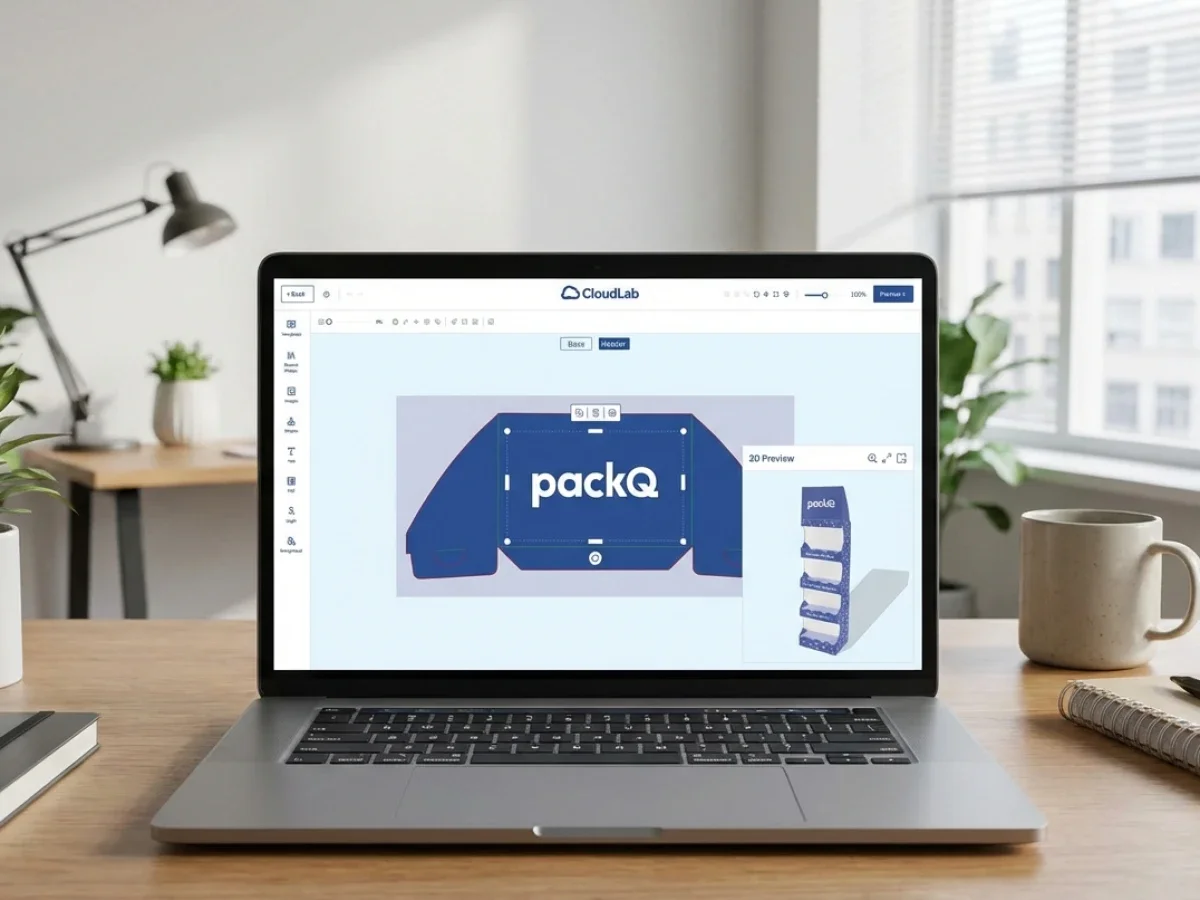
packQ’s browser-based 3D packaging designer provides real-time rendering with synchronized 2D and 3D views. From an accessibility perspective, this raises important questions.
packQ addresses these by structuring interactions clearly and separating visual representation from interaction logic. Users can navigate configuration steps without relying solely on visual cues.
This design philosophy supports accessible interaction even in visually rich environments.
ECMA and FEFCO as a Compliance Advantage
Embedding ECMA and FEFCO standards directly into the platform has compliance implications beyond production efficiency. Standardized structures reduce ambiguity and limit invalid configurations.
For users, this results in fewer errors and clearer feedback. For operators, it reduces the need for manual intervention that could expose personal data unnecessarily.
Standardization becomes a compliance enabler rather than a constraint.
AI Designer Suite and Data Minimization
The AI Designer Suite in packQ improves data quality without increasing data exposure. Image vectorization, resolution enhancement via Crispify, and background removal occur within the platform.
Users do not need to export files to external tools. This reduces uncontrolled data transfers and supports GDPR principles of data minimization.
Operational efficiency and compliance reinforce each other.
Variable Data Printing in B2C Contexts
Variable Data Printing introduces personal information directly into print output. In B2C environments, this requires careful handling.
packQ supports PDF/VT-based Variable Data Printing within a controlled framework. Variable content is generated dynamically, validated automatically, and transferred securely into production.
This approach minimizes manual handling and reduces the risk of data leakage.
Dynamic Pricing and Consumer Transparency
Pricing transparency is part of consumer protection. packQ integrates dynamic pricing in real time, allowing users to see how configuration choices affect cost immediately.
This clarity supports fair pricing practices and reduces disputes. In a B2C web to print storefront, transparency is not only good UX. It is part of regulatory compliance.
Accessibility Requirements for B2C Web to Print Storefronts
Accessibility is not a visual refinement. In a b2c web to print storefront, it defines whether users can complete a transaction at all. Legal frameworks increasingly require that digital services be usable by people with visual, motor, or cognitive impairments.
For a web to print storefront, this requirement extends beyond navigation. Product configuration, previews, and checkout flows must remain accessible under real interaction conditions. If accessibility breaks at the configuration stage, compliance is incomplete.
This makes accessibility a system-wide concern rather than a frontend task.
Accessibility Challenges in Interactive Print Configurators
Interactive configurators present unique accessibility challenges. A web to print storefront often relies on drag-and-drop elements, visual previews, and dynamic updates. These features are powerful but can easily exclude users if not designed carefully.
Accessible configurators require keyboard operability, logical focus management, and clear state changes. Error messages must be understandable without relying on color or animation. Every interaction must provide meaningful feedback.
These requirements demand architectural foresight, not post-launch patches.
packQ’s Approach to Accessible Interaction Design
packQ approaches accessibility by separating interaction logic from visualization. While the platform delivers rich real-time previews, user actions are structured through predictable, sequential steps.
This design allows assistive technologies to interpret configuration flows correctly. Users can move through the process without relying solely on visual cues.
In a b2c web to print storefront, this separation is critical for compliance and usability.
Accessibility and Brand-Controlled Templates
Brand compliance and accessibility are often treated as competing goals. In practice, they reinforce each other when implemented correctly.
packQ’s template-driven approach ensures consistent structure, spacing, and hierarchy. These characteristics improve readability and navigability for all users, including those using assistive technologies.
Accessible design becomes a natural byproduct of standardized, well-defined templates.

Open-Shop and Closed-Shop Compliance Implications
B2C web to print storefronts typically operate as open shops. Anyone can access, configure, and order products. This openness amplifies compliance obligations.
Closed-shop scenarios, by contrast, restrict access to authenticated users. While governance is easier, compliance requirements do not disappear. Accessibility and data protection still apply.
packQ supports both models through configuration. Compliance rules are enforced consistently regardless of access type.
Data Protection Across the Entire Customer Journey
GDPR compliance in a web to print storefront does not end at checkout. Data flows continue into production, logistics, and support.
packQ ensures that personal data follows controlled paths. Uploaded artwork, variable data, and order information remain within governed processes. Access is role-based, and unnecessary duplication is avoided.
This end-to-end perspective is essential in B2C environments where data volumes are high.
Variable Data Printing and Privacy by Design
Variable Data Printing often involves names, addresses, or individualized messages. In a b2c web to print storefront, this introduces direct privacy concerns.
packQ supports PDF/VT-based Variable Data Printing within a structured framework. Variable content is generated dynamically and validated automatically. Manual handling is minimized.
This aligns with privacy-by-design principles, reducing exposure risk without limiting personalization.
Real-Time Pricing as a Consumer Protection Mechanism
Consumer protection regulations emphasize pricing transparency. Hidden costs or delayed price updates undermine trust and can violate regulatory expectations.
packQ integrates dynamic pricing in real time, updating costs immediately as configuration parameters change. Users understand the financial impact of their choices at every step.
In a web to print storefront, this transparency supports both compliance and conversion.
Error Prevention as a Compliance Strategy
Errors are not only a production problem. In B2C environments, they can also become compliance issues if customers are misled or data is mishandled.
packQ’s Dynamic Preflight Check validates resolution, color mode, bleed, and font usage before orders are placed. Users receive immediate, accessible feedback.
Preventing errors early protects customers, operators, and production workflows simultaneously.
ERP and MIS Integration in B2C Scenarios
A b2c web to print storefront must integrate seamlessly with ERP and MIS systems. Orders, invoices, and production data must flow without manual intervention.
packQ’s headless, API-first architecture enables this integration through REST, SOAP, and JSON interfaces. Data consistency is maintained across systems.
From a compliance perspective, this reduces shadow systems and uncontrolled data exports.
Technology Teams and Maintainable Compliance
Compliance is not static. Regulations evolve, and systems must adapt without disruptive rebuilds.
packQ’s architecture allows compliance-related updates to be implemented centrally. Changes in data handling, consent management, or accessibility behavior can be applied consistently across storefronts.
For technology teams, this reduces long-term maintenance effort and compliance risk.
Web to Print Storefronts in Industry 4.0 Contexts
Industry 4.0 and Print 4.0 emphasize automation, data integrity, and system interoperability. A compliant web to print storefront must align with these principles.
packQ integrates storefront, configuration, pricing, validation, and production into a single automated chain. Compliance is embedded into the workflow rather than enforced externally.
This alignment future-proofs B2C web to print operations.
Strategic Value of Compliance-Ready Storefronts
Compliance is often perceived as a constraint. In reality, it is a differentiator.
A b2c web to print storefront that is demonstrably GDPR-compliant and accessible builds trust. Customers complete orders with confidence. Brands reduce legal exposure. Operations run predictably.
packQ enables organizations to treat compliance as a strategic asset rather than a defensive requirement.
Web to Print Storefront Revisited
A modern web to print storefront must do more than sell products. It must protect data, include all users, and integrate seamlessly into production.
Traditional storefront solutions struggle to meet these demands at scale. Compliance gaps emerge as complexity increases.
packQ addresses these challenges by extending the storefront into a governed Web-to-Pack platform.
Web to Print for B2C markts
A web to print storefront for B2C markets must balance usability, compliance, and production intelligence. GDPR and accessibility requirements cannot be retrofitted without architectural compromise. packQ enables compliant, scalable b2c web to print storefronts by embedding data governance, accessible interaction design, real-time 3D visualization, ECMA and FEFCO standardization, automated pricing, preflight validation, and deep ERP/MIS integration. For organizations operating in regulated consumer markets, this approach transforms compliance from a risk into a competitive advantage.
A web to print storefront in B2C environments carries significant responsibility. GDPR compliance, accessibility, and consumer protection requirements shape how storefronts must be designed and operated. It explains why compliance must be embedded into the system architecture rather than added later. By combining governed data flows, accessible configuration design, real-time 3D previews, ECMA and FEFCO standards, AI-assisted design tools, dynamic pricing, preflight validation, and API-first integration, packQ enables compliant, scalable b2c web to print storefronts that align with Print 4.0 and Industry 4.0 principles.


.webp)


