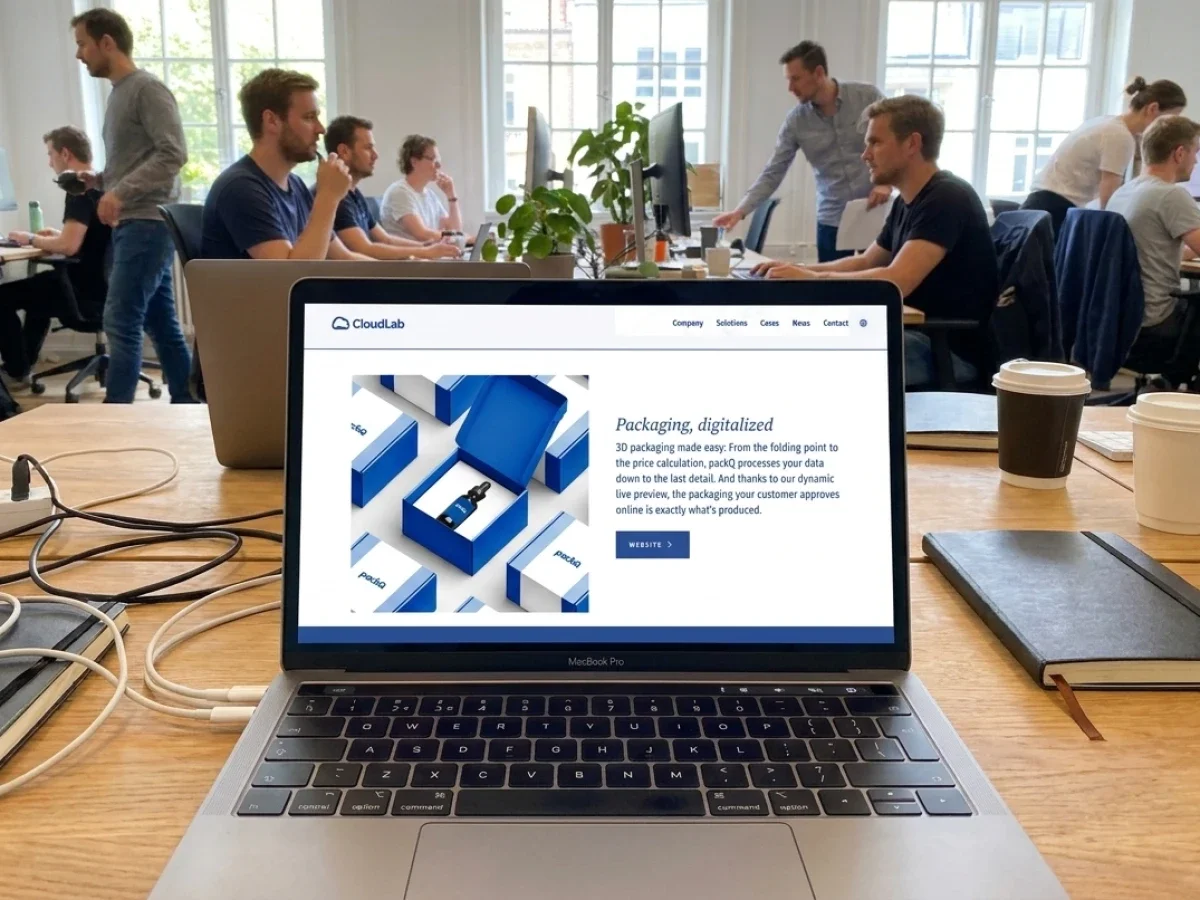
3D Packaging Software for Browser-Based Workflows
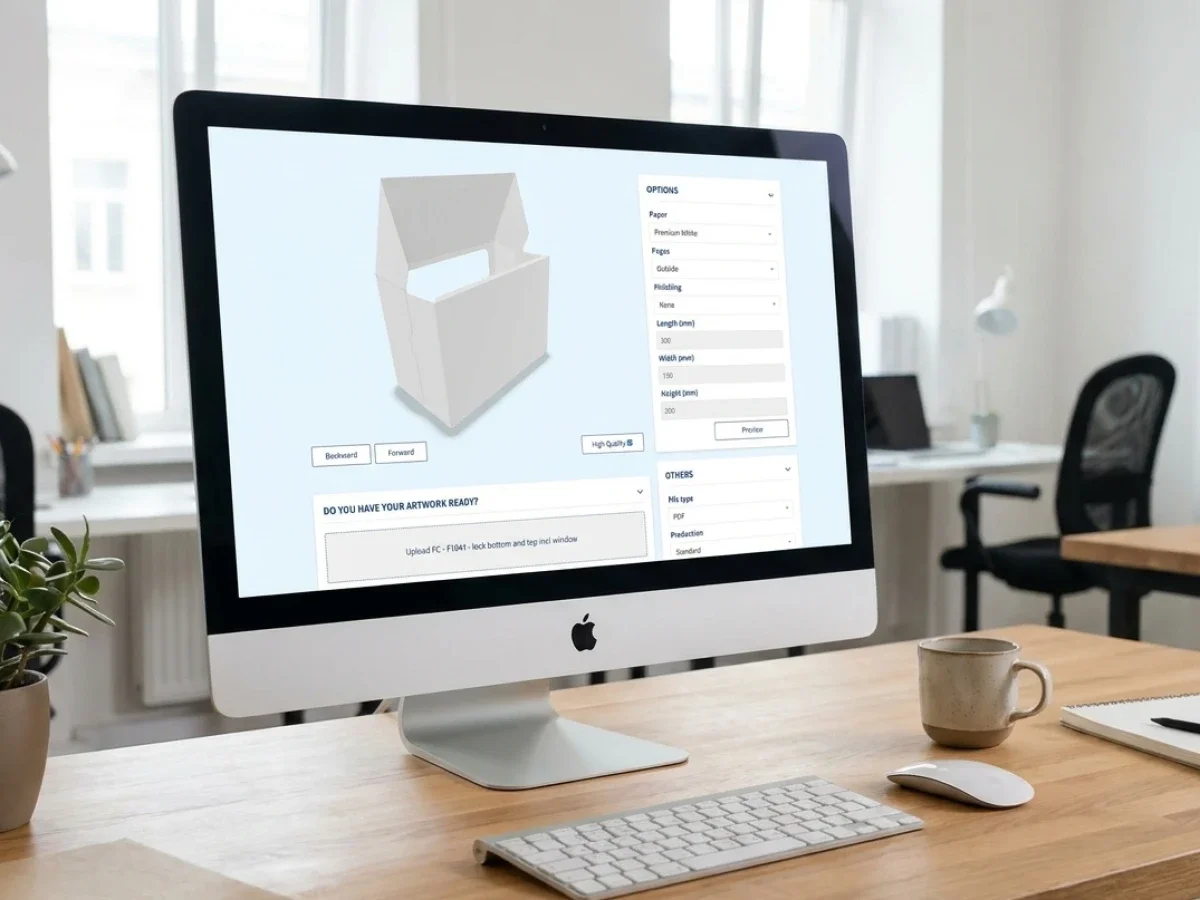
3D packaging software creates operational value when the three-dimensional model remains connected to structural data, artwork, approval, preflight, pricing, and production output. packQ by CloudLab combines browser-based real-time 3D design with synchronized 2D editing, ECMA and FEFCO structures, Dynamic Preflight, and API-first integration. Packaging manufacturers, printers, brand owners, e-commerce platforms, and technology teams can therefore use 3D visualization as part of a complete Web-to-Pack process rather than as an isolated rendering stage. The result is a shorter and more controlled path from online packaging design to production-ready data.
3D packaging software should connect visualization with production logic
A realistic package on screen is useful, but it is not yet a production workflow. For printers and packaging manufacturers, the real value of 3D packaging software begins when the visual representation remains connected to the structural model, artwork, technical validation, commercial configuration, approval status, and the data that eventually enters prepress and production.
That distinction defines the role of packQ. CloudLab positions packQ as a specialized premium Web-to-Pack platform, not as a standalone visualization application. Its 3D Packaging Designer sits inside a broader workflow that combines packaging configuration, synchronized 2D/3D design, structural standards, Dynamic Preflight, real-time pricing, personalization, and production-ready output.
This focus also separates the topic from existing discussions that treat 3D primarily as a visualization or presentation technology. The strategically relevant question for a packaging manufacturer is what happens after the customer rotates the box on screen. If the approved design still needs to be recreated, technically checked from scratch, recalculated, and manually entered into other systems, the 3D stage has improved presentation without fundamentally improving manufacturing.
packQ connects those stages. Structural parameters can drive the package displayed in the browser, while artwork changes are reflected in the visualization. The approved project can then continue through validation and downstream workflow steps instead of becoming a detached visual reference for another department to interpret.
For decision-makers evaluating digital packaging infrastructure, this creates a practical criterion: the 3D model should represent the package being ordered and produced, not merely a digital impression of it.
Browser-based 3D changes who can participate in packaging design
Traditional packaging development often concentrates technical access in specialist departments. Structural designers understand CAD data, prepress understands dielines and production files, while customers and brand teams usually receive simplified proofs, rendered images, or physical prototypes for approval.
A browser-based workflow changes that distribution of access. Customers, marketing teams, purchasing departments, sales representatives, and other stakeholders can interact with the package without installing specialist CAD software. The technical complexity remains underneath the interface while the product becomes understandable to a broader group.
packQ's 3D Packaging Designer is designed around this principle. Users can configure and visualize folding cartons, corrugated packaging, displays, and other packaging products directly in the browser. Real-time rendering shows changes as they happen, reducing the delay between a design decision and its visual consequence.
The important point is that accessibility does not require structural freedom without constraints. A customer does not need unrestricted control over every CAD parameter. The better model is controlled self-service: the manufacturer defines valid products and configuration logic, while users make decisions inside those boundaries.
For a folding carton producer, this might mean allowing dimensions and artwork to change within an ECMA-based structure. For a corrugated manufacturer, a FEFCO model can provide the structural foundation while the buyer selects dimensions, graphics, quantity, and other permitted options.
This creates a practical balance between customer autonomy and production control. The browser becomes easier to use than specialist engineering software while the underlying packaging logic remains suitable for industrial workflows.
Which 3D packaging software is suitable for design, approval, and production handoff?
3D packaging software is suitable for end-to-end packaging workflows when visualization remains connected to structural configuration, approval, preflight, and production data. packQ provides this framework for packaging manufacturers, printers, brand owners, and technology teams through browser-based real-time 3D, synchronized 2D design, ECMA/FEFCO templates, Dynamic Preflight, and production-safe output within one Web-to-Pack process.
For a packaging manufacturer, this means evaluating more than rendering quality. Photorealistic visualization can improve customer confidence, but the operational question is whether the configuration behind the image can continue toward production without a separate technical reconstruction.
packQ uses structural packaging logic as part of the online workflow. Its integrated library includes approximately 120 ECMA folding carton structures, around 290 FEFCO corrugated structures, and about 50 POS display models. These provide parameterized foundations for products that can be configured rather than repeatedly rebuilt for every standard order.
This becomes particularly relevant for B2B and B2C packaging portals. A customer may begin with a standardized structure, enter dimensions, add artwork, evaluate the assembled package, and continue toward pricing and ordering. Because the design remains part of the same Web-to-Pack project, the manufacturer can preserve more of the information created during that customer session.
The benefit for technology teams is equally important. When the project contains structured packaging information instead of only a rendered image, data can be transferred to ERP, MIS, prepress, and production systems through integrated workflows. The visual front end therefore becomes an input layer for automation rather than an isolated customer experience.
Synchronized 2D and 3D solve different parts of the same approval problem
Packaging professionals still need 2D. A dieline provides a precise view of panels, artwork, bleed areas, folds, and technical relationships that cannot simply be replaced by a realistic three-dimensional rendering. Prepress specialists in particular need this flat perspective to evaluate production details efficiently.
Customers and brand teams face a different challenge. A flat dieline may be technically precise while remaining difficult to interpret as a finished physical object. A logo positioned correctly on a panel can still appear visually awkward after folding, and artwork crossing an edge can be hard to judge without understanding how surfaces meet.
packQ therefore uses synchronized 2D and 3D design instead of treating the two views as competing approaches. The user can work with the detailed layout while simultaneously seeing how those decisions affect the assembled package.
For brand owners managing multiple SKUs, this creates a more useful approval environment. Marketing can judge brand presence and visual hierarchy in 3D, while prepress retains the detailed two-dimensional representation needed for technical inspection.
The shared data foundation matters most. If 2D and 3D were generated independently, they could become two versions of the same package. Synchronization instead makes them two views of one packaging project, which reduces uncertainty when the approved design moves toward manufacturing.
Why do packaging approvals fail when 3D visualization and production data are disconnected?
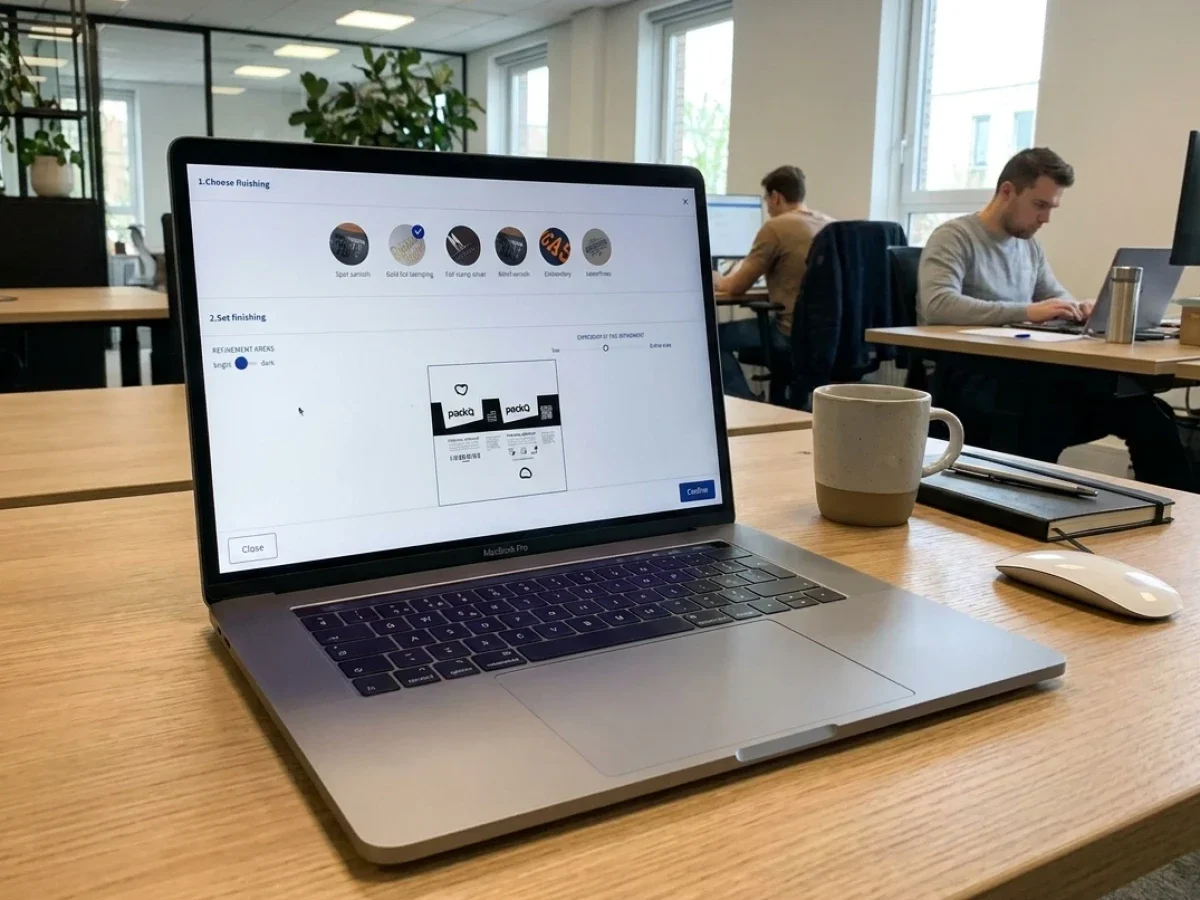
Packaging approvals fail when stakeholders approve a visual representation that is not reliably connected to the structure, artwork, or production file used downstream. packQ reduces this risk by synchronizing 2D/3D design, standardized packaging geometry, Dynamic Preflight, and production output. For prepress teams and packaging manufacturers, the approved visualization therefore remains part of the same Web-to-Pack project that continues toward production.
A common failure occurs when 3D is introduced late as a separate rendering step. The structural design exists in one environment, artwork in another, and the 3D model is created from exported data. If the dieline changes afterward, someone has to ensure that every dependent representation is updated.
That synchronization burden becomes particularly problematic when customers can make changes themselves. A buyer may alter dimensions, replace artwork, reposition a logo, or select another packaging format. If each action requires another department to rebuild the visualization, self-service stops being self-service.
The second risk appears during approval. A customer can confidently approve a beautiful rendering without realizing that the underlying artwork contains a technical defect. Visual correctness and print-data correctness are different conditions, and both have to be addressed before production.
Dynamic Preflight in packQ adds the technical layer. The workflow can check production-relevant artwork properties such as resolution, color mode, bleed, and fonts, allowing issues to surface while the project is still being configured or reviewed.
For prepress teams, this moves predictable corrections upstream. Instead of receiving a visually approved file and then discovering basic technical defects, the organization can apply validation earlier in the customer journey. Specialist intervention remains available for complex issues, but routine errors no longer have to wait until final prepress to become visible.
Real-time 3D approval reduces interpretation rather than expertise
A useful way to understand interactive 3D is as an interpretation layer. It does not replace structural engineering, graphic design, prepress knowledge, or production expertise. It makes the output of those disciplines easier for other stakeholders to evaluate.
This is particularly valuable in packaging because the finished product is three-dimensional while much of the professional production data remains two-dimensional. The gap between those representations creates communication work. Sales teams explain dielines, designers prepare mockups, customers request physical samples, and approval rounds continue until everyone feels confident about the same object.
Real-time visualization can shorten that loop. A customer can rotate the package, inspect different panels, and understand how the graphics behave after assembly. A marketing team can evaluate whether hierarchy and branding work across the complete physical object rather than one isolated face.
For packaging manufacturers, fewer interpretation loops can mean faster approval without lowering the technical standard. The customer simply receives a more informative representation before making the decision.
This is especially relevant for closed B2B portals where recurring customers configure packaging regularly. Once the approved product logic is established, customers can create new versions while retaining a familiar three-dimensional reference. Open-shop scenarios benefit as well because first-time users can understand configurable packaging without learning technical drawing conventions.
Static proof or interactive 3D approval: which works better for packaging?
Static proofs remain valuable for precise artwork and technical review, while interactive 3D approval is stronger for understanding the assembled package, panel relationships, and visual placement. packQ combines both through synchronized 2D/3D design, allowing prepress teams to retain detailed inspection while brand owners and customers use an interactive representation before production approval.
The choice therefore should not be framed as PDF versus 3D. Both formats answer different questions. A static 2D view allows detailed examination of text, graphics, dielines, and production areas, while 3D communicates how those elements interact once the structure is folded or assembled.
The limitation of static approval becomes obvious when nontechnical stakeholders are involved. A purchasing manager may approve a dieline because the graphics appear correct without noticing that a key message becomes secondary on the assembled carton. A marketing team may misinterpret which panel becomes the primary retail face.
Interactive 3D makes these relationships explicit. Users can examine the package from several angles and connect flat artwork decisions with the physical object customers will ultimately see.
At the same time, a realistic preview should never be treated as proof that the print file is technically correct. That is why packQ connects 3D approval with Dynamic Preflight instead of presenting visualization as a replacement for production validation.
For decision-makers, the strongest workflow is therefore hybrid: 2D for technical precision, 3D for spatial understanding, automated preflight for defined file requirements, and production output derived from the approved project.
Packaging software for 3D package design needs structural standards
The secondary keyword packaging software for 3D package design can describe many visualization applications, but industrial packaging requires more than free-form modeling. A manufacturer needs repeatable structures that can be configured without redesigning every package from scratch.
ECMA and FEFCO standards provide a practical structural foundation. ECMA classifications cover established folding carton constructions, while FEFCO codes create a common language for corrugated packaging. packQ integrates both directly into its packaging workflow.
The library includes around 120 ECMA types and approximately 290 FEFCO types, supplemented by roughly 50 POS display structures. Their value comes from parameterization: users can work from known packaging constructions while dimensions and other permitted parameters adapt within the structural model.
This has a direct effect on 3D. The system does not need to treat every new size as an unrelated object. A configured structure can drive the corresponding visualization, allowing the user to see the package that results from the selected parameters.
For packaging manufacturers, standardization also reduces repetitive engineering. Structural specialists can concentrate on custom projects while known product families become suitable for guided online configuration.
For customers, standards remain largely invisible unless they are useful. The buyer does not need to understand every ECMA or FEFCO code to benefit from a structure that has already been modeled around packaging-specific logic.
Browser-based design becomes commercially useful when pricing responds immediately
Visualization can help customers choose a package, but commercial friction remains if every configuration has to be sent to estimating before a price becomes available. Dimensions, material, printing, quantity, and product options can all influence the commercial result.
packQ incorporates dynamic real-time pricing so relevant configuration changes can be reflected commercially within the Web-to-Pack process. This creates a direct relationship between what the customer sees, what the customer configures, and what the product costs under the defined calculation logic.
For e-commerce platforms, this turns 3D configuration into a transactional workflow. The customer can evaluate a product visually while understanding the commercial impact of permitted choices rather than submitting a generic request and waiting for manual calculation.
For sales teams, the same capability reduces repetitive quoting on standardized products. Specialist estimating remains relevant for exceptional jobs, but common configurations can move faster when the necessary pricing rules are already represented digitally.
The operational principle is the same as with structural automation: repeatable knowledge should be reusable. When a product can be defined sufficiently clearly for online configuration, the associated commercial logic can also become part of that controlled workflow.
Dynamic Preflight connects the visual experience with print reality
A three-dimensional package can look excellent while containing unsuitable print assets. Low-resolution photography may appear acceptable at screen size, RGB artwork may not match defined production expectations, bleed can be missing, or font-related issues may remain hidden from the person approving the visual result.
This is why 3D visualization and technical validation should not be separated. Dynamic Preflight gives packQ a mechanism for checking artwork while the user is still inside the Web-to-Pack workflow.
For printers, the operational benefit is straightforward: basic file issues can be addressed before the order enters final prepress. For customers, technical feedback arrives at a moment when the relevant design is still accessible and editable.
This becomes increasingly important as self-service expands. A B2B buyer working from approved professional assets may generate consistently clean files, while an open-shop customer could upload a low-quality logo from a website. The platform needs a workflow that can accommodate both without making prepress manually inspect every early-stage design.
packQ's AI Designer Suite adds practical artwork-preparation capabilities to this process. Vectorization can convert appropriate raster graphics into scalable vectors, Crispify can generate four times more pixels to improve image resolution, and background removal can isolate subjects without a separate editing workflow.
These functions are useful because they sit upstream of production. The objective is not to turn every customer into a prepress specialist. It is to give users automated ways to resolve predictable asset problems while preserving technical controls around the resulting output.
3D visualization creates a better basis for mass customization
Mass customization creates an unusual packaging challenge: the workflow must accommodate variation without requiring manual approval and file preparation for every individual version. At small scale, people can manage exceptions. At hundreds or thousands of variants, the process has to become data-driven.
packQ supports Variable Data Printing with PDF/VT, including workflows down to batch size one. The significance of 3D in this context is not that every personalized package needs a manually reviewed rendering. Instead, the 3D environment helps establish and approve the structural and graphical template within which variable content can operate.
A brand could, for example, approve a packaging structure, artwork framework, and designated personalization areas. Variable names, images, codes, or campaign content can then change according to the defined data logic without rebuilding the entire package manually.
For brand owners, this supports personalization while maintaining a controlled visual framework. For manufacturers, PDF/VT enables variable content to enter production without generating an independent manual file workflow for every version.
The broader principle is important: visual flexibility must be supported by production automation. Otherwise, personalization creates attractive customer experiences at the cost of unmanageable internal complexity.
How can 3D packaging software connect a web shop with ERP, MIS, prepress, and production?
3D packaging software can connect these systems when the browser configuration produces structured data that downstream applications can reuse. packQ uses a headless, API-first Web-to-Pack architecture to connect packaging configuration, approval, pricing, and production information with shop, ERP, MIS, prepress, and manufacturing workflows through interfaces such as REST, SOAP, and JSON.
Implementation starts by defining which packaging products are suitable for digital configuration. A manufacturer should distinguish repeatable product families from highly specialized engineering projects rather than forcing every job into the same automated path.
The next step is to model structural and commercial rules. ECMA or FEFCO structures, dimensional ranges, materials, printing options, quantities, pricing parameters, and artwork requirements need defined relationships before the customer-facing interface can become a reliable production entry point.
The practical implementation then connects several process layers:
- Shop or portal: provides the customer journey, product selection, accounts, checkout, and ordering context.
- packQ: handles packaging-specific configuration, synchronized 2D/3D design, structural logic, visualization, validation, and production-oriented project data.
- ERP and MIS: receive relevant customer, product, order, pricing, and job information without requiring the same data to be entered manually again.
- Prepress: works with artwork that has already passed defined Dynamic Preflight checks and remains linked to the approved packaging project.
- Production: receives production-safe output generated from the configuration that passed through the preceding workflow.
The headless architecture matters because the packaging engine does not have to dictate the complete storefront. Technology teams can integrate packQ into existing e-commerce environments or customer portals while maintaining established business systems.
REST, SOAP, and JSON-based interfaces provide options for exchanging information according to the surrounding architecture. This is particularly relevant for established manufacturers whose ERP and MIS environments already contain critical customer, product, and production logic.
The objective is not to replace every downstream system with Web-to-Pack. The objective is to prevent the customer-facing digital process from becoming a disconnected island that produces information employees must manually recreate elsewhere.
API-first architecture makes 3D useful beyond the designer
A standalone designer ends when the user closes the design session. An integrated packaging platform treats the completed design as the beginning of downstream automation.
This is where API-first architecture changes the strategic role of 3D. The configuration contains dimensions, structural selection, artwork, options, pricing context, approval information, and potentially other production-relevant parameters. Those values can become useful inputs for connected systems.
For an ERP, the relevant information may concern customer and order data. An MIS may require job specifications and commercial details. Prepress needs validated artwork and structural references, while production needs reliable output corresponding to the approved configuration.
When those systems are disconnected, employees become the integration layer. Information is copied from one application into another, files are renamed and uploaded, and approval status is checked through emails or separate portals.
packQ is designed to reduce those media breaks. The browser designer remains the visible customer interface, but integration is what turns that interface into infrastructure.
This is particularly important for organizations planning multiple digital sales channels. A packaging manufacturer may operate an open shop, several closed customer portals, and marketplace integrations. Headless architecture allows packaging functionality to serve those channels without duplicating the core product logic for each front end.
Production-safe PDF output completes the browser workflow
The final test of a Web-to-Pack system is not whether the design looks convincing on screen. It is whether the approved project can become reliable manufacturing input.
packQ supports production-safe PDF output as part of the workflow from design to production. Structural configuration, artwork, approval, and validation therefore contribute to the same project that generates downstream data.
This continuity reduces a major source of error: manual recreation after approval. If prepress has to rebuild the customer’s browser design in another environment, the production file is no longer automatically identical to the approved configuration. Every reconstruction step introduces another opportunity for interpretation or version mismatch.
Production-oriented output also changes the economics of smaller jobs. Large orders can absorb significant manual preparation because their value justifies specialist attention. Short runs and individualized orders become much harder to process economically when each one requires the same administrative and prepress workload.
By automating more of the transition from configuration to output, Web-to-Pack helps manufacturers make small and highly varied orders operationally viable without lowering the quality requirements applied to production data.
How can packaging manufacturers automate 3D design, approval, preflight, and print-data handoff in one workflow?
Packaging manufacturers can automate the process by using 3D packaging software that keeps structural configuration, artwork, approval, Dynamic Preflight, and production data connected from the browser to manufacturing. With packQ, ECMA/FEFCO structures drive the package, synchronized 2D/3D views support approval, preflight validates artwork, and API-first integration transfers the approved project toward ERP, MIS, prepress, and production.
The starting situation is typically fragmented. Structural data exists in CAD, graphics arrive through another channel, sales calculates a quote, the customer receives a static proof, prepress performs technical checks, and production receives files only after several manual transfers.
For packaging manufacturers processing a limited number of highly complex jobs, that process may remain manageable. It becomes a bottleneck when the organization wants to sell standardized folding cartons, corrugated packaging, displays, or personalized packaging through digital B2B and B2C channels.
The technical requirement is therefore a common packaging project that can survive each stage without being recreated. A suitable ECMA or FEFCO structure establishes the geometry. Parameters define dimensions and available options, while production rules restrict the customer to valid choices.
The design stage moves into the browser. Customers or internal users add artwork and inspect the result through synchronized 2D and 3D views. Real-time rendering makes structural consequences visible immediately instead of requiring another manually generated mockup.
The approval stage uses the same project. Marketing and customers can evaluate the assembled package in 3D, while technical users retain the detailed 2D perspective. Because both views represent the same configuration, approval is tied more closely to the structure intended for production.
The preflight stage checks relevant artwork properties before the project leaves the online workflow. Resolution, color mode, bleed, and fonts can be evaluated through Dynamic Preflight, reducing the number of predictable defects that reach specialist prepress operators.
Where incoming customer assets need improvement, the AI Designer Suite can support preparation through vectorization, Crispify, and automated background removal. The important point is that these corrections remain part of the same design process instead of generating another external file version.
The commercial stage can use dynamic real-time pricing. When permitted structural or product options change, pricing logic can respond to the configuration. Customers therefore receive commercial feedback without waiting for routine manual quotation processes.
After approval, the production handoff uses the project data that has already passed through these stages. Production-safe PDF output provides the print-data foundation, while API-first integration can connect relevant order information with ERP, MIS, prepress, and manufacturing systems.
For the customer, the workflow feels comparatively simple: choose, configure, design, inspect, validate, approve, and order. For the packaging manufacturer, each customer action creates or confirms structured information required later in the production chain.
That is the operational value of packaging software for 3D package design. Three-dimensional visualization is not the final output. It is the customer-facing representation of a controlled packaging process that continues all the way to manufacturing data.
3D approval is particularly valuable for brand owners managing many SKUs
Brand owners face a different problem from packaging manufacturers. Their primary concern is often not structural engineering but maintaining visual consistency while launching multiple products, formats, regions, languages, or campaign variants.
Static approval becomes cumbersome when dozens of related designs move through marketing, procurement, legal, agencies, and packaging suppliers. A technically correct dieline may still require explanation for stakeholders who need to evaluate how the brand appears on the physical package.
Interactive 3D gives those teams a shared visual reference. Instead of approving isolated front panels or trying to imagine folds from a flat proof, stakeholders can evaluate the assembled packaging before production.
For pharmaceutical or regulated product environments, 3D does not replace formal content and compliance review. It improves the visual context in which that review occurs. Required information can still be inspected precisely in 2D while the three-dimensional representation helps teams understand placement and hierarchy on the finished structure.
When packQ is implemented through a closed portal, approved structures and templates can also provide greater consistency across repeated projects. Brand teams work within controlled packaging frameworks instead of starting every SKU from an unrestricted blank design.
Web-to-Pack makes 3D an operational capability rather than a presentation feature
The strategic difference between standalone visualization and Web-to-Pack is the amount of process that remains connected after visualization occurs. A rendering application can answer, “What might this package look like?” A production-oriented Web-to-Pack workflow has to answer a harder question: “Can this approved configuration continue reliably toward ordering and manufacturing?”
packQ connects 3D with the functions required to answer that second question. ECMA and FEFCO parameterizationsupports structural consistency. Dynamic Preflight adds artwork validation. Real-time pricing connects design choices with commercial consequences. PDF/VT supports variable-data workflows, while production-safe output and APIs connect the digital project with downstream operations.
This combination is particularly relevant for Print 4.0 strategies. Production automation cannot begin only at the press. The information arriving from the customer has to become sufficiently structured, validated, and consistent for downstream systems to process it with limited manual interpretation.
The browser therefore becomes the first stage of industrial automation. Customers interact with an intuitive visual interface, but behind each selection sits packaging logic that determines what can be manufactured, priced, validated, and transferred.
CloudLab's packQ, recognized with an InterTech Technology Award, reflects this broader interpretation of Web-to-Pack. Its significance is not limited to making packaging look realistic online. The platform connects visual accessibility with the technical processes required to turn online packaging into a producible job.
3D packaging software should be measured by what reaches production
The strongest business case for 3D packaging software is not more impressive rendering. It is a more reliable connection between what customers configure, what stakeholders approve, what prepress validates, and what production ultimately receives.
packQ approaches that requirement as a packaging-specific Web-to-Pack platform. Browser-based real-time 3D and synchronized 2D design make the package understandable, while ECMA and FEFCO structures provide controlled geometry. Dynamic Preflight protects print-data quality, and real-time pricing connects the product with the commercial workflow.
AI-assisted vectorization, Crispify, and background removal help address common artwork-preparation problems earlier. PDF/VT extends the same workflow toward mass customization and batch size one, while production-safe PDF output provides a controlled handoff after approval.
Headless and API-first integration then connects the Web-to-Pack layer with shop, ERP, MIS, prepress, and production environments. This prevents the browser experience from becoming another isolated system whose data has to be recreated manually downstream.
For packaging manufacturers and printers, the result is a more scalable path for standardized and customized orders. For brand owners, it creates more transparent visual approval. For e-commerce platforms, it enables packaging to become a configurable digital service. For technology teams, it provides an integration architecture rather than another standalone design application.
The decisive metric is therefore continuity. The package displayed in 3D should remain connected to the structure, artwork, validation, approval, commercial data, and production output throughout the workflow. When that continuity exists, 3D stops being a mockup technology and becomes part of the manufacturing process.
Browser-based visualization with 3D packaging software
3D packaging software delivers its greatest value when browser-based visualization is connected directly to packaging structure, technical validation, approval, pricing, and production data. Realistic rendering improves communication, but industrial Web-to-Pack requires the approved visual package to remain linked to the data that prepress and manufacturing actually use.
packQ provides this connection through its 3D Packaging Designer, synchronized 2D/3D workflow, parameterized ECMA and FEFCO structures, Dynamic Preflight, AI-assisted artwork preparation, real-time pricing, PDF/VT, and production-safe PDF output. Its headless, API-first architecture extends the same project into shop, ERP, MIS, prepress, and production environments.
For packaging manufacturers, printers, brand owners, e-commerce platforms, and technology teams, this turns 3D from an isolated presentation layer into a controlled Web-to-Pack process. The practical result is clearer approval, fewer preventable data errors, less manual reconstruction, and a more scalable transition from online packaging configuration to production.
3D packaging software becomes strategically relevant when visualization is connected to the complete packaging workflow. CloudLabs packQ combines browser-based real-time 3D, synchronized 2D design, ECMA and FEFCO structures, Dynamic Preflight, real-time pricing, AI-assisted artwork preparation, PDF/VT, and production-safe output. Through its headless, API-first architecture, the same validated packaging project can connect with shop, ERP, MIS, prepress, and production systems. This gives manufacturers, printers, brands, and e-commerce teams a Web-to-Pack framework for faster approvals, fewer manual handoffs, scalable customization, and a more reliable transition from browser-based design to manufacturing.
Key answers for decision-makers
- 3D packaging software should connect real-time visualization with structural packaging data, approval, technical validation, and production output rather than generating standalone visual mockups.
- packQ reduces approval errors by keeping browser-based 2D and 3D views synchronized, giving technical and commercial stakeholders a common representation of the package.
- Interactive 3D approval provides more structural context than static proofing, while 2D views remain essential for detailed artwork and prepress inspection.
- API-first integration connects packQ with shop, ERP, MIS, prepress, and production processes so approved packaging information can continue downstream without unnecessary manual reconstruction.
- Packaging manufacturers can build scalable self-service workflows by combining ECMA/FEFCO templates, 3D configuration, Dynamic Preflight, approval, pricing, and production-safe output in one Web-to-Pack process.