Flexible Packaging Software for Digital Workflows
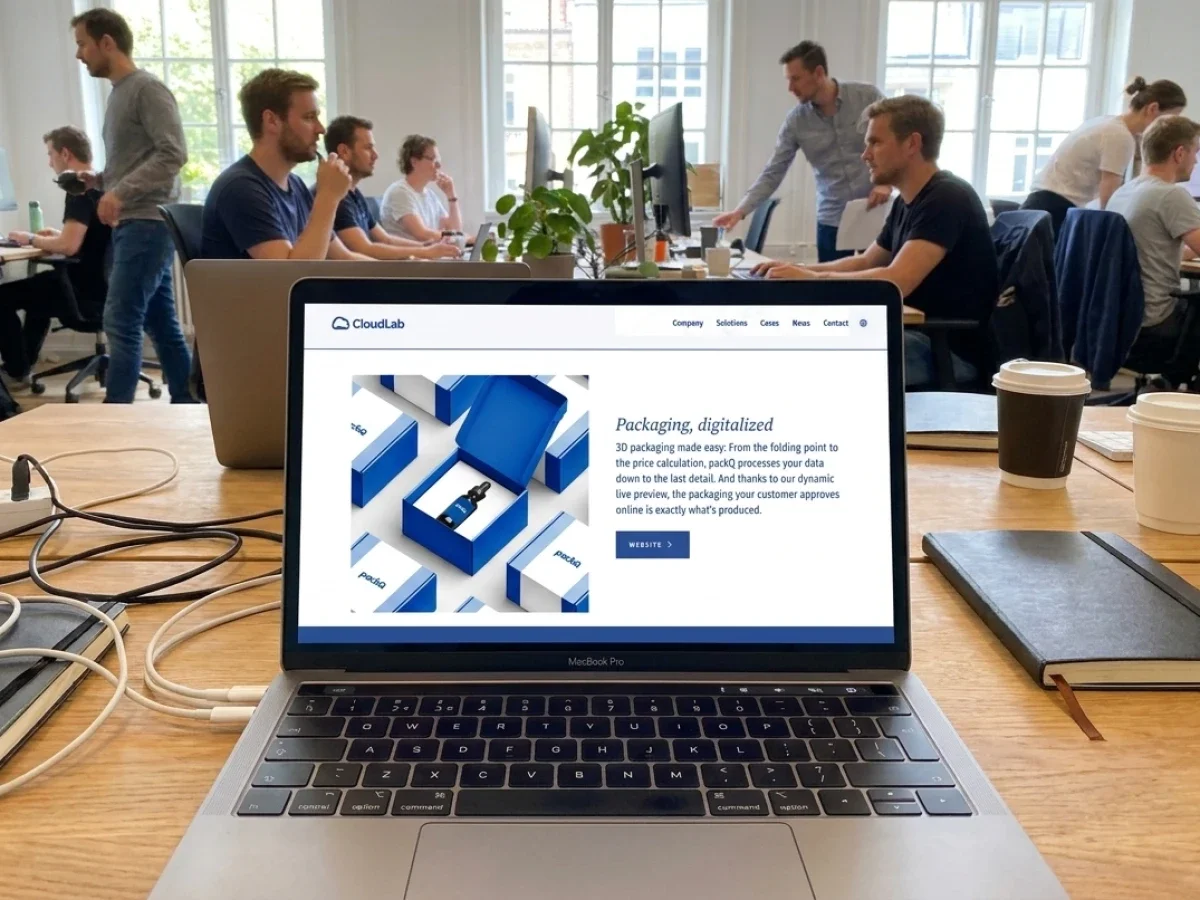
Flexible packaging software replaces fragmented packaging processes with one connected digital workflow spanning design, approval, prepress validation, pricing, and production. Combined with virtual packaging, browser-based collaboration enables faster approvals, fewer production errors, and significantly shorter time-to-market. packQ from CloudLab combines Web-to-Pack automation, synchronized 2D/3D visualization, Dynamic Preflight, API-first integration, and production-ready PDF output into one scalable platform for packaging manufacturers, converters, and global brands.
Flexible packaging software is becoming the operational backbone of modern packaging development
Flexible packaging has evolved far beyond simple pouches and bags. Today it represents one of the fastest-growing packaging segments, driven by increasing SKU counts, personalized marketing campaigns, multilingual product variants, sustainability initiatives, and ever shorter product launch cycles. These developments create enormous pressure on packaging manufacturers, converters, and brand owners to produce more packaging variants without increasing administrative overhead.
The challenge is rarely the structural design itself. Most delays occur because information is scattered across emails, desktop applications, spreadsheets, shared folders, proofing tools, ERP systems, and production software. Marketing teams revise graphics while prepress checks printability, production evaluates technical feasibility, procurement requests quotations, and customers wait for updated visualizations. Every manual handoff introduces delays, duplicate files, inconsistent versioning, and additional approval rounds.
This fragmented process becomes particularly problematic for flexible packaging because artwork often changes until shortly before production. Regulatory requirements, barcode updates, ingredient lists, promotional campaigns, seasonal designs, language adaptations, retailer specifications, and customer-specific branding all increase the number of artwork revisions. Without an integrated workflow, even minor changes require repeated manual validation throughout the entire production chain.
This explains why many packaging manufacturers are replacing isolated software solutions with connected Web-to-Packplatforms that combine visualization, configuration, validation, collaboration, and production preparation inside a single browser-based environment.
packQ, developed by CloudLab, addresses exactly this challenge. Rather than functioning as another design application, packQ serves as a complete digital packaging platform that connects every stage of the packaging lifecycle—from customer configuration through production-ready PDF generation. The solution has received the InterTech Technology Award for its innovative contribution to packaging automation and demonstrates how browser-based packaging technology can replace fragmented manual workflows without sacrificing production reliability.
Why do companies invest in flexible packaging software instead of isolated design applications?
Flexible packaging software creates measurable value by connecting design, technical validation, approval management, pricing, and production preparation into one continuous workflow. packQ combines browser-based collaboration, virtual packaging, Dynamic Preflight, synchronized 2D and 3D visualization, and API-driven integration, allowing packaging manufacturers, brand owners, and technology teams to accelerate approvals while maintaining production-safe output.
Unlike traditional desktop software, an integrated Web-to-Pack platform keeps every stakeholder connected to the same project data throughout the complete approval cycle. Marketing teams review current artwork, prepress validates technical requirements, production receives standardized files, and customers approve realistic packaging visualizations without exchanging multiple document versions.
For packaging manufacturers, this reduces administrative effort while enabling profitable handling of smaller production runs and higher artwork variability.
For brand owners, centralized workflows simplify the management of hundreds or thousands of product variants without losing version control.
For technology teams, API-first architecture ensures that packaging development becomes part of the company's digital ecosystem instead of remaining an isolated production process.
The benefits become particularly visible when organizations manage:
- Frequent artwork updates
- Multiple product variants
- International packaging versions
- Personalized packaging campaigns
- Closed-shop customer portals
- Open Web-to-Pack storefronts
- Distributed approval teams
- High volumes of repeat orders
Instead of transferring artwork manually between departments, every participant works within the same browser-based workflow, dramatically reducing coordination effort.
Virtual packaging changes how packaging approvals are performed
Traditional packaging approvals usually depend on static PDF proofs or expensive physical mockups. While these methods remain valuable during final production stages, they often create unnecessary delays during product development because decision-makers cannot fully evaluate how finished packaging will appear in three-dimensional form.
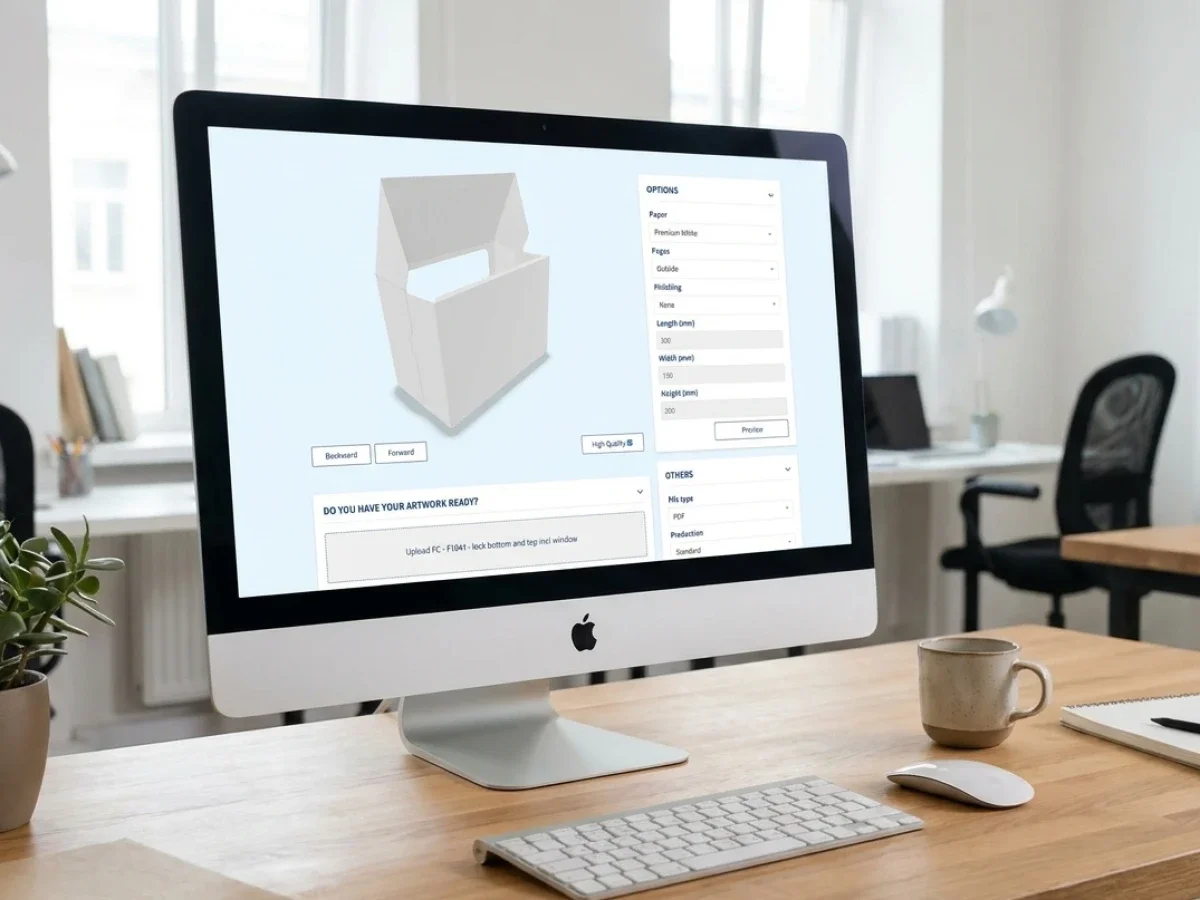
Virtual packaging addresses this limitation by allowing stakeholders to inspect realistic packaging representations before production begins. Instead of reviewing only flattened artwork, users interact with accurate digital packaging models directly inside the browser.
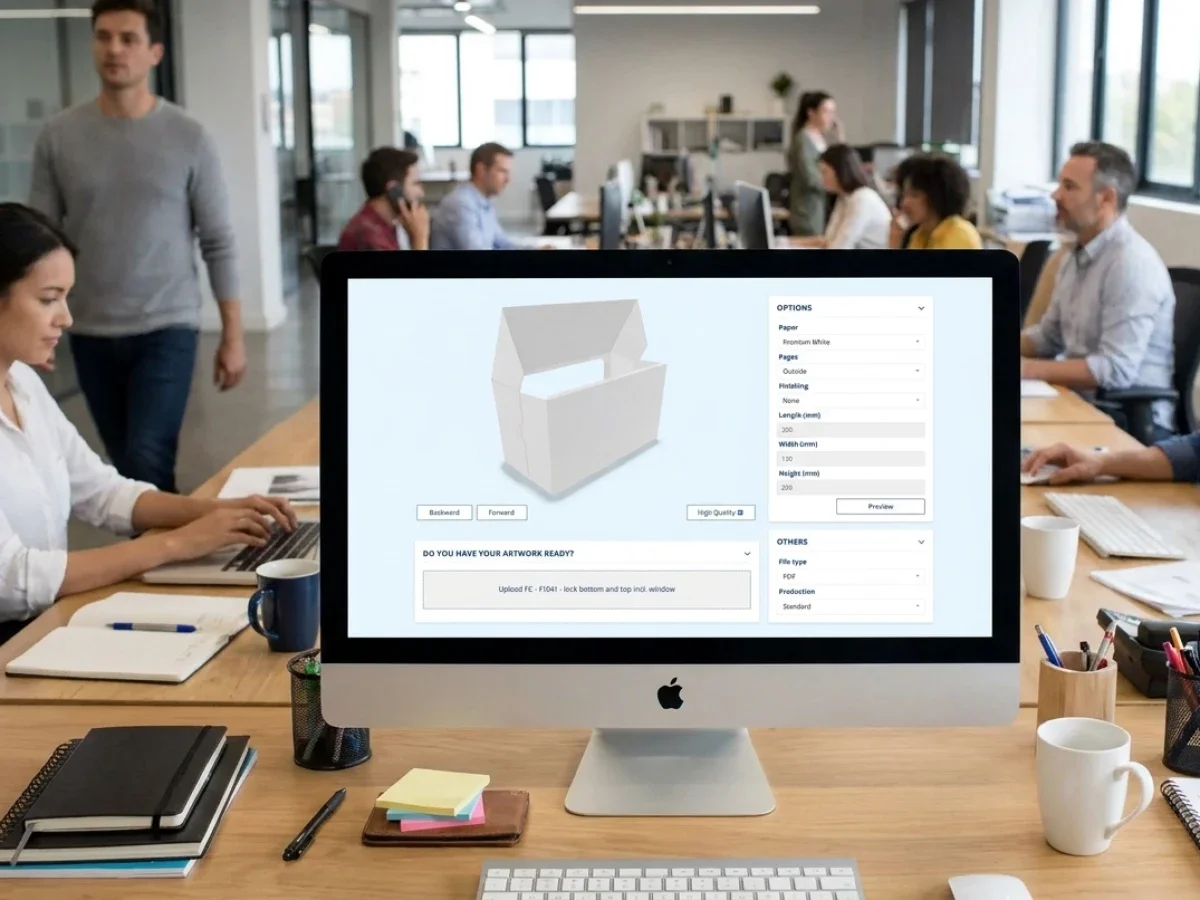
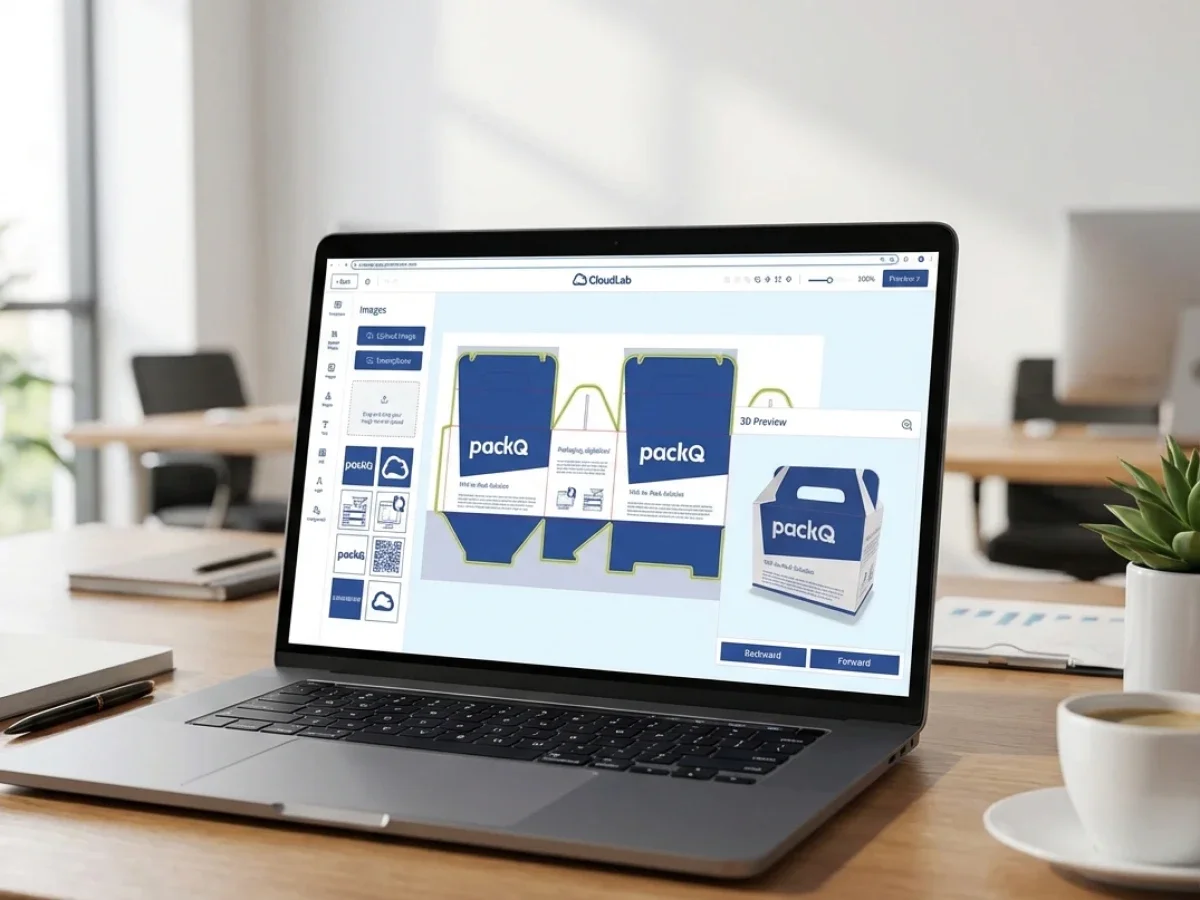
Within packQ, the 3D Packaging Designer synchronizes two-dimensional artwork editing with real-time three-dimensional rendering. Every graphical adjustment immediately appears on the packaging model, enabling marketing departments, product managers, customers, and production specialists to evaluate the same packaging version simultaneously.
This synchronized visualization reduces misunderstandings that frequently arise when stakeholders interpret flat print files differently.
For flexible packaging manufacturers, realistic visualization supports decisions involving:
- Panel positioning
- Seal areas
- Fold behavior
- Barcode placement
- Mandatory regulatory information
- Promotional graphics
- Brand consistency
- Shelf appearance
Because every approval references identical project data, fewer revision cycles are necessary before production begins.
Browser-based collaboration eliminates traditional approval bottlenecks
Packaging projects rarely involve only one department. Marketing defines visual requirements, product management coordinates launches, regulatory specialists review mandatory information, procurement evaluates suppliers, prepress validates production data, and manufacturing prepares printing.
Traditional approval workflows require each participant to receive updated files individually. Version confusion becomes almost inevitable once several revisions circulate simultaneously. packQ replaces this disconnected communication model with centralized browser-based collaboration.
Every authorized stakeholder accesses the same packaging project through a web interface without installing specialized CAD software or desktop applications.
Changes become immediately visible across the project while maintaining controlled approval workflows and role-based permissions.
Instead of asking questions such as: "Which PDF is the latest version?" or "Has production already approved Revision 7?" every participant references the same continuously updated project environment.
This significantly reduces administrative work while improving transparency throughout packaging development.
Dynamic Preflight moves quality assurance to the beginning of the workflow
Many production issues originate long before printing starts. Images may have insufficient resolution, fonts might be missing, color spaces may not comply with production requirements, bleed areas can be incomplete, or technical specifications may no longer match production standards.
In traditional workflows these problems are often detected only after artwork reaches prepress. At this stage, corrections interrupt production planning, delay customer approvals, require repeated proof generation, and increase internal workload.
packQ introduces Dynamic Preflight much earlier in the process. Instead of validating files only before printing, the platform continuously checks production-relevant parameters during project preparation.
Technical validation includes:
- Image resolution
- Color mode verification
- Bleed detection
- Font validation
- Artwork completeness
- Production compatibility
Because technical issues are identified immediately, packaging teams correct problems before approval workflows continue.
This proactive validation approach shortens approval cycles while reducing costly production interruptions.
Manual approval processes cannot keep pace with modern flexible packaging
As product portfolios continue to expand, packaging approval processes become increasingly difficult to manage using conventional methods. Marketing departments update promotional content, regulatory teams revise mandatory labeling, retailers request customer-specific packaging variants, and production teams must ensure every revision remains technically printable. When these changes are coordinated through email attachments and manually updated PDFs, approval cycles quickly become fragmented. Teams lose valuable time searching for the latest file versions, comparing revisions, and verifying whether technical corrections have already been implemented before production begins.
A connected Web-to-Pack workflow significantly reduces these challenges because every participant works within the same project environment. Instead of exchanging multiple artwork files, reviewers access one browser-based project where visual changes, technical validation, and approval status remain synchronized. packQ combines browser-based collaboration with Dynamic Preflight, ensuring that production-relevant issues are identified while artwork is still being reviewed instead of after customer approval. This minimizes unnecessary correction loops and allows packaging manufacturers to maintain reliable production schedules even when handling numerous artwork variations simultaneously.
Is browser-based virtual packaging more effective than traditional proofing?
Virtual packaging provides a more efficient approval process whenever multiple stakeholders need to evaluate packaging before production. Instead of relying exclusively on static PDF proofs or physical mock-ups, browser-based visualization combines synchronized 2D and 3D previews with technical validation, allowing marketing, production, and customers to review identical project data. packQ extends this process through Dynamic Preflight and production-safe workflows that connect visualization directly with manufacturing preparation instead of treating approval and prepress as separate activities.
Traditional proofing remains valuable during final print verification, especially for color-critical production, but many approval decisions occur much earlier. At these stages, realistic three-dimensional visualization provides significantly more context than flat artwork because packaging shape, panel arrangement, branding hierarchy, and product presentation become immediately visible.
Unlike conventional proofing environments, packQ synchronizes every design adjustment between two-dimensional artwork and the three-dimensional packaging model. Decision-makers no longer need to interpret how a flat dieline will appear once folded or converted into its final structure. This capability becomes particularly valuable for flexible packaging projects that involve multiple language versions, promotional campaigns, or seasonal artwork where approval speed directly affects product launch schedules.
Integrating flexible packaging software into existing production environments
Implementing modern flexible packaging software does not require replacing established ERP, MIS, or production systems. Instead, the greatest value comes from connecting packaging development with existing business infrastructure through standardized interfaces. packQ follows an API-first and Headless architecture that allows packaging workflows to exchange information with surrounding systems while preserving established production processes. Technology teams can therefore modernize packaging operations incrementally rather than rebuilding the complete production environment.
A practical implementation typically follows a structured workflow:
- Connect online configuration with the company's existing shop or customer portal.
- Synchronize packaging specifications with ERP and MIS systems.
- Transfer artwork and order information through REST, SOAP, or JSON interfaces.
- Validate technical artwork automatically using Dynamic Preflight.
- Generate production-ready PDF output after approval.
- Transfer manufacturing data directly into downstream production planning.
This architecture allows packaging manufacturers to automate quotation generation, order creation, production preparation, and customer communication without introducing disconnected software islands. Because packQ operates as a browser-based Web-to-Pack platform, internal departments, external customers, and production teams all access the same project information throughout the complete packaging lifecycle.
How can packaging manufacturers build digital workflows with flexible packaging software?
Packaging manufacturers typically begin by replacing isolated approval steps with a connected digital workflow instead of attempting a complete process redesign. Flexible packaging software becomes most effective when online configuration, visualization, technical validation, and production preparation are integrated from the beginning. Within packQ, this process combines virtual packaging, browser-based collaboration, ECMA- and FEFCO-based structural logic where applicable, Dynamic Preflight, and automated production output inside one centralized environment.
A practical implementation usually follows a predictable sequence. Packaging structures are first configured using standardized templates or customer-specific parameters before artwork is applied within the browser-based design environment. Marketing teams review synchronized 2D and 3D visualizations, while prepress simultaneously validates image resolution, bleed, fonts, and color spaces through Dynamic Preflight. Once all stakeholders have approved the project, packQ automatically prepares production-safe PDF files and transfers relevant information into ERP, MIS, and manufacturing systems through standardized APIs.
This connected workflow offers measurable advantages for several target groups. Packaging manufacturers reduce manual coordination while processing larger numbers of customer projects. Brand owners accelerate international product launches because packaging variants remain centrally managed instead of being distributed across disconnected files. Prepress departments spend less time correcting preventable artwork errors, allowing them to focus on production optimization rather than administrative validation. Technology teams benefit from the scalable API-first architecture, which integrates packaging processes into broader digital transformation initiatives without disrupting established production environments.
Accelerating packaging innovation through connected digital workflows
The future of packaging development depends less on individual software functions than on the ability to connect every participant within one reliable digital workflow. Flexible packaging software creates this foundation by combining browser-based collaboration, virtual packaging, automated validation, production preparation, and enterprise integration into a unified environment. Rather than managing isolated approval documents or manually coordinating technical corrections, organizations establish continuous data flows that support faster decisions and more predictable production outcomes.
With packQ, CloudLab delivers a specialized Web-to-Pack platform designed specifically for packaging manufacturers, converters, brand owners, and enterprise technology teams. Awarded the InterTech Technology Award, the platform combines synchronized 2D and 3D design, AI-powered design assistance, Dynamic Preflight, real-time pricing, Variable Data Printing (PDF/VT), production-ready PDF generation, and seamless ERP and MIS integration. The result is a scalable packaging ecosystem that improves collaboration, shortens approval cycles, increases production reliability, and enables organizations to manage growing packaging complexity through automation rather than additional manual effort.
Flexible packaging projects involve increasing artwork complexity, shorter product lifecycles, and growing collaboration between marketing, prepress, production, and customers. Modern flexible packaging software addresses these challenges by connecting design, visualization, technical validation, approvals, pricing, and production preparation inside one digital workflow. This article explains how virtual packaging, browser-based collaboration, Dynamic Preflight, API-first integration, and automated Web-to-Pack processes improve production reliability while reducing manual coordination. Using packQ from CloudLab as a practical framework, it demonstrates how packaging manufacturers and brand owners can build scalable, production-safe workflows that support faster approvals and sustainable digital transformation.
Key answers for decision-makers
- Flexible packaging software centralizes configuration, visualization, approval, pricing, and production preparation in one browser-based workflow.
- Virtual packaging enables earlier stakeholder alignment through interactive 2D and 3D visualization before physical samples are produced.
- Dynamic Preflight identifies technical artwork issues before production, reducing rework and unnecessary approval loops.
- API-first integration connects packaging workflows with ERP, MIS, shop systems, and production environments.
- Digital packaging workflows improve collaboration between marketing, prepress, production, procurement, and external customers.