Software Product Packaging with packQ Web-to-Pack
Software product packaging requires more than attractive artwork or a technically correct folding carton structure. packQ combines browser-based 3D packaging design, ECMA and FEFCO standards, automated preflight, real-time pricing, personalization and API-first integration into one Web-to-Pack workflow. For packaging manufacturers, print service providers, brand owners and technology teams, this creates a controlled path from configuration and approval to production-ready output.
Software product packaging requires a connected production logic
Software product packaging is increasingly a workflow problem rather than a pure design problem. A folding carton may start with a structural specification, continue through artwork creation and customer approval, and eventually become a production file that must satisfy technical requirements in prepress. When these stages rely on disconnected tools, every handover creates another opportunity for incorrect dimensions, outdated artwork, missing information or manual rework.
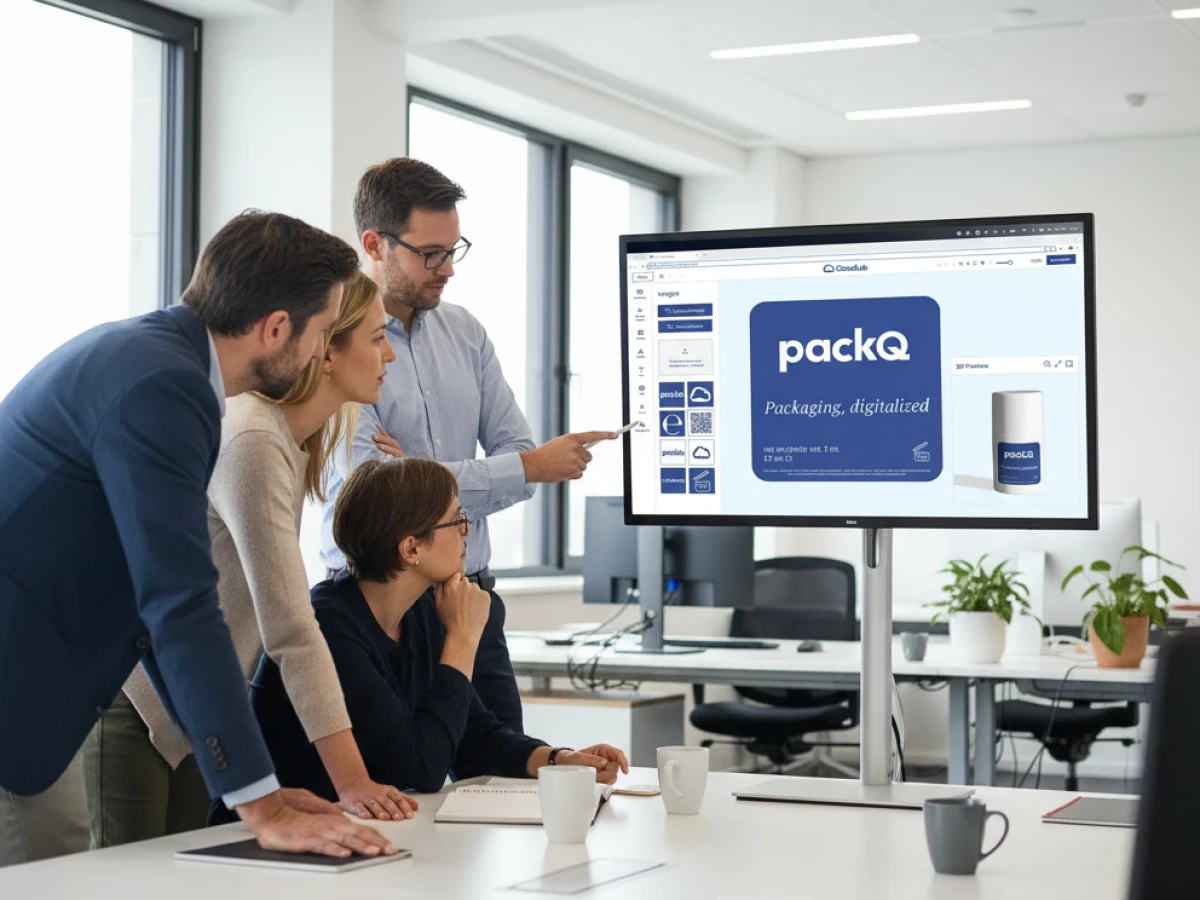
packQ addresses this process as a dedicated Web-to-Pack platform from CloudLab. The focus is not simply on placing graphics onto a box template. The platform connects structural packaging configuration, browser-based design, real-time 3D visualization, pricing, validation and production output so that the configuration approved online can remain aligned with the data used for production.
This approach is particularly relevant for packaging manufacturers, print service providers and brand owners managing many SKUs or customized orders. Instead of treating online packaging configuration as an isolated front-end application, packQ can become part of a broader production architecture that connects customer interaction with prepress, ERP, MIS and manufacturing processes.
For software product packaging, that distinction matters. A customer may need to configure a product box, modify artwork, review the result in three dimensions and approve a final version without understanding the underlying structural or prepress complexity. The system must therefore hide unnecessary technical complexity while preserving the production logic required by the packaging manufacturer.
Why packaging software needs more than a visual editor
A visual editor can show artwork, but packaging production requires additional information. The system needs to understand the selected structure, dimensions, folding logic, printable areas, graphics, variable content and production constraints. The closer those elements are connected, the less manual interpretation is required between the online order and the production environment.
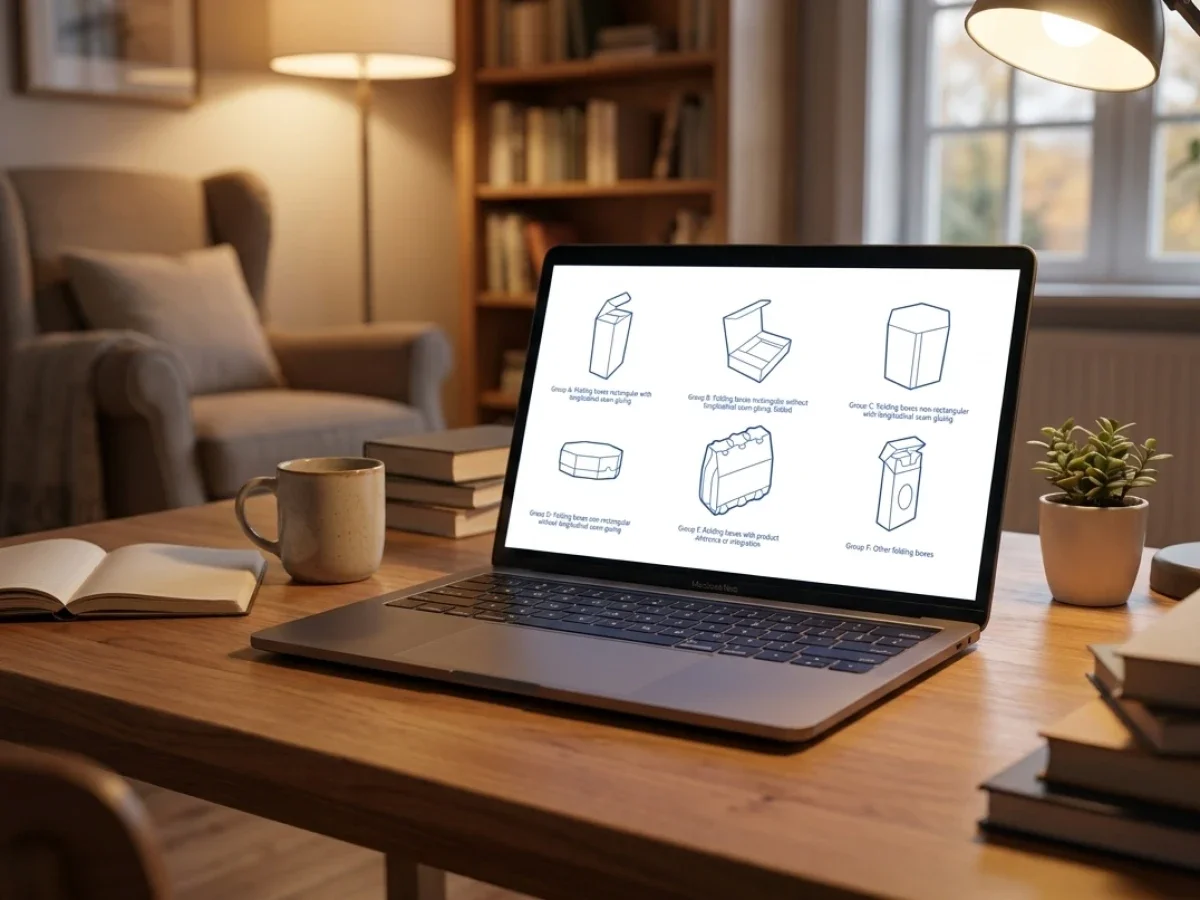
packQ uses standardized packaging structures as a foundation for this process. Its ECMA and FEFCO library covers approximately 120 ECMA types, approximately 290 FEFCO types and around 50 POS display structures, with different structural options for flaps, closures and configurations. This allows packaging manufacturers to build configurable products around established structural standards rather than recreating every package from scratch.
For folding carton manufacturers, this creates a particularly useful foundation. The structural packaging model can become part of the commercial configuration process, while the browser-based designer gives users access to artwork and visualization without requiring direct CAD expertise.
The result is a workflow in which structure and design are no longer separate stages. The packaging geometry, artwork and visualization can remain synchronized while the system prepares the information required for pricing, validation and production.
What makes software product packaging production-ready rather than just visually appealing?
Software product packaging becomes production-ready when structural configuration, artwork, customer approval, validation and output are governed by the same workflow. packQ provides this framework through browser-based 3D design, standardized ECMA and FEFCO structures, Dynamic Preflight, real-time pricing and API-first integration. For packaging manufacturers and technology teams, the advantage is a controlled transition from online configuration to production instead of a manual reconstruction of approved packaging data.
A practical example is a software company selling physical product packages through an online channel. The brand owner may want several box formats, different languages, customer-specific graphics and varying quantities. A traditional workflow can require sales, design, prepress and production teams to coordinate each variation separately.
With a Web-to-Pack workflow, the configuration becomes part of the order process itself. The user selects a valid packaging structure, places or modifies the artwork, receives an immediate visual representation and can see the commercial result before submitting the order. The production organization receives structured information instead of a loosely defined design request.
The same principle applies to packaging manufacturers serving multiple customers. A packaging portal can expose only the structures, materials, sizes, finishing options or design capabilities that are commercially and technically valid for a specific customer segment. This makes the online experience easier to control while keeping the underlying production requirements intact.
The value comes from connecting several individual functions:
- Structural configuration defines the physical packaging model.
- 3D visualization shows how the final package is expected to look.
- Pricing logic calculates the commercial result dynamically.
- Preflight validation identifies technical problems before production.
- Production output transforms the approved configuration into usable production data.
- API-first integration connects the workflow with surrounding business systems.
This is where software product packaging differs from a conventional graphic design workflow. The objective is not simply to create a digital representation of a package. The objective is to create a digital package configuration that can move through a controlled commercial and production process.
The role of 3D packaging design in software product packaging
A three-dimensional preview has a practical function in packaging workflows. It allows customers, sales teams, marketers and production stakeholders to evaluate the physical appearance of a folding carton or other package before manufacturing. This is particularly useful when the packaging structure has multiple panels, folds, closures or unusual geometries that are difficult to judge from a flat artwork file.
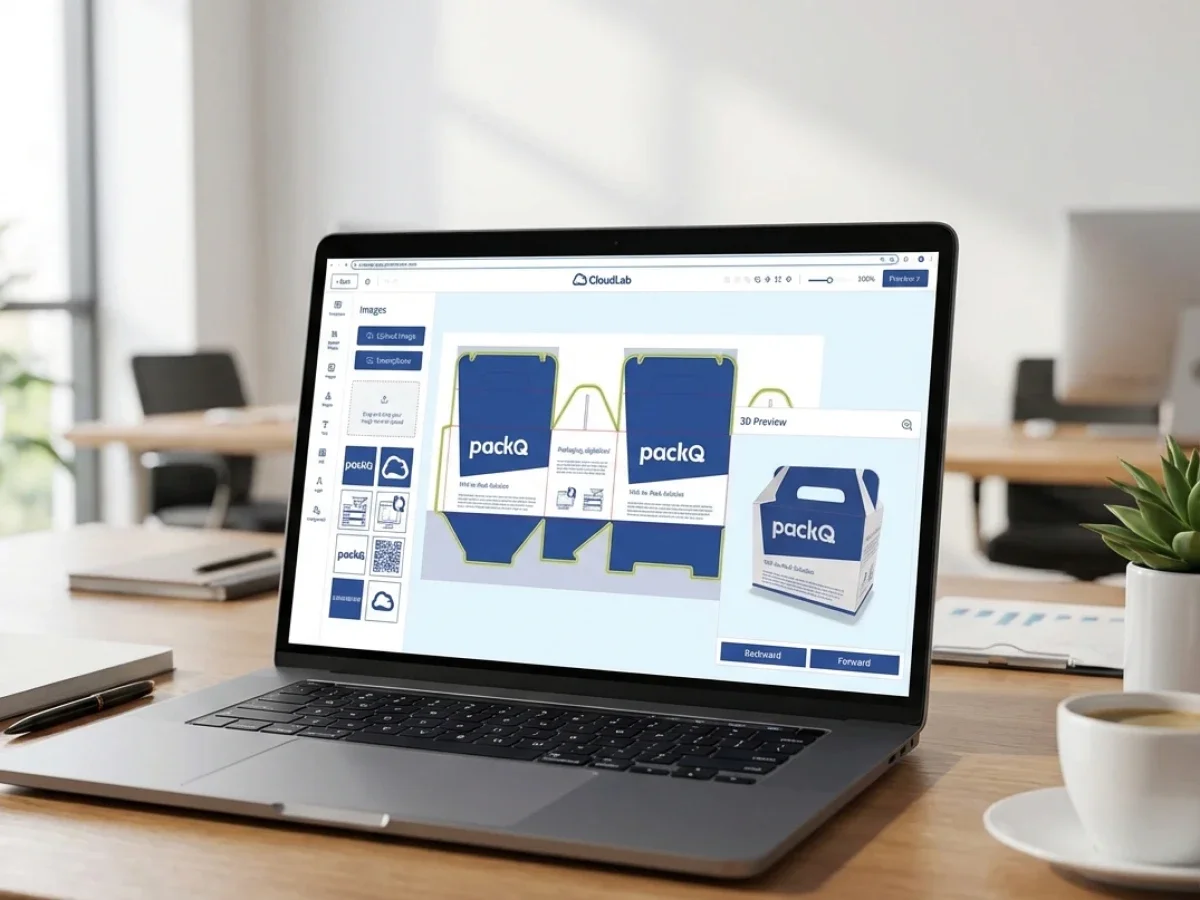
packQ provides a browser-based 3D Packaging Designer with synchronized 2D and 3D visualization. Changes made to the design can therefore be evaluated directly in the context of the three-dimensional package rather than through a separate manual rendering process.
For brand owners, this can shorten approval cycles because the decision is based on a representation that is closer to the intended physical result. For packaging manufacturers, the same mechanism can reduce clarification loops between customer service, design and production.
The 3D component also supports online selling. A packaging product can be configured within an e-commerce environment while the customer sees the result in real time. This creates a more informative product experience without requiring the customer to understand structural packaging terminology.
The underlying principle is important: the 3D visualization should not become a decorative layer disconnected from production. Its value increases when it is derived from the same structural and graphical information that drives the production workflow.
How can packaging teams reduce errors between design approval and production?
Packaging teams reduce errors by moving technical validation closer to the point of configuration and approval. packQ supports this with standardized packaging structures, synchronized 2D and 3D design, Dynamic Preflight and production-oriented output. For prepress teams and packaging manufacturers, the approach reduces the risk that an approved design later fails because of insufficient resolution, incorrect color mode, missing bleed or font problems.
The problem is familiar in complex packaging environments. A customer approves a visual design, but the production department later discovers that an image has insufficient resolution, a required bleed is missing or a font cannot be processed correctly. The file then returns to the customer or design team, creating another approval cycle.
These problems become more expensive when orders are highly customized. A packaging manufacturer processing many SKUs or short runs cannot rely on manual inspection for every configuration without increasing operational cost and slowing production.
Dynamic Preflight addresses this issue by moving defined checks into the workflow. packQ can evaluate relevant production parameters such as resolution, color mode, bleed and fonts before the order reaches the final production stage.
This changes the role of prepress. Instead of discovering every problem after the commercial process has already been completed, the system can prevent technically invalid configurations from progressing.
For a folding carton workflow, the sequence can therefore become more controlled:
- The customer selects a valid structural packaging model.
- Artwork is applied to the corresponding packaging geometry.
- The 3D representation provides immediate visual feedback.
- Technical rules are evaluated through Dynamic Preflight.
- The customer approves a validated configuration.
- Production receives the corresponding production-ready output.
The result is not the elimination of every possible production issue. Instead, the workflow moves known and repeatable validation rules into an earlier stage where they are easier and cheaper to resolve.
Software product packaging for regulated and specification-driven environments
Packaging workflows in regulated or specification-driven industries place particular emphasis on control, consistency and traceability. Pharmaceutical packaging, industrial products and technically sensitive product lines may involve many variants, languages, dimensions and approval requirements. In such environments, a packaging platform must support controlled configuration without turning every change into a manual prepress project.
For brand owners managing large product portfolios, standardized structural templates can provide a foundation for this control. The ECMA and FEFCO logic in packQ allows packaging structures to be represented parametrically, while design and variable content can be handled within the same broader workflow.
The practical advantage is consistency. If a specific packaging format must follow defined structural parameters, users should not be able to accidentally create a configuration that violates the production model. The system can instead expose permitted options while retaining the underlying packaging logic.
Variable Data Printing with PDF/VT extends this concept to personalization and variable production. It enables packaging manufacturers and brand owners to manage individualized or variable content while retaining a production-oriented output format.
This is relevant to mass customization and lot size one. Instead of treating each customized package as a separate design project, the organization can establish a configurable product model and let the workflow generate the required variation.
How does folding carton design software compare with manual CAD and prepress workflows?
Folding carton design software is most effective when the objective is to industrialize repeatable packaging configuration rather than replace specialist CAD work in every situation. Manual CAD workflows remain valuable for highly individual structural development, while browser-based Web-to-Pack is better suited to standardized, configurable packaging products that need online design, approval, pricing and automated production.
The key difference is where the packaging logic lives. In a conventional process, structural design, artwork, approval, pricing and production preparation can exist in separate systems and departments. A Web-to-Pack approach connects those functions around a defined packaging configuration.
This distinction becomes especially relevant for high-volume customer portals. If hundreds or thousands of packaging configurations are expected to follow predefined structures, rebuilding each package manually in a CAD environment is inefficient. A parametrized model can expose the required dimensions and structural options while preventing invalid combinations.
The same comparison applies to Web-to-Print and Web-to-Pack. Web-to-Print typically focuses on graphic products where dimensions and production parameters are comparatively straightforward. Web-to-Pack must additionally understand physical packaging structures, folds, closures, three-dimensional geometry and packaging standards.
A third comparison concerns approval. Static PDF approval gives customers a two-dimensional representation, whereas interactive 3D approval provides a more direct view of how the package is expected to appear after folding.
A fourth distinction concerns validation. A workflow that checks production data only after the order has been submitted leaves less room to correct problems efficiently. Dynamic Preflight brings defined technical checks closer to configuration and approval.
The appropriate approach therefore depends on the process:
- Manual CAD is appropriate for unique structural engineering and specialist development.
- Browser-based Web-to-Pack is appropriate for standardized and configurable packaging products.
- Static approval can work for simple packaging decisions.
- Interactive 3D approval is useful when structure and visual appearance need to be evaluated together.
- Post-order preflight identifies issues late in the process.
- Dynamic Preflight moves repeatable validation into the configuration workflow.
- Isolated systems can handle individual process steps.
- Integrated workflows reduce handovers between configuration, commercial processing, prepress and production.
packQ is designed around the integrated model. Its role is not to eliminate specialist expertise but to encode repeatable packaging logic so that specialists can focus on exceptions, complex development and production optimization.
From folding carton design to commercial configuration
A packaging product is not only a technical object. For many packaging manufacturers, it is also a commercial product that must be quoted, configured, ordered and delivered.
Real-time pricing therefore becomes part of the packaging workflow. Instead of separating design from calculation, packQ can connect product configuration with dynamic price calculation so that customers can see the commercial consequences of their selected options.
For e-commerce platforms, this is particularly important. A customer expects the online product experience to respond immediately when dimensions, quantities, personalization or packaging options change. A delayed manual quotation process breaks that experience and creates additional work for sales teams.
For B2B portals, the same principle can be used differently. A packaging manufacturer can define customer-specific products, structures and commercial rules while still using a common Web-to-Pack architecture.
The combination of configuration and calculation also supports automated order creation. Once a customer has selected the required package and approved the design, the order can move into the downstream workflow with the relevant product and production information attached.
This makes packaging configuration part of the transaction rather than an isolated creative activity.
AI-supported design without separating creativity from production
AI-based design tools become more useful when they operate inside a controlled packaging workflow. packQ includes an AI Designer Suite with functions such as vectorization, image enhancement and background removal, allowing users to prepare graphical assets directly within the packaging design process.
Crispify can increase image resolution by a factor of four, which is relevant when customer-provided assets are not immediately suitable for packaging production. Vectorization can convert graphical elements into vector-based representations, while background removal can simplify the preparation of product imagery.
The operational benefit is that these functions are applied before final packaging approval rather than being dependent on a separate external creative process. The packaging workflow can therefore remain connected while the customer or internal team improves the artwork.
This is particularly useful for e-commerce packaging and mass customization. Customers often provide heterogeneous content, while the packaging manufacturer needs a consistent production process. Integrated image preparation can reduce the amount of manual intervention required before preflight.
The purpose is not to automate creative judgment. It is to automate repetitive preparation steps while keeping the final packaging configuration within the same controlled environment.
How should a packaging manufacturer implement API-first Web-to-Pack with ERP and MIS?
A packaging manufacturer can implement API-first Web-to-Pack by connecting the online configuration layer with shop, ERP, MIS, prepress and production systems through structured data. packQ supports a headless architecture in which the packaging workflow can be integrated into existing digital environments using interfaces such as REST, SOAP and JSON, allowing configuration and production information to move between systems.
Implementation should begin with the business process rather than the API specification. The organization first defines which packaging products can be configured online, which structural parameters are permitted, which pricing rules apply and which production data must be transferred downstream.
The technical architecture can then map those requirements to the surrounding systems. The shop handles customer interaction and commerce, packQ manages packaging configuration and validation, while ERP or MIS systems can receive order and production information according to the company’s existing operational model.
A practical implementation sequence can include:
- Product definition: identify packaging structures, dimensions, materials, finishing options and personalization rules that should be configurable.
- Structural modeling: map suitable ECMA or FEFCO structures and define permitted parameters.
- Design workflow: connect 2D artwork, synchronized 3D visualization and customer approval.
- Commercial logic: connect configuration parameters with dynamic pricing and order calculation.
- Validation: define Dynamic Preflight rules for resolution, color mode, bleed, fonts and other production requirements.
- System integration: exchange structured data with shop, ERP, MIS and production environments.
- Production output: generate production-ready PDF data and, where required, related production information.
- Operational testing: validate the complete process from customer configuration through approval, order creation and production handover.
REST, SOAP and JSON are not the business process themselves. They are mechanisms for exchanging the information required by the business process. The architecture becomes valuable when each interface has a clearly defined responsibility and the same packaging configuration remains the reference across the workflow.
For technology teams, the headless approach also provides flexibility. The packaging experience does not have to be tied to one particular front-end structure. packQ can operate as the packaging intelligence behind an existing shop, portal or digital customer experience.
Web-to-Pack for B2B and B2C packaging models
The same technology can support different commercial models. An open-shop scenario may allow customers to select packaging products, upload artwork and configure their own orders. A closed-shop scenario can expose predefined products, structures and options to selected business customers.
For B2B packaging, controlled configuration can be particularly valuable because customers may have established specifications, approved artwork and negotiated commercial conditions. The online workflow can provide self-service without giving up control over the available packaging models.
For B2C applications, the emphasis may shift toward personalization, ease of use and visual approval. A consumer can configure a package, see the result in 3D and order a small quantity without interacting with a packaging specialist.
The technical architecture can remain similar even though the user experience differs. This is one reason Web-to-Pack platforms need a separation between the front-end experience and the underlying packaging logic.
How can a folding carton manufacturer create production-ready packaging from an online 3D design?
A folding carton manufacturer can create production-ready packaging from an online 3D design by starting with a valid structural template, applying artwork to the corresponding panels, reviewing the synchronized 3D result, validating production parameters and generating the final production data. packQ connects these stages so that the approved packaging configuration remains aligned with the production workflow.
Consider a manufacturer offering digitally configurable folding cartons for cosmetics or pharmaceutical products. The initial requirement is a controlled set of carton formats, but the customer may need different dimensions, artwork versions, languages or product variants.
The workflow begins with a structural model based on an appropriate ECMA configuration. The manufacturer defines the parameters that customers may change and the options that must remain fixed for production reasons.
The customer then works in the browser-based packaging designer. The artwork is positioned on the corresponding surfaces, while the 3D representation provides an immediate view of the folding carton as a physical object.
At this stage, software product packaging becomes more than an online design experience. The configuration contains structural information, artwork information and commercial information that can be processed by the same workflow.
The next step is validation. Dynamic Preflight checks relevant technical characteristics such as image resolution, color mode, bleed and fonts. If variable content is required, PDF/VT can support the corresponding production scenario.
The customer can then approve the design based on the 3D representation. Once the configuration passes the required checks, the system can prepare the production-ready output and transfer the relevant order information into downstream systems.
For the manufacturer, this workflow changes the operational model:
- The structural template controls the physical package.
- The 2D design controls the printable artwork.
- The 3D preview supports visual approval.
- Dynamic Preflight identifies defined technical problems.
- Pricing logic reflects the selected configuration.
- Production output provides the data required downstream.
- API integration connects the workflow with the existing IT environment.
The customer experience and production process therefore use the same underlying configuration instead of maintaining separate versions of the package.
Why ECMA and FEFCO standards matter in packaging software
Packaging standards provide more than a library of shapes. In a digital workflow, standardized structures can become reusable building blocks for product configuration, automation and production control.
packQ incorporates ECMA and FEFCO structures into its packaging logic. The platform’s library includes approximately 120 ECMA types and approximately 290 FEFCO types, as well as around 50 POS display structures. Each structure can include different options for dimensions, flaps, closures and other packaging characteristics.
For packaging manufacturers, this creates a scalable foundation for online configuration. Instead of building every customer product as an independent project, the manufacturer can establish a controlled model around established packaging structures.
This also supports automation. A standardized structure can be associated with pricing logic, design rules, preflight requirements and production output. The more repeatable the structure, the more process steps can be automated reliably.
The benefit is particularly strong for companies handling many variants. A brand owner may have hundreds of SKUs, while a packaging manufacturer may serve dozens of brands with different requirements. Standardized digital structures provide a common technical foundation without forcing every product into exactly the same visual identity.
Mass customization and lot size one
Mass customization changes the economics of packaging because the workflow must handle variation without turning every variation into a separate manual project. packQ supports variable data and PDF/VT workflows that can be used for personalized packaging and product variants.
A packaging manufacturer can therefore build a product model where customer-specific content, campaign information or other variable elements are generated within a controlled workflow. The structural package remains governed by its defined parameters while the content can change from order to order.
This is relevant for promotional packaging, personalized e-commerce orders and short-run production. The business value is not simply the ability to personalize artwork. It is the ability to manage personalization without breaking the connection between configuration, validation and production.
Lot size one becomes more practical when the workflow handles each variation systematically. Instead of manually checking every individual file, the organization can establish rules that are applied consistently throughout the process.
Production security as the connecting principle
Production security is the common thread between the major functions of a Web-to-Pack platform. Three-dimensional design, standardized packaging structures, dynamic pricing and AI-assisted artwork preparation are useful individually, but their operational value increases when they feed the same controlled production workflow.
For prepress teams, this means fewer files arriving without sufficient technical information. For production teams, it means more consistent order data. For sales and e-commerce teams, it means a clearer connection between what the customer configures and what the company actually produces.
packQ is structured around this end-to-end model. The platform connects packaging configuration, design, validation, calculation and production handover rather than treating them as separate software tasks.
That architecture also supports Industry 4.0 and Print 4.0 requirements. The objective is not automation for its own sake, but structured information flow that allows systems to exchange packaging data without repeated manual interpretation.
Digital workflow for Software product packaging
Software product packaging requires a digital workflow that understands the package as both a design object and a production object. packQ combines Web-to-Pack configuration, ECMA and FEFCO structures, browser-based 3D design, dynamic pricing, AI-supported artwork preparation, Dynamic Preflight, PDF/VT and API-first integration to connect customer interaction with production.
For folding carton manufacturers, print service providers, brand owners and technology teams, the key benefit is the continuity of the packaging data. The configuration selected online can remain connected to approval, validation, pricing, order processing and production output instead of being recreated manually at every stage.
packQ therefore provides a practical framework for software product packaging where automation, production security and integration are treated as parts of the same workflow. The result is a Web-to-Pack process that can support customized packaging, scalable e-commerce models and industrial production without separating the digital customer experience from the technical requirements of packaging manufacturing.
Software product packaging becomes significantly more scalable when structural packaging design, artwork, 3D visualization, pricing, preflight and production data are handled within one connected workflow. CloudLabs packQ provides this Web-to-Pack framework for packaging manufacturers, print service providers, brand owners and technology teams. ECMA and FEFCO structures provide the technical foundation, while browser-based 3D design supports approval and Dynamic Preflight helps identify production issues before files reach production. API-first integration connects packaging configuration with shop systems, ERP, MIS and downstream production processes. The result is a controlled workflow for folding cartons, corrugated packaging, POS displays, flexible packaging and customized production, including variable data and lot size one.
Key answers for decision-makers
- Software product packaging becomes more scalable when packQ connects structural design, 3D approval, pricing, preflight and production data in one Web-to-Pack workflow.
- Packaging teams reduce approval and production risks by combining standardized structures, synchronized 2D/3D design and Dynamic Preflight before files enter production.
- Browser-based Web-to-Pack is useful when packaging configuration, approval and production must move beyond isolated CAD and manual prepress processes.
- API-first integration allows packQ to connect packaging configuration with shop systems, ERP, MIS, prepress and production through structured data.
- Folding carton design software becomes more effective when structural packaging design, customer personalization, 3D preview and production validation operate from the same data model.