Best Storefronts for B2B and Multi-Client Workflows

The best storefronts for B2B go far beyond online ordering. They must support multi-client management, CI-compliant templates, and automated production workflows. packQ extends classic web to print B2B portals into a Web-to-Pack platform that combines governance, real-time 3D, and end-to-end automation.
Best Storefronts for B2B as a Strategic Infrastructure Layer
Best storefronts for B2B are no longer optional sales tools. They are a core infrastructure layer that connects customers, internal teams, and production systems. In B2B environments, storefronts must handle complexity without exposing it to users.
Unlike B2C shops, a web to print B2B storefront must reflect contractual relationships, brand rules, and operational constraints for a seamless production workflow. Each client expects a tailored experience, while the provider must maintain centralized control.
This tension defines the requirements for modern B2B storefronts.
Why B2B Storefronts Differ Fundamentally from B2C
B2B purchasing behavior is structured, repetitive, and governed by agreements. Orders are rarely impulse-driven. They follow predefined assortments, pricing models, and approval processes.
The best storefronts for B2B therefore prioritize consistency and governance over visual experimentation. Users must be guided, not inspired. Errors must be prevented, not corrected later.
A web to print B2B platform that treats all users identically fails to address this reality.
Multi-Client Management as a Core Requirement
Multi-client management is the defining feature of any serious B2B storefront. Each client requires its own environment with specific rules, branding, pricing, and permissions.
Without true tenant separation, complexity quickly becomes unmanageable. Manual configuration increases risk and slows onboarding.
The best storefronts for B2B treat multi-client management as a native capability rather than a workaround.
CI-Compliant Design Across Multiple Clients
Corporate identity compliance is critical in B2B environments. Brands invest heavily in consistency across touchpoints. Deviations undermine trust and increase correction effort.
A web to print B2B storefront must enforce CI rules through templates, not guidelines. Fonts, colors, layouts, and structural elements must be locked where necessary.
This ensures that every output aligns with brand standards, regardless of who places the order.
The Web-to-Print Designer as a Governance Tool
In B2B contexts, the web-to-print designer is not a creative sandbox. It is a governance tool.
Users interact with controlled templates that define what may be changed and what must remain fixed. Editable fields are constrained by logic, not by user discretion.
This approach balances flexibility with control and is essential for scalable B2B operations.
Permission Models and Role-Based Access
B2B storefronts serve diverse roles. Marketing teams, procurement officers, local branches, and external partners all require different levels of access.
The best storefronts for B2B implement role-based permission model. The same product may appear differently depending on user role.
This ensures security, compliance, and usability without duplicating systems.
From Web to Print B2B to Web-to-Pack
As soon as packaging enters the B2B portfolio, traditional web to print logic reaches its limits. Packaging is not a flat product. It is a physical object with structure, material behavior, and production constraints.
Web to print B2B platforms that rely on uploaded die-lines and static previews create friction. Errors surface late. Manual checks multiply.
Web-to-Pack platforms resolve this by embedding production intelligence directly into the storefront.
packQ was built for this transition.
packQ as a Premium Web-to-Pack Platform for B2B
packQ is a specialized Web-to-Pack platform developed by CloudLab Solutions and awarded the InterTech Technology Award. It extends web to print B2B storefronts into fully governed, production-safe portals.
packQ enables multi-client environments without fragmentation. Each client operates within its own ruleset, while the platform maintains centralized logic.
This architecture is essential for scalable B2B storefronts.

Real-Time 3D as a B2B Decision Accelerator
In B2B environments, approvals are frequent and costly. packQ addresses this with a browser-based 3D packaging designer offering real-time rendering and synchronized 2D and 3D views.
Decision-makers see the final product as it will be produced. Misinterpretation disappears. Approval cycles shorten.
This capability directly improves time-to-market in B2B workflows.
ECMA and FEFCO as the Foundation of Scalable B2B Packaging
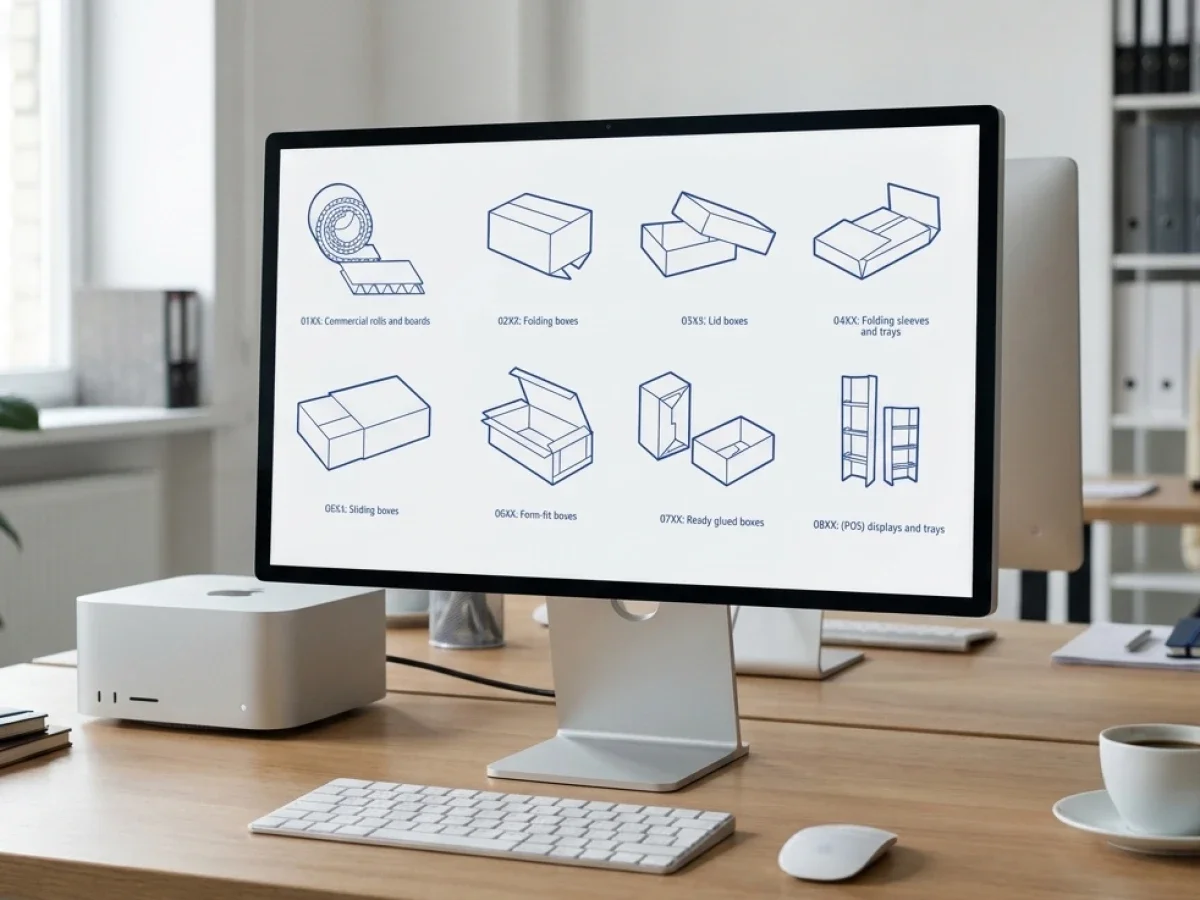
Standardization is the backbone of efficient B2B packaging. packQ integrates ECMA and FEFCO standards directly into the platform, covering around 120 ECMA folding cartons, 290 FEFCO corrugated designs, and 50 POS displays.
These standards are implemented as parametric templates. Users configure dimensions within defined limits while structural correctness is enforced automatically.
This reduces engineering effort and ensures predictable production.
AI Designer Suite for Consistent Output Quality
B2B storefronts often struggle with inconsistent input quality. packQ addresses this with its integrated AI Designer Suite.
Raster images can be vectorized, resolution enhanced using Crispify with four-times higher output resolution, and backgrounds removed directly in the browser.
This stabilizes data quality across clients and reduces manual prepress intervention.
Variable Data Printing in B2B Contexts
Personalization plays a growing role in B2B packaging and print. packQ supports PDF/VT-based Variable Data Printing, enabling mass customization down to lot size one.
Each variant adheres to the same validation and production rules. Customization remains controlled and scalable.
This capability unlocks new B2B use cases without operational risk.
Dynamic Pricing for Client-Specific Conditions
Pricing in B2B environments is rarely uniform. Contracts, volumes, and materials influence cost structures.
packQ integrates dynamic pricing in real time, allowing client-specific pricing models within a single storefront architecture. Prices update instantly as configuration parameters change.
This automation eliminates manual quoting and improves margin control.
Open-Shop and Closed-Shop Models in B2B Storefronts
B2B storefront strategies typically oscillate between open-shop and closed-shop models. Each model serves different commercial and organizational goals, and the best storefronts for B2B must support both without architectural compromise.
Closed shops are the dominant model in established B2B relationships. Access is restricted, assortments are predefined, and pricing reflects contractual agreements. Governance is high, and flexibility exists only within clearly defined boundaries.
Open-shop scenarios, by contrast, allow broader access and support onboarding of new customers. In B2B contexts, they are often used as entry points that later transition into closed environments. packQ enables both models through configuration rather than parallel systems.
Multi-Client Scaling Without Operational Fragmentation
Scaling B2B storefronts is rarely about adding users. It is about adding clients with unique rules.
Without true multi-client architecture, each new client increases configuration effort disproportionately. Manual duplication of templates, pricing logic, and permissions introduces inconsistency and risk.
packQ treats each client as an independent tenant within a shared platform. Rules are inherited where possible and overridden where necessary. This enables rapid onboarding while maintaining consistency across the system.
CI Governance Across Global Organizations
Global brands face a recurring challenge: maintaining CI consistency while enabling local autonomy. B2B storefronts sit directly at this intersection.
packQ enforces CI through centrally managed templates that adapt to regional requirements without deviating from brand standards. Logos, color schemes, and layout logic remain protected, while variable content supports localization.
This approach eliminates the trade-off between speed and consistency.
Faster Approvals Through Real-Time Visualization
Approval workflows are a significant cost factor in B2B environments. Traditional PDF-based approvals are slow and error-prone.
packQ’s real-time 3D visualization enables stakeholders to review and approve configurations with full confidence. Structural accuracy, proportions, and design placement are visible immediately.
This reduces approval cycles and minimizes costly change requests after production planning has begun.
Error Reduction Through Embedded Validation
Errors in B2B print and packaging workflows often originate at the configuration stage. If unchecked, they propagate into production, logistics, and invoicing.
packQ integrates validation logic directly into the storefront. Its Dynamic Preflight Check verifies resolution, color mode, bleed, and font usage before orders are finalized.
By preventing errors early, packQ reduces rework and increases operational predictability.
Efficiency Gains Through ECMA and FEFCO Standardization
Standardization is essential for profitable B2B operations. packQ embeds ECMA and FEFCO standards directly into the storefront logic, ensuring that all configurations are based on proven construction models.
Users adjust dimensions and options within defined limits, while the system enforces manufacturability automatically. This reduces engineering involvement and supports high order volumes without bottlenecks.
Efficiency becomes systemic rather than manual.
Mass Customization in B2B Without Manual Overhead
Mass customization is increasingly demanded in B2B contexts, particularly for marketing campaigns, seasonal assortments, and customer-specific packaging.
packQ supports PDF/VT-based Variable Data Printing, enabling controlled personalization down to lot size one. Each variant is generated within the same validation framework.
This allows B2B customers to customize at scale without introducing operational complexity.

Automated Quotation and Order Creation
Quotation is traditionally one of the most time-consuming steps in B2B print workflows. Manual pricing slows down sales and introduces inconsistencies.
packQ integrates dynamic pricing in real time, generating quotes automatically based on structure, materials, print options, and quantities. Orders flow directly into ERP and MIS systems.
This automation shortens sales cycles and improves margin control.
ERP and MIS Integration as a Non-Negotiable Requirement
The best storefronts for B2B do not operate in isolation. They are deeply integrated into ERP and MIS environments that manage production, scheduling, invoicing, and logistics.
packQ’s headless, API-first architecture supports REST, SOAP, and JSON interfaces, enabling seamless data exchange. Orders, pricing, and production parameters remain consistent across systems.
Integration reduces manual touchpoints and compliance risk.
Technology Teams and Sustainable Customization
From an IT perspective, B2B storefronts must be adaptable without becoming unmaintainable. Code-heavy customization leads to technical debt and slows innovation.
packQ enables customization through configuration, APIs, and rules rather than core code changes. This preserves upgradeability and long-term stability.
Technology teams gain control without carrying excessive maintenance burden.
Industry 4.0 and Print 4.0 Alignment
Industry 4.0 and Print 4.0 emphasize automation, interoperability, and data-driven processes. B2B storefronts must align with these principles to remain competitive.
packQ integrates storefront, configuration, pricing, validation, and production into a single automated chain. Data flows are structured and machine-readable.
This alignment future-proofs B2B storefront investments.
Value for Printing and Packaging Manufacturers
For printers and packaging manufacturers like Saxoprint , packQ transforms the storefront from a sales interface into an operational accelerator.
Small and frequent orders become profitable. Engineering effort per job decreases. Production planning becomes more predictable.
The ability to manage multiple clients efficiently creates a sustainable competitive advantage.
Value for Brands and Industrial Customers
Brand owners benefit from controlled self-service. Local teams order what they need without risking CI deviations. Procurement gains transparency and repeatability.
Industrial customers experience shorter lead times and fewer errors. The storefront becomes a trusted extension of the supply chain.
Best Storefronts for B2B Revisited
A realistic assessment of the best storefronts for B2B reveals a clear pattern. Success depends less on frontend features and more on governance, integration, and production intelligence.
Web to print B2B platforms that lack these foundations struggle as complexity grows. Web-to-Pack platforms address this gap by design.
packQ exemplifies this evolution.
Storefronts enabled for B2B
The best storefronts for B2B enable multi-client management, CI-compliant design, and fully automated production workflows. A web to print B2B portal must do more than accept orders. It must enforce rules, prevent errors, and integrate seamlessly into enterprise systems. packQ extends traditional web to print B2B storefronts into a Web-to-Pack platform by combining real-time 3D visualization, ECMA and FEFCO standardization, AI-assisted design, dynamic pricing, preflight validation, and deep ERP/MIS integration. For organizations operating in complex B2B environments, this approach turns storefronts into scalable infrastructure.
Best storefronts for B2B must support complex client structures, strict CI governance, and automated production workflows. Classic web to print B2B portals reach their limits as complexity increases and how Web-to-Pack platforms redefine the category. By combining multi-client management, real-time 3D visualization, ECMA and FEFCO standards, AI-assisted design tools, dynamic pricing, preflight validation, and API-first ERP/MIS integration, packQ positions itself as a future-ready platform for scalable, compliant B2B storefront operations.