Cloud Packaging Solutions for Scalable Workflows
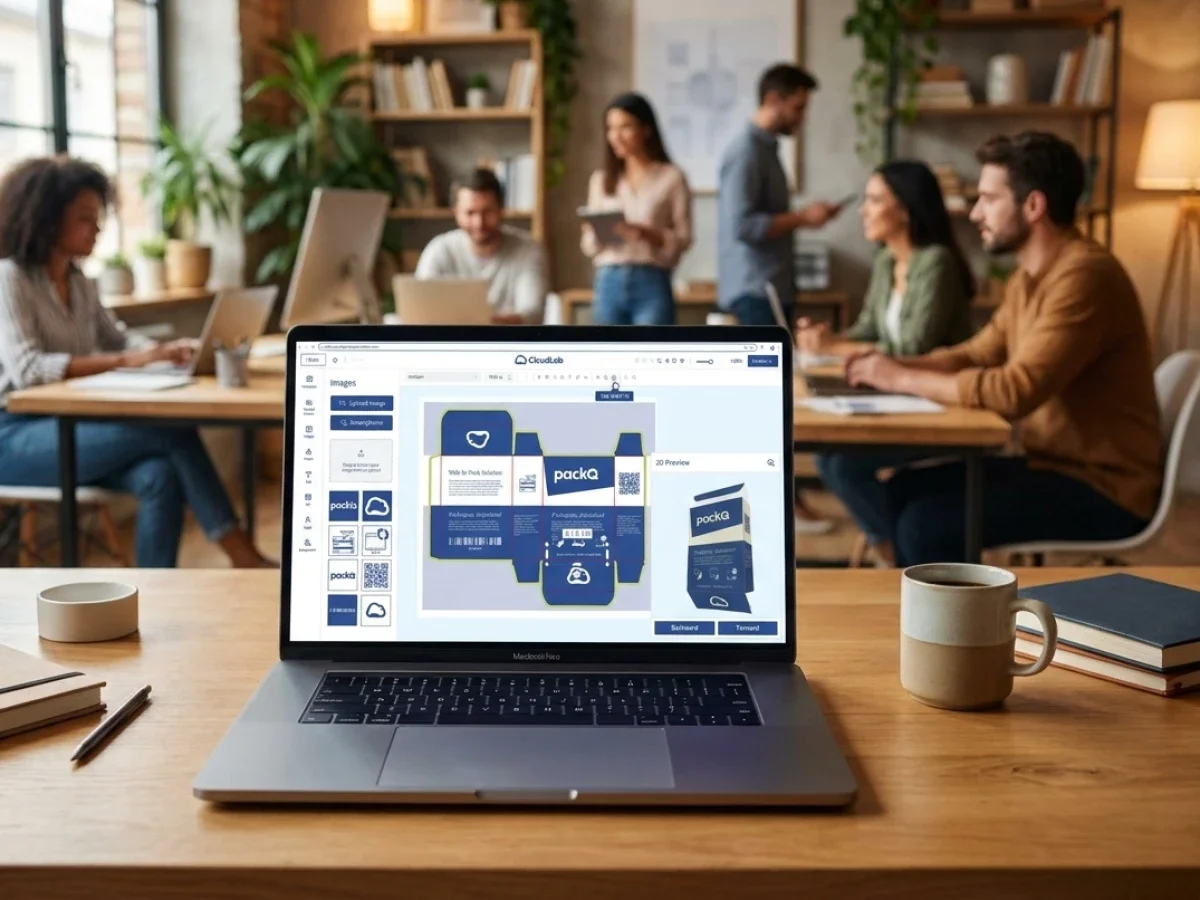
Cloud packaging solutions create the most operational value when packaging data remains connected from configuration and artwork through approval, validation, pricing, and production. packQ by CloudLab combines browser-based Web-to-Pack, synchronized 2D/3D visualization, ECMA and FEFCO structures, Dynamic Preflight, production-ready PDF output, and API-first integration. As packaging workflow software, packQ can connect customer portals with ERP, MIS, prepress, and manufacturing processes instead of creating another isolated system. This allows packaging manufacturers, printers, brand owners, e-commerce platforms, and technology teams to scale digital packaging workflows while retaining production control.
Cloud packaging solutions need to connect workflows, not simply move software online
Moving packaging applications from local workstations into a browser does not automatically create an efficient cloud workflow. The decisive difference is whether structural data, artwork, pricing information, technical validation, approval status, and production files remain connected throughout the packaging lifecycle. If each department continues working with an independent version of the same project, the organization has changed its software location without solving its process fragmentation.
This is where cloud packaging solutions become strategically relevant for packaging manufacturers and printers. Instead of treating design, sales, prepress, and production as separate digital stations, a cloud-based Web-to-Pack environment can use one packaging project as the information source for several stages. The customer configures a product, artwork is connected to that structure, technical requirements are checked, the project is approved, and downstream systems receive data derived from the same configuration.
packQ was developed by CloudLab around this packaging-specific workflow rather than around generic online print personalization. The platform combines browser-based configuration, real-time 3D visualization, synchronized 2D design, ECMA and FEFCO structures, Dynamic Preflight, real-time pricing, AI-assisted artwork preparation, variable-data production, and integration capabilities within a Web-to-Pack architecture.
For decision-makers, the distinction matters because packaging operations rarely suffer from a lack of individual specialist applications. Most established manufacturers already have powerful CAD environments, ERP or MIS platforms, prepress technology, and production systems. The problem frequently appears between those systems, when information has to be exported, re-entered, checked again, renamed, emailed, or manually interpreted.
A scalable cloud strategy therefore does not begin by replacing every existing application. It begins by determining which packaging information should remain continuous from the customer-facing process to manufacturing.
Which cloud packaging solutions are suitable for scalable packaging manufacturers?
Cloud packaging solutions are suitable for scalable packaging operations when they connect customer configuration, structural packaging logic, artwork, approval, preflight, pricing, and production data within one workflow. packQ provides this framework through browser-based Web-to-Pack, ECMA and FEFCO structures, synchronized 2D/3D design, Dynamic Preflight, production-ready output, and API-first integration for packaging manufacturers, printers, brand owners, and technology teams.
The first selection criterion should therefore be workflow continuity rather than the number of isolated features. A packaging manufacturer gains limited operational value from an impressive online designer if every submitted project still has to be reconstructed by structural design, recalculated by estimating, checked manually in prepress, and entered again into the MIS.
The stronger model captures relevant information once and makes it reusable. If a customer chooses a structure, enters dimensions, selects available options, uploads artwork, reviews the 3D result, and accepts the price, those decisions should remain attached to the project as it moves downstream.
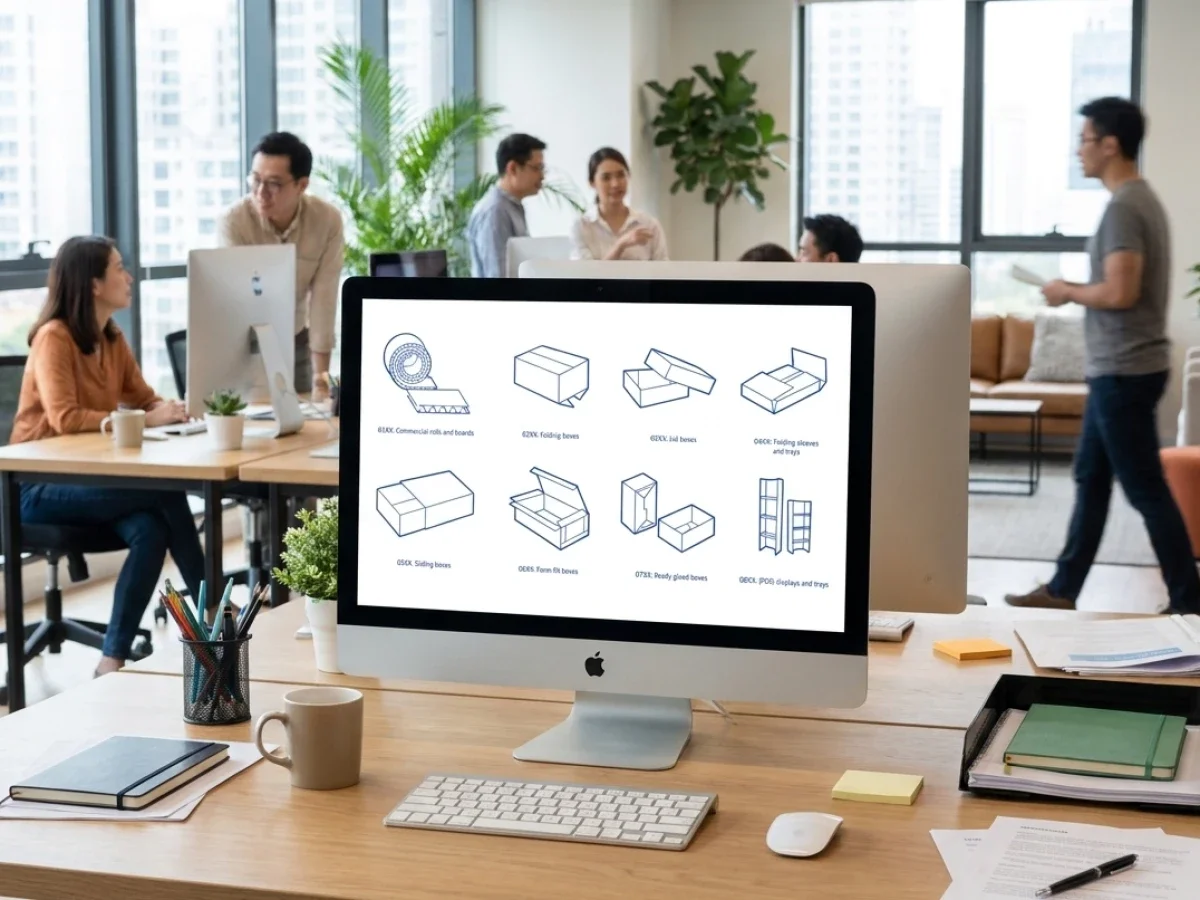
packQ supports this through packaging-specific structural logic. Its integrated libraries include approximately 120 ECMA folding-carton types, around 290 FEFCO corrugated structures, and roughly 50 POS display models. These are not simply visual examples. Parameterized structures provide a foundation for configurable products whose dimensions and related properties can change while defined relationships remain controlled.
For packaging manufacturers, this turns established structural knowledge into a reusable digital service. For customers, it creates a simpler self-service experience because technical complexity remains behind the interface rather than becoming another skill they need to learn.
For technology teams, structured configuration also produces better integration data. A product type, dimensions, artwork status, approval state, and commercial parameters can be exchanged as meaningful information instead of being reduced to a final PDF and a free-text order note.
Packaging workflow software should preserve one project across departments
Traditional packaging workflows often behave like a relay race. Sales collects a request and passes it to structural design. CAD creates a structure and passes files to graphics. Artwork moves to approval, then to prepress, then into another production environment. Every handoff introduces a moment where information can change.
The problem is not that specialist departments exist. Those departments are necessary. The problem is that the packaging project can become a different object in every department.
Sales may work from product specifications in an email. Structural engineering works from CAD. Marketing approves a rendered image or PDF. Prepress receives an artwork file. The MIS contains order data, while production works from another output version.
When each environment contains only part of the project, synchronization becomes a human responsibility. Teams compare filenames, timestamps, approval messages, dimensions, job tickets, and customer notes to determine whether they are working on the latest version.
Modern packaging workflow software should reduce this dependency on manual interpretation. The structural configuration, artwork, commercial information, technical validation, and approval should remain linked closely enough that downstream systems can reuse upstream decisions.
packQ follows this principle through its Web-to-Pack architecture. Browser-based configuration becomes an operational entry point rather than a detached front-end activity. The customer's product choices can remain relevant through validation, pricing, approval, and output.
This is what makes cloud packaging strategically different from simply hosting files online. The goal is not remote access to independent documents. The goal is a continuous packaging data model that supports several teams and systems without repeatedly reconstructing the same order.
Why do packaging workflows break when cloud tools remain isolated?
Packaging workflows break when structural design, artwork, pricing, approval, and production preparation are distributed across cloud applications that do not share reliable project data. packQ reduces these media breaks by connecting Web-to-Pack configuration, synchronized 2D/3D visualization, Dynamic Preflight, standards-based structures, and production output so prepress and manufacturing can work from the same validated packaging project.
One of the most common failures is version divergence. A customer requests a dimensional change after artwork has already been prepared. Structural design creates an updated version, but an earlier rendering remains attached to the approval process. Marketing approves what looks like the correct package while production later receives another structural revision.
A second problem appears when technical validation occurs too late. The artwork can be visually approved but still contain insufficient resolution, an unsuitable color mode, missing bleed, or font-related issues. Once the project is commercially approved, every correction becomes more expensive because it may require renewed customer communication and another approval cycle.
A third problem is duplicated data entry. Dimensions entered into a web shop are copied into a quotation, entered again into an MIS, and interpreted again during production preparation. The same information passes through several people even though it originated digitally.
Cloud technology does not prevent these problems by itself. In fact, using more disconnected online applications can make fragmentation worse because employees assume the workflow is already digital.
The relevant improvement is integration around the packaging project. Structural data should influence visualization. The final configuration should influence pricing. Artwork should be checked against production rules. Approval should reference the actual project moving toward output.
packQ supports these relationships within one Web-to-Pack environment so automation can continue beyond the customer interface.
Standardization is what makes cloud packaging scalable
Scalability depends on reducing unnecessary variability inside the process. This does not mean reducing customer choice. It means identifying which product relationships are already known and should therefore become reusable rules.
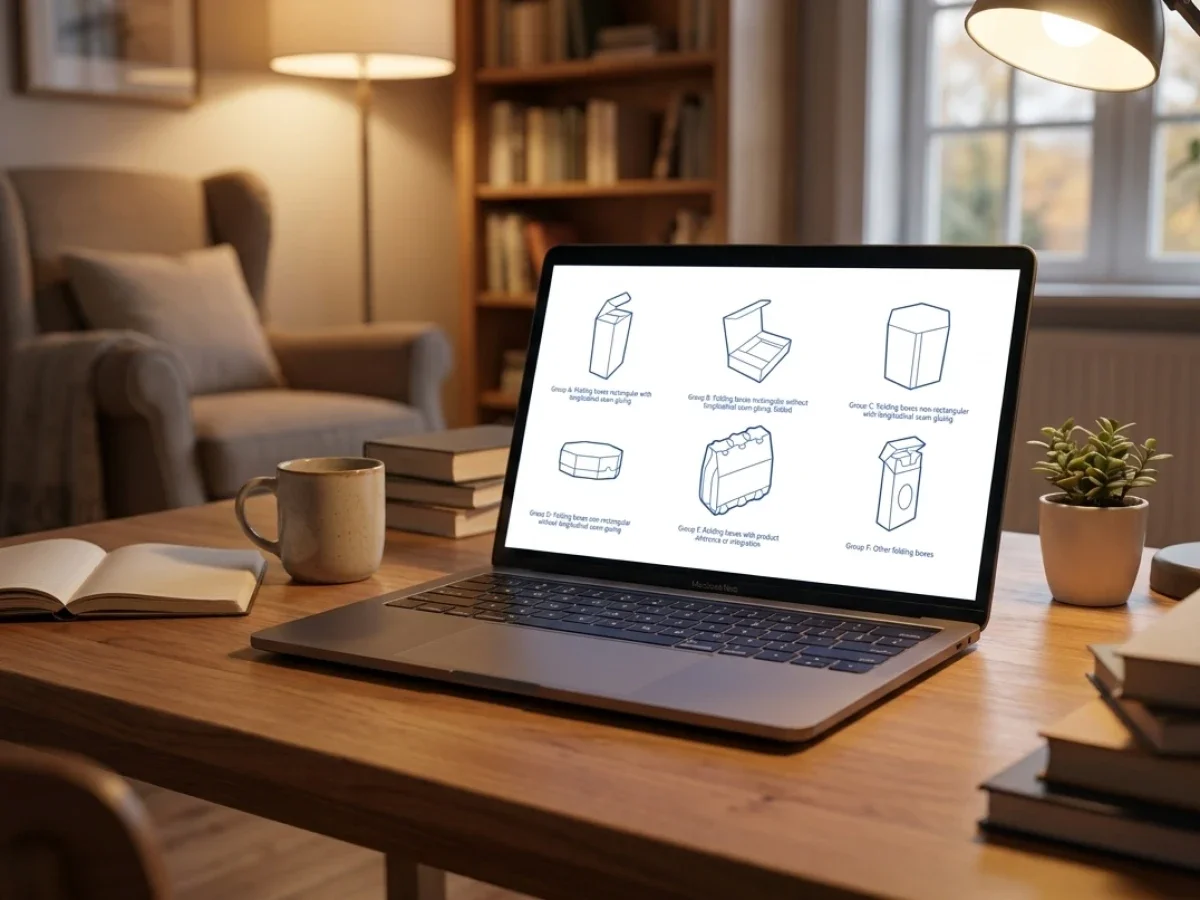
Packaging is particularly suited to this approach because the industry already works with structural standards such as ECMA for folding cartons and FEFCO for corrugated packaging. These standards provide recognizable structural families that can become parameterized digital products.
packQ incorporates both directly into the configuration environment. A manufacturer can therefore define an online product around a known structure and specify which dimensions, materials, artwork areas, print options, quantities, or other parameters customers may control.
The result is controlled customization. Customers receive packaging adapted to their requirements, but the structural model remains within technical boundaries established by the manufacturer.
This has a direct effect on scalability. A corrugated converter does not need a structural designer to manually redraw a familiar shipping-box construction every time another customer requests different dimensions. A folding-carton manufacturer can make recurring ECMA-based formats configurable while retaining specialist engineering for unusual projects.
Standardization also helps IT integration because structured values are easier to exchange than informal instructions. A defined product type, dimensions, quantity, artwork status, and other parameters can move through APIs and downstream business systems.
For production teams, this creates more predictable jobs. The packaging arriving from the online channel has already passed through a controlled product definition rather than beginning as an unrestricted design request.
Cloud workflow or isolated specialist tools: which approach works better?
Isolated specialist tools remain appropriate for advanced structural engineering and highly specialized production tasks, while integrated cloud workflows are stronger for recurring, configurable, collaborative, and customer-driven packaging processes. packQ connects Web-to-Pack with existing expertise rather than replacing every specialist system, allowing repeatable work to be automated while complex exceptions remain under professional control.
This distinction prevents a common misunderstanding about digital packaging. An integrated workflow does not mean that a browser should become the only application used by structural engineers, prepress specialists, or production experts.
Specialized CAD remains essential when a new structural concept must be engineered. Advanced prepress environments remain relevant when complex print conditions require detailed professional intervention. ERP and MIS systems continue to handle business and manufacturing functions that have been developed around the operation.
The value of cloud packaging is found in the repeatable space between these specialist activities. Customer configuration, standardized structures, basic artwork preparation, visual approval, predictable preflight rules, commercial calculation, and order data can often be automated without asking specialists to perform routine work repeatedly.
packQ therefore operates as a packaging-specific workflow layer. It allows engineering knowledge and production rules to be translated into customer-facing configuration while providing interfaces to the systems that remain responsible for downstream functions.
For management, this creates a more realistic transformation strategy. Existing investments do not have to be discarded simply to introduce Web-to-Pack. Instead, the business can automate the sections of the workflow where repeatability is highest and manual effort produces the least additional value.
Browser-based 3D creates a common approval environment
Collaboration becomes difficult when every stakeholder needs a different representation of the package. Structural design works with technical geometry, prepress needs flat artwork detail, while marketing and purchasing usually want to understand the physical product.
Cloud-based 3D visualization can bring these perspectives closer together. packQ's 3D Packaging Designer allows packaging to be visualized directly in the browser while remaining synchronized with the corresponding 2D design.
This is operationally useful because approval no longer depends solely on the ability to interpret a dieline. A brand owner can rotate the package and examine the assembled result, while a prepress specialist retains access to the flat design required for detailed inspection.
For distributed teams, the browser becomes particularly valuable. Marketing, procurement, packaging development, and production do not need identical local software installations merely to evaluate the same project.
The important point is that the visualization remains part of the packaging workflow software, not a separate rendering service. An independently generated 3D mockup may communicate appearance well, but it creates another version that has to remain synchronized manually.
When 2D and 3D views represent the same configuration, approval becomes more closely tied to the product moving toward production.
This is especially important for brand owners managing many SKUs. Variants can share controlled structural and graphical foundations while different stakeholders review the aspects relevant to their role.
Dynamic Preflight moves quality control into the cloud workflow
A scalable packaging portal cannot assume that every uploaded file is production-ready. The broader the customer base, the greater the variation in artwork quality.
Professional agencies may submit carefully prepared assets. A smaller merchant may upload a low-resolution logo or an RGB image intended for a website. Both customers need a process that identifies technical problems before they become production problems.
packQ integrates Dynamic Preflight into the workflow so defined checks occur while the project remains active. Resolution, color mode, bleed, and fonts are among the relevant properties that can be evaluated automatically.
This changes the economics of quality control. Traditional downstream inspection detects problems after the customer believes the order is finished. Prepress then has to contact sales or customer service, the customer supplies a revised file, and another approval may be necessary.
Upstream validation gives the user an opportunity to correct the problem earlier. The process remains inside the configuration environment, reducing interruptions and additional project versions.
For prepress teams, the benefit is not the elimination of specialist expertise. It is a change in where that expertise is applied. Routine technical defects can be handled through rules, while specialists concentrate on exceptional production requirements.
For manufacturers processing many short-run or customized jobs, this division becomes essential. Small amounts of manual work multiplied across thousands of orders can consume more capacity than a smaller number of technically complex projects.
AI-assisted artwork preparation reduces tool fragmentation
Preflight can identify a problem, but the workflow becomes significantly stronger when the customer can resolve common issues without leaving the environment.
The AI Designer Suite in packQ addresses selected artwork-preparation tasks. Vectorization can support suitable raster graphics that need scalable output. Crispify provides four-times higher resolution for appropriate images, while automated background removal can prepare visual assets for packaging layouts.
These functions should not be viewed as isolated creative features. Their operational value comes from reducing additional tool changes and file versions.
Without integrated assistance, a customer may receive a warning, download the file, open another application, modify the artwork, export a new version, and upload it again. The workflow has gained several points where the wrong asset can re-enter the project.
When routine corrections happen in the browser, those steps remain closer to the packaging configuration and validation process.
For brand teams, this creates a more accessible workflow. For printers and converters, it increases the probability that artwork reaches prepress in a usable condition.
Professional validation remains necessary where production requirements demand it. AI-assisted preparation simply removes some of the repetitive friction before specialist intervention becomes necessary.
Real-time pricing connects cloud configuration with commercial workflow
A cloud packaging platform cannot be fully scalable if every product configuration ends with a manual quotation request. Commercial automation has to become part of the same workflow where product specifications are created.
Packaging prices can depend on dimensions, quantity, material, printing method, finishing, and other defined parameters. Where these relationships are known, they can become calculation logic.
packQ supports dynamic real-time pricing, allowing relevant configuration changes to influence the commercial result during the customer journey.
This provides several operational advantages. The customer can make a decision while still configuring the product. Sales avoids repeating known calculations for standard jobs. The price remains attached to the same structure and options that the customer is viewing and approving.
For open-shop environments, this can support direct ordering. For closed B2B portals, it can accelerate recurring customer orders based on approved product portfolios and commercial rules.
The important point is not simply instant pricing. The value comes from making commercial data another property of the same packaging project rather than a separate document produced later.
That connection helps reduce mismatches between the quoted product and the final configuration.
How can cloud packaging solutions connect shop, ERP, MIS, prepress, and production?
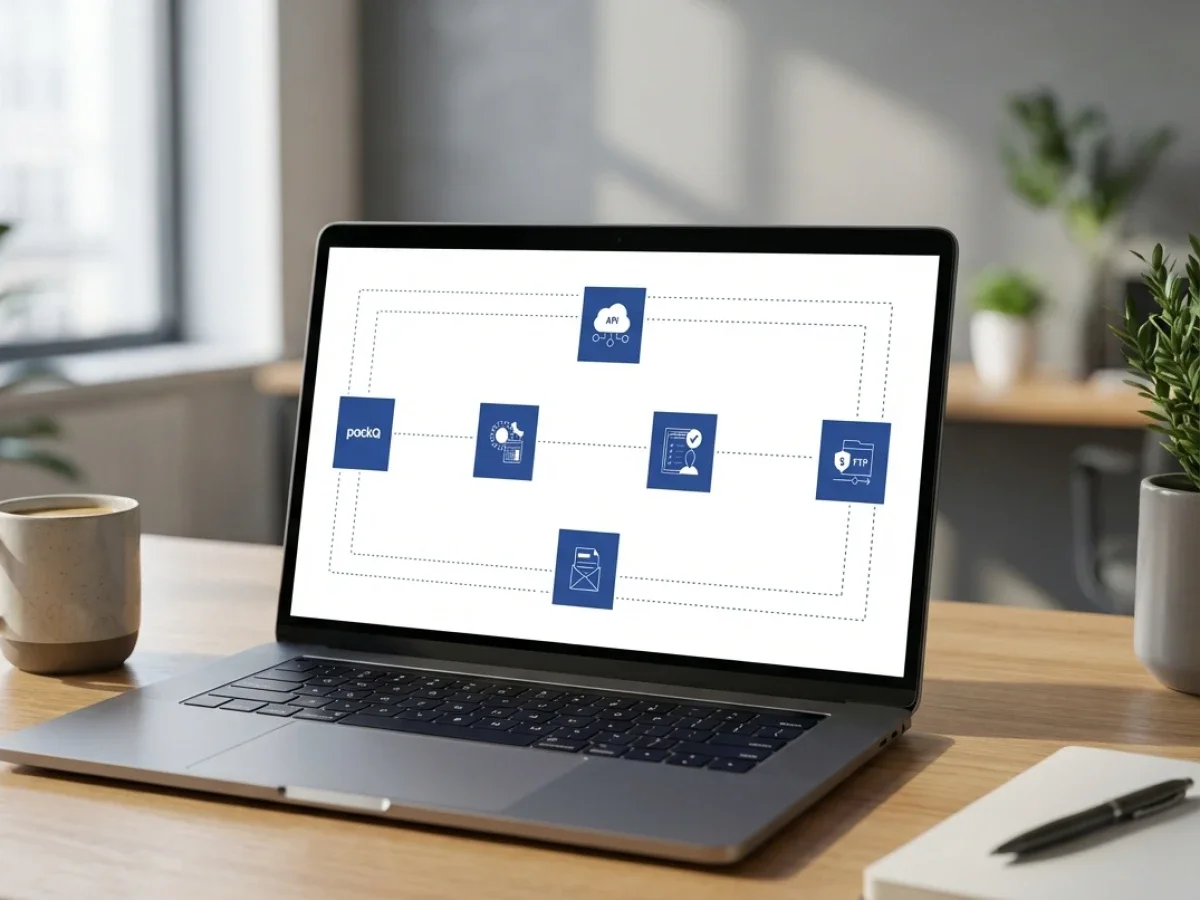
Cloud packaging solutions can connect these systems by using an API-first packaging layer that keeps structural configuration, artwork, pricing, approval, validation, and output available as structured project data. packQ supports headless integration through REST, SOAP, and JSON so packaging manufacturers can connect Web-to-Pack with existing shop, ERP, MIS, prepress, and production environments instead of replacing them.
The practical implementation begins with product scope. The manufacturer determines which packaging families can be represented through reliable configuration rules and which should remain within specialist engineering processes.
Once that boundary is clear, structural products can be modeled. Relevant ECMA or FEFCO structures provide a basis for standardization, while permitted dimensions, materials, print options, and other product rules define the configuration space.
The customer-facing shop then handles the broader commerce experience. Depending on the architecture, packQ supplies the packaging-specific configuration, artwork, visualization, validation, and related functions within that environment.
The ERP and MIS remain responsible for the business processes for which they were designed. Customer information, order administration, planning, job costing, and production control do not need to move into another platform simply because packaging configuration becomes browser-based.
Integration ensures that data already captured online can be reused. A dimension entered by the customer should not need to be typed into the MIS again. The approved structure should remain identifiable when the job reaches production. Commercial parameters should refer to the final configuration rather than an earlier version.
Prepress receives artwork that has already passed defined Dynamic Preflight rules. Specialists can still intervene where technical complexity requires it, but every job does not have to begin from an unknown quality state.
Production receives output based on the validated packaging project. Production-safe PDF generation helps maintain the relationship between the package that was configured, the package that was approved, and the file moving toward manufacturing.
The API-first architecture therefore functions as a bridge. The goal is not to make packQ replace every enterprise application but to ensure that packaging information can travel through them without repeated manual reconstruction.
Headless architecture makes cloud packaging scalable across sales channels
Packaging manufacturers increasingly serve customers through more than one digital channel. A business may operate a public e-commerce store, several customer-specific B2B portals, marketplace integrations, sales-assisted tools, and internal ordering environments.
Building separate packaging logic into each channel creates a maintenance problem. Structural templates, product rules, preflight requirements, pricing parameters, and production logic can gradually diverge.
A headless architecture separates the packaging engine from individual front ends. packQ can therefore provide core Web-to-Pack functionality while different interfaces are designed around different user groups.
An open shop may prioritize simplicity. First-time customers need clear product choices, guided dimensions, accessible design functions, 3D visualization, artwork validation, and immediate feedback.
A closed portal can expose much less choice. Existing customers may work from approved structures, predetermined materials, brand templates, agreed pricing logic, and recurring order patterns.
The customer experiences are different, but the underlying packaging rules can remain centralized.
For technology teams, this supports scalable governance. Adding another portal does not automatically mean creating another independent structural and prepress environment.
For packaging operations, it increases consistency because orders from different channels can still enter the same controlled downstream workflow.
Cloud packaging supports distributed teams without creating distributed data
One of the obvious advantages of browser technology is location independence. Marketing can work from one office, packaging development from another, production from a manufacturing site, while a customer approves the project from elsewhere.
The less obvious advantage is the opportunity to stop distributing copies of the packaging project.
Traditional collaboration often relies on sending files. One participant receives a dieline, another receives a PDF proof, another sees a rendering, while production eventually receives another output version.
Each copy carries the risk of becoming outdated.
A connected cloud environment changes the model from distributing documents to accessing a shared project. Different users may see different interfaces or permissions, but the information can remain tied to the same underlying configuration.
For brand owners, this supports governance across teams and markets. For packaging manufacturers, it simplifies collaboration between sales, structural design, prepress, and production.
For technology teams, it reduces the number of uncontrolled data exchanges that have to be managed around the official workflow.
The objective is not simply remote collaboration. It is shared access without uncontrolled duplication.
Variable Data Printing makes cloud workflows relevant for mass customization
Cloud packaging becomes especially valuable when the number of variants increases. Personalized and regionalized campaigns can produce hundreds or thousands of unique packages from one core design.
A conventional file-based process scales poorly in this environment. If each variant requires a separate artwork file, approval, and prepress operation, personalization multiplies administrative work almost as quickly as it multiplies output variations.
packQ supports Variable Data Printing with PDF/VT, enabling data-driven packaging production within the same broader workflow.
The structural and graphical foundation can remain controlled while designated elements change according to a data source. Names, images, codes, languages, campaign content, or other variable elements can therefore be generated without manually rebuilding the complete design.
This supports workflows down to batch size one, where individual packages can differ while production remains based on automated data processing.
For brand owners, this enables mass customization without losing template control. For printers, it reduces the manual preparation traditionally associated with highly variable series.
The cloud workflow adds another advantage: variable campaigns can remain connected to the same approval, structural, and production environment instead of becoming a standalone personalization project.
Production-safe output is the point where cloud packaging proves its value
The success of a cloud packaging workflow should ultimately be evaluated at the production handoff.
A platform may create excellent customer experiences, but if prepress has to reconstruct the final package manually after checkout, the manufacturer still carries much of the original operational cost.
Production-safe output changes that relationship. packQ is designed so the validated packaging project can generate production-oriented PDF data instead of becoming only a visual reference for another department.
This matters because manual reconstruction after approval creates avoidable risk. The more often a project is recreated, the more opportunities exist for dimensions, artwork, versions, or production parameters to diverge.
Production-oriented output also strengthens the economics of small orders. Large runs can absorb substantial preparation effort because that cost is distributed across many units. Small and highly customized jobs cannot.
Automation therefore has to reduce work before the press. Structural configuration, artwork checks, pricing, approval, and order administration are all part of the cost structure of digital packaging.
When those processes remain connected through cloud packaging workflow software, smaller orders can become operationally more attractive without reducing the technical requirements placed on production data.
How can a packaging manufacturer build a scalable cloud packaging workflow?
A packaging manufacturer can build a scalable cloud workflow by standardizing suitable product families, converting structural and production knowledge into configuration rules, connecting 3D approval with Dynamic Preflight and pricing, and integrating the validated project with ERP, MIS, prepress, and production. packQ provides this architecture as cloud packaging solutions and packaging workflow software designed specifically for Web-to-Pack.
The starting situation should be analyzed from the perspective of recurring work. Manufacturers need to identify where teams repeatedly answer the same customer questions, create similar structures, perform the same artwork checks, calculate similar configurations, or enter the same information into downstream systems.
Those repetitive activities define the strongest automation opportunities. A product family ordered frequently in changing dimensions or artwork variants is generally a better starting point than an unusual package that requires structural engineering for every project.
The technical requirement is a controlled product model. ECMA and FEFCO structures can provide the foundation for folding cartons and corrugated packaging, while the manufacturer determines acceptable dimensional ranges, available materials, print options, finishing, quantities, and other configurable parameters.
The customer experience should then expose only decisions that users can make safely. The browser does not need to reproduce the complete structural CAD environment. It needs to guide customers through the choices that define a valid order.
The visual stage uses synchronized 2D and 3D design. Customers and brand teams can understand the assembled package, while technical users retain access to the flat representation necessary for detailed artwork review.
The validation stage introduces Dynamic Preflight. Resolution, color mode, bleed, fonts, and other defined criteria can be checked while the project is still being configured rather than after final submission.
Where artwork requires routine preparation, the AI Designer Suite can support vectorization, Crispify resolution enhancement, and background removal inside the browser. This keeps common corrections close to the project instead of creating another external design loop.
The commercial stage connects the final configuration with dynamic real-time pricing. Suitable parameters become calculation inputs, allowing routine orders to receive immediate commercial feedback while exceptional projects can still follow individual estimating processes.
The approval stage should reference the same configuration that passed through structure, artwork, validation, and pricing. This reduces the risk that customers approve a visual representation that no longer matches the production project.
The integration stage connects the Web-to-Pack layer with shop, ERP, MIS, and production systems through REST, SOAP, JSON, or other implemented interfaces. Relevant information moves automatically instead of becoming another manual transcription task.
The prepress stage begins with a project that has already passed defined automated checks. Specialists retain responsibility for complex cases, but routine defects have a greater chance of being resolved before they reach this department.
The production stage receives production-safe output derived from the validated project. The objective is continuity: the package that was configured should remain identifiable as the package that is produced.
For personalized workflows, PDF/VT can add variable content while retaining the approved structural and graphical framework. This allows mass customization and batch size one to operate inside the same scalable architecture.
The result is a packaging process in which cloud technology does not simply host the work remotely. It connects the work logically from the customer's first decision to manufacturing.
Packaging workflow software should reduce manual exceptions without hiding them
No packaging operation can automate every job. The stronger strategy is to make exceptions visible and intentional.
A structurally unusual project may need engineering. An exceptional finishing requirement may require production review. A complex artwork problem may need prepress expertise. Those cases should not be forced through a fully automated route merely to achieve a theoretical automation rate.
The purpose of packaging workflow software is to ensure that normal orders do not behave like exceptions.
If a standard FEFCO shipping box falls within established dimensional boundaries, uses known print options, passes preflight, and follows an approved pricing model, it should not require the same amount of manual handling as a new engineering project.
The same applies to folding-carton families, recurring brand portals, and standardized personalized products.
packQ provides the mechanisms for separating these paths. Known product logic can support automation, while specialists remain available when the project leaves those boundaries.
This division protects production quality while preventing expert teams from becoming bottlenecks for routine orders.
It also creates a realistic path toward Print 4.0 and Industry 4.0. Automation does not mean removing people from packaging production. It means ensuring that human attention is applied where it creates measurable value.
Scalable cloud packaging is ultimately a data architecture
The visible side of cloud packaging is the browser. The deeper operational change concerns data.
A customer enters dimensions once. The same dimensions should inform the structure, visualization, pricing, order, and production workflow. Artwork should remain connected to the configured package. Preflight status should remain attached to the project. Approval should reference the current version.
When these relationships are preserved, departments no longer need to continuously reconcile competing representations of the job.
This is why API-first integration is central to scalable packaging. The value of a cloud platform increases when its project data can participate in the systems already used by the organization.
ERP can continue managing commercial processes. MIS can continue supporting production management. Prepress can retain specialist tools. Manufacturing can operate its existing equipment and production systems.
packQ becomes the Web-to-Pack layer that links packaging-specific customer configuration with those environments.
For management, the result is a clearer connection between digital sales and operational scalability. Growing order volume no longer has to create proportional growth in manual administration.
For customers, it creates a faster and more transparent process. For production teams, it creates more predictable incoming data.
Connected cloud workflows create a scalable path from configuration to production
The strongest cloud packaging solutions do not simply move packaging applications into a browser. They create continuity between structural design, artwork, visualization, pricing, validation, approval, order data, and production preparation.
packQ provides this packaging-specific framework through Web-to-Pack. ECMA and FEFCO parameterization gives manufacturers a controlled structural foundation for scalable configuration. The 3D Packaging Designer and synchronized 2D views create a shared visual environment for customers, brand owners, prepress specialists, and production teams.
Dynamic Preflight moves routine technical checks upstream, while the AI Designer Suite helps users address common artwork-preparation problems within the same workflow. Real-time pricing connects product decisions with commercial decisions, and PDF/VT extends the process toward mass customization and batch size one.
The platform's headless, API-first architecture then connects these capabilities with shop, ERP, MIS, prepress, and production systems. REST, SOAP, and JSON-based integration allow existing enterprise environments to remain part of the architecture rather than becoming obstacles to digital packaging.
For printers and packaging manufacturers, this creates a path toward higher order volumes without an equivalent increase in repetitive manual handling. Brand owners gain a more transparent approval and customization environment. E-commerce platforms can offer packaging as a configurable service. IT teams gain an integration model that can serve several customer channels while maintaining centralized packaging rules.
The central principle is one continuously enriched packaging project. Every stage should add information or validation rather than create another disconnected copy.
That is what makes cloud packaging scalable. The customer may experience a simple browser workflow, but behind that interface, packQ connects packaging design, technical rules, commercial logic, and production data into a controlled process capable of supporting long-term growth.
From cloud configuration to production-ready packaging
A scalable packaging operation needs more than remote access and online collaboration. It needs a workflow in which cloud packaging solutions convert customer activity into usable manufacturing information.
packQ does this by connecting Web-to-Pack configuration with structural standards, synchronized visualization, Dynamic Preflight, AI-assisted artwork preparation, real-time pricing, PDF/VT, production-safe output, and enterprise integration. The result is packaging workflow software that operates across commercial and technical boundaries rather than optimizing a single isolated step.
For packaging manufacturers, the benefit is fewer media breaks and less repetitive administration. For prepress teams, it means more predictable incoming files. For brand owners, it enables controlled customization and clearer approval. For technology teams, headless and API-first architecture creates a scalable foundation for connecting digital packaging with the existing enterprise landscape.
The decisive advantage is not that every process takes place in the cloud. It is that the information stays connected while the process moves forward. When structural configuration, graphics, pricing, validation, approval, and production refer to the same project, automation becomes more reliable and manufacturing remains under control.
That is the role of packQ within modern cloud packaging: transforming browser-based customer interaction into a production-oriented Web-to-Pack workflow that can scale across products, customers, sales channels, and manufacturing systems.
Cloud packaging becomes operationally valuable when design, validation, approval, pricing, and production no longer operate as separate digital islands. CloudLabs packQ combines Web-to-Pack configuration, ECMA and FEFCO structures, synchronized 2D/3D visualization, Dynamic Preflight, AI-assisted artwork preparation, real-time pricing, PDF/VT, and production-safe output in one connected framework. Its headless, API-first architecture links shop, ERP, MIS, prepress, and manufacturing environments, helping packaging businesses scale digital orders while reducing manual handoffs, preserving production control, and keeping project data consistent from customer configuration through manufacturing.
Key answers for decision-makers
- Cloud packaging solutions are most effective when configuration, design, approval, preflight, pricing, and production data remain connected instead of being distributed across isolated applications.
- packQ reduces workflow fragmentation by combining browser-based Web-to-Pack with structural standards, synchronized 2D/3D design, Dynamic Preflight, and production-oriented output.
- Integrated packaging workflows are stronger for repeatable and scalable orders, while specialist CAD processes remain appropriate for genuinely new or highly complex structural engineering.
- API-first architecture allows packQ to connect with shop, ERP, MIS, prepress, and production environments while preserving existing enterprise systems and business logic.
- Packaging manufacturers can scale cloud workflows by standardizing products first, defining validation and pricing rules, connecting approval, and automating production handoff through one controlled project.