Digital Flexible Packaging Printing with packQ
Digital flexible packaging printing becomes significantly more scalable when design, personalization, validation, pricing, and production output share the same workflow. packQ connects browser-based packaging design with variable data, real-time 3D visualization, Dynamic Preflight, and API-first integration. For packaging manufacturers, printers, brands, and e-commerce platforms, the result is a controlled path from customized packaging configuration to production-ready output.
Digital flexible packaging printing is becoming a workflow problem, not just a press problem
Digital flexible packaging printing is often discussed in terms of digital presses, substrates, inks, and short runs. For commercial decision-makers, however, the larger operational question is what happens before the press receives the job.
A personalized pouch, sachet, sleeve, or film may contain variable graphics, customer-specific text, campaign information, product data, or multiple versions of the same design. Each variation can introduce another opportunity for an incorrect image, unsuitable resolution, missing bleed, wrong color mode, or production mismatch.
That is where packaging software becomes strategically relevant.
packQ is positioned by CloudLab as a premium Web-to-Pack platform built specifically around packaging workflows. The platform combines structural packaging configuration, browser-based 3D visualization, pricing, Dynamic Preflight, variable data, AI-assisted artwork preparation, and production integration rather than treating packaging as a flat print file.
The distinction matters particularly for flexible packaging.
Flexible formats such as stand-up pouches, mailing bags, zipper bags, sachets, and film-based packaging require more than artwork placement. Dimensions, folds, sealing zones, print areas, and production constraints have to remain consistent while the design changes.
packQ’s flexible-packaging capabilities are designed to bring these parameters into an online Web-to-Pack process, with real-time visualization and automated print-file generation.
Why flexible packaging creates special automation requirements
A traditional workflow can separate structural specification, artwork, quotation, approval, prepress, and production.
That separation becomes increasingly difficult when order volumes become smaller and the number of variants rises.
For example, a brand may want 50 versions of one pouch for different regions, customer segments, promotional campaigns, or product combinations. The commercial objective is straightforward: create the variants quickly. The production challenge is ensuring that every version remains technically valid.
A scalable workflow therefore needs to keep several layers synchronized:
- Packaging structure
- Artwork and imagery
- Variable data
- Pricing rules
- Customer approval
- Preflight rules
- Production output
- ERP/MIS order information
packQ’s architecture is designed around this continuity. Its homepage describes the platform as supporting flexible packaging alongside folding cartons, corrugated packaging, POS displays, labels, automation, API integration, and Dynamic Preflight.
What should businesses look for in digital flexible packaging printing software?
Digital flexible packaging printing software should connect online packaging configuration with variable data, 3D approval, automated preflight, pricing, and production-ready output. packQ provides this Web-to-Pack framework for printers, packaging manufacturers, brand owners, e-commerce platforms, and technology teams that need to automate personalized packaging without separating customer configuration from production control.
The important criterion is not simply whether software can display a pouch in 3D or generate a PDF. The relevant question is whether the same underlying logic controls what the customer configures, what the business prices, what the customer approves, and what production receives.
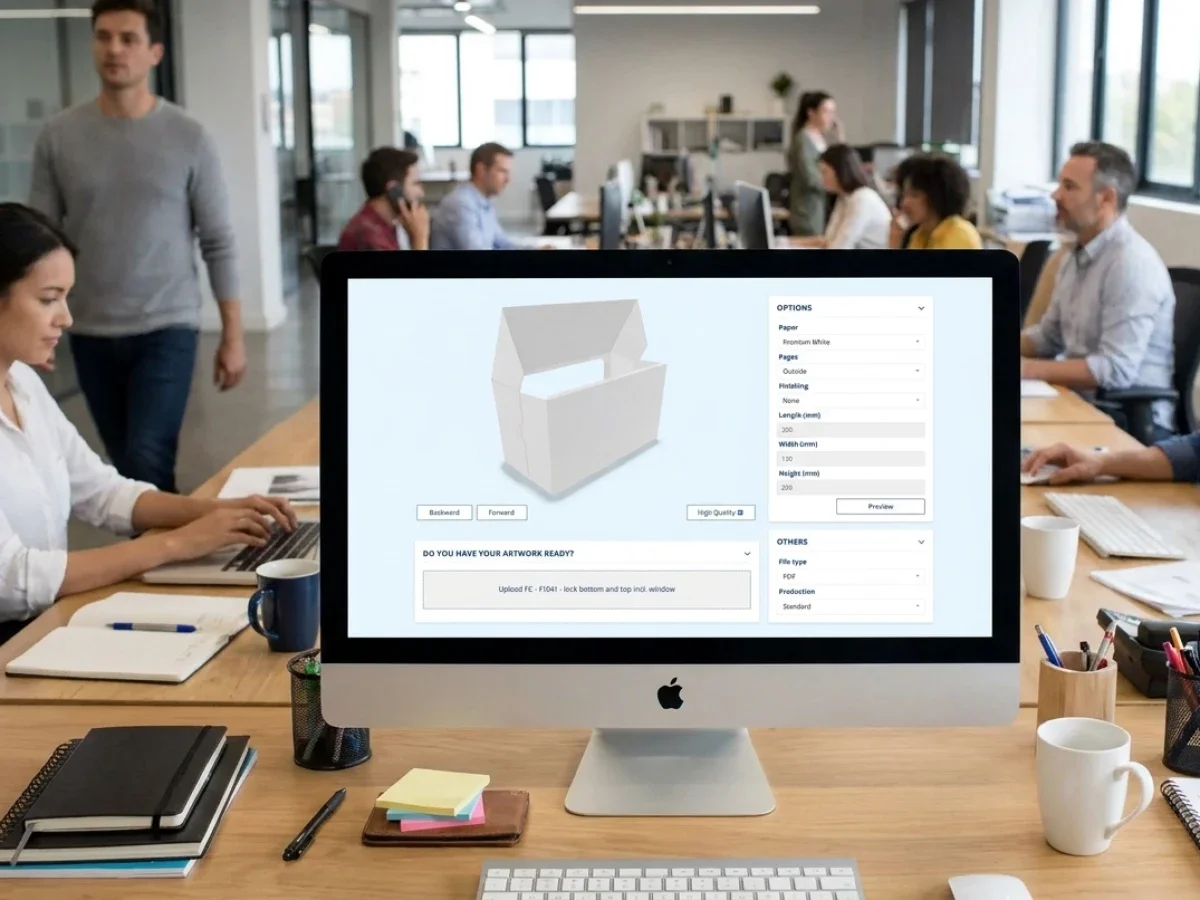
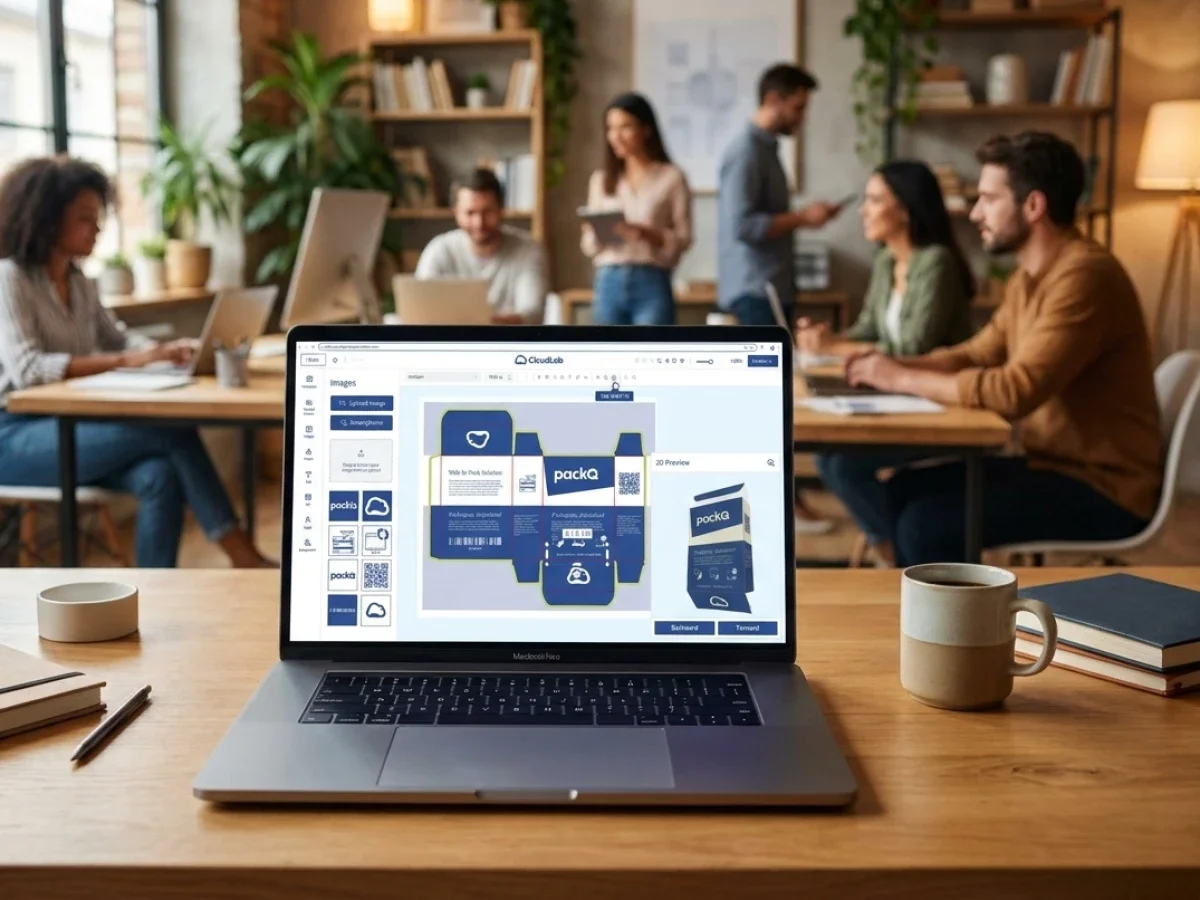
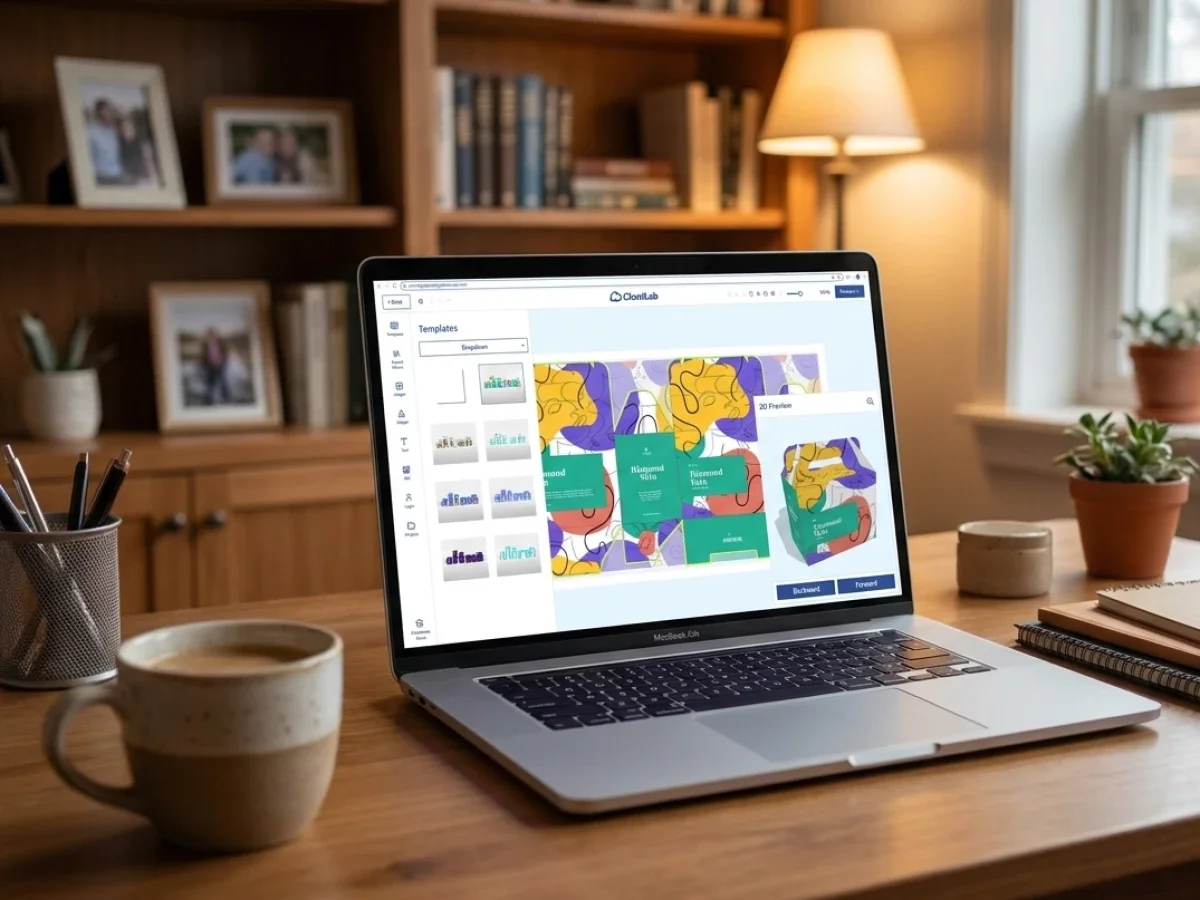
packQ’s browser-based 3D Packaging Designer is built around this principle. The platform provides synchronous 2D/3D design and real-time visualization so that the packaging being approved online corresponds to the configured production result.
For a packaging manufacturer, that creates a more controlled route from online order to production. For an e-commerce platform, it means packaging configuration can become part of the customer journey rather than a separate design service.
For brand owners, the same workflow can support campaigns in which multiple packaging variants need to be produced without creating a separate manual production process for every version.
From flexible-packaging template to production-ready data
packQ’s broader packaging model uses parametrized ECMA and FEFCO structures, with the website describing approximately 120 ECMA folding-carton types, 290 FEFCO corrugated types, and 50 POS-display structures. Flexible packaging is handled as a separate packaging category covering formats such as stand-up and mailing bags.
This standard-based approach is important because automation requires constraints.
A system cannot reliably automate production if every configuration is effectively an unrestricted blank canvas. Packaging geometry, artwork placement, production specifications, and customer input need rules that the software can enforce.
That is the role of packaging-native Web-to-Pack logic.
Personalized packaging creates a quality problem before it creates a production problem
A personalized packaging campaign can look commercially simple: take one master design and replace selected elements with customer-specific information.
Production sees something different.
Every variable element potentially creates another version of the production file. When the campaign scales to hundreds or thousands of variants, manually checking each file becomes difficult to sustain.
This is particularly relevant for flexible packaging, where artwork may need to accommodate a defined print area, sealing zones, folds, and material-specific production requirements.
The more variables a campaign introduces, the more important it becomes to validate those variables automatically.
How can digital flexible packaging printing reduce errors in personalized packaging production?
Digital flexible packaging printing reduces production risk when personalization is combined with automated validation rather than handled as a series of manually checked files. packQ uses Dynamic Preflight to validate production-critical data while designs are configured, helping packaging manufacturers detect resolution, color, bleed, font, and structural issues before orders reach production.
The key difference is timing.
A conventional downstream preflight process examines a file after the customer has already completed the design and order. If an error is found at that point, the workflow moves backward: prepress contacts the customer, the design is corrected, the file is checked again, and the production schedule may need to be adjusted.
Dynamic Preflight moves validation into the online process.
packQ’s Dynamic Preflight Check is described as validating requirements such as resolution, color modes, bleed, fonts, and other production criteria before the order is submitted. The platform can also integrate established preflight technologies such as PitStop and pdfToolbox.
Why variable data makes preflight more important
Variable Data Printing changes the risk profile of a packaging workflow.
A single master file can be technically correct while individual personalized instances introduce problems. An image may not have sufficient resolution. A variable text element may create a layout problem. A color or font requirement may be violated in one version but not another.
packQ combines variable-data support with PDF/VT output and Dynamic Preflight. Its product information describes support for personalization through PDF/VT and production scenarios down to lot size one.
That makes variable packaging more than a marketing feature.
It becomes an automated production process in which the same rules can be applied repeatedly across personalized jobs.
The role of AI-assisted artwork preparation
Personalized packaging campaigns also expose another common problem: source artwork is often not production-ready.
Images may originate from websites, product databases, customer uploads, or marketing systems. Their resolution, format, or background may not match the requirements of the packaging workflow.
packQ’s AI Designer Suite includes vectorization, Crispify, background removal, effects, and related image-processing functions directly in the browser. CloudLab describes Crispify as increasing image resolution by generating four times more pixels. The value is not AI for its own sake.
The practical benefit is that artwork preparation can become part of the same workflow as packaging configuration and validation. Instead of moving an image through several disconnected applications, the user can prepare the asset within the packaging environment before production-critical checks are applied.
3D approval changes the packaging approval process
A flat PDF shows artwork.
A 3D preview shows how that artwork behaves on the physical packaging structure.
That distinction matters when a customer is approving a flexible pack, folding carton, corrugated box, or display. The position of artwork relative to folds, edges, seals, or other structural elements can be easier to understand when the packaging is visualized as an object.
packQ’s 3D Packaging Designer provides browser-based visualization with synchronized 2D and 3D views. The website explicitly connects the dynamic preview to the principle that the packaging approved online should correspond to the packaging produced.
For brand teams, this can shorten approval cycles.
For prepress teams, it can reduce clarification loops.
For e-commerce platforms, it provides a more intuitive customer experience.
Digital flexible packaging printing vs. manual packaging workflows: which approach fits personalized production?
Automated Web-to-Pack is generally better suited to flexible packaging with frequent variants, online ordering, personalization, or short runs because configuration, validation, pricing, approval, and production data remain connected. Manual workflows remain useful for highly bespoke projects, but each additional handoff increases operational complexity.
The comparison is therefore less about “digital versus traditional” and more about connected versus disconnected process logic.
A manual workflow may involve a customer request, artwork exchange, structural review, quotation, PDF approval, prepress inspection, correction, and production handoff. That can work well when volumes are limited and the number of versions is low.
Automation becomes more valuable when the same process must be repeated many times.
For a packaging manufacturer serving e-commerce customers, for example, a manual approval model can become difficult when every order contains a different design. A connected Web-to-Pack workflow can standardize the repetitive parts while leaving the customer room for personalization.
Manual process versus automated Web-to-Pack
The manual approach has a clear strength: experienced specialists can intervene whenever the project requires unusual judgment.
Its weakness is repetition.
Automated Web-to-Pack is strongest when rules can be defined in advance. The system can then apply those rules consistently to every order.
That includes:
- Packaging configuration
- Material and size selection
- Price calculation
- Design validation
- Variable data
- 3D approval
- Preflight
- Production output
- ERP/MIS transfer
packQ’s positioning is explicitly focused on this end-to-end automation, with configuration, calculation, production workflow, APIs, and Dynamic Preflight presented as connected capabilities.
Web-to-Print versus Web-to-Pack
Web-to-Print is highly effective when the product can be represented primarily as a flat print surface.
Packaging introduces structural logic.
A box has folds, flaps, closures, and dimensions. A flexible package can have seals, folds, and other production-specific constraints. A POS display has structural components that affect how graphics are positioned.
packQ’s positioning reflects this distinction: the platform is designed as a packaging-specific Web-to-Pack solution rather than a generic Web-to-Print workflow with packaging added afterward.
That distinction becomes especially relevant for companies seeking to automate customized packaging at scale.
Real-time pricing is part of the same automation chain
Personalization changes more than artwork.
Dimensions, material, print method, quantity, finishing, and production parameters can all influence the price. If pricing is calculated manually after the design has been created, the digital customer journey still contains a manual bottleneck.
packQ integrates dynamic pricing into its packaging workflow. CloudLab’s current product content describes real-time recalculation based on structural and production parameters, enabling online quotation and ordering.
For an e-commerce packaging platform, this creates a direct relationship between configuration and commercial decision-making.
The customer changes the packaging.
The system recalculates the relevant parameters.
The customer sees the resulting price.
The approved configuration can then continue toward production.
That continuity is particularly valuable for small orders and mass customization, where manual quotation would undermine the economics of self-service ordering.
How do you implement web-to-pack and box packaging software in an existing packaging workflow?
Implement web-to-pack and box packaging software by connecting the customer-facing shop or portal to packQ, defining packaging and pricing rules, connecting ERP/MIS and prepress systems, and routing validated production data through API-first interfaces. REST, SOAP, JSON, XML/JDF/XJDF, and CSV can support different integration requirements.
Implementation should begin with the workflow, not the interface.
The objective is not simply to put a 3D designer on a website. The objective is to establish a controlled data path from customer configuration through commercial validation and into production.
Start with the commercial entry point
The front end can be an existing e-commerce store, B2B portal, marketplace, custom application, or another customer-facing environment.
packQ uses a headless architecture, allowing the packaging engine to be separated from the presentation layer. CloudLab also provides a Shop Connector for common e-commerce environments and API-based integration options.
This means a technology team does not necessarily have to rebuild the company’s existing customer experience.
The packaging logic can become a service within that experience.
Connect packaging configuration to business rules
The next layer is product configuration.
The business defines which structures, dimensions, materials, finishes, personalization options, and quantities are available. Pricing logic can then calculate the commercial result dynamically.
For packaging manufacturers, this is where the difference between a design application and a Web-to-Pack platform becomes clear.
The system must understand what can actually be sold and produced.
Connect ERP and MIS
After configuration and approval, the order needs to enter the operational environment.
packQ supports integration with ERP and MIS systems through APIs and production-oriented data formats. CloudLab documents REST and SOAP interfaces alongside XML, JDF/XJDF, CSV, and JSON integration paths.
The implementation can therefore connect:
- Shop or customer portal
- packQ configuration and design
- Pricing
- Dynamic Preflight
- ERP
- MIS
- Prepress workflow
- Production systems
The exact architecture depends on the existing IT landscape.
The important principle is that the approved packaging configuration should remain the source of truth as the order moves downstream.
Define the prepress rules before scaling
A successful rollout also requires production rules.
Prepress teams should establish the requirements that customer-generated packaging files must meet. These can include resolution, color mode, bleed, fonts, and packaging-specific constraints.
Dynamic Preflight can then apply these rules during the customer-facing process instead of leaving prepress to correct every error after ordering.
For technology teams, this converts specialist knowledge into executable workflow logic.
For production, it creates a more predictable input stream.
The business case for lot size one
Mass customization only becomes commercially useful when the workflow can handle variation without requiring an equal increase in manual work.
That is why lot size one is relevant to digital flexible packaging printing.
A brand may want a different pouch for every event participant. A retailer may want localized packaging. A marketing department may launch a campaign with multiple regional versions. An e-commerce platform may allow customers to create individually branded packaging.
The commercial opportunity comes from making those variants operationally manageable.
packQ supports variable data through PDF/VT and is positioned for mass customization and lot-size-one scenarios. Its API-first architecture also allows the packaging workflow to become part of a larger digital commerce environment.
The key is that personalization should not create a second production system.
It should use the same structural, validation, pricing, and production logic as standard packaging orders.
How can packaging manufacturers use digital flexible packaging printing for personalized campaigns and variable data safely?
Packaging manufacturers can use digital flexible packaging printing for personalized campaigns by starting from a controlled packaging structure, applying variable artwork and data, validating every configuration with Dynamic Preflight, presenting the result in 3D, and generating production-ready PDF/VT output. packQ connects these stages into one Web-to-Pack workflow.
Consider a packaging manufacturer producing personalized stand-up pouches for a consumer brand.
Starting situation
The brand has one core packaging concept but wants hundreds of campaign-specific variants.
Each variant may contain a different image, name, promotional message, or campaign identifier. The manufacturer needs to maintain consistent structural and production requirements across all versions.
Technical requirement
The workflow needs to control the packaging structure while allowing approved variable content to change.
The manufacturer also needs to ensure that variable images and text remain technically suitable for print.
This is where packaging-native configuration and preflight become more important than a simple online artwork editor.
Workflow implementation
The manufacturer can configure an appropriate flexible-packaging model in packQ and define the available parameters.
The customer-facing workflow can then provide the required personalization options while packQ maintains the underlying packaging logic.
The AI Designer Suite can assist with image preparation where appropriate, while the Dynamic Preflight Check validates production-critical parameters.
The 3D Packaging Designer provides the visual approval layer.
Variable data can then be processed through PDF/VT-oriented production workflows, with the resulting production information transferred through the connected workflow architecture.
Production and customer experience
The customer sees a packaging design that reflects the intended personalization before placing the order.
The production team receives validated output instead of relying on a separate manual interpretation of the approved artwork.
The result is a workflow in which customer experience and production control reinforce each other rather than operating as separate processes.
Why packQ fits this model
packQ brings several relevant capabilities together:
- Browser-based 3D packaging design
- Flexible-packaging configuration
- Synchronous 2D/3D visualization
- ECMA/FEFCO packaging logic where applicable
- Variable Data Printing through PDF/VT
- AI-assisted artwork preparation
- Dynamic pricing
- Dynamic Preflight
- Production-ready PDF output
- Headless and API-first integration
- ERP/MIS connectivity
The strategic value lies in the connection between these functions, not in any individual feature.

From packaging design software to a production platform
For technology teams, the architectural question is particularly important.
A packaging application that requires a separate workflow for every sales channel creates technical duplication. A headless, API-first platform can instead expose packaging functionality to different customer-facing environments.
packQ’s documented integration architecture supports REST and SOAP APIs as well as JSON and production-oriented formats such as XML/JDF/XJDF and CSV.
That makes the platform relevant beyond a conventional online shop.
A packaging manufacturer could use the same underlying engine for a B2B portal, a B2C store, a marketplace integration, or a custom brand platform.
The customer interface can change.
The packaging logic does not need to be rebuilt each time.
Why API-first matters for packaging automation
Packaging configuration contains business logic that should not be duplicated across channels.
A product may have minimum and maximum dimensions. Certain materials may only be available for certain structures. A particular finishing option may affect pricing. A design may need to meet defined preflight requirements.
When those rules live inside a central packaging engine, different interfaces can consume the same logic.
That is the architectural advantage of API-first Web-to-Pack.
Production safety is the real scaling mechanism
Scaling personalized packaging is not primarily a question of how many designs a browser can display.
It is a question of how many valid orders a business can move through production without increasing manual intervention at the same rate.
This is why Dynamic Preflight, standardized packaging structures, automated pricing, variable data, 3D approval, and ERP/MIS integration belong in the same conversation.
packQ’s current positioning combines these components into a single Web-to-Pack workflow. The platform has also been associated with CloudLab’s 2018 InterTech Technology Award for packaging-related innovation, providing a longer technology history behind the current product architecture.
For printers and packaging manufacturers, this means the platform can be evaluated not merely as a design interface but as an automation layer between commerce and production.
For brand owners, it provides a controlled way to expand personalization without turning every campaign into a bespoke prepress project.
For technology teams, the headless architecture provides a route to integrate packaging capabilities into existing digital infrastructure.
Where packQ fits across the packaging organization
The value of Web-to-Pack changes depending on which team owns the problem.
For printers and packaging manufacturers, the emphasis is on throughput, fewer manual corrections, standardized configuration, and production-ready output.
For brand owners, the emphasis is on controlled personalization, faster approvals, consistent brand presentation, and scalable campaign execution.
For e-commerce platforms, the focus is on turning packaging into a configurable digital product with real-time visualization and pricing.
For prepress teams, Dynamic Preflight shifts validation toward the point where errors are introduced rather than leaving every problem for downstream correction.
For IT and technology teams, API-first and headless architecture provide a way to integrate packaging logic without replacing the entire digital commerce environment.
For marketing and procurement, the combination of mass customization and automated production can make smaller, more targeted packaging campaigns operationally realistic.
Why packaging-native Web-to-Pack matters for digital flexible packaging printing
The central distinction is simple.
Digital flexible packaging printing becomes commercially powerful when the digital workflow around the press is as controlled as the production technology itself.
A press can produce highly variable output. That does not automatically mean the business can sell, configure, approve, validate, price, and route highly variable packaging efficiently.
The surrounding software determines how much manual work remains.
packQ addresses that gap by treating packaging as a structured digital product rather than a flat artwork file. Its browser-based 3D design, packaging templates, variable-data support, AI Designer Suite, Dynamic Preflight, pricing engine, and API-first architecture connect customer interaction with production logic.
That is the practical foundation for scalable Web-to-Pack.
packQs flexible packaging printing digitalized
Digital flexible packaging printing delivers its strongest business value when personalization, packaging design, validation, approval, pricing, and production are connected rather than handled as separate stages. packQ provides this Web-to-Pack framework by combining browser-based 3D packaging design, variable data, Dynamic Preflight, AI-assisted artwork preparation, real-time pricing, production-ready output, and API-first integration.
For packaging manufacturers, printers, brands, e-commerce platforms, and technology teams, the objective is not simply to digitize packaging design. It is to make customized packaging repeatable, production-safe, and automatable. packQ’s packaging-native architecture provides the workflow foundation for doing that across digital flexible packaging printing and broader Web-to-Pack applications.
Digital flexible packaging printing becomes significantly more scalable when personalization, 3D approval, pricing, preflight, and production output are connected. This article explains how Web-to-Pack can reduce manual handoffs and production risk for flexible packaging campaigns, particularly when variable data and short runs are involved. With packQ, CloudLab connects packaging configuration, browser-based 3D design, Dynamic Preflight, PDF/VT, AI-assisted artwork preparation, and API-first integration into one production-oriented workflow for printers, packaging manufacturers, brands, e-commerce platforms, and technology teams.
Key answers for decision-makers
- Digital flexible packaging printing works best when configuration, variable data, preflight, approval, pricing, and production output are connected. packQ provides this Web-to-Pack framework for printers, converters, brands, and technology teams.
- Personalized flexible packaging creates risks around image quality, color, bleed, fonts, and variable content. packQ addresses these risks through Dynamic Preflight, 3D visualization, standardized packaging logic, and automated production data.
- Automated Web-to-Pack is more suitable than manual workflows when packaging involves frequent variants, short runs, personalization, or online ordering. Static approval and downstream checking create additional handoffs.
- Implementation starts by connecting the customer-facing shop or portal with packQ, then linking ERP/MIS, prepress, workflow, and production systems through API-first interfaces such as REST, SOAP, JSON, and production formats.
- For personalized campaigns, manufacturers can combine flexible-packaging templates, variable data, 3D preview, Dynamic Preflight, and PDF/VT output so each customized package follows the same production rules.