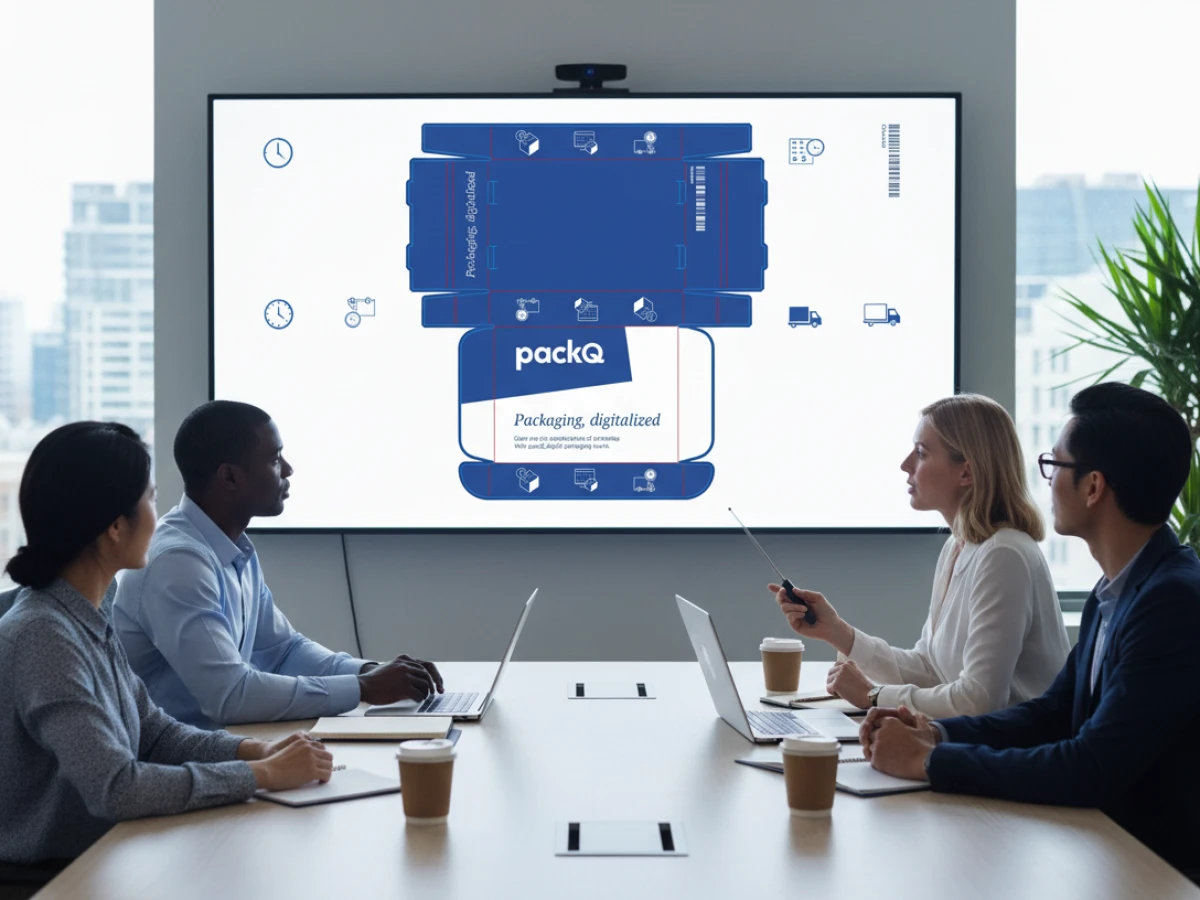
E‑Commerce Integrations & APIs for packQ – Seamlessly Connected from Shop to Production

PackQ links webshops, ERP and production systems using open APIs and a shop connector. This article explains what e‑commerce APIs are, how the packQ connector works, which data formats are supported and what advantages headless commerce offers for printers, brands and technology teams. Concrete examples show the complete process from the click in the shop to the finished package.
PackQ as a bridge between webshop and production
Every click in an online shop triggers a chain of processes: customers configure products, upload data, receive prices and expect rapid delivery. For printers and packaging manufacturers this means linking information from the webshop, design tool, ERP system and production. This is exactly where packQ comes in. The software is a specialised web‑to‑pack solution from CloudLab Solutions, on the market since 2018 and awarded several times. It digitises the entire packaging development process – from configuration through price calculation to output of press‑ready PDFs. The heart of this digital strategy is e‑commerce integrations and application programming interfaces (APIs). The following sections show how packQ uses open interfaces to break down silos, reduce errors and shorten your time to market.
What are e‑commerce APIs and why do you need them?
Before delving into the specifics of packQ, it’s worth looking at the basics. An Application Programming Interface (API) defines protocols and tools for different software modules to communicate. Professional literature describes APIs as defined routines that encapsulate complex logic so that developers do not need to know the internal processes. In the e‑commerce world, APIs connect formerly siloed back‑end systems securely and ensure speed and flexibility. Without APIs, shop platforms, payment systems, warehouse management and shipping software would each have to be connected individually – an error‑prone undertaking.
Overview of API types
- System APIs hide the complexity of large systems such as ERP, CRM or MIS. They provide functions without requiring the caller to know internal structures.
- Process APIs manage data between different systems and ensure that workflows are connected. In packaging this means the seamless transition from the shop to preflight and price calculation.
- Experience APIs prepare data for different front ends: desktop websites, mobile apps or touch kiosks. They ensure that each front end receives the right data in the right format.
In modern e‑commerce architectures the front end is decoupled from the back end (headless commerce). APIs are the glue that connects all parts and enables a consistent user experience.

Why APIs are indispensable in the packaging sector
Packaging products have special requirements. Each box varies in dimensions, materials and finishing options. Customers expect live prices, 3D previews and error‑free production, even for small runs. Without standardised data transfer, manual steps and correction loops would slow down the process. APIs make it possible to map this variety while increasing efficiency. They connect webshops, configurators, preflight software, CAD programs and production machines in real time.
The packQ shop connector: plug & print without programming
PackQ makes entry into the API world easy with a shop connector. This module connects common shop systems like Shopify, WooCommerce, Magento or custom marketplaces with packQ – without any programming knowledge. The product description calls it plug & print: with a few clicks the integration is active.
How the shop connector works
- Authentication: The connector synchronises customer data and ensures that users are logged into packQ automatically when they come from the shop.
- Order data transfer: All configured parameters – size, material, finishing, price – are transferred. The order does not need to be re‑entered.
- Smooth feedback: packQ sends status information (e.g. preflight OK, production started, shipment) back to the shop, so that the customer is always informed.
By using the shop connector you eliminate media breaks and significantly accelerate order entry.
Open interfaces: SOAP, REST and data formats
PackQ relies on open interfaces and supports both SOAP and REST APIs as well as various file formats such as XML, JDF/XJDF, CSV and JSON. This gives companies maximum flexibility when integrating into existing software landscapes.
SOAP and REST – advantages and disadvantages
SOAP: This standardised protocol is based on XML, offers high security and strict error checking. It is particularly suitable for transaction‑critical data such as payment information and is often used in banking, ERP integrations or other areas with strict compliance requirements.
REST: This lightweight architecture uses HTTP methods and is therefore quick to implement. It usually works with JSON data and scales very well. REST is ideal for web applications, mobile apps and systems with many simultaneous requests.
PackQ can use both protocols in parallel. Companies can secure individual services via SOAP while using REST APIs for quick queries.
Data formats: standards for a common language
XML/JDF/XJDF: The Job Definition Format (JDF) and its successor XJDF are industry standards for uniquely describing complex print jobs. packQ creates these files automatically so that machine parameters, cutting contours and production workflows are transmitted exactly.
CSV/JSON: For variable data printing campaigns, large data sets can easily be imported as CSV. JSON is suitable for web service calls and is particularly common in REST APIs.
This standardisation ensures that data from different vendors, machines and software products can be processed smoothly.
Connecting ERP, MIS and workflow systems
An online shop generates order data, but only the integration with Enterprise Resource Planning (ERP), Management Information Systems (MIS) and production workflows makes the process complete. packQ enables seamless connection of these systems. The feature page stresses that packQ communicates with print production, workflow and ERP systems via SOAP/REST APIs and files like XML, JDF/XJDF and CSV. This simplifies the configuration of different production methods and allows the connection of many suppliers.
Benefits of ERP integration
- Automated material checks: ERP systems automatically verify material availability based on the order data.
- Dynamic price calculation: packQ passes parameters to the MIS, which calculates setup and run costs. Customers therefore receive realistic prices instantly.
- Inventory control and purchasing: Thanks to API‑supported synchronisation, orders trigger reorders if necessary.
Workflow systems and preflight
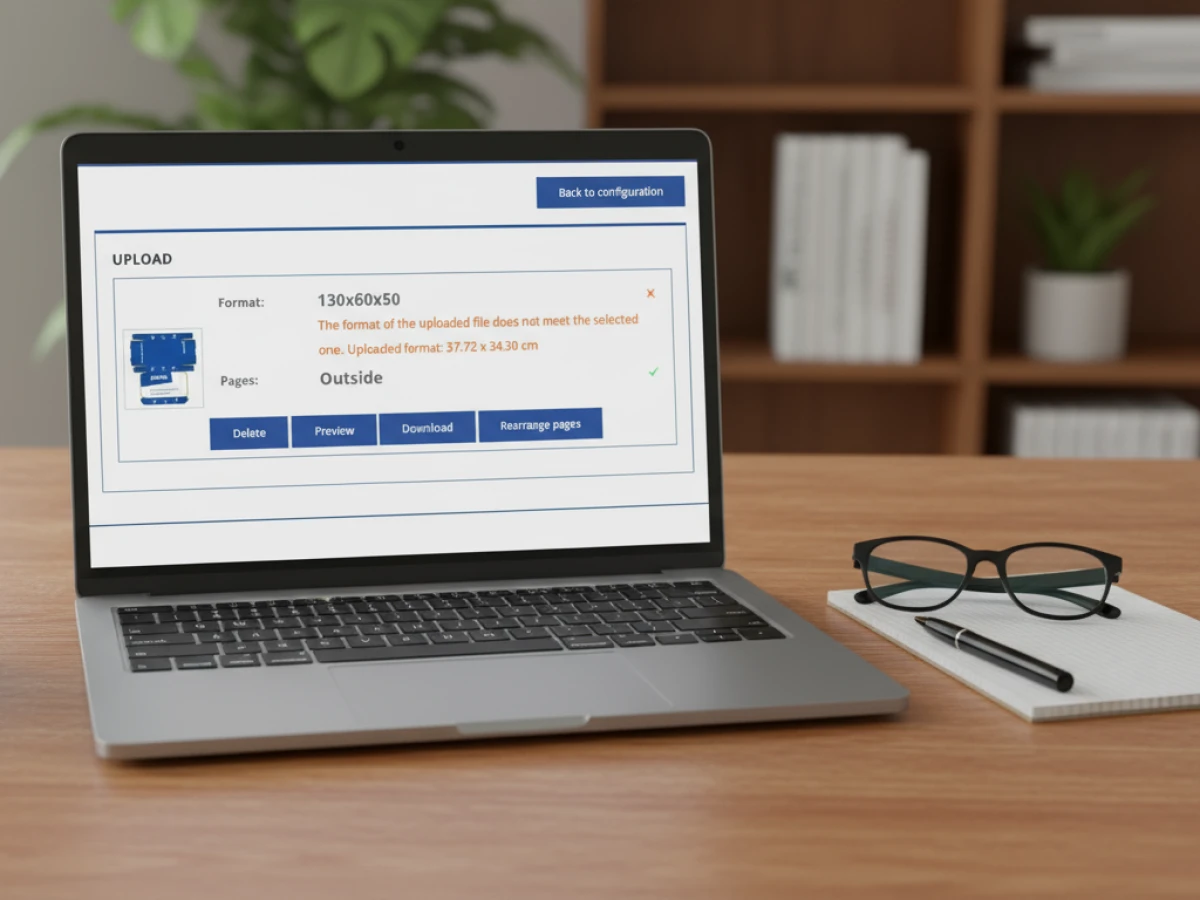
In addition to ERP, connecting to workflow systems is central. packQ integrates automated preflight checks that analyse files in real time. The dynamic preflight check uses tools like Enfocus PitStop and callas pdfToolbox to check image resolution, colour modes, bleed and fonts. It automatically corrects problems before the file goes into production. This information goes via API to the workflow system, which updates the job status.
Headless commerce with packQ: more flexibility and personalisation
Headless commerce describes the separation of front end and back end. Customers interact through a shop, an app or a B2B channel, while the back end processes data centrally and distributes it via APIs. According to expert articles, companies can grow faster in an omnichannel world thanks to APIs, because all systems can communicate freely and scale.
PackQ is built API‑first. This means:
- All functions can be accessed via APIs and integrated into any front end.
- It doesn’t matter whether you use Shopify, Magento or a custom platform: data always flows to the same packQ service.
- You can operate multiple front ends in parallel, e.g. a B2B shop for large buyers and a self‑service platform for start‑ups.
Headless commerce offers personalisation: you can design individual interfaces for each target group without changing the back‑end logic. The API layer ensures that data remains consistent.
Security and compliance: protecting sensitive data
APIs must not only work, they must also be secure. E‑commerce APIs enable access to payment data, customer details and production information. Sources emphasise the importance of differentiating between open and private APIs: open APIs are publicly available, private APIs are limited to internal or partner developers.
PackQ relies on private, authenticated endpoints. Every call requires an API key and user authorisation. In addition, usage can be limited to prevent abuse. Sensitive data such as customer details and print files are transmitted in encrypted form.
Compliance and standards
- GDPR/DSGVO: Customer data is processed according to European data protection regulations. Requests to delete or export data are facilitated via API endpoints.
- PCI‑DSS: Payment information is not stored in packQ but handled via secure payment providers. The API only passes tokens for identification.
- Audit logs: All API requests are logged. This makes it easy to trace errors quickly and meet compliance requirements.
Real‑world examples: how companies work with packQ
Folding cartons for a cosmetics shop
A cosmetics manufacturer offers personalised beauty boxes. Customers can configure the box in the web shop and upload a custom design. packQ’s shop connector imports the order.
- Data import: Material and size are sent to packQ. The system automatically selects the appropriate ECMA database template (e.g. ECMA A series) and generates a 3D mock‑up.
- Preflight and price: The dynamic preflight check immediately validates the design for resolution, colour mode and bleed. At the same time, the MIS calculates the price based on material costs, setup times and print run.
- Production: After approval, the data is automatically passed to the ERP and the cutting machine. Thanks to packQ’s hotfolder integration, the file ends up in the correct directory and the job starts automatically.
The manufacturer saves hours of manual work and offers customers a seamless experience.
E‑commerce marketplace for start‑ups
A marketplace for sustainable products wants to offer packaging as a service. Several small manufacturers use the same marketplace but have different requirements.
- Multi‑tenant structure: The marketplace runs a separate front end for each manufacturer, all connected via the same packQ API. Data remains isolated while the back end is centralised.
- Variable data printing: Many start‑ups want to print personalised series. They upload CSV files containing names, serial numbers or QR codes. PackQ processes these via API and generates PDF/VT files for variable data printing.
- Transparent pricing: Because packQ passes production parameters to the MIS, manufacturers see the correct price immediately and can decide whether to proceed.
Result: small brands benefit from professional packaging without investing in their own software. The marketplace opens up a new revenue stream.
Print shop with multiple suppliers
A mid‑sized print shop produces folding cartons, corrugated boxes and labels. It works with various raw material suppliers and finishing partners.
- Supplier integration: packQ allows several suppliers to be connected via API. Each order can be sent to the appropriate supplier while the data structure remains identical. This enables the print shop to choose the cheapest provider depending on capacity or price.
- 3D preview and standard libraries: Customers configure products online and choose from ECMA and FEFCO codes. Thanks to the integrated libraries, these templates are parametric and adapt to the desired dimensions. This builds trust and reduces errors.
- Automated hotfolders: Once a job is completed, packQ places the files in the correct hotfolder. This ensures that data reaches the finishing department without delay.
The print shop reduces lead time, increases machine utilisation and improves service quality.

Benefits for different target groups
Printers & packaging manufacturers
- Efficiency and cost savings: Automated data exchange eliminates many manual steps. This reduces errors and lowers the cost per job.
- Increased capacity: API‑supported processes make it economical to produce many small orders. Standardised templates (ECMA/FEFCO) accelerate prepress.
- Better planning: ERP and MIS integration provide clear production plans and material scheduling.
E‑commerce platforms & marketplaces
- New service offering: Platforms can offer packaging as an additional service without operating their own printing machines.
- Scalability: APIs make it easy to add new sellers or product categories quickly.
- Consistent customer experience: The headless architecture ensures consistent data and status updates across all channels.
Brand owners & industrial companies
- Quick prototypes: Marketing teams can design and order CI‑compliant packaging prototypes themselves without CAD knowledge.
- Personalisation: Thanks to variable data printing and the AI designer suite, campaigns with personalised content are easy to create.
- Transparent costs: Live prices and automatic calculation help plan budgets and avoid last‑minute changes.
Technology teams & developers
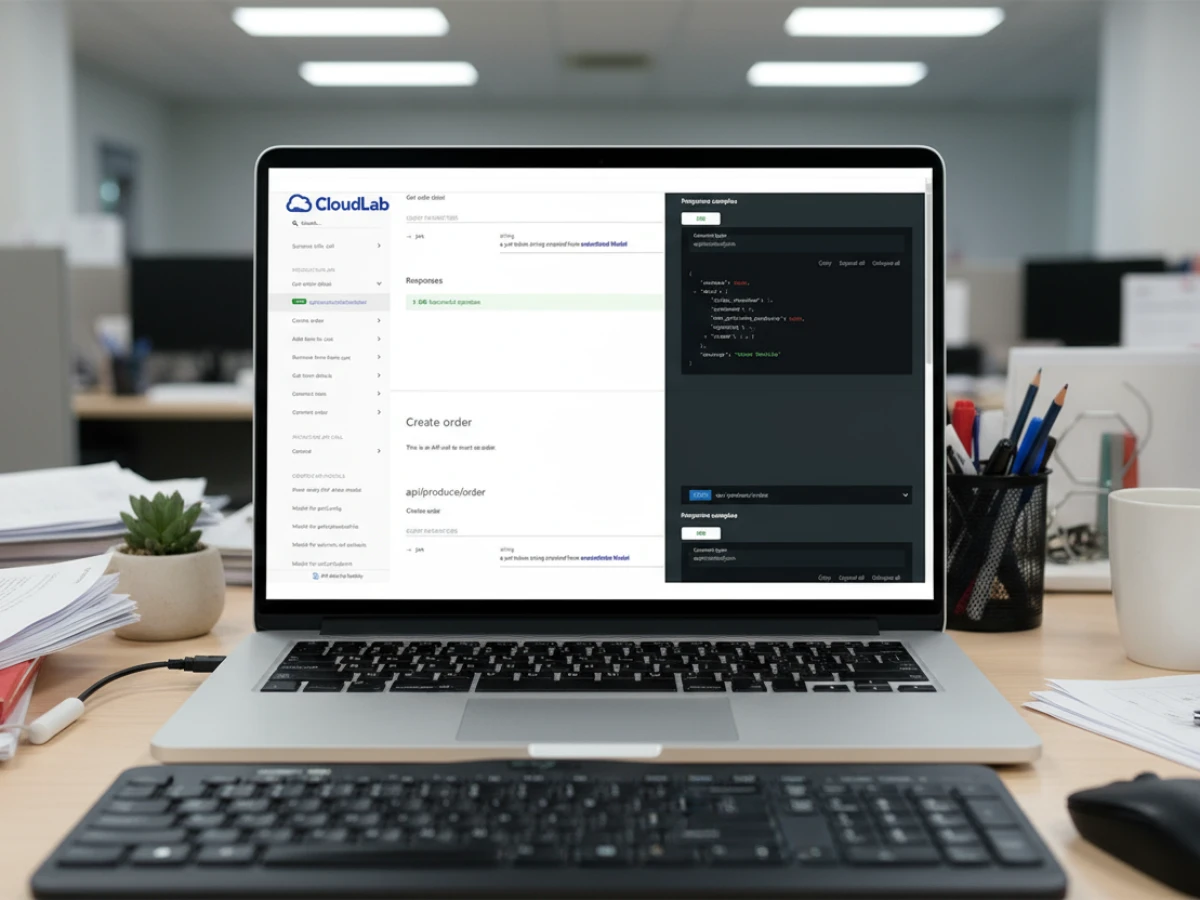
- API‑first: Clear interfaces and documentation simplify implementation. Teams can build their own extensions or embed packQ into existing systems.
- Testability: Sandbox environments allow integrations to be tested before going live. Errors can be detected early.
- Future‑proofing: With a modular design and microservices, packQ is ready for future requirements. New technologies like AI or augmented reality can be connected easily.
Implementation steps for your integration
- Take stock and define goals: List all systems that need to be connected: shop, CRM, ERP, MIS, printing machines. Define your objectives: do you want to shorten turnaround times, reduce errors or offer new services?
- Develop an API strategy: Decide which type of interface to use for which system. SOAP may be appropriate for your ERP, while you use REST for the webshop. Consider security and performance requirements.
- Define data standards: Use industry standards such as JDF/XJDF for production data and CSV/JSON for variable data. Uniform formats make implementation easier and prevent conversion errors.
- Integrate step by step: Start with a minimum viable product: connect the shop and automate order creation. Then integrate preflight, price calculation and production. Each extension should be tested and documented.
- Training and change management: Involve all stakeholders early. Training for sales, prepress and production creates acceptance. Document interfaces so that developers can understand future extensions.

Challenges and best practices
Complex system landscapes
Many companies have evolved IT environments with legacy systems. A middleware approach helps here: an integration platform collects data from different sources and distributes it. PackQ can be connected to this and functions as a packaging service within the platform.
Data quality and consistency
Poor or inconsistent data leads to errors. Carry out regular data checks and use packQ’s preflight system to detect problems early.
Scaling and performance
Ensure that your infrastructure scales. APIs should absorb peaks. Use caching, asynchronous processing and load balancing. packQ is cloud‑based and designed for scalability.
Mass customisation, AI and personalised packaging
The possibilities of packQ go beyond classic integrations. One trend in the packaging industry is mass customisation – the ability to produce products in high volume while still integrating individual content. APIs provide the foundation: by networking configurators, databases and printing systems, individual texts, graphics or QR codes can be automatically inserted. PackQ’s PDF/VT and CSV upload function allows large data sets to be uploaded directly and converted into personalised print data. Serial numbers, personalisation or marketing messages can thus be scaled easily.
Another highlight is the AI designer suite. Using algorithms, raster images are vectorised, backgrounds removed and image resolution increased. Features like Crispify improve details so that designs appear razor‑sharp on the press sheet. These AI‑supported tools are seamlessly integrated into packQ and available via APIs. Developers can create automated workflows in which incoming images are automatically optimised before being inserted into the layout.
Dimensional variability also benefits from APIs. In packQ, formats such as ECMA or FEFCO boxes can be adjusted dynamically. When the dimensions change, the software automatically calculates new cutting contours and adapts the layout using Liquid Layouts. This flexibility is crucial for marketing campaigns or seasonal products where sizes vary. Thanks to API calls, external systems – such as 3D configurators or augmented reality apps – can fetch the new dimensions and display them in their own front end.
Together, mass customisation, AI tools and variable formats enable a highly personalised customer experience. Customers design their packaging online, upload images, select variable data fields and adjust dimensions – everything is validated, optimised and converted into print data in real time. This personalisation increases customer satisfaction and raises the value added per order. For companies, the investment pays off because APIs keep the complexity manageable.
Future trends: API economy, microservices and AI
The API economy describes a business model in which digital services are provided via APIs. Companies monetise functions by offering them as a service. For the packaging industry this means: services such as preflight, price calculation or 3D rendering could be offered separately.
Microservices are becoming increasingly important. They break complex applications down into independent modules. PackQ already follows this principle in part: the AI designer suite, the 3D designer, the standard libraries and the preflight are separate components. This allows new technologies to be integrated more quickly.
Artificial intelligence will play an increasing role in data analysis and automation. PackQ already includes the AI designer suite, which vectorises images, increases resolution and removes backgrounds. In future, AI systems could automatically generate design suggestions or optimise production schedules.
APIs as an enabler for efficient packaging workflows
PackQ demonstrates how e‑commerce integrations and APIs are revolutionising the packaging industry. With the shop connector, orders are transferred without programming, open interfaces (SOAP/REST) and standard files like XML, JDF/XJDF, CSV and JSON ensure seamless communication. Connecting ERP, MIS and workflow systems eliminates media breaks, while the dynamic preflight check detects errors before production. Headless commerce offers flexibility and personalisation, and security mechanisms protect sensitive data.
For printers, e‑commerce platforms, brand owners and developers there are clear advantages: more efficient processes, lower costs, faster time to market and new business models. Anyone wanting to invest in scalable packaging services today cannot ignore API‑supported solutions like packQ.
FAQs: Common questions about e‑commerce integrations with packQ
What exactly is the packQ shop connector?
The shop connector is a module that links packQ with common webshops. It automatically takes over order and customer data and creates jobs in packQ. This allows packaging products to be configured and ordered directly from the shop without having to program anything.
Which data formats and protocols does packQ support?
PackQ uses open interfaces: SOAP and REST APIs. The file formats are XML, JDF/XJDF, CSV and JSON. ERP systems, MIS, workflow tools and machines can thus be connected without problems.
How does packQ ensure data security?
PackQ uses private, authenticated API endpoints. Access is encrypted and requires an API key. Customer data is processed in compliance with the GDPR. Payment data remains with external payment service providers; packQ only receives encrypted tokens.
What is headless commerce and why is it important?
Headless commerce separates the front end (shop interface) from the back end (business logic). APIs connect both parts so that different front ends can use the same back‑end services. This enables a consistent user experience and simplifies the introduction of new sales channels.
How does my company benefit from API integrations?
APIs reduce manual steps, speed up order processing and minimise errors. Experts say they allow applications to be expanded quickly without rebuilding the existing infrastructure. PackQ uses this architecture to orchestrate orders, pricing, preflight and production automatically.
What steps are required for implementation?
First, analyse your system landscape. Then define an API strategy, establish data standards and integrate the systems step by step. PackQ offers documentation and test environments to try out interfaces and optimise processes. Training and change management are important to prepare your team for the new processes.
What are the next steps?
If you would like to integrate packQ into your e‑commerce environment, a direct dialogue with the experts at CloudLab is worthwhile. Together you analyse your requirements and develop an integration concept that fits your existing system landscape. Test environments allow you to try out interfaces without risk and optimise processes. This lets you experience immediately how packQ connects your workflows and paves the way to scalable packaging services – without hidden obstacles.
Introducing our product features:
https://www.packagingdesignsoftware.com/feature/ecommerce-integrations-and-apis
https://www.packagingdesignsoftware.com/feature/ai-designer-suite
https://www.packagingdesignsoftware.com/feature/dynamic-preflight-check
https://www.packagingdesignsoftware.com/feature/production-workflow