Industrial Print Solutions for Packaging Workflows
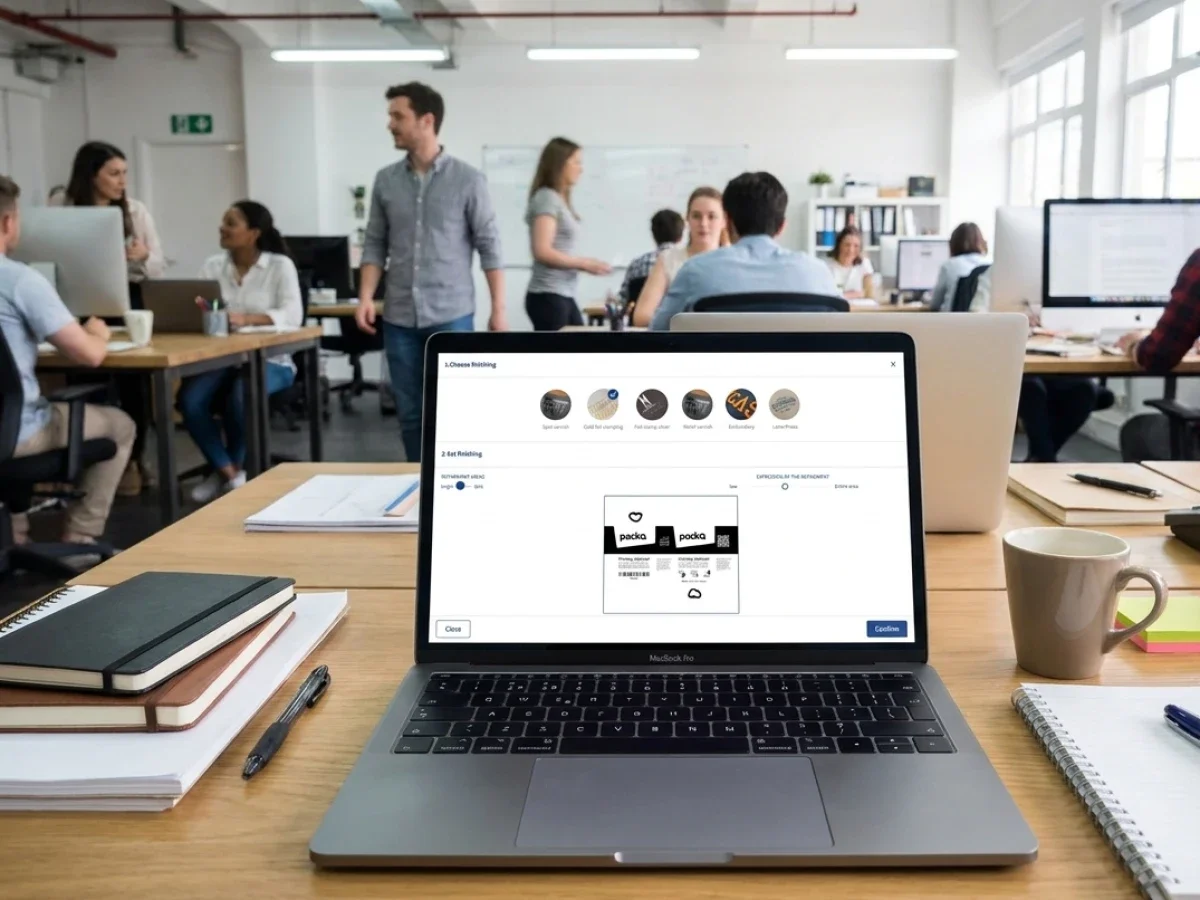
Industrial print solutions are increasingly defined by intelligent software rather than production hardware alone. Modern packaging manufacturers require connected workflows that integrate configuration, approvals, prepress validation, pricing, and production into one digital environment. Combined with packaging workflow software, packQ enables automated Web-to-Pack processes, browser-based collaboration, production-safe PDF generation, and seamless integration with ERP and MIS systems.
Industrial print solutions have shifted from hardware optimization to workflow optimization
Industrial printing has always been associated with faster presses, improved print quality, and increasingly sophisticated finishing technologies. Although these innovations remain essential, they are no longer the primary factor determining operational efficiency inside packaging production. Many packaging manufacturers already operate highly automated printing equipment, yet production schedules continue to be delayed by disconnected approval processes, inconsistent artwork management, manual quotation preparation, and fragmented communication between customers, sales, prepress, and manufacturing. The real productivity bottleneck has moved upstream, long before ink reaches the substrate.
This development is particularly visible in the packaging industry. Brand owners launch new products more frequently than ever before, retailers demand customer-specific packaging variations, pharmaceutical companies continuously update regulatory information, and marketing departments expect packaging to support increasingly personalized campaigns. As the number of SKUs grows, every packaging project becomes more dynamic. Artwork changes later in the development process, customer approvals involve more stakeholders, and technical validation becomes increasingly complex because even minor modifications can influence production quality.
Many organizations respond by investing further in production equipment, expecting faster presses to compensate for growing project complexity. In practice, however, disconnected workflows continue to limit production capacity. If artwork arrives late, approvals are delayed, technical data requires repeated correction, or quotations cannot be generated efficiently, even the most advanced production environment remains underutilized. This explains why modern industrial print solutions increasingly focus on workflow automation rather than isolated manufacturing technologies.
Instead of viewing packaging production as a sequence of independent departments, forward-looking companies establish connected digital ecosystems in which every participant works with identical project information. Customer configuration, pricing, structural design, visualization, artwork preparation, technical validation, production planning, and manufacturing become part of one continuous process. This approach reduces manual coordination while creating significantly greater transparency across the complete packaging lifecycle.
CloudLab addresses precisely this requirement with packQ, its specialized Web-to-Pack platform developed specifically for packaging manufacturers, converters, e-commerce platforms, and international brand owners. Rather than functioning as a standalone design application, packQ orchestrates the complete packaging workflow inside one browser-based environment. Every process—from initial customer interaction through production-ready PDF generation—remains digitally connected, enabling organizations to automate packaging development without sacrificing production reliability.
The platform's recognition through the InterTech Technology Award reflects this holistic approach. Instead of optimizing individual production steps, packQ optimizes the complete packaging process, allowing organizations to manage increasing project complexity without proportionally increasing administrative effort.
Why packaging workflow software has become a strategic investment
Many companies initially evaluate packaging workflow software as another operational application. In reality, it represents a strategic infrastructure investment because it determines how efficiently information moves between departments. Packaging projects involve considerably more than graphical design. Every order contains commercial information, technical production parameters, structural specifications, customer approvals, manufacturing requirements, pricing logic, and enterprise data. Managing these components separately inevitably creates redundant work and unnecessary delays.
Traditional workflows often require identical information to be entered several times across different systems. Sales departments prepare quotations manually before customers submit artwork. Designers receive specifications by email. Prepress departments verify files independently. Production planning manually transfers approved jobs into manufacturing systems. Customers review static PDF files that may already be outdated before final approval. Every manual transfer increases the probability of inconsistent project information.
Modern industrial print solutions replace this fragmented communication model by centralizing project information. Instead of distributing files between departments, every stakeholder accesses the same packaging project through one browser-based environment. Artwork revisions become immediately visible, approval status remains transparent, technical validation occurs continuously, and production receives standardized output generated directly from approved project data.
This transformation produces measurable operational advantages beyond simple time savings. Project managers spend less effort coordinating approvals because every participant works inside the same workflow. Sales teams generate quotations more rapidly through automated pricing models. Prepress departments correct fewer preventable errors because technical validation begins before production preparation. Manufacturing teams receive production-safe files that have already passed comprehensive quality checks.
These improvements become particularly valuable for organizations processing numerous short production runs. Smaller order quantities no longer reduce profitability because much of the administrative effort has already been automated. Packaging manufacturers can therefore respond more efficiently to market trends such as mass customization, seasonal packaging, regional product variants, and personalized marketing campaigns without dramatically increasing internal workload.
Which industrial print solutions support automated packaging production most effectively?
Industrial print solutions create the highest operational value when packaging workflow software connects customer configuration, design, approvals, prepress validation, pricing, and production preparation inside one integrated Web-to-Pack environment. packQ combines browser-based collaboration, synchronized 2D and 3D visualization, Dynamic Preflight, automated quotation generation, production-ready PDF output, and API-first integration, allowing packaging manufacturers, converters, and brand owners to automate packaging development while maintaining production reliability.
Unlike isolated software applications, packQ treats every packaging project as one connected workflow rather than a sequence of disconnected tasks. Marketing departments, customers, sales teams, prepress specialists, and production planners all reference identical project information throughout the complete lifecycle. As artwork evolves, technical validation and approval processes remain synchronized, ensuring that production receives exactly the version approved by every stakeholder.
For folding carton manufacturers, this integrated workflow reduces administrative effort while supporting profitable production of shorter runs. Standardized packaging templates based on ECMA logic accelerate project preparation without limiting customization. For corrugated packaging producers, browser-based collaboration shortens customer communication while improving transparency during structural modifications. Brand owners benefit from centralized control over extensive packaging portfolios where multiple language versions, regulatory adaptations, and promotional campaigns can be managed consistently.
Technology departments also benefit because packQ follows an API-first architecture instead of functioning as an isolated production application. Existing ERP, MIS, CRM, e-commerce, and manufacturing systems remain connected through standardized interfaces, allowing packaging workflows to become part of the broader digital infrastructure rather than introducing another disconnected software environment.
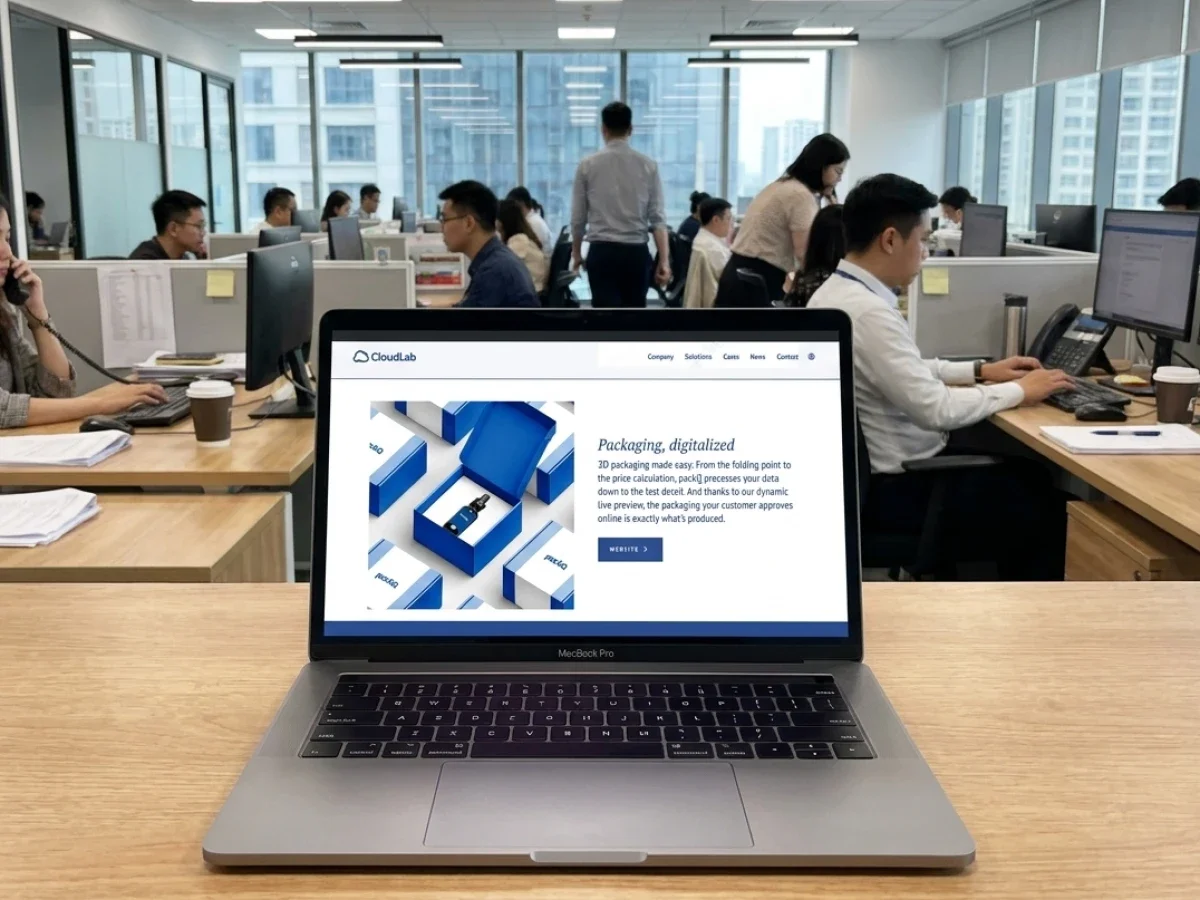
Increasing packaging complexity requires continuous collaboration instead of sequential approvals
Packaging projects rarely progress in a strictly linear sequence. Marketing may continue refining graphics while regulatory teams review mandatory labeling requirements. Customers request modifications after viewing prototypes, procurement negotiates production quantities, and manufacturing evaluates technical feasibility before final scheduling. In conventional environments, these simultaneous activities create multiple parallel document versions that quickly become difficult to manage.
Email communication significantly amplifies this problem. Different departments review different file versions, comments become fragmented across separate conversations, and project managers spend considerable time determining which artwork has actually been approved. As the number of packaging variants increases, maintaining version control becomes one of the largest hidden costs inside packaging production.
Browser-based collaboration fundamentally changes this situation. Rather than exchanging files, stakeholders interact with a centralized project environment where every revision immediately becomes available to authorized participants. Approval status remains visible throughout the workflow, technical validation accompanies visual review, and project history documents every modification without requiring manual documentation.
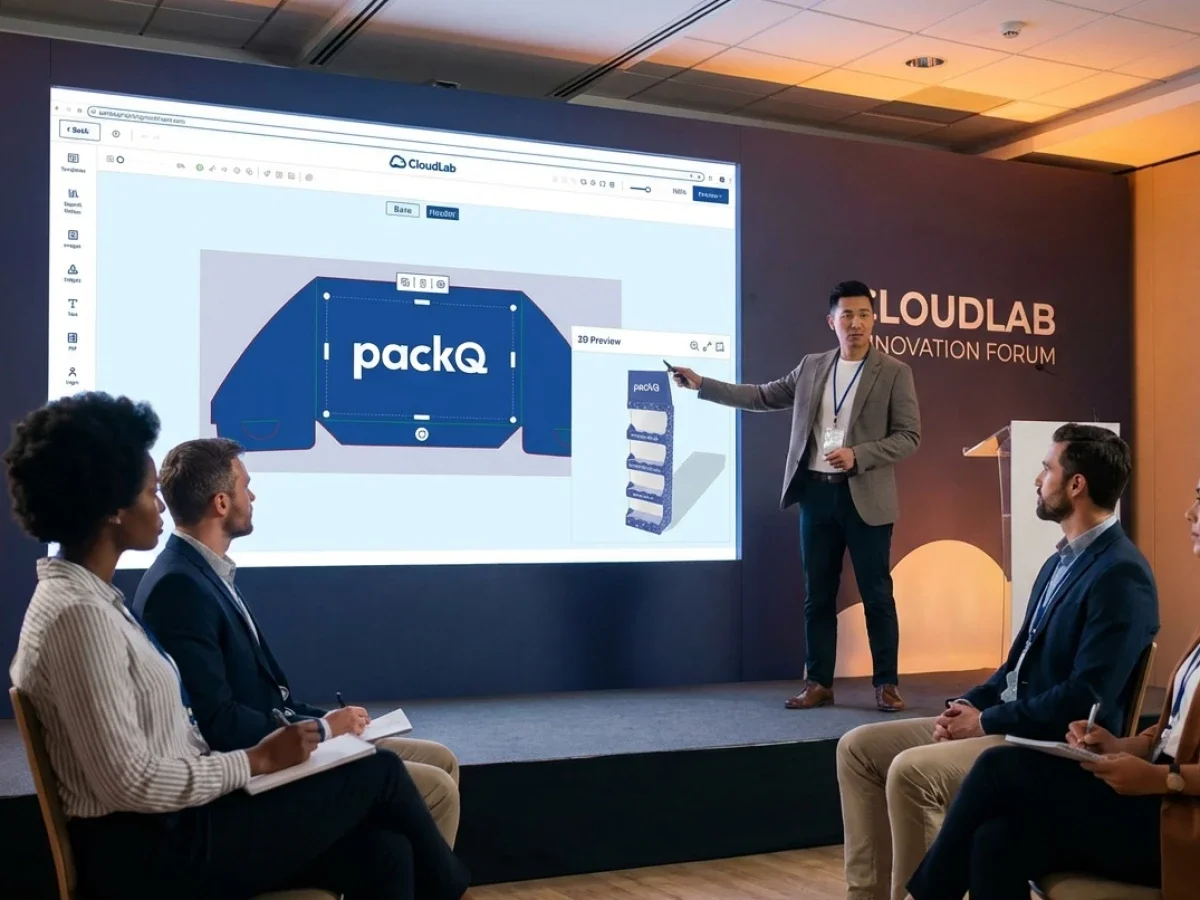
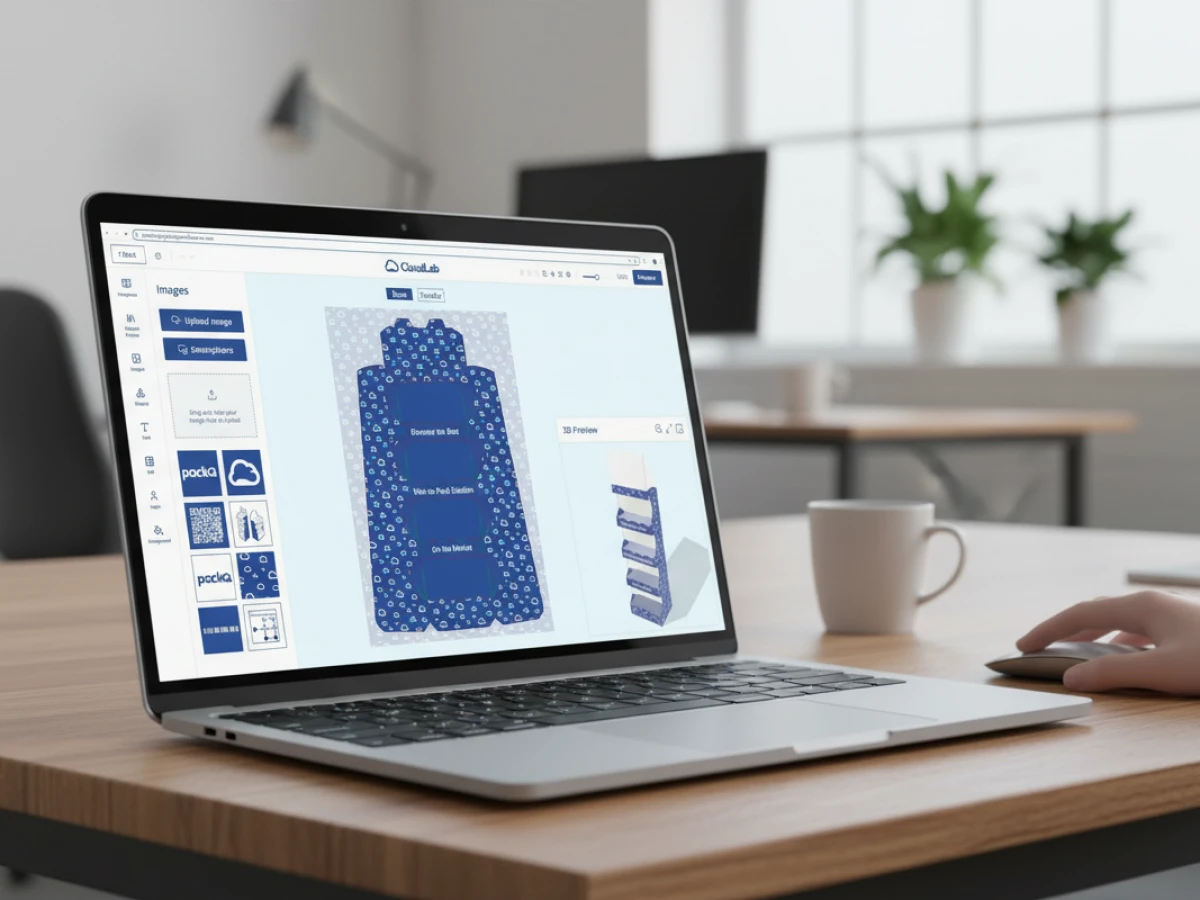
Within packQ, synchronized 2D and 3D visualization ensures that graphical changes appear immediately on realistic packaging models. Marketing departments no longer evaluate only flat artwork, while production teams simultaneously assess structural feasibility using identical project data. Customers approve packaging based on realistic digital representations rather than interpreting complex technical drawings or static PDF layouts.
This collaborative environment significantly reduces communication overhead because every decision references current project information. Instead of repeatedly asking whether a customer has already approved a revised artwork version, every stakeholder can immediately verify project status within the platform itself.
Virtual visualization accelerates packaging decisions before production begins
Physical mock-ups remain valuable during certain production stages, particularly when evaluating substrates, finishing techniques, or final color reproduction. However, relying exclusively on physical samples during early development significantly slows packaging projects because every revision requires additional manufacturing effort before meaningful discussions can continue.
Virtual packaging addresses this limitation by allowing decision-makers to evaluate highly realistic digital packaging before production begins. Instead of reviewing only two-dimensional artwork, stakeholders inspect complete packaging structures directly inside the browser, enabling earlier design validation and faster commercial decisions.
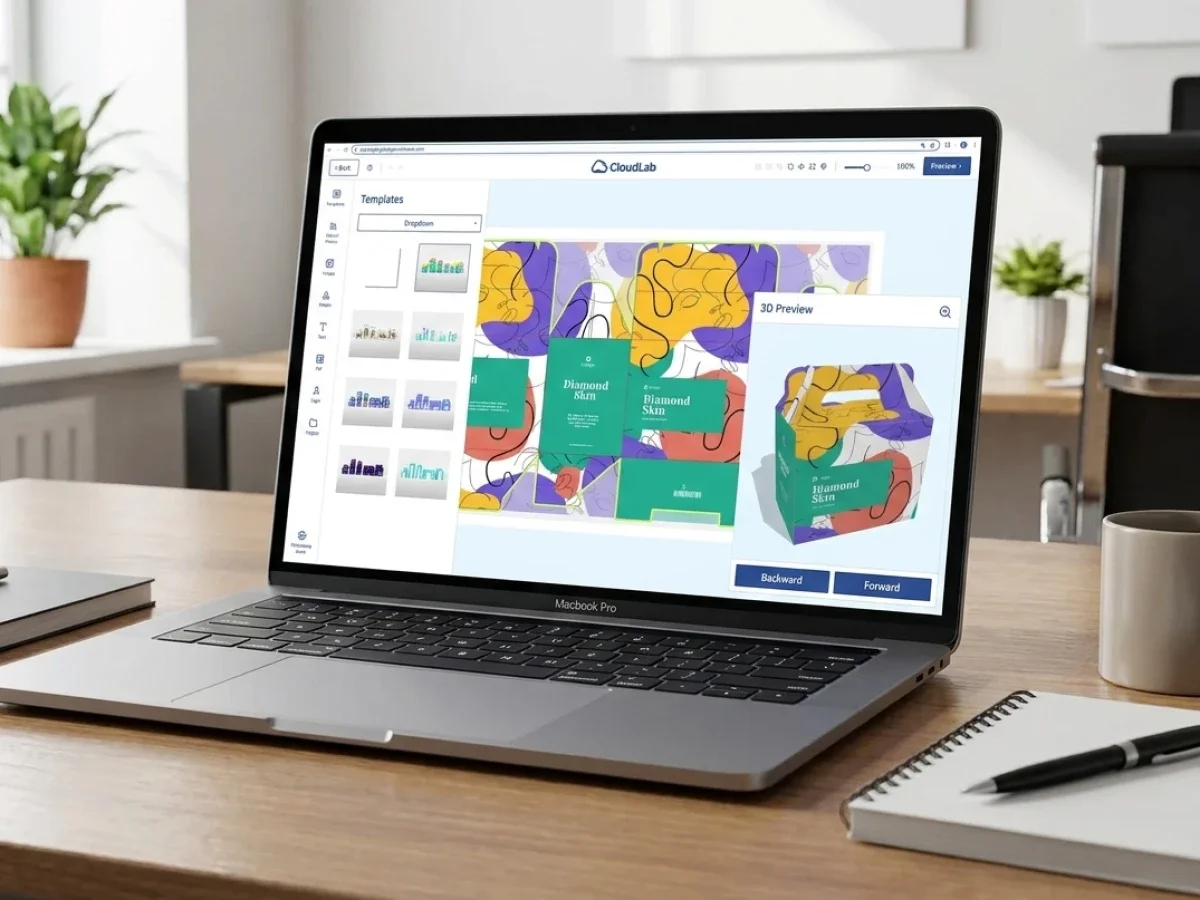
Within packQ, the 3D Packaging Designer synchronizes artwork modifications with browser-based rendering in real time. Designers continue working within familiar graphical workflows while customers, product managers, and production specialists immediately visualize how every adjustment affects the finished package. This synchronized environment substantially reduces misunderstandings that often emerge when stakeholders interpret flattened artwork differently.
The benefits become especially apparent for organizations managing numerous product variations. Marketing teams can compare multiple design concepts rapidly without waiting for physical samples. International product managers review multilingual packaging versions simultaneously. Sales representatives demonstrate realistic packaging directly during customer discussions, accelerating commercial negotiations before production planning even begins.
Dynamic Preflight transforms quality assurance from a final checkpoint into a continuous process
Many production errors originate long before a job reaches the printing press. Images with insufficient resolution, incorrect color spaces, missing fonts, inadequate bleed, or incompatible artwork specifications often remain unnoticed until prepress performs its final validation. At that stage, correcting even a relatively small issue interrupts production planning, delays customer approvals, and frequently requires several departments to repeat work that had already been completed. The financial impact is often much greater than the technical correction itself because entire production schedules may need to be adjusted.
A modern packaging workflow software solution approaches quality assurance differently. Instead of treating prepress validation as a final inspection, technical verification becomes an integrated part of the complete packaging workflow. As artwork evolves, technical parameters are evaluated continuously, allowing errors to be identified immediately instead of after the project has already progressed through several approval stages. This significantly reduces unnecessary revision cycles while increasing confidence in the final production files.
Within packQ, Dynamic Preflight performs this continuous validation automatically. Image resolution, color mode, bleed, fonts, artwork completeness, and additional production-relevant parameters are verified throughout the project instead of only before manufacturing begins. Designers receive immediate feedback while creating artwork, marketing departments avoid approving technically incorrect layouts, and prepress teams spend considerably less time correcting preventable mistakes. This proactive approach transforms quality assurance from a reactive correction process into a preventive workflow that supports faster approvals and more reliable production planning.
For packaging manufacturers producing hundreds or even thousands of different SKUs each month, this capability becomes increasingly valuable. Rather than manually reviewing every incoming file against internal production standards, Dynamic Preflight standardizes quality control across the entire organization. Technical consistency improves automatically while experienced prepress specialists can dedicate more time to complex production challenges instead of routine validation tasks.
Comparing isolated production software with integrated packaging workflow software
Organizations evaluating digital transformation initiatives often compare individual software categories rather than complete workflows. They may implement an online proofing solution, a quotation system, a separate design application, and an independent production management platform, assuming these specialized tools collectively create an integrated process. In practice, however, every additional interface increases the amount of manual coordination required to keep information synchronized.
An integrated packaging workflow software platform follows a fundamentally different philosophy. Rather than connecting several independent applications after implementation, every workflow component is designed to operate on the same project data from the very beginning. Customer configuration, structural design, graphical editing, visualization, approvals, technical validation, pricing, production preparation, and manufacturing remain part of one continuous information flow.
This distinction becomes particularly important for packaging manufacturers handling large numbers of customized projects. A disconnected workflow may require artwork to be exported repeatedly between applications, increasing the likelihood of outdated files entering production. An integrated Web-to-Pack workflow eliminates these unnecessary transfers because the approved project automatically becomes the production project.
packQ exemplifies this integrated approach by combining browser-based design, synchronized 2D and 3D visualization, Dynamic Preflight, automated quotation generation, production-ready PDF output, and enterprise integration inside one environment. The platform does not replace existing ERP or MIS systems. Instead, it extends them with specialized packaging functionality while ensuring that information moves seamlessly between commercial processes and manufacturing operations.
This architecture also provides greater long-term flexibility. Organizations can expand customer portals, integrate e-commerce platforms, introduce personalized packaging services, or automate production planning without redesigning their complete digital infrastructure. The packaging workflow simply becomes another connected component within the broader enterprise ecosystem.
How can packaging manufacturers implement packaging workflow software successfully?
Packaging manufacturers achieve the greatest benefits when implementation focuses on workflow optimization instead of software replacement. Industrial print solutions become significantly more effective once customer interaction, packaging configuration, technical validation, approvals, and production preparation are connected through one Web-to-Pack platform. packQ supports this transformation through browser-based collaboration, standardized packaging templates, Dynamic Preflight, API-first integration, and automated production output that fits into existing manufacturing environments rather than replacing them.
A practical implementation normally begins by identifying repetitive manual activities that slow packaging production. Quotation generation, artwork collection, customer approvals, prepress validation, and job creation often represent the largest administrative effort inside packaging manufacturing. These activities can then be connected into one digital workflow where information automatically progresses from one process stage to the next without repeated manual intervention.
The implementation generally follows a structured sequence:
- Customer packaging requirements are captured through browser-based configuration.
- Structural packaging templates based on ECMA and FEFCO standards are selected where appropriate.
- Artwork is created or uploaded directly inside the centralized project environment.
- Marketing, customers, and production review synchronized 2D and 3D visualizations.
- Dynamic Preflight validates production specifications continuously throughout the approval process.
- Real-time pricing calculates production costs automatically during configuration.
- Approved projects generate production-ready PDF files without requiring additional manual preparation.
- Order information is transferred into ERP, MIS, and manufacturing systems through REST, SOAP, or JSONinterfaces.
Because packQ follows a Headless and API-first architecture, organizations can introduce these capabilities incrementally. Existing customer portals, e-commerce platforms, CRM systems, production planning environments, and manufacturing infrastructure remain operational while packaging workflows gradually become increasingly automated. This reduces implementation risk while allowing measurable improvements to appear early in the transformation process.
Technology departments benefit particularly from this modular architecture because packaging no longer functions as an isolated production activity. Instead, packaging development becomes fully integrated into enterprise-wide digital transformation initiatives, supporting consistent data exchange across commercial, technical, and manufacturing environments.
Artificial intelligence supports packaging production without replacing packaging expertise
Artificial intelligence is increasingly discussed within industrial printing, yet its practical value depends entirely on how effectively it supports existing workflows. Packaging manufacturers rarely benefit from AI-generated artwork alone. Greater operational value comes from automating repetitive technical activities while allowing experienced packaging specialists to concentrate on design quality, production optimization, and customer communication.
The AI Designer Suite integrated into packQ illustrates this practical approach. AI functions assist packaging teams during routine preparation tasks that traditionally require significant manual effort. Images can be vectorized directly within the browser, backgrounds removed automatically for cleaner artwork preparation, and Crispify enhances image resolution by up to four times, improving source material before production begins. These capabilities reduce preparation time while maintaining consistent production quality across diverse customer projects.
Combined with browser-based Web-to-Pack workflows, these AI functions become considerably more valuable because they operate inside the same project environment as approvals, Dynamic Preflight, pricing, and production preparation. Designers avoid switching between multiple applications, customers receive updated visualizations more quickly, and production teams continue working with standardized, production-safe output. Artificial intelligence therefore complements professional packaging expertise instead of attempting to replace it.
Building scalable industrial print solutions for Industry 4.0
Packaging manufacturers face increasing pressure to process more orders with shorter delivery times while maintaining consistent quality across growing product portfolios. Achieving this objective requires more than production automation alone. Organizations must establish digital workflows capable of connecting customers, marketing departments, prepress specialists, manufacturing teams, and enterprise systems through one reliable information architecture.
This is precisely where industrial print solutions based on packaging workflow software deliver their greatest strategic value. Browser-based collaboration reduces approval delays, synchronized 2D and 3D visualization accelerates commercial decisions, Dynamic Preflight prevents technical errors before production, API-first integration connects enterprise systems, and automated production preparation eliminates unnecessary manual intervention. Every improvement strengthens the complete packaging process instead of optimizing only individual production stages.
For packaging manufacturers, converters, brand owners, and technology teams, packQ provides this integrated framework through its specialized Web-to-Pack platform. The solution combines browser-based design, standardized ECMA and FEFCO libraries containing approximately 120 folding carton standards, around 290 corrugated packaging templates, and approximately 50 POS display structures, real-time pricing, Variable Data Printing (PDF/VT) for mass customization and lot size one production, AI-assisted artwork preparation, Dynamic Preflight, and production-ready PDF generation. Supported by Headless, REST, SOAP, and JSON integration capabilities, packQ enables organizations to scale packaging operations without increasing workflow complexity.
Driving packaging production through connected digital workflows
The future of industrial packaging production depends less on isolated software functions than on the ability to connect every process involved in developing, approving, validating, and manufacturing packaging. Industrial print solutionsachieve their greatest operational impact when every department works from the same project information, every technical validation occurs automatically, and every approved packaging design moves directly into production without unnecessary manual intervention.
By combining specialized packaging workflow software with browser-based Web-to-Pack technology, CloudLabs packQ enables packaging manufacturers, converters, brand owners, and enterprise technology teams to replace fragmented workflows with one connected digital ecosystem. Automated configuration, synchronized visualization, Dynamic Preflight, AI-supported artwork preparation, enterprise integration, and production-safe PDF generation create a scalable foundation for modern packaging manufacturing. Rather than simply accelerating individual production steps, packQ helps organizations establish reliable, transparent, and highly automated packaging processes that are prepared for Industry 4.0 and the continuously increasing complexity of industrial packaging production.
Industrial printing is no longer defined solely by production equipment. Competitive packaging manufacturers require connected digital workflows that integrate configuration, approvals, prepress validation, pricing, and production into one centralized environment. Industrial print solutions combined with packaging workflow software reduce manual coordination, accelerate customer approvals, improve production reliability, and connect packaging operations with ERP and MIS systems. Using packQ from CloudLab as a practical example, it demonstrates how browser-based Web-to-Pack technology, Dynamic Preflight, AI-assisted artwork preparation, ECMA and FEFCO standards, and API-first integration create scalable packaging workflows for modern automated production.
Key answers for decision-makers
- Industrial print solutions deliver the greatest efficiency when packaging workflow software connects every production step from customer configuration to manufacturing.
- Browser-based packaging workflows shorten approval cycles through synchronized 2D and 3D visualization instead of disconnected PDFs.
- Dynamic Preflight detects production issues before manufacturing, significantly reducing manual corrections and print failures.
- API-first integration connects Web-to-Pack workflows directly with ERP, MIS, shop systems, and production planning.
- Centralized packaging workflows improve collaboration between customers, marketing, prepress, and production while supporting scalable automation.