packQ packaging software solutions & API‑First

packQ is a premium web‑to‑pack platform that unites design, automation and commerce into a single workflow. Its shop connector and API‑first architecture transform packaging software solutions for printers, brands, marketplaces and developers. Real‑time 3D design, ECMA/FEFCO templates, AI tools and PDF/VT personalization reduce errors and accelerate time to market. CloudLab’s award‑winning technology proves that modern packaging is as much about software as it is about cardboard.
Why Packaging Needs a Digital Brain
The packaging sector is under pressure to deliver more variety, shorter lead times and personalized experiences. Offline CAD tools, manual approvals and disparate systems slow innovation, yet customers expect instant configurations, live pricing and error‑free delivery. packQ answers this call by combining web‑to‑pack software with API‑driven automation, turning packaging into a seamless digital workflow. Founded by CloudLab in Germany, packQ draws on decades of print‑industry know‑how and engineering excellence. It has earned recognition such as the InterTech Technology Award for its 3D packaging design capability, illustrating how far software innovation has reshaped the packaging landscape.
Digital packaging isn’t only about shifting design work online. It requires a structural foundation—standard libraries, parametric engines, live preview and integration with ERP, MIS and production systems. When these components are orchestrated correctly, packaging becomes a scalable service accessible to printers, brands and marketplaces. This article explores how packQ delivers these capabilities through an API‑first architecture, real‑time 3D design, dynamic preflight, AI‑enabled editing and variable data printing. The goal is to show decision‑makers how packaging software for 3D package design is evolving from isolated design tools into integrated business platforms.
CloudLab’s Vision: Web‑to‑Pack as a Unified Platform
From printQ to packQ: A heritage of innovation
CloudLab began with printQ, a modular web‑to‑print solution for commercial print. Building on that success, it launched packQ to address the unique demands of structural packaging. The InterTech judges praised CloudLab’s 3D Packaging Design for enabling customers to design a box in minutes with dynamic 3D visualization and automatic production file generation. packQ extends this vision to corrugated boxes, folding cartons and display units, providing an open platform for web to pack solutions. CloudLab’s mission—connecting creative freedom with production intelligence—runs throughout packQ, ensuring that design, pricing and prepress tasks happen in one continuous process.
Premium positioning for printers, brands and marketplaces
packQ is not a generic software product packaging tool; it is tailored for packaging specialists. Printers and converters use it to reduce setup time and handle small, complex orders profitably. Brands leverage its 3D previews to accelerate marketing campaigns and ensure packaging consistency across regions. Marketplaces integrate packQ via APIs to offer packaging as a service without owning production equipment. Because packQ is headless, these stakeholders can embed its functions—configurators, 3D viewers, preflight, pricing—into their own websites or apps without forcing users to switch contexts. This modular approach allows technology teams to integrate packaging services into broader e‑commerce architectures.
3D Packaging Designer: From Concept to Production in the Browser
Real‑time 3D visualization and parametric geometry
At the heart of packQ is a browser‑based 3D designer that combines structural logic with intuitive interaction. When a user changes dimensions or materials, the engine recalculates cuts, folds and panels instantly. This parametric engine eliminates the need for specialized CAD expertise; complex structures like tuck‑end boxes or crash‑lock bottoms can be reconfigured in seconds. Real‑time visualization allows users to rotate, zoom and inspect flaps and glue tabs. Such immediacy shortens approval cycles because the on‑screen model matches the printed result.
Integrated artwork editing and vector tools
packQ’s designer includes a synchronized 2D canvas where artwork and structure are edited in one space. Users drag and drop logos, text and barcodes onto panels and adjust layers for varnish, embossing or spot colors. Advanced functions such as vectorization of raster images, AI‑based background removal, real‑time resolution checks and layer management ensure print quality. Designers don’t need to switch between applications; the 3D model updates automatically, and every element aligns with die lines. This integration makes packQ more than a viewer—it is a full structural packaging design software built into the browser.
Dynamic pricing and production‑ready output
Every change in dimensions, material or quantity triggers an automatic price recalculation. packQ updates costs in real time, enabling customers to balance budgets and specifications without waiting for manual quotes. Once approved, the system generates print‑ready PDF/X files, CAD die‑cut drawings and metadata for MIS and ERP systems. Automated preflight reports validate image resolution, color profiles and safe zones, ensuring right‑first‑time production. This end‑to‑end automation differentiates packQ from tools that stop at visualization or quoting.
API integration and headless architecture
Beyond design, packQ’s power lies in connectivity. The 3D designer is part of an API‑first, web to pack software architecture. It communicates with ERP, MIS and production environments via RESTful APIs, enabling automatic order creation, material checks, pricing and prepress. Because the system is headless, it can be embedded into any webshop or enterprise portal; all functionality is accessible through documented endpoints. This design principle makes packQ future‑proof and adaptable to diverse business models.
Structural Standards: ECMA & FEFCO Templates for Reliability
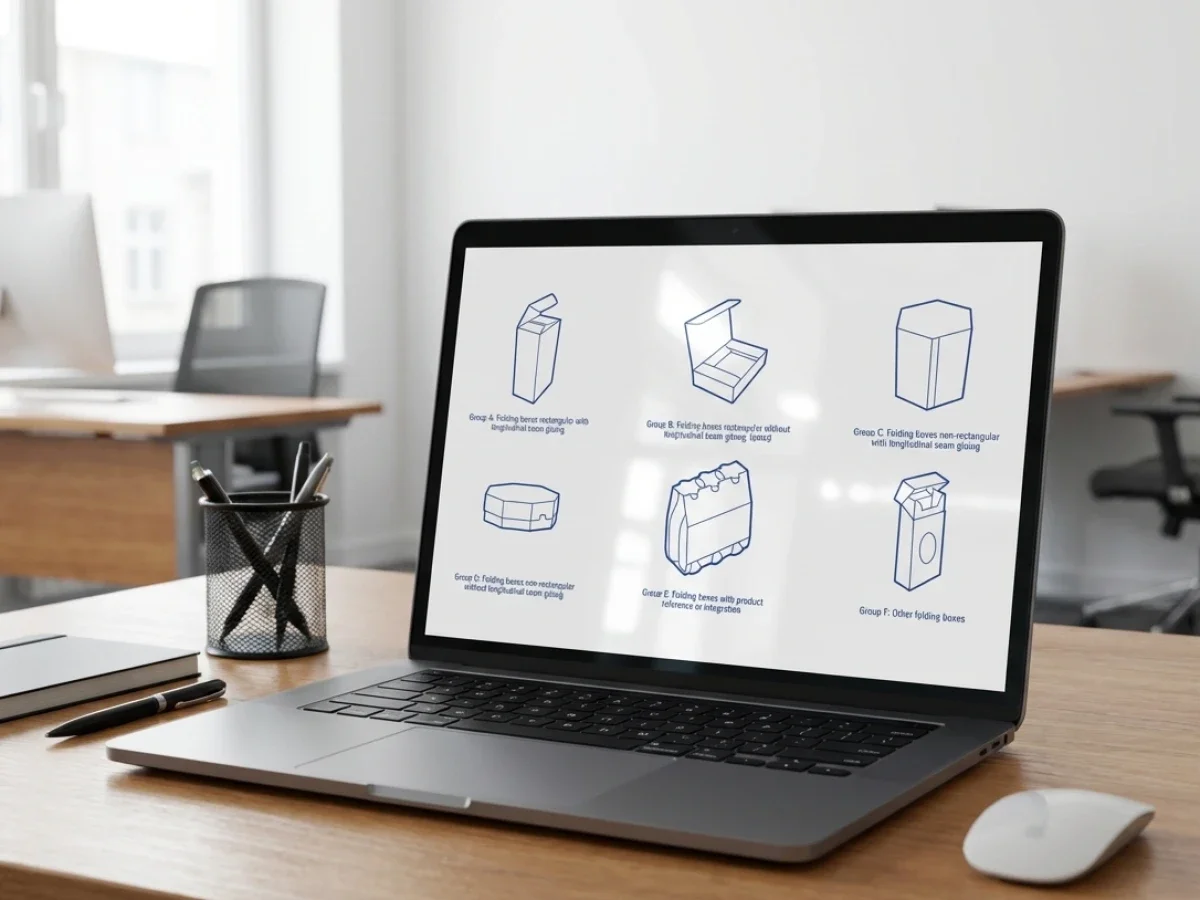
Folding boxes: Parametric ECMA library
packQ integrates the complete ECMA standard library, offering over 120 folding‑carton styles including reverse‑tuck, crash‑lock and sleeve designs. Users select a template in the gallery and configure width, height and depth; the system recalculates dielines, glue flaps and panel proportions instantly. Real‑time 3D visualization and dynamic preflight validate resolution, bleed and color mode while the pricing engine recalculates costs. Once approved, packQ exports production‑ready PDFs, DXF outlines and 3D assets that align perfectly with ECMA codes. The platform ensures that modified dimensions preserve the structural ratios defined by ECMA, guaranteeing machine compatibility for folding and gluing lines.
Corrugated board: Comprehensive FEFCO libraries
FEFCO codes classify corrugated packaging designs. packQ transforms these codes into dynamic templates that users can configure online. Modern web‑to‑pack software like packQ contains more than 290 FEFCO models, each preloaded with fold lines, glue flaps, material thicknesses and parameter ranges. After choosing a model such as 0201 or 0427, users adjust length, width, height and flute type; the system automatically calculates panels, fold zones and flap widths. The workflow continues with 3D design, preflight validation, pricing and generation of PDF, DXF and 3D files. This library ensures standardized design and production across hundreds of box types. packQ extends FEFCO templates with AI tools for vectorization and resolution enhancement, variable data placement and automatic preflight. These capabilities help printers, brands and e‑commerce platforms produce corrugated packaging efficiently without sacrificing customization.
Why standards matter
ECMA and FEFCO standards offer a common language for designers, printers and customers, reducing ambiguity and speeding production. When combined with packQ’s parametric engine and preflight tools, they deliver packaging software solutions that guarantee structural integrity. Standardized templates also accelerate quoting and allow printers to reuse dies, saving cost. For brands, adherence to ECMA and FEFCO ensures global consistency in packaging and compliance with regulatory labelling requirements. For marketplaces, it enables self‑service configurators with reliable outcomes. In other words, standards provide the backbone while packQ adds the digital muscle.

AI Designer Suite: Intelligent Editing Inside the Browser
Vectorization and effects
Many designers struggle with low‑quality assets, especially when clients submit raster logos. packQ’s AI Designer Suite includes tools that convert raster images into vectors in seconds. Users select smoothing and color settings, and the vectorized graphic appears ready for high‑resolution printing. Additional effects such as grayscale, sepia and vintage filters allow designers to enhance images directly in the software. These built‑in effects reduce the need for external software and streamline the creative workflow.
Crispify: Super‑resolution for print quality
packQ’s Crispify feature increases image resolution by generating four times more pixels. Low‑resolution photos become sharp, detailed graphics suitable for packaging. This is particularly valuable when user‑supplied images would otherwise fail preflight checks. Crispify works seamlessly within the browser, eliminating manual upscaling or visits to external tools.
One‑click background removal
Removing backgrounds from product photos can be tedious. packQ simplifies this process: the Remove Background tool isolates subjects at the click of a button. Designers can then place isolated objects on any panel without white boxes or noise. This capability not only improves visual quality but also speeds up layout preparation, enabling quick iterations during product launches.
Why AI matters in packaging design
AI tools democratize professional image editing. By embedding vectorization, super‑resolution and background removal directly into the packaging workflow, packQ empowers non‑experts to achieve professional results. Moreover, AI ensures that images meet print resolution requirements, reducing rejections during preflight. For mass customization, AI accelerates the processing of thousands of images, scaling personalization campaigns without adding prepress staff. Combined with dynamic preflight, AI becomes a crucial component of modern packaging software for 3D package design.
Variable Data Printing (VDP): Personalization at Scale
Template‑based design and data integration
Variable Data Printing enables thousands of unique packages within a single workflow. In packQ, designers define templates with placeholders—such as <FIRSTNAME>, <SERIAL> or <QR>—that link to external data sources. The template remains static in layout but dynamic in content. Data can come from CSV or Excel uploads, API connections to CRM or ERP systems or dynamic streams from online campaigns. Each record corresponds to one packaging variant, enabling micro‑segmentation and targeted marketing.
Real‑time merging, rendering and automation
When data is uploaded, packQ merges text, images and barcodes into the template. The engine renders all variants as PDF/VT files—the industry standard for variable data printing—or as individual PDFs for proofs. Because packQ supports PDF/VT streams optimized for fast RIP on digital presses, there are no delays or manual file handling. After approval, the output flows directly into the print queue; every variant is ready for production.
Real‑world examples
VDP opens countless possibilities. A chocolate brand can produce holiday gift boxes personalized with customer names and messages. Pharmaceutical companies can generate packaging with unique serial numbers and QR codes for traceability. Energy drink brands can print QR codes linking to promotions. Multilingual campaigns can produce packaging in multiple languages from one template. These scenarios show how VDP transforms packaging from static containers into interactive, data‑driven experiences.
Business benefits and AI in VDP
For printers, VDP creates new revenue streams, allows micro‑runs to be processed like mass jobs and increases equipment utilization. For brands, personalization drives engagement and data‑driven marketing while reducing waste. E‑commerce platforms gain a differentiating service that scales effortlessly. AI plays a vital role in VDP by predicting text overflow, resizing fonts, adjusting contrast and caching shared assets. This intelligence ensures that thousands of variants maintain visual consistency and production quality.
Dynamic Preflight Check: Quality Assurance from Start to Finish
Why traditional preflight falls short
Preflight is the printing industry’s equivalent of aviation’s safety check. It examines resolution, fonts, color modes, bleed and transparency to ensure files meet technical requirements. Traditionally, preflight occurred after job submission, meaning errors were discovered late. Corrections required extra time, wasted materials and delayed production. As print volumes grow and personalisation increases, this reactive approach becomes unsustainable.
packQ’s dynamic approach
packQ moves quality assurance to the beginning of the process. Its dynamic preflight analyzes print data in real time during configuration and upload. When a user uploads a file or changes dimensions, packQ checks image resolution (minimum 300 DPI), color mode (converting RGB to CMYK), ICC profiles, embedded fonts, bleed margins and transparency. Deviations trigger warning messages with recommendations and visual markers highlighting affected areas. Live previews show the impact of adjustments immediately, empowering users to fix errors before placing an order.
Integration with industry tools and automation
To deliver accurate analysis, packQ integrates leading preflight engines such as Enfocus PitStop and callas pdfToolbox. These tools detect missing barcodes, incorrect color schemes and PDF/VT specifications. Users can choose preconfigured profiles or create custom rules tailored to specific materials and products. The system not only flags issues but also performs automated corrections—converting RGB to CMYK or adding bleed automatically. After all parameters pass, packQ generates a production‑ready PDF and transfers data to ERP and MIS systems via APIs. Hotfolder integration ensures files are sent to the correct production machines without human intervention.
Benefits across stakeholder groups
Dynamic preflight reduces waste, increases capacity and standardizes checks for printers. E‑commerce platforms gain improved user experience and scalability because customers receive immediate feedback. Brand owners maintain corporate design integrity and rapidly prototype ideas. For technology teams, the API‑first architecture makes integration straightforward and scalable. Finally, the preflight considers ECMA and FEFCO standards, verifying crease lines, flaps and bleed margins against the selected code. This combination of structural and data checks ensures every package is functional, aesthetic and compliant.

eCommerce Integrations & API‑First Architecture
The packQ shop connector: Plug & print without coding
packQ demystifies integration with its shop connector. This module links common e‑commerce platforms such as Shopify, WooCommerce, Magento and custom marketplaces without programming knowledge. Authentication synchronizes customer data so users are automatically logged into packQ, order details (size, material, finish, price) are transferred and status updates (preflight OK, production started, shipment) are sent back to the shop. By eliminating manual order entry, the shop connector accelerates time‑to‑market and reduces errors.
Open interfaces and data formats
packQ relies on open interfaces—SOAP and REST—and supports data formats like XML, JDF/XJDF, CSV and JSON. SOAP offers high security and strict error checking, suitable for transaction‑critical data; REST is lightweight and scalable for web applications. The platform can use both protocols in parallel, securing payment data via SOAP while using REST for quick queries. JDF/XJDF files describe complex print jobs and are generated automatically; CSV imports enable bulk personalization; JSON is ideal for web service calls. Standardizing data ensures smooth communication across software vendors and machines.
Connecting ERP, MIS and workflow systems
An online shop generates orders, but only integration with ERP, MIS and production systems completes the process. packQ communicates with these systems via SOAP/REST APIs and file formats like XML, JDF/XJDF and CSV. ERP integration automates material checks, dynamic price calculation and inventory control. Workflow integration uses dynamic preflight to analyze files in real time and update job statuses. These connections enable automated procurement, scheduling and production control, turning web orders into production jobs seamlessly.
Headless commerce and personalization
Headless commerce decouples the front end from the back end, allowing companies to use multiple storefronts while centralizing business logic. packQ is built API‑first: all functions can be accessed via endpoints and integrated into any front end. This means a B2B portal for large buyers and a self‑service shop for start‑ups can share the same packaging engine. Headless architecture also enables personalization: each target group can have its own interface while data flows through a consistent API layer. Security and compliance are paramount; packQ uses private authenticated endpoints, encryption and audit logs, and adheres to GDPR and PCI‑DSS requirements.
Real‑world examples and benefits
Case studies illustrate the impact of packQ’s APIs. A cosmetics manufacturer uses the shop connector to import orders and selects ECMA templates automatically while dynamic preflight validates design and MIS calculates price. A sustainable marketplace runs multiple storefronts connected to the same API, enabling start‑ups to upload CSV files with names or serial numbers for PDF/VT generation. A mid‑sized print shop connects multiple suppliers through packQ; each order is routed to the appropriate partner while customers configure ECMA/FEFCO boxes online. Across these scenarios, benefits include automated data exchange, capacity for small orders, transparent pricing, and integration with existing supply chains.
Implementation and best practices
Successful integration starts with a clear inventory of systems—shop, CRM, ERP, MIS, printing machines—and goals such as shorter turnaround times or new services. Developing an API strategy involves deciding which interfaces to use for which systems, considering security and performance. Standardize data using JDF/XJDF for production information and CSV/JSON for variable data. Integrate gradually, beginning with order creation then adding preflight, pricing and production. Training and change management ensure adoption across sales, prepress and production. These best practices turn technology into tangible business gains.
Use Cases and Targeted Benefits
Printers and packaging manufacturers
- Production efficiency: Standardized templates and automated workflows reduce setup time and misprints.
- Higher capacity: API‑supported processes enable many small orders to be processed economically.
- Better planning: ERP and MIS integration provides clear production schedules and material checks.
- New business models: Web‑to‑pack portals allow printers to offer online configurators and attract B2B and B2C clients.
E‑commerce platforms & marketplaces
- Service expansion: Platforms can offer personalized packaging without owning production equipment.
- Scalability: APIs make it easy to add sellers or product categories.
- Consistent customer experience: Headless architecture ensures unified data and status updates across channels.
- Revenue uplift: Packaging services add value and differentiate the platform.
Brand owners and industrial companies
- Rapid prototyping: Marketing teams design CI‑compliant packaging themselves and preview it in 3D.
- Personalization: Variable data printing and AI tools enable campaigns with individualized content.
- Transparent costs: Live prices and automated calculations help plan budgets.
- Global consistency: ECMA/FEFCO standards ensure uniform packaging across locations.
Technology teams and developers
- API‑first flexibility: Clear interfaces and documentation simplify integration.
- Scalability: Cloud‑native architecture and microservices handle high loads.
- Future readiness: AI and augmented reality modules can be added seamlessly.
- Security & compliance: Private endpoints, encryption and audit logs protect sensitive data.

Unique Selling Propositions (USPs)
Pure web‑to‑pack rather than web‑to‑print
Unlike generic web‑to‑print systems, packQ is purpose‑built for packaging. It handles structural design, parametric libraries and 3D visualization, not just flat artwork. Its integration of ECMA and FEFCO standards and dynamic preflight ensures that packaging designs are production‑ready. This focus gives printers and brands a tool tailored to their products, not adapted from other print segments.
Deep ECMA/FEFCO integration and CAD‑based output
packQ’s templated libraries and parametric engine deliver the deepest ECMA and FEFCO integration available. Dielines, glue flaps, material thicknesses and flute types are predefined and recalculated on the fly. The resulting PDF, DXF and 3D files are machine‑ready, eliminating manual CAD work. This depth ensures structural accuracy, reduces errors and speeds production.
Real‑time 3D with CAD precision
The browser‑based 3D designer offers CAD‑level precision combined with consumer‑grade usability. Live rotation, zoom, lighting and material simulation allow customers to experience packaging virtually and approve it instantly. This accuracy builds trust and prevents costly surprises.
Integrated AI functions
Vectorization, super‑resolution, background removal and image effects are built into the workflow. Designers and end‑users can edit images without external tools, ensuring that artwork meets print standards and looks polished. AI also automates layout adjustments and anomaly detection during mass personalization.
End‑to‑end automation and industry 4.0 readiness
From order intake through design, pricing, preflight, personalization, approval and production, packQ automates every step. JDF/XJDF, XML, CSV and JSON data flow through SOAP and REST APIs to ERP, MIS and production machines, enabling fully digital workflows. Dynamic preflight prevents errors before they propagate, while hotfolder integration triggers machine jobs automatically. This end‑to‑end automation positions packQ for Industry 4.0/Print 4.0 scenarios where machines and software systems communicate without human intervention.
Headless architecture and scalability
Because every function is exposed through APIs, packQ can be embedded in multiple front ends and scaled across geographies. Its cloud‑native infrastructure enables multi‑tenant hosting, dynamic resource allocation and rapid updates. Microservices allow new modules—like AI‑assisted layout suggestions or augmented reality overlays—to be added without disrupting core functions. This flexibility future‑proofs investments and supports evolving business models.
Connecting the Dots with packaging software solutions
packQ is more than a packaging configurator; it is a packaging software solution that unites structural design, creative editing, personalization, quality assurance and commerce. By embedding ECMA/FEFCO libraries, AI tools, dynamic preflight, variable data printing and headless APIs into a single platform, CloudLab has created a system that meets the needs of printers, brands, marketplaces and developers. The result is faster time‑to‑market, fewer errors, better experiences and new revenue opportunities. In an era where packaging must be as agile as marketing, packQ proves that packaging software solutions are the key to unlocking digital efficiency and creative freedom.
An overview of all features of packQ developed by CloudLab
- 3D Packaging Designer – Design folding cartons, cartons and other packaging directly in the browser and instantly see how your product will look thanks to the real‑time 3D preview. Dimensions can be adjusted and prices are recalculated automatically.
- ECMA and FEFCO Library – Gives access to standardised templates for folding cartons, corrugated boxes and POS displays. The parametric models are based on the internationally recognised ECMA and FEFCO codes and can be customised.
- Vectorisation & Finishing – Pixel images are converted into high‑resolution vector graphics in just a few clicks. Finishing options such as foil stamping, spot UV varnish or embossing are also available to enhance the product.
- Variable Data Printing (PDF/VT) – Enables the import of personalised data or images via CSV/PDF‑VT upload. Data can also be added manually, allowing both one‑off pieces and large series to be produced efficiently.
- Template Gallery – A large selection of ready‑made templates accelerates the design process. The AI‑based “Liquid Layouts” automatically adjust designs to different formats while preserving the original design concept.
- Folding Boxes – Configure folding cartons with various closure types, viewing windows and embellishments. An interactive 3D preview provides complete control over material, format and features.
- Corrugated Board – Design corrugated packaging including special formats. The software supports different materials and special colours, automatically checks fold and cutting lines and shows the folding sequence in an animated view.
- POS Displays – Create individual product displays with configurable shelves and trays. Logos, text and QR codes can be placed precisely; a 3D preview shows the result from every angle.
- Flexible Packaging – For stand‑up pouches, mailing bags or film packaging, the print area and bleed can be defined in the backend. PackQ automatically trims artwork to size and marks relevant production dimensions directly in the editor.
- Labels & Stickers – Offers a wide range of label shapes and sizes. Materials, coatings and finishes can be freely selected; a preview shows the label directly on the packaging. Both data imports and manual entries are supported.
- AI Designer Suite – A set of image‑editing tools: raster images can be vectorised, resolution enhanced four‑fold with “Crispify”, and backgrounds removed automatically. Various filters are also available.
- Dynamic Preflight Check – Print data is checked in real time for resolution, colour mode and other criteria during configuration. This allows errors to be corrected before the job goes into production.
- Production Workflow – Once an order is placed, all relevant print and production data are generated automatically, including JDF/XML files. Hot‑folder integration ensures seamless transfer to printing and die‑cutting equipment.
- Product Configuration & Calculation – Enables detailed selection of materials, colours and finishes with inputs checked for plausibility. Dynamic pricing calculates realistic production costs based on industry‑standard parameters.
- eCommerce Integrations & APIs – Thanks to the “packQ Shop Connector”, the software can be connected to common shop systems without programming knowledge. Through REST/SOAP APIs and formats such as JDF, XJDF or JSON, packQ also integrates into ERP and production systems.