Web to Pack Solutions vs CAD and Manual Costs
Web to pack solutions become economically compelling when they eliminate CAD dependency, manual quoting, and fragmented prepress – replacing them with automated 3D configuration, real-time pricing, preflight validation, and direct production routing. packQ delivers this in a single connected platform.
Web to Pack Solutions: economic analysis versus CAD workflows and manual processes
Economics — not interface design — is what decides which packaging workflows are effective today. Shorter runs, faster product cycles, personalization, and e-commerce expectations have exposed the weakness of older operating models built on offline CAD, emailed PDFs, manual approvals, and quote-by-quote clarification. What was once acceptable for a handful of projects becomes expensive when every size change, finishing adjustment, or artwork issue triggers a new human loop.
packQ is designed as CloudLab's answer to that problem. CloudLab positions it as a dedicated Web-to-Pack platform rather than a packaging add-on for generic Web-to-Print, and its current feature set reflects that specialization: browser-based 3D design, ECMA/FEFCO structural templates, AI-assisted artwork tools, PDF/VT personalization, real-time pricing, dynamic preflight, headless APIs, and automated production output. The CloudLab company history also ties packQ to the 2018 InterTech Technology Award, while Printing Industries of America ranked CloudLab's 3D packaging design technology among the 2018 InterTech award winners.
Why packaging profitability is usually lost before production begins
Margin leakage in packaging rarely starts at the press. It starts earlier, when sales is waiting on engineering, customers are waiting for price confirmation, marketing is approving on flat proofs, and prepress becomes the first place where obvious file problems are discovered. In this model, every order carries avoidable coordination costs before manufacturing even begins.
CAD remains essential for genuinely new or highly complex structural work, but it is financially weak as the default solution for repeatable packaging sold at scale. CloudLab's recent product documentation makes the tradeoff clear: classic CAD tools are precise, but they require specialist knowledge, sit apart from online storefronts and ERP systems, and are poorly suited to micro-orders and personalization because specialist staff and manual job setup limit scalability.
Manual process adds a second drag factor. Even when the structure itself is standard, the organization spends time on routine variation: another width, another substrate, another barcode position, another quote revision, another proof. This is not just slow. It is a misuse of expensive technical labor.
Where CAD-heavy and manual workflows remain expensive
Quotes are separated from product logic
Pricing is one of the largest hidden cost centers in packaging because it is rarely isolated to quantity alone. Dimensions, materials, print methods, finishing, and structure all interact, which is why traditional workflows often separate pricing from configuration and depend on manual quotes and iterative clarification. Every clarification cycle delays conversion and increases administrative cost per order.
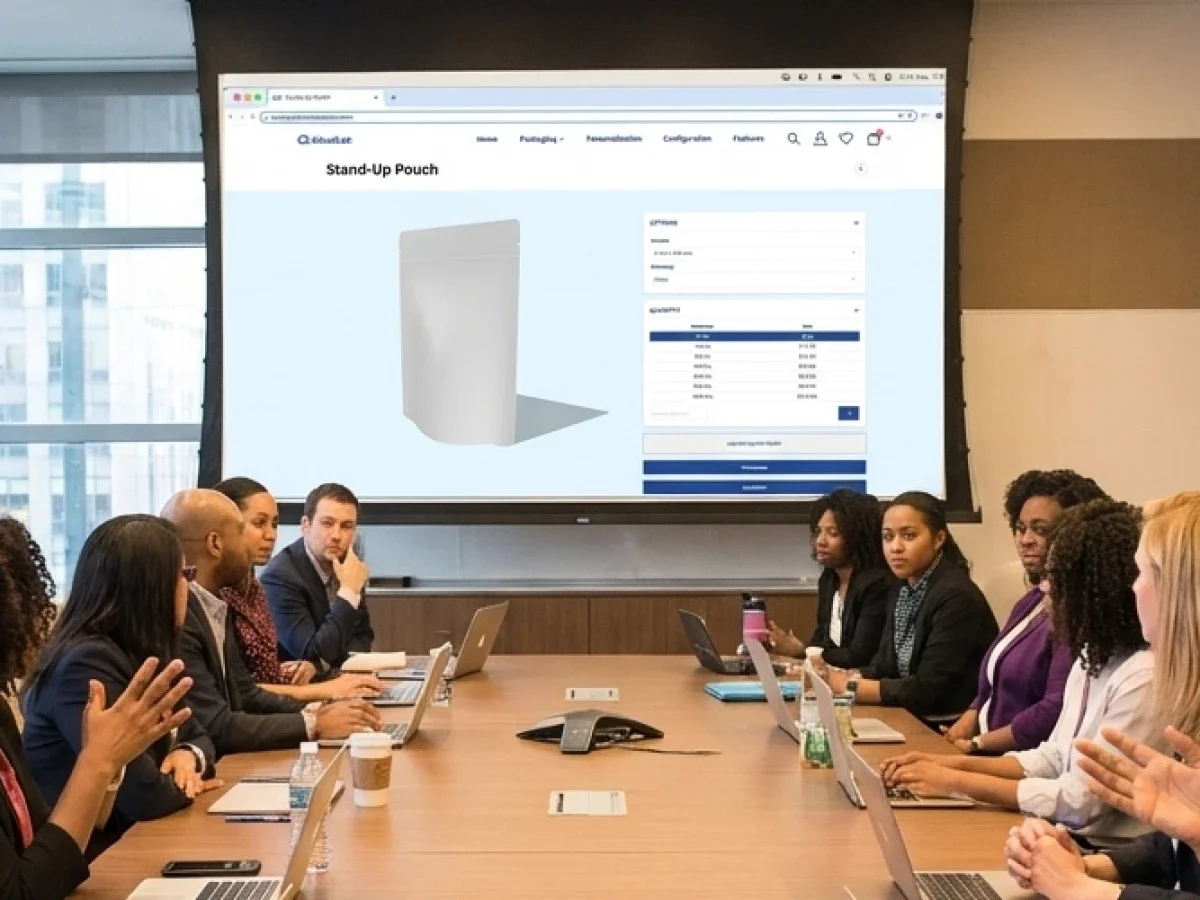
packQ changes this by embedding calculation into configuration. On the official feature pages, CloudLab states that packQ's dynamic calculation is based on standard cost constants such as setup and production prices, while detailed plausibility checks flag issues directly during configuration. In practice, quoting is no longer a separate departmental event. It becomes a live property of the configured package.
Approvals depend on abstract proofs
Approval becomes expensive whenever stakeholders are required to imagine the final pack from a dieline, a flat PDF, or a simplified mockup. CloudLab's current 3D packaging material clearly reflects the old reality: offline CAD tools, manual approvals, and long back-and-forth cycles, where resolving a small structural or finishing change can take hours or even days.
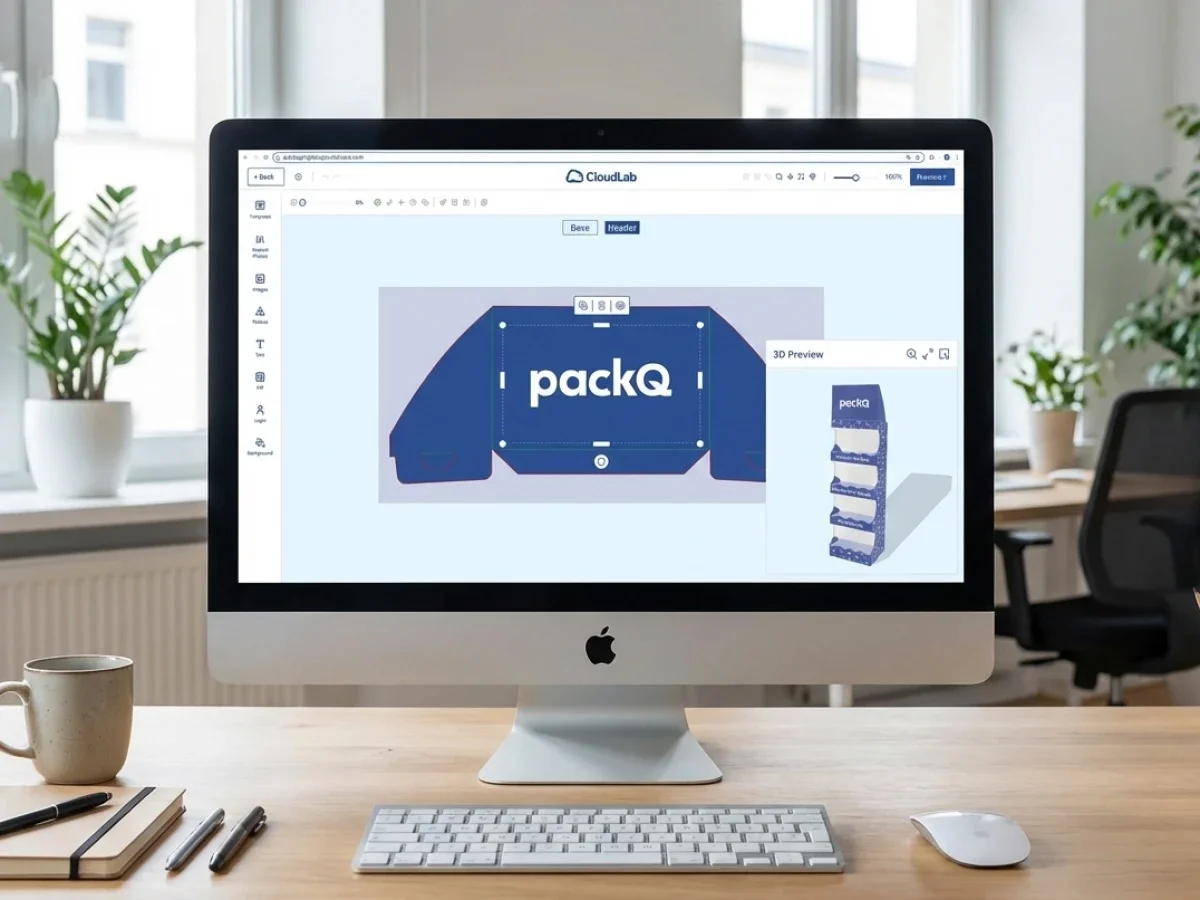
3D packaging design software only has economic significance if that ambiguity is removed. packQ's browser-based designer gives users synchronized visual feedback and lets them configure, visualize, and approve packaging in 3D without CAD expertise or software installation. CloudLab's workflow KPI material also states that approval time is one of the most impactful upstream metrics, because faster and clearer approvals directly increase throughput and customer satisfaction.
Prepress becomes where upstream errors arrive
Prepress is expensive when it is the first serious checkpoint. CloudLab's Dynamic Preflight Check page states that in many workflows, critical requirements such as minimum font sizes, DPI, or color spaces are not checked until after an order is placed, even though those are precisely the issues that should be resolved earlier. That is one of the structural reasons why late-stage correction costs so much.
packQ shifts that control upstream. Its preflight layer validates packaging and print data in real time, and CloudLab highlights support for Enfocus PitStop and callas PDFToolbox with minimal setup time. The economic consequence is straightforward: fewer production interruptions, fewer re-approvals, and fewer jobs that need repair after they have already been committed commercially.
Specialists spend time on work that should be parametric
Engineering time should be reserved for exceptions, not consumed by standard box families that repeat every day. packQ's ECMA and FEFCO pages explain that specialist CAD software runs in the background while users configure parametric folding cartons, corrugated box templates, and POS structures online. This means structural accuracy stays intact without every recurring job needing to draw on a CAD specialist.
Which Web to Pack solutions actually outperform CAD-only economics?
Dedicated Web-to-Pack solutions outperform CAD-only economics when they pair manufacturing intelligence with e-commerce behavior. CloudLab's comparison material is clear on this point: generic Web-to-Print systems often treat packaging as a printable surface, rely on uploaded dielines, static previews, and manual checks, and leave production validation to downstream effort. That can work for simple flat print. It does not scale well for packaging.
packQ sits in a different category because it was built around packaging logic first. CloudLab positions it as a pure Web-to-Pack platform that connects structure, visualization, pricing, validation, and production handoff. This matters because the real economic comparison is not "online versus offline." It is "connected packaging logic versus disconnected packaging logic."
How digital packaging solutions change the cost curve
Real-time calculation moves pricing upstream
Dynamic pricing is not a convenience feature in packaging. It is a cost control mechanism. CloudLab explains that packQ calculates realistic prepress, print, and postpress prices from live configuration data, and its 3D design page adds that size changes automatically update the price, eliminating the need for lengthy price lists that differ only slightly.
The commercial gain runs deeper than faster responses. CloudLab's recent workflow content states that pricing speed and accuracy both influence conversion and margin KPIs, and that only production-safe configurations should generate prices. This combination matters because fast quoting without rule enforcement leads to disputes later; fast quoting with rule enforcement accelerates sales without increasing operational risk.
3D packaging design software reduces approval friction
Visualization becomes a financial lever when it reduces the time spent translating technical intent for non-technical stakeholders. packQ's 3D environment is browser-based, real-time, and designed so that the final product matches what was approved, while CloudLab's 2025 and 2026 materials emphasize synchronized 2D and 3D visualization rather than static representation. This is especially valuable in packaging, where folds, closures, and material behavior are part of the decision.
Throughput improves because approvals become more reliable. CloudLab's KPI article states that stakeholders make decisions faster when they are reviewing realistic packaging representations rather than abstract proofs, and that shorter approval times translate into better capacity utilization. Economically, the 3D preview is not only about presentation quality. It is about reducing wait time during the order lifecycle.
ECMA and FEFCO standardization reduces exception handling
Standardization is one of the most compelling financial arguments for packQ. The current packQ site describes approximately 120 folding carton templates, 290 corrugated box templates, and around 50 POS displays, while recent CloudLab articles describe these as parametric implementations of ECMA and FEFCO logic. The depth of this library matters because it allows teams to sell repeatable packaging online without rebuilding the structure each time.
Parametric modeling is what turns those standards into economic data. CloudLab explains that the background CAD layer preserves dimensional accuracy when users modify widths, heights, flaps, closures, and other options directly in the browser. The result is a workflow where customization happens inside controlled structural rules rather than outside them. This reduces technical exceptions and makes outcomes more predictable.
AI reduces artwork repair work before prepress begins
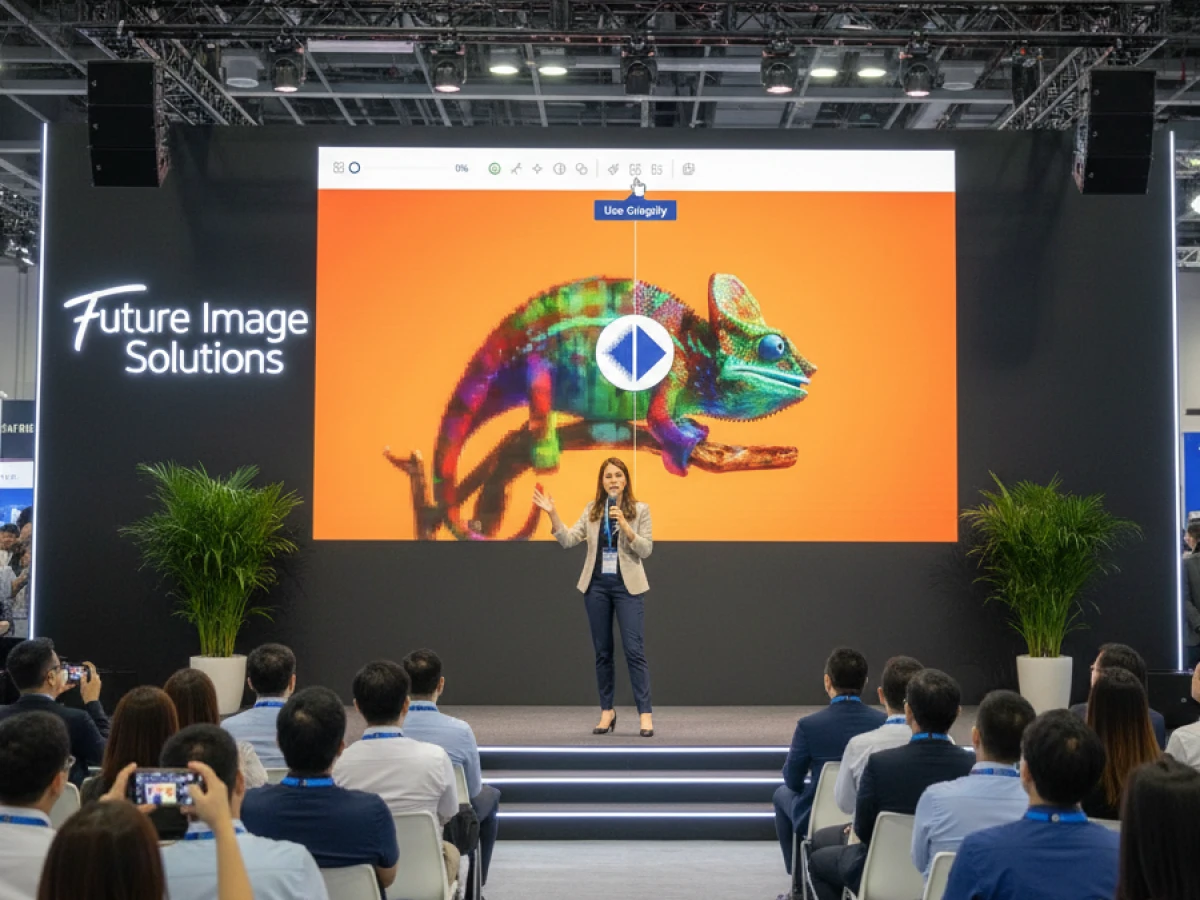
The AI Designer Suite matters because poor incoming artwork is one of the fastest ways to turn "self-service" into hidden manual work. On the official feature pages, CloudLab lists browser-based vectorization, resolution enhancement via Crispify, and one-click background removal as built-in packQ functions rather than external add-ons. Crispify is described as generating four times as many pixels for sharper print-ready visuals.
Input quality has direct economic value. CloudLab's workflow KPI material explicitly links AI-assisted input improvement to better first-pass yield, less rework, and greater effective capacity. This is an important distinction: the AI layer is not only for prettier files. It is a mechanism for reducing the number of orders that require human cleanup before production.
Automation prevents labor from simply moving downstream
Headless architecture is essential when packaging digitization needs to fit an existing IT landscape. CloudLab explains that packQ uses a flexible headless structure, a shop connector for common shop systems, and interfaces via REST or SOAP plus XML, JDF/XJDF, CSV, and JSON for print production, workflows, and ERP integration. That is the difference between a packaging tool and a packaging engine.
Production handoff is equally important. packQ's production workflow pages state that the system automatically creates print and packaging data after each order, can generate standards-compliant JDF and XML files, and supports hotfolder-based print data traffic. CloudLab also describes the automation of production-ready PDFs and job tickets in its recent packQ content, meaning labor is removed from the handoff step instead of simply being transferred to it.

Financial comparison between digital packaging solutions and classic CAD
The fixed cost profile of classic CAD is difficult to justify for everyday self-service packaging. CAD licenses, specialist staff, and manual job setup are economically defensible for new engineering challenges, but much less so for standardized cartons, reorders, minor dimensional changes, or versioned campaigns. CloudLab's own comparison language supports this view by presenting traditional CAD as precise but expensive, expert-dependent, and poorly suited to micro-orders.
The variable cost profile is where Web-to-Pack wins. In a manual or CAD-heavy model, every order absorbs time across sales, design, prepress, and customer service. In packQ's model, the customer handles configuration in a controlled system, sees a price instantly, is validated during the session, and moves to automatic output. This makes high-variety, single-unit business less dependent on linear headcount growth.
The risk profile also shifts. CloudLab's KPI material states that error rate is one of the most expensive production indicators because reprints consume material, machine time, and labor, while packQ's dynamic preflight validates resolution, color mode, bleed, fonts, and structural constraints before production. This is a critical economic shift, from a correction-cost logic to a prevention logic.
The revenue profile improves through sales cycle compression. When pricing is embedded in configuration and approval happens in realistic 3D, the organization spends less time waiting for internal clarification and more time converting orders. CloudLab even argues that reducing approval times can generate higher return on investment than investing in faster machinery, which is a useful way to think about packaging automation budgets.
What the economics look like for each target group
Printers and packaging manufacturers
For printers and converters, packQ changes the economics of short runs. CloudLab states that customers can design boxes online, receive instant prices, and automatically generate print-ready data, while the system plans jobs and reduces dependency on CAD specialists. This makes smaller or more variable packaging orders commercially viable to process instead of treating them as administrative problems.
E-commerce platforms and marketplaces
For marketplaces, the value lies in expanding without having to rebuild packaging intelligence from scratch. CloudLab states that packQ can be embedded as a white-label service so that sellers configure boxes directly on the platform, with live pricing and a smooth checkout logic. In this model, packaging becomes an integrated revenue source instead of a separate manual service.
Brand owners, healthcare, and regulated sectors
For brand owners such as Lindt, especially where consistency and traceability matter, packQ's closed-shop logic, standards-based templates, and automated validation are economically relevant because they reduce deviations while preserving speed. CloudLab's folding carton pages explicitly mention healthcare use cases, and its variable data content includes serialized pharmaceutical packaging with unique serial numbers and QR codes linked to ERP data. This makes the platform relevant not only for marketing campaigns but also for controlled packaging environments.
Technology, prepress, and production teams
For technology teams, the value is architectural. CloudLab describes packQ as an API-driven, deeply integrable solution, with the same core logic able to serve storefronts, ERP, MIS, workflows, and production systems. This reduces the risk of packaging digitization becoming another siloed system that creates new handoffs instead of eliminating them.
How to implement Web to Pack solutions without disrupting operations
Start with repeatable structures, not edge cases
Implementation works best when the first online assortment is built around repeatable packaging families, not the most exotic exceptions. ECMA and FEFCO libraries are useful precisely because they allow teams to digitize proven structures first, normalize parameters, and learn where pricing, approvals, and production handoff need refinement. That is a safer path than launching extensive configurability before governance exists.
Then connect pricing, permissions, and shop logic
Governance is the second layer. CloudLab's recent storefront material states that packQ supports open-shop and closed-shop scenarios, multi-client environments, separate pricing rules, and approval workflows within the same platform. This matters because B2C acquisition and B2B account management rarely follow the same commercial logic, even when the underlying structural packaging engine should remain the same.
Automate output once the commercial model is stable
Workflow automation should follow once product scope and governance are clear. packQ then handles the output side — production-ready PDF, JDF/XML, hotfolder dispatch, and ERP/MIS integration — so that job creation does not remain manual inside a modern storefront. This sequence lets deployment build on solid commercial foundations and be technically scalable.
What concrete use cases say about the model
WildKind Packaging is a useful example of why e-commerce logic matters to packaging economics. In CloudLab's customer testimonial, WildKind describes e-commerce as a must-have because traditional quote-to-order packaging workflows did not fit its mission of making it easy to buy sustainable custom packaging, and the project moved from design to go-live in approximately seven months. That is a useful reference point for decision-makers evaluating implementation seriousness rather than theory alone.
newprint shows a different commercial pattern. CloudLab's case study states that the Canadian company consolidated print, graphic design, direct mail, packaging, and labeling into a single online environment. This matters because it shows how packQ can extend an existing digital print business model instead of forcing packaging to follow a completely separate channel.
Lindt shows the B2C side of the equation. CloudLab's customer page describes Lindt's use of the CloudLab designer for personalized gifts with photos and messages, demonstrating how mass customization can move from industrial packaging logic to a direct consumer experience without abandoning brand presentation. For businesses comparing open-shop and closed-shop strategies, this kind of use case broadens the revenue conversation.
Why the benefits extend beyond cost reduction
Personalization is one of the reasons the long-term argument for packQ goes beyond labor savings. CloudLab states that packQ supports PDF/VT and CSV-driven variable data printing for packaging, labels, and films, with thousands of variants generated from a linked template and data workflow. That is what makes it possible to turn packaging from a fixed object into a scalable data product.
Batch size 1 only works when validation scales with variation. CloudLab's workflow content states that packQ applies identical rules to every PDF/VT variant so that production planning can treat variable-data jobs as standard jobs, while recent VDP examples include serialized pharmaceutical boxes and QR-enabled promotional packaging. The commercial implication is that personalization can increase business value without multiplying manual workload at the same rate.
Industry 4.0 readiness comes from the data chain, not just the storefront. CloudLab's KPI and workflow materials describe packQ as a system that connects configuration, validation, preview, pricing, and production within a measurable digital chain. That is why packQ fits Print 4.0 logic: it generates operational data continuously and allows packaging automation to scale as a system, not as a collection of isolated tools.
Web to Pack solutions win when commercial logic and packaging logic are one system
Web to Pack solutions justify their investment when they do more than digitize order intake. The real financial gain appears when pricing, standards, approvals, preflight, and production are executed within a controlled workflow instead of passing through disconnected departments and tools. That is exactly where packQ is most powerful.
packQ gives CloudLab a clear position in this market because it replaces manual quoting, brief approvals, late prepress corrections, and CAD-heavy repetition with a packaging-native operating model. Its browser-based 3D designer, deep ECMA/FEFCO library, AI Designer Suite, PDF/VT personalization, dynamic calculation, dynamic preflight, API-driven architecture, and production-safe outputs make custom packaging faster to sell, safer to approve, and more economical to produce at scale.
packQ shows why Web to Pack solutions outperform manual and CAD-only packaging workflows when economics are measured across the full order lifecycle. Instead of separating quotes, approvals, file checks, and production handoff, CloudLab's platform combines browser-based 3D design, dynamic pricing, ECMA/FEFCO standards, AI-assisted artwork tools, PDF/VT personalization, real-time preflight, and API-driven automation in a single system. The result is fewer manual touchpoints, shorter approval cycles, less rework, and smoother ERP/MIS integration for printers, converters, marketplaces, brands, and technology teams that need cost-effective customization at industrial scale.