
Web to Print Solutions vs. Web-to-Pack: The Future
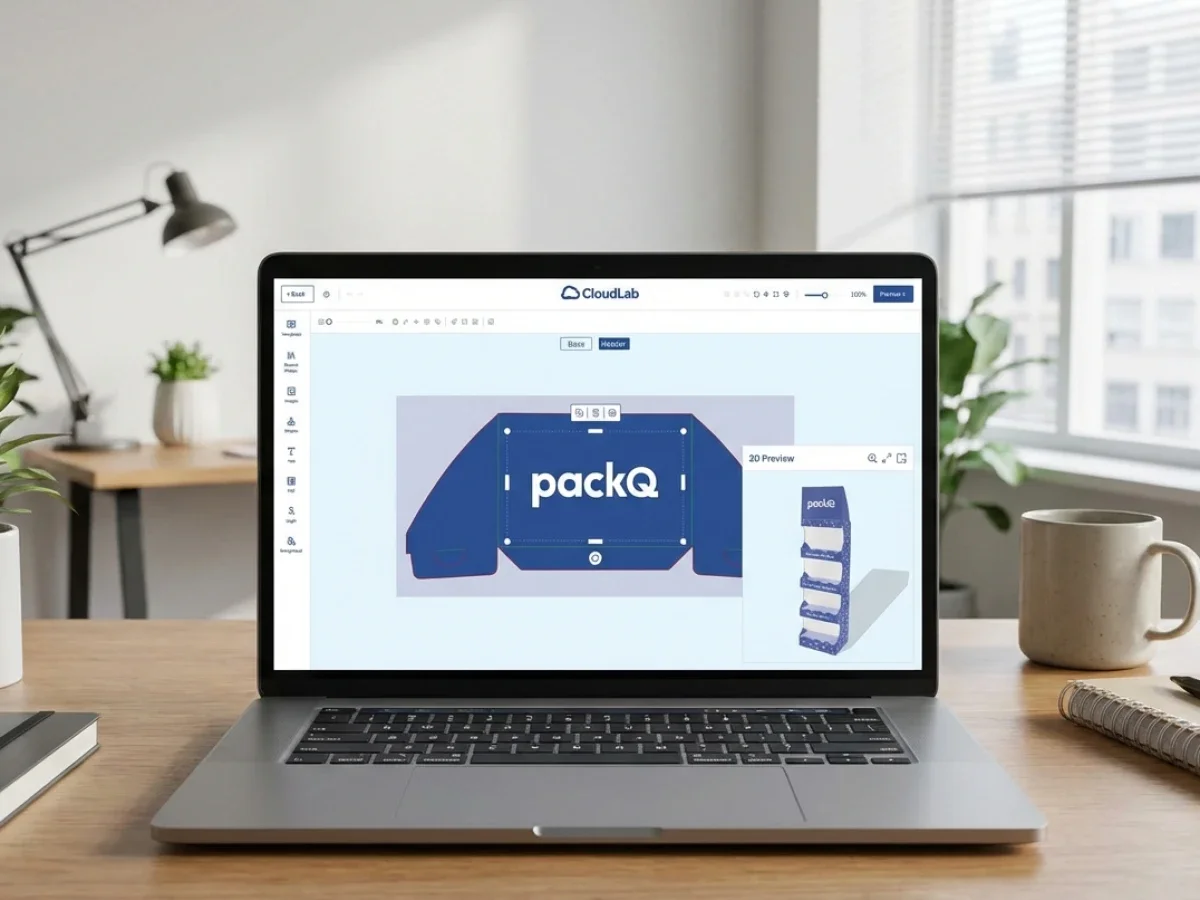
Web to print solutions revolutionized print commerce but fall short when applied to packaging. Structural complexity, production constraints, and mass customization require a different software logic. Web-to-Pack platforms like packQ combine real-time 3D, ECMA and FEFCO standards, automation, and API-first architecture to enable scalable, production-safe packaging workflows.
Web to Print Solutions at a Strategic Turning Point
Web to print solutions have become a standard component of digital print businesses. Over the past decade, they have transformed how printed products are sold, configured, and produced. By moving ordering and customization into browser-based self-service environments, they reduced manual effort, shortened turnaround times, and enabled scalable handling of small and medium print runs.
In commercial print, this model proved highly effective.
In packaging, however, the same logic reveals fundamental limitations.
Packaging is not a printed surface that happens to be folded. It is a physical product whose structure, material behavior, and manufacturability define its value long before any artwork is applied. As demand for packaging becomes faster, more fragmented, and more personalized, the gap between traditional web to print solutions and real packaging requirements becomes impossible to ignore.
This moment marks a strategic turning point.
Why Packaging Changes the Logic of Digital Commerce
The defining characteristic of packaging is that production logic precedes visual design. A folding carton, corrugated box, or POS display must first be constructible, stable, and compatible with manufacturing processes. Only then does design become relevant.
Web to print solutions were built around the opposite assumption. They start with layout, preview, and print parameters, and delegate production validation to downstream processes. This works for flat print products, where physical complexity is low and tolerance margins are wide.
Packaging offers no such forgiveness.
A packaging error is rarely cosmetic. A wrong fold, incorrect material thickness, or incompatible closure mechanism can render an entire batch unusable. These errors are expensive, disruptive, and often detected too late.
As order volumes increase and batch sizes decrease, relying on manual checks becomes unsustainable. Packaging therefore requires early, automated, and system-based validation, not late human intervention.
The Structural Limits of Web to Print Solutions
Most web to print solutions are optimized for two-dimensional products. Their internal logic revolves around page size, bleed, color mode, finishing options, and quantity-based pricing. Packaging introduces additional dimensions that these systems were never designed to handle.
The result is a growing dependency on manual expertise. Prepress and engineering teams compensate for missing intelligence in the software by reviewing, correcting, and adapting outputs. This approach may work at low scale, but it collapses under volume and variability.
This limitation is not a missing feature. It is a structural mismatch.
Packaging requires software that understands packaging as a product category in its own right.
From Web to Print to Web-to-Pack
Web to Pack is not a rebranding of web to print. It is a distinct software paradigm.
Where web to print solutions digitize transactions, Web-to-Pack platforms digitize production intelligence. They embed construction rules, standards, and constraints directly into the configuration process, ensuring that every possible outcome remains manufacturable.
This shift mirrors how packaging is actually developed. Engineers do not start with artwork. They start with structure. Web-to-Pack brings this logic into the digital front end.
packQ was built entirely around this principle.
packQ as a Purpose-Built Web-to-Pack Platform
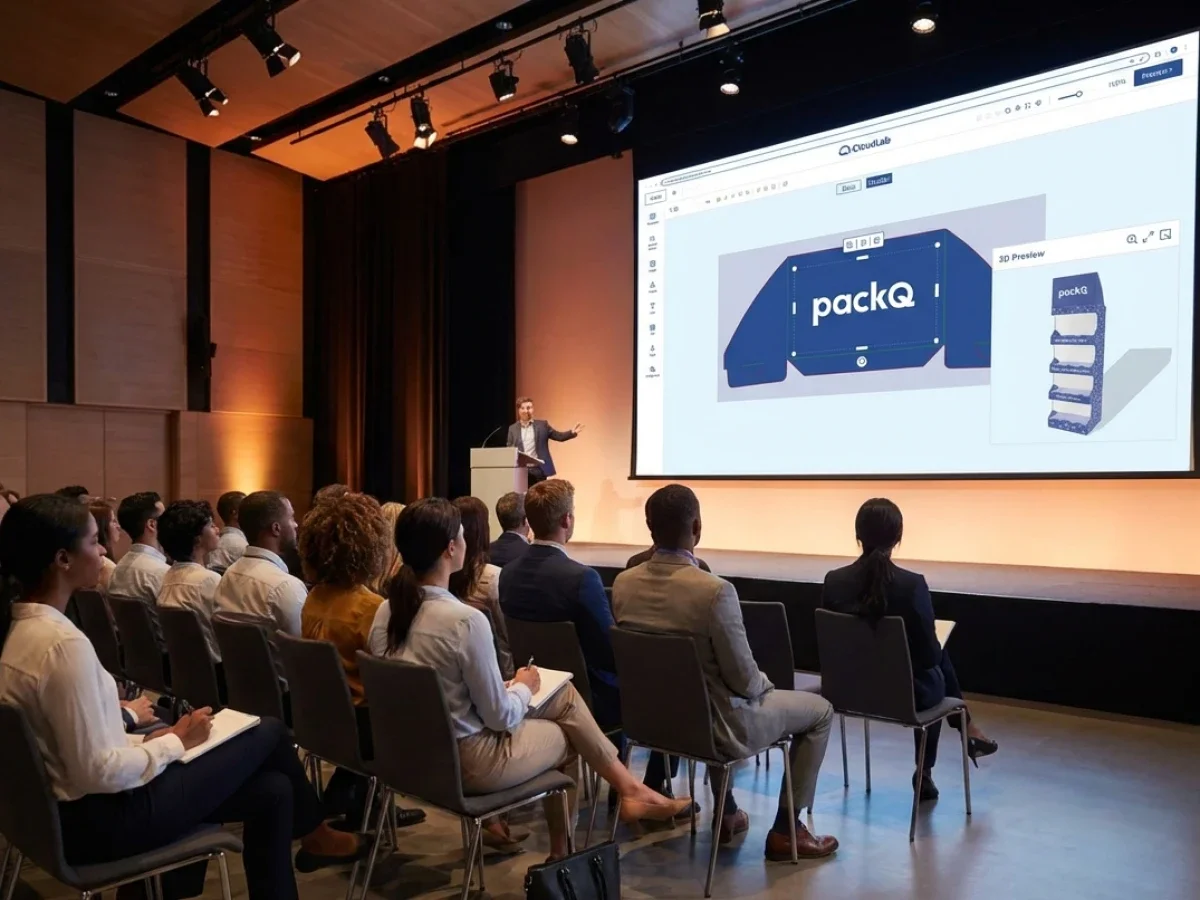
packQ is a premium Web-to-Pack platform developed by CloudLab Solutions and recognized with the InterTech Technology Award. From its inception, packQ was designed specifically for packaging workflows, not adapted from print-centric tools.
Its objective is to digitalize the entire packaging development process — from initial configuration through approval, pricing, validation, and production-ready output. Every module contributes to a single goal: enabling scalable, error-free packaging operations without manual interpretation.
This end-to-end scope is what fundamentally differentiates packQ from traditional web to print solutions.
Real-Time 3D as the Foundation of Trust
In packaging, visual validation must correspond exactly to physical reality. packQ addresses this requirement through a browser-based 3D packaging designer that is directly connected to the underlying construction logic.
Changes to dimensions, materials, or layout are reflected instantly in both the 2D die-line and the 3D model. The visualization is not a mockup. It is a direct representation of the actual product geometry.
This real-time synchronization transforms approval processes. Stakeholders no longer approve abstract layouts or assumptions. They approve what will actually be produced. The result is fewer clarification loops, faster decisions, and greater confidence across departments.
Standardization as an Enabler, Not a Constraint
Scalable packaging automation requires standardization. At the same time, markets demand flexibility. packQ resolves this apparent contradiction by embedding ECMA and FEFCO standards as parametric construction models.
Instead of offering unrestricted freedom, the platform constrains variation within proven industrial frameworks. Users can adjust dimensions and options, while the system automatically enforces production rules.
This approach enables controlled mass customization. Packaging remains flexible enough to meet diverse requirements, yet standardized enough to scale efficiently.
Packaging Intelligence Embedded in the System
Traditional packaging workflows rely heavily on individual expertise. Knowledge about tolerances, materials, and constructions often resides in the heads of a few specialists. While effective in small teams, this model limits scalability and creates operational risk.
packQ shifts this intelligence into the platform itself. Construction logic, constraints, and validation rules are encoded into the configuration process. This reduces dependency on individuals and makes workflows more resilient.
Packaging knowledge becomes systemic rather than personal, which is essential for sustainable growth.
AI-Supported Design as a Process Accelerator
Many packaging delays originate not from structural issues, but from artwork quality. Low-resolution images, unsuitable formats, or poorly prepared graphics create friction between customers and production teams.
packQ addresses this challenge through its integrated AI Designer Suite. Artwork can be enhanced directly during configuration, without leaving the browser. Raster images are vectorized, resolution is increased via Crispify, and backgrounds are removed seamlessly.
By shifting correction upstream, packQ reduces manual prepress effort and accelerates the path from design to production.
Variable Data Printing as an Industrial Capability
Variable Data Printing in packaging is often misunderstood as a purely marketing-driven feature. In reality, it plays a crucial role in traceability, compliance, and differentiation.
packQ supports PDF/VT-based variable data workflows that scale to industrial volumes. Each variant remains bound to the same construction logic and validation rules. This ensures that personalization does not introduce operational risk.
Mass customization down to lot size one becomes feasible without sacrificing stability.
Pricing Integrated into Configuration Logic
Packaging pricing is inherently complex. It depends on dimensions, materials, print processes, quantities, and finishing options. Traditional workflows separate pricing from configuration, relying on manual quoting and iterative clarification.
packQ integrates dynamic pricing directly into the configuration process. Prices update in real time as parameters change. This transparency accelerates decision-making and shortens sales cycles.
For suppliers, it eliminates manual quoting. For buyers, it creates predictability and trust.
Quality Control Before Commitment
In many packaging workflows, quality control occurs too late. Errors are detected after an order is placed, when correction is expensive and disruptive.
packQ moves quality assurance upstream through its Dynamic Preflight Check. Technical parameters such as resolution, color mode, bleed, and typography are validated during configuration.
Errors are addressed before commitment, not after. This preventive approach reduces waste, increases throughput, and stabilizes production planning.
API-First Architecture as a Strategic Foundation
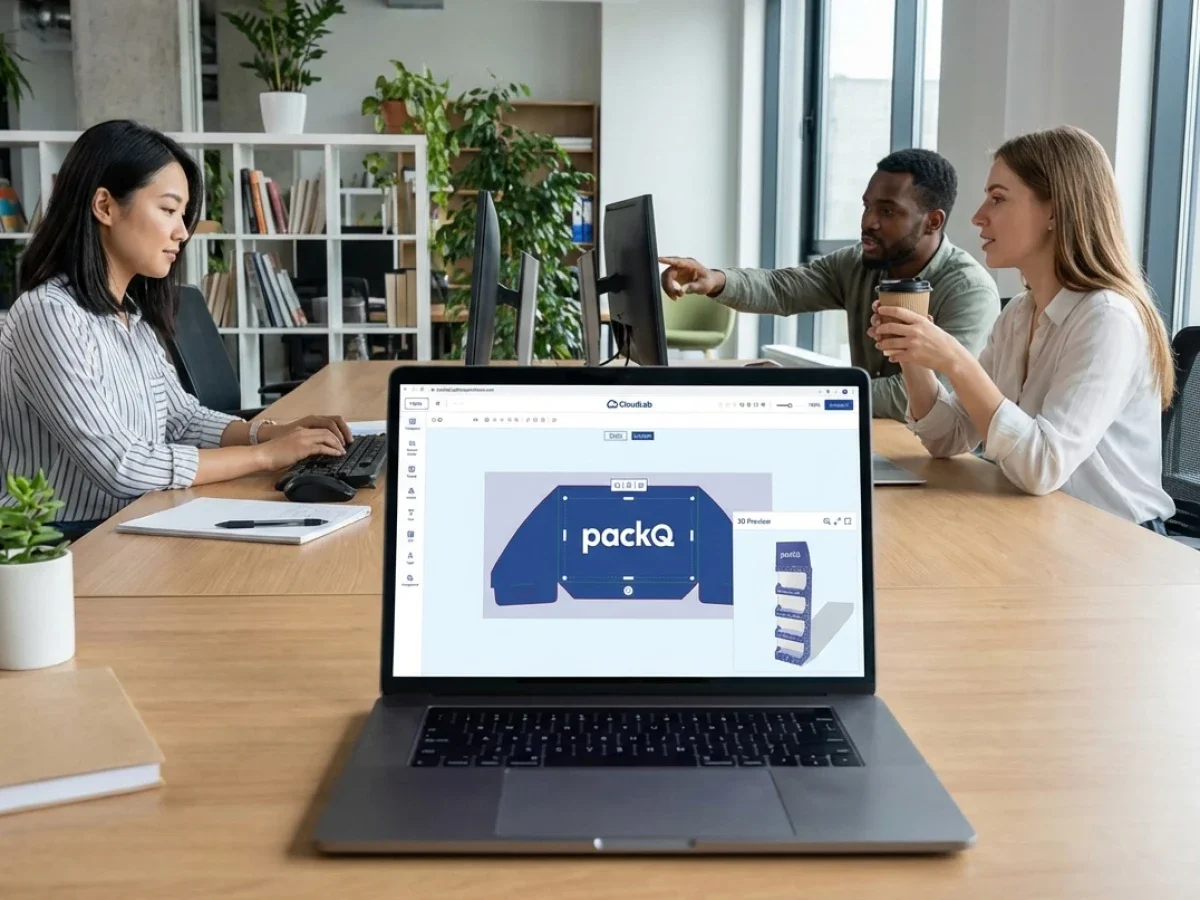
packQ is built as a headless, API-first platform. This architectural decision enables deep integration into existing system landscapes without forcing structural change.
ERP systems, MIS platforms, e-commerce frontends, and production workflows connect via standardized interfaces. packQ becomes part of a larger digital ecosystem rather than a standalone tool.
This flexibility supports gradual adoption and long-term scalability.
Production-Safe Output Without Interpretation
One of the most critical promises of packQ is production-safe output. Every configuration generates CAD-accurate die-lines and print-ready PDFs.
There is no interpretative layer between approval and production. What is approved in 3D is exactly what is manufactured. This consistency is essential for reliable automation at scale.
Web-to-Pack Across Business Models
packQ supports multiple business models without fragmenting workflows. Public storefronts, closed brand portals, and hybrid scenarios all operate on the same automation backbone.
The platform enables:
- Open-shop environments for standardized packaging products
- Closed portals for CI-controlled brand ordering
- Hybrid models combining public access with restricted assortments
These models coexist without increasing operational complexity.
Organizational Impact of Web-to-Pack Adoption
Adopting Web-to-Pack reshapes organizations. Sales teams focus less on manual configuration and quoting, and more on strategic accounts. Marketing teams gain faster access to packaging variants. Engineering and prepress shift from repetitive validation to optimization and exception handling.
This redistribution of work is one of the most significant economic benefits of Web-to-Pack. Automation does not remove expertise; it reallocates it to higher-value activities.
Economic Implications Beyond Cost Reduction
While cost savings are real, the broader economic impact of Web-to-Pack is strategic. By making small batch sizes profitable, packQ expands the addressable market. Customers that were previously unviable become accessible.
Revenue growth becomes decoupled from linear increases in operational effort. This is a decisive advantage in fragmented, fast-moving markets.
Governance, Compliance, and Risk Management
In regulated industries such as pharmaceuticals, food, and cosmetics, packaging errors carry legal and reputational risk. Web-to-Pack platforms support governance by enforcing standards, documenting configurations, and generating consistent, traceable output.
packQ enables compliance without sacrificing agility, which is difficult to achieve with ad hoc workflows or generic web to print solutions.
Web to Print Solutions vs. Web-to-Pack Platforms
The distinction between web to print solutions and Web-to-Pack platforms lies in intent and scope. Web-to-Print digitizes transactions. Web-to-Pack digitizes production intelligence.
packQ bridges the gap between digital configuration and physical manufacturing, enabling packaging to scale without losing control.
Web-to-Pack as a strategic necessi
Web to print solutions laid the foundation for digital print commerce, but packaging requires a fundamentally different approach. Web-to-Pack platforms like packQ embed construction logic, real-time 3D validation, industry standards, automation, and system integration into a single workflow. For organizations preparing for Print 4.0, moving beyond web to print solutions toward Web-to-Pack is no longer optional. It is a strategic necessity.
Web-to-Print enabled digital print commerce, but packaging requires deeper automation and earlier validation. Web to print solutions reach their limits and how Web-to-Pack platforms address structural complexity. With real-time 3D, ECMA and FEFCO integration, AI-supported design, dynamic pricing, and API-first architecture, packQ positions itself as a premium Web-to-Pack platform for scalable, production-safe packaging workflows.

.webp)


