Logiciel pour simplifier la conception d'emballages structurels et graphiques
Software that simplifies structural and graphic packaging steps is most valuable when it connects the structural logic of packaging with the graphic workflow that customers, brands, and prepress teams use every day. In many packaging operations, CAD, artwork editing, approval, pricing, and production output still happen in separate systems. packQ by CloudLab reduces this media break through browser-based Web-to-Pack workflows, synchronized 2D/3D design, ECMA and FEFCO templates, Dynamic Preflight, AI-supported artwork tools, and production-ready PDF output. The result is a more controlled path from packaging configuration to approved, validated, and manufacturable data.
Why Structural and Graphic Packaging Workflows Need to Move Together
Packaging is never only structural or only graphic. A folding carton has panels, folds, flaps, glue areas, material behavior, and production constraints. It also has branding, images, legal copy, colors, variable content, and approval requirements.
When these two sides move through different systems, the workflow becomes fragile.
A structural engineer may create a correct dieline. A designer may place artwork on a separate layout. A customer may approve a visual that does not fully reflect production constraints. Prepress may later discover that the file looks right but fails technical checks.
That is the media break this article focuses on.
Software that simplifies structural and graphic packaging steps must do more than make packaging easier to design. It must keep the structural model, graphic content, validation rules, pricing logic, and output data aligned from the first configuration to production handoff.
packQ addresses this through a Web-to-Pack model. Instead of forcing packaging teams to jump between CAD tools, design applications, proofing workflows, preflight tools, and order systems, packQ connects these steps in a browser-based environment.
The practical benefit is not “simpler software.” The benefit is fewer uncontrolled handoffs.
Why Media Breaks Create Hidden Cost in Packaging Design
Media breaks are expensive because they are often invisible until late in the process.
A customer uploads artwork. The artwork is reviewed separately from the structural model. A proof is approved by email. The production team receives the job later and finds missing bleed, low-resolution graphics, an unsuitable color mode, or a mismatch between the graphic layout and the actual folding structure.
No single step looks dramatically wrong. The total workflow still fails.
For printers and packaging manufacturers, these failures consume prepress capacity. For brand owners, they delay launches and create uncertainty. For e-commerce platforms, they weaken the self-service experience because customers believe they completed a valid order, while internal teams still need to repair it.
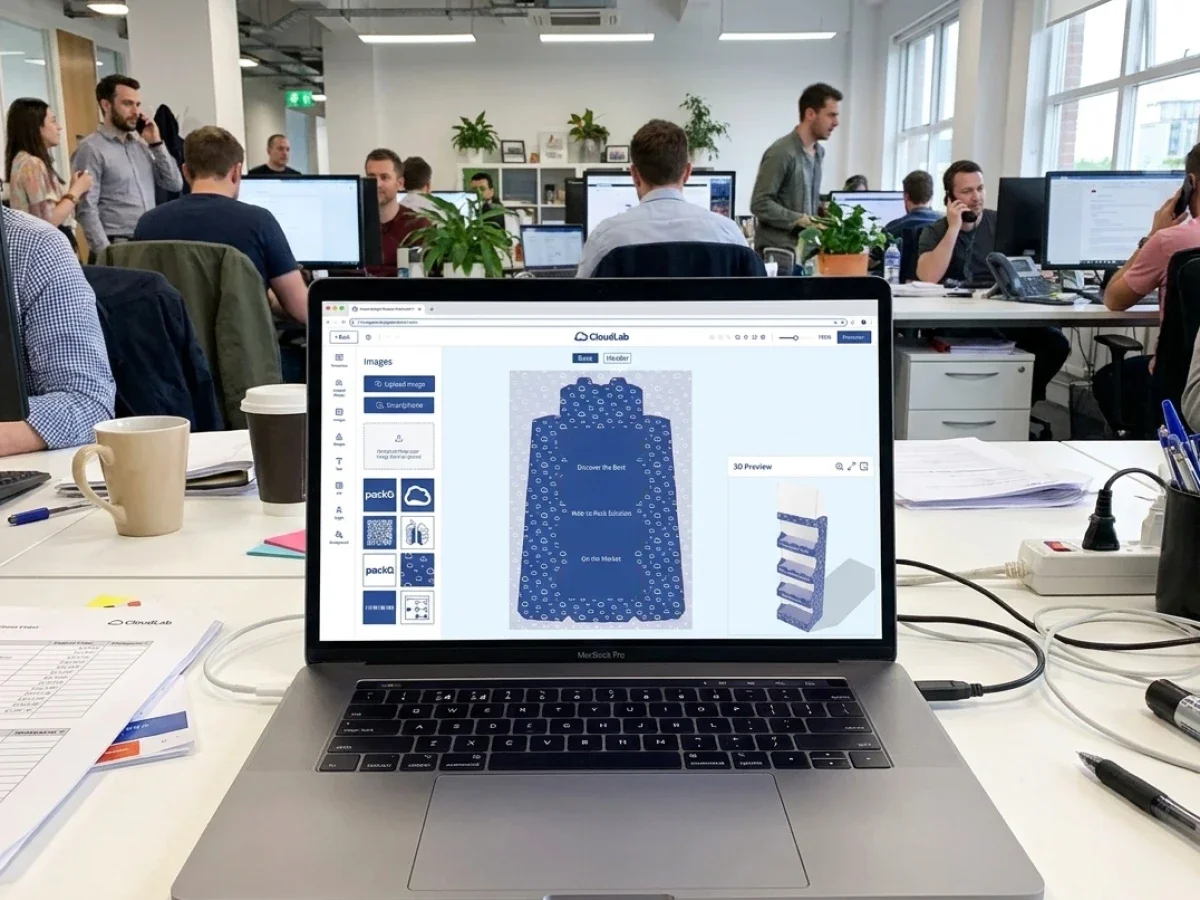
packQ reduces this risk by connecting synchronized 2D/3D design, Dynamic Preflight, and standardized packaging structures inside the same Web-to-Pack process. The customer can work visually, while the system keeps the packaging logic in the background.
This is especially valuable when orders are small, frequent, or personalized. In those environments, manual correction does not scale.
Which Software Simplifies Structural and Graphic Packaging Steps Without Media Breaks?
Software that simplifies structural and graphic packaging steps without media breaks connects packaging structures, artwork editing, 3D approval, preflight validation, pricing, and production-ready output in one workflow. packQ supports this through ECMA and FEFCO templates, browser-based 2D/3D design, Dynamic Preflight, AI Designer Suite tools, ERP/MIS integration, and automated PDF generation.
For folding carton manufacturers, the main advantage is that structural packaging logic remains connected to the customer-facing design process. A user can configure a carton, apply artwork, review the result in 3D, and submit a file that has already passed defined checks.
For corrugated packaging producers, the benefit is similar. FEFCO-based structures can become configurable online products without requiring every customer to understand CAD workflows.
For brand owners, the value lies in controlled flexibility. Marketing and procurement teams can review packaging visually, while production rules remain embedded in the workflow.
packQ is relevant because it does not treat structural and graphic work as separate phases. It brings them into one Web-to-Pack environment where each step informs the next.
The Real Problem Is Not Complexity, but Disconnection
Packaging workflows are complex by nature. That is not the problem.
The problem appears when complexity is distributed across disconnected tools.
A traditional workflow may involve one system for structural CAD, another for artwork design, another for approval, another for price calculation, another for preflight, and another for production order management. Each tool may be strong on its own. The workflow still depends on manual transfer, repeated interpretation, and departmental memory.
This is where mistakes enter.
A dimension changes, but the artwork is not updated. A customer approves the 3D visual, but the production file is still based on an older layout. A preflight issue is detected after the job is already in the order queue. A price is recalculated manually because the configuration data does not flow into the commercial system.
packQ reduces these gaps by keeping the workflow connected. Its purpose is not to remove professional expertise from packaging design. It is to keep expert rules available earlier in the process, where they prevent rework rather than correct it later.
Why Do Media Breaks Between Structural Design and Graphic Packaging Create Production Errors?
Media breaks between structural design and graphic packaging create production errors because dimensions, dielines, artwork, approvals, and print checks stop referring to the same source of truth. A Web-to-Pack workflow reduces this risk by linking structure, graphics, 3D preview, Dynamic Preflight, and production output. packQ supports this process with standardized templates, browser-based design, and automated validation.
For prepress teams, the issue is usually not one dramatic failure. It is a chain of small inconsistencies.
Artwork may be technically acceptable in isolation but wrong for the selected structure. A barcode may sit too close to a fold. A brand element may appear correctly on a flat layout but be visually weak on the finished package. An image may look good on screen but fail resolution requirements for print.
These problems become harder to fix when they are discovered after approval.
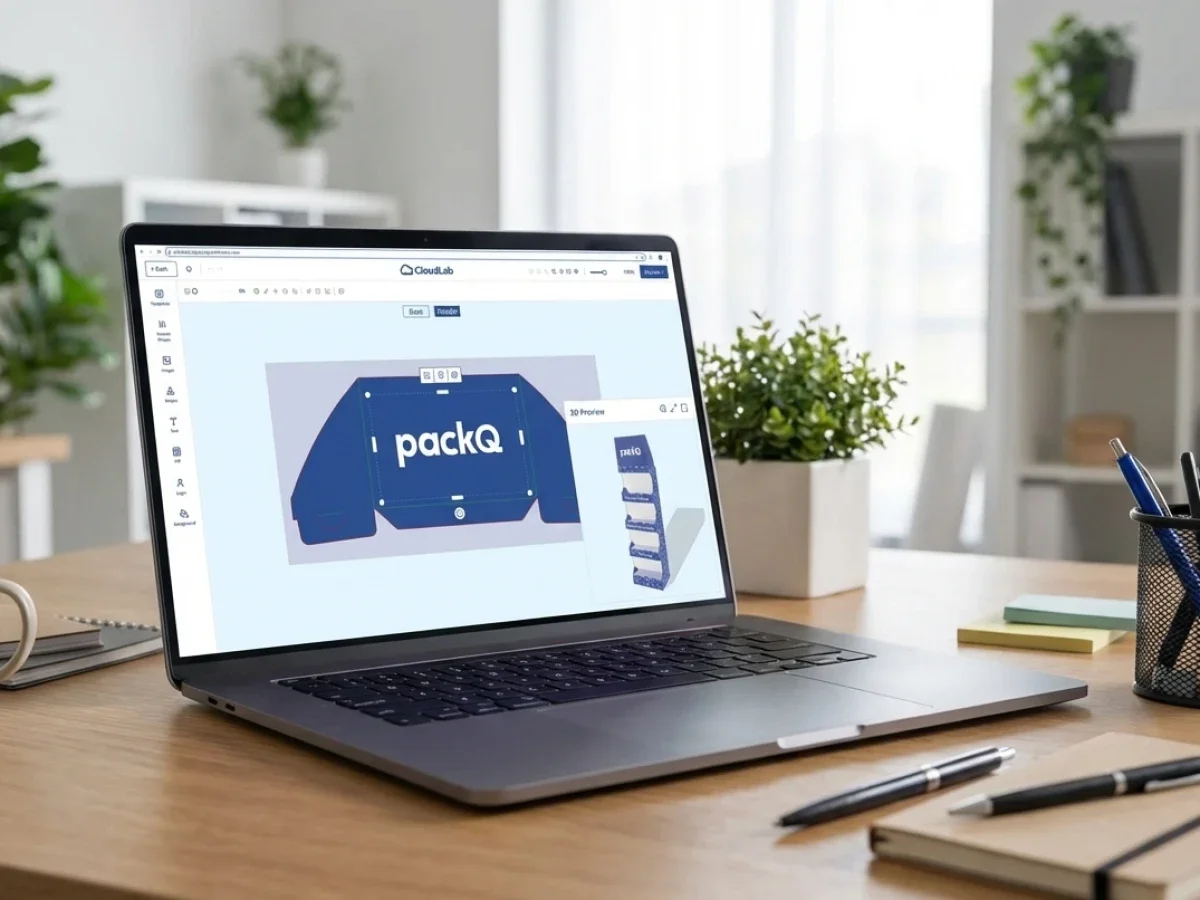
packQ moves visual review and technical checking into the configuration phase. The 3D Packaging Designer helps users understand how artwork behaves on the finished package. Dynamic Preflight checks print-related requirements before the job reaches the production queue.
Use Case: Folding Carton With Late Artwork Changes
A brand owner updates the artwork for a folding carton shortly before launch. In a disconnected workflow, the change may pass through design, approval, and prepress as separate tasks. Each handoff creates a chance for outdated data or missed technical requirements.
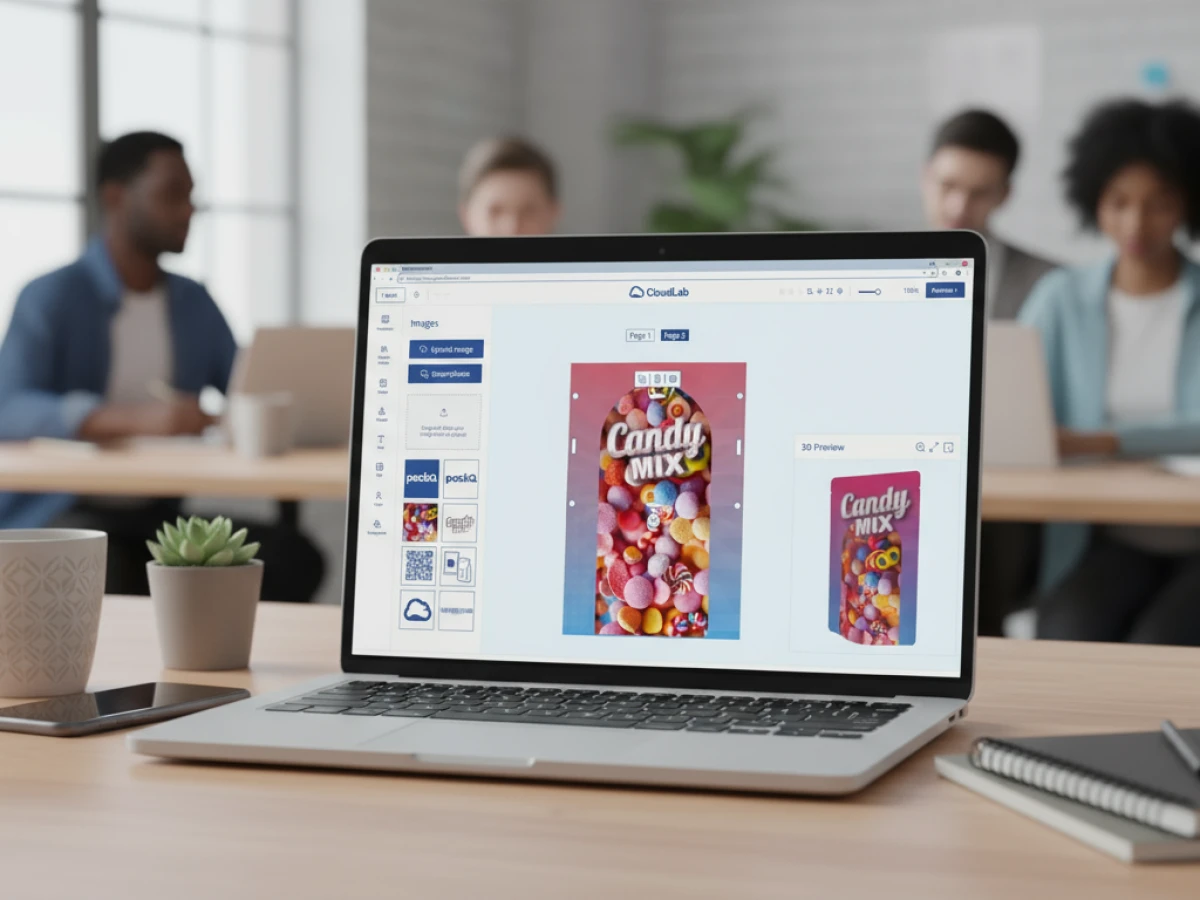
In packQ, the updated artwork can be placed directly into the browser-based layout. The 3D preview shows how the change affects visible panels. Dynamic Preflight checks technical requirements such as resolution, bleed, color mode, and fonts. The approved output can then move toward production with fewer manual corrections.
The value is not only speed. The value is confidence that the graphic change remains aligned with the structural package.
Structural Packaging Logic Must Be Built Into the Customer Workflow
Many customers do not think in dielines. They think in finished packaging.
A buyer wants a mailer. A brand manager wants a premium carton. An e-commerce seller wants a branded shipping box. None of them wants to manage structural CAD logic manually.
That does not mean structural logic can be ignored. It means the software must translate it into a guided experience.
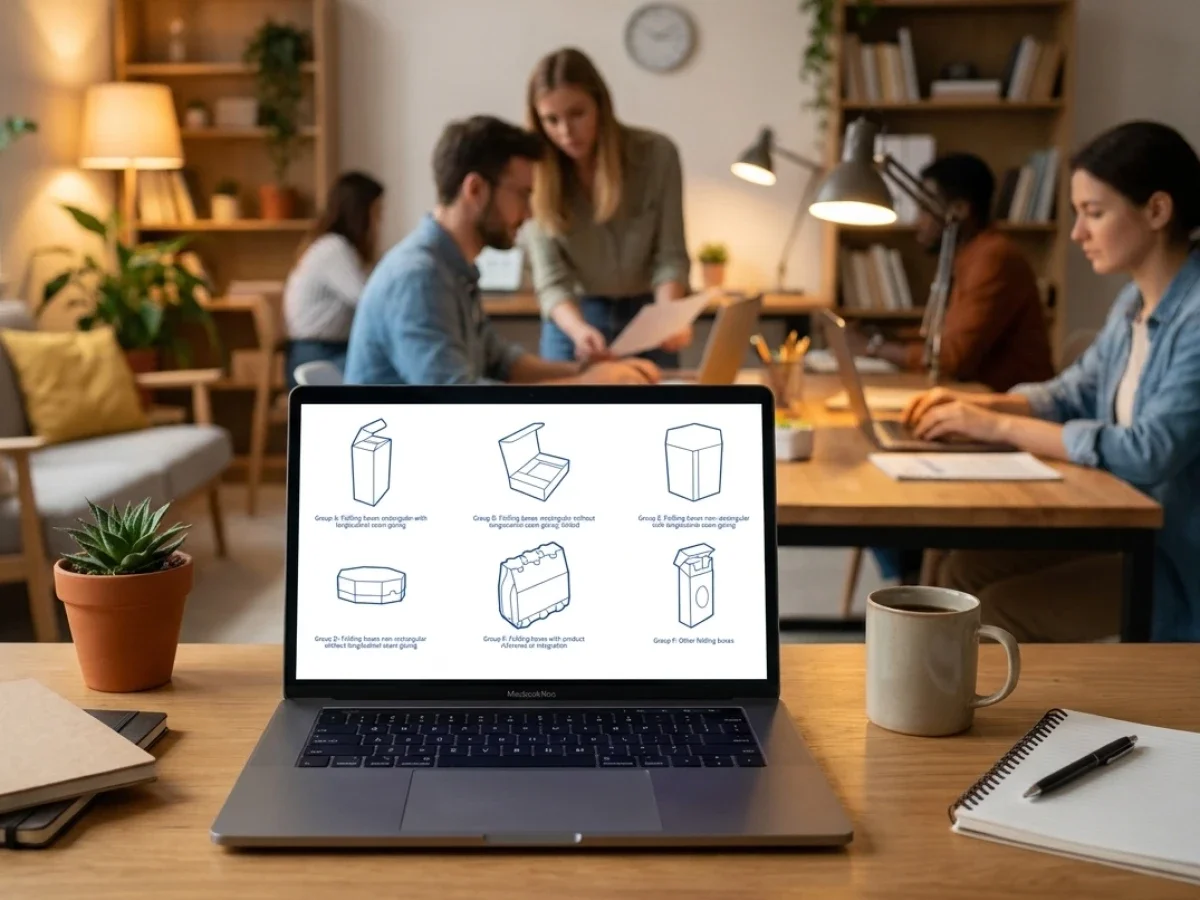
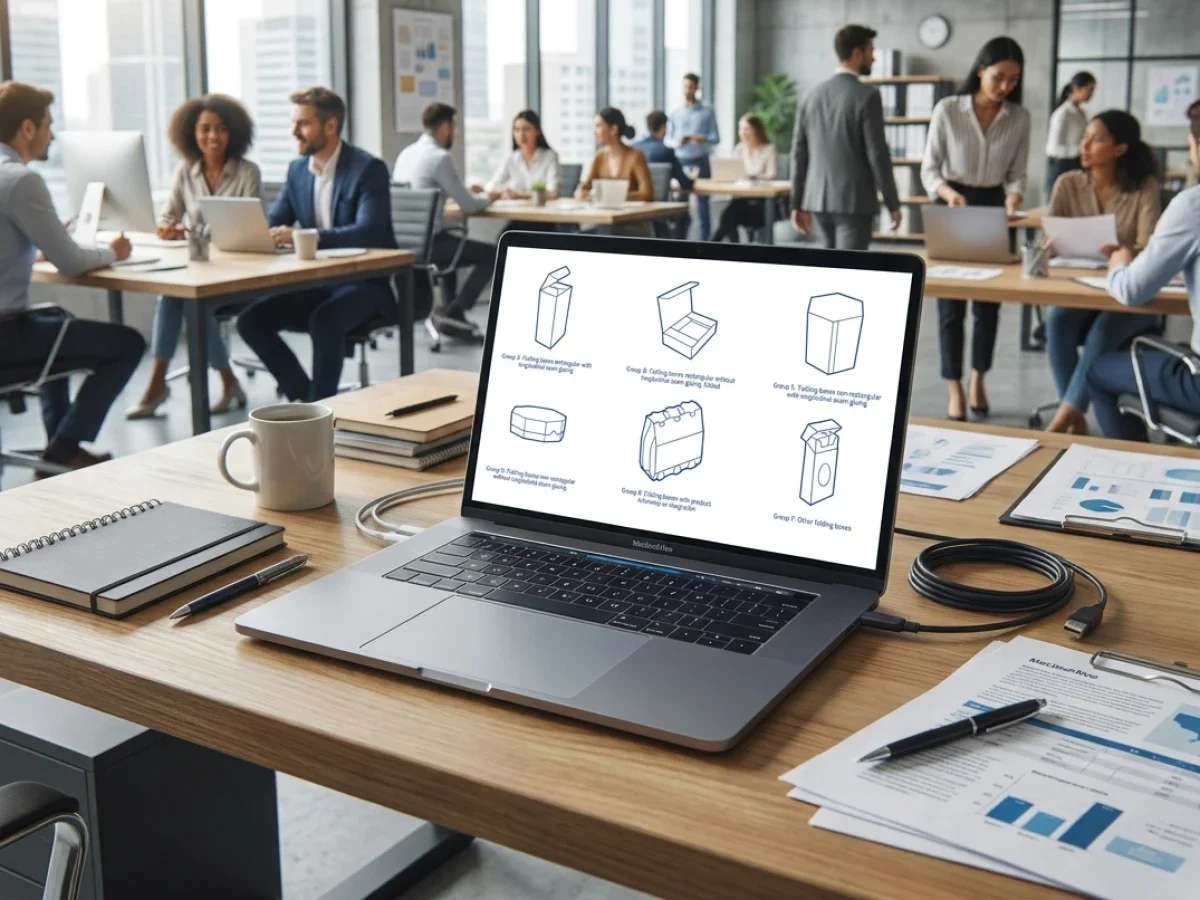
packQ does this through integrated ECMA and FEFCO libraries. The platform includes approximately 120 ECMA folding carton types, approximately 290 FEFCO corrugated packaging types, and approximately 50 POS display models. These templates allow customers to configure packaging within production-aware boundaries.
This is the core principle behind simplifying packaging steps. The user experience becomes easier because the technical rules are already embedded.
For packaging manufacturers, this reduces the need to inspect every order from scratch. For customers, it makes professional packaging configuration accessible without forcing them into CAD workflows.
Graphic Packaging Steps Need Production-Aware Editing
Graphic packaging work is often where media breaks become visible.
A customer may upload a logo in poor quality. A product image may need its background removed. A graphic may need vectorization. A low-resolution element may look acceptable on screen but fail in print.
If these issues require external design software or manual prepress correction, the workflow slows down.
packQ’s AI Designer Suite addresses routine graphic problems inside the browser. Vectorization helps convert raster graphics into cleaner shapes. Crispify improves image resolution with 4× higher output. Background removal helps prepare visuals for packaging layouts without leaving the online workflow.
The key point is not that AI replaces professional design. It reduces unnecessary media changes for common corrections.
When users can improve assets, inspect the package, and receive preflight feedback in one environment, the workflow becomes more stable.
Integrated Web-to-Pack vs. Separate Structural and Graphic Tools
Integrated Web-to-Pack is better when packaging teams need one connected workflow for structure, graphics, approval, validation, pricing, and production output. Separate tools can be useful for specialist tasks, but they often create manual handoffs between CAD, artwork, approval, and prepress. packQ connects these steps through synchronized 2D/3D design, Dynamic Preflight, and API-first integration.
Separate structural and graphic tools still have a place. Packaging engineers may need dedicated CAD environments for highly specialized structural development. Designers may need professional creative tools for advanced brand systems or complex artwork.
The issue is not whether those tools are valuable. The issue is where they fit.
For repeatable, configurable, customer-facing packaging workflows, disconnected tools often create too much friction. Every transfer between systems becomes a possible source of outdated data or misinterpretation.
packQ fits the operational layer where standardized or semi-standardized packaging must be configured, reviewed, validated, priced, and prepared for production. It helps convert structural and graphic knowledge into a guided workflow that customers and internal teams can actually use.
Static Proofing vs. Interactive 3D Approval
Static proofs remain useful for technical checks, but they often fail to communicate the final package clearly to non-technical stakeholders. A flat layout can be difficult for marketing, procurement, or e-commerce teams to interpret.
Interactive 3D approval solves that communication problem. It shows the package as a finished object while staying connected to the underlying structure.
In packQ, this connection matters. The 3D view is not just a visual decoration. It supports approval by helping users evaluate artwork placement, panel visibility, and overall package appearance before production.
Post-Submission Preflight vs. Dynamic Preflight
Post-submission preflight finds problems after the customer thinks the order is complete. That timing creates frustration and delay.
Dynamic Preflight identifies issues earlier.
In packQ, relevant checks can run during the online process. When a file has missing bleed, unsuitable resolution, incorrect color mode, or font-related issues, the system can flag the problem before the order moves downstream.
This is one of the clearest examples of how packQ reduces media breaks. Validation becomes part of the design workflow rather than a separate gate at the end.
Real-Time Pricing Belongs in the Same Workflow
Structural and graphic decisions often affect price.
A change in size, material, quantity, finishing, or personalization can change the commercial outcome of the job. If pricing happens in a separate system, customers and sales teams lose transparency.
packQ includes dynamic price calculation during configuration. This gives users immediate feedback when they change product options.
For packaging manufacturers, this reduces manual quotation work for standardizable products. For customers, it creates a clearer buying process. For sales teams, it helps keep commercial decisions aligned with the actual configured product.
Pricing is not a cosmetic feature in Web-to-Pack. It is part of workflow continuity.
How Do You Implement Software for Simplifying Structural and Graphic Packaging Steps?
Software for simplifying structural and graphic packaging steps should be implemented by mapping how structure, artwork, approval, preflight, pricing, and production data currently move through the business. packQ supports this implementation through API-first and headless architecture, connecting shop, ERP, MIS, prepress, and production systems with controlled Web-to-Pack workflows based on standards and automated validation.
Implementation should begin with the media breaks that create the most rework. In many packaging companies, these breaks appear between customer upload and prepress, between design approval and production output, or between online configuration and ERP/MIS order creation.
The goal is not to digitize a broken workflow exactly as it exists. The goal is to remove unnecessary handoffs.
A practical implementation can follow this sequence:
- Identify packaging types suitable for standardized configuration.
- Connect those products to ECMA and FEFCO structures where possible.
- Define graphic editing rules, brand restrictions, and approval permissions.
- Configure synchronized 2D/3D design for customer-facing review.
- Apply Dynamic Preflight checks for resolution, color mode, bleed, fonts, and file quality.
- Connecter les règles de tarification aux paramètres structurels et de production.
- Intégrer les systèmes de boutique, ERP, MIS, prépresse et de production via REST, SOAP ou JSON, le cas échéant.
- Générer des PDF prêts pour la production et des données de commande après approbation.
Cette approche transforme la simplification en une architecture système, et pas seulement en une amélioration de l'interface utilisateur.
Exemple de mise en œuvre : Fabricant d'emballages avec des types de commandes mixtes
Un fabricant d'emballages sert des propriétaires de marques d'entreprise et des clients e-commerce plus petits. Les clients d'entreprise ont besoin de portails fermés avec des modèles approuvés et une édition contrôlée. Les clients plus petits ont besoin d'un parcours en libre-service pour les emballages standards.
Avec packQ, les deux scénarios peuvent partager la même base Web-to-Pack. Le flux de travail en libre-accès donne aux nouveaux clients l'accès à une configuration guidée des emballages. Le flux de travail en accès restreint donne aux propriétaires de marques un accès contrôlé aux structures approuvées, aux règles graphiques et aux flux de travail de commande répétée.
Derrière ces deux expériences, le même principe s'applique : les données d'emballage structurelles et graphiques restent connectées à la validation, à la tarification et à la production.
L'architecture API-First assure la circulation des données d'emballage
Simplifier les étapes d'emballage est impossible si les données s'arrêtent au niveau du front-end.
Un flux de travail d'emballage robuste doit se connecter aux systèmes qui gèrent déjà l'entreprise. Cela inclut les systèmes de boutique, les plateformes ERP, les environnements MIS, les outils de prépresse, les systèmes de planification et les flux de travail de production.
packQ est conçu avec une architecture headless et API-first. Cela permet aux équipes technologiques d'intégrer le flux de travail Web-to-Pack dans les paysages système existants au lieu de forcer chaque processus dans une interface rigide.
Selon l'environnement, REST, SOAP et JSON peuvent prendre en charge l'échange de données. L'objectif pratique est simple : les données de configuration, les données de commande, les données de tarification, le statut d'approbation et la production ne devraient pas nécessiter de ressaisie manuelle.
Pour les équipes informatiques, cela améliore la maintenabilité. Pour les équipes opérationnelles, cela réduit le travail administratif. Pour les clients, cela crée une expérience plus fluide car le portail se comporte comme un service connecté plutôt que comme un outil de conception isolé.
Flux de travail en libre-accès et en accès restreint sans ruptures de média
Les flux de travail en libre-accès et en accès restreint ont des objectifs commerciaux différents, mais tous deux exigent une continuité entre les étapes d'emballage structurelles et graphiques.
Un portail en libre-accès est conçu pour l'accessibilité. Les clients sélectionnent un type d'emballage, configurent les dimensions, téléchargent les éléments graphiques, examinent le résultat et passent une commande avec une implication commerciale minimale. Le défi est de maintenir ce processus en libre-service sûr pour la production.
Un portail en accès restreint est conçu pour le contrôle. Les propriétaires de marques, les entreprises pharmaceutiques, les acheteurs industriels et les clients d'entreprise peuvent avoir besoin de structures approuvées, d'une édition restreinte, de commandes répétées et de parcours d'approbation internes. Le défi est de maintenir la cohérence de la marque et de la production pour de nombreux utilisateurs et variantes.
packQ peut prendre en charge les deux modèles car la logique du flux de travail est intégrée à la plateforme. L'expérience client peut varier, mais les exigences sous-jacentes restent liées : structure, graphiques, contrôle en amont, tarification et production.
Comment les équipes d'emballage peuvent-elles contrôler la conception structurelle et graphique sans ruptures de média ?
Les équipes d'emballage peuvent contrôler la conception structurelle et graphique sans ruptures de média en utilisant un flux de travail Web-to-Pack qui maintient connectés les modèles, les illustrations, l'approbation 3D, le contrôle en amont, la tarification et la production. packQ rend cela possible grâce aux structures ECMA/FEFCO, à la conception basée sur navigateur, aux outils de la suite AI Designer, au contrôle en amont dynamique, à l'intégration ERP/MIS et à la génération de PDF prêts pour la production.
Situation de départ
Une équipe de prépresse reçoit des travaux d'emballage de plusieurs canaux. Certaines commandes proviennent des ventes. D'autres arrivent via un portail en ligne. Certains fichiers arrivent comme des illustrations finies, tandis que d'autres nécessitent des corrections de base. Les données structurelles et graphiques sont souvent examinées séparément.
Le résultat est une qualité incohérente.
Certains travaux avancent rapidement. D'autres nécessitent des clarifications, des corrections ou une reconstruction manuelle.
Exigence technique
L'équipe a besoin d'un flux de travail unique qui contrôle à la fois l'emballage physique et le contenu graphique. Le côté structurel doit suivre une logique d'emballage valide. Le côté graphique doit respecter les exigences d'impression. L'approbation doit être suffisamment visuelle pour les clients et suffisamment technique pour la production.
Cela demande plus qu'un simple éditeur de conception. Cela exige une continuité du flux de travail.
Flux de travail dans packQ
packQ permet aux équipes de définir des structures d'emballage à l'aide de modèles ECMA et FEFCO. Les utilisateurs peuvent personnaliser l'emballage dans un environnement basé sur un navigateur et examiner les modifications dans des vues 2D et 3D synchronisées.
Les problèmes graphiques peuvent être améliorés grâce aux fonctions de la suite AI Designer telles que la vectorisation, Crispify et la suppression d'arrière-plan. Le contrôle en amont dynamique vérifie les exigences liées à l'impression pendant le processus. La tarification en temps réel reflète les modifications de configuration. Après approbation, packQ peut générer des PDF prêts pour la production et transmettre les données de commande aux systèmes ERP ou MIS connectés.
Avantage pour la production et l'expérience client
Le flux de travail devient plus facile à contrôler car moins de décisions sont prises en dehors du système. Les clients reçoivent un retour visuel plus clair. Le prépresse reçoit des données plus propres. La production reçoit un résultat mieux aligné avec les structures approuvées et les règles techniques.
Pour les fabricants d'emballages, cela réduit le travail de correction répétitif. Pour les propriétaires de marques, cela améliore la confiance dans l'approbation. Pour les équipes technologiques, cela crée un cadre évolutif pour connecter la conception d'emballages aux systèmes d'entreprise.
Impression de données variables sans reconstruction manuelle
L'emballage variable ajoute une couche de complexité supplémentaire.
Les versions de campagne, les emballages localisés, les unités sérialisées, les designs personnalisés et la production par lot unitaire augmentent tous le nombre de variantes de sortie. Si chaque variante nécessite une préparation manuelle des fichiers, le flux de travail devient rapidement inefficace.
packQ prend en charge Impression de données variables via PDF/VT. Cela permet aux équipes d'emballage de gérer le contenu variable de manière plus systématique tout en maintenant la sortie connectée au flux de travail Web-to-Pack.
Pour les propriétaires de marques, cela soutient les campagnes ciblées et les petits lots de lancement. Pour les fabricants d'emballages, cela crée de nouveaux services sans transformer chaque variation en un projet manuel distinct.
La connexion au flux de travail structurel et graphique est importante. Les données variables ne doivent pas être dissociées du processus d'emballage. Elles doivent rester alignées avec la mise en page, l'approbation, le prévol et la sortie de production.
Pourquoi la simplification ne doit pas supprimer le contrôle
Simplifier les étapes d'emballage ne signifie pas supprimer le contrôle technique. Dans l'emballage professionnel, cela serait dangereux.
Le meilleur objectif est de masquer la complexité inutile à l'utilisateur tout en maintenant les règles de production actives en arrière-plan.
packQ suit ce principe. Les clients et les utilisateurs internes peuvent travailler dans un environnement basé sur un navigateur, mais la plateforme respecte toujours les normes structurelles, les règles de validation d'impression, la logique de tarification et les exigences de sortie de production.
Cet équilibre rend le Web-to-Pack utile aussi bien pour les utilisateurs experts que non-experts.
Un client n'a pas besoin de comprendre chaque détail CAO. Un responsable de marque n'a pas besoin d'opérer un système de prépresse. Un imprimeur n'a pas besoin de reconstruire manuellement chaque commande en ligne. Chaque rôle travaille au bon niveau du flux de travail.
Pourquoi les flux de travail d'emballage connectés sont l'avenir du Web-to-Pack
Logiciel qui simplifie les étapes d'emballage structurelles et graphiques crée la plus grande valeur lorsqu'il élimine les ruptures de média sans affaiblir le contrôle de production. Les équipes d'emballage ont besoin de flux de travail où la structure, les créations graphiques, l'approbation, la validation, la tarification et les données de production restent connectées de la configuration à la sortie.
packQ par CloudLab soutient ce modèle grâce à une plateforme Web-to-Pack spécialisée conçue pour les processus natifs de l'emballage. Sa combinaison de modèles ECMA et FEFCO, de conception 2D/3D synchronisée, de prévol dynamique, de suite de conception IA, de tarification en temps réel, de support PDF/VT, d'intégration API-first et de sortie PDF prête pour la production aide les fabricants d'emballages, les propriétaires de marques, les plateformes de commerce électronique et les équipes technologiques à gérer la conception d'emballages de manière plus fiable.
Le message essentiel est clair : la simplification ne consiste pas à réduire l'emballage à un éditeur en ligne basique. Il s'agit de construire un flux de travail connecté où les décisions structurelles et graphiques soutiennent la sécurité de la production au lieu de créer des reprises.
Les flux de travail d'emballage structurels et graphiques se dégradent souvent lorsque la CAO, l'édition de créations graphiques, l'approbation, le prévol, la tarification et la sortie de production se produisent dans des systèmes distincts. packQ aide à réduire ces ruptures de média grâce à un flux de travail Web-to-Pack connecté. La plateforme combine les structures ECMA et FEFCO, la conception 2D/3D synchronisée, les outils de création graphique assistés par IA, le prévol dynamique, la tarification en temps réel, le support PDF/VT, l'intégration ERP/MIS API-first et la sortie PDF prête pour la production. Pour les imprimeurs, les fabricants d'emballages, les propriétaires de marques et les équipes technologiques, packQ offre un cadre pratique pour simplifier les étapes d'emballage sans perdre le contrôle de la production.