Programvara som förenklar processerna för konstruktions- och grafisk förpackning
Software that simplifies structural and graphic packaging steps is most valuable when it connects the structural logic of packaging with the graphic workflow that customers, brands, and prepress teams use every day. In many packaging operations, CAD, artwork editing, approval, pricing, and production output still happen in separate systems. packQ by CloudLab reduces this media break through browser-based Web-to-Pack workflows, synchronized 2D/3D design, ECMA and FEFCO templates, Dynamic Preflight, AI-supported artwork tools, and production-ready PDF output. The result is a more controlled path from packaging configuration to approved, validated, and manufacturable data.
Why Structural and Graphic Packaging Workflows Need to Move Together
Packaging is never only structural or only graphic. A folding carton has panels, folds, flaps, glue areas, material behavior, and production constraints. It also has branding, images, legal copy, colors, variable content, and approval requirements.
When these two sides move through different systems, the workflow becomes fragile.
A structural engineer may create a correct dieline. A designer may place artwork on a separate layout. A customer may approve a visual that does not fully reflect production constraints. Prepress may later discover that the file looks right but fails technical checks.
That is the media break this article focuses on.
Software that simplifies structural and graphic packaging steps must do more than make packaging easier to design. It must keep the structural model, graphic content, validation rules, pricing logic, and output data aligned from the first configuration to production handoff.
packQ addresses this through a Web-to-Pack model. Instead of forcing packaging teams to jump between CAD tools, design applications, proofing workflows, preflight tools, and order systems, packQ connects these steps in a browser-based environment.
The practical benefit is not “simpler software.” The benefit is fewer uncontrolled handoffs.
Why Media Breaks Create Hidden Cost in Packaging Design
Media breaks are expensive because they are often invisible until late in the process.
A customer uploads artwork. The artwork is reviewed separately from the structural model. A proof is approved by email. The production team receives the job later and finds missing bleed, low-resolution graphics, an unsuitable color mode, or a mismatch between the graphic layout and the actual folding structure.
No single step looks dramatically wrong. The total workflow still fails.
For printers and packaging manufacturers, these failures consume prepress capacity. For brand owners, they delay launches and create uncertainty. For e-commerce platforms, they weaken the self-service experience because customers believe they completed a valid order, while internal teams still need to repair it.
packQ reduces this risk by connecting synchronized 2D/3D design, Dynamic Preflight, and standardized packaging structures inside the same Web-to-Pack process. The customer can work visually, while the system keeps the packaging logic in the background.
This is especially valuable when orders are small, frequent, or personalized. In those environments, manual correction does not scale.
Which Software Simplifies Structural and Graphic Packaging Steps Without Media Breaks?
Software that simplifies structural and graphic packaging steps without media breaks connects packaging structures, artwork editing, 3D approval, preflight validation, pricing, and production-ready output in one workflow. packQ supports this through ECMA and FEFCO templates, browser-based 2D/3D design, Dynamic Preflight, AI Designer Suite tools, ERP/MIS integration, and automated PDF generation.
For folding carton manufacturers, the main advantage is that structural packaging logic remains connected to the customer-facing design process. A user can configure a carton, apply artwork, review the result in 3D, and submit a file that has already passed defined checks.
For corrugated packaging producers, the benefit is similar. FEFCO-based structures can become configurable online products without requiring every customer to understand CAD workflows.
For brand owners, the value lies in controlled flexibility. Marketing and procurement teams can review packaging visually, while production rules remain embedded in the workflow.
packQ is relevant because it does not treat structural and graphic work as separate phases. It brings them into one Web-to-Pack environment where each step informs the next.
The Real Problem Is Not Complexity, but Disconnection
Packaging workflows are complex by nature. That is not the problem.
The problem appears when complexity is distributed across disconnected tools.
A traditional workflow may involve one system for structural CAD, another for artwork design, another for approval, another for price calculation, another for preflight, and another for production order management. Each tool may be strong on its own. The workflow still depends on manual transfer, repeated interpretation, and departmental memory.
This is where mistakes enter.
A dimension changes, but the artwork is not updated. A customer approves the 3D visual, but the production file is still based on an older layout. A preflight issue is detected after the job is already in the order queue. A price is recalculated manually because the configuration data does not flow into the commercial system.
packQ reduces these gaps by keeping the workflow connected. Its purpose is not to remove professional expertise from packaging design. It is to keep expert rules available earlier in the process, where they prevent rework rather than correct it later.
Why Do Media Breaks Between Structural Design and Graphic Packaging Create Production Errors?
Media breaks between structural design and graphic packaging create production errors because dimensions, dielines, artwork, approvals, and print checks stop referring to the same source of truth. A Web-to-Pack workflow reduces this risk by linking structure, graphics, 3D preview, Dynamic Preflight, and production output. packQ supports this process with standardized templates, browser-based design, and automated validation.
For prepress teams, the issue is usually not one dramatic failure. It is a chain of small inconsistencies.
Artwork may be technically acceptable in isolation but wrong for the selected structure. A barcode may sit too close to a fold. A brand element may appear correctly on a flat layout but be visually weak on the finished package. An image may look good on screen but fail resolution requirements for print.
These problems become harder to fix when they are discovered after approval.
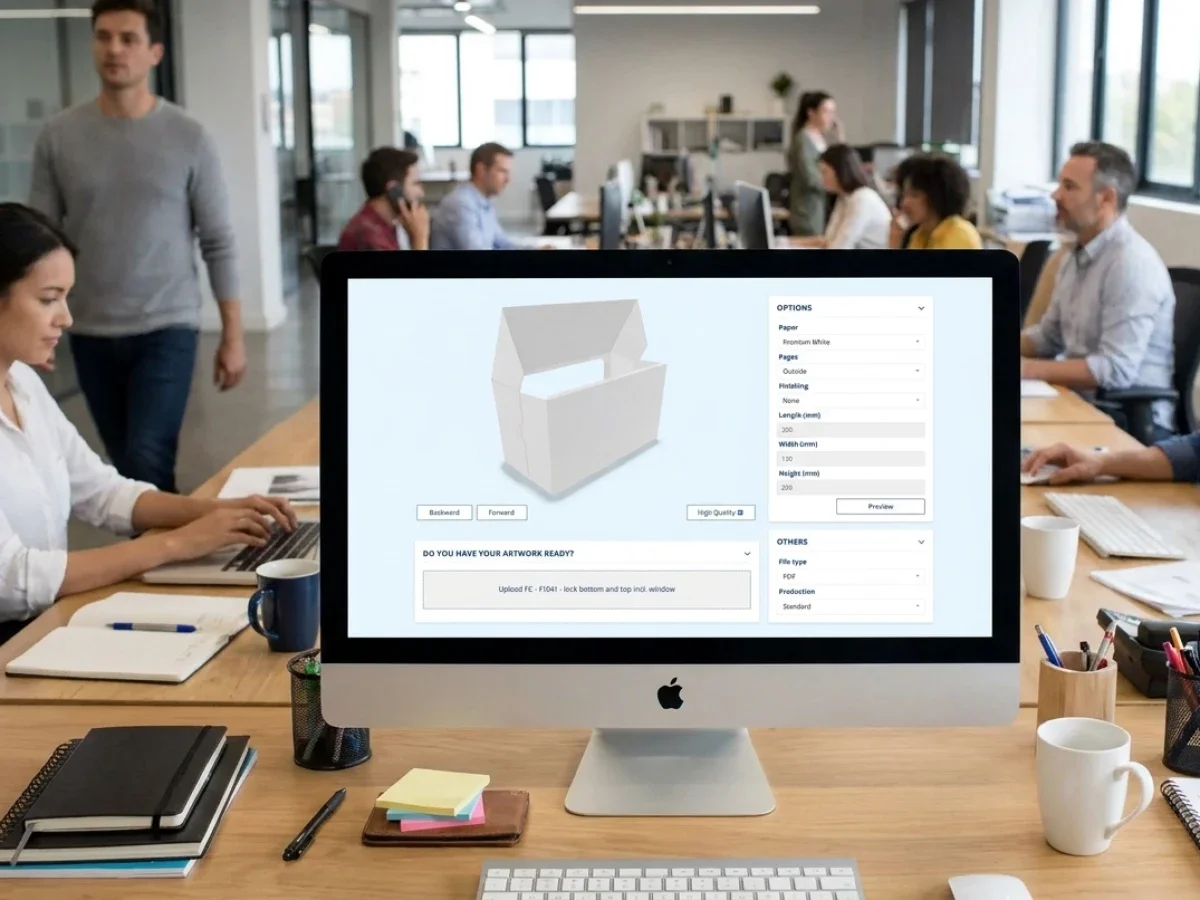
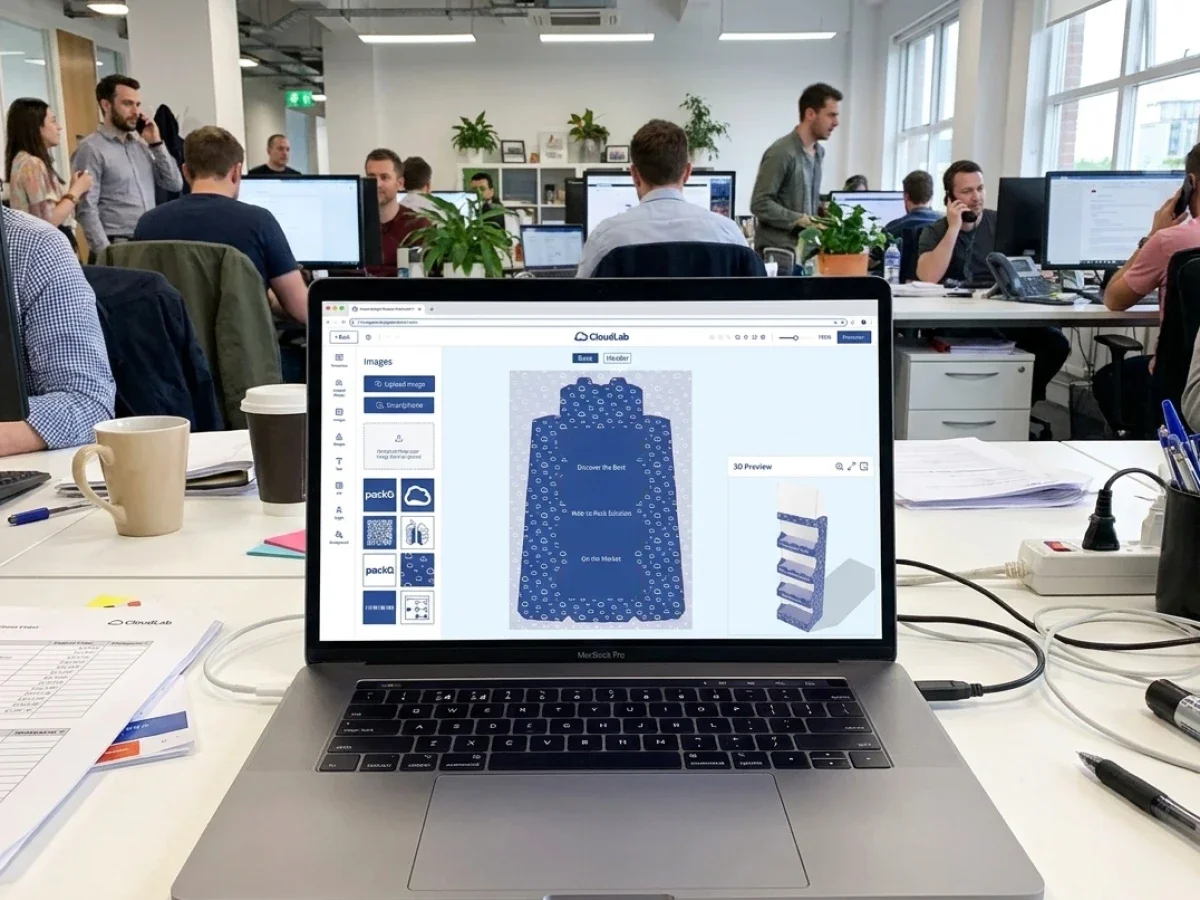
packQ moves visual review and technical checking into the configuration phase. The 3D Packaging Designer helps users understand how artwork behaves on the finished package. Dynamic Preflight checks print-related requirements before the job reaches the production queue.
Use Case: Folding Carton With Late Artwork Changes
A brand owner updates the artwork for a folding carton shortly before launch. In a disconnected workflow, the change may pass through design, approval, and prepress as separate tasks. Each handoff creates a chance for outdated data or missed technical requirements.
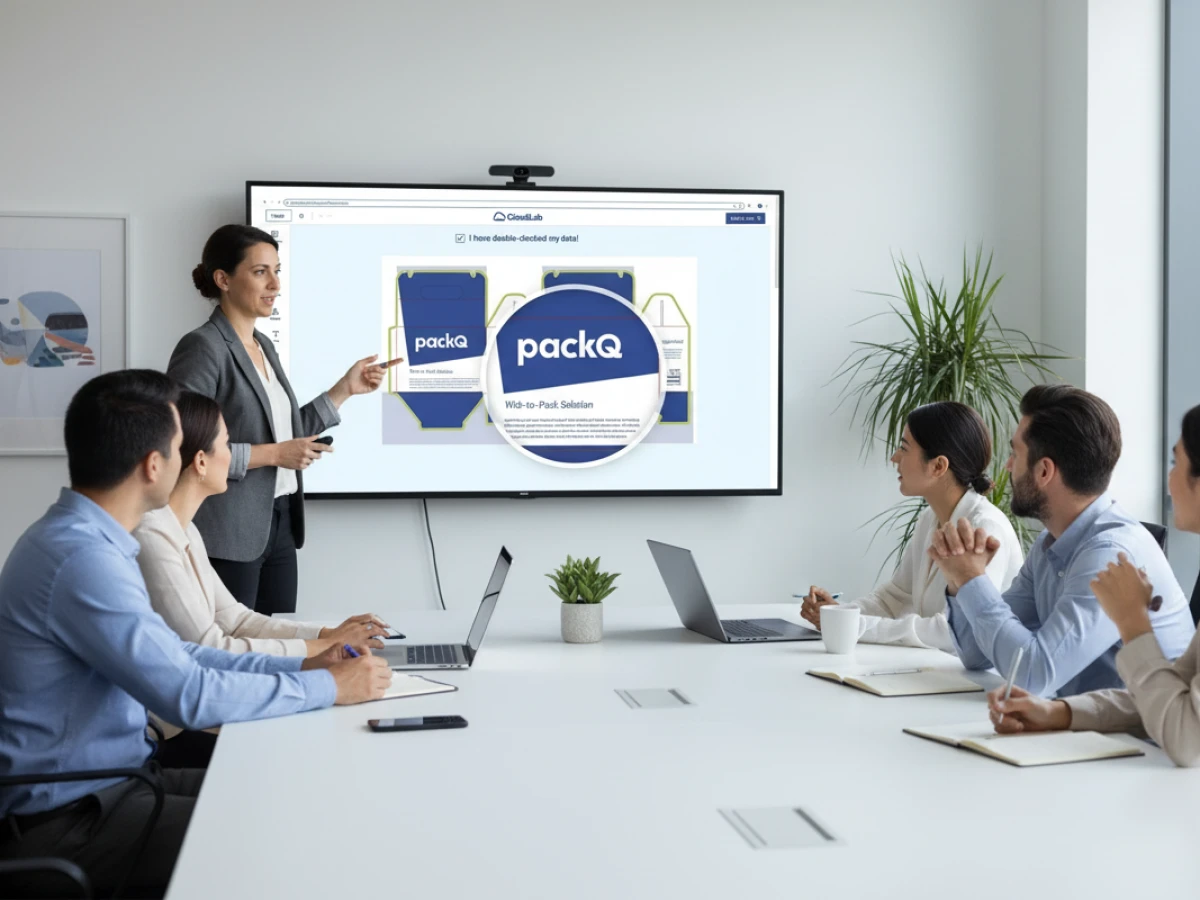
In packQ, the updated artwork can be placed directly into the browser-based layout. The 3D preview shows how the change affects visible panels. Dynamic Preflight checks technical requirements such as resolution, bleed, color mode, and fonts. The approved output can then move toward production with fewer manual corrections.
The value is not only speed. The value is confidence that the graphic change remains aligned with the structural package.
Structural Packaging Logic Must Be Built Into the Customer Workflow
Many customers do not think in dielines. They think in finished packaging.
A buyer wants a mailer. A brand manager wants a premium carton. An e-commerce seller wants a branded shipping box. None of them wants to manage structural CAD logic manually.
That does not mean structural logic can be ignored. It means the software must translate it into a guided experience.
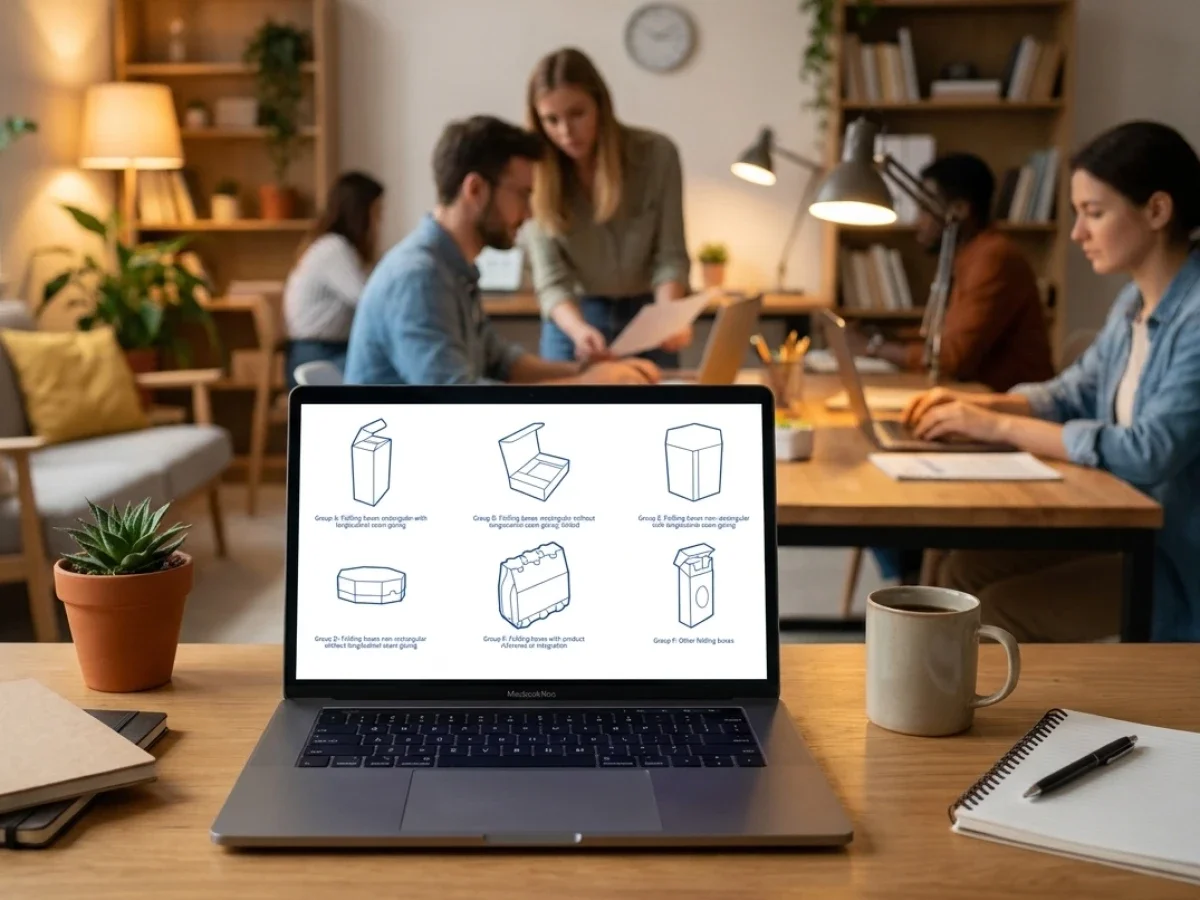
packQ does this through integrated ECMA and FEFCO libraries. The platform includes approximately 120 ECMA folding carton types, approximately 290 FEFCO corrugated packaging types, and approximately 50 POS display models. These templates allow customers to configure packaging within production-aware boundaries.
This is the core principle behind simplifying packaging steps. The user experience becomes easier because the technical rules are already embedded.
For packaging manufacturers, this reduces the need to inspect every order from scratch. For customers, it makes professional packaging configuration accessible without forcing them into CAD workflows.
Graphic Packaging Steps Need Production-Aware Editing
Graphic packaging work is often where media breaks become visible.
A customer may upload a logo in poor quality. A product image may need its background removed. A graphic may need vectorization. A low-resolution element may look acceptable on screen but fail in print.
If these issues require external design software or manual prepress correction, the workflow slows down.
packQ’s AI Designer Suite addresses routine graphic problems inside the browser. Vectorization helps convert raster graphics into cleaner shapes. Crispify improves image resolution with 4× higher output. Background removal helps prepare visuals for packaging layouts without leaving the online workflow.
The key point is not that AI replaces professional design. It reduces unnecessary media changes for common corrections.
When users can improve assets, inspect the package, and receive preflight feedback in one environment, the workflow becomes more stable.
Integrated Web-to-Pack vs. Separate Structural and Graphic Tools
Integrated Web-to-Pack is better when packaging teams need one connected workflow for structure, graphics, approval, validation, pricing, and production output. Separate tools can be useful for specialist tasks, but they often create manual handoffs between CAD, artwork, approval, and prepress. packQ connects these steps through synchronized 2D/3D design, Dynamic Preflight, and API-first integration.
Separate structural and graphic tools still have a place. Packaging engineers may need dedicated CAD environments for highly specialized structural development. Designers may need professional creative tools for advanced brand systems or complex artwork.
The issue is not whether those tools are valuable. The issue is where they fit.
For repeatable, configurable, customer-facing packaging workflows, disconnected tools often create too much friction. Every transfer between systems becomes a possible source of outdated data or misinterpretation.
packQ fits the operational layer where standardized or semi-standardized packaging must be configured, reviewed, validated, priced, and prepared for production. It helps convert structural and graphic knowledge into a guided workflow that customers and internal teams can actually use.
Static Proofing vs. Interactive 3D Approval
Static proofs remain useful for technical checks, but they often fail to communicate the final package clearly to non-technical stakeholders. A flat layout can be difficult for marketing, procurement, or e-commerce teams to interpret.
Interactive 3D approval solves that communication problem. It shows the package as a finished object while staying connected to the underlying structure.
In packQ, this connection matters. The 3D view is not just a visual decoration. It supports approval by helping users evaluate artwork placement, panel visibility, and overall package appearance before production.
Post-Submission Preflight vs. Dynamic Preflight
Post-submission preflight finds problems after the customer thinks the order is complete. That timing creates frustration and delay.
Dynamic Preflight identifies issues earlier.
In packQ, relevant checks can run during the online process. When a file has missing bleed, unsuitable resolution, incorrect color mode, or font-related issues, the system can flag the problem before the order moves downstream.
This is one of the clearest examples of how packQ reduces media breaks. Validation becomes part of the design workflow rather than a separate gate at the end.
Real-Time Pricing Belongs in the Same Workflow
Structural and graphic decisions often affect price.
A change in size, material, quantity, finishing, or personalization can change the commercial outcome of the job. If pricing happens in a separate system, customers and sales teams lose transparency.
packQ includes dynamic price calculation during configuration. This gives users immediate feedback when they change product options.
For packaging manufacturers, this reduces manual quotation work for standardizable products. For customers, it creates a clearer buying process. For sales teams, it helps keep commercial decisions aligned with the actual configured product.
Pricing is not a cosmetic feature in Web-to-Pack. It is part of workflow continuity.
How Do You Implement Software for Simplifying Structural and Graphic Packaging Steps?
Software for simplifying structural and graphic packaging steps should be implemented by mapping how structure, artwork, approval, preflight, pricing, and production data currently move through the business. packQ supports this implementation through API-first and headless architecture, connecting shop, ERP, MIS, prepress, and production systems with controlled Web-to-Pack workflows based on standards and automated validation.
Implementation should begin with the media breaks that create the most rework. In many packaging companies, these breaks appear between customer upload and prepress, between design approval and production output, or between online configuration and ERP/MIS order creation.
The goal is not to digitize a broken workflow exactly as it exists. The goal is to remove unnecessary handoffs.
A practical implementation can follow this sequence:
- Identify packaging types suitable for standardized configuration.
- Connect those products to ECMA and FEFCO structures where possible.
- Define graphic editing rules, brand restrictions, and approval permissions.
- Configure synchronized 2D/3D design for customer-facing review.
- Apply Dynamic Preflight checks for resolution, color mode, bleed, fonts, and file quality.
- Koppla prisregler till strukturella och produktionsparametrar.
- Integrera butiks-, affärs-, MIS-, prepress- och produktionssystem via REST, SOAP eller JSON där det är relevant.
- Generera produktionsfärdiga PDF:er och jobbdata efter godkännande.
Detta tillvägagångssätt förvandlar förenkling till en systemarkitektur, inte bara en förbättring av användargränssnittet.
Implementeringsexempel: Förpackningstillverkare med blandade ordertyper
En förpackningstillverkare betjänar stora varumärkesägare och mindre e-handelskunder. Företagskunder behöver stängda portaler med godkända mallar och kontrollerad redigering. Mindre kunder behöver en självbetjäningsväg för standardförpackningar.
Med packQ kan båda scenarierna dela samma Web-to-Pack-grund. Arbetsflödet för öppen butik ger nya kunder tillgång till guidad förpackningskonfiguration. Arbetsflödet för stängd butik ger varumärkesägare kontrollerad tillgång till godkända strukturer, originalregler och arbetsflöden för återkommande beställningar.
Bakom båda upplevelserna gäller samma princip: strukturell och grafisk förpackningsdata förblir kopplade till validering, prissättning och produktionsresultat.
API-driven arkitektur säkerställer flödet av förpackningsdata
Att förenkla förpackningssteg är omöjligt om data stannar i frontend.
Ett robust förpackningsarbetsflöde måste kopplas till de system som redan driver verksamheten. Detta inkluderar butikssystem, affärssystemplattformar, MIS-miljöer, prepressverktyg, planeringssystem och produktionsarbetsflöden.
packQ är utformat med en huvudlös och API-driven arkitektur. Detta gör det möjligt för teknikteam att integrera Web-to-Pack-arbetsflödet i befintliga systemlandskap istället för att tvinga in varje process i ett enda stelt gränssnitt.
Beroende på miljö kan REST, SOAP och JSON stödja datautbyte. Det praktiska målet är enkelt: konfigurationsdata, orderdata, prisdata, godkännandestatus och produktionsresultat bör inte kräva manuell återinmatning.
För IT-team förbättrar detta underhållbarheten. För driftteam minskar det administrativt arbete. För kunder skapar det en smidigare upplevelse eftersom portalen beter sig som en ansluten tjänst snarare än ett isolerat designverktyg.
Arbetsflöden för öppen och stängd butik utan mediebrott
Arbetsflöden för öppen och stängd butik har olika affärsmål, men båda kräver kontinuitet mellan strukturella och grafiska förpackningssteg.
En öppen butik är byggd för tillgänglighet. Kunder väljer en förpackningstyp, konfigurerar mått, laddar upp original, granskar resultatet och lägger en beställning med minimal säljinblandning. Utmaningen är att hålla den självbetjäningsprocessen produktionssäker.
En stängd butik är byggd för kontroll. Varumärkesägare, läkemedelsföretag, industriella köpare och företagskunder kan behöva godkända strukturer, begränsad redigering, återkommande beställningar och interna godkännandevägar. Utmaningen är att upprätthålla varumärkes- och produktionskonsistens över många användare och varianter.
packQ kan stödja båda modellerna eftersom arbetsflödeslogiken är inbäddad i plattformen. Kundupplevelsen kan skilja sig åt, men de underliggande kraven förblir sammankopplade: struktur, grafik, preflight, prissättning och utdata.
Hur kan förpackningsteam kontrollera strukturell och grafisk design utan mediebrott?
Förpackningsteam kan kontrollera strukturell och grafisk design utan mediebrott genom att använda ett Web-to-Pack-arbetsflöde som håller mallar, original, 3D-godkännande, preflight, prissättning och produktionsutdata sammankopplade. packQ möjliggör detta genom ECMA/FEFCO-strukturer, webbläsarbaserad design, AI Designer Suite-verktyg, Dynamic Preflight, ERP/MIS-integration och generering av produktionsfärdiga PDF-filer.
Utgångsläge
Ett prepressteam tar emot förpackningsjobb från flera kanaler. Vissa beställningar kommer från försäljning. Andra kommer via en onlineportal. Vissa filer anländer som färdiga original, medan andra kräver grundläggande korrigeringar. Strukturella data och grafiska data granskas ofta separat.
Resultatet blir inkonsekvent kvalitet.
Vissa jobb går snabbt. Andra kräver förtydligande, korrigering eller manuell rekonstruktion.
Tekniskt krav
Teamet behöver ett arbetsflöde som kontrollerar både den fysiska förpackningen och det grafiska innehållet. Den strukturella sidan måste följa giltig förpackningslogik. Den grafiska sidan måste uppfylla tryckkraven. Godkännandet måste vara tillräckligt visuellt för kunder och tillräckligt tekniskt för produktion.
Detta kräver mer än en designredigerare. Det kräver arbetsflödeskontinuitet.
Arbetsflöde i packQ
packQ gör det möjligt för team att definiera förpackningsstrukturer med hjälp av ECMA- och FEFCO-mallar. Användare kan anpassa förpackningen i en webbläsarbaserad miljö och granska ändringar i synkroniserade 2D- och 3D-vyer.
Grafiska problem kan förbättras med AI Designer Suite-funktioner som vektorisering, Crispify och bakgrundsborttagning. Dynamic Preflight kontrollerar tryckrelaterade krav under processen. Realtidsprissättning återspeglar konfigurationsändringar. Efter godkännande kan packQ generera produktionsfärdiga PDF-filer och överföra orderdata till anslutna ERP- eller MIS-system.
Fördel för produktion och kundupplevelse
Arbetsflödet blir lättare att kontrollera eftersom färre beslut fattas utanför systemet. Kunder får tydligare visuell feedback. Prepress får renare data. Produktionen får utdata som är bättre anpassad till godkända strukturer och tekniska regler.
För förpackningstillverkare minskar detta repetitivt korrigeringsarbete. För varumärkesägare ökar det tryggheten vid godkännande. För teknikteam skapar det ett skalbart ramverk för att koppla samman förpackningsdesign med affärssystem.
Variabel datatryckning utan manuell återskapning
Variabla förpackningar lägger till ytterligare ett lager av komplexitet.
Kampanjversioner, lokaliserade förpackningar, serialiserade enheter, personliga designer och produktion i batchstorlek ett ökar alla antalet utdatavarianter. Om varje variant kräver manuell filförberedelse blir arbetsflödet snabbt ineffektivt.
packQ stöder Variabel datatryckning via PDF/VT. Detta gör att förpackningsteam kan hantera variabelt innehåll mer systematiskt samtidigt som resultatet förblir kopplat till Web-to-Pack-arbetsflödet.
För varumärkesägare stöder detta riktade kampanjer och mindre lanseringsserier. För förpackningstillverkare skapar det nya tjänster utan att varje variation blir ett separat manuellt projekt.
Kopplingen till strukturella och grafiska arbetsflöden är viktig. Variabel data får inte ligga utanför förpackningsprocessen. Den måste förbli anpassad till layout, godkännande, preflight och produktionsresultat.
Varför förenkling inte får ta bort kontrollen
Att förenkla förpackningssteg innebär inte att ta bort teknisk kontroll. Inom professionell förpackning skulle det vara farligt.
Det bättre målet är att dölja onödig komplexitet för användaren samtidigt som produktionsregler hålls aktiva i bakgrunden.
packQ följer denna princip. Kunder och interna användare kan arbeta i en webbläsarbaserad miljö, men plattformen respekterar fortfarande strukturella standarder, utskriftsvalideringsregler, prislogik och krav på produktionsresultat.
Denna balans är det som gör Web-to-Pack användbart för både experter och icke-experter.
En kund behöver inte förstå varje CAD-detalj. En varumärkeschef behöver inte hantera ett prepress-system. En tryckare behöver inte manuellt återskapa varje onlinebeställning. Varje roll arbetar på rätt nivå i arbetsflödet.
Varför uppkopplade förpackningsarbetsflöden är framtiden för Web-to-Pack
Programvara som förenklar strukturella och grafiska förpackningssteg skapar det största värdet när den eliminerar mediebrott utan att försvaga produktionskontrollen. Förpackningsteam behöver arbetsflöden där struktur, artwork, godkännande, validering, prissättning och produktionsdata förblir sammankopplade från konfiguration till slutprodukt.
packQ från CloudLab stöder denna modell genom en specialiserad Web-to-Pack-plattform byggd för förpackningsspecifika processer. Dess kombination av ECMA- och FEFCO-mallar, synkroniserad 2D/3D-design, Dynamic Preflight, AI Designer Suite, realtidsprissättning, PDF/VT-stöd, API-först-integration och produktionsfärdig PDF-utdata hjälper förpackningstillverkare, varumärkesägare, e-handelsplattformar och teknikteam att hantera förpackningsdesign mer tillförlitligt.
Huvudbudskapet är tydligt: förenkling handlar inte om att reducera förpackningar till en grundläggande online-redigerare. Det handlar om att bygga ett uppkopplat arbetsflöde där strukturella och grafiska beslut stöder produktionssäkerheten istället för att skapa omarbetning.
Strukturella och grafiska förpackningsarbetsflöden bryts ofta ner när CAD, artwork-redigering, godkännande, preflight, prissättning och produktionsresultat sker i separata system. packQ hjälper till att minska dessa mediebrott genom ett uppkopplat Web-to-Pack-arbetsflöde. Plattformen kombinerar ECMA- och FEFCO-strukturer, synkroniserad 2D/3D-design, AI-stödda artwork-verktyg, Dynamic Preflight, realtidsprissättning, PDF/VT-stöd, API-först ERP/MIS-integration och produktionsfärdig PDF-utdata. För tryckerier, förpackningstillverkare, varumärkesägare och teknikteam erbjuder packQ ett praktiskt ramverk för att förenkla förpackningssteg utan att förlora produktionskontrollen.