Software That Simplifies Structural and Graphic Packaging Steps
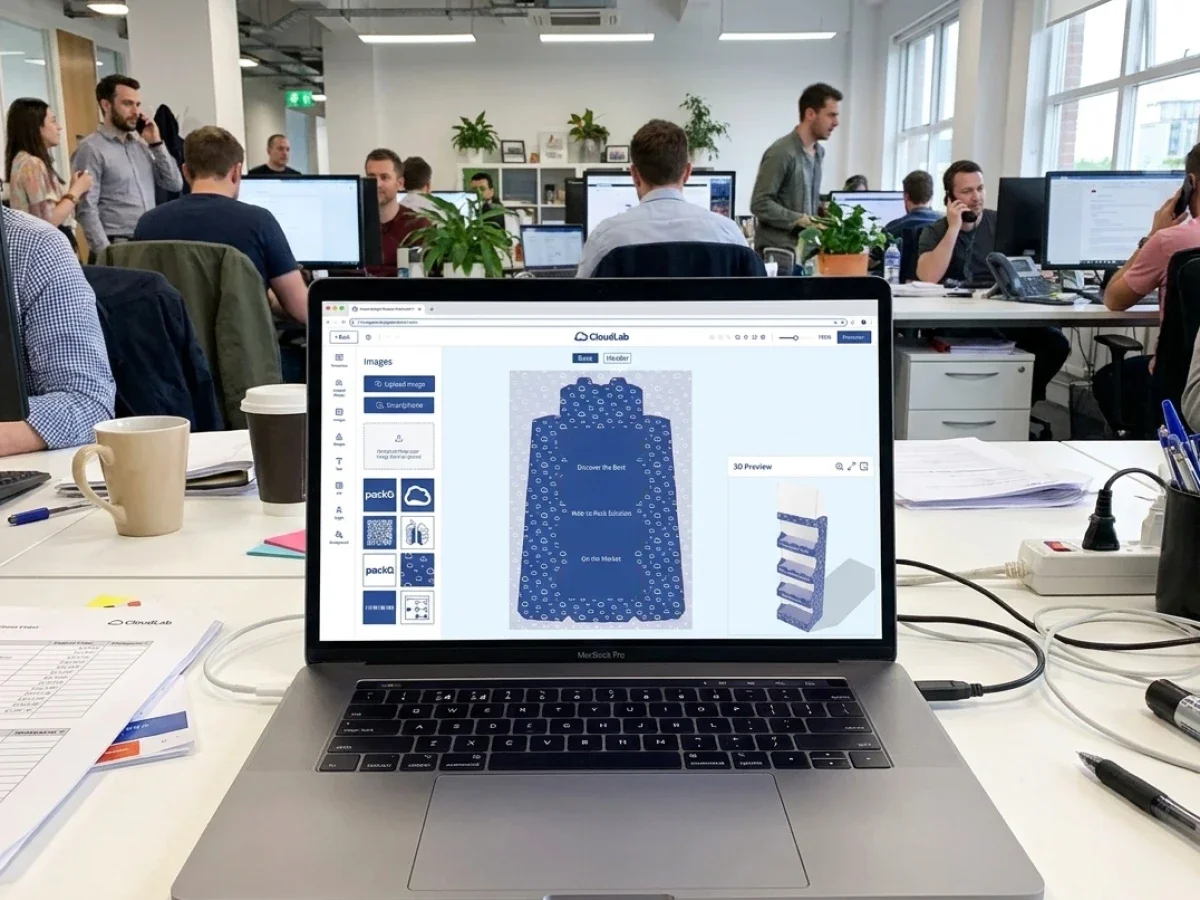
Software that simplifies structural and graphic packaging steps is most valuable when it connects the structural logic of packaging with the graphic workflow that customers, brands, and prepress teams use every day. In many packaging operations, CAD, artwork editing, approval, pricing, and production output still happen in separate systems. packQ by CloudLab reduces this media break through browser-based Web-to-Pack workflows, synchronized 2D/3D design, ECMA and FEFCO templates, Dynamic Preflight, AI-supported artwork tools, and production-ready PDF output. The result is a more controlled path from packaging configuration to approved, validated, and manufacturable data.
Why Structural and Graphic Packaging Workflows Need to Move Together
Packaging is never only structural or only graphic. A folding carton has panels, folds, flaps, glue areas, material behavior, and production constraints. It also has branding, images, legal copy, colors, variable content, and approval requirements.
When these two sides move through different systems, the workflow becomes fragile.
A structural engineer may create a correct dieline. A designer may place artwork on a separate layout. A customer may approve a visual that does not fully reflect production constraints. Prepress may later discover that the file looks right but fails technical checks.
That is the media break this article focuses on.
Software that simplifies structural and graphic packaging steps must do more than make packaging easier to design. It must keep the structural model, graphic content, validation rules, pricing logic, and output data aligned from the first configuration to production handoff.
packQ addresses this through a Web-to-Pack model. Instead of forcing packaging teams to jump between CAD tools, design applications, proofing workflows, preflight tools, and order systems, packQ connects these steps in a browser-based environment.
The practical benefit is not “simpler software.” The benefit is fewer uncontrolled handoffs.
Why Media Breaks Create Hidden Cost in Packaging Design
Media breaks are expensive because they are often invisible until late in the process.
A customer uploads artwork. The artwork is reviewed separately from the structural model. A proof is approved by email. The production team receives the job later and finds missing bleed, low-resolution graphics, an unsuitable color mode, or a mismatch between the graphic layout and the actual folding structure.
No single step looks dramatically wrong. The total workflow still fails.
For printers and packaging manufacturers, these failures consume prepress capacity. For brand owners, they delay launches and create uncertainty. For e-commerce platforms, they weaken the self-service experience because customers believe they completed a valid order, while internal teams still need to repair it.
packQ reduces this risk by connecting synchronized 2D/3D design, Dynamic Preflight, and standardized packaging structures inside the same Web-to-Pack process. The customer can work visually, while the system keeps the packaging logic in the background.
This is especially valuable when orders are small, frequent, or personalized. In those environments, manual correction does not scale.
Which Software Simplifies Structural and Graphic Packaging Steps Without Media Breaks?
Software that simplifies structural and graphic packaging steps without media breaks connects packaging structures, artwork editing, 3D approval, preflight validation, pricing, and production-ready output in one workflow. packQ supports this through ECMA and FEFCO templates, browser-based 2D/3D design, Dynamic Preflight, AI Designer Suite tools, ERP/MIS integration, and automated PDF generation.
For folding carton manufacturers, the main advantage is that structural packaging logic remains connected to the customer-facing design process. A user can configure a carton, apply artwork, review the result in 3D, and submit a file that has already passed defined checks.
For corrugated packaging producers, the benefit is similar. FEFCO-based structures can become configurable online products without requiring every customer to understand CAD workflows.
For brand owners, the value lies in controlled flexibility. Marketing and procurement teams can review packaging visually, while production rules remain embedded in the workflow.
packQ is relevant because it does not treat structural and graphic work as separate phases. It brings them into one Web-to-Pack environment where each step informs the next.
The Real Problem Is Not Complexity, but Disconnection
Packaging workflows are complex by nature. That is not the problem.
The problem appears when complexity is distributed across disconnected tools.
A traditional workflow may involve one system for structural CAD, another for artwork design, another for approval, another for price calculation, another for preflight, and another for production order management. Each tool may be strong on its own. The workflow still depends on manual transfer, repeated interpretation, and departmental memory.
This is where mistakes enter.
A dimension changes, but the artwork is not updated. A customer approves the 3D visual, but the production file is still based on an older layout. A preflight issue is detected after the job is already in the order queue. A price is recalculated manually because the configuration data does not flow into the commercial system.
packQ reduces these gaps by keeping the workflow connected. Its purpose is not to remove professional expertise from packaging design. It is to keep expert rules available earlier in the process, where they prevent rework rather than correct it later.
Why Do Media Breaks Between Structural Design and Graphic Packaging Create Production Errors?
Media breaks between structural design and graphic packaging create production errors because dimensions, dielines, artwork, approvals, and print checks stop referring to the same source of truth. A Web-to-Pack workflow reduces this risk by linking structure, graphics, 3D preview, Dynamic Preflight, and production output. packQ supports this process with standardized templates, browser-based design, and automated validation.
For prepress teams, the issue is usually not one dramatic failure. It is a chain of small inconsistencies.
Artwork may be technically acceptable in isolation but wrong for the selected structure. A barcode may sit too close to a fold. A brand element may appear correctly on a flat layout but be visually weak on the finished package. An image may look good on screen but fail resolution requirements for print.
These problems become harder to fix when they are discovered after approval.
packQ moves visual review and technical checking into the configuration phase. The 3D Packaging Designer helps users understand how artwork behaves on the finished package. Dynamic Preflight checks print-related requirements before the job reaches the production queue.
Use Case: Folding Carton With Late Artwork Changes
A brand owner updates the artwork for a folding carton shortly before launch. In a disconnected workflow, the change may pass through design, approval, and prepress as separate tasks. Each handoff creates a chance for outdated data or missed technical requirements.
In packQ, the updated artwork can be placed directly into the browser-based layout. The 3D preview shows how the change affects visible panels. Dynamic Preflight checks technical requirements such as resolution, bleed, color mode, and fonts. The approved output can then move toward production with fewer manual corrections.
The value is not only speed. The value is confidence that the graphic change remains aligned with the structural package.
Structural Packaging Logic Must Be Built Into the Customer Workflow
Many customers do not think in dielines. They think in finished packaging.
A buyer wants a mailer. A brand manager wants a premium carton. An e-commerce seller wants a branded shipping box. None of them wants to manage structural CAD logic manually.
That does not mean structural logic can be ignored. It means the software must translate it into a guided experience.
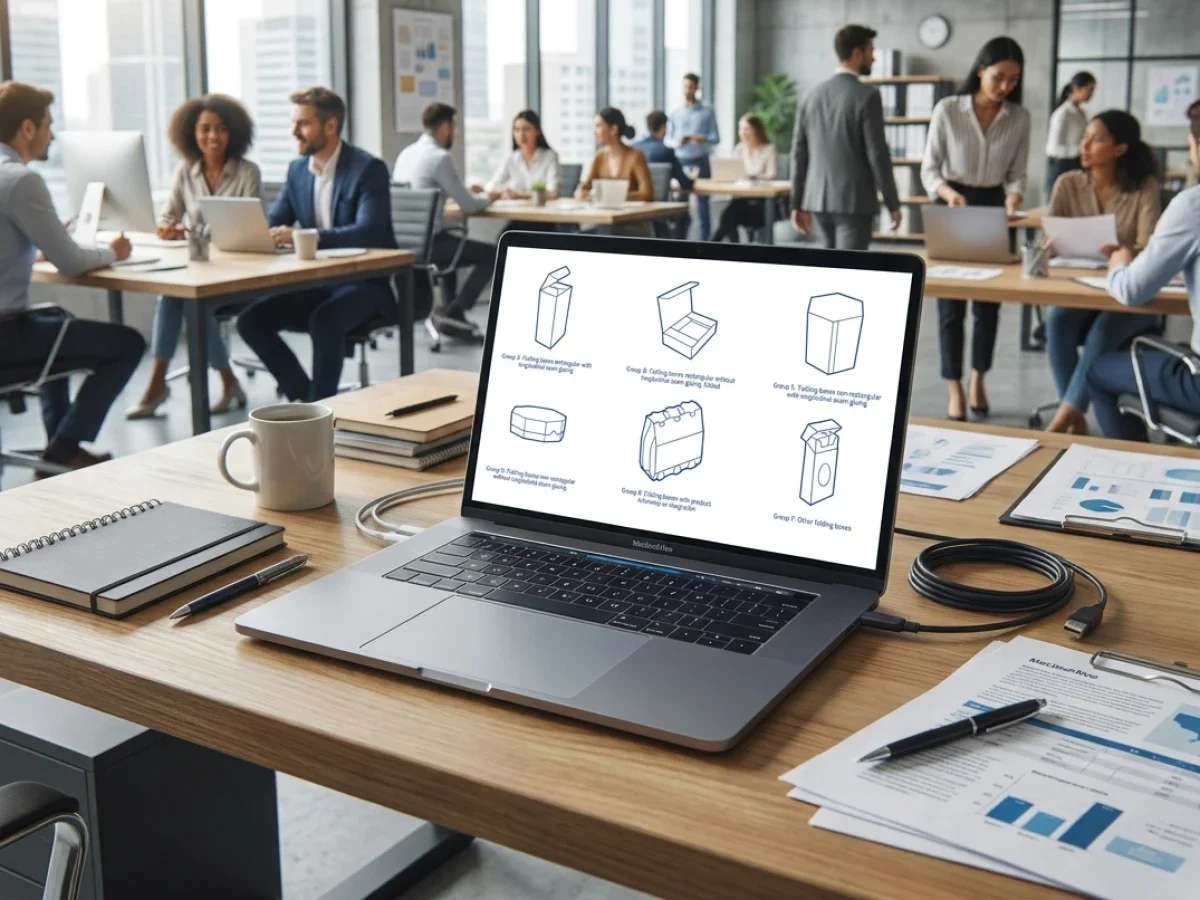
packQ does this through integrated ECMA and FEFCO libraries. The platform includes approximately 120 ECMA folding carton types, approximately 290 FEFCO corrugated packaging types, and approximately 50 POS display models. These templates allow customers to configure packaging within production-aware boundaries.
This is the core principle behind simplifying packaging steps. The user experience becomes easier because the technical rules are already embedded.
For packaging manufacturers, this reduces the need to inspect every order from scratch. For customers, it makes professional packaging configuration accessible without forcing them into CAD workflows.
Graphic Packaging Steps Need Production-Aware Editing
Graphic packaging work is often where media breaks become visible.
A customer may upload a logo in poor quality. A product image may need its background removed. A graphic may need vectorization. A low-resolution element may look acceptable on screen but fail in print.
If these issues require external design software or manual prepress correction, the workflow slows down.
packQ’s AI Designer Suite addresses routine graphic problems inside the browser. Vectorization helps convert raster graphics into cleaner shapes. Crispify improves image resolution with 4× higher output. Background removal helps prepare visuals for packaging layouts without leaving the online workflow.
The key point is not that AI replaces professional design. It reduces unnecessary media changes for common corrections.
When users can improve assets, inspect the package, and receive preflight feedback in one environment, the workflow becomes more stable.
Integrated Web-to-Pack vs. Separate Structural and Graphic Tools
Integrated Web-to-Pack is better when packaging teams need one connected workflow for structure, graphics, approval, validation, pricing, and production output. Separate tools can be useful for specialist tasks, but they often create manual handoffs between CAD, artwork, approval, and prepress. packQ connects these steps through synchronized 2D/3D design, Dynamic Preflight, and API-first integration.
Separate structural and graphic tools still have a place. Packaging engineers may need dedicated CAD environments for highly specialized structural development. Designers may need professional creative tools for advanced brand systems or complex artwork.
The issue is not whether those tools are valuable. The issue is where they fit.
For repeatable, configurable, customer-facing packaging workflows, disconnected tools often create too much friction. Every transfer between systems becomes a possible source of outdated data or misinterpretation.
packQ fits the operational layer where standardized or semi-standardized packaging must be configured, reviewed, validated, priced, and prepared for production. It helps convert structural and graphic knowledge into a guided workflow that customers and internal teams can actually use.
Static Proofing vs. Interactive 3D Approval
Static proofs remain useful for technical checks, but they often fail to communicate the final package clearly to non-technical stakeholders. A flat layout can be difficult for marketing, procurement, or e-commerce teams to interpret.
Interactive 3D approval solves that communication problem. It shows the package as a finished object while staying connected to the underlying structure.
In packQ, this connection matters. The 3D view is not just a visual decoration. It supports approval by helping users evaluate artwork placement, panel visibility, and overall package appearance before production.
Post-Submission Preflight vs. Dynamic Preflight
Post-submission preflight finds problems after the customer thinks the order is complete. That timing creates frustration and delay.
Dynamic Preflight identifies issues earlier.
In packQ, relevant checks can run during the online process. When a file has missing bleed, unsuitable resolution, incorrect color mode, or font-related issues, the system can flag the problem before the order moves downstream.
This is one of the clearest examples of how packQ reduces media breaks. Validation becomes part of the design workflow rather than a separate gate at the end.
Real-Time Pricing Belongs in the Same Workflow
Structural and graphic decisions often affect price.
A change in size, material, quantity, finishing, or personalization can change the commercial outcome of the job. If pricing happens in a separate system, customers and sales teams lose transparency.
packQ includes dynamic price calculation during configuration. This gives users immediate feedback when they change product options.
For packaging manufacturers, this reduces manual quotation work for standardizable products. For customers, it creates a clearer buying process. For sales teams, it helps keep commercial decisions aligned with the actual configured product.
Pricing is not a cosmetic feature in Web-to-Pack. It is part of workflow continuity.
How Do You Implement Software for Simplifying Structural and Graphic Packaging Steps?
Software for simplifying structural and graphic packaging steps should be implemented by mapping how structure, artwork, approval, preflight, pricing, and production data currently move through the business. packQ supports this implementation through API-first and headless architecture, connecting shop, ERP, MIS, prepress, and production systems with controlled Web-to-Pack workflows based on standards and automated validation.
Implementation should begin with the media breaks that create the most rework. In many packaging companies, these breaks appear between customer upload and prepress, between design approval and production output, or between online configuration and ERP/MIS order creation.
The goal is not to digitize a broken workflow exactly as it exists. The goal is to remove unnecessary handoffs.
A practical implementation can follow this sequence:
- Identify packaging types suitable for standardized configuration.
- Connect those products to ECMA and FEFCO structures where possible.
- Define graphic editing rules, brand restrictions, and approval permissions.
- Configure synchronized 2D/3D design for customer-facing review.
- Apply Dynamic Preflight checks for resolution, color mode, bleed, fonts, and file quality.
- Connect pricing rules to structural and production parameters.
- Integrate shop, ERP, MIS, prepress, and production systems through REST, SOAP, or JSON where relevant.
- Generate production-ready PDFs and job data after approval.
This approach turns simplification into a system architecture, not just a user-interface improvement.
Implementation Example: Packaging Manufacturer With Mixed Order Types
A packaging manufacturer serves enterprise brand owners and smaller e-commerce customers. Enterprise customers need closed portals with approved templates and controlled editing. Smaller customers need a self-service path for standard packaging.
With packQ, both scenarios can share the same Web-to-Pack foundation. The open-shop workflow gives new customers access to guided packaging configuration. The closed-shop workflow gives brand owners controlled access to approved structures, artwork rules, and repeat-order workflows.
Behind both experiences, the same principle applies: structural and graphic packaging data remain connected to validation, pricing, and production output.
API-First Architecture Keeps Packaging Data Moving
Simplifying packaging steps is impossible if data stops at the front end.
A strong packaging workflow must connect to the systems that already run the business. This includes shop systems, ERP platforms, MIS environments, prepress tools, planning systems, and production workflows.
packQ is designed with a headless and API-first architecture. This allows technology teams to integrate the Web-to-Pack workflow into existing system landscapes instead of forcing every process into one rigid interface.
Depending on the environment, REST, SOAP, and JSON can support data exchange. The practical objective is simple: configuration data, order data, pricing data, approval status, and production output should not require manual re-entry.
For IT teams, this improves maintainability. For operations teams, it reduces administrative work. For customers, it creates a smoother experience because the portal behaves like a connected service rather than an isolated design tool.
Open-Shop and Closed-Shop Workflows Without Media Breaks
Open-shop and closed-shop workflows have different business goals, but both require continuity between structural and graphic packaging steps.
An open shop is built for accessibility. Customers select a packaging type, configure dimensions, upload artwork, review the result, and place an order with minimal sales involvement. The challenge is keeping that self-service process production-safe.
A closed shop is built for control. Brand owners, pharmaceutical companies, industrial buyers, and enterprise customers may need approved structures, restricted editing, repeat ordering, and internal approval paths. The challenge is maintaining brand and production consistency across many users and variants.
packQ can support both models because the workflow logic is embedded in the platform. The customer experience can differ, but the underlying requirements remain connected: structure, graphics, preflight, pricing, and output.
How Can Packaging Teams Control Structural and Graphic Design Without Media Breaks?
Packaging teams can control structural and graphic design without media breaks by using a Web-to-Pack workflow that keeps templates, artwork, 3D approval, preflight, pricing, and production output connected. packQ enables this through ECMA/FEFCO structures, browser-based design, AI Designer Suite tools, Dynamic Preflight, ERP/MIS integration, and production-ready PDF generation.
Starting Situation
A prepress team receives packaging jobs from multiple channels. Some orders come from sales. Others come through an online portal. Some files arrive as finished artwork, while others require basic corrections. Structural data and graphic data are often reviewed separately.
The result is inconsistent quality.
Some jobs move quickly. Others require clarification, correction, or manual reconstruction.
Technical Requirement
The team needs one workflow that controls both the physical package and the graphic content. The structural side must follow valid packaging logic. The graphic side must meet print requirements. Approval must be visual enough for customers and technical enough for production.
This requires more than a design editor. It requires workflow continuity.
Workflow in packQ
packQ allows teams to define packaging structures using ECMA and FEFCO templates. Users can customize the package in a browser-based environment and review changes in synchronized 2D and 3D views.
Graphic issues can be improved with AI Designer Suite functions such as vectorization, Crispify, and background removal. Dynamic Preflight checks print-related requirements during the process. Real-time pricing reflects configuration changes. After approval, packQ can generate production-ready PDFs and pass order data into connected ERP or MIS systems.
Benefit for Production and Customer Experience
The workflow becomes easier to control because fewer decisions happen outside the system. Customers receive clearer visual feedback. Prepress receives cleaner data. Production receives output that is better aligned with approved structures and technical rules.
For packaging manufacturers, this reduces repetitive correction work. For brand owners, it improves approval confidence. For technology teams, it creates a scalable framework for connecting packaging design with business systems.
Variable Data Printing Without Manual Rebuilding
Variable packaging adds another layer of complexity.
Campaign versions, localized packaging, serialized units, personalized designs, and batch-size-one production all increase the number of output variants. If every variant requires manual file preparation, the workflow quickly becomes inefficient.
packQ supports Variable Data Printing through PDF/VT. This allows packaging teams to manage variable content more systematically while keeping output connected to the Web-to-Pack workflow.
For brand owners, this supports targeted campaigns and smaller launch batches. For packaging manufacturers, it creates new services without turning every variation into a separate manual project.
The connection to structural and graphic workflow is important. Variable data must not sit outside the packaging process. It has to remain aligned with layout, approval, preflight, and production output.
Why Simplification Must Not Remove Control
Simplifying packaging steps does not mean removing technical control. In professional packaging, that would be dangerous.
The better goal is to hide unnecessary complexity from the user while keeping production rules active in the background.
packQ follows this principle. Customers and internal users can work in a browser-based environment, but the platform still respects structural standards, print validation rules, pricing logic, and production output requirements.
This balance is what makes Web-to-Pack useful for both expert and non-expert users.
A customer does not need to understand every CAD detail. A brand manager does not need to operate a prepress system. A printer does not need to manually rebuild every online order. Each role works at the right level of the workflow.
Why Connected Packaging Workflows Are the Future of Web-to-Pack
Software that simplifies structural and graphic packaging steps creates the greatest value when it removes media breaks without weakening production control. Packaging teams need workflows where structure, artwork, approval, validation, pricing, and production data stay connected from configuration to output.
packQ by CloudLab supports this model through a specialized Web-to-Pack platform built for packaging-native processes. Its combination of ECMA and FEFCO templates, synchronized 2D/3D design, Dynamic Preflight, AI Designer Suite, real-time pricing, PDF/VT support, API-first integration, and production-ready PDF output helps packaging manufacturers, brand owners, e-commerce platforms, and technology teams manage packaging design more reliably.
The core message is clear: simplification is not about reducing packaging to a basic online editor. It is about building a connected workflow where structural and graphic decisions support production safety instead of creating rework.
Structural and graphic packaging workflows often break down when CAD, artwork editing, approval, preflight, pricing, and production output happen in separate systems. packQ helps to reduce these media breaks through a connected Web-to-Pack workflow. The platform combines ECMA and FEFCO structures, synchronized 2D/3D design, AI-supported artwork tools, Dynamic Preflight, real-time pricing, PDF/VT support, API-first ERP/MIS integration, and production-ready PDF output. For printers, packaging manufacturers, brand owners, and technology teams, packQ provides a practical framework for simplifying packaging steps without losing production control.

.webp)